



Stacking in pickleball is legal, effective, and widely misused. The tactic lets a doubles team keep both players on their preferred side of the court regardless of who's serving or returning — done right, it's like having a lineup card that always puts your best hitter up in the clutch. Done wrong, it's a confusion generator that loses points you'd have won by just playing normal doubles.
The short answer: stacking is a positional reset that lets a doubles team override the score-based court rotation to keep both players on their strongest sides. It's 100% legal under USA Pickleball and APPA rules. The only constraint is where players must be at the exact moment the serve crosses the net — after that, go wherever you want.
Last updated: June 2026
Disclosure: This post contains affiliate links to Pickleball Central. If you purchase through our links, FORWRD earns a small commission at no extra cost to you. We only link to products we'd recommend regardless.
What Is Stacking and Why Does It Matter?
Normally, the score determines which side of the court each player occupies. If you're serving from the right side and your team wins the point, you move to the left. The score rotates your position, which means after a few rallies, you and your partner might end up on sides that don't match your dominant hands or preferred shot patterns.
Stacking fixes this. Before the serve, both players line up on the same side of the court — "stacking" — then immediately move to their preferred sides the moment the ball is struck. The server (or receiver) is still in the legally correct position at the moment of contact. Everyone else can be anywhere.
Here's why it matters in practice. Consider two right-handed players on the same team. In a standard rotation, one player ends up serving from the left side of the court, which puts their forehand on the sideline instead of the middle. That's a weaker position — the middle is where most of the action happens, and where having a forehand facing in costs you the most. Stacking lets both players keep their forehands pointing toward the center of the court, no matter what the score says.
Done consistently, stacking raises team win rate without either player improving a single shot. You're just fighting from a better position on every rally.
Stacking is one piece of a bigger picture — see our complete pickleball strategy & tactics guide for the full framework, including positioning, third shot decisions, and kitchen play.
When to Stack (and When to Skip It)
Most stacking guides tell you how to do it. This section tells you when to do it — and when to leave it alone. That decision-tree is the piece every other guide skips.
Stack when:
- You have a clear dominant-side preference. One or both players is significantly stronger on one side, and the score rotation keeps putting them on the wrong one. If it's the same player who consistently ends up out of position, stacking is the right fix.
- You're protecting a significant backhand weakness. If your partner's backhand is getting targeted and the rotation keeps putting it in the middle, stacking moves it to the sideline where it gets fewer balls and your forehand covers the center.
- You're playing against opponents who dominate the middle. Stacking lets you put your stronger player's forehand in the middle as a deliberate tactical counter.
- You and your partner have practiced it. This one is non-negotiable. Don't debut stacking in a match you care about. Practice the mechanics first — 20–30 reps of the serve-side transition at moderate pace before you try it in live play.
Do NOT stack when:
- You're down 7-2 and losing badly. This is not the moment to add a new mechanical system to an already stressed team. Stacking mid-match when you've never practiced it together creates confusion and almost always produces miscommunication errors at the worst time. Either stack from the first point or don't stack that day.
- Your opponents are consistently serving wide. Stacking rearranges your starting position, but if your opponent is exploiting a particular angle, stacking might expose the same weakness from a different direction. Understand what they're doing before deciding to change your formation.
- Communication between you and your partner isn't sharp. Stacking requires a clear signal — verbal or visual — before every point. If you're already miscommunicating on basic doubles positioning, adding stacking will amplify the chaos. Build your communication fundamentals first.
- The margin is too thin to experiment. Close recreational match, fifth game, 9-8. Play the formations you know cold. Stacking is a weapon for when you can afford to be deliberate, not when every point feels like the last.
Server-Side Stacking: Step-by-Step
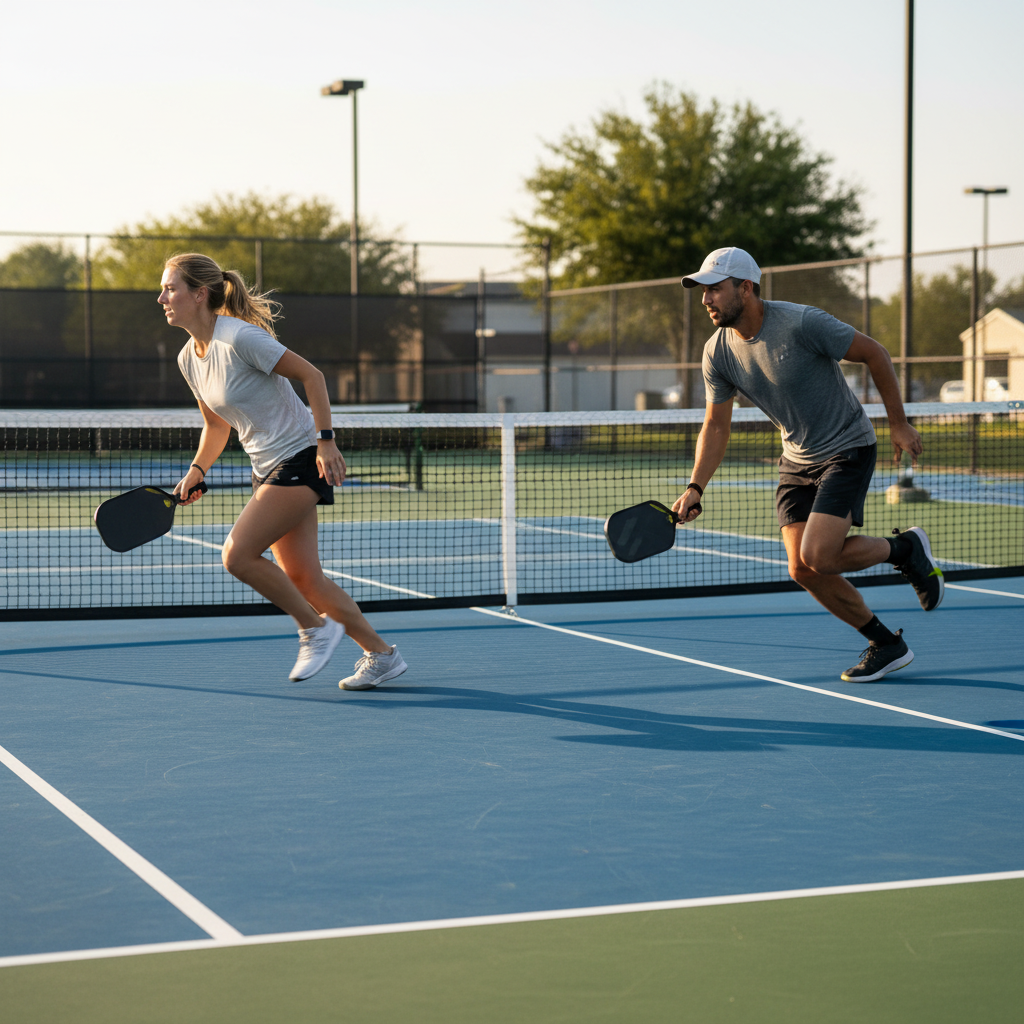
Server-side stacking is the version most players try first, and the one most players botch the first three times. Here's why: the instinct after serving is to move toward centerline. In stacking, you're moving sideways instead — and that feels unnatural until it's been drilled.
Setup: Say you and your partner are right-handed. You're supposed to serve from the left side of the court (even score), but that would put your forehand on the outside. Instead, your partner stands on the left side as a "dummy" while you set up just right of center, slightly behind the service line.
The mechanics — step by step:
- Before the serve, both players stand on the right side of the court (stacked). Your partner stands near the right sideline, behind the kitchen line so they're not in the NVZ.
- You serve from just right of center — you're still in a legal position (you can serve from anywhere behind the baseline on your designated side as long as the ball crosses correctly).
- The moment you make contact with the ball, both of you move immediately to your preferred sides. You slide left; your partner holds or moves right.
- The return is coming back. You're now in your preferred position by the time the ball crosses the net.
Communication: Before every point, one quick signal — "stack" or "switch" or whatever you've decided on. The signal comes before the score is called, not after. Get in the habit of signaling first, then calling the score, then serving.
The most common mistake: waiting too long to move after the serve. You have about 1.2–1.5 seconds before the return arrives at a recreational pace. That's enough time — but only if you move the moment the ball leaves your paddle, not after you watch where it lands.
Receiver-Side Stacking: Step-by-Step
Receiver-side stacking is harder. Most players skip it entirely because server-side feels complicated enough. Don't skip it — receiver-side stacking is where teams get the biggest positional gains, because it means you're always on your preferred sides regardless of whether you're serving or returning.
The constraint: The receiver must be in the correct receiving position when the serve is struck. Your partner can be anywhere else on your side of the court that's not in the NVZ.
Step-by-step:
- Say you're supposed to receive on the right side but prefer the left. Your partner stands near the left sideline, behind the kitchen line, in anticipation of moving there.
- You receive from the right side — legally required. As you strike the return, your partner moves immediately to the right side, and you begin your transition to the left.
- You both arrive at your preferred sides ideally before or as the third shot comes back over. The earlier you move, the less scramble there is.
Receiver-side stacking requires more speed and coordination than server-side because the receiver is transitioning while simultaneously executing a return — which is a real shot that needs attention. Practice the footwork separately before combining it with actual returns in a drill.
Half-Stack and Poaching Combinations
Full stack means you use it every rally, on both serves and returns. Half stack means you use it selectively — typically only when serving, or only in one specific score situation where the rotation puts you badly out of position. Start with half stack. Learn the movement and communication, nail the transition, then layer in full stack later.
"The most common reason doubles teams don't stack is they try it for the first time in a match and botch the transition. Practice the server-side stack 20 times before your next rec session — it's a mechanical movement, not a complicated system. If you've drilled it, it becomes automatic." — Topher, FORWRD Co-Founder
Poaching combinations work naturally with stacking. When your team is stacked with the stronger player covering the middle (forehand in center), that player can poach aggressively because they're already in position for a middle ball. The signal for a poach can be built into your pre-point communication: "stack, I'll crash the middle if they go center." That's a two-word add-on to the call you're already making.

For controlling shots during poaching situations — where you're catching the ball on the move — a paddle with a larger sweet spot and good feel in transition helps significantly. The Selkirk LUXX Control Air InfiniGrit is built for exactly this kind of controlled aggression at the kitchen line — the InfiniGrit surface maintains feel even when you're hitting on the run.
Common Stacking Mistakes (and How to Fix Them)
Stacking failures fall into three categories: positioning errors, timing errors, and communication failures. Most teams experience all three in their first five attempts. Here's where things go wrong and what to do about it:
Moving Too Early Before the Serve
Both players must be stationary at the moment of serve contact. Moving before the serve is a fault. The fix: wait for the server's paddle to make contact before either player starts transitioning. This feels like you're waiting too long — but 0.1 seconds of patience at serve contact is not a problem; moving 0.5 seconds early is a fault.
Forgetting Which Way to Stack
This is embarrassingly common in the first five matches. You've called "stack," but mid-rally both players hesitate because they're not sure who goes where. Fix this before match day: designate a clear rule, like "right-handed player always goes left, left-handed player always goes right." Whatever your rule is, drill it until it's reflexive. No thinking allowed in a fast-paced rally.
The Receiver Moving Too Slowly
On receiver-side stacking, the non-receiver needs to be crossing toward their preferred side while the return is still in the air. Slow cross = scramble on the third shot. Fix: the non-receiver starts moving on the first forward motion of the receiver's paddle arm, not after watching the return land.
Over-Stacking in Low-Stakes Rec Play
If you and your partner are 3.0 players at a casual Wednesday morning rec session, full stacking is probably overkill and will annoy your less tactical partners. Use stacking in competitive scenarios — club championship, league play, tournaments — and let it rip in practice. In pure casual rec, your energy is better spent on shot quality than formation management.
For more doubles tactics including kitchen positioning and third shot strategy, see our pickleball kitchen rules and NVZ guide and the third shot drop breakdown.
Complete Your Setup for Tournament Doubles
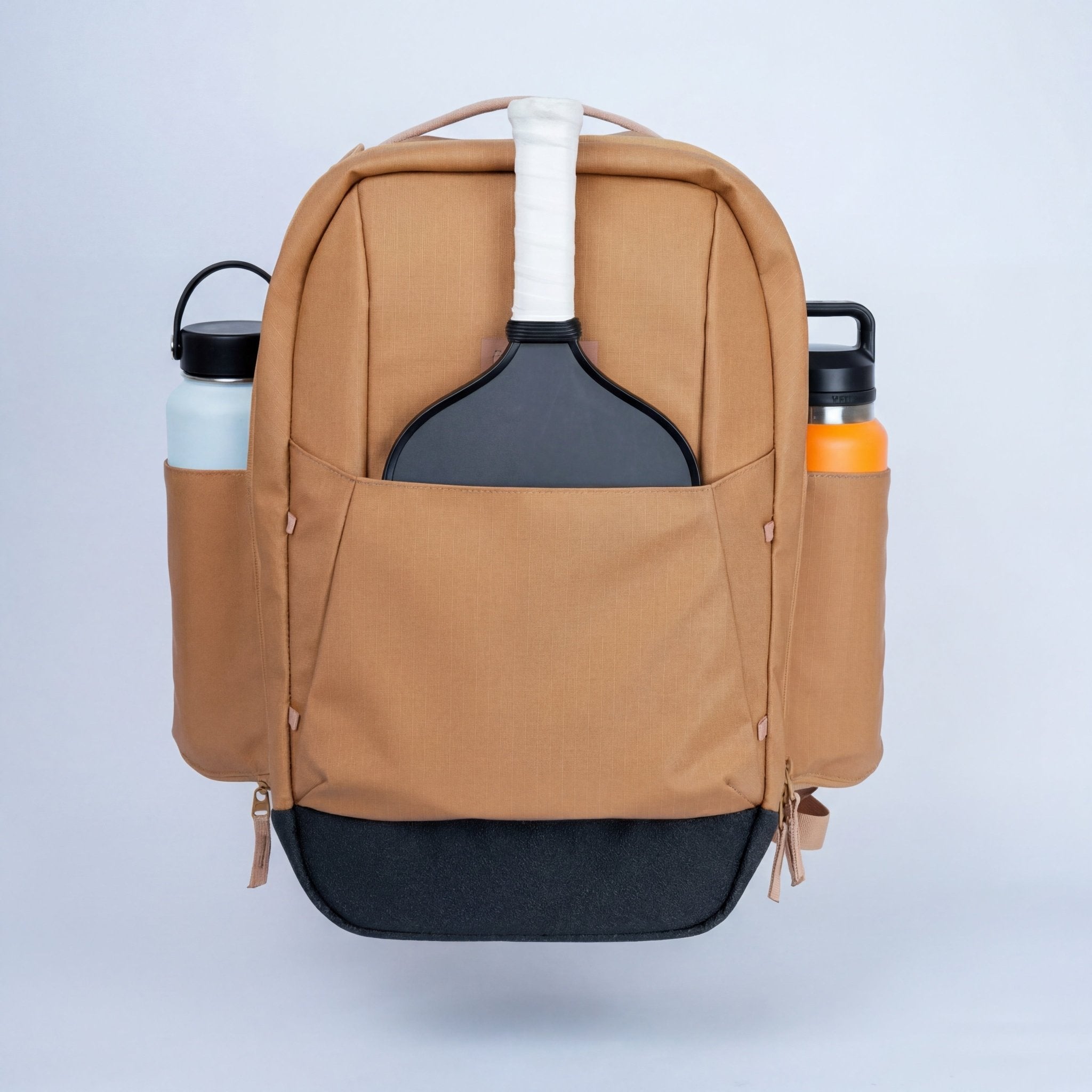
Stacking works best when the rest of your court-day logistics are dialed in too. After you've drilled the transitions, the thing that slows teams down in tournament doubles is disorganized gear — scrambling for a backup paddle, missing a towel, forgetting which pocket has the sunscreen. The Court Ranger V2 ($195) keeps everything sorted with separate modular paddle sleeves, YKK AquaGuard zippers, and a 16" laptop compartment for court-to-office days. Designed with input from 500+ real players who play exactly this kind of competitive doubles.

Our Pick: Court Ranger V2 Pickleball Backpack
Modular paddle sleeve for match and warmup paddles, 16" laptop compartment, YKK AquaGuard zippers. Built with 500+ real players who play serious doubles.
FAQ: Pickleball Stacking Questions
What is stacking in pickleball?
Stacking is a doubles positioning tactic where both players on a team line up on the same side of the court before a serve or return, then immediately move to their preferred sides once the ball is struck. It allows teams to keep their stronger player's forehand in the middle regardless of what the score-based rotation would normally dictate. It's 100% legal under USA Pickleball rules.
When should you stack in pickleball?
Stack when one or both players has a strong side preference that the score rotation keeps disrupting — especially when a player's forehand ends up on the outside instead of covering the middle. Also use it when protecting a significant backhand weakness from getting targeted. Don't stack when you haven't practiced it with your partner, or when you're in a high-pressure point and already miscommunicating on positioning.
How do you do server-side stacking in pickleball?
Before the serve, both players position on the same (preferred) side of the court. The server takes their legal position and serves. The instant the ball is struck, both players transition to their preferred sides — server slides to their preferred court, partner crosses to theirs. Communication before every point is essential: signal the stack before calling the score, then serve. The key mistake is waiting too long to transition after contact.
Is stacking legal in pickleball?
Yes, fully legal. The only requirement under USA Pickleball and APPA rules is that the server must be in the correct service position (even or odd side based on score) and the receiver must be in their correct receiving position at the moment the serve is struck. After contact, all four players can move anywhere on the court. Stacking takes advantage of this movement freedom to override the score-based rotation.
What is half-stack in pickleball?
Half-stack means using the stacking formation selectively — typically only when serving, not on returns. It's the recommended starting point for teams learning to stack because it's simpler than full stacking (where you stack on both serves and returns). Master the server-side transition first, build the communication habit, then add receiver-side stacking once the server-side mechanics are automatic.
When should you NOT stack in pickleball?
Don't stack mid-match when you're already losing badly (7-2 in a tight game), when your partner communication is already breaking down, or when you've never practiced it together. Don't debut stacking in a competitive match — drill it first. Also skip it in casual recreational play where it's more likely to confuse and irritate partners than improve your positioning in low-stakes situations.

Leave a comment
This site is protected by hCaptcha and the hCaptcha Privacy Policy and Terms of Service apply.