

Last Updated: June 2026
The return of serve is the most undervalued shot in pickleball. Most 3.0–4.0 players treat it as a formality — get it back in, don't miss it, move on. That thinking is exactly why they keep losing the first three-shot exchange.
Done right, the return is your first offensive weapon. It neutralizes the server's advantage, compresses the court, and — if you execute the transition — puts you and your partner in control of the rally before the server can settle in. This guide covers the positioning mistake most players make, the deep return targets that actually work, how to read spin serves, and a 3-part decision system you can apply on every single return.
Return strategy is one chapter in a bigger picture — for the full framework covering every phase of play, see our complete pickleball strategy & tactics guide.
The One Job of the Return (and Why Most Players Blow It)
The return of serve has one job: get your team to the kitchen with the server pinned back. That's it. Not win a point off the serve. Not hit a flashy winner cross-court. Get the ball deep and get moving.
Why does this matter? Because of the two-bounce rule. The serving team must let the return bounce before they can volley it — which means they're stuck at the baseline for at least one more shot. Your goal is to make that third shot as hard as possible. A deep return forces them to execute a quality third shot from 6–8 feet further back than a short return does. That's a massive margin of error difference, especially under pressure.
The most common mistake at 3.0–3.5: trying to hit too much. Players go for angles, pace, or winners and miss short or into the net. A solid, deep, unattackable return that lands you at the kitchen is worth 10 flashy winners that also produce 10 errors.
"I coach a lot of 3.5–4.0 players who can execute a technically clean return — good contact, good swing path — but they aim for the lines. When I tell them to aim for the middle-back third of the court, their return immediately gets 30% harder to attack. They think they're giving something up. They're not." — Topher Carper, FORWRD co-founder
Return Positioning: Where to Stand Before the Ball Is Served
This is the most correctable mistake in pickleball and the one most players never address. Before a single ball is struck, you can already be wrong.
Most recreational players stand at the baseline. The right position is 3–4 feet behind the baseline.
Why? Two reasons. First, you need time. A hard flat serve to your backhand gives you roughly 0.6 seconds to react and position from the baseline. From 3 feet back, you have 0.8 seconds — enough to take one more step and actually set your feet. Second, angled serves are designed to pull you wide. If you're at the baseline and a serve breaks wide, you're chasing it from the wrong angle. From 3 feet back, you can cut it off moving forward rather than scrambling sideways.
Your partner, already at the kitchen line, should be positioned center-to-their-side — ready to poach a floater or cover the middle on your transition. Don't let your partner crowd the centerline; they need to cover the alley on a short-angled serve return.
One exception: if the server is slow and the ball barely makes it deep, stepping inside the baseline to take the ball early can compress their time even further. But the default is always: start back, move forward into the shot.
The Deep Return: Why It's Your Default Play
Target: land the return in the top 18 inches of the service box, near the centerline or to the server's backhand side. That's your landing zone. Everything else is a plan B.
A return that lands in the deep zone does three things. First, it pushes the server back further — they have to hit their third shot (usually a third-shot drop or drive) from a harder position. Second, a deep return to the middle creates indecision in doubles — both players may hesitate to take the ball. Third, a return down the middle reduces the server's angles on the third shot. They have fewer places to put it than if your return was wide.
Aim for the center-back zone roughly 75% of the time. The other 25% is when you have a specific read — a backhand weakness you've confirmed, or a server who consistently drives cross-court and you want to change the angle.
Depth cue that works: Instead of thinking "aim at the service box," aim for the back fence. The overcorrection naturally produces a deeper return than trying to place it precisely in a small zone. Players who miss the return usually miss short — they aim for the middle of the court and land it at the T. Aim for where the back fence meets the sideline, and you'll hit it where you want it.
Cross-Court vs. Down the Line: The Return Placement Decision
In doubles, you have two target options: cross-court (to the server's side) or down the line (to the server's partner, who's rushing up from the baseline). Here's how to decide.
Cross-court (default, ~70% of returns): The diagonal gives you the most net clearance, the deepest landing zone, and the most time after contact to advance. Cross-court is the highest-percentage play because physics favor it — you're hitting over the low part of the net and have the full diagonal of the court to work with. Cross-court deep to the server's backhand is the strongest return in the game from a percentage standpoint.
Down the line (situational, ~30% of returns): When the server's partner is slow to advance, a sharp down-the-line return can catch them in no-man's land and force a low-quality third shot. It's also useful when the server is cheating toward the middle, leaving the line open. The risk: less net clearance, tighter margin, and if your partner isn't covering the alley, you're leaving it open. Don't go down the line unless you have a clear read that it's there.
One read that makes down-the-line more attractive: the server's partner starts crowding toward center on every point. Once you identify that pattern — usually by point 3 or 4 in a game — the alley is genuinely open and the down-the-line return becomes the higher-percentage play.
Handling Spin Serves: What Changes on Return
The 2025 serve rules confirmed one thing: spin is legal, pace is the real differentiator at higher levels. Knowing how to read spin on the serve protects you from being exploited on the most important shot sequence in the game.
Flat/hard serve: Step back an extra 6 inches before it's struck. Your swing adjustment is minimal — a flat ball behaves the way you expect. The priority is depth and not giving them pace back. Block it rather than swinging through at full pace, and let the depth of the return do the work.
Topspin serve: The ball bounces higher and into you. Most players step back when they see topspin — that's wrong. Step in, take it early at the top of the bounce, and drive it. Taking a topspin serve late means you're hitting a ball that's broken toward your body and falling away from the net. Taking it early at the bounce peak means the ball is in the zone you want it.
Sidespin/slice serve: The ball breaks away from you after the bounce. Adjust your starting position by 1–2 steps toward the direction of the spin before the serve — this means you're stepping into the ball as it breaks, not chasing it. A left-handed server's natural sidespin breaks to a right-hander's backhand. Most players know this intellectually and still don't adjust their starting position.
For players who struggle with spin serve reads: a paddle with more control and a softer feel reduces how much the spin transfers into your return. The JOOLA Perseus Pro V 16mm is built for exactly this — the foam core absorbs spin input and gives you a controllable surface to redirect the ball. Useful in rated play where servers come with varied spin repertoires.
Disclosure: This post contains affiliate links to Pickleball Central. If you purchase through our links, FORWRD earns a small commission at no extra cost to you. We only link to products we'd recommend regardless.
From Return to Kitchen Line: The Transition Pattern
The return is only half the job. The second half is getting to the kitchen before the server's third shot lands.
The transition works like this: you hit the return, then immediately take 2–3 aggressive steps forward. You're not sprinting to the kitchen in one motion — you're moving in and stopping when the server contacts the third shot. The stop is called a split-step: a small, balanced hop that leaves you ready to move in any direction as the third shot comes. Then you continue advancing after you read the third shot.
The timing window: You have roughly the time it takes the third shot to travel from the server to the kitchen line. If your return lands deep, their third shot takes ~0.9 seconds to arrive. If your return lands short, they're hitting from closer and you have 0.6–0.7 seconds. Deep return = more transition time. This is the mechanical reason why depth matters beyond just "give them a harder shot."
Most players who struggle to reach the kitchen in time are starting their transition too late. The split-step and first 2 steps forward should begin the moment the return leaves your paddle — not when the server strikes the third shot. By the time they make contact, you should already be 4–5 feet inside the baseline.
For doubles: communicate the transition with your partner. A simple "up" call when you hit a quality deep return signals your partner to hold position at the kitchen and be ready for your arrival. If your return is short, "back" signals them to be ready for a drive they may need to defend.
The 3-Part Return Decision System
Every return situation runs through three questions, in order. At 3.5+, this happens in about half a second — but practicing the framework in drilling makes it automatic.
1. What serve type am I reading? Flat → plan to drive through it or block deep. Topspin → step in early, take it at the bounce peak. Sidespin → shift starting position into the break direction. This read happens as the server winds up, not after the ball bounces.
2. Where does the placement go? Cross-court deep to backhand (default). Down-the-line if partner is camping center (situational). Middle if they're both cheating to their respective alleys (rare but real). The placement decision is made before contact based on the read in step 1 and your pre-scan of the server's partner position.
3. What's my transition timing? Did the return land deep enough to give me a full transition window? Or is it short and I need to split-step quickly and expect a drive? Make this call as the ball leaves your paddle. Your feet already know what to do — this is the cue to start moving.
When you're playing point-by-point with this framework, you'll notice your transition improves even before your return quality does. The system forces you to be present and moving rather than watching to see where your return lands. That mental shift alone is worth a rating point.

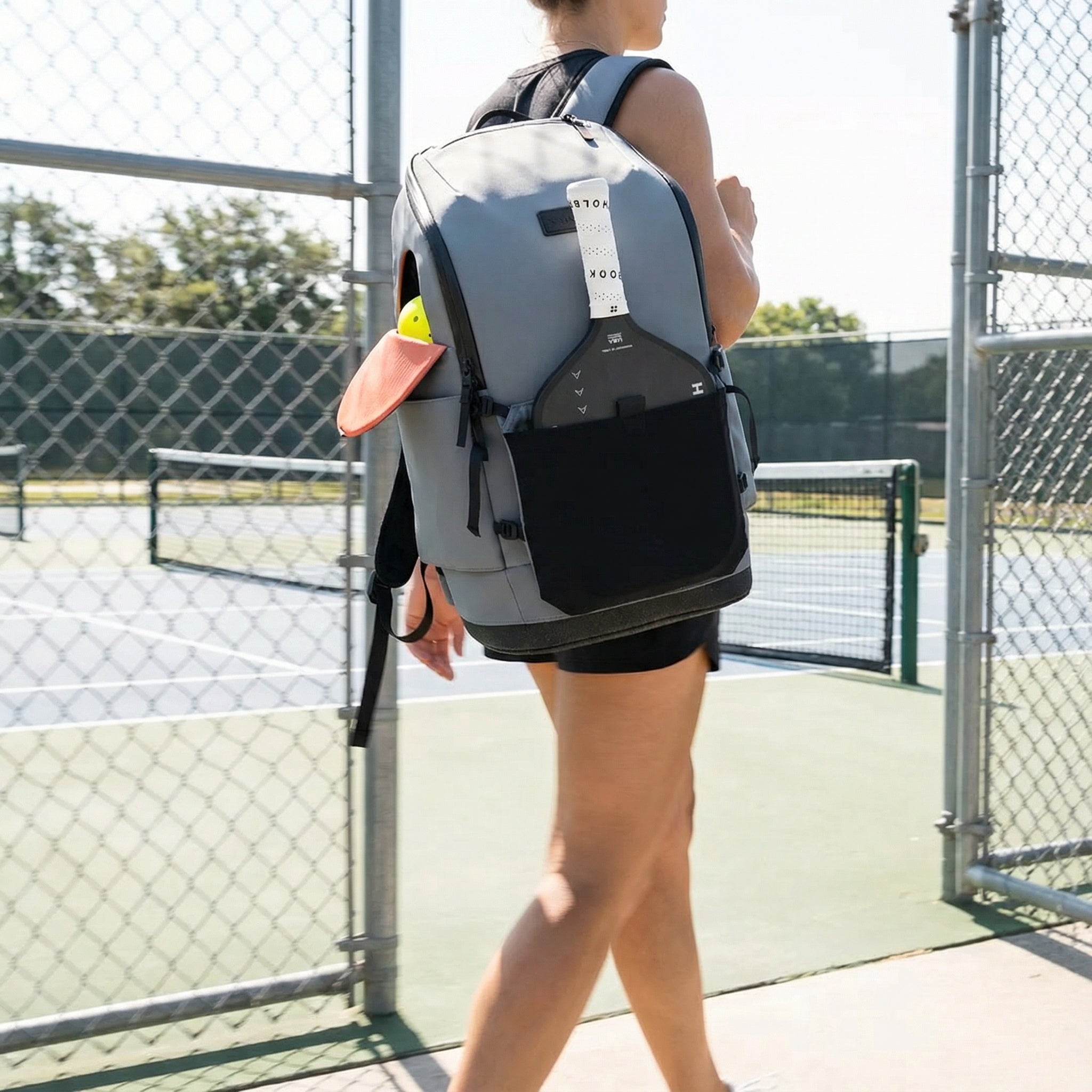
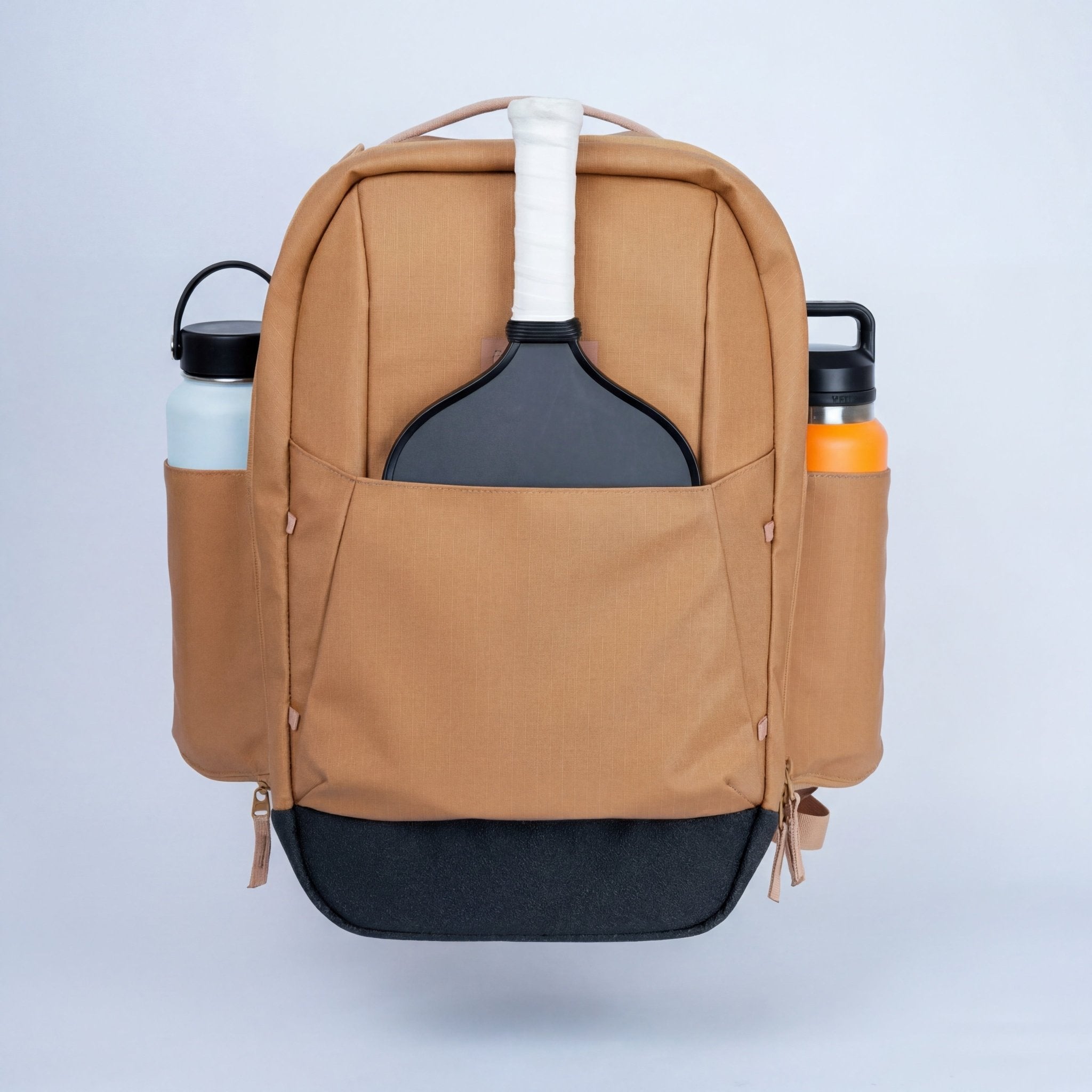
If you're running this framework in rated play, the Court Ranger V2 ($195) keeps your paddles organized and your gear accessible so you can focus on the game, not the setup. Modular paddle sleeve, 16" laptop sleeve, YKK AquaGuard zippers — designed with input from 500+ players who play 3+ times a week.
FAQ: Pickleball Return of Serve Questions
Where should you stand when returning serve in pickleball?
Stand 3–4 feet behind the baseline, not at the baseline. This gives you more time to react to hard flat serves, lets you step into wide serves rather than chase them, and gives your feet room to set before contact. Your partner should be positioned at the kitchen line from the start of the rally.
How do you hit a deep return in pickleball?
Aim for the back fence line rather than the service box. This natural overcorrection produces deeper returns than trying to place the ball precisely in a small target zone. Contact the ball in front of your body, use a full follow-through, and aim for the server's backhand side to reduce their options on the third shot.
Should you always return to the kitchen line after your return?
Yes — the kitchen line is where you want to be for almost every rally. The exception: if your return lands very short and the server is likely to drive it hard at your feet in transition, stop and split-step early rather than running through it. But even then, your goal is still the kitchen. You're managing the timing, not abandoning the destination.
What is the purpose of the return of serve in pickleball?
The return neutralizes the serving team's positional advantage. The server must let your return bounce before volleying (two-bounce rule), which means they're stuck at the baseline for one more shot. A deep return forces a harder third shot and buys time for you to reach the kitchen — converting the rally from a defensive chase into a 4-0 battle at the net.
How do you handle a spin serve on return?
Read the serve type before contact. Topspin: step in and take it early at the bounce peak. Sidespin/slice: shift your starting position 1–2 steps toward the direction of the break. Flat: position is standard, just prioritize depth over pace on the return. The adjustment is in your starting position before the ball is struck, not a last-second reaction after the bounce.
What return strategy works best against a hard server?
Use their pace — don't try to add your own. Block the ball back deep with a compact swing, absorbing the pace rather than driving through it. A hard server wants you flinching and going short. A compact block that lands deep in the court gives them a harder third shot than a big swing that goes into the net or lands short.

Leave a comment
This site is protected by hCaptcha and the hCaptcha Privacy Policy and Terms of Service apply.