

A banger's strategy is brutally simple: hit hard, hit fast, and wait for you to make an error under pressure. Most players lose to bangers not because they're outmatched — but because they play right into the banger's hands.
The short answer: stop them with resets and patience, not by hitting harder. A well-executed reset takes all the pace off a power shot and forces the banger to generate their own power from scratch — which most bangers can't do against a low, soft ball at their feet.
This guide breaks down the specific mechanics, court positioning, and the 3-shot pattern that neutralizes bangers at the 3.0–4.5 level.
Last updated: June 2026
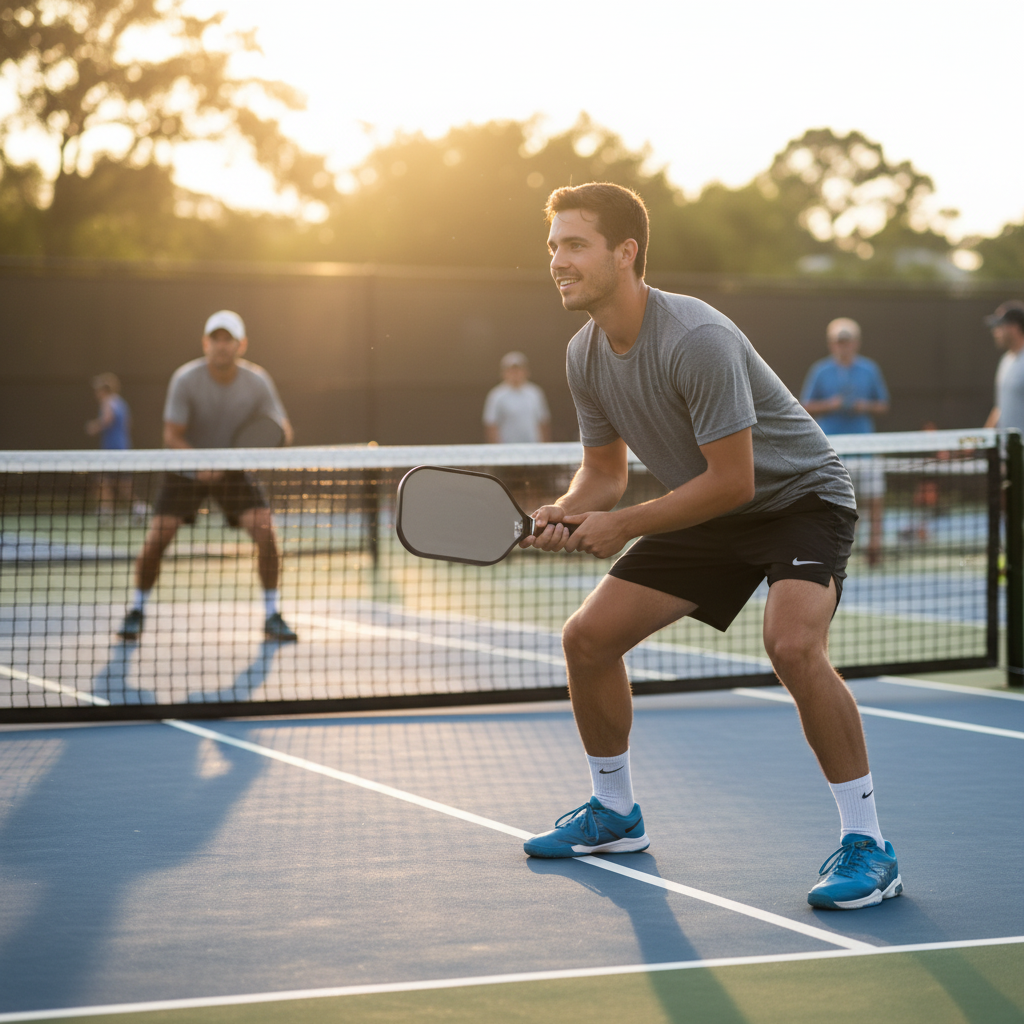
Table of Contents
- What Is a Banger (and Why They're Harder to Beat Than They Should Be)
- The Core Principle: Don't Trade Power for Power
- The Reset: How to Take Pace Off Without Losing Control
- Court Position Against Bangers (Where to Stand)
- The 3-Shot Pattern That Neutralizes Bangers
- When to Speed Up (and When Absolutely Not To)
- FAQ: How to Beat Bangers in Pickleball
What Is a Banger (and Why They're Harder to Beat Than They Should Be)
A banger is a player who drives the ball as hard as possible on almost every shot. They rely on pace, flat drives from the baseline or transition zone, and opponent errors — not on placement, spin, or kitchen-line construction. Many bangers are former tennis players who haven't retrained their instincts for pickleball's slower, softer game.
Here's why they're genuinely difficult, even for better players: bangers thrive on chaos. When you hit back hard, they get more pace to work with — they just redirect your energy. Every counter-drive you hit is the banger's favorite shot because you're doing the work for them.
And here's the uncomfortable truth — most recreational players lose to bangers because they try to out-bang the banger. That's a losing game 9 times out of 10.
The Core Principle: Don't Trade Power for Power
The moment you start counter-driving a banger — trying to hit it harder back — you've already lost the point mentally. You're on their terms, their game, their strength.
"The biggest mistake I see at 3.5 is players trying to out-speed a banger instead of resetting. The banger WANTS the firefight. The moment you take pace off and make them dink, their whole game falls apart — because they never practiced generating pace from scratch. They only know how to react to pace."
— Topher Carper, Co-Founder, FORWRD (4.5+ competitive record)
The counter-intuitive goal: absorb pace, redirect it softly, and force the banger to hit upward. Most bangers are devastating from mid-height or above. A ball at their shoelaces? They have no reliable answer.
The Reset: How to Take Pace Off Without Losing Control
The reset is the single most valuable skill against a banger. A successful reset takes a hard-driven ball and returns it as a soft, low shot that lands in the non-volley zone — unattackable and frustrating for the banger.
The mechanics of a reset:
- Soft hands. Don't tighten your grip to block a hard ball — that pops it up. Keep your grip pressure at a 3/10. The ball's pace does the work; you just redirect it.
- Paddle face slightly open (tilted back), absorbing the pace downward toward the kitchen.
- Contact point out in front, before the ball reaches your body. Resetting off your hip sends it long; resetting out front sends it low.
- Small, compact motion. You don't need a swing. The banger's pace is your power source — just soften and redirect.
The 3-ball reset drill: Start at the transition zone (behind the kitchen line). Have a partner feed 3 consecutive hard drives at your body, hip height. Your only job: return all 3 into the kitchen. No power, no counters. First player to land 5 consecutive resets in the kitchen wins. Run this drill for 15 minutes, 3x per week. Significant improvement in banger-match performance shows up within 4–6 weeks.

Court Position Against Bangers (Where to Stand)
Bangers are most effective when you're caught in no-man's land — stuck in the transition zone, unable to reach the kitchen and too close to block effectively. Your positioning discipline matters more against bangers than against any other player type.
Get to the kitchen line — and stay there. This sounds obvious, but the instinct against a banger is to back up. Resist it. Backing up gives the banger more angle and more time to wind up. At the kitchen line, their drive has less room to work and your reset window is cleaner.
If you can't get to the kitchen, the safest fallback position is the baseline — not no-man's land. From the baseline you have time to react, read the drive, and execute a third-shot drop to earn your way to the kitchen.
Target their backhand, then their feet. Most bangers have a weaker backhand drive. And almost every banger — regardless of handedness — struggles when the ball is aimed directly at their feet in the transition zone. They have to hit up, not through. That's your goal.
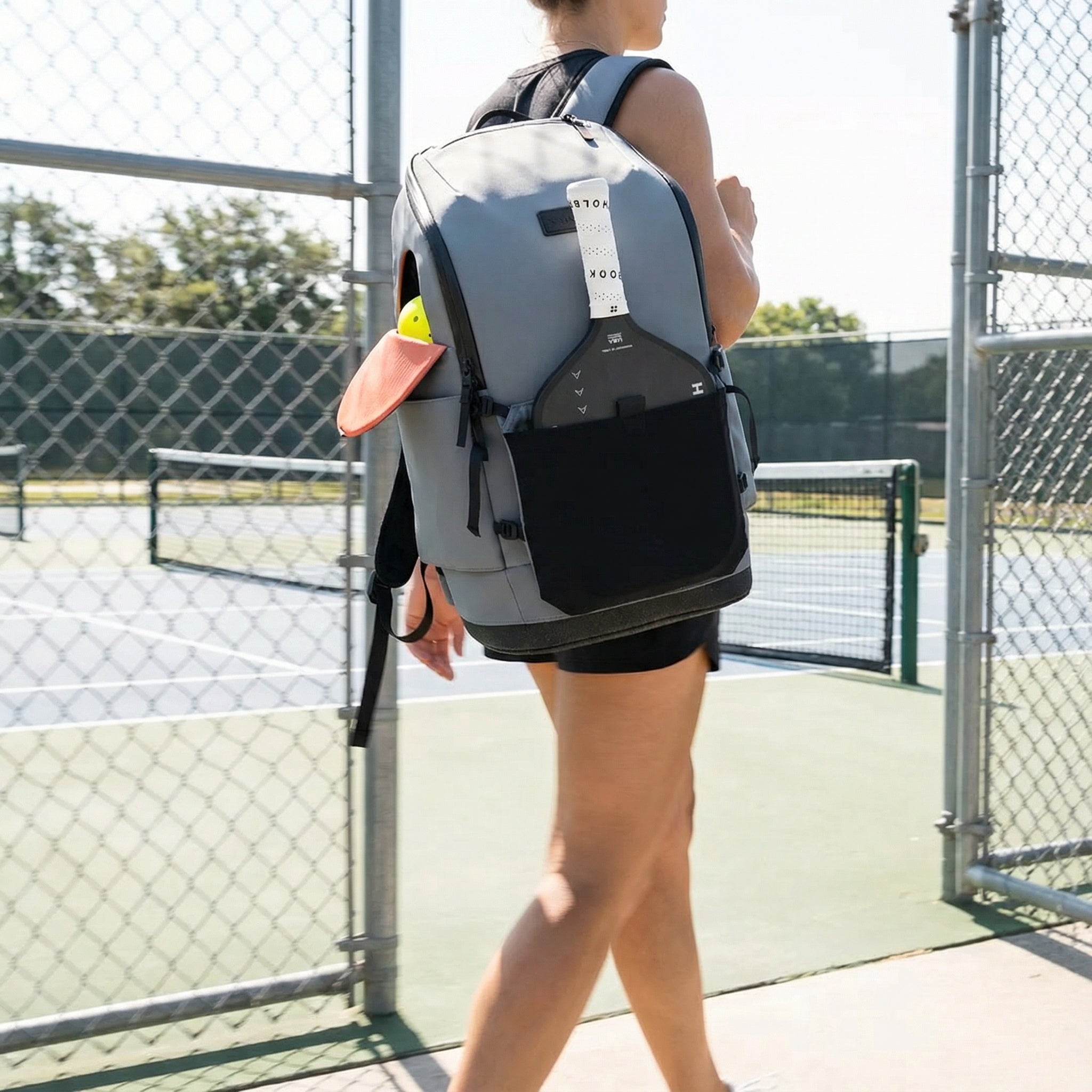
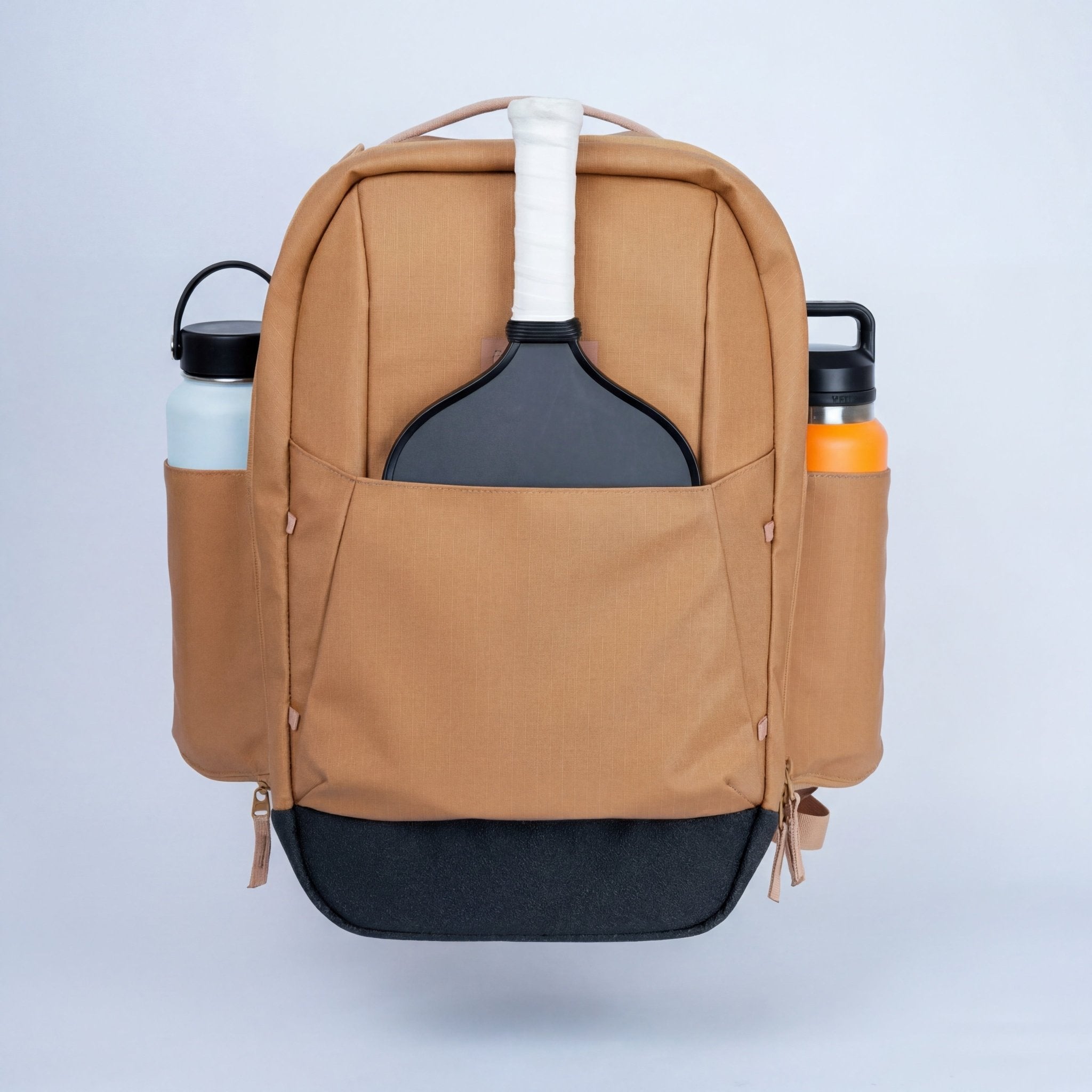
A quick note on equipment: players competing seriously at 3.5+ who face bangers regularly carry at least two paddles because hard exchanges can chip edges you don't notice until you're mid-point. The Court Caddy's modular sleeve fits 3–4 paddles with full face protection — so having a backup ready doesn't mean digging through your bag between matches.
The 3-Shot Pattern That Neutralizes Bangers
Here's the repeatable sequence that actually works. Run this pattern until the banger's pace drops or until they start trying to dink — at which point they're no longer a banger problem, they're in your game.
Shot 1 — The third-shot drop. From the baseline, drop the ball into the kitchen. Don't try to drive it past the banger (that's their favorite). Land it soft, unattackable, and start your approach to the kitchen. The banger will often try to drive this — that's fine, see Shot 2.
Shot 2 — The kitchen reset. The banger drives at you from midcourt. Soft hands, open face, redirect it low into the kitchen. This is where the drill you've been running pays off. You don't need to win this shot — you need to keep it low and drivable.
Shot 3 — The pressure point. After 1–2 resets, the banger has to move up toward the kitchen to find an angle. That's when you place the ball at their feet — a low push into the transition zone as they're still moving. This is the moment bangers hate. They can't wind up. They can't drive from their shoelaces. You've forced them to play your game.
Run this pattern consistently and most bangers break within 5–7 shots. The ones who don't are the ones who've actually developed a soft game — at which point they're not really bangers anymore, and they'll beat you anyway until you level up.
When to Speed Up (and When Absolutely Not To)
Most guides on beating bangers stop here: "slow it down, slow it down, slow it down." That's correct — but incomplete. There are specific moments when speeding up is the right call against a banger, and knowing them is what separates 3.5 from 4.0+ play.
Speed up when:
- The ball pops up above kitchen height. Any ball that sits up at net height or above — from a banger's mis-hit reset, a floated lob, or a pushed return — that's your ball to attack. Take it.
- You've reset the banger to their weaker side and they're off balance. A banger scrambling to their backhand, late to a wide ball, has no time to set up a drive. Speed up down the line before they recover.
- The banger has moved up to the kitchen and is standing flat-footed. Once the banger commits to the kitchen and stops driving, they're in a new game. An aggressive speedup at their shoulder or hip catches them flat-footed — they expected another soft ball.
Never speed up when:
- The ball is below the net — you'll hit it up, and the banger will punish the height.
- You're out of position (mid-court, back-pedaling). Speed it up from there and you're handing the point back.
- The banger is set up and ready on the forehand. That's exactly what they want — they'll hit your speedup harder than you hit it and catch you wrong-footed.
The rule of thumb: when you're defending (getting driven at), slow it down every time. When you're the one who has a quality ball sitting up, attack it. The mistake most players make is speeding up out of frustration — "I've reset 6 times and I'm still losing ground." That's the banger's game working. Stay patient.
Complete Your Setup
If you're drilling these patterns 3+ times a week on outdoor courts, your bag should be built for it. The Court Ranger V2 holds 2–3 paddles in a protected sleeve with a 16" laptop compartment for $195. For tournament players who carry 3–4 paddles and full gear, the Court Caddy ($325) has the modular sleeve that keeps faces separated on hard-use days.
FAQ: How to Beat Bangers in Pickleball
How do you beat a banger in pickleball?
Reset their drives with soft hands into the non-volley zone, forcing them to hit upward from their feet. Don't counter-drive — let them burn energy generating their own pace, then attack when they give you a ball that sits up above the net. Patience and court position beat power almost every time.
What is a banger in pickleball?
A banger is a player who hits hard, flat drives on almost every shot rather than using the soft, kitchen-based game that dominates higher-level play. Many are former tennis players. They win when opponents counter-drive; they lose when opponents reset patiently and force them into dink exchanges.
Should you speed up against a banger?
Sometimes — but only on your terms. Speed up when a ball sits above the net, when the banger is off-balance, or when you've moved them out of position. Never speed up out of frustration or when the ball is below net height. Speeding up a banger's pace just feeds them more ammunition.
How do you slow down a banger in pickleball?
Use soft, absorbing resets with an open paddle face and relaxed grip pressure. Contact the ball out in front of your body. The goal is to redirect the banger's pace into a low, soft ball that lands in the kitchen — not to generate your own pace against theirs.
What shot stops bangers in pickleball?
The reset into the non-volley zone is the single most effective shot against a banger. A well-executed reset forces them to hit upward from a low ball at their feet — most bangers have no reliable answer to this because they've built their game around reacting to pace, not generating it from scratch.

Leave a comment
This site is protected by hCaptcha and the hCaptcha Privacy Policy and Terms of Service apply.