

Disclosure: This post contains affiliate links to Pickleball Central. If you purchase through our links, FORWRD earns a small commission at no extra cost to you. We only link to products we'd recommend regardless.
The pickleball coaching market has exploded — group clinics, private lessons, PPA pro camps, AARP free sessions, multi-day retreats. Knowing which format is worth your time and money is harder than it should be, because most of the information online is either from directories trying to sell you a booking or from individual coaches promoting their own programs. This guide is neither. It covers what each format actually delivers, what 2026 clinics really cost, and what separates a coach worth hiring from one you should walk away from.
Last updated: June 2026
Group Clinic vs. Private Lesson vs. Multi-Day Camp: Which Format Is Right for You?
These three formats are fundamentally different experiences. Picking the wrong one wastes both your money and your court time.
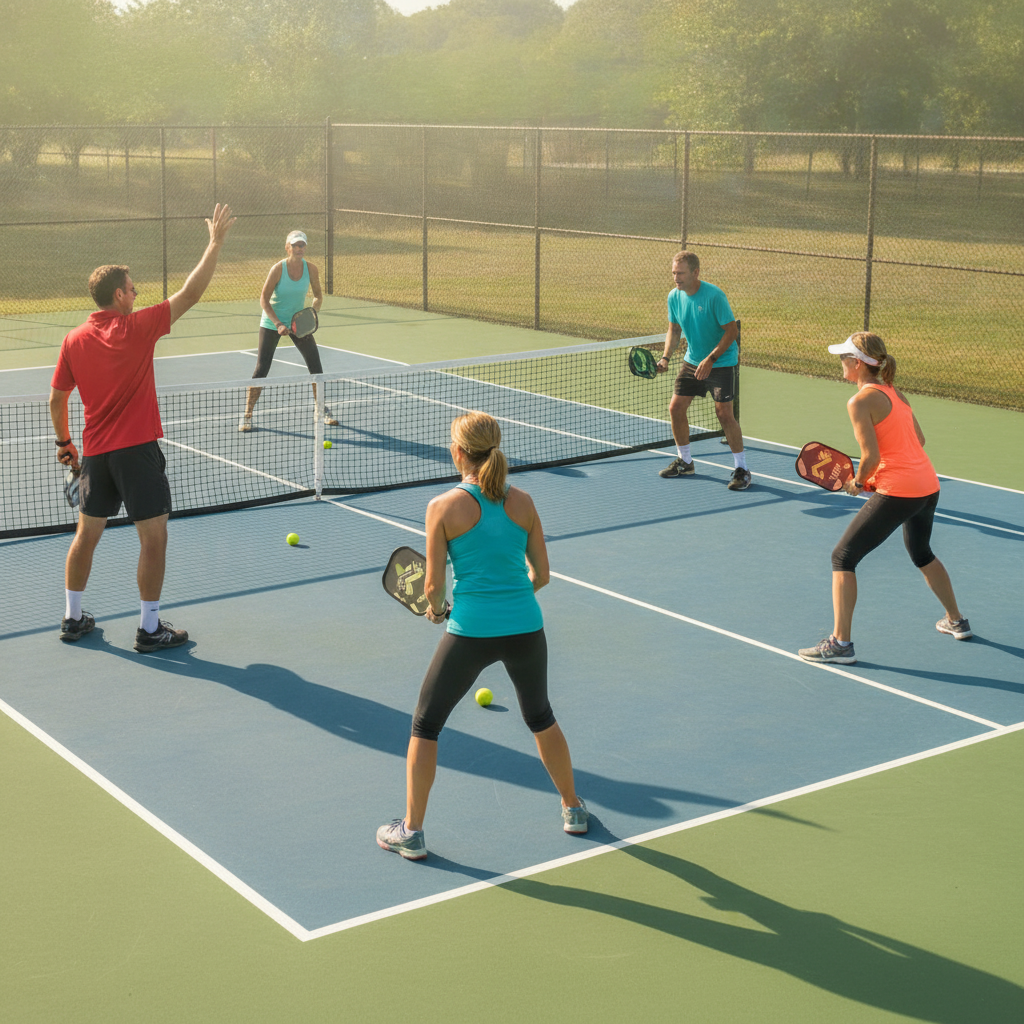
Group Clinics (6–12 players, 1–2 coaches)
The most accessible and most widely available format. A group clinic with 8 players and one coach — even a PPA-level pro — gives you roughly 4–5 minutes of actual individual attention per 2-hour session. That's not a knock on the format; it's just the math. What group clinics do deliver well: a structured drill framework, court time in a controlled environment, and the chance to see how other players at your level execute the same skills. At 3.0–3.5, group clinics work well because the fundamentals you're working on (third-shot drops, NVZ footwork, basic dink mechanics) are the same for everyone in the group.
Above 4.0, though, you start needing diagnosis — understanding your specific movement patterns, your tendency to drop the elbow on reset shots, your court positioning habit that's costing you points. Group clinics can't give you that. A group clinic coach running a 2-hour session for 8 players literally cannot diagnose individual problems while also keeping the drill structure moving.
Private Lessons (1 coach : 1–2 players)
The fastest format for skill-specific improvement. A good private lesson is almost entirely diagnostic: the coach watches you hit 15–20 shots, identifies what's breaking down, and designs the next 45 minutes around fixing it. One 90-minute private lesson with a good coach can move your game faster than 10 group clinic sessions — because the diagnosis is specific to you. The trade-off is cost (typically $80–$150/hour) and availability (good private coaches book out weeks in advance in busy markets).
At 4.0 and above, private lessons aren't a luxury — they're the only format that efficiently addresses the specific technical gaps holding you back.
Multi-Day Camps and Intensives
The most immersive option — and the one that produces the most durable improvement because of the repetition volume over consecutive days. A 2-day intensive with 6 hours of on-court time gives your body enough repetitions to genuinely start embedding new motor patterns. You'll spend days 1–2 rebuilding something (which feels worse before it feels better), then day 3 and beyond reaping the benefit. The PPA Tour camps run 6-hour on-court formats with PPA pro instruction starting around $370 for bronze packages. Better Pickleball's immersive camps run around $899 for a 2-day format. Neither is cheap — but if you can attend one per year and do consistent practice between, the ROI is real.
How Much Do Pickleball Clinics Cost in 2026?
| Format | Typical Cost | Individual Attention | Best For |
|---|---|---|---|
| Free/community clinic (AARP, parks dept.) | $0–$15 | Minimal (10–15 players, 1 coach) | True beginners, social play |
| Standard group clinic | $40–$90 per session | 4–6 min per player per hour | 2.5–3.5 skill level, fundamentals |
| Pro-led group clinic (PPA/APP affiliated) | $75–$150 per session | Similar to standard group, plus pro demo value | 3.0–4.0 players motivated by pro-level modeling |
| Private lesson (independent coach) | $80–$150/hour | Full hour, 100% individual | 3.5+ players ready for specific diagnosis |
| Multi-day intensive camp | $370–$999 per camp | More total hours, some 1-on-1 time | 3.5–5.0 players with time to commit |
The value math on private lessons surprises most players. At $100/hour for a 90-minute private lesson, you're paying $150 to potentially fix a single technical issue that's been costing you points for months. Compare that to attending a $75 group clinic 3 times and getting 12 total minutes of individual attention. The math favors private lessons for players above 3.5 almost every time.
How to Find a Pickleball Clinic Near You
Three reliable paths in 2026:
USA Pickleball certified coach directory: USA Pickleball maintains a certified coach database filterable by location and certification level (CPT and SSPT). The directory is dry and bureaucratic but the certification matters — it's the baseline credential check.
Pickleheads "Find a Pro": More user-friendly than USA Pickleball's directory, with ratings and booking infrastructure built in. Pickleheads has expanded significantly in 2025–26 and now covers most metro markets. Filter by format (group vs. private), location, and price range.
Local YMCA, rec center, and indoor pickleball facilities: Many facilities run their own clinics — often cheaper than independent coach rates and with more predictable scheduling. These don't always make it onto national directories. Call the facility directly.
AARP Pickleball Clinic Tour: Free clinics in cities nationwide with orientation, skill work, and gameplay. Not deep coaching — but a no-risk way to try structured play if you're new to the sport.
What to Look for in a Pickleball Coach (and What to Avoid)
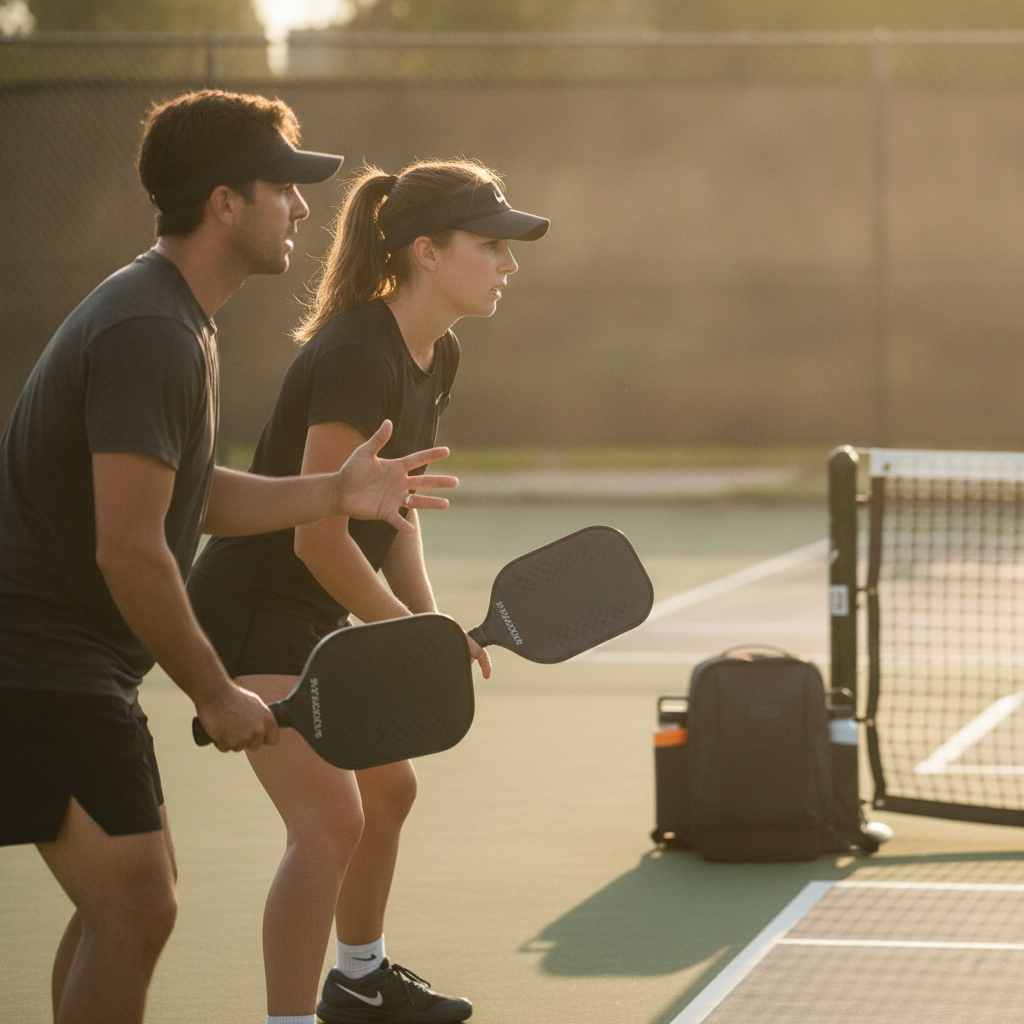
The credential matters less than most players think. A USA Pickleball certification is a baseline, not a quality guarantee. What actually matters:
They adjust to you. A good coach watches you hit 5–10 shots and then modifies the drill structure based on what they see. A bad coach runs the same drill for 90 minutes regardless of what the group is doing or not doing.
They explain the "why." "Keep your paddle up" is instruction. "Your paddle is dropping between shots because your elbow is flaring out — fix the elbow, the paddle follows" is coaching. One of those builds understanding that transfers to other shots. The other requires constant reminding.
They're honest about what takes time. Any coach who guarantees DUPR improvement in a specific timeframe — or who tells you you'll be playing "at the next level" after two sessions — is telling you what you want to hear. Real coaching honesty means "this is going to feel worse before it feels better, because we're breaking a habit."
"At 3.0 to 3.5, any competent group clinic will move your game — the fundamentals are universal. But once you're consistently at 4.0, what holds you back is specific to you. I spent two years taking group clinics at 4.0 and kept running into the same ceiling. One private coach session identified a forehand contact point issue I'd built into my swing. Four weeks of focused drilling on that single thing pushed me past where I'd been stuck for years." — Topher, co-founder of FORWRD
Red Flags When Booking a Pickleball Clinic
No competitor article is honest enough to say this, so we will:
- No skill-level separation. A clinic that mixes 2.5 beginners with 4.0+ players isn't actually serving either group. Beginners can't keep up with the drills; advanced players are bored. If the listing says "all levels welcome" for a focused drill clinic, that's a quality signal worth noting.
- Guaranteed DUPR improvement. Nobody can promise this. DUPR is based on match results against opponents — a clinic can improve your skills but can't guarantee how those translate to specific rating changes.
- No drill progression described. A quality clinic should be able to tell you the session structure in advance. "We'll work on kitchen control, then transition zone footwork, then competitive point play" is a plan. "We'll work on improving your game" is not.
- Primarily social, secondarily instructional. Some "clinics" are really organized social play with a coach present. Fine if that's what you want — but if you're paying $75 for instruction, verify what percentage of the session is drilling vs. match play.
What to Expect at Your First Clinic: A Session-by-Session Breakdown
For a standard 2-hour group clinic, here's what typically happens:
First 15 minutes: Warm-up dinking from the kitchen, cross-court. The coach is watching everyone move and identifying who's doing what wrong. Don't try to impress anyone here — the coach is logging your mechanics, and your warm-up form is data.
Minutes 15–45: First drill block. A skill-focused drill that the coach will demo first, then have the group execute. You'll get coach feedback in rotation — budget for 1–2 corrective comments during this block if there are 8+ players.
Minutes 45–75: Second drill block, building on the first. Typically progresses from isolated drill to a more game-like sequence. This is where you'll be most challenged.
Minutes 75–95: Competitive practice points. Most clinics end with competitive play using the skills from the session. The coach is less hands-on here — you're applying, not drilling.
Final 15 minutes: Debrief or Q&A. Ask about what to work on before the next session. A good coach gives you a specific drill to do independently before you return.
Don't skip the pre-clinic warm-up. Clinics are high-intensity — a cold shoulder on third-shot drops is how injuries happen. Get to the facility 15 minutes early and do your own warm-up before the formal session starts.
What to Bring to a Pickleball Clinic (Gear Checklist)
Most clinics run 3–4 hours with multiple drill stations and rotation patterns. Here's what you actually need:
- 2 paddles minimum. String breaks and grip failures are real. Many clinics actually recommend having a backup with a different grip size to test during the session.
- Extra balls. Some clinics supply balls; others expect you to bring your own. Check the listing. Franklin X-40 balls are standard at USA Pickleball events and widely accepted.
- Overgrips. Clinics are intense — your grip will sweat through faster than in casual play. Keep a few overgrips in your bag to replace between drill blocks if needed.
- Court shoes. Almost every facility requires court shoes — running shoes on a pickleball court are both a performance problem and a potential rules violation. Court-specific pickleball shoes provide the lateral support the sport demands.
- Water + nutrition. A 4-hour camp burns more than you expect. Bring 2 water bottles and a snack if the session runs past 2 hours.
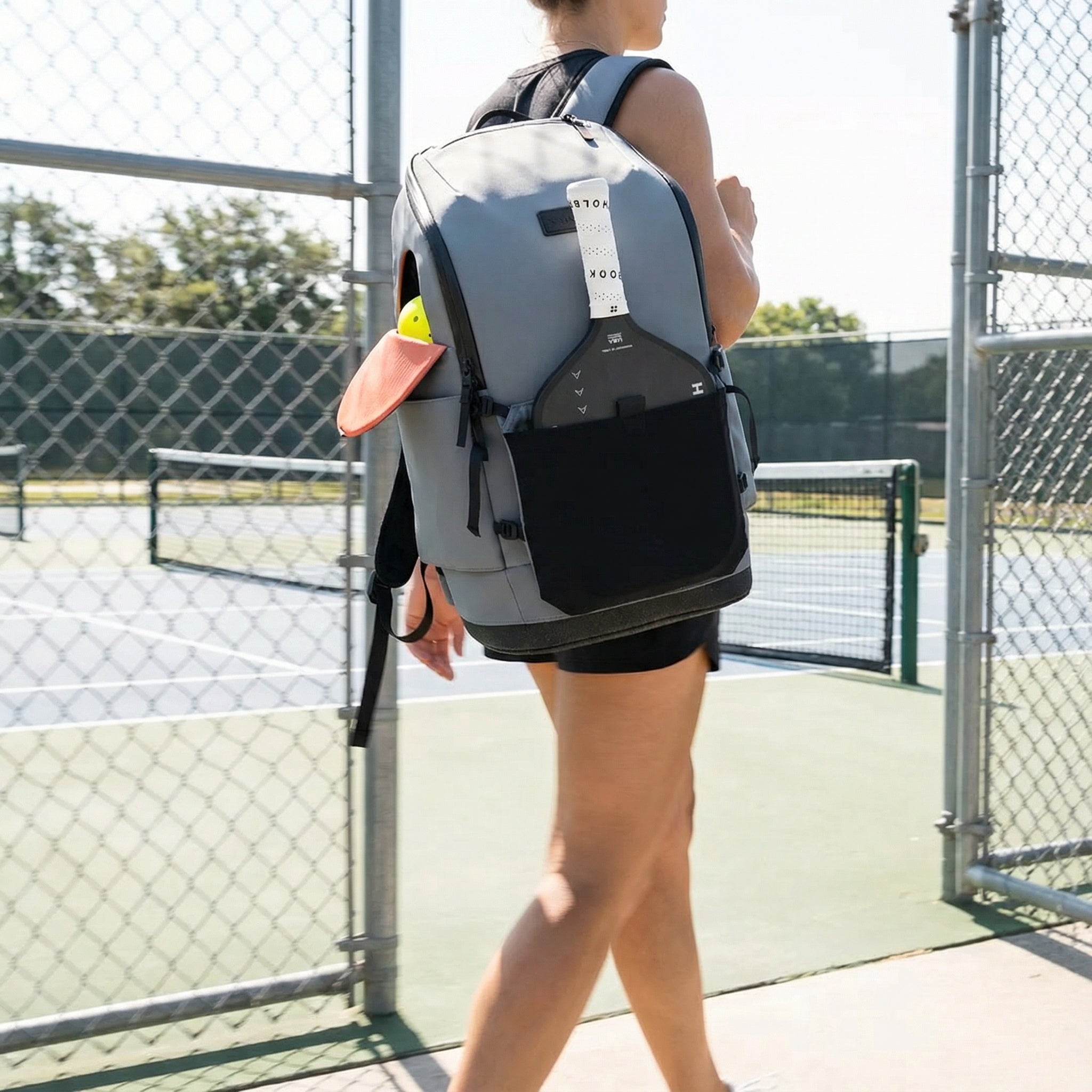
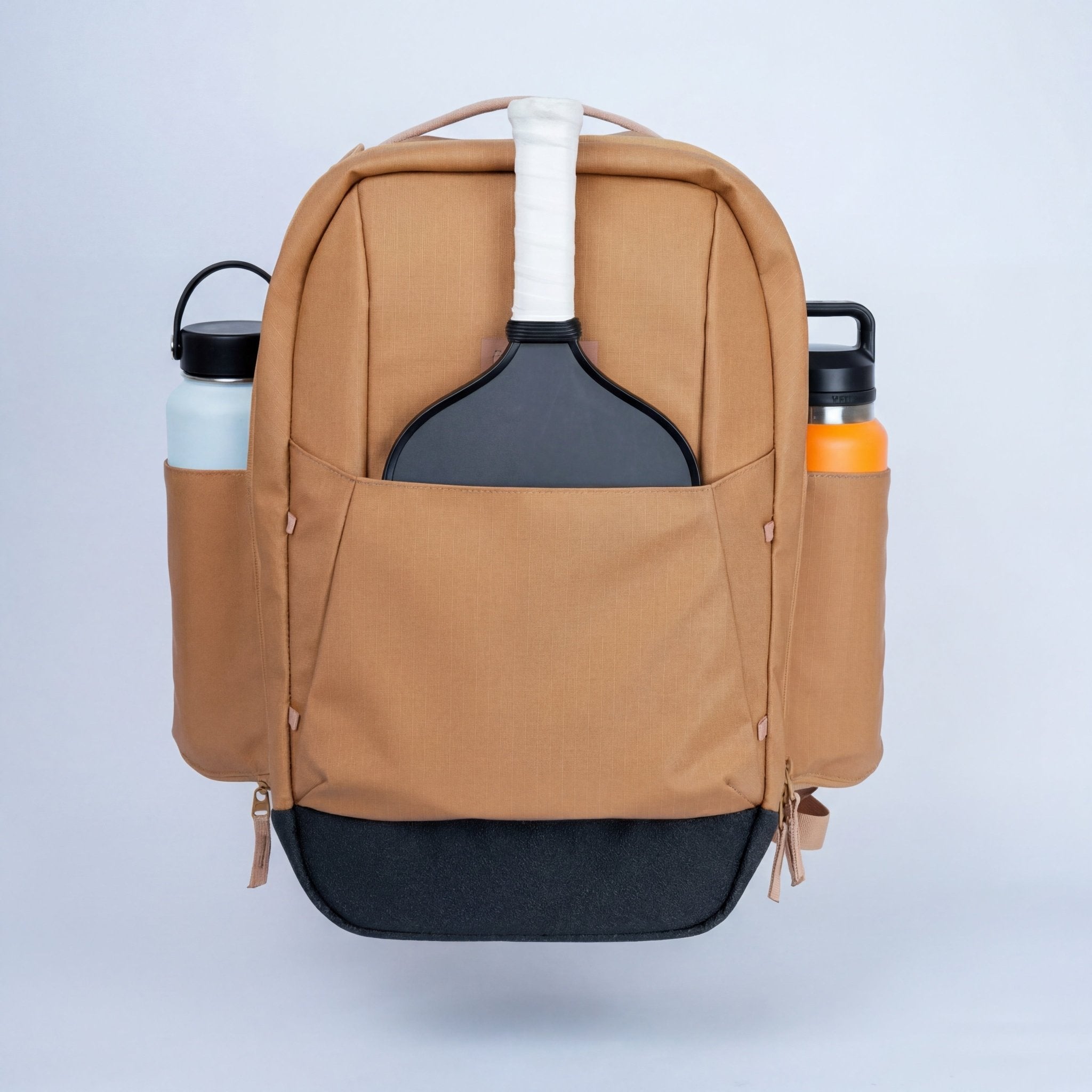
For all-day clinic events — especially if you're rotating through multiple drill stations or staying for open play afterward — the Court Caddy's fence hooks keep your bag off the court surface during drills, and the 4-paddle modular sleeve makes sense when you're testing grip weights or need an easy backup. That's not a luxury at a 4-hour clinic — it's practical. The Court Ranger V2 at $195 works well for shorter, single-session clinics where you're carrying less.

FORWRD Court Caddy Backpack → Built for all-day court sessions — fence hooks, 4-paddle capacity, 15" laptop sleeve.
FAQ: Pickleball Clinic Questions
How much does a pickleball clinic cost?
Group clinics typically run $40–$90 per 2-hour session. Pro-led clinics (PPA or APP affiliated) run $75–$150. Private lessons range from $80–$150/hour. Multi-day camps cost $370–$999. Free community clinics through AARP and local recreation departments are available in many cities at no cost.
What is the difference between a pickleball clinic and private lessons?
A group clinic has 6–12 players working through a structured drill curriculum with shared coaching time. A private lesson is 1-on-1 (or 1-on-2) with a coach whose full attention is on your specific mechanics. Group clinics work well for fundamentals (3.5 and below); private lessons are more efficient for players above 3.5 with specific technical gaps to address.
How do I find a pickleball coach near me?
Search USA Pickleball's certified coach directory at usapickleball.org, Pickleheads' "Find a Pro" feature, or contact local rec centers and indoor pickleball facilities directly. For DUPR-focused improvement, find a coach who works with competitive recreational players — see our DUPR rating guide for how coaching affects your rating trajectory.
Are pickleball clinics worth it?
Depends on the format and your skill level. For beginners through 3.5: group clinics are absolutely worth it for structured skill development. For 4.0+ players: private lessons have a better ROI for targeted improvement. Multi-day camps are worth it once a year for players who can commit the time — the repetition volume is what makes the improvement stick.
What skill level should I be before taking a pickleball clinic?
No minimum level required — most group clinics have beginner sections. That said, the experience is better if you understand basic rules and scoring before attending. Free AARP clinics and parks department intro clinics are the right entry point for true beginners. Once you can sustain a dink rally and understand the kitchen rules, you're ready for a structured group clinic.
How long does it take to improve with pickleball lessons?
Most players notice real improvement within 4–6 weeks of consistent lesson-plus-practice work. "Consistent" means attending a clinic or lesson weekly AND practicing the drilled skills independently between sessions. Lessons without practice between sessions improve you more slowly — the session identifies the issue, but practice between sessions is what hardwires the fix.

Leave a comment
This site is protected by hCaptcha and the hCaptcha Privacy Policy and Terms of Service apply.