

Most pickleball bag packing advice is useless. Not because it's wrong — but because it's abstract. "Keep your paddles accessible." "Use separate compartments." Great, thanks. But which compartment? In what order? What actually gets lost at the bottom of the bag after three sessions?
Here's how to actually organize your pickleball bag: build your packing system around your bag's specific architecture, not a generic list. Every compartment has a job. When you assign gear to the right spot — and stick to it — you stop digging.
Last updated: June 2026
Disclosure: This post contains affiliate links to Pickleball Central. If you purchase through our links, FORWRD earns a small commission at no extra cost to you. We only link to products we'd recommend regardless.
Table of Contents
- Start With Your Bag's Architecture (Not a Generic Packing List)
- The Paddle Compartment: How to Store Paddles Without Scratching Them
- What to Always Have in Your Bag (The Non-Negotiables)
- The Tournament Day Upgrade: What to Add When Stakes Are Higher
- How to Reset and Organize Your Bag Weekly
- FAQ: Pickleball Bag Organization Questions
Start With Your Bag's Architecture (Not a Generic Packing List)
Here's why every generic "packing list" article fails you: they treat your bag as a neutral container. It's not. Your bag has a specific internal architecture — where the paddles live, where the water bottle slot sits, how the shoe compartment is positioned. Work against that architecture and you'll fight your bag every session. Work with it and packing takes 90 seconds.
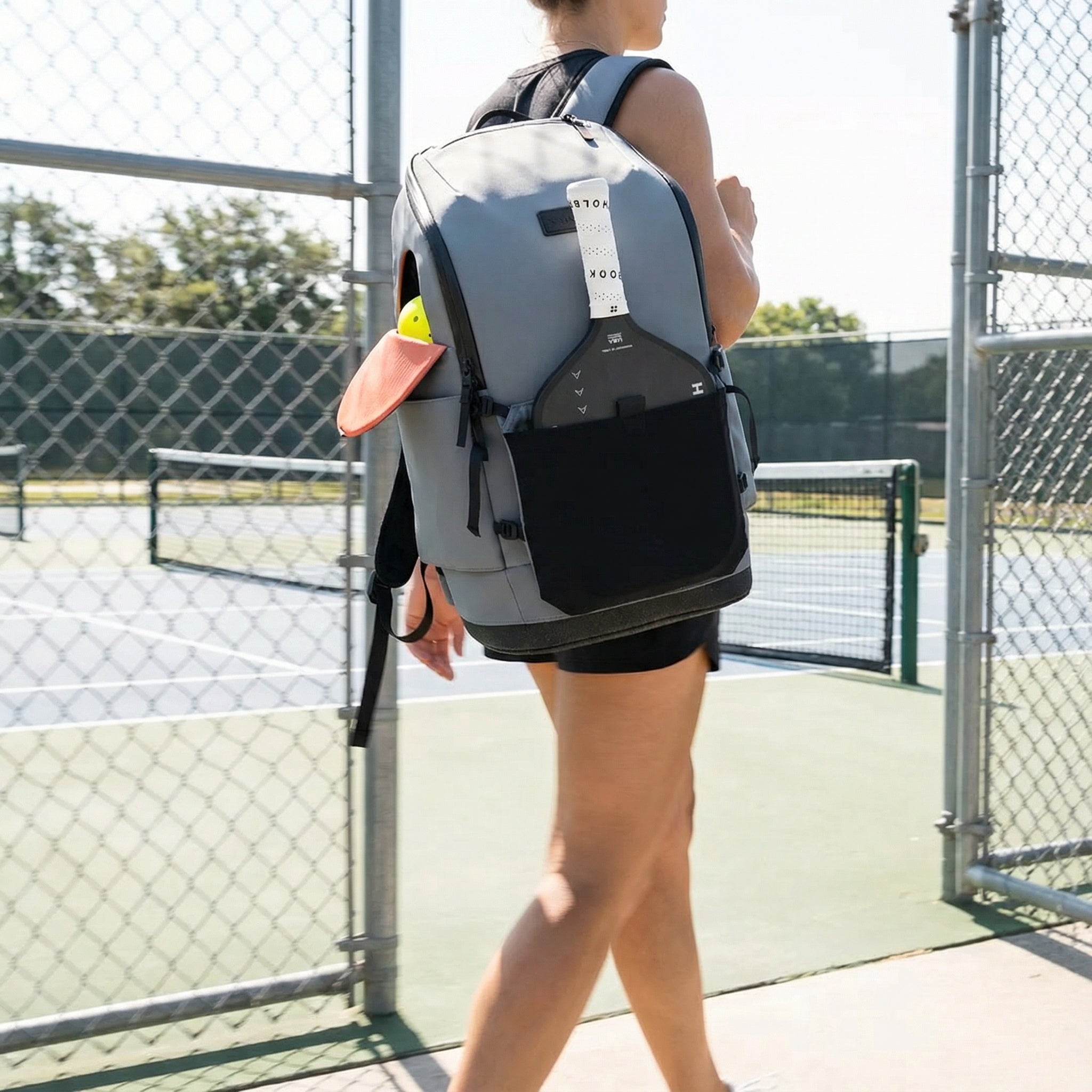
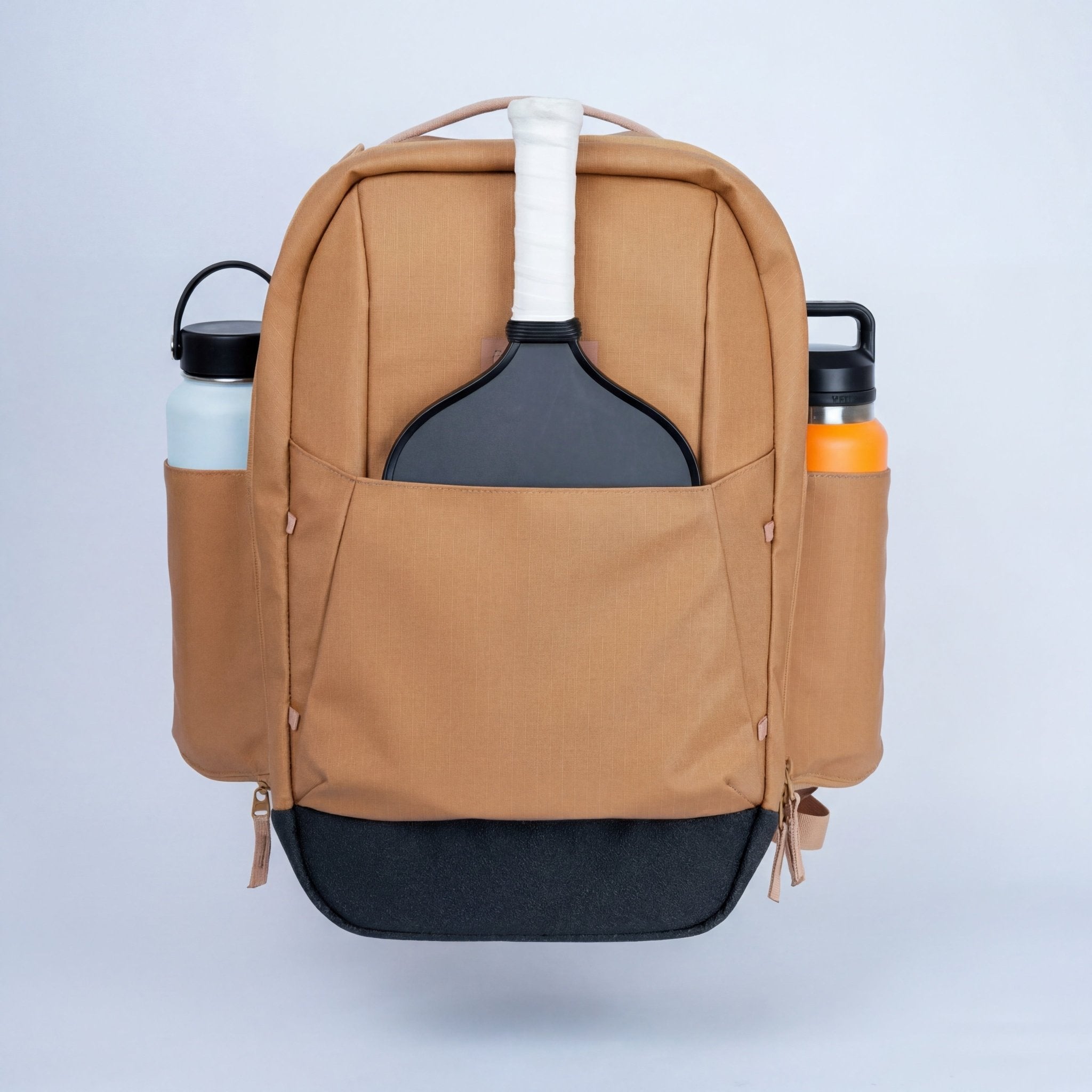
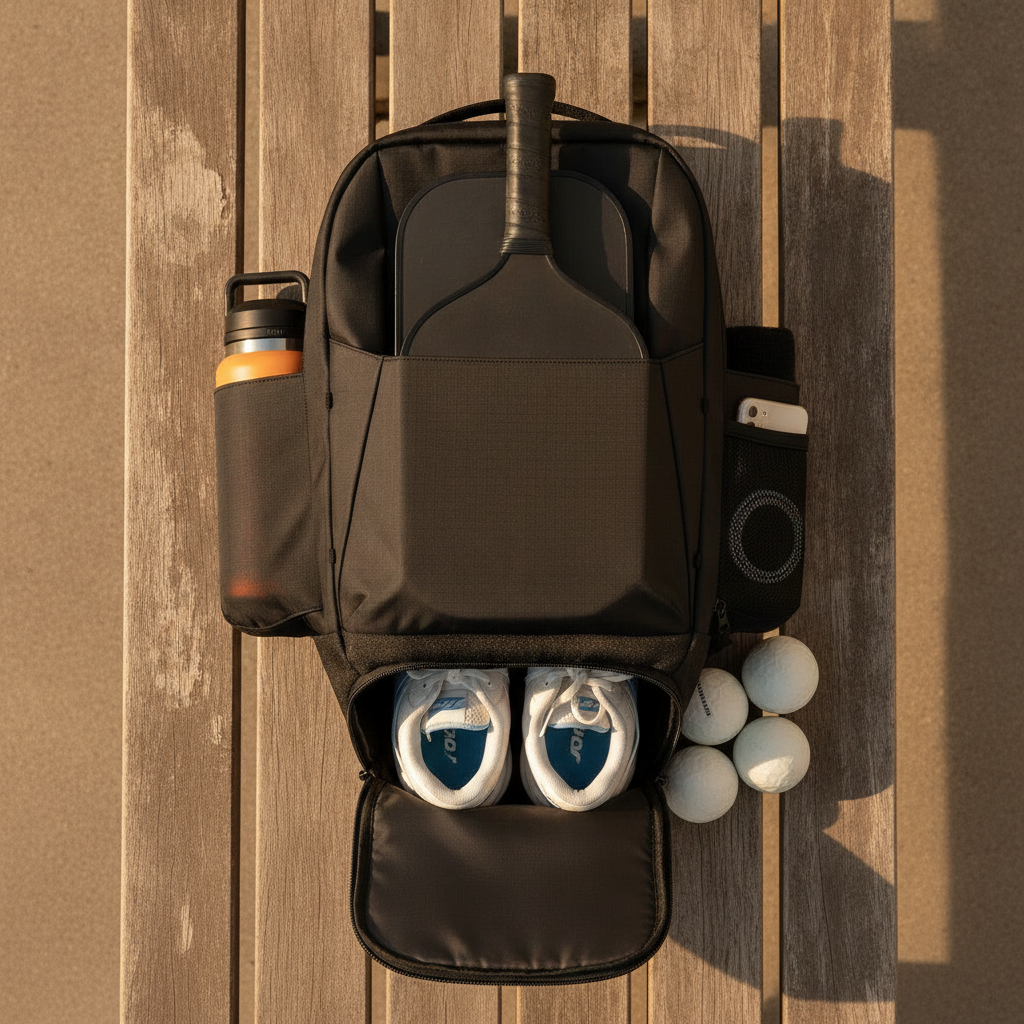
The Court Caddy Backpack is organized around a specific principle: gear you grab frequently is on the outside, gear you set once and forget is on the inside. Front-facing paddle sleeve for your game-day paddles. Main compartment for clothing, snacks, and tech. Bottom shoe pocket for post-session shoes. Side water bottle slot at grab height, not dig height.
"We iterated on the water bottle slot placement three times before we got it right. The original was 3 inches lower — players had to dig when the bag was packed full. We moved it up after consistent feedback from 200+ players who said reaching blind between rallies was breaking their flow. The current position lines up with the top of a 32oz bottle and you can grab it one-handed without looking down."
— Topher Carper, Co-Founder, FORWRD
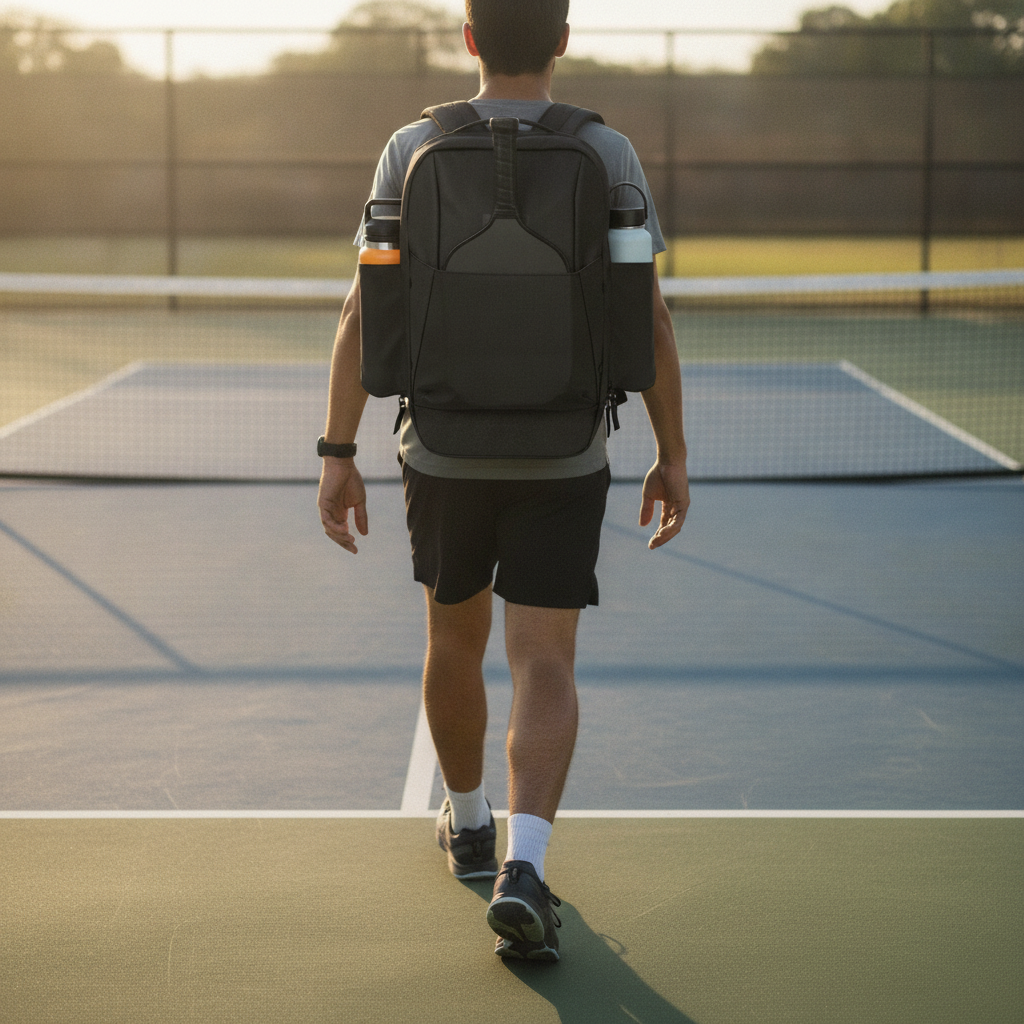
Before you pack anything, understand the zones of your specific bag. The system below is built around the Court Caddy — but the principle applies to any quality pickleball backpack.
The Paddle Compartment: How to Store Paddles Without Scratching Them
Your paddles are the most expensive thing in the bag. Store them wrong and you're grinding edge guards against each other every time you set the bag down.
The Court Caddy's modular paddle sleeve fits 3–4 paddles depending on grip size. We've tested this: a JOOLA Perseus 2 at 4.25" grip + two Selkirk LUXX paddles at 4.25" grip fit cleanly with the sleeve fully loaded, with no handle-to-face contact. The modular design keeps paddles separated — not just stacked. That's the difference between scuffed faces after 6 months and paddles that still look new after two years.
A few paddle storage rules that actually matter:
- Never store a paddle face-to-face without a cover. Carbon fiber faces scratch against each other. If you're carrying two uncovered paddles, orient them face-to-back or use the sleeve dividers.
- Grip up, head down protects the face in transit but puts handle pressure on the bag base. The Caddy's sleeve is oriented so paddles sit head-down with handles accessible at the top — easy to draw, nothing gets crushed.
- Two paddles minimum at outdoor courts. Edge hits on outdoor concrete can chip a face you didn't see coming. Having a backup isn't paranoid — it's practical at 3.5+.

What to Always Have in Your Bag (The Non-Negotiables)
These are the items that should never leave your bag. Not "pack when you remember to" — always in, refilled after every session:
Paddles + spare ball. Obvious, but the spare ball is the one people forget until they're on court 4 waiting for someone to walk back to their bag.
Grip tape + overgrip. A grip that's slipping mid-session is both annoying and a legitimate safety issue. Keep a full roll in the front pocket. Overgrip tape compresses down to almost nothing — there's no reason not to have a backup.
Sunscreen (spray, not lotion). Spray applies over sweaty skin. Lotion doesn't. Outdoor court players know this by the second session of getting burned — spray is the answer.
Electrolyte packets. A water bottle is obvious. Electrolytes are the thing players add to their bag after the first time they cramp up 90 minutes into a 3-hour outdoor session.
Small first aid kit. Two or three bandages, an ibuprofen packet, and a blister pad. Fits in a Ziploc bag and takes up less than a tennis ball's worth of space.
Court shoes (separate pocket). If your bag has a dedicated shoe compartment — and any serious pickleball bag should — your court shoes live there. Not in the main compartment, not dangling off the outside. The Court Caddy's shoe pocket keeps them isolated from clothing and equipment. More importantly, when you pull them out, the sole faces down — you're not dusting off the inside of your bag every session.
The Court Ranger V2 ($195) is the right bag for players who play 2–3 times a week with a simpler loadout: paddles, shoes, a water bottle, and a 16" laptop sleeve for the commute-to-court double. Everything above fits in the V2 without overpacking.
The Tournament Day Upgrade: What to Add When Stakes Are Higher
Tournament day is when bag organization actually matters. You're at a strange venue, courts are split across two facilities, you've got a 9 AM match followed by a 2 PM match — and you need to function in between without running to your car three times.
Here's what gets added on tournament day beyond the baseline:
Third or fourth paddle. The Court Caddy's sleeve holds 3–4 paddles. On a standard rec session, most players carry 2. Tournament players carry 3 — their game paddle, a backup of the same model (or close to it), and a third if they're playing with borrowed partners or have a specific outdoor/indoor preference. The sleeve can handle it.
Protein/snack pack. Energy bars, a banana, trail mix. Tournament schedules shift constantly — pack like you won't have access to food for 5 hours, because sometimes you won't.
Change of clothes. Not just a backup shirt. A full change: shorts, socks, a dry base layer. Three 45-minute matches in 85°F heat will soak through everything you're wearing.
Tablet or small notebook. For tracking your partner's serving rotation, noting which opponents struggled with the soft game, or just keeping your head organized between rounds. Some players use the Court Caddy's 15" laptop sleeve for a tablet on tournament days so their laptop stays home.
Cash for court fees / tip if applicable. Some venues charge day-of entry even for registered events. $20 in the front pocket of your bag means you never scramble.

How to Reset and Organize Your Bag Weekly
Organization isn't a one-time setup. It's a 5-minute weekly ritual that keeps things from degrading into chaos.
Once a week — Sunday evening is when most serious rec players do it — dump the entire bag, wipe the inside with a damp cloth, and repack from scratch. The process takes 4–6 minutes if your system is solid:
- Dump everything out. Check every pocket, including the small front accessory pocket where grip tape lives. Pull the trash (empty wrappers, dead overgrip, random receipts).
- Wipe the interior. A damp cloth picks up court dust and chalk that settles in the base of the bag after outdoor sessions. For the shoe pocket, a quick spray of disinfectant prevents odor buildup. The Court Caddy's 840D ballistic nylon interior wipes clean in under a minute.
- Restock consumables. Top off electrolyte packets, replace used sunscreen, add a fresh overgrip if needed. If your small first aid kit got used, restock it now instead of at 7:45 AM before a match.
- Reload paddles. If you've taken paddles out for home practice, put them back in the sleeve now. Forgetting your game paddle is the worst possible way to start a session.
- Check shoe compartment. If you wore your court shoes home (don't — they're for court surfaces only), wipe the soles before putting them back in the dedicated pocket.
Players who do the weekly reset before a session start focused. Players who pack in the parking lot dig, panic, and play distracted for the first 20 minutes.
FAQ: Pickleball Bag Organization Questions
How do you organize a pickleball bag?
Organize by frequency of use: paddles in the dedicated sleeve (fastest access), water bottle in the side slot, shoes in the bottom compartment, consumables (grip tape, sunscreen, snacks) in the front accessory pockets. Your bag's architecture should dictate the system — work with the compartments, not around them.
What should you always keep in a pickleball bag?
At minimum: paddles, spare ball, overgrip tape, sunscreen, electrolyte packets, basic first aid (2-3 bandages + ibuprofen), and court shoes in a separate compartment. These are the items that should never leave your bag between sessions — refill as consumed.
How many paddles should you bring to pickleball?
Two paddles minimum for casual sessions — your game paddle and a backup. Tournament players should carry 3: your primary, a same-model backup, and a third for partner lending or surface changes. The Court Caddy's modular sleeve accommodates 3–4 paddles without contact between faces.
What is the best way to pack a pickleball bag for a tournament?
Add a third paddle, a full change of clothes, a protein-heavy snack pack, and enough cash for incidentals. Use a bag with a laptop or tablet sleeve for score tracking, and keep your shoes in a dedicated pocket so they're not cross-contaminating clothing. Pack the night before, not morning-of.
How do you keep a pickleball bag clean and organized?
A 5-minute weekly reset: dump the bag, wipe the interior with a damp cloth, spray the shoe compartment with disinfectant, restock consumables, and reload paddles. The reset prevents gradual accumulation of court dust, dead wrappers, and forgotten items that quietly take over the main compartment.

Leave a comment
This site is protected by hCaptcha and the hCaptcha Privacy Policy and Terms of Service apply.