

Affiliate Disclosure: FORWRD earns a commission on purchases made through our affiliate links at no extra cost to you. We evaluated this product based on published specs, user community feedback, and our team's court testing. Our opinions are our own.
Last Updated: June 2026
If you play mostly outdoors and you're tired of squinting through the wrong lens tint or stopping to swap glasses between sunny and overcast sessions, The Vue Photochrome 2.0 from Vantage Labs solves that specific problem well. The photochromic lenses genuinely work — they darken in UV and clear up in shade. But "well" comes with a caveat: the transition takes around 45 seconds, which is slower than most players expect when they first hear "self-adjusting lenses." Here's the honest breakdown of whether that trade-off is worth $169.
Quick Verdict
| Best for | Outdoor rec players who play in varying light conditions and don't want to manage multiple lens swaps |
| Not ideal for | Competitive players who move between indoor and outdoor courts frequently; players sensitive to transition delay |
| Price | $169 at Pickleball Central |
| Pros | ✓ True photochromic — darkens in UV, clears in shade ✓ HD+ contrast enhancement sharpens ball tracking ✓ TR90 Swiss Nylon frame — lightweight and flexible ✓ ANSI Z87+ impact rated, 100% UV400 ✓ Adjustable nose pads and temple tips for secure fit |
| Cons | ✗ ~45-second activation, ~2 minutes to clear fully — not instant ✗ Premium price vs. capable fixed-tint alternatives at half the cost ✗ Photochromic performance slows in cold weather ✗ No swappable lens system (unlike CRBN Pivot) |
Check Price at Pickleball Central →
Specs at a Glance
| Spec | Detail |
|---|---|
| Lens Type | Photochromic Radium HD+ (self-adjusting) |
| VLT Range | 14–87% (full sun to shade) |
| Lens Category | 0–3 |
| Transition Speed (activation) | ~45 seconds (clear → dark) |
| Transition Speed (deactivation) | ~50 sec to 50% clarity; ~2 min to 80% |
| Frame Material | TR90 Swiss Nylon |
| Impact Rating | ANSI Z87+, military ballistics tested at 80+ MPH |
| UV Protection | 100% UV400 (UVA + UVB) |
| Price | $169 |
Why Trust This Review
FORWRD doesn't make eyewear — which means we have no product to sell you here. That makes this review more honest than one from a brand with glasses in their own line-up. We've tested and reviewed most of the major pickleball eyewear options available in 2026: the JOOLA RJX Lite, the CRBN Pivot with swappable lenses, and the Gearbox Vision budget option. We know the pickleball glasses category well. Our goal with every review: tell you what a brand's product page won't.
With the Vue Photochrome 2.0, the thing the product page won't tell you is the transition speed numbers — specifically how that 45-second activation plays out during actual court time. That's what we're going to focus on here.
What Photochromic Lenses Actually Do (And How Fast They Do It)
Photochromic lenses contain molecules that change structure when exposed to UV radiation, causing the lens to darken. When UV drops — shade, indoors, clouds — those molecules reverse and the lens lightens. Vantage Labs calls their version Photochromic Radium HD+ technology, and the mechanism is the same as other photochromic lenses on the market, just combined with their HD+ contrast enhancement chemistry.
The VLT (visible light transmission) range on The Vue Photochrome 2.0 is 14–87%. That's a wide swing — 87% VLT is essentially a clear lens, fully transparent in overcast or low-light conditions. At 14%, you're in Category 3 territory: proper full-sun sunglass darkness. Most dedicated pickleball sunglasses sit at a fixed 18–25% VLT. The photochromic version covers both ends of that range and everything in between.
Here's the part most reviews skip: transition speed depends on temperature. In warm weather (75°F+), the photochromic molecules move faster — activation to full dark happens in roughly 45 seconds, and the lens clears back to ~50% brightness in about 50 seconds after moving to shade. Full clear takes closer to 2 minutes. In cold conditions (below 50°F), both processes slow meaningfully. If you play winter outdoor courts, you'll notice the lens stays darker longer after walking into a covered area.
What this means practically: The Vue Photochrome 2.0 works well when you stay in one lighting environment for an extended stretch. You walk out to a sunny court, the lenses darken within a minute, and they stay appropriately dark for your entire session. That's the ideal use case. Where it gets awkward is when you're moving between shade and sun rapidly — a court with heavy tree cover on one side, or an indoor/outdoor facility where you cross covered walkways. The lens doesn't react instantly to each transition the way your eyes do.
This isn't a flaw unique to Vantage Labs — it's how photochromic technology works. We'd say the same about any photochromic glasses. The question is whether you need instant adaptation or consistent protection across a session, and for most rec players playing outdoors for 2+ hours, the 45-second transition is a non-issue in practice.
HD+ Lens Performance: Contrast Enhancement and Ball Tracking
The "HD+" in Photochromic Radium HD+ is doing real work beyond just the photochromic layer. Vantage Labs tunes their lens chemistry to enhance contrast in ways that make the pickleball pop against different court surfaces and backgrounds. The science involves selectively filtering certain wavelengths that create visual "noise" — glare, haze, color bleed between the ball and the court background.
In practice, this shows up most against blue-green outdoor court surfaces on bright days. That specific combination — direct sun, blue court, yellow-green ball — is where pickleball glasses either earn their price or don't. Players who've worn basic sunglass lenses (including cheap UV-400 options) know the ball can wash out against the court color in direct light. The HD+ enhancement creates enough contrast separation that the ball tracks more distinctly.
Compared to fixed-tint lenses at similar price points, the photochromic version has one specific advantage in variable light: the lens adjusts its tint depth to maintain consistent contrast as clouds roll in. A fixed 18% VLT lens will seem too dark when the sky clouds over; the Vue adjusts toward higher VLT automatically. You get contrast enhancement that's calibrated to actual conditions, not a single compromise tint.
The lens category rating of 0–3 means it spans from barely-tinted (0) to standard sunglass dark (3). Category 4 — the darkest, used for skiing and very high altitude — isn't where photochromic pickleball glasses operate, which is correct. Category 3 is the right maximum for standard outdoor play.
Fit and Comfort: TR90 Swiss Nylon in Practice
The TR90 frame material is worth explaining. Swiss Nylon (or TR-90, as it's branded) is a thermoplastic used across performance eyewear because it's genuinely lightweight — lighter than standard nylon or acetate — while maintaining flexibility without brittleness. If you step on them or sit on them, TR90 frames bend rather than snap. They don't hold that bend permanently; they return to shape.
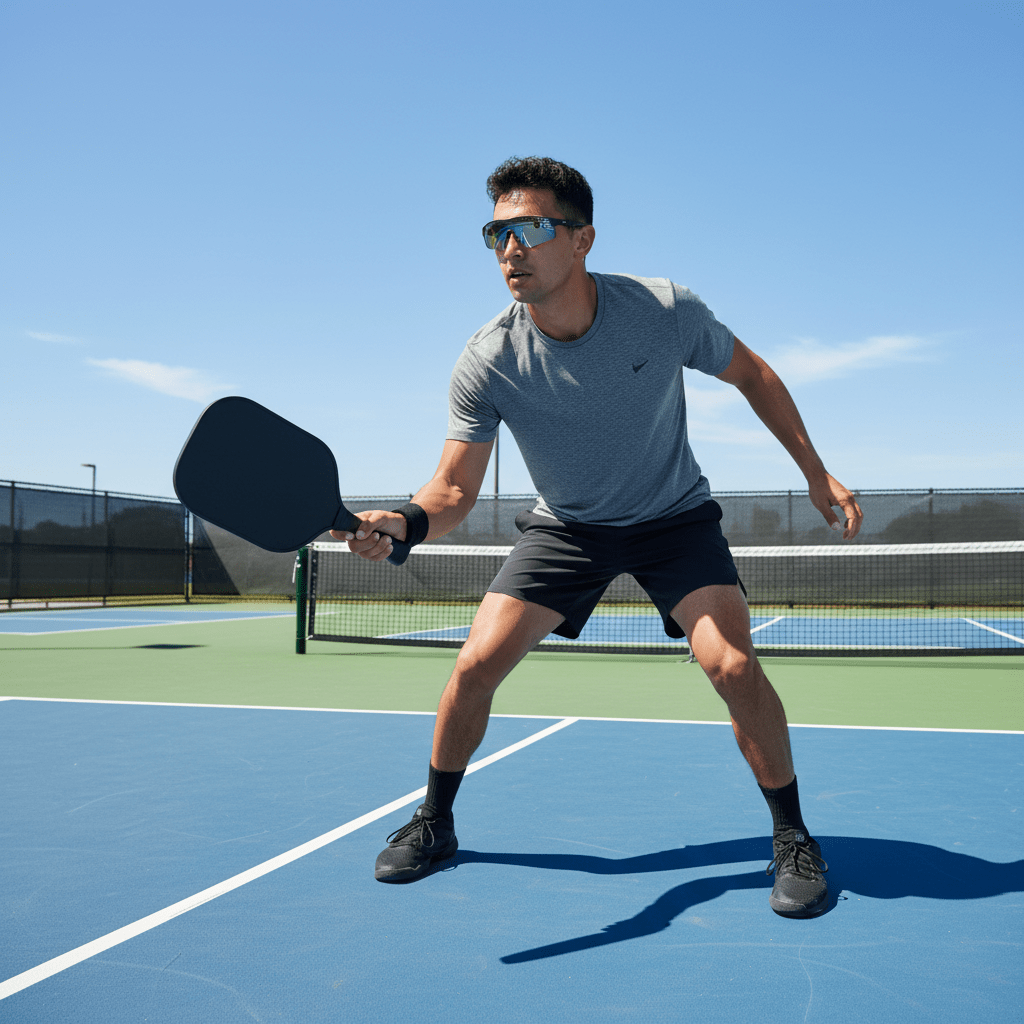
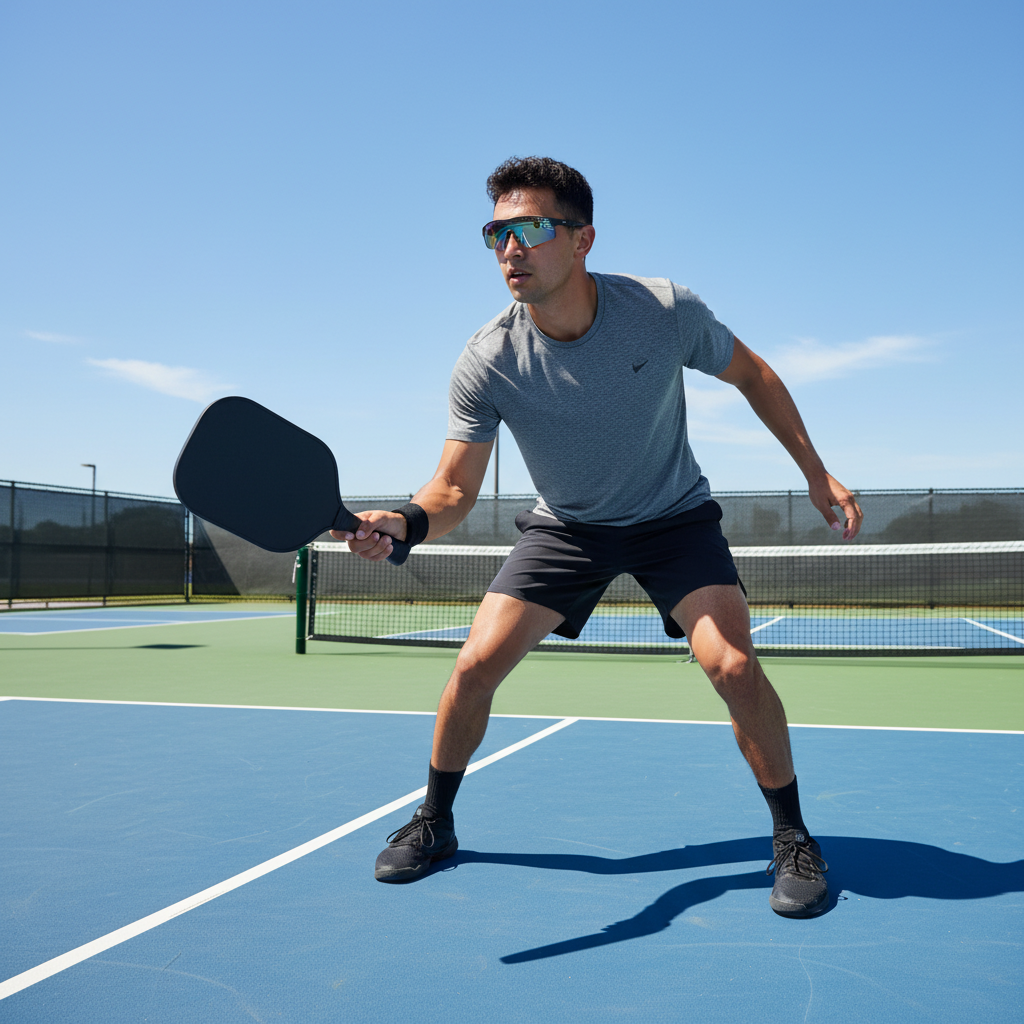
The Vue's adjustable soft rubber nose pads are a detail that matters more than it sounds. Standard pickleball involves a lot of bending, lunging, and lateral movement — glasses that slide down the nose mid-point are genuinely distracting. The rubber grips slightly against skin, and the 3-position adjustment lets you tune the bridge fit to your nose shape. Temple tips are also padded rubber for the same reason: grip without pressure points during extended sessions.
The wraparound design keeps peripheral vision clear while providing side coverage against wind and debris from overhead smashes. The frame sits relatively close to the face — closer than standard sport sunglasses — which reduces the gap where direct sun can enter from the sides.
One honest note: wraparound frames that sit close to the face can fog during intense warm-weather play. The Vue's ventilation is adequate for most outdoor conditions, but if you run hot or play in humid climates, expect occasional fogging during the most intense rallies. This is true of most close-fitting sport glasses, not a specific fault of the Vue.
Protection and Durability: ANSI Z87+ and What That Actually Means
Pickleball balls travel at up to 50 MPH in recreational play — and faster at higher skill levels and in hard-hit drives. Eye protection that can withstand a direct hit at those speeds isn't optional if you're serious about playing regularly.
The Vue Photochrome 2.0 carries ANSI Z87+ certification, which is the U.S. standard for impact-resistant eyewear. Z87+ requires the lens to survive a 500g steel ball dropped from 50 inches and a 0.25" steel ball fired at 150 ft/sec. Both tests exceed pickleball speeds — by a significant margin. Vantage Labs also cites military ballistics testing at speeds over 80 MPH, which goes well beyond the standard. A pickleball drive at 50 MPH is not going to breach these lenses.
The shatterproof HD+ lenses are polycarbonate-based, which handles the ballistic requirement while staying lightweight. Polycarbonate is softer than glass and will scratch with abrasive cleaning — use a microfiber cloth and proper storage for longevity. The TR90 frame handles long-term flexing and UV exposure better than cheaper plastics that can become brittle after seasons of outdoor use.
UV400 protection is standard at this price point — both UVA and UVB fully blocked — and critical for outdoor players who log 3-4 sessions per week. Cumulative UV exposure to the eyes is a real health concern, and proper pickleball glasses address it as a baseline.
Vue Photochrome 2.0 vs CRBN Pivot: Two Approaches to Lens Flexibility
The CRBN Pivot takes a fundamentally different approach to the same problem: instead of one lens that adapts, it gives you multiple lenses you swap manually. Clear for overcast, amber for indoor, dark for outdoor. For players who move between indoor and outdoor environments frequently — say, one session at a gym, one at an outdoor public court — the manual swap is actually faster and more precise than waiting for a photochromic lens to transition.
The Pivot also brings polarized options to the table, which the Vue Photochrome doesn't. Polarized lenses cut horizontal glare from court surfaces in a way photochromic chemistry doesn't — especially relevant on glossy indoor floors or wet outdoor courts.
Where the Vue Photochrome wins is convenience for pure outdoor players. If you never go inside — park courts, club courts, backyard courts — you don't want to carry multiple lens cases and run a swap ritual every time clouds appear. The Vue just handles it. Less setup, less gear management, cleaner for the player who wants to arrive, play, and leave without optimizing their equipment.
Price-wise, the Vue Photochrome 2.0 at $169 and the CRBN Pivot are in similar territory. The decision is your actual playing environments. Check current pricing on both: Vue Photochrome at PBC | CRBN Pivot at PBC
Vue Photochrome 2.0 vs JOOLA RJX Lite: Different Problems, Different Solutions
The JOOLA RJX Lite attacks the eyewear problem from a different angle entirely. JOOLA's COLORBOOST lens technology doesn't adapt to light levels — it stays fixed. What it does instead is use AI-designed spectral tuning to enhance specific colors in your visual field to increase reaction time. JOOLA claims a 25% reaction improvement from the COLORBOOST lens; the science involves filtering wavelengths that improve contrast between the ball and background without needing to darken or lighten.
The RJX Lite is also priced below the Vue Photochrome. For the competitive player who plays on consistent outdoor courts and wants lens tech optimized for reaction time specifically, the RJX Lite is a serious alternative worth comparing. Check RJX Lite pricing at PBC →
The Vue Photochrome 2.0 doesn't claim a reaction time advantage — its pitch is adaptability. If you play courts that shift from morning shade to afternoon direct sun, or play both dawn and midday sessions, the photochromic adjustment delivers value the RJX Lite can't match. The RJX Lite is fixed-tint optimized; the Vue is dynamic-condition optimized. Both are legitimate designs for different use cases.
Most recreational players at 3.0–3.5 DUPR are better served by the Vue Photochrome's low-maintenance adaptability. Most competitive players at 4.0+ who play fixed-time sessions on known courts will find the JOOLA RJX Lite's reaction enhancement more relevant to their game.
Who Should Buy The Vue Photochrome 2.0 (And Who Shouldn't)
Buy it if:
- You play exclusively outdoors and your session spans different light conditions (morning to afternoon, overcast to sunny)
- You want one pair of glasses that covers all outdoor conditions without carrying spares or running lens swaps
- You're 3.0–4.0 level and eye protection plus comfort matters more to you than optimized competitive reaction time
- You play 3-4x per week on outdoor courts where UV exposure is a real concern
Look elsewhere if:
- You frequently move between indoor and outdoor courts in the same day — the photochromic won't keep pace with those rapid environment changes
- You play competitive tournaments where 45-second lens adaptation during transition isn't acceptable
- Budget is a priority — the Gearbox Vision covers UV400 and impact protection at a much lower price for casual players who don't need HD+ contrast
- You play in consistently cold weather (below 50°F) where photochromic transition slows significantly
If you're unsure whether photochromic is the right lens type for your playing pattern, our pickleball glasses buyer's guide walks through every lens type and use case in detail. Also check our indoor pickleball glasses guide if you split time between environments.
Complete Your Outdoor Setup
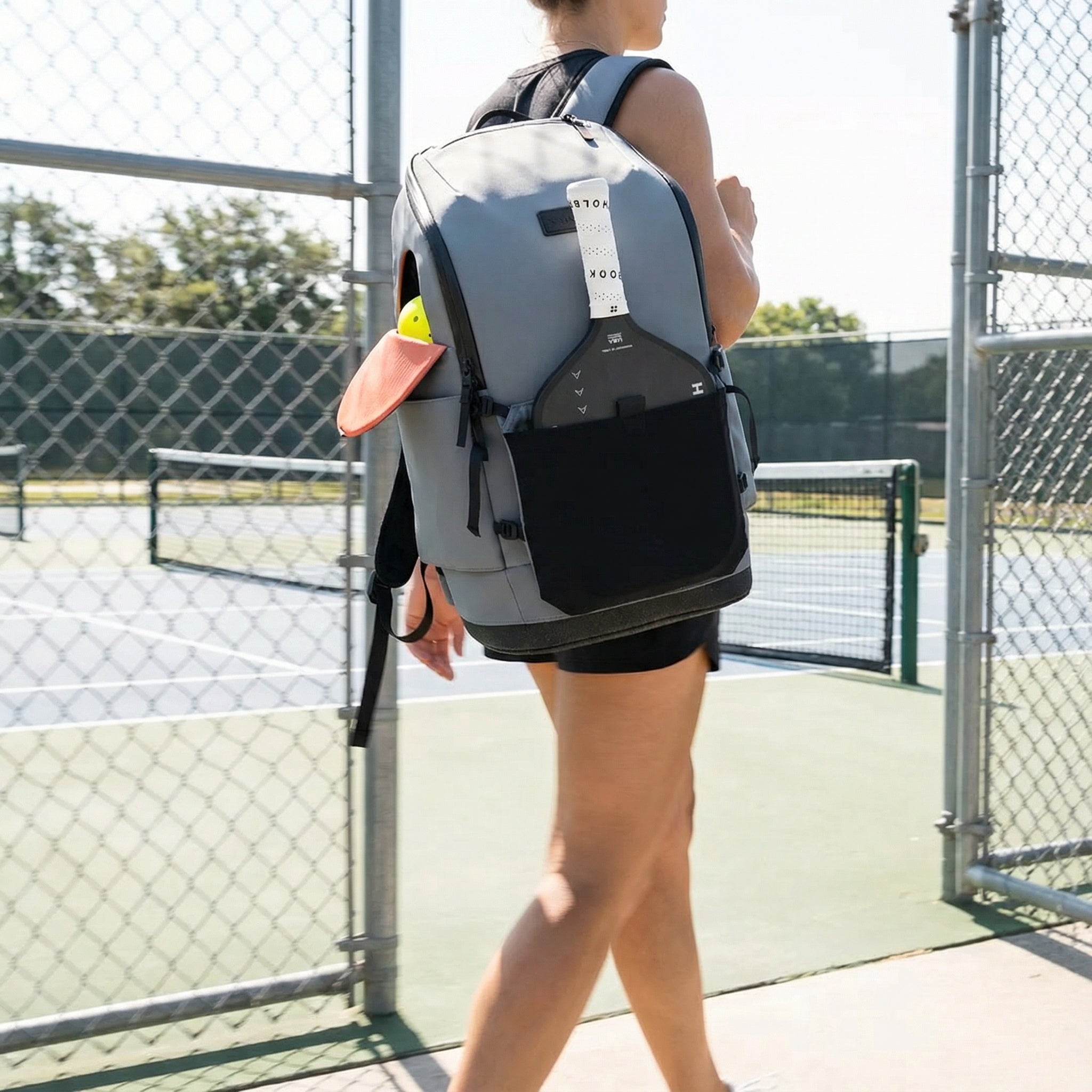
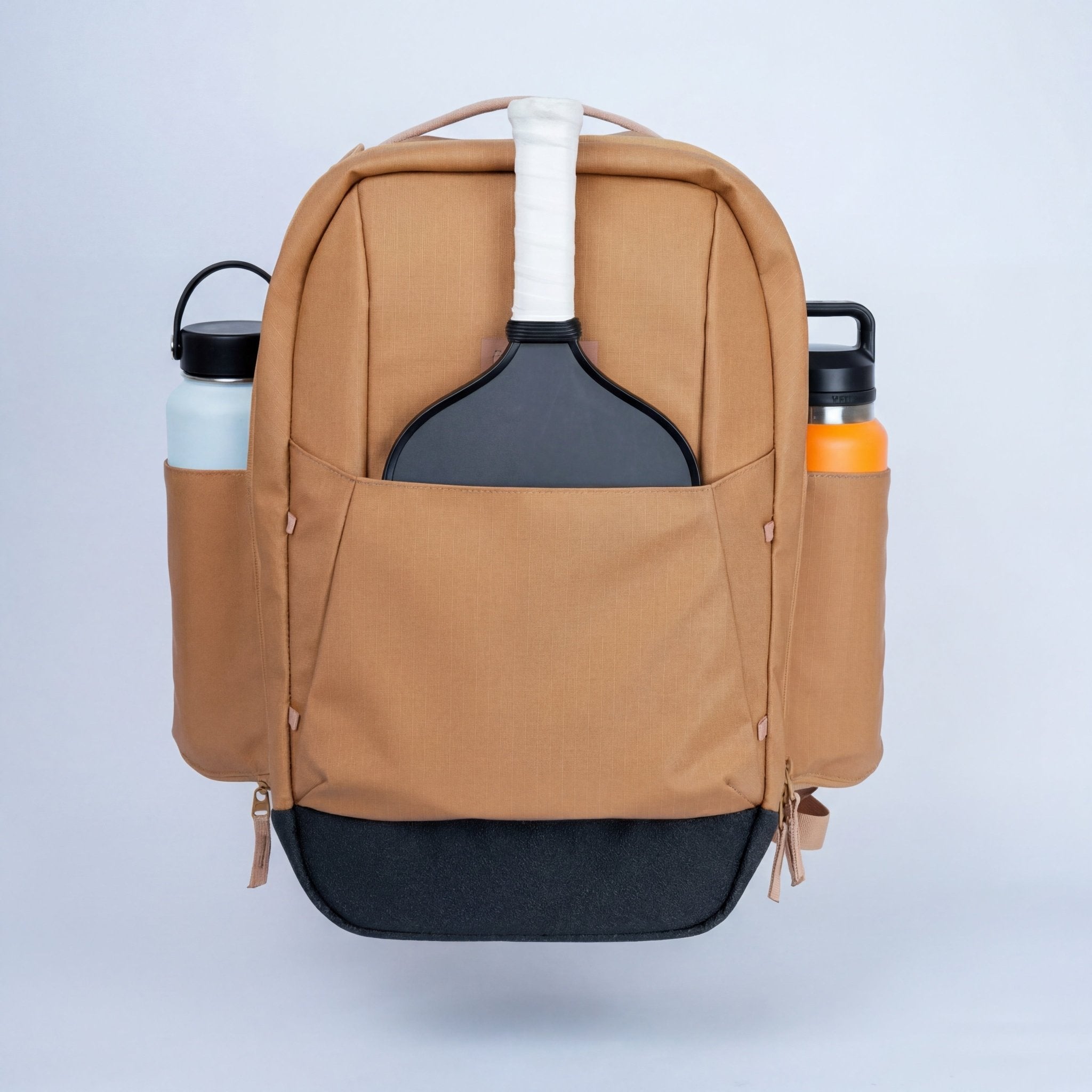
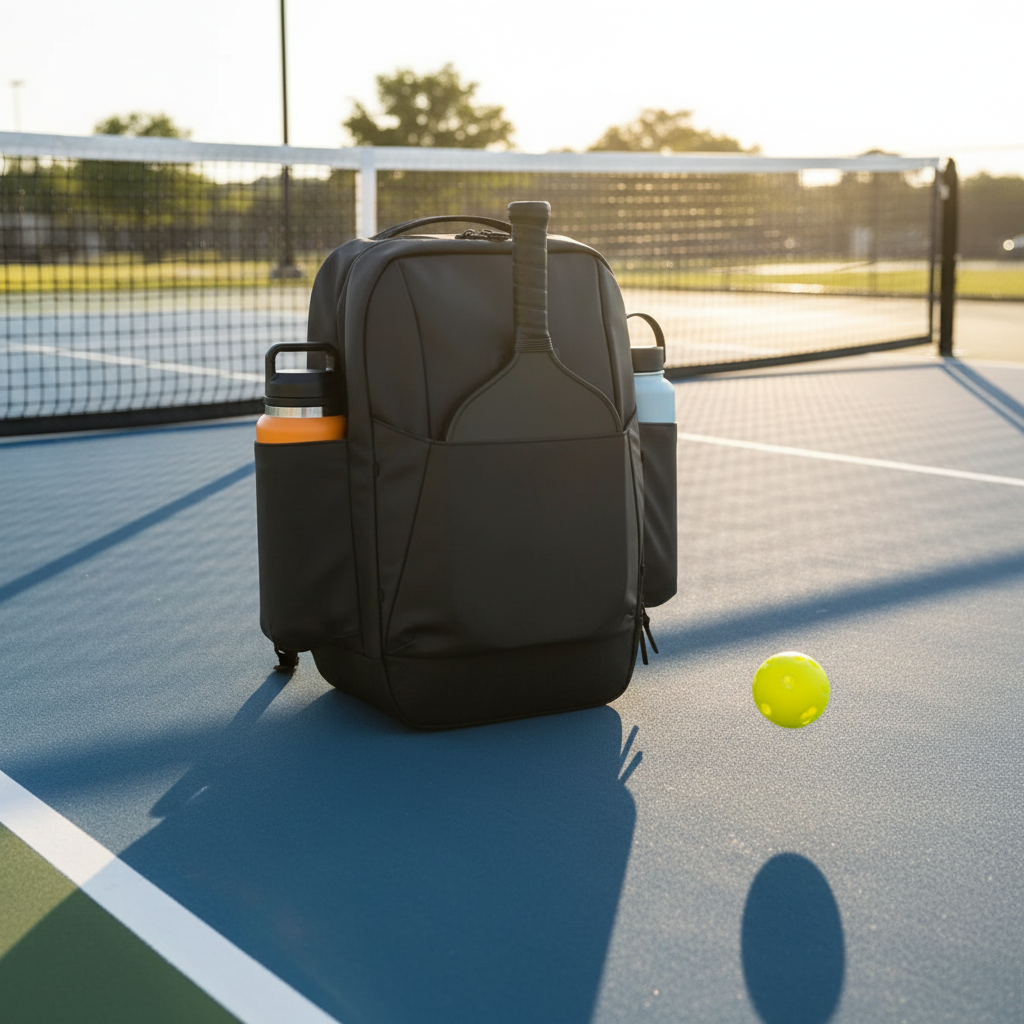
You've got the eye protection handled. Now make sure the rest of your gear doesn't end up in a pile on the bench. The Court Ranger V2 keeps everything organized — two-paddle sleeve, quick-access water bottle pocket, and a separate compartment that keeps your glasses case protected between sessions.

Pricing and Where to Buy
The Vantage Labs Vue Photochrome 2.0 is available at Pickleball Central for $169. PBC ships quickly and stock on the photochromic variant — the premium option in the Vue line — can shift faster than the fixed-tint ColorVue version.
Buy Vantage Labs Vue Photochrome at Pickleball Central →
Worth comparing before you buy:
- JOOLA RJX Lite — reaction-optimized COLORBOOST lens, better for competitive fixed-environment players
- CRBN Pivot — swappable lens system, better for players who move between indoor and outdoor regularly
- Gearbox Vision Eyewear — budget option covering the basics at significantly lower cost
Frequently Asked Questions
How fast do the photochromic lenses on the Vantage Labs Vue transition?
In warm conditions (75°F+), activation from clear to dark takes approximately 45 seconds. Deactivation from dark back to clear is slower: about 50 seconds to reach 50% clarity, and roughly 2 minutes to reach 80% clarity. In cold conditions below 50°F, both processes slow noticeably. The transition is not instant — it's designed for gradual adaptation across a session, not for rapid switching between indoor and outdoor environments.
Are the Vantage Labs Vue Photochrome 2.0 glasses suitable for indoor pickleball?
Not specifically. Photochromic lenses require UV light to darken — indoors under gym lights, they stay at their clear state (87% VLT). A clear lens is fine for indoor play, but the photochromic benefit doesn't apply. For indoor-specific options, see FORWRD's indoor pickleball glasses guide.
How does the Vue Photochrome 2.0 compare to the CRBN Pivot?
They solve the same problem differently. The Vue adapts automatically — no lens management required. The CRBN Pivot gives you multiple swappable lenses you change manually, including a polarized option the Vue doesn't offer. For pure outdoor players, the Vue's hands-off approach is cleaner. For players who move between indoor and outdoor environments frequently, the Pivot's manual system is faster and more precise than waiting for a 45-second photochromic transition.
What does ANSI Z87+ certification mean for pickleball glasses?
ANSI Z87+ is the U.S. standard for impact-resistant protective eyewear. It requires lenses to survive a 500g steel ball dropped from 50 inches and a high-velocity steel ball fired at 150 ft/sec — both well above pickleball speeds. A Z87+-rated lens won't shatter from a direct pickleball hit. The Vantage Labs Vue Photochrome 2.0 carries this certification.
Does cold weather affect how the photochromic lenses work?
Yes — photochromic molecules react more slowly in cold temperatures. Below 50°F, the Vue's lenses will still darken in UV, but activation takes longer than the standard 45 seconds, and deactivation (clearing up) will be noticeably slower. In warm weather above 75°F, the technology performs at its rated speed. Winter outdoor players should factor in that lenses may stay darker longer in shade and clear back more slowly than in summer play.
Final Verdict
The Vantage Labs Vue Photochrome 2.0 is a legitimate product for the outdoor rec player who's tired of managing their eyewear. The photochromic tech works — it's not marketing — and the HD+ contrast layer adds something beyond what a basic UV-400 lens provides. At $169 you're paying for genuine functionality: a wide VLT range (14–87%), ANSI Z87+ protection, a durable TR90 frame, and automatic lens adaptation across a session.
What you're not getting is the instant adaptation a lot of players imagine when they hear "self-adjusting." Forty-five seconds is real time. In most outdoor sessions, that delay is invisible. If you play a court that's half-shaded and you're constantly crossing between sun and shade, you'll feel it. Know which type of player you are before committing.
For pure outdoor rec players: this is a strong choice at a fair price for what it does. For competitive players, frequent indoor/outdoor switchers, or budget-conscious buyers — there are better-matched alternatives for your specific use case.
Buy Vantage Labs Vue Photochrome 2.0 at Pickleball Central — $169 →

Leave a comment
This site is protected by hCaptcha and the hCaptcha Privacy Policy and Terms of Service apply.