

Last updated: June 2026
Training for a pickleball tournament is different from playing more pickleball. One produces measurable results. The other keeps you plateaued at the same skill level, showing up to events unprepared. This 8-week plan gives you a structured countdown — what to drill each week, what to skip, and the specific mistake that costs most recreational players at every stage.
Disclosure: This post contains affiliate links to Pickleball Central. If you purchase through our links, FORWRD earns a small commission at no extra cost to you. We only link to products we'd recommend regardless.
Table of Contents
- Why Tournament Play Demands Different Preparation
- The 8-Week Tournament Prep Countdown
- Physical Conditioning: What to Work On
- The 3 Shots to Drill in the Final 4 Weeks
- Mental Game: Tournament Nerves
- The 7 Days Before
- Tournament Day Logistics
- What to Pack
- FAQ
Why Tournament Play Demands Different Preparation Than Rec Play
Open play rewards the player who shows up. Tournament play rewards the player who prepared. Two things rec games won't give you:
Score pressure. Open play points are practice points — nobody's bracket is on the line. Tournament points are different, and most recreational players discover this the hard way at 9-9 in game 3. Your body responds differently when it counts. Players who've drilled under simulated pressure conditions handle it; players who just logged more court time don't.
Fatigue management over a full event. A single-day DUPR or APP sanctioned event might have you playing 5-7 matches across 6-8 hours. Your fourth match should feel like your first. That only happens with intentional conditioning, not extra rec sessions.
The 8-week framework below is built for 3.0–4.0 recreational players with a specific tournament on the calendar who want a deliberate prep arc — not another "show up and hope" experience.
The 8-Week Tournament Prep Countdown (Week-by-Week Training Plan)
Print this. Use it. The "Mistake to Avoid" column is where most players lose ground — every week has its own failure mode.
| Week | Focus | Key Sessions | Mistake to Avoid This Week |
|---|---|---|---|
| 8 | Baseline assessment | Record yourself playing; identify your 3 weakest shots; establish a conditioning baseline with lateral shuffle intervals | Assuming you know your weak spots without watching yourself on video. You don't. |
| 7 | Serve + return | 40 serves per session targeting deep corners; 30-ball return-of-serve sets with partner | Over-drilling serves and skipping the return. The return starts 50% of your points — it's not an afterthought. |
| 6 | Third shot drop | 50+ drops per session from both wings at 80–90% of match pace; target the back third of the kitchen | Drilling at half speed. Slow practice doesn't transfer to real pace. Always drill at game tempo. |
| 5 | Dinking + NVZ control | 100-ball dink rallies; add error constraints (5 unforced errors allowed before reset) | Treating dinking practice as easy filler. Dink under constraint or you're just warming up, not training. |
| 4 | Transition game + speed-ups | Practice the transition zone; introduce controlled speed-up execution; defend against partner speed-ups | Adding new shots you found on YouTube. The last month before a tournament is not the time to rebuild technique. |
| 3 | Match simulation | Full match play with scoring; analyze shot patterns after each match; review video if possible | Drilling without keeping score. Scoreless pressure hides the gaps that surface in real matches. |
| 2 | Mental prep + sharpening | Shorter sessions (45 min max); focus on shot selection and decision-making over volume; start mental game protocols | Heavy volume training to "peak." Overtraining now causes fatigue to peak on tournament day — not before it. |
| 1 — Taper | Rest + logistics | Light drilling only (30–45 min, 3 sessions max); finalize logistics; full rest the day before | Playing aggressive open play to "get sharp." You'll import bad habits right before competition. |
For a complementary framework on structuring individual practice sessions within this arc, see the Pickleball Practice Routine guide — it covers how to structure each session, not just the 8-week arc.
Physical Conditioning: What to Work On and What to Skip
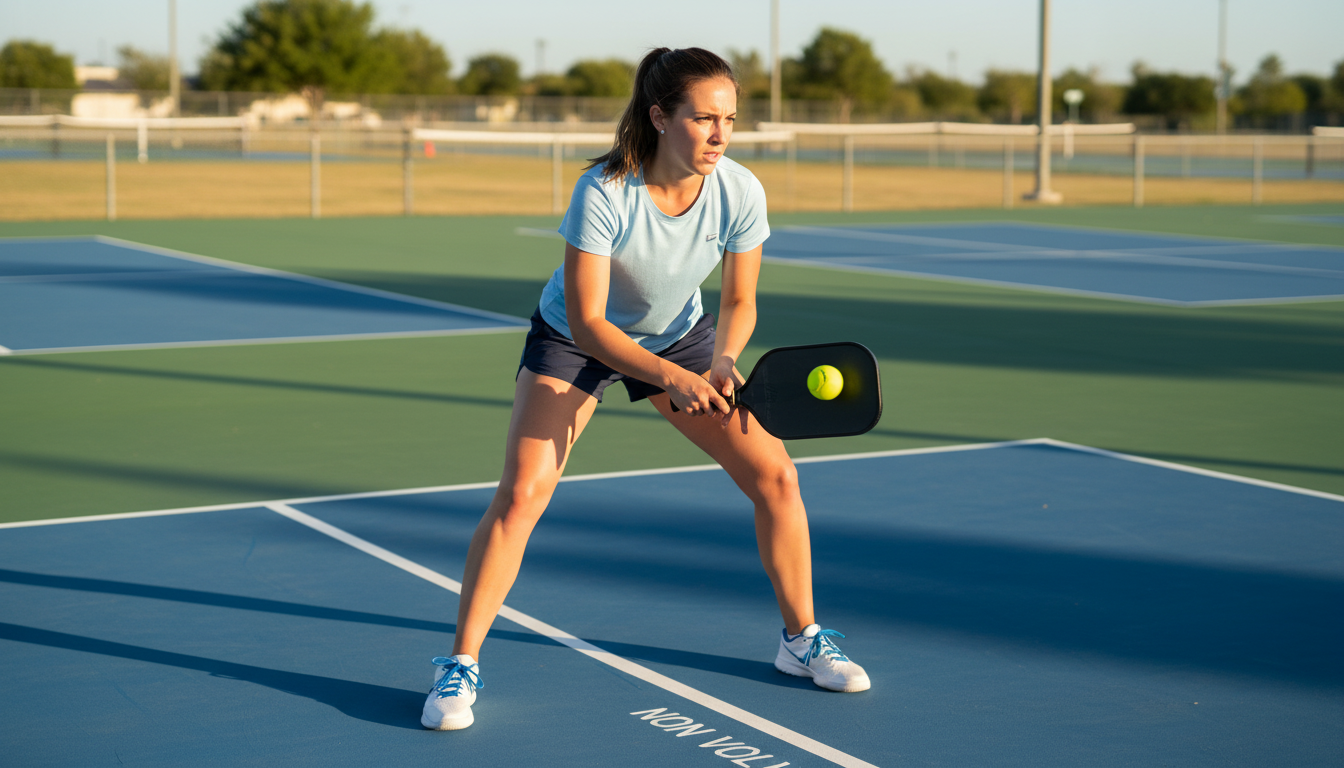
Pickleball conditioning is specific. You're doing short lateral bursts, explosive split-steps, and quick direction changes — not sustained cardio. The conditioning that actually transfers:
- Lateral shuffle intervals. 10-yard side-to-side shuffles, 8 reps per set, 60 seconds rest between sets. Do this 3x/week in your first 4 weeks. You'll feel the payoff in your 5th match of the day when your opponent's legs are going and yours aren't.
- Split-step reaction drills. Drop a ball, split-step, and touch the ground with both hands before it bounces twice. 20 reps builds the explosive hip response that separates 3.5 players from 4.0. It sounds simple. Do it for a week and you'll notice the difference.
- Core stability. Planks, anti-rotation pallof press, dead bugs. Not six-pack work — stability work. Dinking rallies are quiet core endurance, and long tournament days expose weakness that casual games hide.
What to skip: long-distance running. Pickleball fitness doesn't come from 5K pace. If you're running 30-minute sessions to "get in shape for tournaments," you're conditioning the wrong movement patterns. That time belongs in lateral intervals.
Skill Training: The 3 Shots to Drill in the Final 4 Weeks
Trying to improve 6 shots before a tournament doesn't work. Pick 3, go deep. For most 3.0–4.0 players, these give the highest return:
1. Third Shot Drop — The Foundational Transition Shot
If your third shot drop doesn't land in the kitchen 6 out of 10 times at full pace, you're fighting uphill every point. Drill 50 drops per session from both wings. Target the back third of the kitchen — aim 2 feet over the net, not 2 inches. The tape isn't your target; the middle of the kitchen is.
2. Reset Dink — The Shot That Wins Close Tournaments
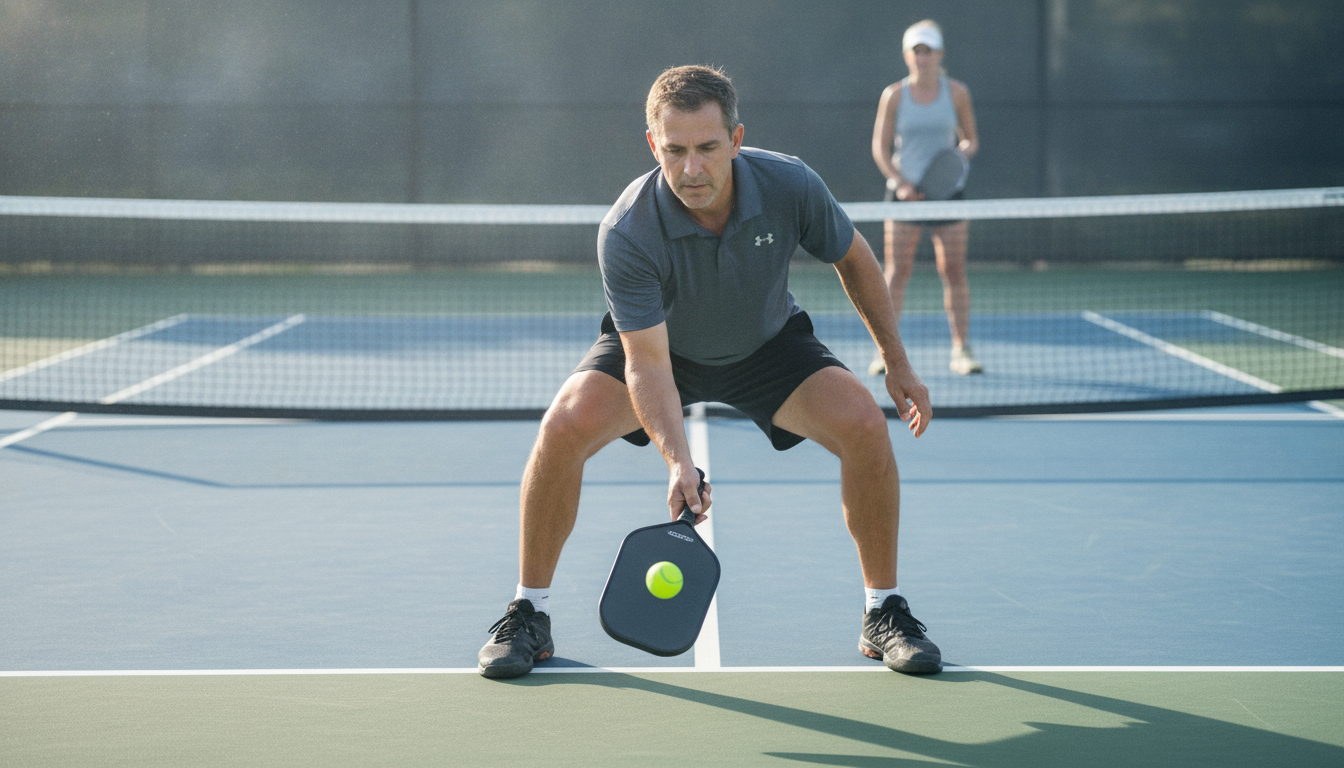
When you're pushed deep into the transition zone and take a hard ball at the hip, can you absorb pace and float it soft into the kitchen? Most 3.5 players can't. This specific scenario — hard low ball at your body in the transition zone — needs dedicated drilling. Have a partner feed you aggressive low shots from the NVZ while you're mid-court, and practice killing the pace. This is the highest-value defensive shot at the recreational level.
3. Speed-Up Recognition — Not Just Execution
You need to execute a controlled speed-up from the NVZ, but more importantly you need to recognize when your opponent is about to trigger one. The player who reacts first wins the exchange every time. Pair drill: dink normally, but one player triggers a speed-up randomly. The other reacts. Do 50 reps each. You're training recognition, not just execution.
For all three shots, having enough balls to run 50-rep sets without stopping to chase matters. A Franklin Pickleball Ball Hopper makes feeding drills practical. Franklin X-40 outdoor pickleballs hold up through 1,000+ drilling reps before you need to replace them — they're the most consistent ball for structured practice.
Mental Game: How to Manage Tournament Nerves Like a 4.0 Player
Tournament nerves are real, and they don't go away. 4.0 players don't have fewer nerves — they've built routines that prevent nerves from hijacking their decision-making. Three adjustments that transfer from practice to competition:
Pre-serve routine. Every serve, every time: bounce the ball twice, take a breath, pick your target, serve. The routine anchors your nervous system. At 9-9 in game 3 with cold hands, the routine runs on autopilot so your conscious brain isn't managing the moment.
Reset word. Pick one word for when a point goes badly: "Next." Say it, turn away from the net for two seconds, come back. This interrupts the error-spiral that causes double-fault sequences in tournament play — the one bad call becomes three bad calls becomes a game handed over.
Score-call discipline. Announce the score before every serve — your score first, then the serving score. It keeps you grounded in the moment and prevents the score-fog that hits during tight games in round-robin formats.
"The biggest shift I made was reframing what nerves mean. Before a competitive match, I stopped trying to calm down and started treating the adrenaline as signal — your body telling you this matters. That one reframe changed how I stepped onto the court." — Topher, FORWRD co-founder
Tournament Week: What to Do (and Avoid) in the 7 Days Before
Tournament week is about maintenance and logistics. You're not improving your third shot drop in the final 7 days, but you can absolutely ruin your body trying to.
Days 7–4: Light drilling, 45 minutes max. Nothing new. No technique rebuilds. Stick to your A-shots and practice executing them under low-stakes pressure — not technique drills, but short simulated match scenarios.
Days 3–2: One 30-minute session to stay loose. Serves and dink touch only. Nothing high-intensity.
Day 1 (day before): Rest day or 20-minute light warm-up at most. Do not go to open play. Do not do a 2-hour session to "shake out rust." Your muscles need 24 hours to absorb the training cycle. The player who rests the day before a tournament outperforms the player who drills right up until morning — consistently.
Grip wear from intensive training weeks is real. Freshen your paddle grip the night before the tournament — an old, slick grip costs 1-2% control at the kitchen, which is enough to decide close dink rallies. Gamma Honeycomb Cushion Overgrip and Tourna Mega Tac XL are the two overgrips that hold up best across weather conditions.
Tournament Day Logistics: The Night Before, Morning Routine, and Warm-Up Protocol
Logistics failures are avoidable — and they destroy focus. The night before a tournament, run through this checklist, not the morning of:
- Paddles packed: your primary match paddle + one spare
- Pickleballs: bring 3–4 (most formats expect players to supply their own)
- Water: 40 oz minimum for outdoor events; 64 oz for all-day formats
- Overgrips: at least 2 extra for mid-tournament reapplication
- Court shoes in their own compartment so they're not touching your paddles
- Laptop or phone for scoring apps, match video, or DUPR tracking
- Bracket time confirmed — don't discover your first match is 45 minutes earlier than you thought
Morning warm-up protocol (allow 20–25 minutes): 5 minutes dynamic movement (lateral shuffles, leg swings, hip circles) → 5 minutes soft dinking → 5 minutes serves and returns at 70% pace → 3 minutes speed-up recognition sequences → 2 minutes standing reset before your first match. Don't go hard. You're activating, not exhausting.
For a full pre-match warm-up routine built for injury prevention and skill activation, the How to Warm Up Before Pickleball guide covers every piece of the pre-session prep protocol.

What to Pack for Tournament Day
For a complete tournament packing checklist with category breakdowns, see the Pickleball Tournament Packing List (2026). Short version: two paddles, 4 pickleballs, 40 oz water, sunscreen, towel, fresh overgrips, and a bag with enough organization to access your gear between matches.
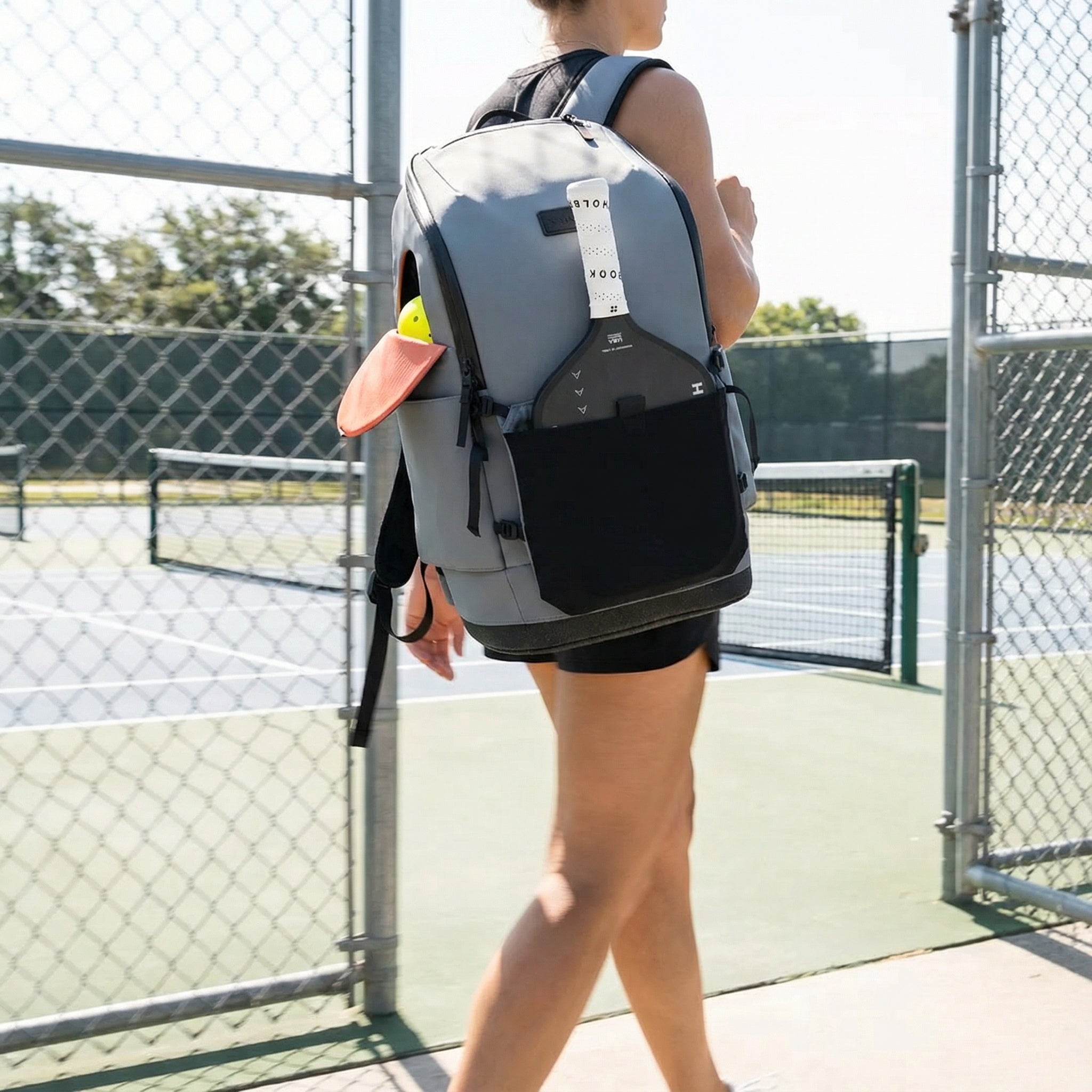
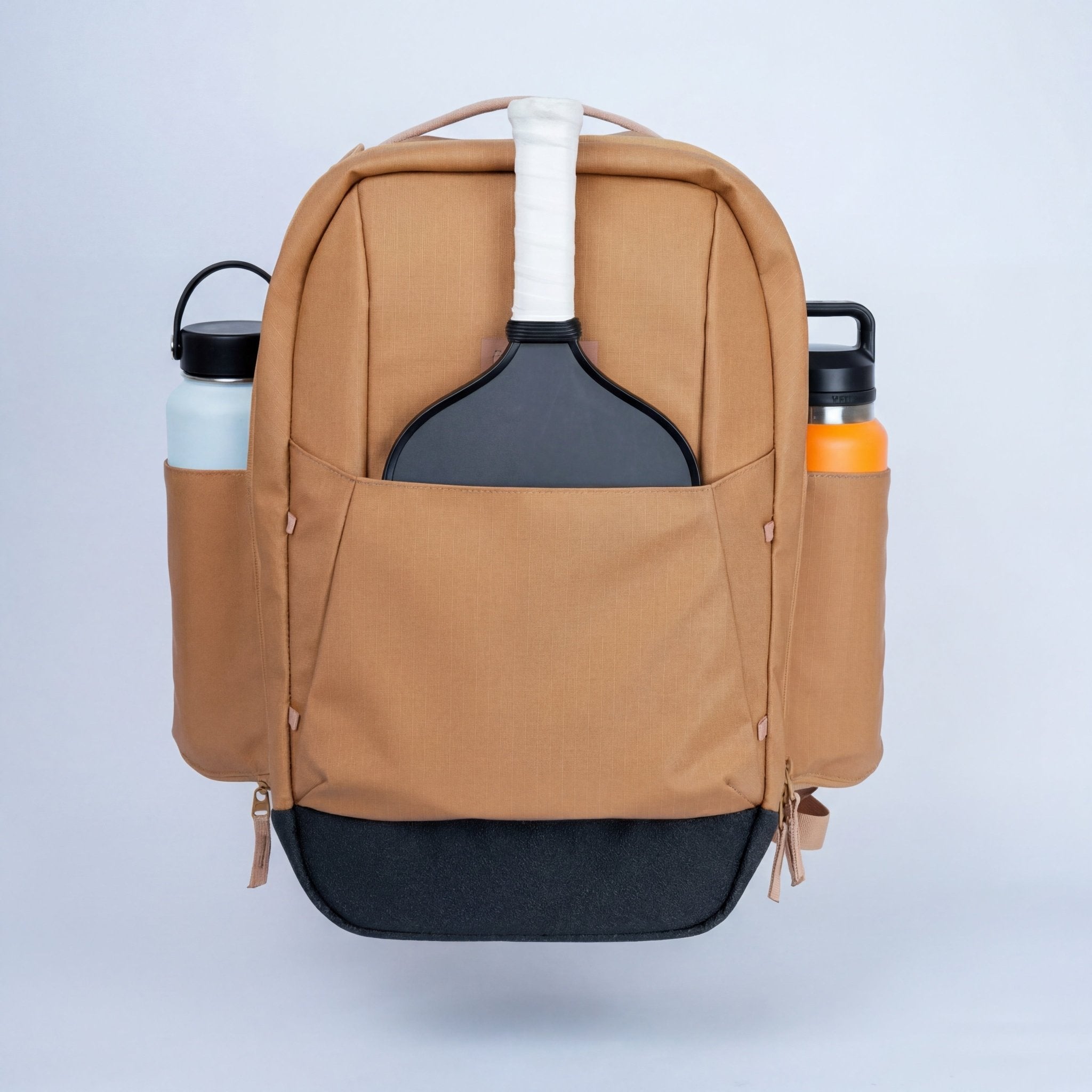
The Court Caddy Backpack ($325) handles the tournament-day carry cleanly — 4-paddle modular sleeve, 15" padded laptop sleeve for DUPR tracking or match video review, and fence hooks that keep your bag off the court surface during drills. It was designed specifically for the multi-match tournament format, not repurposed from a tennis or gym bag. For a lighter carry (2 paddles, casual tournament format), the Court Ranger V2 ($195) covers the full functional checklist at $130 less.
Ready to upgrade your tournament bag? Shop the Court Caddy — built with 500+ real players and backed by a lifetime warranty.
FAQ: Pickleball Tournament Prep Questions
How do you train for a pickleball tournament?
Start 8 weeks out: baseline assessment in week 8, build foundation skills (serve, return, third shot drop) in weeks 7–5, transition to match simulation in weeks 4–3, and taper with mental prep and logistics in the final week. Structured drilling beats added court time at a ratio of roughly 3:1 for tournament-specific improvement.
How long before a tournament should you start preparing?
8 weeks is the ideal runway for 3.0–4.0 recreational players. 4 weeks is workable if you're already playing consistently 3+ times per week. Under 2 weeks: focus entirely on mental prep, logistics, and rest — new skills don't consolidate in under 2 weeks.
What's the best warm-up routine before tournament play?
Allow 20–25 minutes: 5 minutes dynamic movement, 5 minutes soft dinking, 5 minutes serves and returns at 70% pace, then 3 minutes speed-up/reset sequences. Never go hard in tournament warm-ups — you're activating muscle memory, not building fitness.
How do you handle nerves in a pickleball tournament?
Build a pre-serve routine and a one-word error reset anchor. Reframe nerves as activation — 4.0 players don't have fewer nerves, they've trained them not to change their shot selection. The serves routine (bounce, breathe, target, serve) is the single most transferable mental skill in recreational tournament play.
Should I practice differently in the week before a tournament?
Yes — cut volume dramatically. 45-minute max sessions in days 7–4, one 30-minute session in days 3–2, rest the day before. The training gains from your 8-week arc need 24 hours to absorb. Over-drilling tournament week is the most consistent performance mistake at the 3.0–4.0 level.
What physical conditioning helps most for pickleball competition?
Lateral shuffle intervals, split-step reaction drills, and core stability — not running. Pickleball fitness is explosive and directional. Train the movement patterns you'll use: quick lateral changes over 6–8 hours of matches, not sustained aerobic endurance.

Leave a comment
This site is protected by hCaptcha and the hCaptcha Privacy Policy and Terms of Service apply.