

Last updated: June 2026
Most players train too hard in the wrong weeks — and coast when it matters most. Here's the direct answer: start 8 weeks before your tournament. Weeks 7-8 build your physical base. Weeks 5-6 fix your actual weaknesses. Weeks 3-4 are game simulation and strategy lock-in. The final week is taper and mental prep. Arrive fresh, not spent — that's how you play your best when the bracket actually counts.
What follows is the only structured, week-by-week tournament prep calendar for pickleball — built from competitive experience across multiple APP-sanctioned events and a lot of lessons learned the hard way.
Disclosure: This post contains affiliate links to Pickleball Central. If you purchase through our links, FORWRD earns a small commission at no extra cost to you. We only link to products we'd recommend regardless.
Table of Contents
- Why Tournament Prep Is Different From Regular Practice
- The 6-8 Week Framework: How to Structure Your Training
- Phase 1 (Weeks 7-8): Physical Conditioning and Movement Foundation
- Phase 2 (Weeks 5-6): Skill Sharpening and Weakness Elimination
- Phase 3 (Weeks 3-4): Simulated Match Play and Strategy Lock-In
- Final Week: Taper, Mental Prep, and Logistics
- What to Bring to Tournament Day
- FAQ
Why Tournament Prep Is Different From Regular Practice
Recreational play rewards habits. Tournament play punishes them.
Your normal game has the same opponents, the same courts, the same unforced errors nobody calls you on because it's open play. Tournament matches compress everything — sharper play on your weak side, opponents who've scouted your patterns, conditions where every rally feels like it costs something real.
The prep gap is real. Players who play 3-4x per week all year and "feel ready" still get bounced in early rounds — not because they lack skill, but because they haven't practiced under tournament-specific stress. There's a real difference between drilling shots you're already good at and drilling the scenarios a smart opponent will force on you.
Fatigue patterns in a tournament are nothing like open play. Multi-bracket events have you playing 3-5 matches across a full day, often without predictable rest windows. The players who make late rounds aren't always the most skilled — they're usually the best prepared physically and the most mentally durable.
The 6-8 Week Tournament Prep Framework: How to Structure Your Training
Eight weeks is the sweet spot. Less than that and you're cramming. More and you peak too early and lose intensity before game day arrives.
Here's the full calendar:
| Weeks Out | Phase | Primary Focus | Court Sessions/Week |
|---|---|---|---|
| Weeks 7-8 | Physical Base | Cardio, lateral movement, injury prevention | 3-4 |
| Weeks 5-6 | Skill Sharpening | Weakness fixing, third-shot drops, dinking consistency | 4-5 |
| Weeks 3-4 | Match Simulation | Competitive drilling, game plans, pressure-point scoring | 4-5 |
| Week 2 | Consolidation | Mental prep, lock in game plan, reduce volume | 3 |
| Week 1 (Final) | Taper | Light play only, rest, logistics, mindset | 1-2 (light) |
Phase 1 (Weeks 7-8 Out): Physical Conditioning and Movement Foundation
This is the part most players skip entirely — and it's why they're gassed by match three.
In weeks 7-8, the primary goal is building a physical base you can draw on when the mental pressure spikes. You're not chasing performance here, you're building the engine. Specifically:
- Cardiovascular conditioning: 20-30 minute sessions of moderate-intensity cardio (cycling, rowing, light running) 2-3x per week alongside your court sessions. You're building aerobic capacity, not sprinting intervals. Pickleball rallies are short, but the cumulative fatigue across 10+ games in a tournament is real — and it's cardiovascular, not muscular.
- Lateral movement drills: Lateral shuffles, split-step practice, cone work. Do 10-15 minute movement sessions before court play — not after, when your form has already degraded. The split step specifically: most recreational players don't do it consistently under fatigue. Practice until it's automatic.
- Injury prevention: If you have a nagging shoulder, knee, or hip issue, address it in week 8. Not the week before the tournament. A physical therapy consult during week 8 is a fraction of the cost — financial and competitive — of playing through pain in round 2 of a tournament.
On court during this phase: keep it loose. Regular games, not pressure drilling. You're building the engine, not tuning the car.
Gear note: your court shoes matter more in high-volume training than anywhere else. Lateral movement across 4x sessions per week will tell you fast whether your shoes have adequate support. The K-Swiss Express Light is purpose-built for court laterals — light without sacrificing ankle stability. The Skechers Viper Court Pro 2.0 adds more cushion for players who need it. Both are available at Pickleball Central.
Also: start every session with a proper warm-up protocol. Eight weeks of heavy training with zero warm-up is the classic recipe for showing up to a tournament with sharp skills and a tweaked hamstring.
Phase 2 (Weeks 5-6 Out): Skill Sharpening and Weakness Elimination
Here's where most players waste their prep time: they practice what they're already good at.
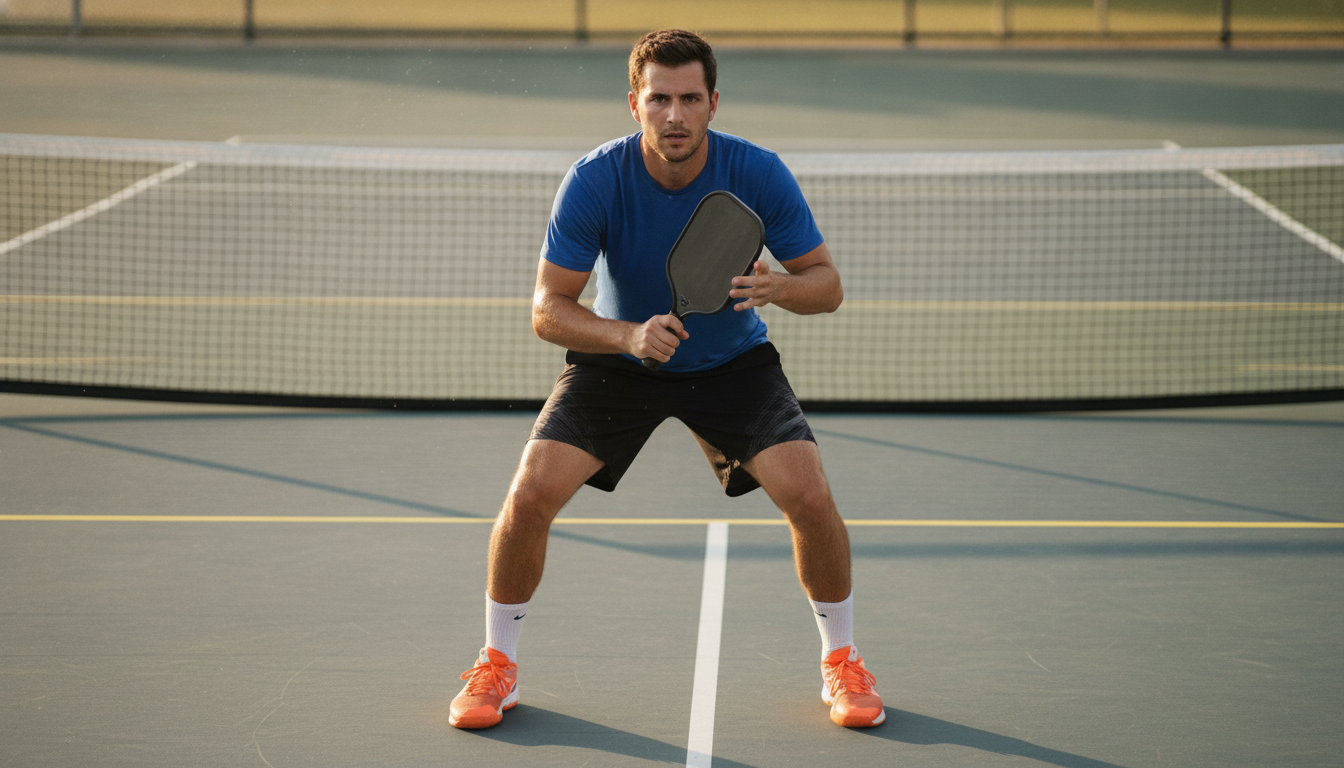
You like banging from the baseline? Spend these 2 weeks drilling third-shot drops. You're comfortable dinking crosscourt? Practice the middle-court ATP attack defense you always get caught on. The goal is to shrink the list of predictable weaknesses an experienced opponent can exploit.
Specific drills worth building into weeks 5-6:
- Third-shot drop consistency: 50 consecutive attempts, track your make percentage from both service positions. Target 70%+ landing in the kitchen. Most 3.5-4.0 players are at 40-50% when they bother to measure. That gap closes in 2 weeks if you drill it deliberately.
- Erne defense: Playing 4.0+ events, opponents will look for erne opportunities every few games. Practice identifying the setup cue early — when your opponent starts moving toward the sideline post — and adjusting your positioning before they pull the trigger.
- Reset drilling from the transition zone: The area between the baseline and the kitchen is where most rallies are won or lost. Drill reset shots from 8-10 feet inside the baseline until they're automatic. Not "pretty good." Automatic.
- Serving under pressure: Have a partner call "game point" or "deuce" randomly during serve practice. The focus shift is real and it's trainable.
The balls you drill with matter. The Franklin X-40 is the APP Tour official outdoor ball — if your tournament uses it (most outdoor APP/PPA-sanctioned events do), drill with it specifically. The bounce, weight, and touch response are different from the Onix Pure 2. That difference isn't trivial when you're calibrating soft touch at the kitchen line.
What to skip during weeks 5-6: adding entirely new shots. This is not the time to develop a jump smash or experiment with a different grip. Untrained techniques become liabilities under tournament pressure. Lock in what you have and make it sharp.
Phase 3 (Weeks 3-4 Out): Simulated Match Play and Strategy Lock-In
Switch the training context. You've built the fitness. You've sharpened the skills. Now it's time to play under pressure that approximates what tournament rounds actually feel like.
The most effective method: keep score on every single game, even in casual drilling. A casual "let's play to 11 just to practice" becomes a completely different mental exercise when you're keeping it honest at 9-7 in a game your partner is taking seriously.
Strategy work to do now:
- Scout your division if possible. Most tournament organizers post brackets and registration lists. Know whether you're facing left-handed players (positioning changes significantly), strong bangers (kitchen control becomes a higher priority), or soft-game specialists who'll try to out-dink you.
- Develop a primary game plan and a backup. Your primary plays to your strengths. Your backup kicks in when your primary gets neutralized by round 2. Talk this through with your doubles partner now — not on the court between games.
- Tournament-length practice sessions. Play a full 3-game match, take a 30-minute break (simulate the between-round window), then play another. This isn't just physical conditioning — it's mental conditioning. You learn how you actually feel emotionally going into a second match after a tough first one.
This is also the time to read the FORWRD tournament strategy guide and align your in-game tactics with the prep work you've been putting in. Technical drilling and court strategy need to connect before game day.
Final Week: Taper, Mental Prep, and Tournament-Day Logistics
This is the week most players blow by playing too much. Don't.
Cut your court volume in half. Play 1-2 light sessions — nothing intense, nothing you could injure yourself on. Your body has all the fitness it's going to have at this point. Give it a chance to absorb the training before you ask it to perform under stress.
Mental prep for the final week:
"The work I do in the final week before a tournament is almost entirely mental. I spend 10-15 minutes each night visualizing specific scenarios — serving at game point, coming back from 8-4 down in the third game, making a solid reset after a bad stretch of points. Not visualizing winning. Visualizing the process of recovering and competing well. That mental work shows up on the court in ways that more drilling simply doesn't." — Topher, FORWRD co-founder and 4.5+ competitive player
Logistics to confirm by day 5 of the final week:
- Your start time (many tournaments finalize schedules only a week prior — check the organizer's communication channels daily)
- Court surface type — indoor gym floors, outdoor hard courts, and concrete all play noticeably differently, especially for foot movement and ball bounce
- Travel plan so you're not rushing tournament morning — arriving calm matters
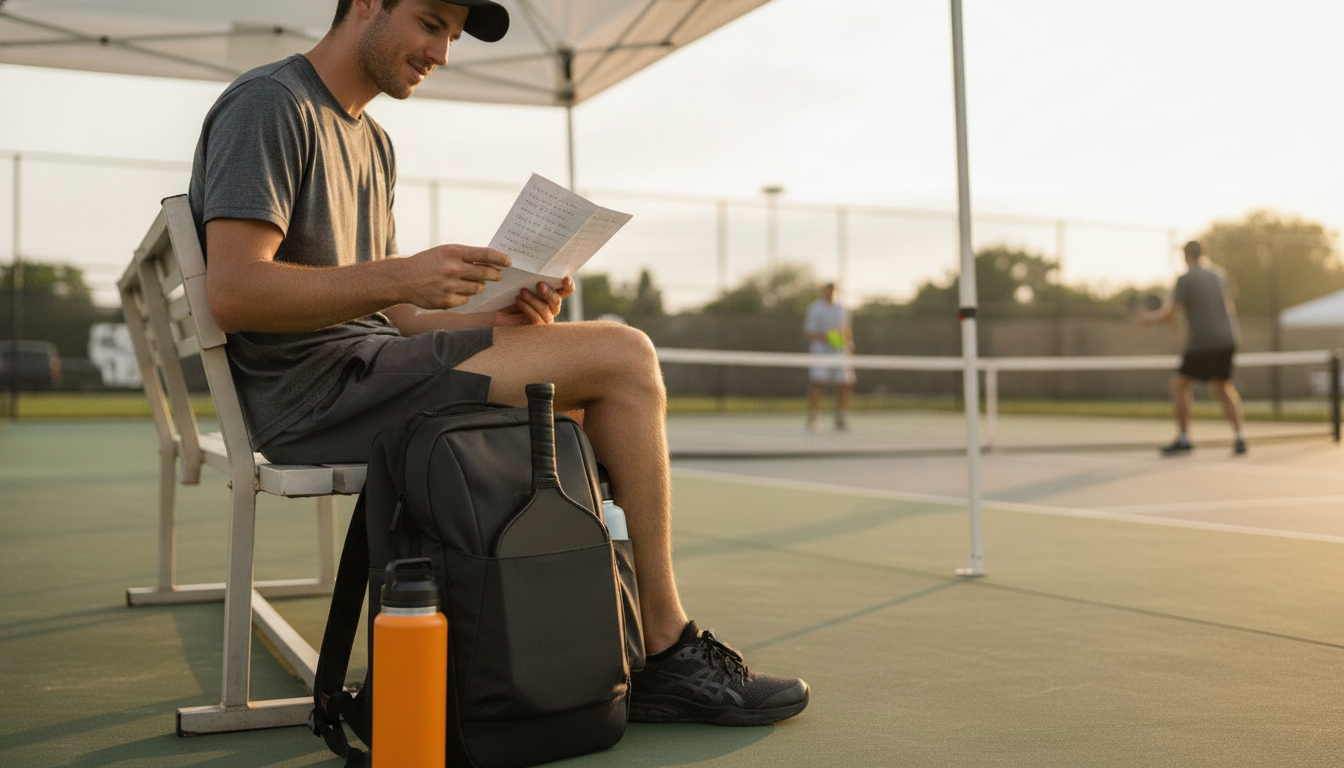
- Bag packed the night before, not 20 minutes before you leave
What to Bring to Tournament Day (Gear Checklist)
Multi-bracket tournaments — especially if you're playing men's doubles and mixed — can run 8 AM to 6 PM. You're hauling gear for an entire day of competition.

The checklist:
- 2-3 paddles — a backup for a cracked edge guard or a string issue that changes feel mid-day
- 2 pairs of court shoes — change between matches if courts are wet or conditions shift
- Extra overgrips — grip slippage in humid heat is a real competitive issue; stock up at Pickleball Central before tournament week
- Court towel and wristbands
- Your own balls — most tournaments require players to provide during warm-up
- Sunscreen, hat, change of clothes
- Electrolytes, not just water — sustained performance across a full tournament day is a hydration management problem
- Phone charger — bracket tracking apps drain batteries
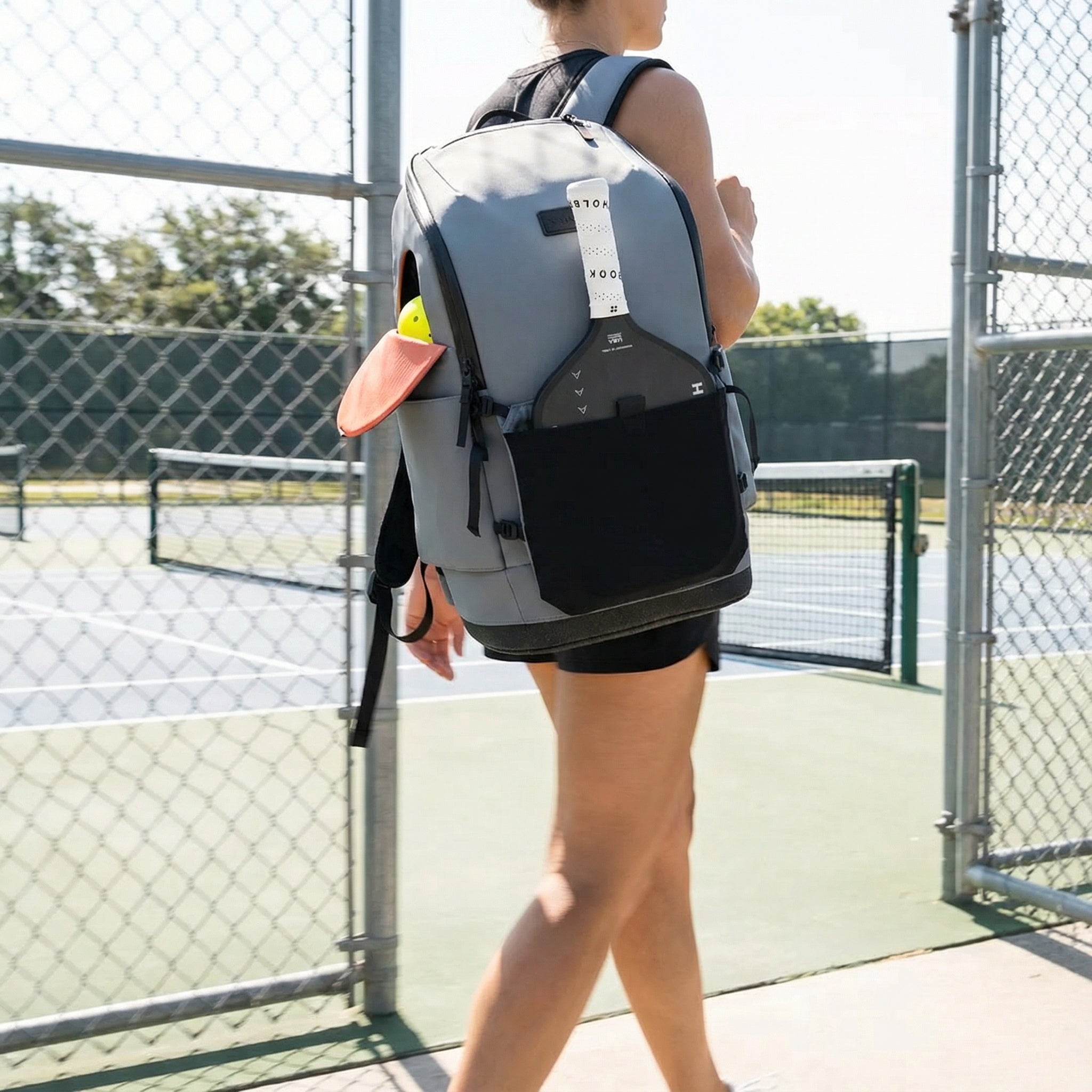
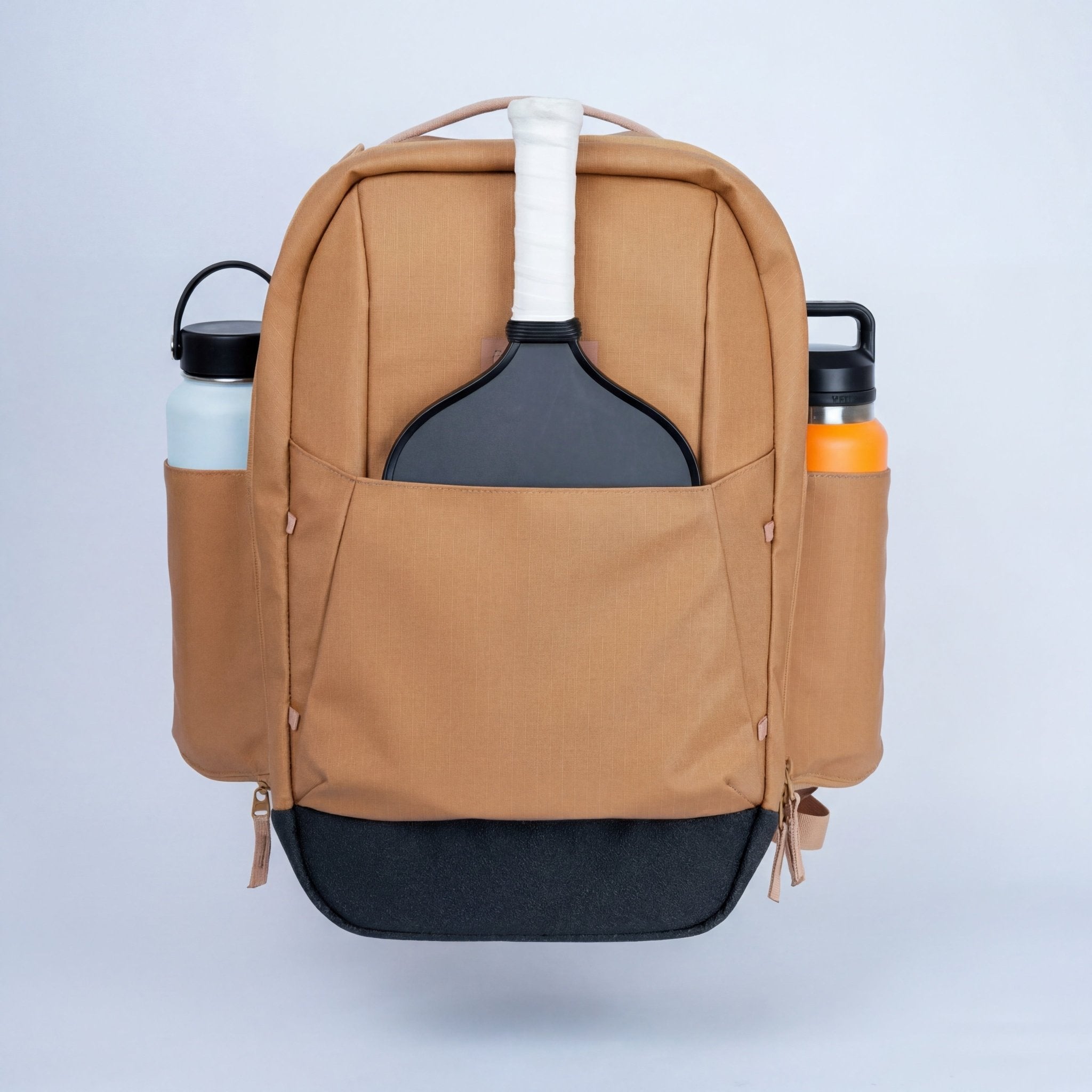
Multi-day tournaments mean hauling 3-4 paddles, two pairs of shoes, and a full day's gear from check-in through the final match. The Court Caddy's 4-paddle modular sleeve and 15" laptop compartment make one bag handle all of it — organized, not stuffed. See the full tournament packing guide for a deep breakdown by event type and duration.
FAQ: Pickleball Tournament Prep Training Questions
How do you train for a pickleball tournament?
Start 8 weeks out. Build physical conditioning first (cardio, lateral movement, injury prevention), then shift to skill sharpening in weeks 5-6 (fixing weaknesses, drilling third-shot drops and resets), then transition to simulated match play with pressure scoring in weeks 3-4. Taper the final week.
How long before a pickleball tournament should I start training?
Eight weeks is the optimal window. Less than four weeks isn't enough time to meaningfully improve physical conditioning or fix structural skill weaknesses. More than ten weeks risks peaking too early and losing match-simulation intensity before game day arrives.
What physical conditioning helps pickleball tournament performance?
Cardiovascular base-building (20-30 minute moderate-cardio sessions 2-3x/week), lateral movement and split-step footwork drills, and sport-specific flexibility work. Core strength and ankle stability also reduce injury risk during high-volume tournament play across a full day.
How do pro pickleball players prepare for tournaments?
PPA and APP Tour pros emphasize structured periodization — heavy training blocks followed by planned tapers before events. Mental rehearsal, video review of opponents' tendencies, and full-intensity match simulation are standard among top-ranked players competing week-to-week on tour.
How do you manage nerves before a pickleball tournament?
Scenario visualization is the most effective approach — not winning, but handling adversity. Visualize trailing 4-8 in the third game and making solid resets. That mental rehearsal makes the real scenario feel familiar rather than overwhelming. Controlled breathing between points (4-count inhale, 4-count exhale) also calms the nervous system mid-match.
What drills are most important for tournament prep?
Third-shot drop consistency (target 70%+ landing in the kitchen from both service positions), reset drilling from the transition zone, and pressure serve practice. These are the most impactful drill categories because they target the exact moments most pickleball tournament matches are decided.

Leave a comment
This site is protected by hCaptcha and the hCaptcha Privacy Policy and Terms of Service apply.