

Most players don't lose tournaments because they play bad pickleball. They lose because they play rec pickleball. The patterns that work in open play — going for hero shots, chasing speed-ups, trying to close out with highlight-reel attacks — are exactly the patterns that get exploited the moment your opponent has any tactical awareness. Tournament pickleball operates on a different set of priorities. Here's the framework, organized by where you actually are in the match.
Last updated: June 2026
The Tournament Mindset: How It Differs From Rec Play
In rec play, the social contract is roughly: play well, have fun, don't be too aggressive. In a tournament, those priorities flip. Your only job is to win the match — and everything else serves that goal.
The psychological shift that actually separates 3.5 tournament players from 4.0+ players isn't technical. It's decision speed under pressure. A 4.0+ player sees a high ball and immediately knows what to do — attack crosscourt, attack middle, or reset if the position isn't right. A 3.5 player hesitates for a half-second while deciding, and that hesitation produces the low-percentage error that ends the rally.
Tournament play also removes the social cushion. You can't laugh off an unforced error and give your opponent a let. Every point matters. The players who handle that pressure best are the ones who've defined a simple game plan before the first serve — and trust it when things get uncomfortable.
This guide is part of our complete pickleball tournament guide, which covers bracket formats, registration, and what to expect on day one. For official USA Pickleball rules and tournament sanctioning requirements, visit usapickleball.org. For the broader strategy foundation, see our complete pickleball strategy guide.
Scouting Your Opponents in Warm-Up (What to Actually Watch For)
Most players treat warm-up as a time to get their own game going. Smart players use it as an intelligence phase. You have 3–5 minutes watching your opponent hit before the match starts — don't waste it.
Here's what actually matters:
- Backhand strength. Most recreational tournament players have weaker backhands. Watch whether they reset or speed up from the backhand side. If they reset consistently, the backhand is their defensive zone — push them there all match.
- Reaction to overhead threats. Do they retreat from lobs quickly? Do they look comfortable on overheads? A player who flinches at lobs will face a lot of them in game one.
- Serve patterns. Power or placement? Middle or out wide? Most players have one serve they default to under pressure — note it and don't be surprised when they run it at 9–9.
- Panic response. When they miss, do they immediately speed up the next ball? Players who chase errors with aggression are predictable — let them think they're in the rally, then reset and watch them tighten up.
Pool play is especially useful here. If you face a team twice — once in pool play and once in bracket — use pool play as your intelligence run. Every tendency you spot becomes a tool for the rematch.
Kitchen Line Dominance: Why Most Points Are Won Here
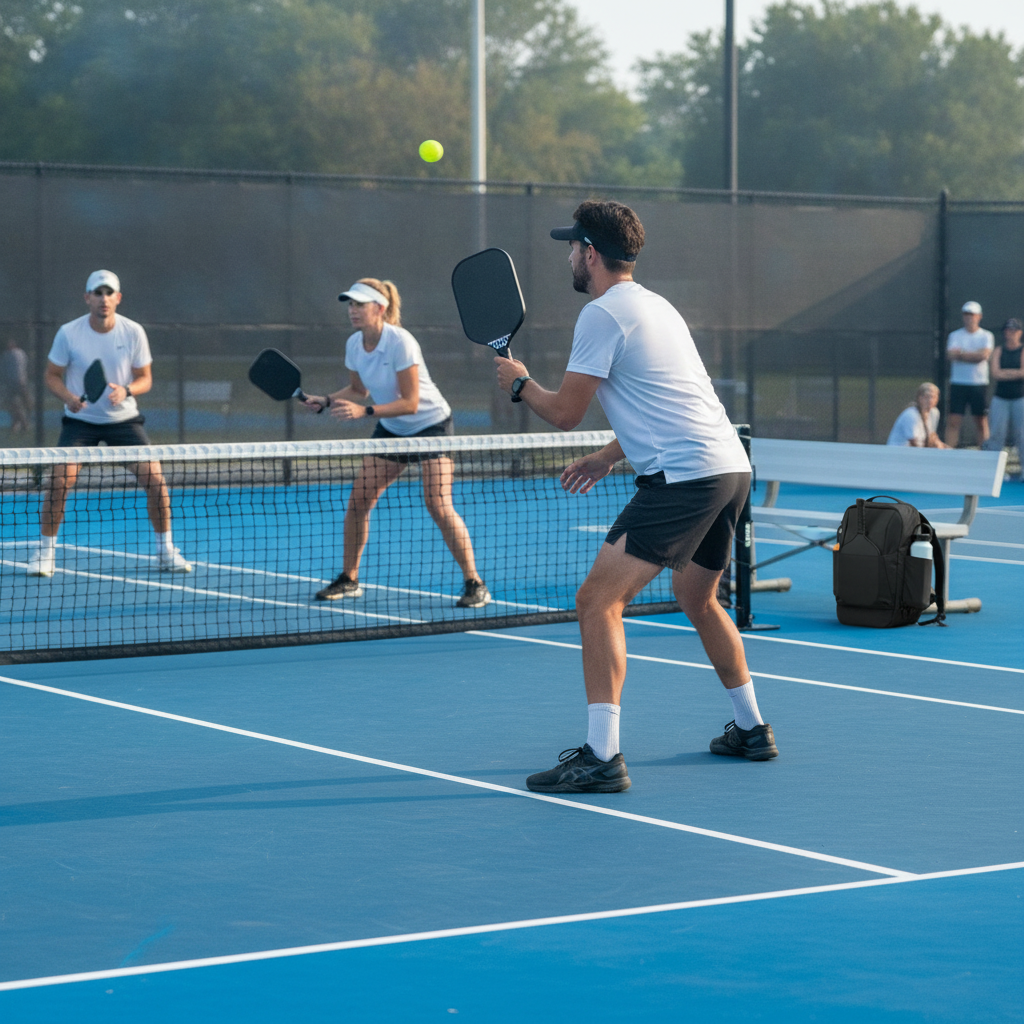
Study any competitive pickleball match at the 4.0+ level and you'll see the same pattern: most points end within a few feet of the NVZ line. Not because players end up there by accident — because the team that controls the kitchen line controls the match.
Getting to the kitchen first forces your opponent to hit up. Hitting up gives them a low-percentage attack window. Stay patient in the rally, keep the ball below net height as often as possible, and let them take the high-variance shot.
The middle target. About 60–70% of your dinks should go down the middle of the court. The net is at its lowest point there. Your opponent has to decide who takes it. And a ball that no one owns often becomes an error. It's not flashy — it's effective.
One of the biggest jumps between 3.5 and 4.0 play is recognizing when NOT to attack from the kitchen. If the ball is below net height, resist the speed-up. Reset it, stay patient, and wait for the ball you can put away cleanly from above the tape.
Serve and Return Discipline as Your Foundation
Unforced serve errors are free points you're handing your opponent. They cost you nothing in effort — they cost you momentum. In a close match, two unforced serve errors in a game can be the difference between advancing and going home early.
The tournament serve: Deep, with spin, to the backhand. That's the default. Boring and reliable beats clever and inconsistent every time. A deep serve jams your opponent's transition to the kitchen. Spin adds another variable to manage. Target the backhand because it's usually the weaker return.
The tournament return: Deep cross-court, then move immediately to the kitchen. The goal isn't to win the point on the return — it's to neutralize the serving team's advantage. A deep cross-court return buys you time to reach the kitchen and puts the ball in a non-threatening location for the server's third shot.
The third shot gap — the moment between return and kitchen approach — is where rec players and tournament players diverge most. Tournament players know what they're doing: third shot drop if the ball is deep, drive if it's short. Rec players guess. If you can train that decision to be automatic, you've closed a significant percentage of the skill gap.
Targeting the Weaker Player Without Being Obvious About It
Let's just say it plainly: in doubles, there's almost always a weaker player on the other side. Targeting them is legal, standard, and practiced by every 4.0+ tournament team. The strategy guides that dance around this are doing you a disservice.
The mistake most intermediate players make isn't failing to target the weaker player — it's targeting them so obviously that both opponents notice and adjust. Hit directly at the weaker player on 9 out of 10 balls and they stop making errors. Their partner steps in to cover more court. They get sharp from the repetition. Your advantage evaporates by the middle of game two.
The smarter approach: target the weaker player 60–65% of the time, but use the stronger player strategically to reset their partner's attention. Pull the stronger player wide, create an open lane, then redirect to the weaker side. Use the stronger player's position to set up your attack on their partner — not to avoid them altogether.
Watch for this pattern in pool play: when you hit to the stronger player, does the weaker one drift? If so, the middle becomes your most effective target — the stronger player reaches, the weaker one hesitates, and the middle ball dies between them.
The Reset-to-Attack Pattern: When to Counter, When to Wait
Tournament pickleball is patient until it's suddenly not. The players who can turn the dial between patience and aggression — and choose the right mode at the right moment — win more than they should on paper.
The reset: When you're forced into a defensive position, don't panic-attack. Get the ball back soft, low, to the kitchen, and recover your position. A soft reset from a bad spot resets the rally to neutral. A speed-up from a bad spot gifts your opponent an easy attack window.
The hardest reset to commit to is the one after a near-miss. You're off-balance, the ball is below the net, and every instinct says "attack this before they set up." Don't. A ball hit upward from a defensive position is exactly what your opponent is waiting for. Dink it back, get to the kitchen, and rebuild.
The attack: When the ball is above net height, when your opponent is out of position, when you've worked them back into their weaker side — that's when you shift gears. Commit to the attack. Half-speed speed-ups are worse than no attack at all; they give your opponent time to reset and you've now revealed your pattern.
If something isn't working after five consecutive errors on the same shot, change the target or the approach. One or two mistakes isn't a pattern. Five consecutive errors is telling you something important — listen.
Energy Management Across a Long Tournament Day
A full tournament day can mean 6–8 hours on court across pool play, elimination rounds, and semifinals. The players who manage energy across that arc have a significant edge over players who burn hot in early rounds and fade by the quarterfinals.
A few things that matter more than most people think:
- Eat between rounds, not just water. Light carbs — fruit, a bar, something with accessible energy. Heavy meals mid-tournament will slow you down; nothing at all is worse. Your decision-making on the court at hour six is directly connected to whether you ate at hour two.
- 5-minute mental reset between matches. Not reviewing every error. Not running the match tape in your head. Just five minutes of quiet — get off the court, sit down, let the adrenaline clear. The players who go straight from one match into reviewing the next one burn cognitive resources they'll need later.
- Don't blow out your energy in early rounds. Winning 11–8 in pool play conserving energy beats winning 11–2 while leaving nothing in the tank for the bracket round.
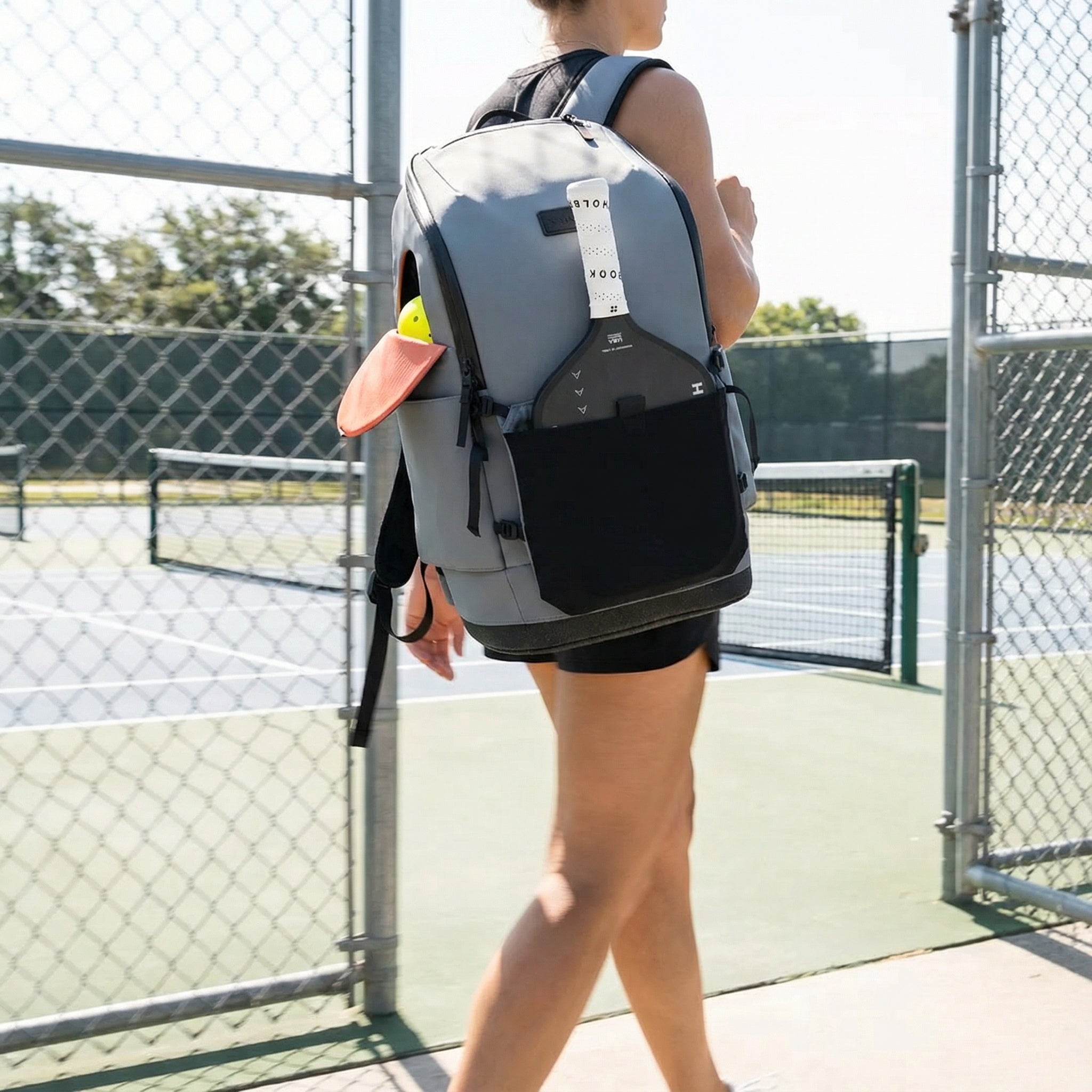
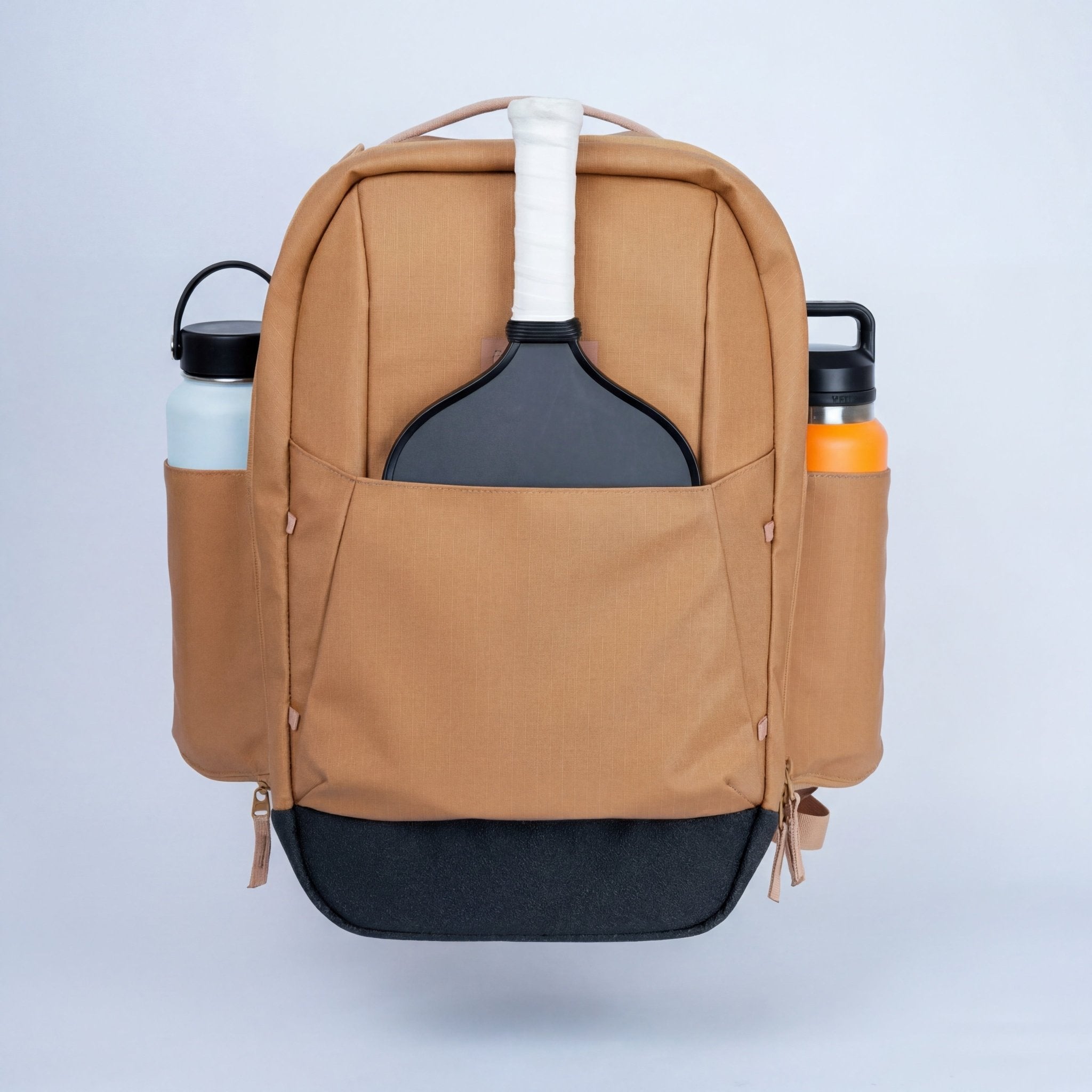
This is where the right gear earns its keep. A full tournament day means paddles, water bottles, a change of clothes, nutrition, and recovery supplies — all organized so you can grab what you need between rounds without digging. The Court Caddy is designed specifically for this: modular paddle sleeve, separate compartments for dry and wet gear, and a 15" padded laptop sleeve for players who can't fully unplug even at a tournament.

Adjusting Between Games: What to Change at the Changeover
You have roughly 60 seconds between games. That's enough time for one good adjustment — not a full strategy overhaul.
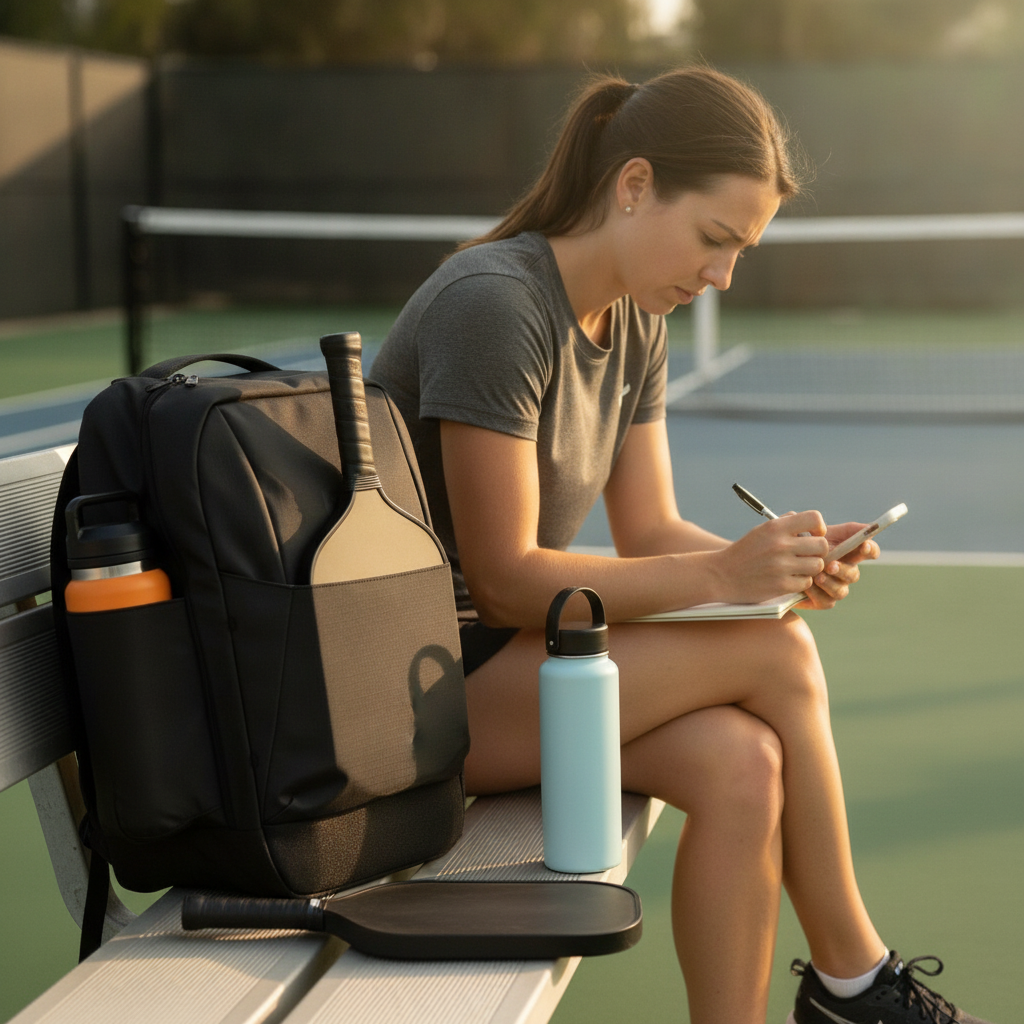
The three questions to answer in that minute:
- What pattern are they running that's working against us?
- What's working for us that we're underusing?
- What's one specific thing we change game two?
One adjustment. Change the serve target. Switch from attacking crosscourt to attacking down the line. Move your stacking position to create a different look. Pick one thing and run it deliberately for the first five points of game two. If it works, keep it. If not, you still have a full game to find your next lever.
"The changeover isn't about calming down — it's about recalibrating. The best adjustment I ever made was simply switching which side of the court I served from. Took their whole game plan away in about three points." — Topher, FORWRD Co-Founder
One trap to avoid: spending the entire changeover reviewing what went wrong in game one. Whatever happened is done. The question is what you're going to do differently starting now. Players who dwell on errors in the changeover carry those errors into game two.
Closing Out Leads vs. Coming From Behind
Up 9–5 in game three, and you suddenly start missing shots you've been making all match. You know what that is — and so does your opponent.
Closing out a lead is one of the most common choke points in tournament pickleball. The temptation is to get fancy, try something creative, close it with a highlight shot. Don't. Go back to your core pattern — the three or four shots that got you to 9–5 in the first place. Your opponent is desperate. They're going to take risks. Let them. Your job is to not give them a free error to build on.
Use timeouts. Up 9–5 and they run off three straight points? Call time immediately. Stop the run before it becomes 9–8. A single timeout can flip momentum more reliably than trying to out-hit them while they're feeling it.
Coming back from behind is a different game entirely. Down 3–9 in game three? Attack mode. The conservative strategy that works when you're ahead becomes a liability when you're chasing. You need variance — you need them to feel uncomfortable, to make errors they wouldn't make if the score were close. Take the risks you wouldn't take at 7–7. One 3–0 run can change the entire emotional tenor of the match.
The math: you need them to feel pressure they weren't expecting. Passive play when you're down 6 points just confirms the result. Aggressive, structured play — specific attacks to their weaknesses, not random hero shots — gives you the only realistic path back.
FAQ: Tournament Strategy Questions
What is the best strategy for pickleball tournaments?
Control the kitchen line, minimize unforced errors, and target patterns rather than power. Tournament points are won more often by consistency and smart targeting than by outright athleticism. Know your game plan before the first serve, and trust it when the score gets tight.
How do you prepare mentally for a pickleball tournament?
Define a simple game plan with 2–3 core shots or patterns you're committing to. Accept that you'll lose some points — the goal is winning more than you lose, not playing perfect. Between matches, reset mentally (5 minutes, off the court), and reframe adjustments as intelligence rather than corrections.
How do you win a tournament in pickleball?
Win the kitchen line battle more often than not, serve deep and return deep to start every rally from a neutral position, and scout opponent patterns during warm-up and pool play. In close matches, the team that makes fewer unforced errors at the kitchen almost always wins. Fitness and energy management across a long day matter more than most players prepare for.
What do tournament pickleball players do differently than rec players?
Tournament players make deliberate, pre-decided choices under pressure — rec players improvise. They target opponents' weaknesses consistently rather than just playing to their own strengths. They reset willingly when forced into bad positions instead of panic-attacking. And they use the changeover to adjust rather than recover emotionally.
How important is serving strategy in pickleball tournaments?
Very. An unforced serve error is a free point you gave away before the rally started. The tournament serve isn't about power or trickery — it's about depth, consistency, and targeting the backhand to create a difficult return. Ace serves are a bonus; reliable deep serves that set up your third shot are the actual goal.
How do you handle momentum swings in a pickleball match?
Call a timeout the moment you sense a momentum shift — don't wait until it's a full 5-point run. Between points, slow down your reset routine. Focus on the next point only, not the score. Opponents on a run are usually feeling it emotionally — a 60-second stoppage disrupts their rhythm more than it disrupts yours.
The Bag That Keeps Up With Your Tournament Game
Your strategy only works if you're organized and ready. The Court Caddy holds up to 4 paddles in its modular sleeve, has a dedicated 15" laptop compartment, and uses YKK AquaGuard zippers that hold through outdoor all-day use. Designed with feedback from 500+ players who play tournaments, not just open play.

Leave a comment
This site is protected by hCaptcha and the hCaptcha Privacy Policy and Terms of Service apply.