

Last updated: June 2026
The right shot in pickleball comes down to one question above everything else: where is the ball when it reaches you? A ball above your hip crossing the net above the tape is attackable. A ball arriving at hip height or below, coming in soft — that's a dink or a reset. Everything in between requires one more read: where your opponent is standing.
Most players at 3.5–4.0 level lose points not because they swing badly, but because they swing at the wrong ball. Attacking something below the net. Resetting a pop-up that was begging to be put away. These aren't technique failures — they're decision failures. And decision failures are fixable with a framework you can apply in three seconds.
This is that framework.
The Three Decisions: Attack, Reset, or Dink — What Each Means
Every ball in a rally gives you three options. Attack — add pace, force your opponent into a fast decision, try to end the point or shift momentum. Reset — remove pace from the exchange, land the ball softly in the kitchen, return the rally to dinking pace. Or dink — keep the exchange going at kitchen line speed, applying pressure through placement rather than pace.
None of these is always right. All three are wrong at the wrong moment.
The attack gets too much credit at rec level. Players want to end rallies, not manage them. The problem isn't attacking. It's attacking the wrong ball. Speed up a ball arriving below the net and you're handing your opponent a ball they can counter from above — you're hitting upward, the pace is recoverable, and if they're positioned well, they've got an easy speed-up right back at you. That's not a winner; it's an invitation.
The reset gets almost no credit, which is exactly why 3.5 players lose the points they lose. A proper reset — paddle face open, slight lean into the ball, absorbing pace rather than redirecting it — stops the bleeding. It buys time. It returns the rally to a state where you have real options. Most players try to counter hard balls instead of absorbing them, and most of those counters pop up.
The dink is the weapon that looks passive. A dink placed 6 inches from the sideline forces your opponent to reach. That reach compromises their paddle angle on the next shot. The ball comes back predictably. That's the ball you attack. The dink doesn't win points directly — it engineers the ball that does.
How to Read Attackable Balls vs. Neutral Balls vs. Defensive Balls
Here's the Ball Zone Framework. Three zones, three responses. Learn this and your shot decisions stop being instinct and start being skill.
Attack Zone: Ball arrives above hip height AND crosses the net above the tape. If both conditions are true and you're balanced, this is an attack candidate. You're not guaranteed to attack — opponent position still matters — but this is the ball you're training yourself to recognize and exploit.
Neutral Zone: Ball arrives at hip height or at the net tape level. Dink. Not because you can't attack, but because the risk-reward flips. A ball arriving at tape height that you speed up travels flat or barely downward. Your opponent has time to set and counter. A cross-court dink aimed at their backhand side 12 inches from the sideline creates more scoring pressure than the speed-up would — without the risk of a clean counter-attack opportunity.
Defense Zone: Ball arrives below hip height or coming up from below the net. Reset. Full stop. When players try to speed up a ball arriving below waist height, it pops up the vast majority of the time. Track it in your own game for a session. Your opponent then gets the high ball you've handed them, and you've created the exact problem you were trying to solve.
The useful thing about this framework: it applies everywhere on the court. Kitchen line, transition zone, mid-court off a lob — ball height relative to your hip and to the net is the read, regardless of where you're standing when you hit.
The Speed-Up: When to Attack and What Makes a Ball Worth Attacking
Three questions. You have about three seconds to answer them before the ball is past you.
- Is the ball above net height?
- Is your opponent's paddle below their shoulder?
- Are you balanced and in position?
All three yes: consider attacking. Any one no: dink or reset instead.
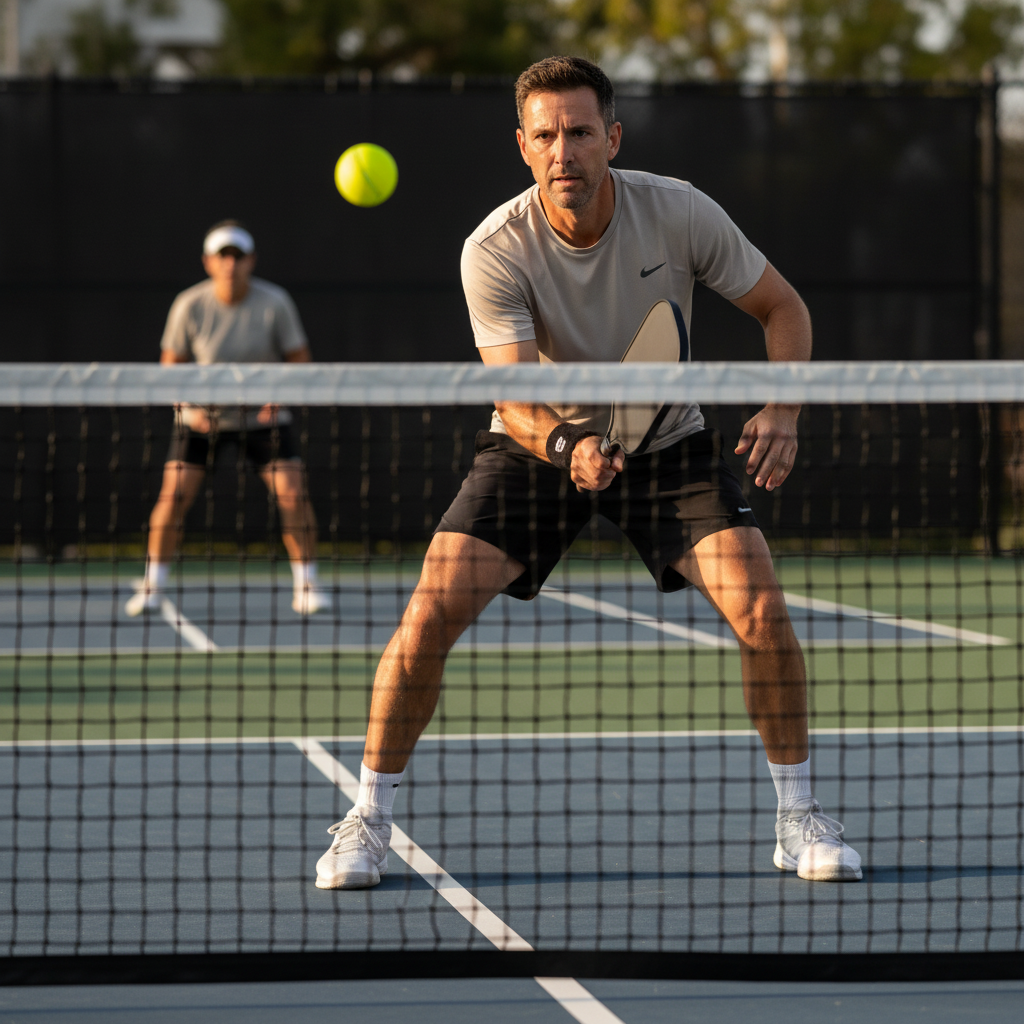
The second question is what most players skip — and it's arguably the most important. Your opponent's paddle position tells you whether they can counter. Paddle up and ready means a speed-up gives them a ball they can block or counter-attack. Paddle low — they just hit a dink, or they're retreating — means the speed-up finds them out of position. Same ball height, completely different risk profile depending on that one detail.
Where to aim: the body. Specifically, the zone from paddle-side hip to paddle-side shoulder. It's awkward territory — too tight for a clean forehand, too far for a comfortable backhand. Your opponent has to decide which side to use in a fraction of a second. That half-second of indecision is what the placement is creating, not just the pace.
The reflex attack is the most common speed-up error at 3.5–4.0. The rally's been long. A neutral ball comes through. You attack out of impatience rather than opportunity. The contact can feel clean and the result can still be negative. If the ball didn't meet the three-question checklist, the speed-up is a bad decision regardless of how it felt off the paddle.
Worth understanding: at 4.0+ level, the first speed-up rarely ends the point outright. It pulls your opponent into a defensive reply that gives you the ball at Attack Zone height. The initial speed-up is the setup — the follow-up is the winner. Shot selection is sequential. Think two balls ahead.
For a deeper look at speed-up mechanics and the 4-trigger framework, see our guide to pickleball speed-up attack strategy.
The Reset: When to Slow It Down and How to Execute Under Pressure
The reset is an emergency response with a specific job: neutralize your defensive position and return the rally to dinking pace so you can regain kitchen line control.
You don't choose a reset because you like playing soft. You choose it because trying to counter a hard ball from below the net puts you in a worse position almost every time. The reset acknowledges a difficult situation and solves it — rather than compounding it by forcing a low-percentage attack.
Physical execution: paddle face open (tilted slightly back toward the sky), slight forward lean into the ball, soft grip, absorb the pace rather than redirect it. The ball should land softly in the kitchen — 2 to 3 feet from the net, somewhere in the middle third. The goal isn't placement brilliance. It's landing non-attackable. Give your opponent nothing to speed up, and advance to the kitchen while they figure out what to do with the soft return.
What players call resetting but isn't: jabbing or poking at the ball with pace. That's a desperate dink, not a reset. A real reset requires a soft grip and the willingness to let the ball absorb into your paddle face rather than snapping through it. The difference in sound off the paddle is noticeable once you know what to listen for.
The reset from the transition zone vs. at the kitchen line: same mechanics, different context. At the kitchen, you're absorbing a speed-up or a counter. In the transition zone, you're dealing with a ball at your feet while trying to advance. In both cases, the reset is the exit route — not the shot that wins the point, but the shot that gets you to a position where you can.
For drill progressions and footwork specifics, see our full pickleball reset shot guide.
The Dink: When Patience Is the Aggressive Play
At 3.5, the dink exchange looks like this: both players hitting back to the middle, nobody creating pressure, both waiting for an error.
At 4.5, it looks like this: one player angling each dink an inch closer to the sideline, pulling the opponent slightly wide with every exchange, building toward a reach that compromises the next shot. That compromised shot comes back predictably. Then the attack lands.
Patience in the dink game isn't passive. It's the slow construction of an angle advantage that eventually forces an attackable ball. Players who win the kitchen exchange understand this. Players who lose it are usually doing one of two things: attacking neutral dinks out of impatience, or dinking aimlessly back to center with no intention behind the placement.
Three things that make a dink effective — not just safe, but strategically effective:
- Placement near the sideline. The last 12 inches near the sideline forces a reach. Midcourt dinks create zero pressure.
- Low net clearance. A dink barely clearing the tape is harder to attack than one floating 18 inches above. Lower height limits the attack angle your opponent can take.
- Cross-court when pulled to center. If you've been pulled toward the middle, a cross-court dink opens the far sideline and forces your opponent to sprint or let the ball drop into the corner.
"The dink exchange is chess, not cardio. Every dink you hit should be setting up a problem — not just keeping the ball in play." — Grub, FORWRD Co-Founder
For the full tactical dink system — including the three named patterns used at 4.0+ competitive level — see our pickleball dinking strategy guide.
Shot selection is the meta-skill that connects every other chapter of the tactical game. For the full strategic framework covering every phase of play, see our complete pickleball strategy & tactics guide.
The Decision Matrix: Court Position + Ball Height + Opponent Position
Ball Zone covers 80% of the decision. The other 20% is opponent position — particularly for Neutral Zone balls where either a dink or an attack could be defensible.
| Ball Zone | Opponent Position | Decision |
|---|---|---|
| Attack Zone — above hip, above net | Off-balance, paddle low | Attack — ideal scenario |
| Attack Zone — above hip, above net | Set, paddle up and ready | Dink cross-court — don't give them a counter |
| Neutral Zone — hip height, at tape | Open court gap available | Dink to the gap |
| Neutral Zone — hip height, at tape | Fully positioned and ready | Continue dinking, build your angle |
| Defense Zone — below hip, below net | Either / any | Reset — no exceptions |
The in-between ball: sometimes a ball sits exactly between zones — above waist but not cleanly above the net, or at tape level with some pace behind it. In those cases, read opponent position first. Off-balance or retreating? Lean toward attacking. Set and ready? Lean toward reset or dink. The in-between ball is where most reflex attacks happen at club level — recognizing it as a gray zone (rather than a clear Attack Zone ball) is the adjustment that drops your unforced error rate.
One honest check: ask yourself "would I be comfortable if this ball came back at me at pace?" If yes — you're in an attack position. If no — reset, advance, get to a better situation. The honest answer tells you everything your hesitation won't.
Complete Your Pickleball Setup
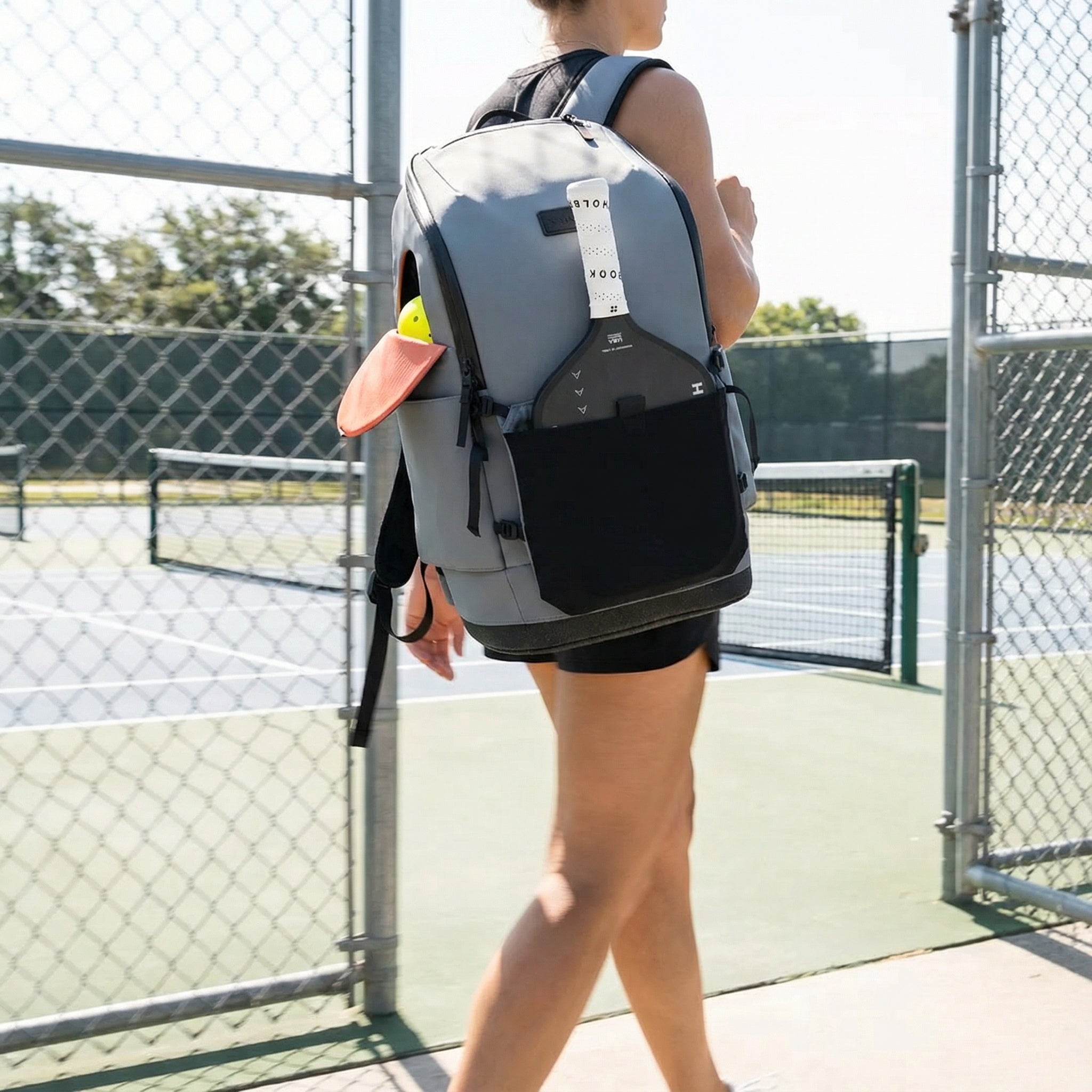
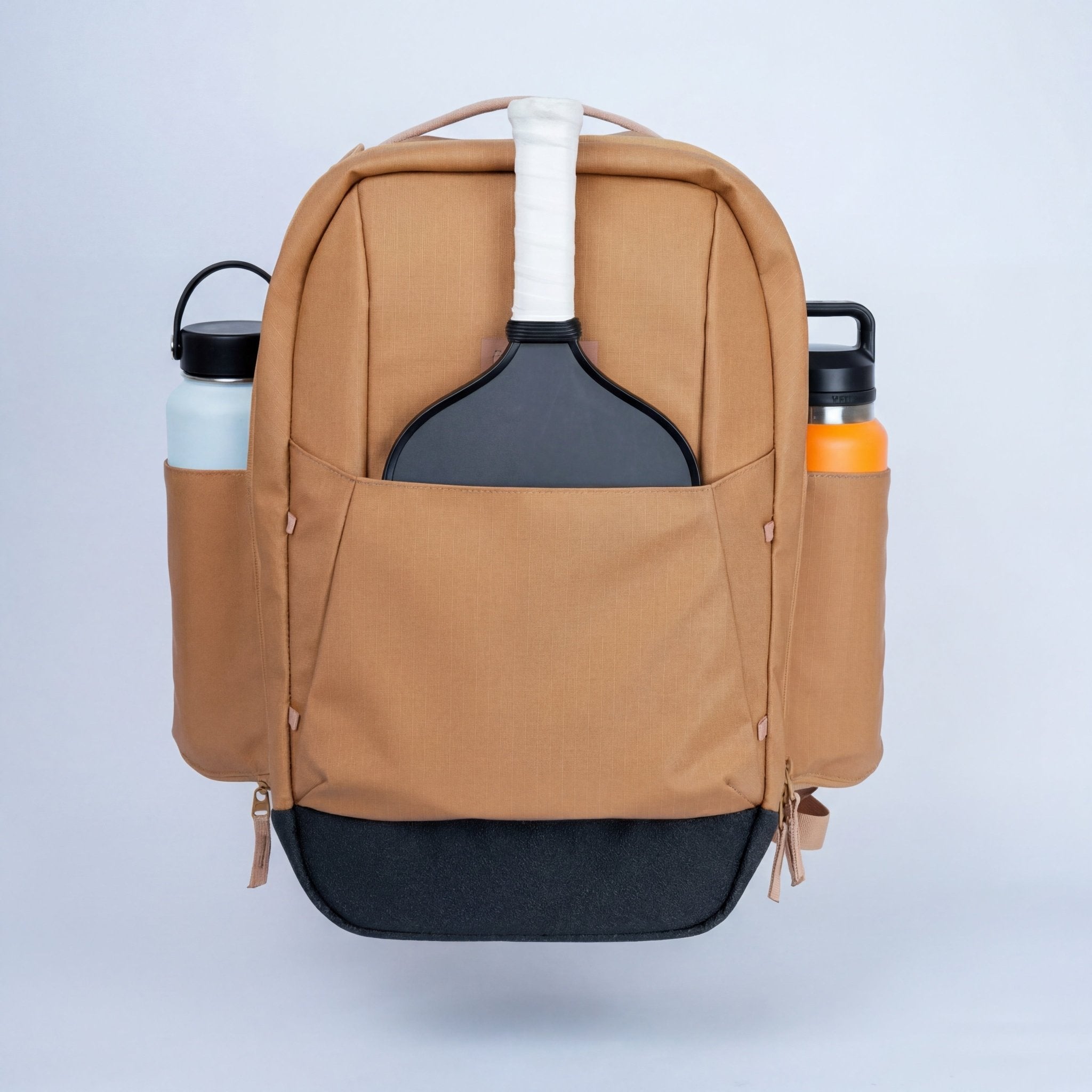
Good shot selection is a mental skill. The right bag is a physical one. If you're dialing in your decision matrix on the court, the FORWRD Court Ranger V2 ($195) keeps your gear organized so your focus stays on the game — 16" laptop sleeve, 5–6 paddle capacity, YKK AquaGuard zippers, built with 500+ real players.

Our Bag Pick for Strategy-Focused Players
The Court Ranger V2 carries everything you need for a full training session — paddles, balls, towel, and your 16" laptop for video review afterward.
FAQ: Pickleball Shot Selection Questions
When should you speed up in pickleball?
When the ball arrives above hip height, crosses the net above the tape, your opponent's paddle is low, and you're balanced. If any of those four conditions isn't met, dink or reset instead. Attacking a marginal ball against a prepared opponent is a negative trade even when the contact feels good off the paddle.
When should you reset in pickleball?
Any time a ball arrives below your hip or below net-tape level. These balls produce pop-ups when attacked at a high rate — you're fighting geometry. The better play is a soft reset to the kitchen, then advance and create a better attack opportunity once you're at the line.
How do you know if a dink is attackable?
Ball height above the net tape is the primary signal. If it's clearing the net by 10 or more inches at or above hip height, it's worth evaluating. Then check opponent paddle position. A ball that meets both criteria against an out-of-position opponent is Attack Zone. The same ball against a set opponent often dinks better than it attacks.
What is the difference between attacking and resetting in pickleball?
An attack adds pace and forces a fast reaction from your opponent. A reset removes pace — you absorb a hard ball and return it softly to the kitchen, neutralizing offensive pressure and returning the rally to dink pace. Different situations, different mechanics, different goals: attacks end exchanges, resets restart them on your terms.
How do you decide what shot to hit in pickleball?
Use the Ball Zone Framework: above hip and above net → evaluate attacking. At hip height or net tape level → dink. Below hip or below net → reset. Then for Neutral Zone balls, layer in opponent position — are they set and ready, or off-balance and reaching? That final read is what turns a borderline dink into a well-timed attack.
What shots should you avoid from the transition zone?
Attacking balls below waist height. This is the single most common unforced error at 3.5–4.0 level. A ball at your feet in the transition zone is a reset — absorb it, land it softly in the kitchen, and advance to the line. Once you're at the kitchen, your attack options are dramatically better than they were from mid-court.

Leave a comment
This site is protected by hCaptcha and the hCaptcha Privacy Policy and Terms of Service apply.