

Last updated: June 2026
At 3.5, almost everyone knows you should keep the ball in the kitchen during a dink exchange. At 4.0+, that's not enough. The players who win the kitchen battle aren't hitting better dinks — they're hitting smarter ones, aiming 3 inches lower and 6 inches more cross-court for a reason: to create the specific situation that sets up the next attack. That's the gap between trading dinks and winning dink exchanges, and this guide closes it.
If you're newer to dinking and want to nail the basics first, start with our beginner's guide to dinking before coming back here for the tactical layer.
Why the Dink Exchange Decides More Points Than You Think
Track your last 20 match losses and count where the points actually ended. Most players assume it's the big errors — shanked overheads, drive volleys that sail long. But at 3.5–4.5 level, the majority of points end in the kitchen exchange: one player sends a dink that sits up a half-inch too high, the other speeds it up, and the point is over in one shot.
The dink exchange isn't a neutral zone where two players just wait each other out. It's the most tactical part of pickleball, and the players who understand it as strategy rather than patience win at a meaningfully higher rate. The most common mistake at 3.5: hitting every dink back to the middle of the kitchen. That shot creates zero pressure — your opponent can reach it easily, they're balanced, and they have full dink-pattern options on the next ball. You're essentially handing them the initiative with every soft return to center.
Dinking with intention means every dink is setting up a specific problem for your opponent. Even if you don't win the point off that dink directly, you're building toward a ball that becomes attackable — a pop-up, an off-balance return, a reached backhand that comes back with no pace. Dinking strategy is the full system, not just the single shot.
For the broader tactical framework this fits into, see our complete pickleball strategy & tactics guide.
The 3 Dink Zones: Where You Aim and Why It Matters
Advanced dinking isn't about sending the ball back wherever it's comfortable. It's about picking a target zone and understanding what that target creates. Three zones. Each forces a different situation for your opponent.
Zone 1 — The deep cross-court corner. Target: the last 12 inches of the kitchen near the sideline on the opposite side. This is the "golden zone" — the most pressured dink target available. It pulls your opponent wide, forces them to reach with their paddle arm extended, and compromises their next contact point. An opponent dinking from a wide, extended reach has a fraction of the shot options a balanced, centered opponent has. You don't have to win from this dink; you just need to move them enough that their return comes back softer or higher.
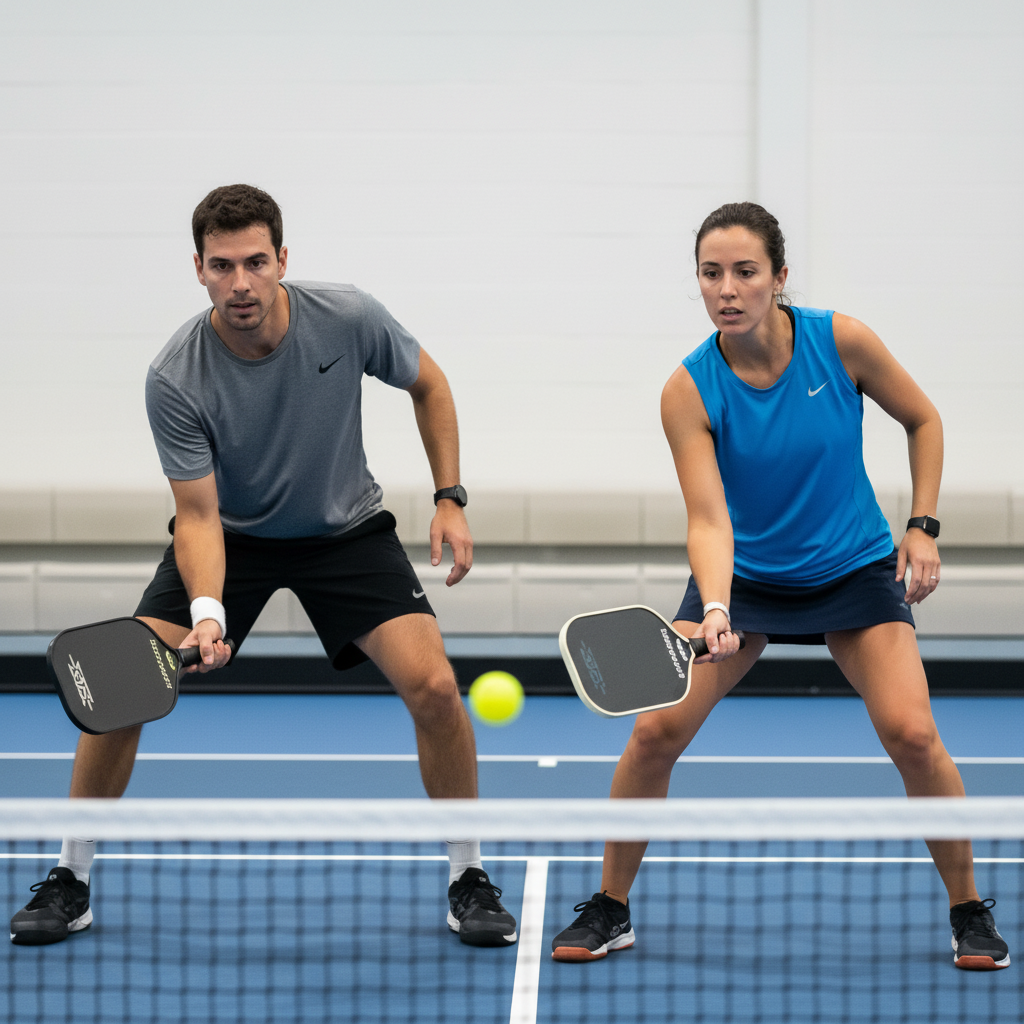
Zone 2 — The middle (in doubles). Target: the center line, directly between the two opponents. This exploits the coverage split — neither player is quite sure whose ball it is, which costs them a fraction of a second. That hesitation either produces an error, or it produces a rushed dink that sits up. Use this against teams that have a strong left-side player — the middle dink forces the weaker righty player to take a forehand that's crowded, or the stronger player to reach across awkwardly. Middle dinking isn't passive. It's a calculated gap exploitation.
Zone 3 — At the hip-to-shoulder transition. Target: the opponent's hip or low shoulder — the exact boundary between forehand and backhand. This is the "body jam" dink. It forces an awkward decision: do they take it on the forehand side with a collapsed elbow, or try to backhand it with a crowded shoulder? Either way, the return is usually weak, shortened, or high. Body dinks are underused at 3.5 because players aim at the paddle, not at the body position. Start targeting the opponent's dominant-side hip and watch the quality of their returns drop.
Angle Dinks vs. Straight Dinks: The Tactical Trade-Off
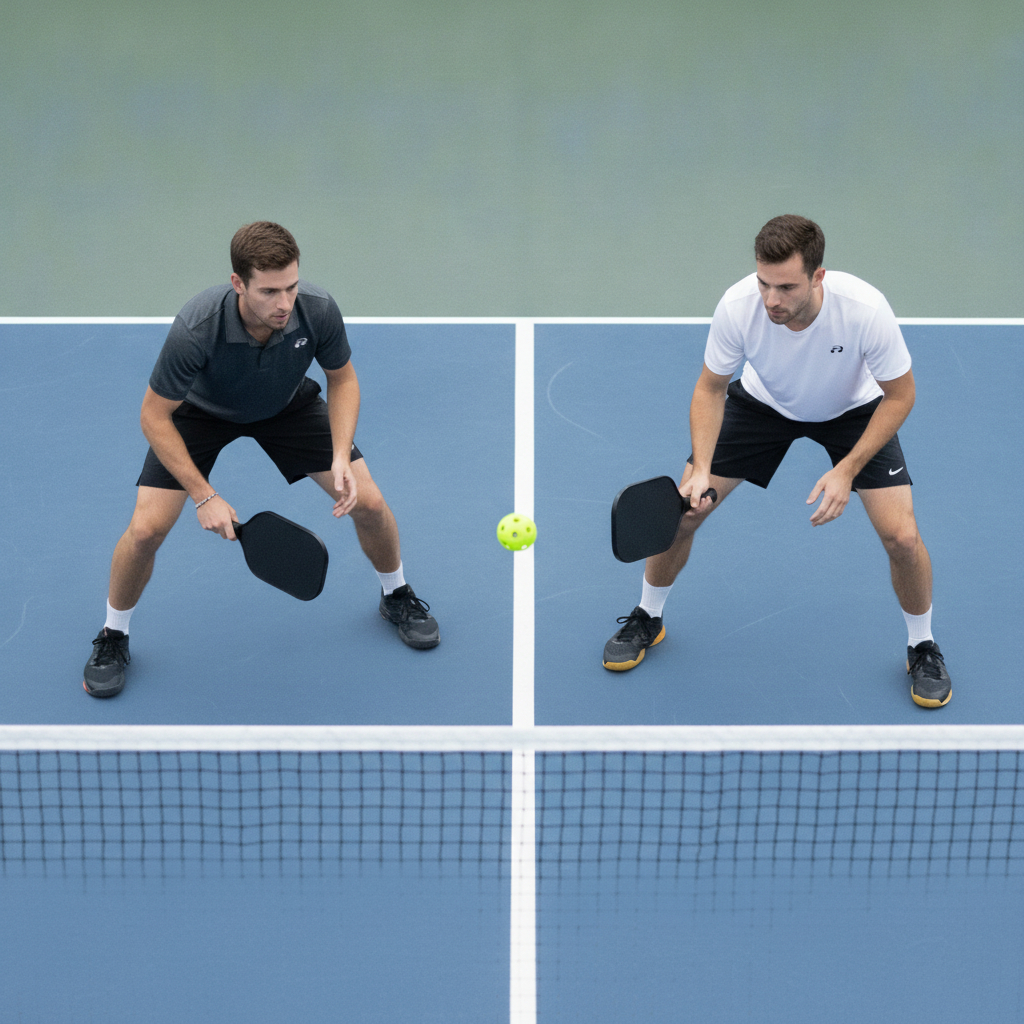
Cross-court dinks beat straight dinks at advanced levels for a geometric reason: the cross-court angle covers more net clearance and a wider landing zone, but more importantly, it forces your opponent to cover a wider court position to return it. A straight dink down the line is easier for your opponent to handle — they barely need to move, and they have a straight return path back at you.
The trade-off: cross-court dinks travel farther and give an alert opponent more time to set up. Straight dinks arrive faster and give your opponent less reaction time, which matters when the exchange is moving quickly and you're trying to create a tempo advantage rather than a position advantage.
Use cross-court dinks when: you want to move your opponent laterally, create the open middle or open sideline for an eventual attack, or when you're in a controlled exchange and have time to pick a precise target.
Use straight dinks when: you want to accelerate the tempo, your opponent has positioned themselves for a cross-court, or you're trying to use the sideline angle before your opponent closes it off.
The 4.0+ pattern is to use cross-court dinks to set up the open court, then use a straight dink or a speed-up down the line as the finishing move. Cross-court opens. Straight or body closes.
Setting Up the Speed-Up: How to Create the Ball You Want to Attack
The speed-up doesn't come from waiting for a perfect ball. It comes from engineering one. That's the distinction most guides skip.
Here are the three named patterns FORWRD uses for setting up a speed-up off the dink exchange. These aren't abstract tactics — they're play calls. Each has a setup phase, a trigger condition, and an execution cue.
Pattern 1: The Angle-Open. Dink cross-court to the opponent's backhand corner, drawing them wide. Keep the dink tight to the sideline — the golden zone. After two or three of these, their weight is shifted toward their backhand side, and the center of the court is open. Speed up down the middle or at their backhand hip. The setup created the opening; the speed-up exploits it.
Pattern 2: The Middle Sneak. In doubles, alternate between cross-court dinks and middle dinks. Watch for the moment the stronger player moves to cover the middle — that leaves their partner's side open. Speed up low to the now-exposed side, ideally at the weaker player's backhand or hip. The middle dinks weren't passive; they were forcing a positioning response that you then punish.
Pattern 3: The Speed-Up Bait. Keep dinking soft and cross-court until you see your opponent lean and reach for a wide ball, paddle face opening upward as they extend. That open paddle face on the next contact almost always produces a high, soft return. That's your speed-up trigger — don't wait for a better ball, because you just created one. Drive it at their backhand hip or down the line while they're still recovering position.
"The dink exchange is chess, not cardio. Every dink you hit should be setting up a problem — not just keeping the ball in play."
— Grub, FORWRD
Understanding the full speed-up attack framework — when to go, where to aim, how to read the response — is the next step once your dink pattern setups are reliable.
Reading the Pop-Up: When the Dink War Is Over
A pop-up is any dink that arrives above the top of the net — typically above mid-thigh. At that height, your opponent can drive it, speed it up, or roll it with topspin. The dink war is effectively over: they have a ball they can attack, and your job shifts immediately from offense to defense.
The read happens before contact. Watch your opponent's paddle face as they move toward the ball. An open face — tilted upward — almost always produces a high return. A closed or neutral face means the ball will stay low. Start reading the face, not the ball, and you'll have a head start on whether to be preparing to speed up or preparing to defend.
When you've created a pop-up off your dink pattern: don't hesitate. Speed it up immediately at the backhand hip or drive it through the middle. A pop-up that you don't attack resets the exchange with the momentum gone — your opponent recovers, and whatever positional advantage you just earned disappears.
When you've sent a pop-up: immediately shift your paddle up, step back slightly, and anticipate a speed-up at your body or backhand. You've given away the attack opportunity. Your job now is to absorb it and reset — the same mechanics as a defensive reset from any other hard ball.
Patience vs. Urgency: The Mental Game at the Kitchen Line
Here's the mistake that kills 3.5 players in dink exchanges: mistaking patience for passivity. Patience in the dink exchange doesn't mean waiting indefinitely for a perfect ball — it means continuing to run your pattern without making a forced error. Those are different things.
Passive dinking — hitting soft balls back wherever they came from, no target, no pattern — is actually impatient in a different way: you're not committing to anything, which means your opponent has nothing to respond to and nothing goes wrong for them. You're both just waiting.
Real patience is running Pattern 1 (Angle-Open) for five or six dinks in a row, even when nothing dramatic happens, because you know it's building toward a condition. You're patient about the outcome while being active about the setup. That's the mental game. Per USA Pickleball's official player rating framework, executing intentional dink patterns rather than reactive dinks is a defining marker of the 4.0+ player — and it shows in how you think through every exchange at the kitchen line.
When patience IS a mistake: when your opponent gives you a mediocre ball. At 4.0+, a ball that arrives at mid-thigh, even if it's not a perfect pop-up, is good enough to attack if you're ready and positioned. Waiting for a better ball while a good-enough ball sits in front of you is over-waiting. If you have a ball at mid-thigh or above and you're balanced — that's your trigger. Waiting for shoulder height when mid-thigh is available costs you attack opportunities you can't afford to leave on the court.
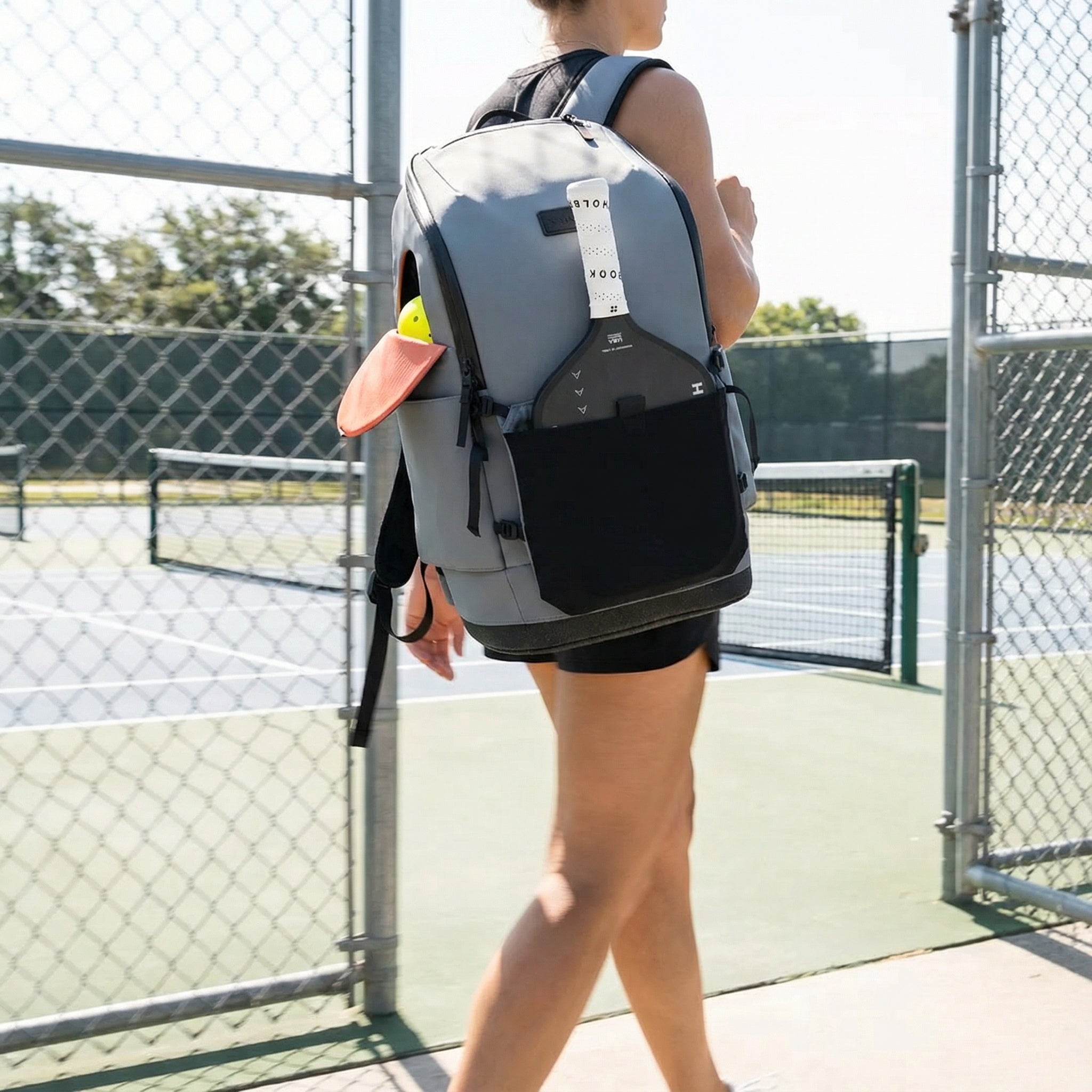
If you're running dedicated kitchen drilling sessions to build these patterns, the Court Ranger V2 has a quick-access paddle slot that makes grab-and-go drilling easy — useful when you're doing pattern repetition sets with a partner and want to switch paddles between drills without digging through a bag.
Complete Your Setup
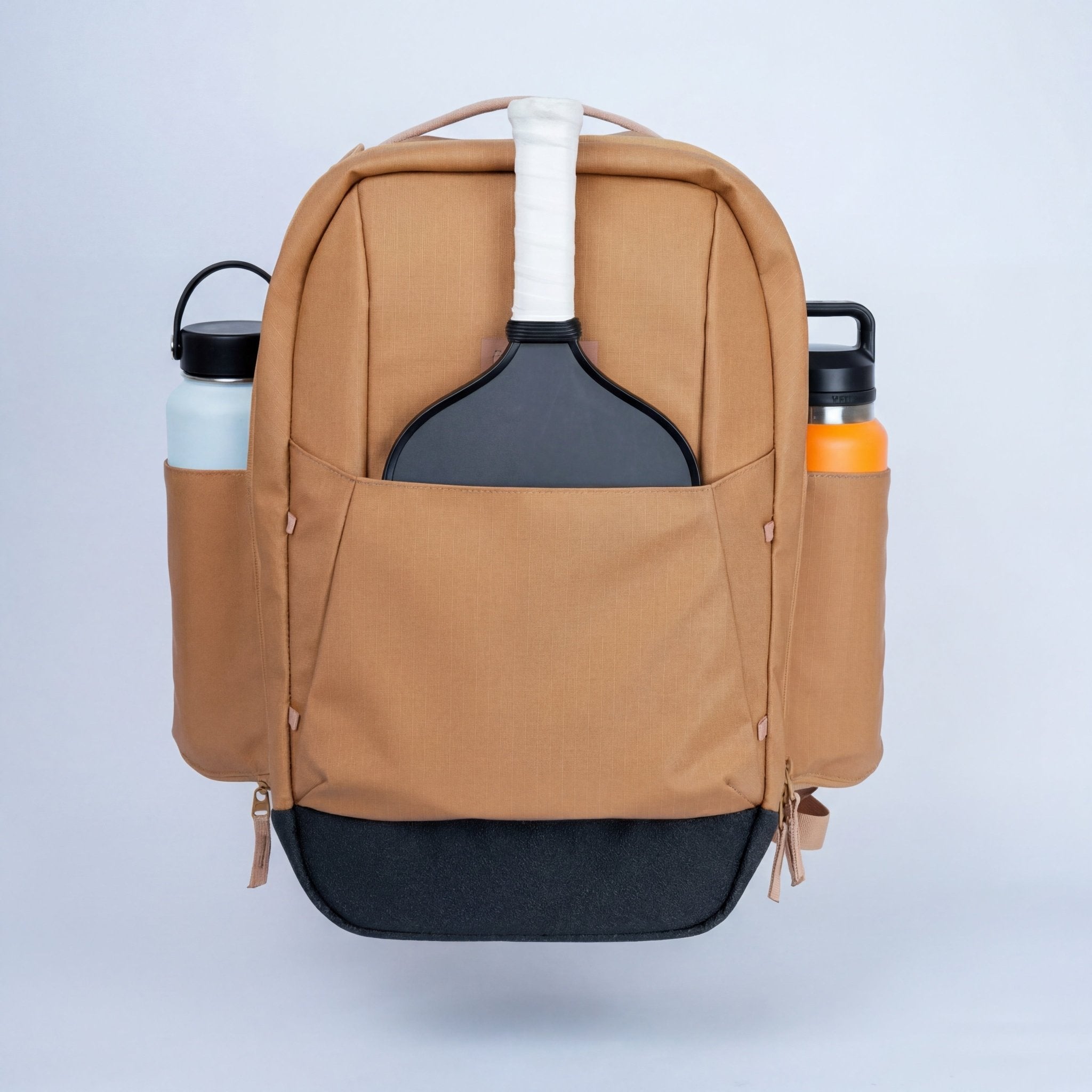
If you're drilling these dink patterns seriously, the bag matters. The FORWRD Court Ranger V2 ($195) has a quick-access modular paddle sleeve — switch paddles between drill reps without digging through a bag. Built with YKK AquaGuard zippers, designed with input from 500+ real players, featured in The Dink and Pickleball Effect.

For players who also carry a laptop or do court-to-office commutes, the Court Caddy Backpack ($325) handles the full kit — 4-paddle capacity, 15″ padded laptop sleeve, and the same YKK AquaGuard build.
FAQ: Pickleball Dinking Strategy Questions
What is the best dinking strategy in pickleball?
The best dinking strategy is pattern-based, not reactive. Pick a target zone — cross-court corner, middle, or body — and dink there with purpose until you create a condition you can exploit: an opponent moved wide, a covered middle that opens a sideline, or an extended reach that produces a high return. The goal of every dink is to set up the ball after the next one, not just clear the net.
How do you win a dink battle in pickleball?
Win the dink battle by creating pressure rather than waiting for errors. Use cross-court dinks to the golden zone (last 12 inches of kitchen, near sideline) to pull opponents wide. Use body dinks to force awkward decisions at the forehand-backhand transition. Use middle dinks in doubles to exploit coverage gaps. Win by engineering the pop-up, not by hoping for one.
Where should you aim your dinks in pickleball?
Three primary targets: the deep cross-court corner (pulls opponent wide), the middle of the kitchen (exploits doubles indecision), and the opponent's hip-to-shoulder area (forces a compromised forehand-to-backhand decision). Avoid aiming at the middle of the opponent's body or the center of the kitchen — those are easy to return with full options.
When should you attack during a dink exchange?
Attack when your opponent's paddle face opens upward on a return (sign of a pop-up coming), when they're reaching and off-balance, or when you're running Pattern 3 (Speed-Up Bait) and they've given you the forced high ball. Also attack when a ball arrives at mid-thigh or above and you're balanced — don't over-wait for a perfect ball when a good-enough one is in front of you.
What is a dink pattern in pickleball?
A dink pattern is a pre-planned sequence of dink targets designed to create a specific outcome — either a pop-up you can attack, a positional advantage, or an opponent decision forced in your favor. The three patterns in this guide (Angle-Open, Middle Sneak, Speed-Up Bait) each have a setup phase, a trigger condition when the pattern has worked, and an execution cue for what to do when the opportunity appears.
How do you set up a winner off a dink exchange?
Use the Angle-Open pattern: dink cross-court to the deep corner repeatedly until your opponent's weight shifts wide, opening the middle or the opposite sideline. When you see the opening — or when their reach produces a high return — speed up into the open court. The dink pattern doesn't win the point; it creates the position from which you can win it with one aggressive ball.

Leave a comment
This site is protected by hCaptcha and the hCaptcha Privacy Policy and Terms of Service apply.