

Last updated: June 2026
Poaching is legal in pickleball. There's no rule requiring players to stay on their side of the court during a rally — USA Pickleball rules are explicit on this. The problem isn't whether you can poach. It's that most players poach on the wrong ball, at the wrong time, and end up costing their team the point and their partner's trust in the same motion.
The difference between a poach that wins the point and one that loses it isn't speed or technique. It's reading what's about to happen before your opponent hits the ball.
What Poaching Is (And Why Most Players Do It Too Early)
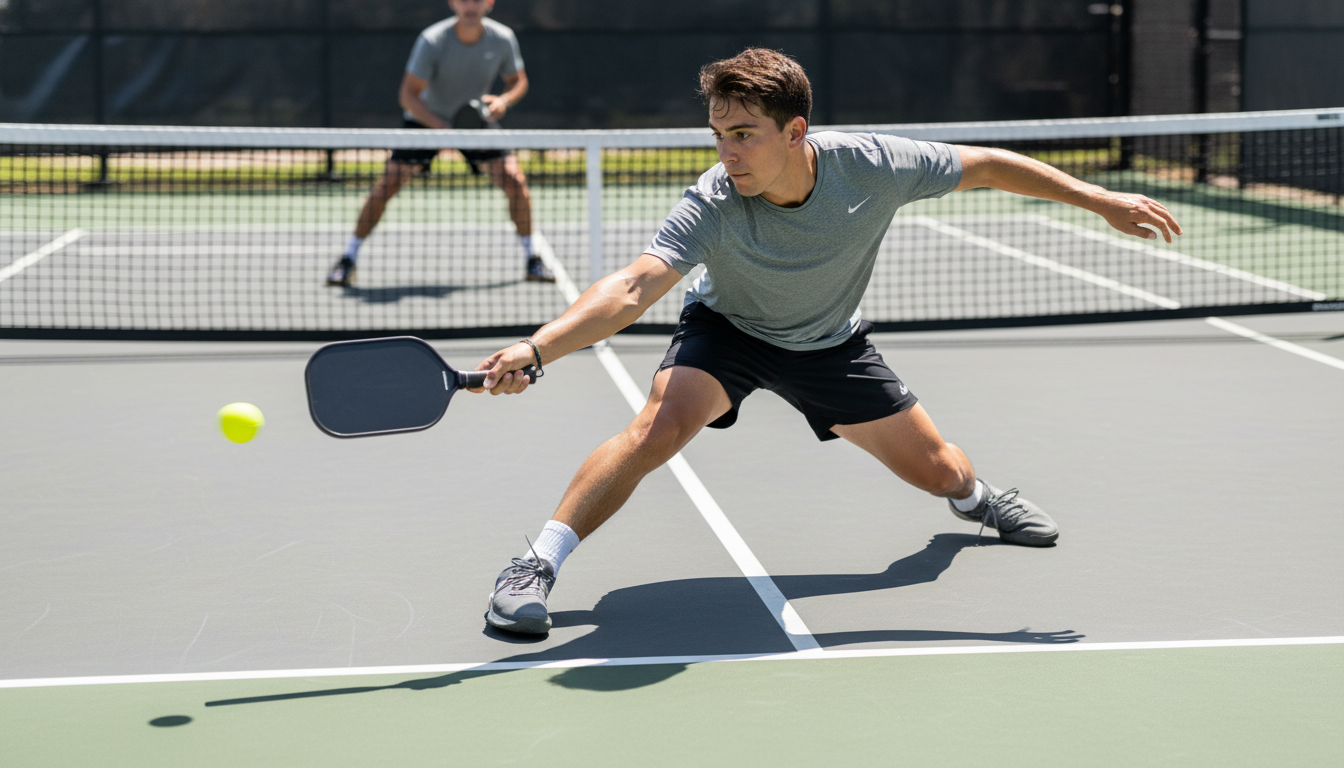
Poaching is crossing into your partner's side of the court to intercept a ball that would otherwise go to them. Usually this happens at the kitchen line, where you cut off a ball coming toward your partner's side by stepping across and volleying it before it reaches them.
Done right, it's one of the most effective plays in doubles — it creates angles your partner couldn't use, puts your opponents on the defensive, and disrupts their dinking pattern. Done wrong, it's just one more way to give away a point and create tension with whoever you're paired with.
The core problem at 3.5 level is timing. Players react to the ball instead of reading the situation before it develops. By the time the ball is in the air and headed for your partner's kitchen, it's almost too late to poach cleanly. The players who poach well aren't faster — they're earlier. They've already started moving as their opponent is loading up to hit, not after the ball leaves the paddle.
That pre-shot read is what this guide is about. Everything else — the footwork, the follow-through, the put-away — is secondary to the decision of whether to go at all.
The 3 Poach Triggers: When the Ball Is Yours
Three pre-shot signals make a poach the correct call. All three come from reading your opponent's body position and paddle path before they make contact — not from reacting to the ball in flight.
Trigger 1 — The ball is headed for the middle or your side of the middle. If your partner's dink pulls your opponent wide to their backhand corner, the return is almost certainly coming back cross-court — which means it's headed toward you, or toward the middle. That's your ball. If the opponent's ball is angling toward your partner's forehand or pulling your partner wide to their side, stay put. The ball isn't coming toward you, and reaching across for it requires a crosscourt swing that leaves your side exposed.
Trigger 2 — Your opponent's paddle path points toward your side. Watch the opponent's shoulder and paddle face as they load up. Open paddle face turning toward your half of the court? That ball is coming your direction. If their paddle is closing or their shoulder is turning toward your partner, the ball is going to your partner — let it.
Trigger 3 — You're already moving forward. The best poaches happen when your forward momentum puts you in position to intercept naturally — you're not diving sideways to reach something, you're catching a ball that arrives exactly where you're moving. If you're stationary or moving backward, a poach attempt requires more lateral commitment and leaves a larger gap on your original side of the court.
The "Poach or Stay?" rule, as a decision matrix:
| Signal | Poach | Stay |
|---|---|---|
| Ball direction | Middle or toward your side | Angling toward partner's side |
| Opponent paddle path | Points crosscourt toward you | Points toward partner |
| Your body position | Moving forward, balanced | Off-balance, stationary, or your partner is already moving to it |
All three say go? Poach. Any one says stay? Stay. The crossover point is when at least two of three signals point clearly toward go — but honestly, if you're uncertain, stay. Uncertain poaches almost always end in errors.
How to Signal a Poach: Communication Before Movement
Planned poaches — where you and your partner agree before the point that you'll cross on a specific shot — are far more effective than spontaneous ones. They eliminate the biggest risk of poaching: both players going for the same ball, or your partner moving toward the ball you just vacated.
The signal doesn't need to be elaborate. Between points, as you're setting up at the kitchen: "Next time they go wide to your backhand, I'm going to cross." Your partner's job becomes two things — don't take that ball, and immediately shift to cover your vacated side.
The physical signal during the point is a paddle tap or a verbal "mine" — short, not disruptive, definitely not "I GOT IT" shouted mid-dink. At 4.0+ level, experienced doubles teams use a closed fist behind the back to signal a planned poach on serve return, so the opponent can't see it.
Without communication, poaching defaults to opportunistic. (Our pickleball doubles strategy guide covers the broader communication and positioning system planned poaches fit into.) Opportunistic poaching can work — but it requires both players to have good instincts about each other's movement, which takes months of playing together to develop. Until you have that, signal first.
Common Poaching Mistakes (And How to Stop Making Them)
The most common poaching mistake at club level: going for a ball that's already angled away from you. The opponent has pulled the ball wide to your partner's side, you see an opportunity, and you reach across for a crosscourt shot that requires you to swing across your body while moving in the wrong direction. Nine times out of ten, that shot goes wide or floats up easy. And your side of the court is now wide open for the response.
The second most common: poaching when your partner is already committed to taking the ball. You both lunge for the same shot, neither of you hits it cleanly, and now you're tangled up at the kitchen while your opponents calmly put the next ball away. The fix is simple: if your partner is moving toward a ball, don't go. Your job at that point is to shift and cover the gap they just left.
"The poach that goes wide or pops up costs you the point AND your partner's trust — there's only one rule about poaching: you have to put it away."
— Grub, FORWRD
The third mistake is poaching for placement instead of power. A clean poach is a put-away — or at minimum, a shot that creates such a bad angle that your opponents are scrambling. Poaching to keep the dink rally going is usually the wrong call. If you're going to cross, commit to ending the point or creating a clear advantage. A weak poach that your opponents return easily now means you're out of position on their next shot.
There's also a mirror principle worth knowing: when the exchange turns into fast volleys and hard drives at the kitchen — that's a reset situation, not a poaching opportunity. Our pickleball reset strategy guide covers exactly how to absorb those exchanges and reset the point before transitioning back to offense.
Poaching at Different Skill Levels: 3.5, 4.0, 4.5+
At 3.5, poaching should be rare and almost entirely planned. Use it only when you and your partner have identified a specific opponent tendency — they always go cross-court when pulled wide, for example — and you've talked through the plan before the point. Spontaneous poaching at 3.5 creates more unforced errors than points won. The skills that pay off more at this level: staying in your lane, covering your side, and communicating clearly.
At 4.0, opportunistic poaching becomes viable — but only on balls that fit all three triggers above. You should be reading opponent body language before they hit, not reacting after. By 4.0 you have enough match reps to start seeing the patterns: this player always flips it cross-court when they're backed up, this player's drive from the right always goes middle. Those patterns are your poach triggers. Start logging them mentally and using planned poaches based on what you've observed.
At 4.5+, poaching is a core offensive weapon, not a specialty play. Players at this level are actively manipulating the dink pattern to create a specific return they can poach — dinking to the opponent's backhand corner to force the cross-court response, then crossing. The poach and the setup shot are part of the same sequence. If you're playing 4.5+, the work is in refining which situations you go and which you don't — the instinct exists; it's the edge cases where the discipline pays off.
For the full positioning and tactical system that poaching slots into, see our complete pickleball strategy & tactics guide.
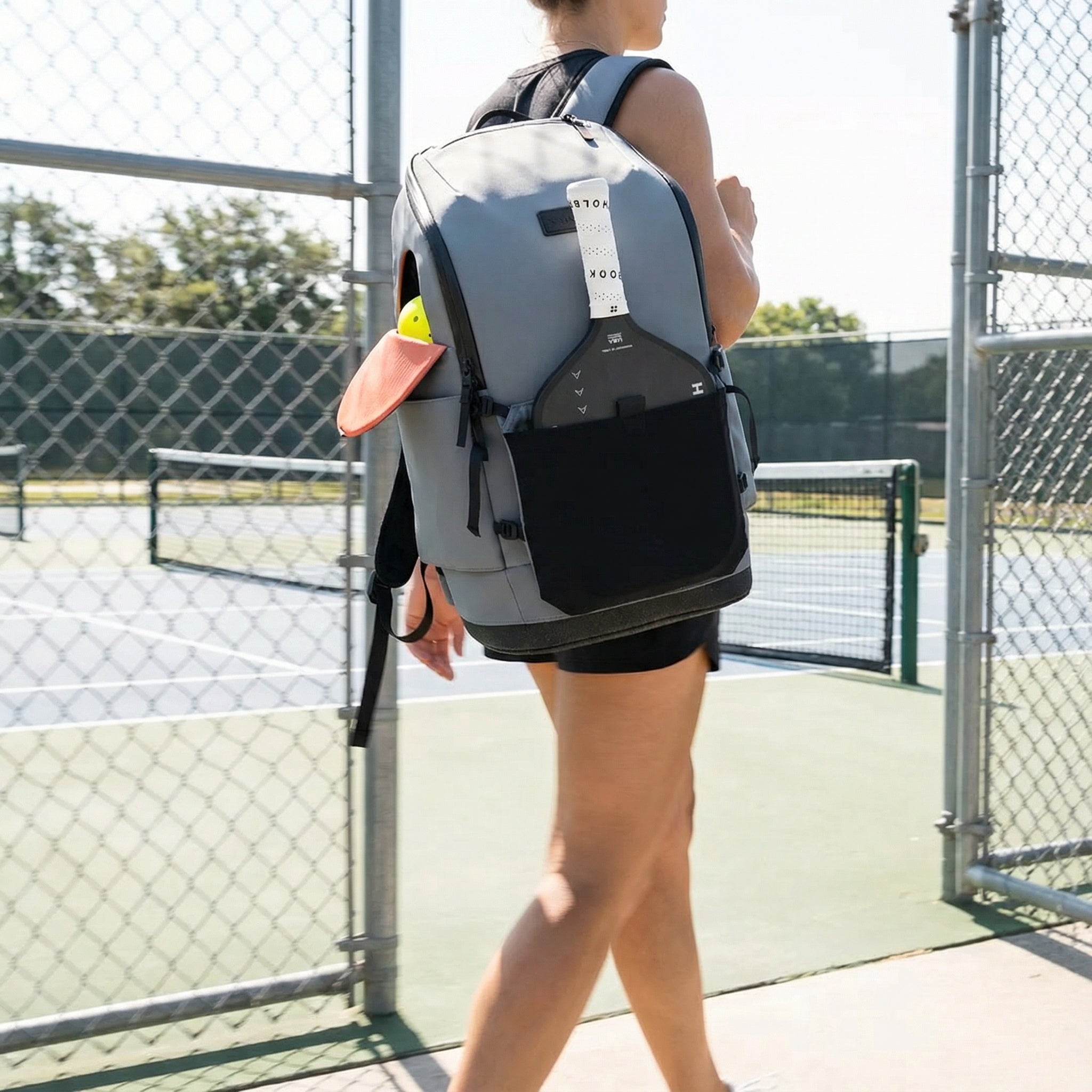
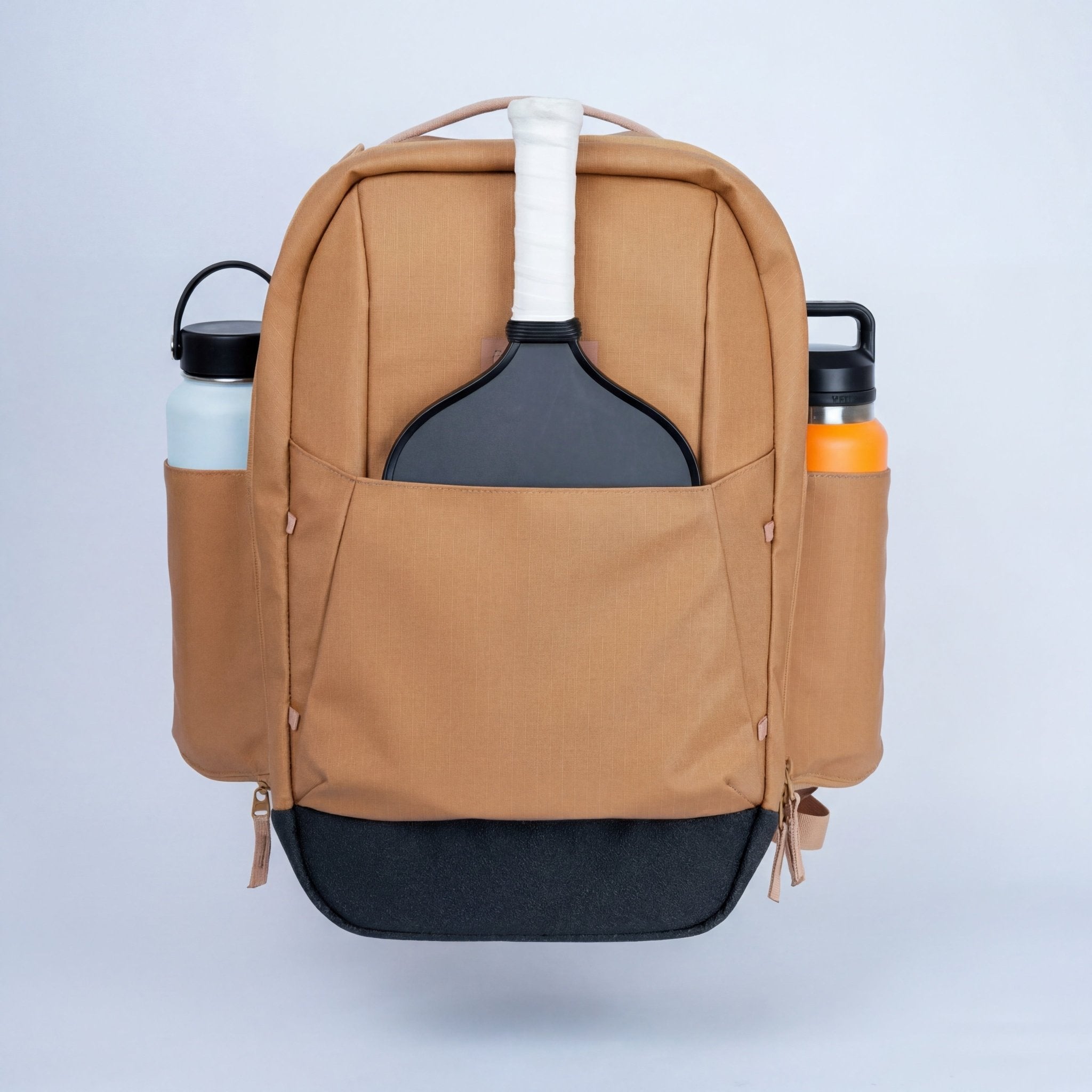
If you're drilling communication patterns with a regular partner, showing up organized matters. The Court Ranger V2 fits two paddles in the modular sleeve so you and your partner can both grab yours and get on the court without the five-minute bag dig that eats into practice time.
Complete Your Setup
Poaching relies on quick movement and clear communication — make sure your gear isn't slowing you down.

Our Pick: FORWRD Court Ranger V2 — $195
Fits two paddles in the modular sleeve, 16" laptop sleeve, YKK water-resistant zippers. Designed with 500+ real players — built for court time, not just carrying.
Shop the Court Ranger V2 → | Also: Court Caddy ($325) for 4-paddle capacity
FAQ: Pickleball Poaching Questions
What is poaching in pickleball?
Poaching is crossing into your partner's side of the court to intercept a ball that would otherwise go to them — typically at the kitchen line, where you step across and volley a ball headed toward your partner's side. When timed correctly, it creates angles and pressure your partner couldn't generate from their position. When timed poorly, it leaves a gap and costs you the point.
Is poaching legal in pickleball?
Yes, completely legal under USA Pickleball rules. There is no rule requiring players to stay on their side of the court during a rally. Both players can move freely anywhere on their side of the net. The only restriction is the non-volley zone rules, which apply equally to both players regardless of which side of the court they're on when volleying.
When should you poach in pickleball doubles?
Poach when the ball is heading toward the middle or your side, when your opponent's paddle path points cross-court toward you, and when you're already moving forward and balanced. All three signals should align. If you're uncertain about any of them, stay in position — uncertain poaches nearly always result in errors or defensive scrambling.
How do you signal a poach in pickleball?
The simplest method: communicate between points, before the rally begins. Tell your partner what ball you plan to take and which direction you'll move. During the rally, a short verbal "mine" or a paddle tap signals to your partner to cover your vacated side. At higher skill levels, teams use physical signals like a closed fist behind the back during serve preparation to set up a planned poach without tipping off opponents.
What skill level should you start poaching?
Planned poaching (discussed with your partner before the point) can start at 3.5 when you've identified a clear opponent tendency. Opportunistic poaching — reading the situation in real-time — becomes reliable at 4.0+, once you've developed enough match experience to read opponent body language before they hit the ball. Starting poaching before those reads are developed creates more errors than points and damages partner communication.

Leave a comment
This site is protected by hCaptcha and the hCaptcha Privacy Policy and Terms of Service apply.