

Last updated: June 2026
The most common mistake at club level isn't a bad third shot drop or a missed overhead. It's a failed attack on a ball that was never attackable to begin with. The reset is the skill that fixes this — not by being defensive, but by being correct. A well-executed reset doesn't just survive a hard exchange; it creates the attack opportunity that shows up two shots later.
What a Reset Is (And Why It's Not Just a Soft Shot)
Here's a distinction most pickleball players never make explicit: a reset and a dink are not the same shot. A dink is intentional — you've chosen soft placement from a position of relative control. A reset is something else entirely. It's an emergency defensive response to a ball coming at you fast, hard, or from a bad position.
Different intentions require different mechanics. A dink uses a slight forward push with a partly closed face. A reset needs a genuinely open paddle face and a passive, absorbing motion — you're not redirecting the ball, you're taking pace off it and returning it to neutral. Mixing up those intentions is what produces the "soft" shot that still pops up, because the technique was wrong for the situation.
"Most players who want to attack more actually need to reset better — because the attack opportunity comes after the reset, not instead of it."
— Grub, FORWRD
That's the strategic reality. Resets don't win points on their own. They buy time, return the rally to neutral, and create the next float or mid-court pop-up that you can actually punish. The reset and the attack are a two-shot sequence — not alternatives to each other. It's one piece in the larger soft-game system — for the full tactical framework, see our complete pickleball strategy & tactics guide.
The 3 Reset Triggers: When to Absorb Instead of Attack
This is the framework you need before any discussion of mechanics. Three conditions tell you a reset is the correct play. When any of them applies, attack attempts fail more often than they work.
Trigger 1 — The ball is at or below your waist. This is the most important rule. Below-waist contact creates an upward swing path. That upward path hands your opponent an easy counter at a downward angle — attack attempts from that ball height pop up more than 70% of the time at the 3.5–4.0 level (the intermediate range defined by USA Pickleball's skill rating system). Reset every time from this contact zone. No exceptions.
Trigger 2 — You're off-balance or out of position. Even a perfect ball height becomes unattackable if you're mid-step, reaching wide, or recovering from a previous exchange. Balance is a precondition for any attack. If your weight is shifting, reset — then reset again if needed — until you've recovered position and a stable stance.
Trigger 3 — The ball has more pace than you can redirect with control. A speedup or hard drive is moving fast enough that any counter requires perfect timing and a neutral or closed paddle face — conditions that rarely exist mid-exchange. If the ball's moving too fast to counter cleanly, open your paddle face and absorb it. Let your opponent's pace work against itself.
The inverse gives you the "Reset or Counter?" rule: if the ball is above your waist AND you're balanced, you have the option to counter. Both conditions must be true simultaneously. One out of two is still a reset situation.
How to Execute the Reset: Mechanics and Paddle Path
Three physical cues define a clean reset. Get all three right and the shot almost executes itself:
Paddle face open. Not slightly tilted — genuinely open, facing upward at about 45–60 degrees at contact. This creates the soft arc over the net. A closed or neutral face on a reset attempt produces a hard return that your opponent simply speeds up again. Feel for the sky with your paddle face.
Slight forward lean, weight into the shot. Counterintuitive, but critical. Most players' instinct when defending is to pull back. Don't. A small amount of forward body weight stabilizes the contact and prevents the "ping" that happens when you block passively with no weight transfer. Think of absorbing a punch — you lean into it slightly, you don't retreat from it.
Absorb pace — don't redirect it. The paddle moves toward the ball, but gently. Meet the ball early, out in front of your body, before it drops low. Then slow your paddle down on contact — the ball's pace dissipates through your grip and arm rather than bouncing off a stationary face. The paddle motion stops at contact, not after it. That's the whole technique.
A common mistake is a "push" motion — extending the paddle forward after contact. This adds pace instead of removing it. The correct motion ends at contact.
Reset from the Transition Zone vs. at the Kitchen
These two scenarios require slightly different execution. Most guides treat them as the same shot. They're not.
Resetting from the transition zone — mid-court, between the baseline and NVZ — gives you more time because the ball travels farther. But you're also in the most vulnerable position on the court. Take the ball as early as possible, out in front of your body, rather than letting it drop low beside you. Early contact keeps your options open. A late contact point means the ball is already dropping and your only play is an awkward upward scoop.
After a transition-zone reset: move forward immediately. Most players reset and stand still. The reset only works if you use the neutralized exchange to close the distance to the NVZ. If you stay back, you'll be resetting from the same spot until your opponents eventually get the pop-up they're waiting for. (If you're still building your NVZ approach mechanics, our dinking for beginners guide covers the kitchen fundamentals that reset work builds on.)
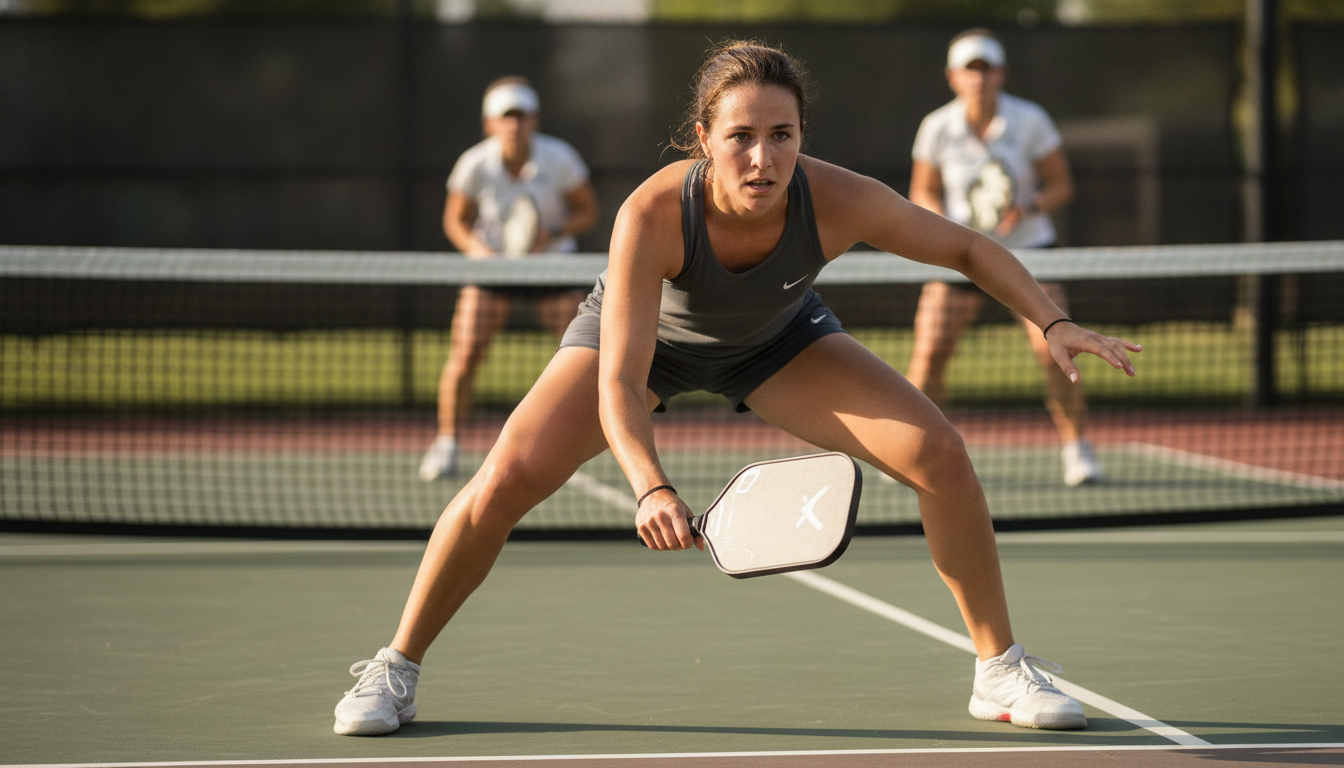
Resetting at the kitchen line is different. A speedup from across the net arrives in under half a second — there's no time for a decision process. Here the reset is almost entirely a reflex, not a choice. The mechanics are identical, but the timing is compressed. This is why your ready position at the NVZ matters: keep your paddle up and in front of your chest at all times. A paddle resting at your hip gives you no chance against a well-timed speedup. Paddle up means you can absorb; paddle down means you're already late.
Building the Reset Into Your Practice Routine
The reset fails in matches for one reason: players understand the concept but haven't built the mechanics into reflex. Here's how to close that gap.
The 3-ball absorption drill. Stand at the NVZ with a partner feeding moderate-pace speedups — not full power, just enough to require active absorption — to your forehand side, backhand side, and body. Don't focus on placement. Just focus on pace absorption and landing the ball in the kitchen. Run 20–30 balls per side for 5 minutes before every session. Within a few weeks, the open paddle face becomes automatic.
Transition zone reset → advance drill. Partner hits a hard ball to you at mid-court. Reset it into the kitchen, then move forward and take the next ball as a volley from the NVZ. The reset is useless without the advance — train the two-shot sequence together, not the reset in isolation.
Reset under pressure. The real test is resetting when you're tired and out of position. Have a partner hit balls randomly — some hard, some soft, unpredictable positions. Your job is to identify reset vs. counter in real-time without thinking through a checklist. This trains the decision into instinct, which is the only way it shows up under match pressure.
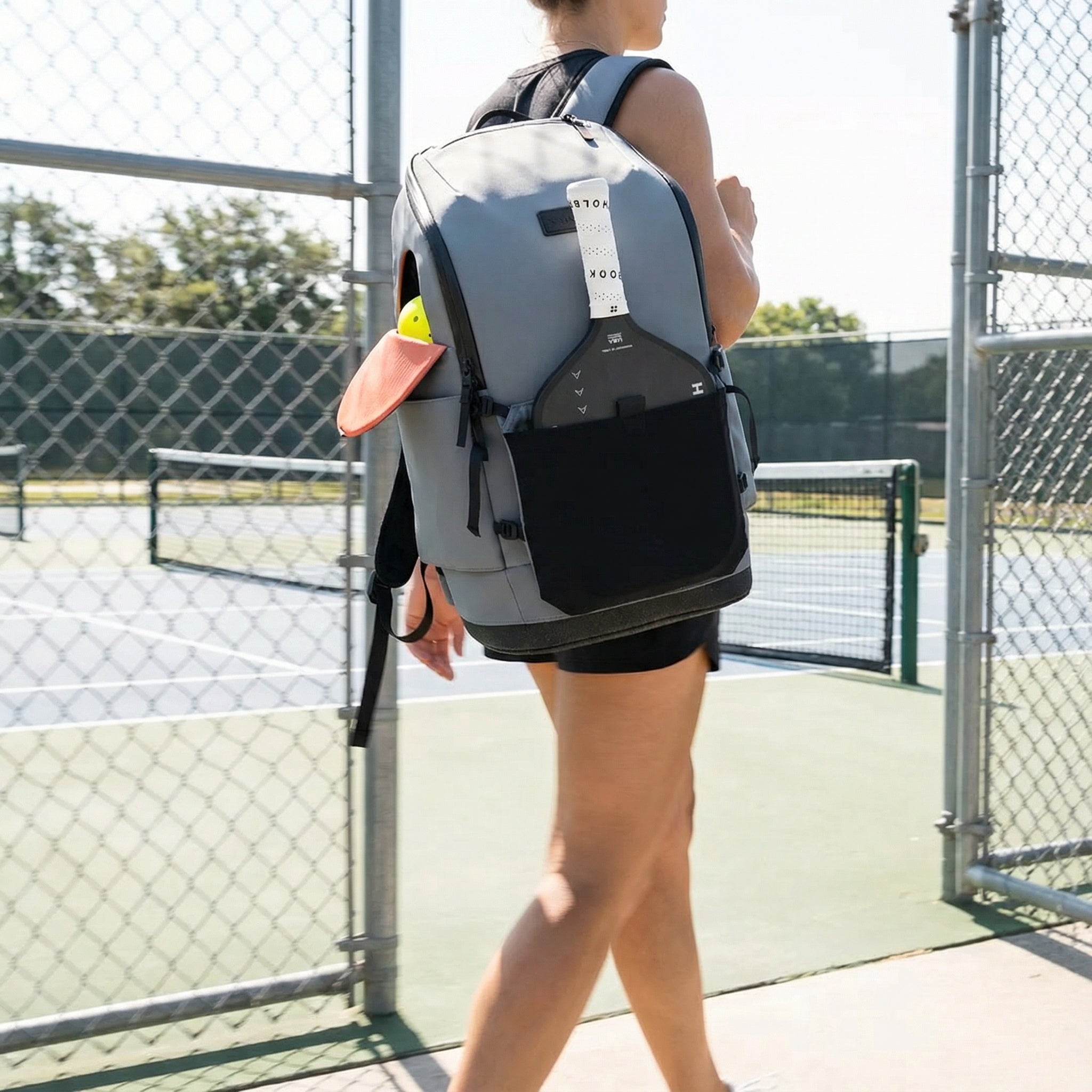
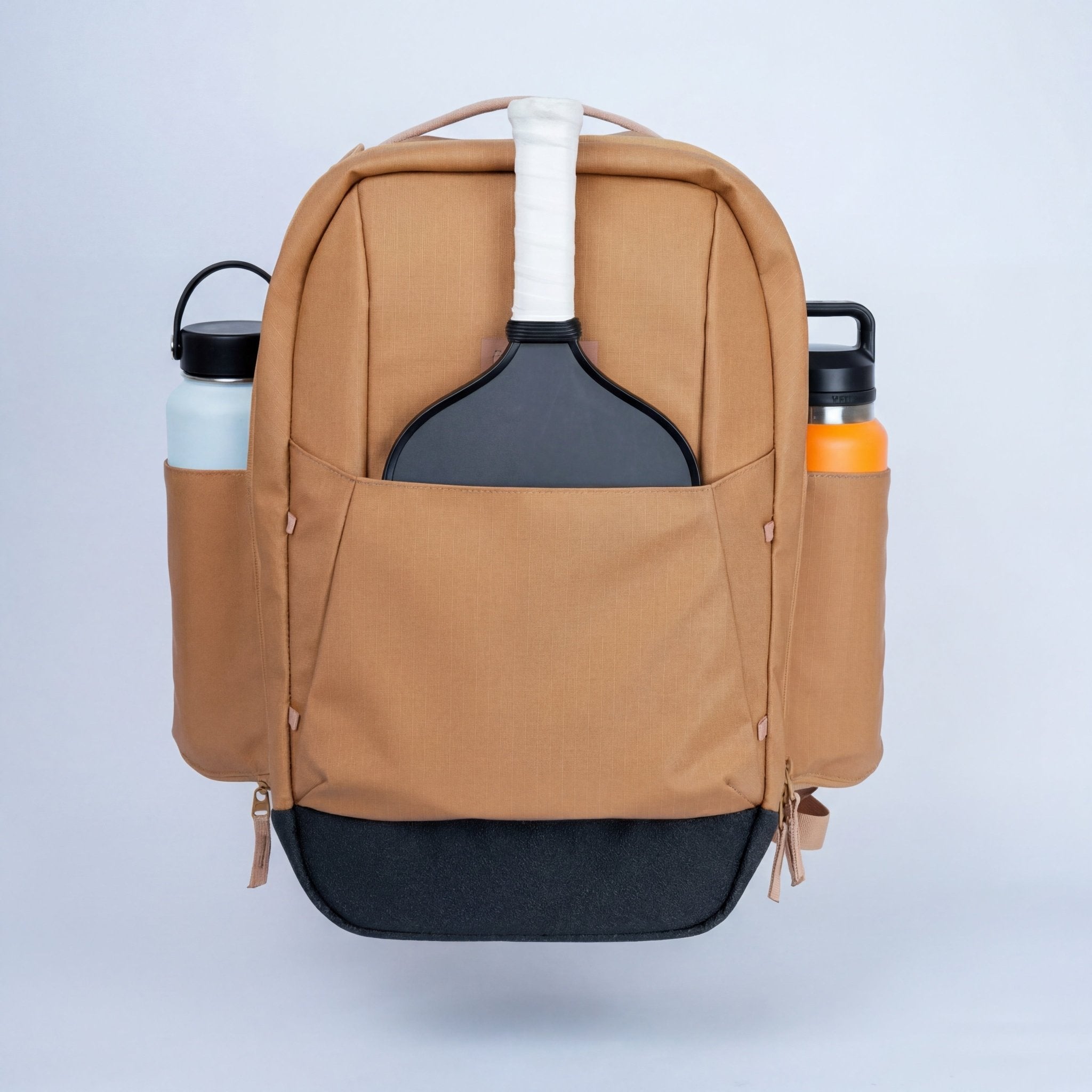
If you're running dedicated drilling sessions, the Court Ranger V2 keeps extra balls accessible in the exterior side pockets so you're not hunting between reps — a small detail that keeps practice tight across a 90-minute grind session.

Shop the Court Ranger V2 — $195 →
FAQ: Pickleball Reset Questions
What is a reset in pickleball?
A reset is a defensive shot that absorbs the pace from a hard incoming ball and returns it softly into the opponent's kitchen. Unlike a dink — an intentional soft placement from a controlled position — a reset is an emergency response to a fast or difficult ball, designed to neutralize the exchange rather than win the point outright.
When should you reset in pickleball instead of attacking?
Reset whenever the ball is at or below waist height, when you're off-balance, or when the ball has more pace than you can redirect cleanly. The rule: if the ball is above your waist AND you're balanced, you have the option to counter. Both conditions must be true. Any other combination means reset — attack attempts from those positions pop up more than 70% of the time.
How do you reset a hard ball in pickleball?
Open your paddle face to roughly 45–60 degrees, lean slightly forward, and absorb the ball's pace on contact rather than blocking or redirecting it. Meet the ball out in front of your body before it drops low. Stop your paddle motion at contact — don't push through. This takes the pace off and drops the ball softly into the kitchen instead of returning it at speed.
What is the difference between a reset and a dink in pickleball?
A dink is an intentional soft placement from a position of control. A reset is an emergency defensive response to a hard ball. They require different paddle faces (dink: partly closed with a forward push; reset: genuinely open with absorption), different intentions, and different mechanics. Mixing them up produces the pop-up "reset" that opponents punish immediately.
How do you practice resets in pickleball?
Start with the 3-ball absorption drill: have a partner feed moderate-pace speedups to your forehand, backhand, and body from across the net. Focus purely on pace absorption and landing in the kitchen — not placement — for 5–10 minutes before each session. Then combine with the transition zone reset-and-advance drill to train the full two-shot sequence together rather than the reset in isolation.

Leave a comment
This site is protected by hCaptcha and the hCaptcha Privacy Policy and Terms of Service apply.