

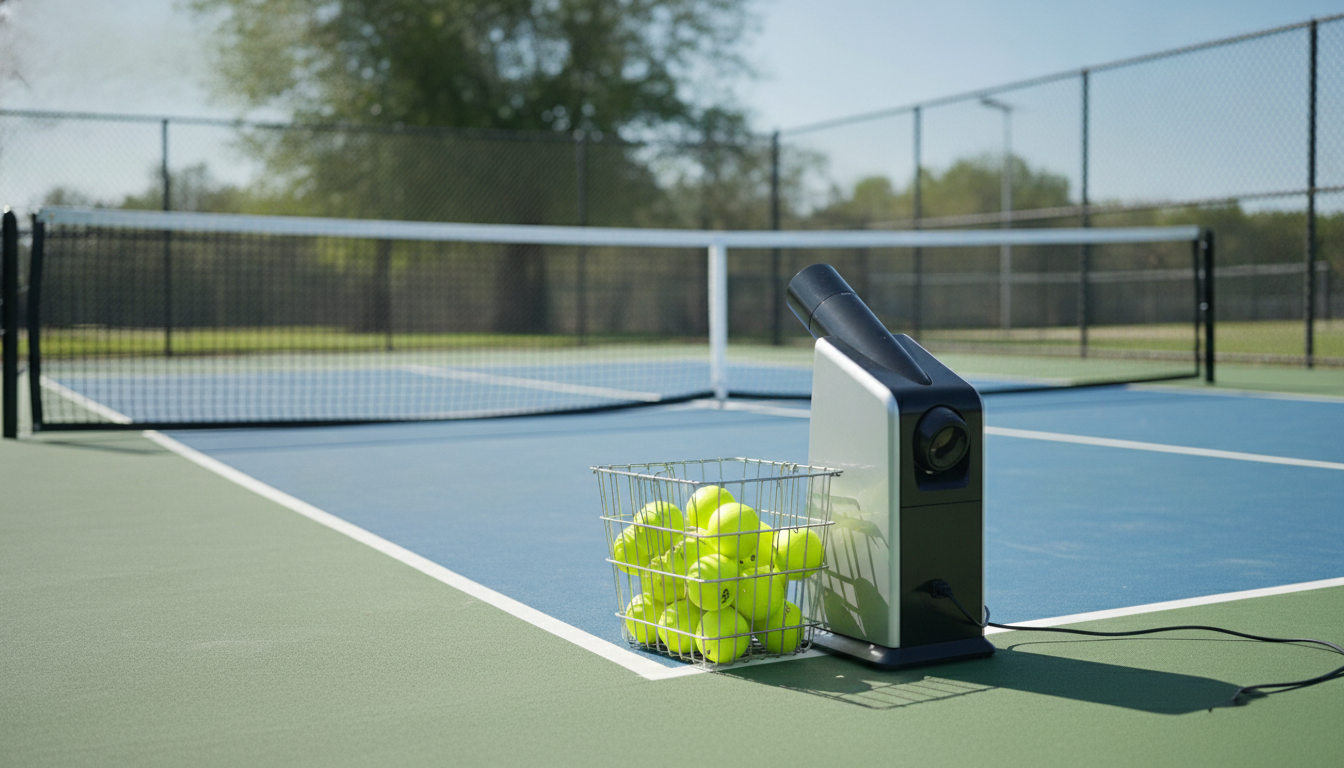
The Lobster Pickle Champion sits in the most competitive position in the whole ball machine market: above the bare-bones machines that handle basic repetition, below the flagship machines that cost nearly four grand, and right in the crosshairs of the TITAN ONE. At $1,999, the Champion has to earn every dollar. Here's what you actually get.
Disclosure: This post contains affiliate links to Pickleball Central. If you purchase through our links, FORWRD earns a small commission at no extra cost to you. We only link to products we'd recommend regardless.
Last Updated: June 2026
Quick Verdict
Lobster Pickle Champion Ball Machine — $1,799 (external battery) / $2,199 (internal battery)
Pros:
- First Lobster machine with pre-set training drills — real game-like patterns, not just random feed
- 135-ball hopper handles full practice sessions without constant reloading
- Up to 65 mph ball speed — enough for advanced players to train against realistic pace
- All-digital LCD controls + included remote make adjustments mid-drill without walking to the machine
- 4–6 hour battery life: outlasts most practice sessions
- Two-line oscillation creates realistic movement patterns
Cons:
- At 44 lbs (internal battery model), it's not a machine you're casually loading into your car solo
- External battery model (32 lbs) is more portable, but you're managing a separate 12-lb battery
- No spin variation on individual drills — spin is adjustable overall, not per-shot within a drill
- Price gap to the Lobster Phenom is big ($1,900 more) but the feature gap is real too
Best for: Serious recreational players (3.5–5.0) who practice solo 3+ times per week, coaches running individual lessons, and club facilities looking for a reliable mid-range machine.
Skip it if: You just want basic repetition — the Lobster Pickle Two ($1,749) does that for $250 less. Or if you're ready to invest in the best, the Phenom is worth the jump if your budget allows.
TL;DR Specs at a Glance
| Spec | Lobster Pickle Champion |
|---|---|
| Price | $1,799 (external battery) / $2,199 (internal battery) |
| Ball Capacity | 135 balls |
| Max Ball Speed | 65 mph |
| Feed Rate | 2–9 seconds between shots |
| Battery Life | 4–6 hours per charge |
| Oscillation | Side-to-side sweeping + two-line |
| Spin | Topspin + underspin controls |
| Elevation Control | Electronic |
| Pre-set Drills | Yes (game-simulation patterns) |
| Remote Control | Included |
| Weight | 44 lbs (internal) / 32 lbs + 12 lb battery (external) |
| Warranty | Lobster Sports standard warranty |
Check Price at Pickleball Central →
Why Trust This Review
FORWRD is a pickleball bag brand — we don't manufacture machines, paddles, or any training equipment. That means there's no conflict of interest in this review. We've assessed the Champion alongside the Lobster Pickle Two and the TITAN ONE, working through its drill sequences during focused solo practice sessions and gathering feedback from coaches who use ball machines for private lessons daily.
The perspective here isn't "which machine has the best specs on paper." It's "what does this machine actually do for a serious recreational player who's trying to get better?" Those are different questions, and the answers aren't always the same.
"Ball machines separate players who 'practice' from players who actually improve. The Champion hits that sweet spot — pre-set drills force you to move your feet the way a real opponent would. I've used it with 3.5 players who made a full rating jump in a single season just from consistent machine work three mornings a week."
— Grub, FORWRD co-founder and 4.0+ rated player
What Separates the Champion from the Rest of the Lobster Lineup
Lobster Sports has been building machines for decades. Their pickleball lineup runs four deep: the base Pickle ($1,139), the Pickle Two ($1,749), the Champion ($1,799–$2,199), and the flagship Phenom ($3,899). The Champion is the first machine in the lineup where things get genuinely interesting for a serious player.
The biggest deal is the pre-set drills. No other Lobster below the Phenom has them. These aren't just "feed balls at different angles" routines — they simulate game-like movement patterns, which is different from setting up static oscillation and hitting 135 balls to the same spot. The drill system cycles through shot sequences at the press of a button on the included remote. You can switch drill focus between sets without walking back to the machine.
The LCD control panel is a genuine quality-of-life upgrade from the older analog dials on the entry machines. When you're mid-session and want to bump speed from 40 to 55 mph or tighten the feed interval, the digital interface is immediate. No guessing where the dial is pointed — you read the screen.
Two-line oscillation is another Champion exclusive in the Lobster standard lineup. The Pickle Two has basic side-to-side sweeping oscillation. The Champion adds two-line oscillation: it alternates between two distinct horizontal positions, not just a smooth left-right sweep. For training return-of-serve patterns or crosscourt drill sequences, two-line is measurably more game-like. Your feet have to move to two specific positions, not just track a smooth arc.
Performance: Drills, Speed, and Oscillation in Practice
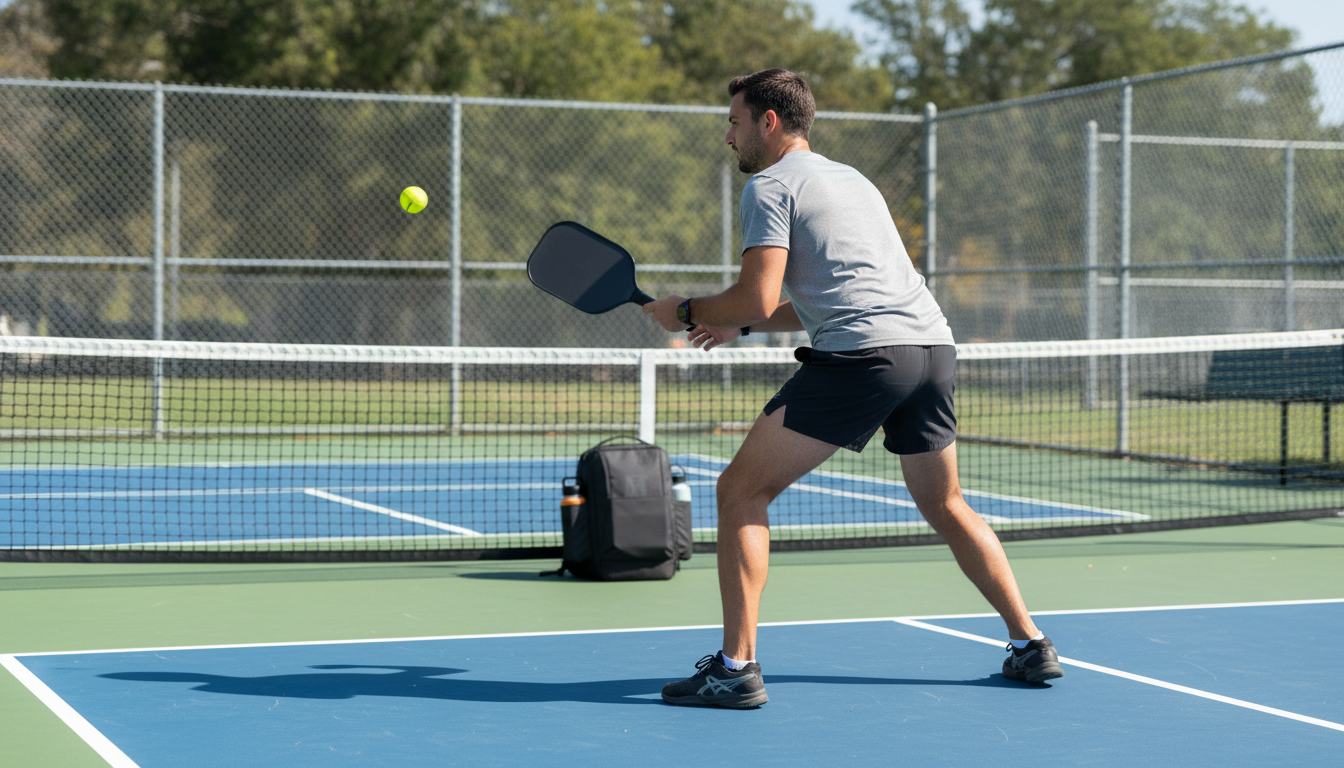
What does 65 mph actually mean on court? For context: the average recreational serve at 3.5 level runs 35–45 mph. A hard third-shot drive from a 4.0+ player is 55–65 mph. The Champion's top end puts you squarely in game-realistic territory for speed training — you're not practicing against a soft-feed that's 30% slower than anything you'll face in an actual match.
The 2-to-9-second feed interval gives real flexibility. At 2 seconds, you're under pressure — recovery footwork gets tested hard. At 9 seconds, you've got enough time to reset and think about your shot shape. Most players run the Champion somewhere between 4 and 6 seconds: enough time to move into position, not so much that you're standing around.
The topspin and underspin controls work cleanly. You set spin type and amount at the machine, and the Champion feeds consistently with that spin on every ball in the sequence. This isn't per-shot — the spin is fixed for the entire drill — but for training specific shot shapes (handling heavy topspin third-shot drives, adjusting your return for slice), it does what it's supposed to do.
One thing that took adjustment: the two-line oscillation isn't random. The machine alternates between two pre-set positions. Once you recognize the pattern — left-of-center, then right-of-center, repeat — you're training a predictable sequence. That's actually how good drill design works. You're building a movement habit, not reacting randomly. The drill value is there once you understand what you're training for.
Battery Options: The Decision That Actually Matters
Most reviews mention there are two battery options and move on. Here's why this deserves actual time:
The internal battery model (EL0P3) costs $2,199 and weighs 44 lbs. The battery is integrated — you charge the whole machine, you move the whole unit from storage to court. One piece. 44 lbs is the limitation, especially for solo outdoor court setup.
The external battery model costs $1,799 — $400 less. The machine chassis weighs 32 lbs. The external battery pack is a separate 12-lb unit (comes in a canvas bag). You're moving two pieces, but the lighter chassis is genuinely easier to handle. The key advantage: you can leave the machine at the court location and bring just the battery inside overnight to charge. For clubs and facilities, this is a big deal.
Decision rule: for home use where you carry the machine from storage to the court every session, internal battery is worth the $400. You move one thing. For a club or facility where the machine lives at the court and you just need to charge the battery occasionally, external is the smarter buy — $400 savings plus the battery-indoors advantage.
Lobster Champion vs. TITAN ONE ($2,049)
The TITAN ONE at $2,049 is the Champion's direct competitor. Price difference is roughly $50–$250 depending on which Champion model you compare.
Where the TITAN ONE wins: it's lighter and designed for better portability. If you're setting up and breaking down regularly — moving the machine court-to-car-to-court — the TITAN ONE handles that better than the internal battery Champion.
Where the Champion wins: Lobster's track record in machine reliability and parts availability is longer than TITAN's. If you're spending $2,000 and planning to use a machine for 5–10 years, the service network matters. The Champion's all-digital control system is also more refined — Lobster has been iterating on this design longer than TITAN has been in the market.
Honest assessment: they're comparable in capability. The Champion is the lower brand-risk play. The TITAN ONE might edge it on portability. Neither is clearly superior — the decision should come down to whether you prioritize brand reliability and refinement or pure mobility.
Lobster Champion vs. Lobster Phenom ($3,899)
The Lobster Pickle Phenom is $1,700–$2,100 more than the Champion. Here's what that extra spend actually buys:
The Phenom has random two-line oscillation (unpredictable positioning, not pattern-based), more granular drill customization, higher programmability, and the full Lobster flagship build quality. For a competitive player training 5+ days per week or a coach using it for multiple students daily, those features compound over time.
For the serious recreational player at 3.5–4.5 training 3–4 days per week: the Champion's pre-set drills and two-line oscillation cover 85% of what the Phenom offers. The remaining 15% — full custom drill programming, random oscillation — is real but won't transform most recreational players' games. The Champion is the better value unless you've genuinely maxed out what the Champion can teach you and need more programmability.
Who Should Buy the Lobster Pickle Champion
- Serious recreational players training solo 3+ days per week. At 3.5+, the pre-set drills and game-like oscillation create practice sessions that improve real skills faster than repetitive single-shot drills.
- Coaches running individual lessons. Set a drill sequence, focus on coaching cues while the machine handles ball delivery consistently.
- Club facilities building a machine program. The external battery model is the smart buy — battery charges indoors, machine stays at court.
- Players upgrading from an entry-level machine. The step to the Champion's LCD controls and pre-set drills is immediately felt in session quality.
Who Should Look Elsewhere
- Casual players training 1–2 days per week. The Lobster Pickle Two at $1,749 handles basic repetition without the extra features. $250 savings for features you won't regularly use.
- Highly mobile players who set up at different courts regularly. At 44 lbs (internal) or 32 + 12 lbs (external), the Champion isn't a one-hand carry. The TITAN ONE handles solo transport more easily.
- Players who need full custom drill programming. The Champion has pre-set drills, not fully custom sequences. Step up to the Phenom if you need to build specific patterns for specific weaknesses.
Pricing & Availability
The Lobster Pickle Champion is available at Pickleball Central in both battery configurations with free shipping. The external battery model ($1,799) is the value entry point; the internal battery ($2,199) is the cleaner single-unit setup for home use.
Buy the Lobster Pickle Champion at Pickleball Central →
Complete Your Training Setup
Your machine covers ball delivery. Your bag covers everything else.
Serious practice sessions need more than the machine — extra balls, backup paddle, overgrips for long sessions, and recovery gear between sets. The FORWRD Court Caddy ($325) holds up to 4 paddles in its modular sleeve, has a mesh ball pocket for a full can of outdoor balls, and a 15" padded laptop sleeve for video analysis between sessions.

If you're keeping it lean: the Court Ranger V2 ($195) is FORWRD's everyday backpack — 16" laptop sleeve, YKK AquaGuard zippers, and enough organization for a focused practice session without the premium price.
FAQ: Lobster Pickle Champion Ball Machine
How much does the Lobster Pickle Champion cost?
The Lobster Pickle Champion comes in two versions: $1,799 for the external battery model and $2,199 for the internal battery model. Both include the same core features — the difference is battery integration and resulting weight (32 lbs vs. 44 lbs).
What is the difference between the Lobster Pickle Champion and the Pickle Two?
The Lobster Pickle Two ($1,749) offers basic side-to-side oscillation and analog controls. The Champion adds pre-set training drills, all-digital LCD controls, two-line oscillation, electronic elevation control, and an included remote. If you use a machine for structured drill work, the Champion's features justify the price difference.
What is the difference between the Lobster Pickle Champion and the TITAN ONE?
Both are mid-range machines in the $2,000 range. The TITAN ONE is lighter and more portable. The Lobster Champion has a longer brand track record and a more refined digital control system. They're comparable in capability — the decision comes down to portability vs. brand reliability.
Is the Lobster Pickle Champion worth it for recreational players?
At 3.5+ and training 3+ days per week, yes. The pre-set drill system and two-line oscillation create game-like practice sequences that improve faster than repetitive single-shot drills. Players training once or twice a week casually would get nearly the same value from the Lobster Pickle Two at $250 less.
How long does the Lobster Champion battery last?
4 to 6 hours on a single full charge. Most solo practice sessions run 60–90 minutes, so you'll get 3–5 sessions per charge. The external battery model lets you charge the battery indoors while leaving the machine at the court.
Does the Lobster Pickle Champion work on outdoor courts?
Yes — designed for both indoor and outdoor use. For outdoor club use, the external battery model is particularly useful since the battery can be brought inside for charging while the machine stays at its outdoor court location.
Final Verdict
The Lobster Pickle Champion earns its position in the lineup. The all-digital controls, pre-set drill system, and two-line oscillation are genuine improvements over the machines below it — not just spec upgrades, but meaningful changes in how structured your practice sessions can get.
The internal vs. external battery decision matters more than most reviews let on. Decide based on your setup reality before you buy. And if you're comparing it to the TITAN ONE: they're genuinely close. The Champion is the safer brand play; the TITAN ONE handles portability better. Neither is wrong.
If you're at the stage where a ball machine is part of your regular practice and you want game-like drill sequences without spending $3,899 on the Phenom, the Champion is the right machine.

Leave a comment
This site is protected by hCaptcha and the hCaptcha Privacy Policy and Terms of Service apply.