

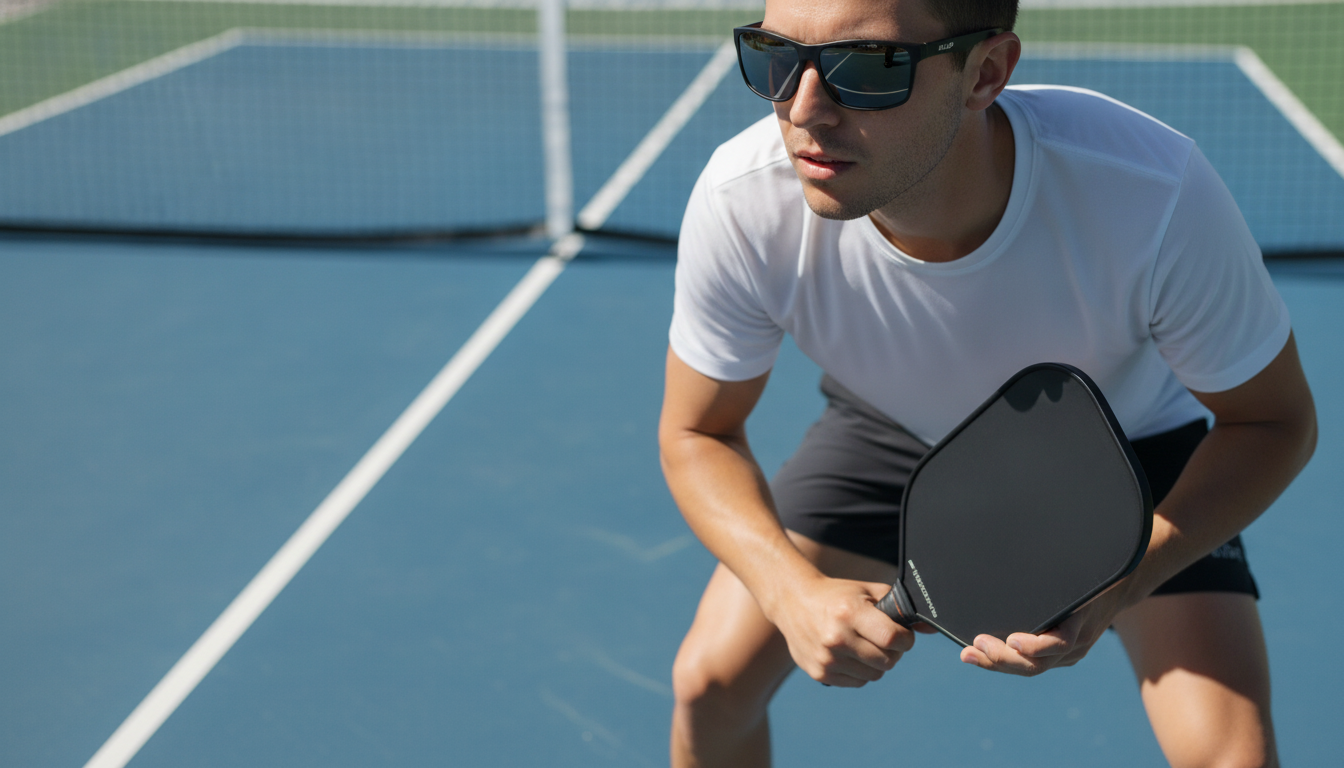
Pickleball eyewear doesn't get the same attention as paddles, but once you've had a ball skip off the court directly toward your face — or spent a two-hour outdoor session squinting against late-afternoon sun — you understand why players who take the game seriously start wearing eye protection. The ONIX Falcon sits at $39.99: not budget-basic, not premium-priced, and from a brand that actually knows pickleball equipment. Here's what you actually get.
Disclosure: This post contains affiliate links to Pickleball Central. If you purchase through our links, FORWRD earns a small commission at no extra cost to you. We only link to products we'd recommend regardless.
Last Updated: June 2026
Quick Verdict
ONIX Pickleball Falcon Eyewear — $39.99
Pros:
- Three interchangeable lens colors (clear, smoke, blue tint) for different lighting conditions — rare at this price point
- 99.9% UV protection with anti-scratch and fog treatment applied to lenses
- Impact-resistant frame: protects against direct ball contact, not just glare
- Adjustable elastic strap + ear pads + curved temples for a secure, non-slip fit
- Carrying bag doubles as a lens cloth — eliminates the need for a separate cleaning tool
- Rectangular frame provides excellent horizontal coverage without feeling bulky
Cons:
- Rectangular frame works well for most face shapes, but if you have a narrow face it may feel wide
- Foam padding around the frame would add dust-seal protection — absent at this price point
- Color options are limited compared to some competitors (no amber option, which is the preferred lens for overcast/low-light play)
- $39.99 is 33% more than ONIX's own Eagle ($29.99) — the lens interchangeability needs to justify that gap, which it does if you play in varied conditions
Best for: Recreational players who play in varied outdoor lighting conditions and want real ball-impact protection with lens flexibility at a price that doesn't require a second thought.
Skip it if: You play exclusively indoors under consistent lighting — the clear lens ONIX Eagle at $29.99 handles that without the extra spend. Or if you want maximum optical tech, the CRBN Pivot or JOOLA RJX are purpose-built premium options.
TL;DR Specs at a Glance
| Spec | ONIX Falcon Eyewear |
|---|---|
| Price | $39.99 |
| Lens Colors Included | Clear, Smoke, Blue Tint (all three included) |
| UV Protection | 99.9% UV |
| Lens Treatment | Anti-scratch + anti-fog |
| Frame Type | Impact-resistant rectangular |
| Fit System | Ear pads + curved temples + adjustable elastic strap |
| Vented | Yes (fog-reduction design) |
| Included Accessories | Protective carrying bag (doubles as lens cloth) |
Check Price at Pickleball Central →
Why the Three-Lens System Actually Matters
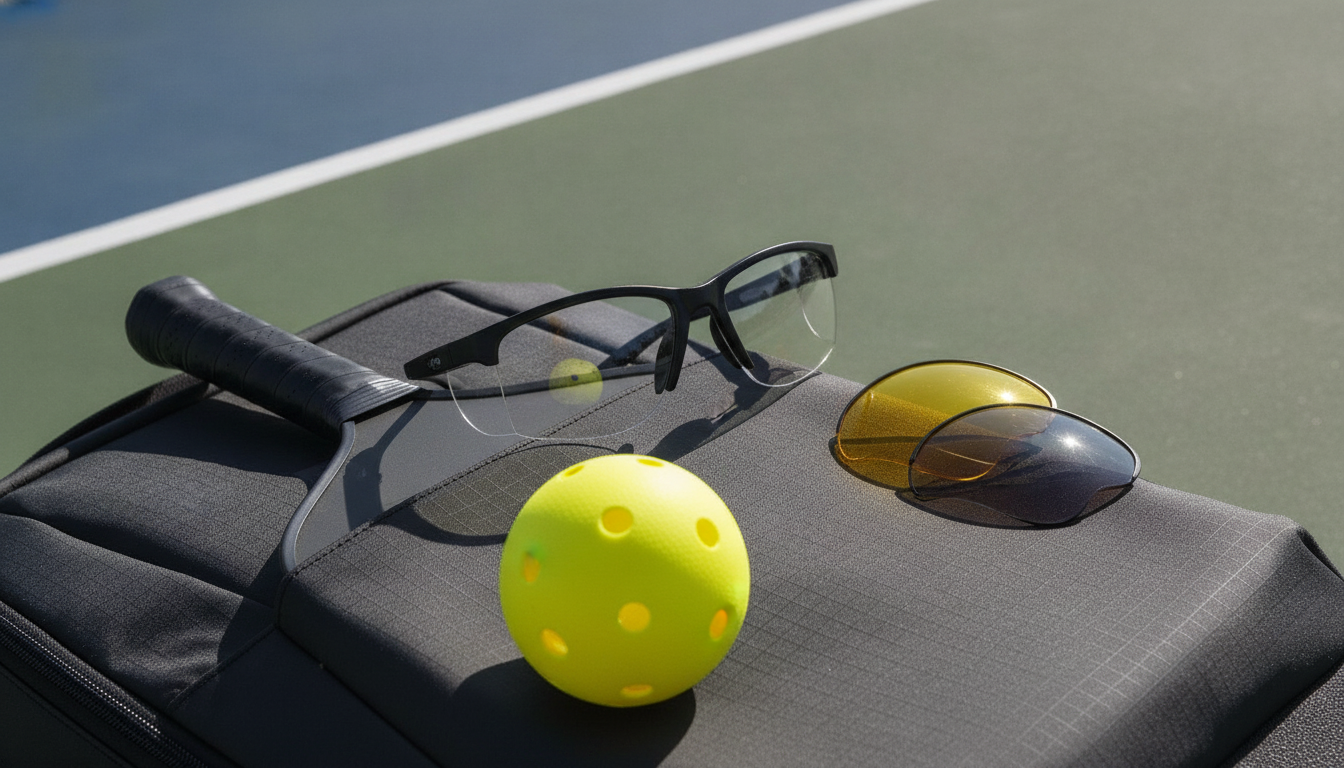
This is the thing that separates the Falcon from the rest of the ONIX eyewear lineup — and from most sub-$50 court eyewear in general. Three interchangeable lenses, all included in the $39.99 price. Let's talk about what each one actually does:
Clear lens: The indoor workhorse. No tint means no light reduction — every lumen you get in an indoor gym makes it to your eyes. Under fluorescent gym lighting where balls already disappear against certain backgrounds, you don't want any additional dimming. The clear lens also works for evening outdoor play or overcast days where tint would just make it darker without adding contrast.
Smoke lens: The outdoor standard. Smoke reduces overall brightness without shifting the color spectrum — you see the ball in true color, just without the glare. For bright midday outdoor play on concrete or asphalt courts, smoke is the right lens. It handles sun glare without making you feel like you're playing through sunglasses.
Blue tint: The variable-light option. Blue-tinted lenses work best in partly cloudy or transitional outdoor conditions — they manage light scatter without being as aggressive as full smoke. Some players find blue tint enhances yellow ball visibility on certain court surfaces, though this is player-dependent.
Getting all three for $39.99 is genuinely useful — not because you'll swap mid-match, but because you'll pick the right one before you step on court, and you won't be stuck with the wrong choice when conditions change session to session.
Fit, Feel, and On-Court Performance
Eyewear that slips during play is worse than no eyewear — you end up reaching up to adjust constantly, which is exactly the moment a ball finds your face. The Falcon's fit system is well-designed for court use.
The ear pads keep the temples locked against your head without pressure-point discomfort during longer sessions. The curved temples wrap slightly, which is the difference between glasses that stay put during explosive movement and glasses that require the elastic strap to function. With the Falcon, the elastic strap is a backup, not the primary retention system — that's the right design priority.
Venting is real and functional. The vented frame design creates airflow between the lens and your face, which is what keeps the anti-fog treatment working during intense rally sequences and outdoor summer heat. Players who've worn non-vented protective eyewear know the issue: fogging happens fast during high-exertion points, and clearing your vision mid-rally is not an option. The Falcon stays clear throughout sustained high-intensity play.
The rectangular frame provides broad horizontal coverage — you're protected against both direct ball strikes and peripheral glare. It doesn't wrap as aggressively as some dedicated sports glasses (the Gearbox Vision, for example, wraps more), but the coverage is sufficient for most players' needs at this price point.
One genuine limitation: there's no foam padding around the frame perimeter. Foam adds a dust seal and additional ball-deflection protection. At $39.99 you're not getting that feature — it shows up in eyewear at $80+. If you're an aggressive net player who regularly catches balls to the face at close range, the premium eyewear is worth it. For most recreational players, the Falcon's impact-resistant frame handles the realistic exposure.
"I've been telling players at our Saturday open sessions for two years: stop playing outdoor pickleball without eye protection. At $39.99 and three lenses in the box, there's no good excuse anymore. The Falcon is legitimately the easiest sell I've made in gear recommendations — it just makes sense."
— Topher, FORWRD co-founder and certified pickleball instructor
ONIX Falcon vs. ONIX Eagle ($29.99): Should You Save the $10?
The ONIX Eagle at $29.99 is the entry point in the ONIX eyewear lineup. It's $10 less than the Falcon.
The Eagle also has replaceable lenses — it's not a fixed single-lens frame. The difference is that the Eagle comes with fewer lens options included, and the overall build spec is slightly below the Falcon's. If you play primarily indoors under consistent gym lighting, the Eagle's value is hard to argue with — you probably need one lens type and you'll use it every session.
The Falcon justifies the extra $10 if you play outdoors in varying conditions across the season. Having clear, smoke, and blue lenses ready in the carrying bag means you're never in the wrong lens for the conditions. For a player who plays both indoor and outdoor, the Falcon's three-lens coverage is worth the slight premium over the Eagle.
ONIX Falcon vs. Gearbox Vision ($44.99): Which Is the Better Value?
The Gearbox Vision at $44.99 is $5 more than the Falcon. The Gearbox Vision comes in amber (indoor/outdoor), blue (indoor/outdoor), and smoke (outdoor) — the amber option is the one notable advantage over the Falcon's lineup, since amber lenses are widely preferred for low-light and overcast outdoor conditions because they increase contrast.
The Gearbox Vision weighs approximately 27 grams and comes with a storage case. It wraps slightly more than the Falcon, giving better peripheral coverage. At $5 more, it's not a price concern.
Honest comparison: if you play outdoors in early morning, evening, or overcast conditions frequently, the Gearbox Vision's amber option is a real advantage over the Falcon. If you play in bright midday sun where smoke is the right lens and indoor play is your other context, the Falcon's clear lens gives you a clear-lens option that the Gearbox Vision's color lineup doesn't optimize for as directly.
Both are solid choices in the same price tier. The Falcon wins on clear-lens indoor play; the Gearbox Vision wins on low-light outdoor versatility via amber.
ONIX Falcon vs. Premium Eyewear ($95+): The Real Question
The CRBN Pivot ($95) and JOOLA RJX line ($97–$130) occupy a different tier entirely. You get things the Falcon doesn't offer: photochromic lens options in some models, more aggressive wrap-around protection, foam padding for a full seal, and better optical clarity at high speeds. The JOOLA RJX's ColorBoost technology is specifically engineered to increase yellow ball contrast against various court backgrounds — that's a real performance feature that the Falcon's tinted lenses don't replicate.
Whether the premium is worth it depends on what you're optimizing for. If you're playing competitive recreational or tournament pickleball where every edge matters, the $95+ tier is worth investigating. If you're a 3x-per-week rec player who wants real eye protection and lens flexibility without thinking too hard about it, the Falcon at $39.99 does the job cleanly.
Who Should Buy the ONIX Falcon Eyewear
- Outdoor recreational players in varied conditions. The three-lens system handles bright sun, overcast days, and indoor crossover without separate purchases.
- Players who want real impact protection at an accessible price. This isn't fashion eyewear — the impact-resistant frame and 99.9% UV rating are functional specs.
- ONIX brand players. If your paddle is ONIX, the Falcon's aesthetic aligns with the brand. More importantly, ONIX's track record in court gear translates to the eyewear line.
- Gift buyers. At $39.99, the Falcon with its carrying case and three lenses is a genuinely useful gift for any outdoor pickleball player — complete at one price.
Who Should Look Elsewhere
- Exclusively indoor players. The ONIX Eagle at $29.99 handles indoor play with less spend. The extra $10 for multi-lens outdoor versatility isn't useful if you never play outside.
- Players who need amber lenses for low-light outdoor play. The Falcon's lineup (clear, smoke, blue) doesn't include amber. The Gearbox Vision at $44.99 has it.
- Competitive tournament players. If you're playing in APP or PPA events and optimizing gear, the JOOLA RJX or CRBN Pivot's dedicated performance features are worth the upgrade spend.
Pricing & Availability
The ONIX Falcon Eyewear is available at Pickleball Central for $39.99 with free shipping. All three lens options and the carrying bag/lens cloth are included at that price — no add-ons required.
Buy the ONIX Falcon Eyewear at Pickleball Central →
Complete Your Court Setup
You've got the eye protection sorted. What carries it all to the court?
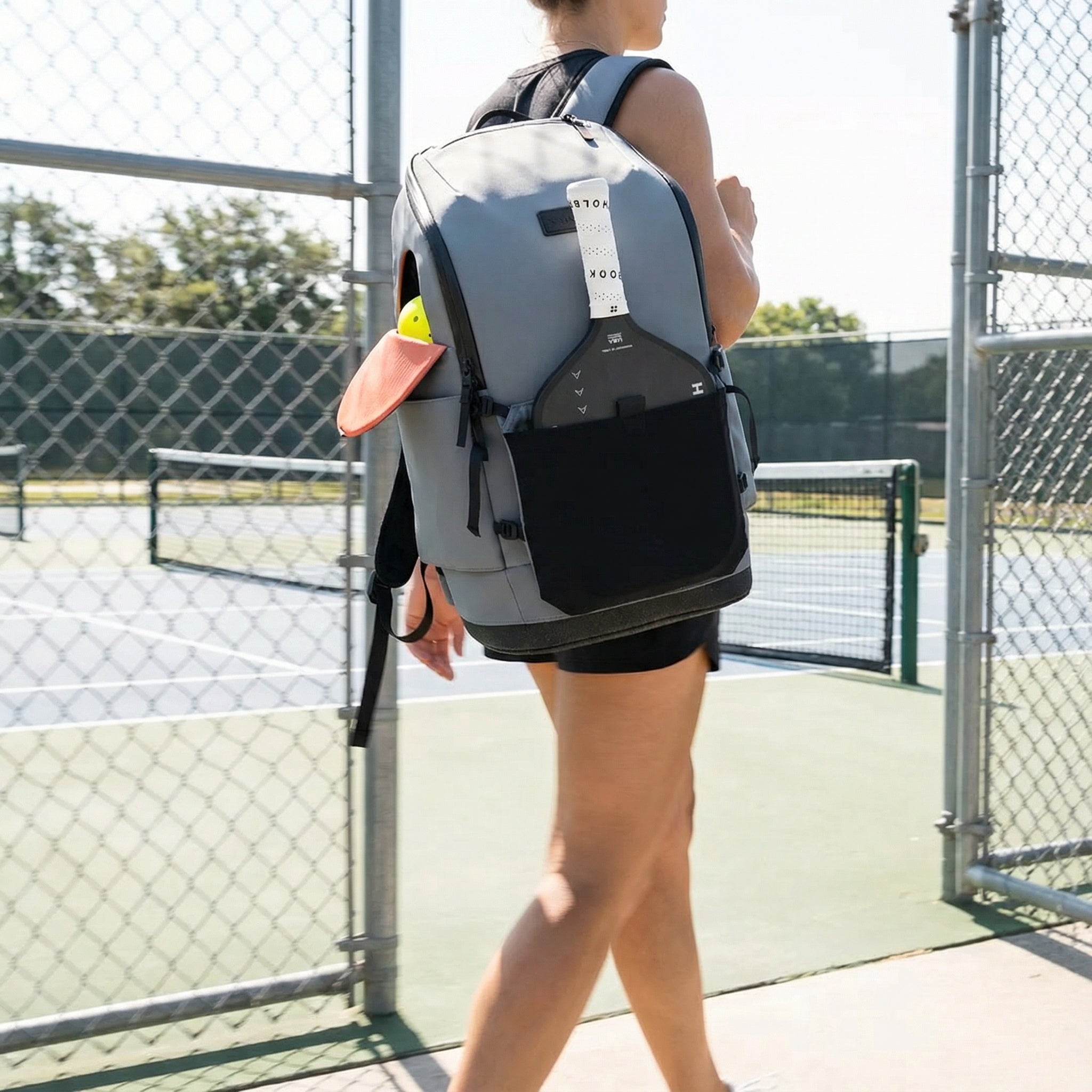
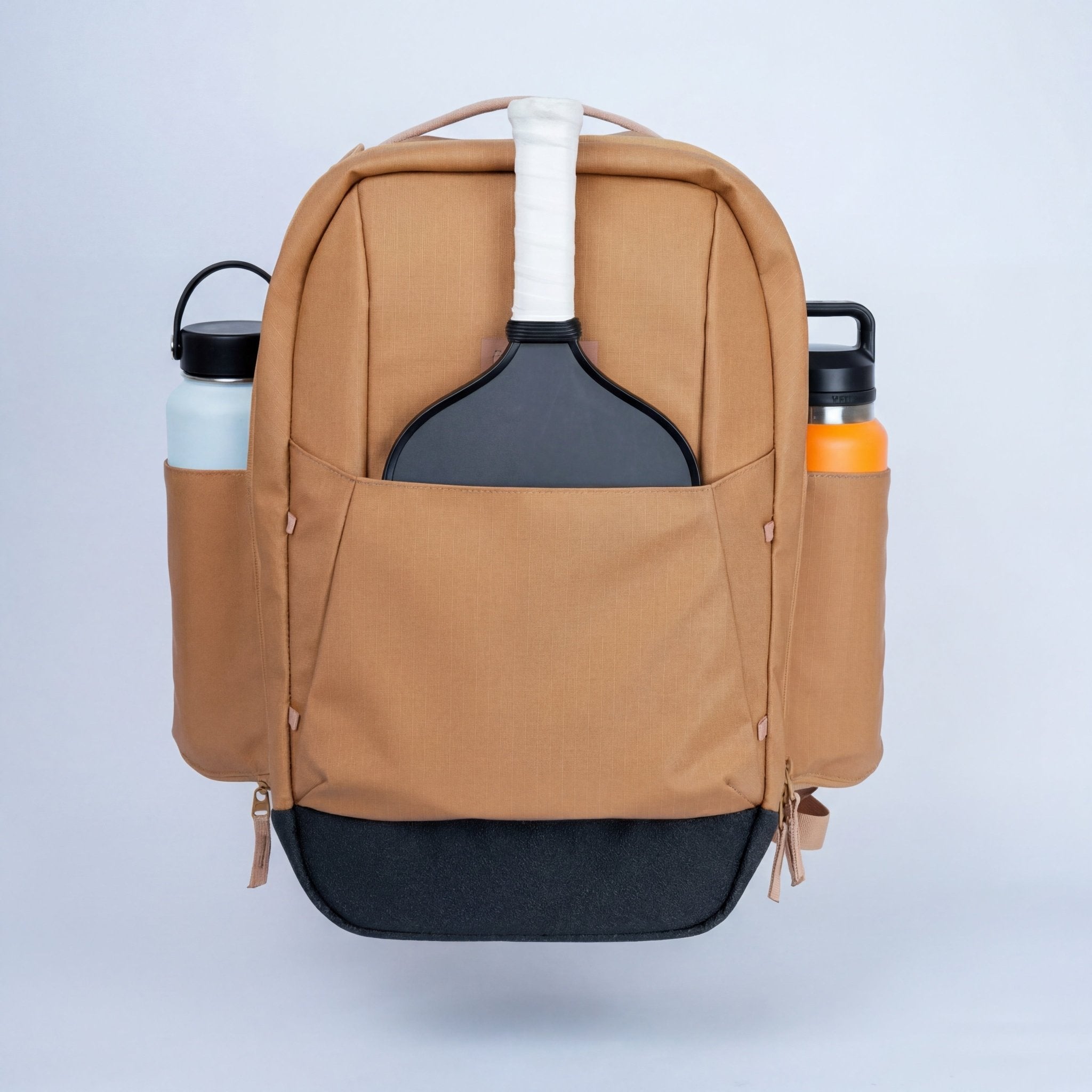
The Falcon's carrying bag is great for the eyewear itself, but your paddles, shoes, water bottle, and tournament gear all need a home. The FORWRD Court Ranger V2 ($195) has organized compartments for all your court essentials — dedicated paddle sleeve, 16" laptop pocket, and YKK AquaGuard zippers that handle outdoor conditions as well as the court itself.

For tournament players or anyone who brings a full kit: the Court Caddy ($325) adds a 15" padded laptop sleeve, modular 4-paddle sleeve, and premium YKK AquaGuard zippers — everything in one organized system.
FAQ: ONIX Falcon Pickleball Eyewear
What lenses come with the ONIX Falcon Eyewear?
The ONIX Falcon includes three interchangeable lens colors: clear (for indoor and low-light play), smoke (for bright outdoor sun), and blue tint (for variable outdoor conditions). All three are included in the $39.99 price — no add-on purchases required.
Does the ONIX Falcon protect against ball impact?
Yes. The Falcon has an impact-resistant rectangular frame designed specifically to protect against direct pickleball contact. It also provides 99.9% UV protection with anti-scratch and anti-fog lens treatment.
How does the ONIX Falcon compare to the ONIX Eagle?
The Eagle ($29.99) is the entry ONIX option and also has replaceable lenses. The Falcon ($39.99) includes three lens colors in the box and has a slightly elevated build specification. The Falcon is the better choice for mixed indoor/outdoor players; the Eagle is solid for predominantly indoor use.
Is the ONIX Falcon good for tournament play?
The Falcon is well-suited for recreational tournament play at the local and regional level. For highly competitive players at advanced tournament tiers who want maximum optical performance, the premium JOOLA RJX or CRBN Pivot lines offer dedicated performance features like color-contrast enhancement and full foam sealing.
Does the ONIX Falcon fog up during play?
The vented frame design reduces fogging significantly, and the anti-fog lens treatment is applied at the factory. In normal court conditions, fogging is not an issue. In extremely humid, enclosed indoor environments (heated gym, no HVAC), any eyewear can fog — the Falcon performs well in typical conditions.
Who makes ONIX Falcon eyewear?
ONIX is a division of KempaLead LLC, best known for its pickleball paddles and balls. The brand has been in pickleball equipment manufacturing for over 20 years and has applied that court-specific knowledge to its eyewear line. The Falcon is made for pickleball specifically, not repurposed from tennis or cycling eyewear.
Final Verdict
The ONIX Falcon gets the fundamentals right: real impact protection, genuine UV performance, anti-fog venting, and three lens options for different lighting conditions — all for $39.99. It's not trying to compete with CRBN or JOOLA RJX on optical technology. It's giving serious recreational players exactly what they need to protect their eyes on court without overthinking the purchase.
The three-lens system is the genuine differentiator here. At this price, getting clear, smoke, and tinted coverage in one package removes the "which one do I need today?" question from your pre-match routine.

Leave a comment
This site is protected by hCaptcha and the hCaptcha Privacy Policy and Terms of Service apply.