

Last updated: June 2026
Most tournament prep guides are flat tip lists — "practice your dinks," "get enough sleep," "check your paddle." Not wrong, exactly, but not useful either. What they don't tell you is the week-by-week sequence that actually builds tournament confidence, the specific things that backfire when you do them in the wrong order, and why your gear check should happen three days before the event, not the morning of.
This guide gives you a 4-week countdown calendar with specific focus areas at each stage, the skills to drill vs. leave alone, and the most common prep mistakes that cost players points before they even step on court.
The 4-Week Timeline: What to Prioritize at Each Stage
Tournament prep isn't one continuous push — it's four distinct phases, each with a specific job. Players who treat the four weeks as uniform "more pickleball" miss the point. The goal of the first week is different from the goal of the last.
Week 4 (Four Weeks Out): Identify and Drill Your Weaknesses
This is the only week you should be working on your weakest shots. Four weeks out gives you enough time to meaningfully improve a specific area — the third shot drop, resetting from the baseline, backhand dink consistency — without the anxiety of trying to fix fundamentals close to competition. Play more games, track where you're losing points, and drill the gaps.
Also the right week to: register (if you haven't), check that your paddle is on the USA Pickleball approved list for the event you're entering, and decide your doubles partner situation if relevant.
Week 3 (Three Weeks Out): Sharpen Your Three Best Shots
Stop drilling weaknesses. Start drilling your strongest shots — the ones you can execute under pressure. Identify your three best shots (maybe: third shot drop, cross-court dink, drive-and-transition combo) and get reps on those specifically. The goal isn't to become a complete player in three weeks. It's to walk into tournament day with three shots you trust completely.
Week 2 (Two Weeks Out): Competitive Games, Not Drilling
Get off the drill court and play real competitive games. Find the strongest players at your club. Play best-of-three sets, not casual open play. Push your game at game speed. This is where you discover what holds up under pressure and what needs refinement. Also: start paying attention to recovery between sessions — your body needs more than it did in weeks 4 and 3.
Week 1 (Final Week): Rest, Sharpen, and Prepare Mentally
The biggest prep mistake recreational players make happens right here: they try to cram more court time into the final week. Don't. Your skills are already set — nothing significant changes in 5 days of drilling. What can change is your mental state and physical freshness. Play 2-3 times maximum, keep sessions shorter, and spend the mental energy on strategy and game-planning rather than mechanical improvement.
Skills Practice: What to Drill vs. What to Leave Alone Before a Tournament
Counterintuitive but consistently true: drilling your weakest shot the week before a tournament backfires. You walk into the match thinking about what you're doing wrong, feeling uncertain, and the mechanics get worse under pressure, not better.
What to drill in the final two weeks:
- Third shot drop — specifically getting it over the net and landing in the kitchen, not just "working on it"
- Reset from the transition zone — the ability to reset a hard attack into a soft dink is a match-winning skill at every level
- Dink consistency — cross-court and down-the-line, keeping the ball below net height at the opponents' side
- Serve depth — the single most undervalued setup shot in recreational pickleball
What to leave alone:
- New grip or technique changes — introducing mechanics changes days before competition is a trap
- Shots you've never reliably executed in practice — trying to "unlock" a new shot under tournament pressure doesn't work
- Extensive doubles stacking if you haven't drilled it at all — a partial stack executed poorly is worse than not stacking
Physical Preparation: Sleep, Nutrition, and Court Time in the Final Week
Tournament pickleball is physically demanding in a way that casual open play isn't. Multiple matches, potentially 4–6 hours of play, heat exposure on outdoor courts, and the cumulative fatigue of managing adrenaline through a full bracket. Physical prep matters more than most players account for.
Sleep: Get 7–8 hours in the three nights before the event, not just the night before. Sleep debt accumulated through the week doesn't get erased by one good night. If the tournament is early (7 AM check-in is common at local events), start shifting your sleep schedule earlier 4-5 days out — not the night before.
Nutrition: The night before a tournament is not the time to eat something new or heavy. Stick to foods you know digest well for you personally. Carbohydrates the night before, protein in the morning, bring enough food and hydration for a full day on court. Running out of energy in bracket play is avoidable.
Court time in the final 48 hours: Play less than you think you need to. Your body needs rest more than additional reps at this point. A 45-minute practice hitting session the day before is fine — a 3-hour competitive game session is counterproductive. Show up fresh, not pre-exhausted.
"The players who show up nervous are the players who didn't prepare. Preparation is confidence. When you've drilled your third shot drop 200 times in the two weeks before a tournament, you don't have to hope it works — you know it does."
— Grub, FORWRD co-founder
Gear Check: The Complete Equipment Audit (Do This 3 Days Before)
This is the gear check you should do three days before the tournament — not the night before, and definitely not the morning of. Discovering a broken zipper, a cracked paddle face, or a missing registration document at 6:45 AM before a 7 AM check-in is a preventable problem that derails your mental preparation before you've hit a ball.
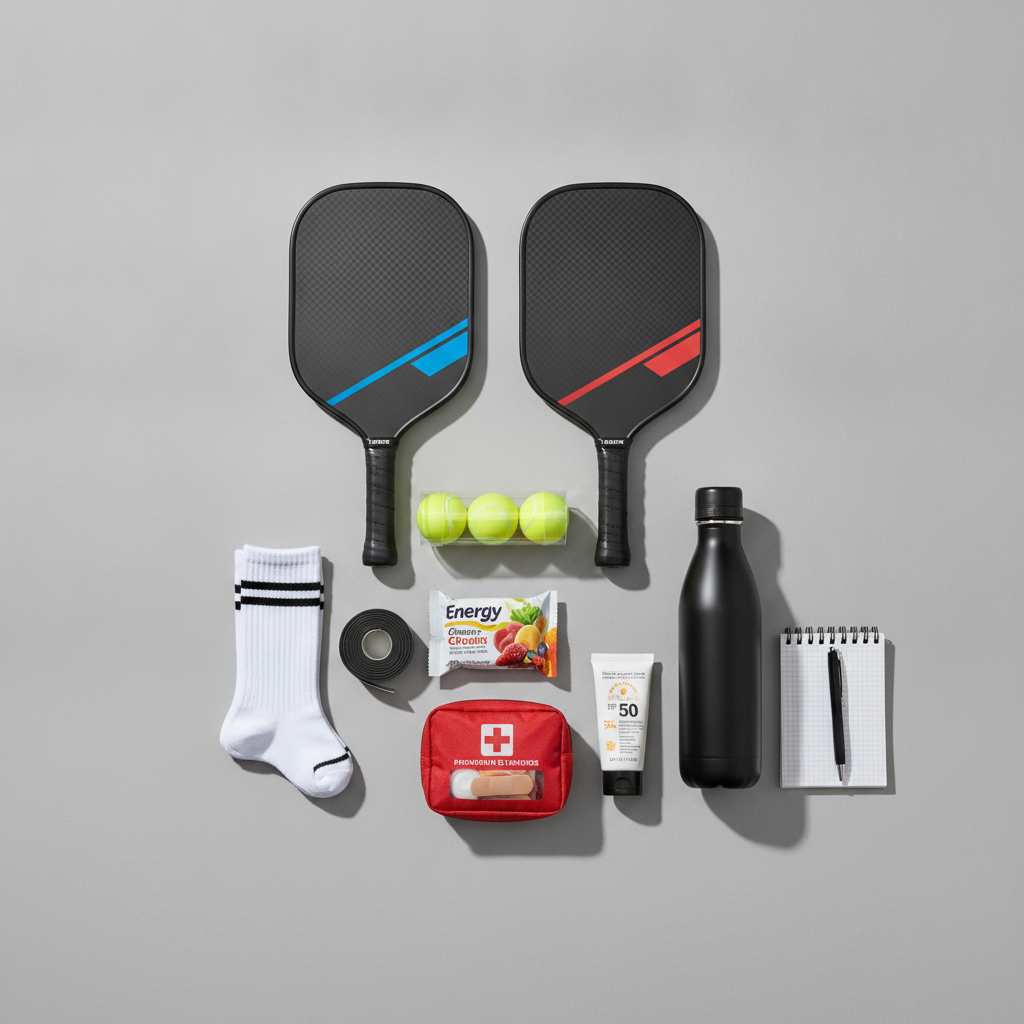
The complete audit checklist:
- Paddles: Check face for cracks, chips, or delamination. Check grip for wear — replace if slippery. Confirm the paddle is on the approved list for this specific event (rules have tightened in 2026). Bring at least two paddles.
- Balls: Bring a dozen minimum for outdoor events. Outdoor balls crack. Don't rely on event-provided balls being the brand you've been practicing with.
- Shoes: Check for worn treads, particularly on the outside of the heel where most lateral movement wear occurs. Court shoes with worn-out grip on hard courts are an injury risk.
- Nutrition and hydration: Pre-pack everything — don't assume there's food at the venue. Energy gels, bars, electrolyte tablets, more water than you think you'll need.
- Registration and ID: Print your confirmation or have it saved offline. Have photo ID. For DUPR-rated events, make sure your DUPR profile matches your registration name exactly.
- Extra grip tape and overgrips: A grip change between matches can completely change how a paddle feels under pressure. Bring backup.
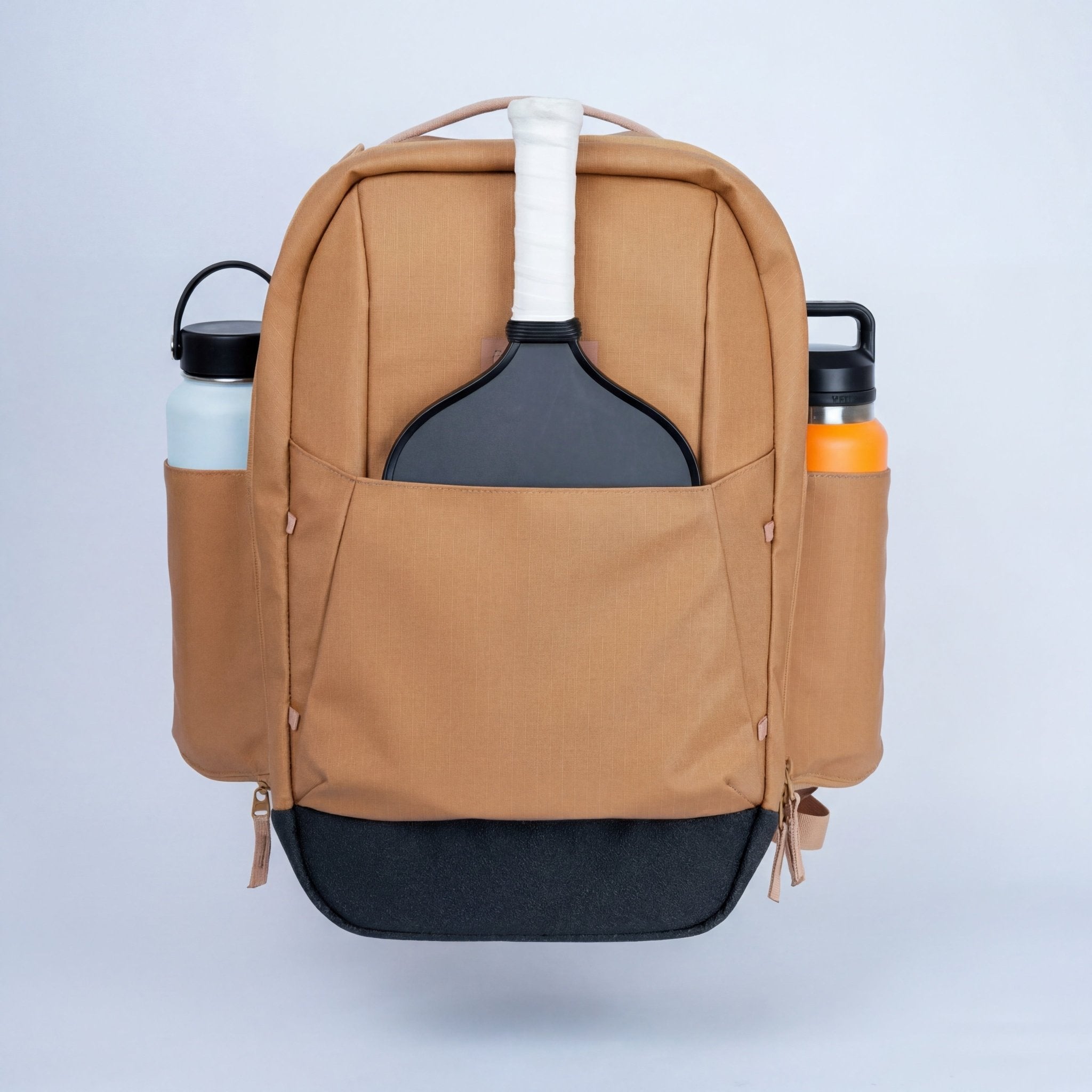
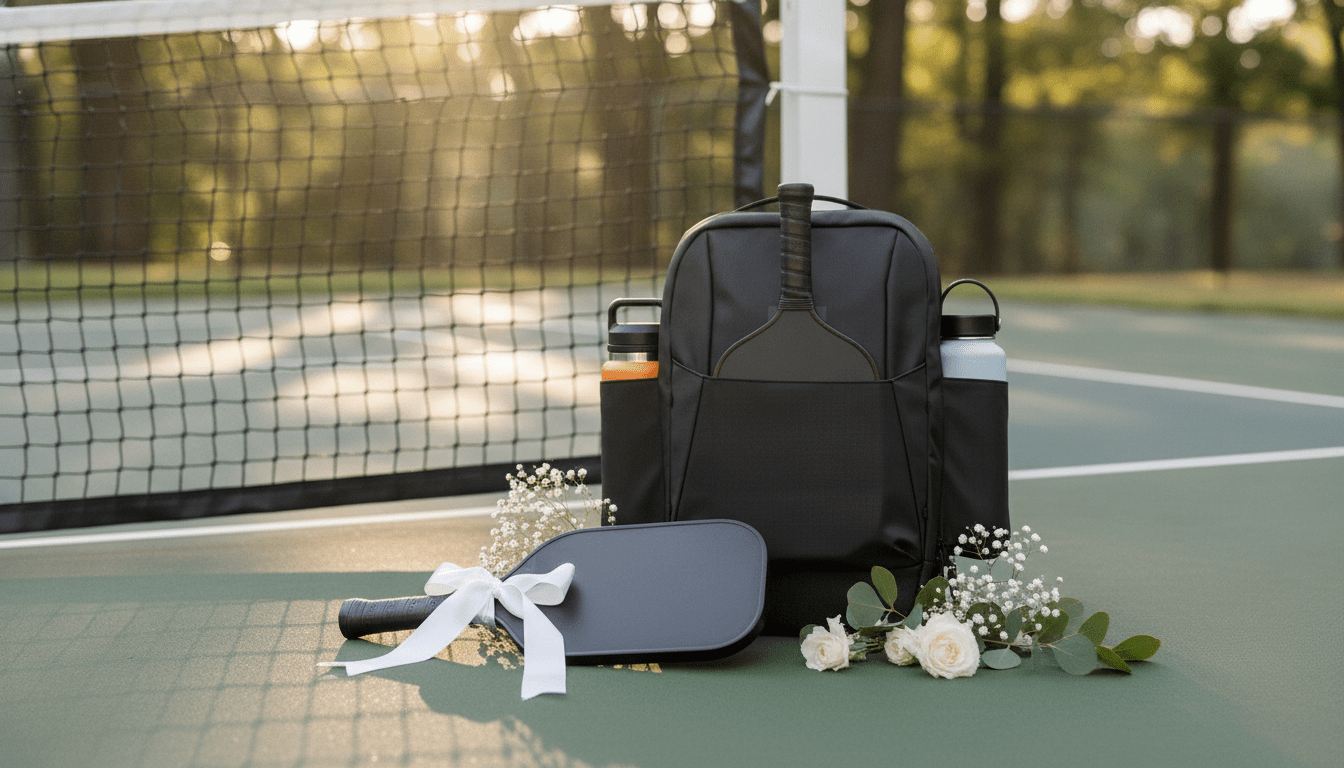
Your bag is the foundation of your gear system. The right tournament bag keeps everything organized so you're not rummaging through a single main compartment between matches looking for your water bottle or phone charger.

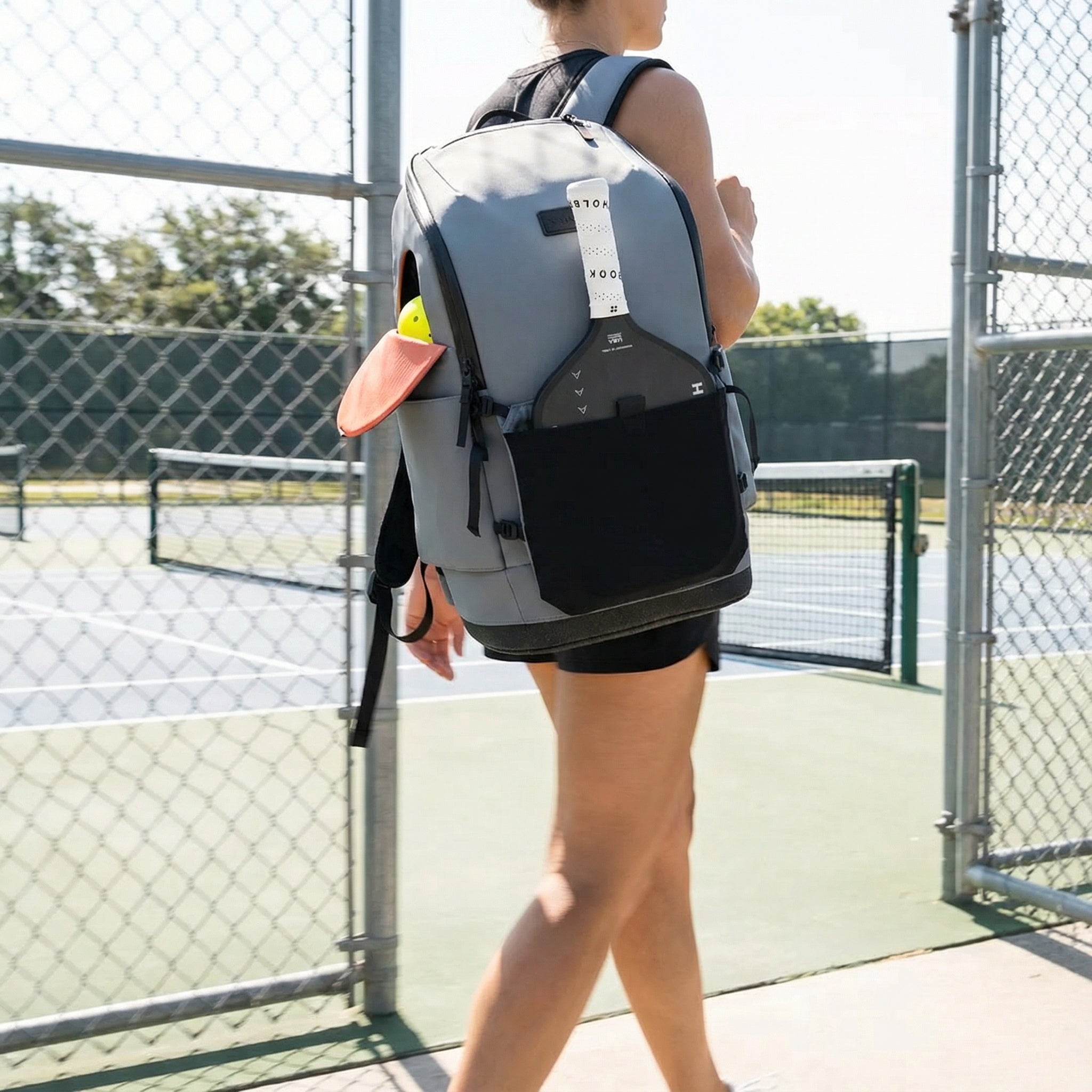
The Court Caddy Backpack ($325) is built for full tournament days — modular paddle sleeve that holds up to four paddles, 15" padded laptop sleeve, dedicated water bottle pockets, and YKK AquaGuard weatherproof zippers that hold up through outdoor summer tournament conditions. If you're doing your first tournament on a tighter budget, the Court Ranger V2 ($195) has a 16" laptop sleeve and the same modular system. Both are designed with feedback from 500+ real players. See our full pickleball tournament packing list for the complete gear breakdown.
The Night Before: What to Prep, What to Pack, What to Ignore
The night before a tournament has one goal: eliminate decisions from the morning. Every decision you make at 6:30 AM under mild time pressure is a cognitive tax you're paying before you've played a point.
What to prep:
- Pack your bag completely — paddles secured, nutrition packed, registration accessible
- Lay out your clothes and court shoes
- Set an alarm 90 minutes before you need to leave (not 30 minutes — tournament check-ins have lines)
- Know the venue address, parking situation, and where to check in
What to pack: Everything from your gear check above, plus a light jacket (outdoor courts in the morning are cold even in summer), sunscreen (apply before you leave, not at the venue), and a small first-aid kit with athletic tape and ibuprofen.
What to ignore: Rewatching technique videos at 11 PM. Analyzing your potential opponents. Trying to review new strategy. Your game is set — the night before is logistics, not preparation. Read something unrelated to pickleball, eat something familiar, and sleep.
Tournament Morning: The Warm-Up Routine That Actually Works
Most recreational players show up, hit a few balls against the wall or with a partner, and consider themselves warmed up. That's not a warm-up — that's avoiding cold muscles. A real warm-up prepares your body specifically for what pickleball demands: lateral movement, rapid direction changes, arm swing acceleration, and fine motor control for soft shots at the kitchen.
The 20-minute tournament morning warm-up:
- 5 minutes: light movement — brisk walk, arm circles, hip rotations, leg swings. Get blood moving before you touch a paddle.
- 5 minutes: groundstrokes — rally from the baseline with a partner, medium pace. Not trying to win points, just establishing hand-eye timing and feel.
- 5 minutes: kitchen work — dink exchanges, cross-court and down-the-line. Soft game calibration. This is where you find out how the ball is responding to the court surface.
- 5 minutes: transition and volleys — move from baseline to NVZ, hit volleys at different heights and angles. The transition zone is where most rallies are decided — warm it up specifically.
Do this before your first match, not during it. The first game is not a warm-up game — it counts. Players who treat the first game as "getting loose" give away points they didn't have to.
For everything that goes into a full tournament day beyond preparation, check our first pickleball tournament guide and the complete pickleball tournament guide. And if the mental side of tournament nerves is what's tripping you up, our pickleball mental game strategy article covers the specific tools that actually reduce pre-match anxiety.
FAQ: Pickleball Tournament Preparation Questions
How long does it take to prepare for a pickleball tournament?
Four weeks is ideal — it gives you time to identify and partially address weaknesses, sharpen your strongest shots, get competitive game reps, and spend the final week on rest and mental prep. You can enter a tournament with less preparation, but four weeks is the minimum to feel genuinely ready rather than just showing up hoping for the best.
What should I practice before a pickleball tournament?
In the final two weeks, drill your strongest shots — not your weakest. Prioritize third shot drops, dink consistency, and resetting from the transition zone. Avoid introducing new technique changes close to competition. The goal isn't to become a complete player in two weeks; it's to walk in with three or four shots you trust completely under pressure.
What should you do the night before a pickleball tournament?
Pack your bag completely, lay out your clothes and shoes, and know the venue logistics — address, parking, check-in location. Eat a familiar meal, set your alarm for 90 minutes before you need to leave, and avoid strategy analysis or technique videos at night. Your game is set. The night before is logistics and rest, not preparation.
How do you warm up for a pickleball tournament?
20 minutes before your first match: 5 minutes of light movement (arm circles, hip rotations, leg swings), 5 minutes of mid-court groundstrokes, 5 minutes of kitchen dink exchanges, and 5 minutes of transition and volley work. The goal is to arrive at match time with your timing calibrated and your body warm — not to practice technique during warm-up.
What should a beginner do to prepare for their first pickleball tournament?
Focus on knowing the scoring and service rotation rules cold, drilling your third shot drop until it's reliable under pressure, and doing a complete gear check 3 days before. Manage expectations — your first tournament is a learning experience. Show up organized, warm up properly, and focus on unforced error reduction rather than trying to play aggressively.
How do I reduce nerves before a pickleball tournament?
Preparation is the most reliable anxiety reducer. Players who've drilled their shots 200 times before a tournament don't need to hope those shots work — they know they work. Beyond preparation: arrive early (rushed arrivals spike anxiety), follow your established warm-up routine, and focus on process (executing your game plan) rather than outcome (winning or losing). Read more in our pickleball mental game strategy guide.

Leave a comment
This site is protected by hCaptcha and the hCaptcha Privacy Policy and Terms of Service apply.