

For a pickleball tournament, you need at minimum: 2–3 paddles, 6 overgrips, a water bottle and electrolyte mix, court shoes (plus a backup pair for outdoor concrete), two sets of performance clothes, a towel, energy snacks, and a bag that keeps all of it organized between courts — not in a locker room. Last updated: June 2026.
Every other tournament packing guide organizes gear by category. This one organizes it by when you need it — pre-match warm-up, Match 1, between-match recovery, Match 2, and the finals push. That's how you actually use a tournament bag. You're not unpacking everything at once; you're pulling the right thing at the right moment between courts.
Here's what you actually need, in the order you'll need it.
Disclosure: This post contains affiliate links to Pickleball Central. If you purchase through our links, FORWRD earns a small commission at no extra cost to you. We only link to products we'd recommend regardless.
Table of Contents
- Why Tournament Day Requires a Different Bag Setup
- The Full Tournament Bag Checklist (by Match Sequence)
- Paddles: How Many to Bring and Why Grip Matters More in Tournaments
- Hydration and Nutrition: What the Top Players Actually Use
- Recovery and Between-Match Essentials
- What to Wear: Dress Code, Layers, and Court-to-Dinner Versatility
- Your Bag: The Gear That Holds It All Together
- FAQ: Pickleball Tournament Packing
Why Tournament Day Requires a Different Bag Setup Than Your Regular Game
Tuesday night rec play and a sanctioned USA Pickleball tournament are not the same event. On a typical club session, you're playing 2 hours max, there's a restroom nearby, and if you forget something you improvise. A tournament — even a small local bracket — is a 5-to-8-hour day with 3–5 matches, outdoor heat (or cold), no guaranteed locker room access, and gaps of 20–40 minutes between matches where you're sitting courtside managing your energy and equipment.
The bag is your command center. You're not going back to your car between every match. You're pulling a fresh overgrip on Court 3 while your partner stretches on Court 7. You're eating your banana at the scorer's table before your semi-final. You're switching to a dry pair of socks at 1pm when your feet are soaked and your calves are tight.
The #1 mistake first-time tournament players make: packing the same as they would for an open play session. The result? Running out of overgrips by Match 3 when their hands are sweating most, eating a heavy meal that kills their legs mid-afternoon, and wearing their only good pair of court shoes on outdoor concrete until the cushioning is destroyed by the fourth match.
The Full Tournament Bag Checklist (Organized by Match Sequence)
Screenshot this table. Bookmark it. This is the tournament packing list organized the way a tournament actually runs — by when you need each item, not what type of item it is.
| Phase | What You Need | Why It Matters |
|---|---|---|
| Pre-Match Warm-Up | Primary paddle + fresh overgrip • warm-up balls (check tournament rules on ball type) • light snack (banana, nuts) eaten 60+ min before play • water • sunscreen • tournament-approved court shoes | Gear check before first match |
| Match 1 | Primary paddle • 1 backup paddle • water bottle accessible • towel clipped to bag • sweat headband/wristbands | First match — energy high, grip less critical |
| Between Match 1–2 | Fresh overgrip (hands sweat more each match) • electrolyte drink • snack (dates, peanut butter, energy bar) • dry socks if needed • ice pack on calves/knees • 5-min recovery stretch | Grip and energy management — this is where most players slip |
| Match 2 | Fresh overgrip applied • backup paddle ready • electrolyte + water accessible • towel • mental focus (score neutral, play tactical) | Mid-tournament — grip and energy most critical here |
| Finals Push (Match 3+) | Third overgrip of the day • muscle rub or Biofreeze for calves • final snack • change of shirt if soaked • backup paddle confirmed ready • ibuprofen if needed | Legs are heavy, grip is unpredictable — preparation is the edge |
| Post-Tournament | Change of full clothes • flip flops/casual shoes • phone charger • cash/card for awards or food • recovery snack (protein + carbs) | Court to dinner versatility — you deserve it |
Paddles: How Many to Bring and Why Grip Matters More in Tournaments
The rule: bring at least 2. For a full-day bracket, 3 is better. Paddles crack — especially in cold morning temperatures before they've warmed up. Surface delamination happens. A broken paddle in Match 1 with no backup means a forfeit or borrowing something unfamiliar under pressure. Neither is acceptable.
Overgrips are the most underestimated tournament supply. In a regular club session, you might replace your grip every few weeks. At a tournament? By Match 3, most players' hands are sweating enough that a grip applied at 8am is compromised by 2pm. Plan on one new overgrip per 1–2 matches — which means carrying 4–6 for a full day. Shop overgrips at Pickleball Central — Tourna Grip and Gamma Supreme are the standards at tournament play, absorb sweat reliably, and cost under $5 each.
A note on tournament balls: some events provide balls at each court (typically Franklin X-40 or Dura Fast-40 for outdoor play), others expect you to bring your own. Check your tournament registration info. USA Pickleball-sanctioned events at certain levels must use USAP-approved balls — bring at least one tube of the specified ball type to warm up and in case of shortage.
Hydration and Nutrition: What the Top Players Actually Use
The hydration mistake at tournaments isn't failing to drink — it's waiting until you're thirsty. By the time you're thirsty in 85°F heat after two matches, you're already behind. Drink water consistently between every point in the first match. Add electrolytes — Liquid IV, Nuun, or a sports mix — starting with Match 2.
Snack timing matters more than snack content. A banana eaten 90 minutes before a match gives you steady energy. The same banana eaten 15 minutes before a match gives you a sugar spike right as you start warming up — followed by a crash mid-match. Pack foods with a low glycemic load: nuts, peanut butter, dates, and whole-grain bars are the standards. Energy gels work for the finals push. Watermelon at lunch is excellent (hydrating, light, easy to digest).
What not to eat: a full tournament-day lunch heavy in protein or fat between Match 2 and Match 3. Your body diverts blood flow to digestion. Your legs get heavy. Your reaction time slows. A 500-calorie lunch 30 minutes before your semi-final is one of the most common tournament mistakes at the 3.5–4.0 level.
Bring 32+ oz of water minimum, plus a smaller bottle for electrolytes. Don't rely on the venue having what you need — sometimes there's a vending machine, sometimes there isn't.
Recovery and Between-Match Essentials
This is the category that separates experienced tournament players from first-timers. Experienced players spend the 20–40 minutes between matches actively managing their body. First-timers sit and scroll their phones.
- Towel: Essential for wiping hands and paddle grip between every two points in hot weather. Clip it to your bag handle so it's always accessible.
- Ice pack or cold compress: For calves, knees, or ankles between matches if they're tight. Small gel packs stay cold for 2–3 hours.
- Muscle rub or Biofreeze: Applied between Match 2 and Match 3, it can quiet nagging tightness enough to play through without medication.
- Dry socks: Outdoor concrete on a warm day soaks socks within 2–3 matches. Wet socks = blisters, hot spots, and impaired footwork. Bring a spare pair and swap at the halfway point.
- Ibuprofen or acetaminophen: Not for playing injured — for managing the normal joint stiffness that accumulates across a full day of competition. Take it proactively between matches if you know your knees or shoulders tighten up.
What to Wear: Dress Code, Layers, and Court-to-Dinner Versatility
Wear performance clothing — moisture-wicking fabric that pulls sweat away from skin rather than absorbing it. Cotton is comfortable for the first match and miserable for the third. Pack at least one full change of clothes: a dry shirt and shorts or skirt for the finals push or the post-tournament celebration.
Shoes are the most important call. For outdoor tournaments on hard court surfaces, concrete destroys cushioning fast. In 4–6 hours of play, a shoe that feels fine at 9am can feel dead at 2pm — and dead cushioning means more knee and ankle impact on every lateral movement. If you play tournaments more than 2–3 times per year, designate a pair of court shoes as your tournament shoes and don't use them for everyday practice. Shop court-specific shoes at Pickleball Central — brands like ASICS, K-Swiss, and Skechers make court-specific models engineered for the lateral demands of pickleball.
Layers for morning starts: a full-zip or quarter-zip for the warm-up that comes off by Match 1. Sunglasses and a hat for outdoor play — UV exposure across a full tournament day adds up. Sunscreen (SPF 30+) reapplied after Match 2, not just at the start of the day.
Your Bag: The Gear That Holds It All Together
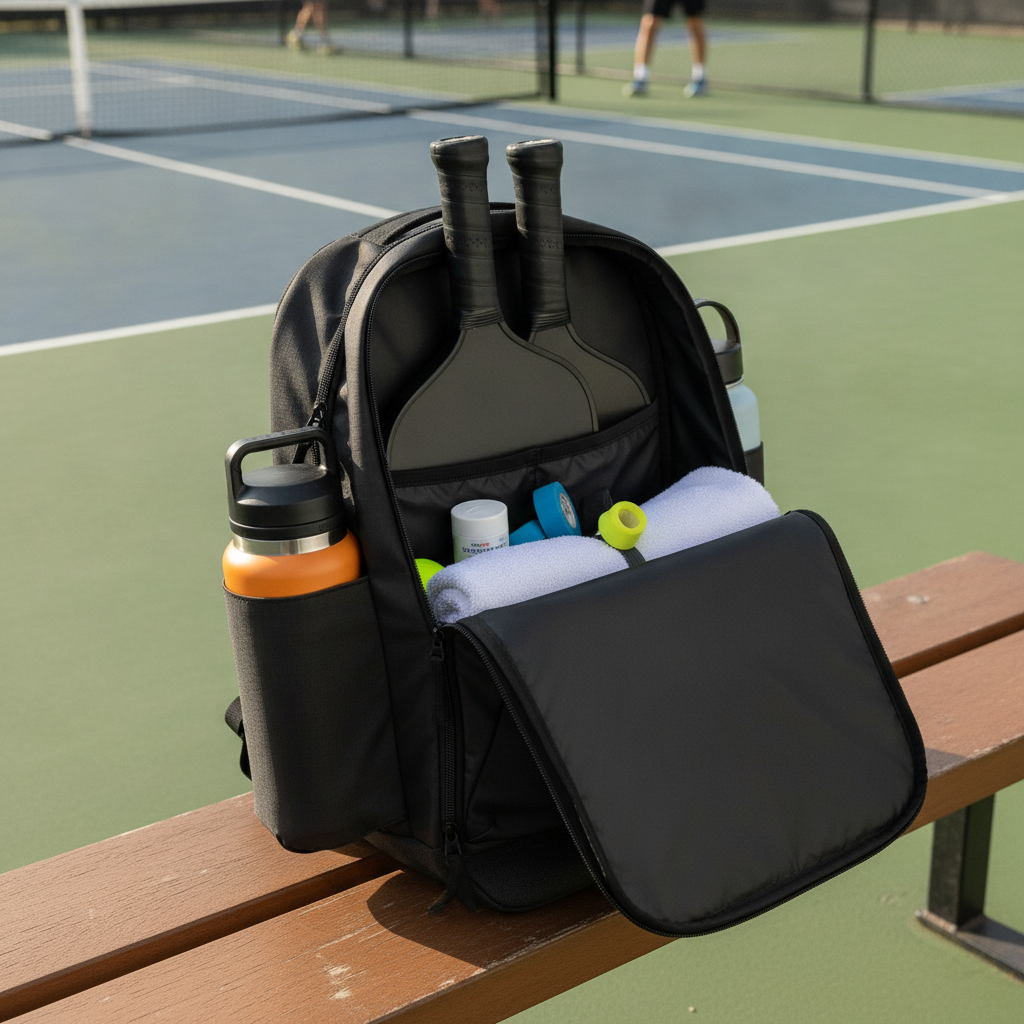
Organization isn't a luxury at a tournament. You're pulling gear between courts in 10-minute windows. If your bag is a disorganized pile, you spend those windows digging instead of prepping. You miss the fresh overgrip. You forget the electrolytes. You arrive at your next court flustered instead of focused.
"The difference between a prepared tournament player and a scrambling one shows up in the bag. When you know exactly where everything is — grips in the front pocket, water in the side, snacks on top — the between-match recovery becomes automatic. You're recharging, not hunting." — Grub, FORWRD Co-Founder
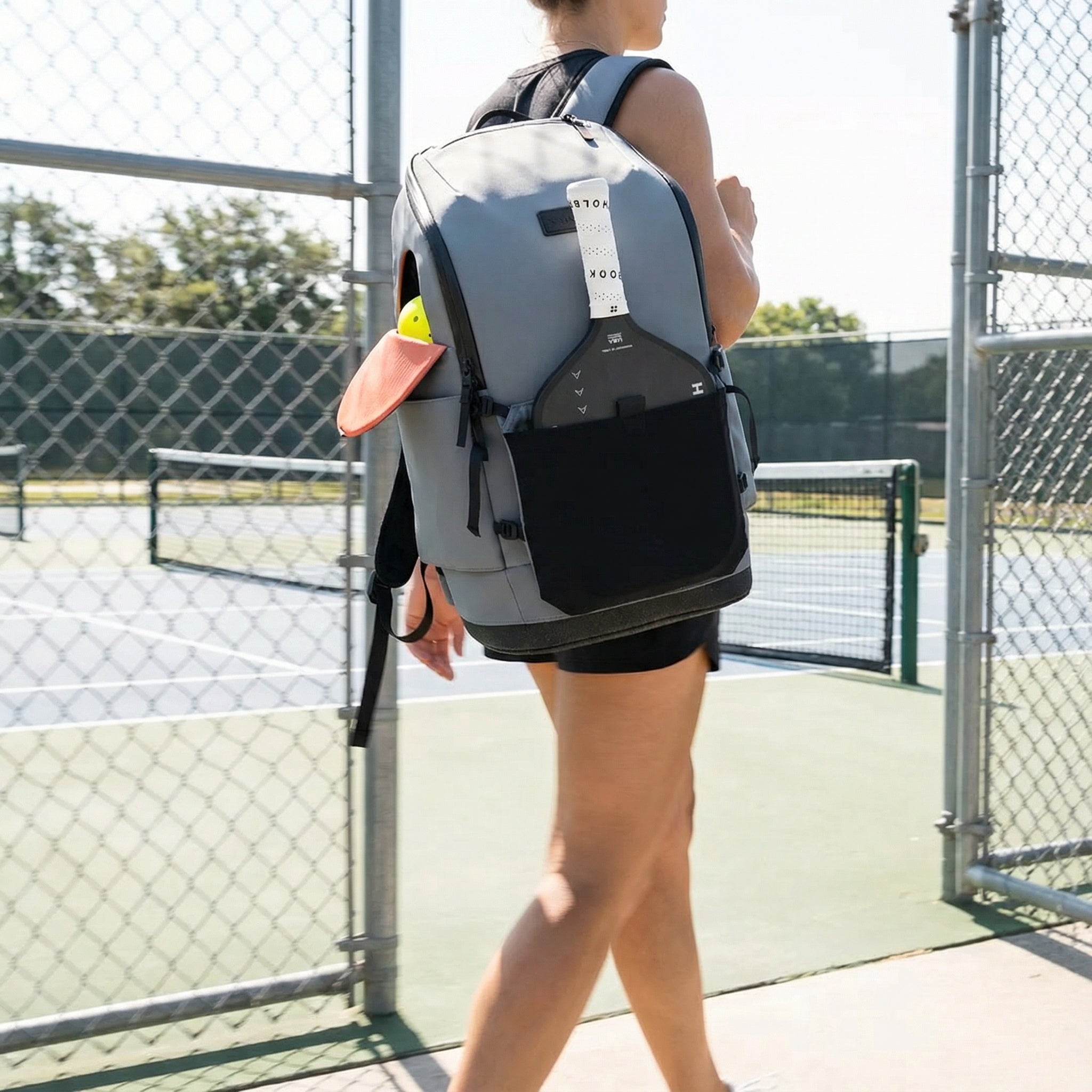
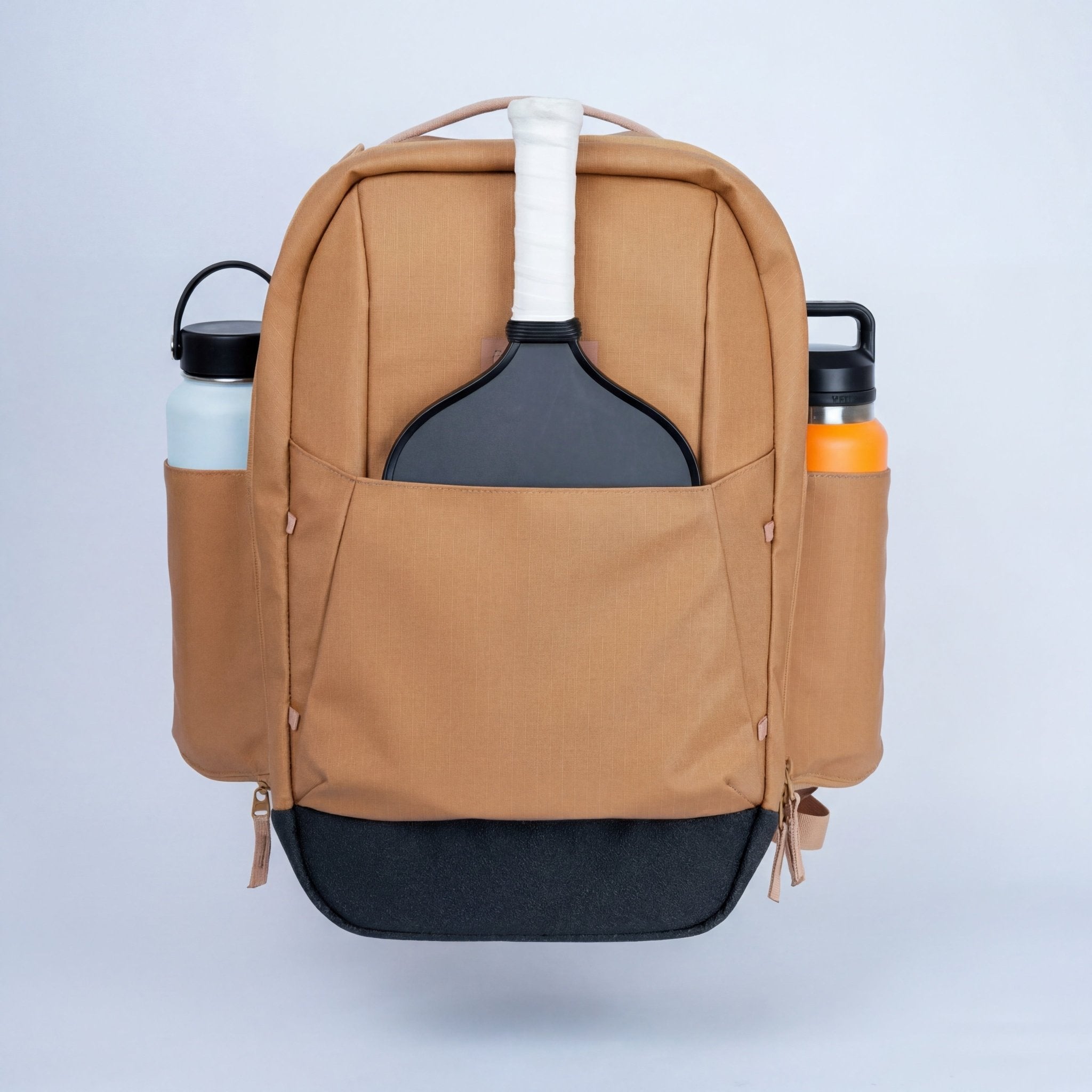
The Court Caddy Pickleball Bag ($325) was designed specifically around the tournament player's loadout: a modular front paddle sleeve that holds 4 paddles with quick access, a 15" padded laptop sleeve, YKK AquaGuard weatherproof zippers for unpredictable outdoor conditions, and compartment layout designed by 500+ real players who gave input on how they actually use a bag during competition. The organization is the product — every compartment has a purpose so you're not digging through a pile to find your overgrip in the 12 minutes before your semi-final.

If you want to spend less: the Court Ranger V2 ($195) handles a 2-paddle tournament setup with its 16" laptop sleeve and quick-access paddle slot. It's lighter, which matters on long tournament days when you're carrying the bag courtside all day. If you're playing one-day local events and want room to grow into a more organized system, it's the honest pick.
Ready to upgrade your tournament setup?
The Court Caddy was built around how tournament players actually use a bag — modular paddle sleeve, organized compartments, YKK AquaGuard zippers for outdoor play.
FAQ: Pickleball Tournament Packing
What do you need to bring to a pickleball tournament?
At minimum: 2–3 paddles, 4–6 overgrips, 32+ oz of water plus electrolytes, performance clothing (plus a spare set), court shoes, towel, energy snacks, sunscreen, and a bag with organized compartments. For a full-day bracket, also pack dry socks, a cold pack, muscle rub, and ibuprofen for between-match recovery.
How many paddles should I bring to a tournament?
Two at minimum, three is better. Paddles crack in cold morning temperatures, delaminate, or break during play. A broken primary paddle with no backup means either forfeiting or borrowing something unfamiliar mid-match. Three paddles — your primary, a backup with the same or similar feel, and a third as insurance — is the standard for serious tournament players.
What should I wear to a pickleball tournament?
Moisture-wicking performance fabrics that pull sweat away from skin — not cotton. Pack a full spare outfit. Court-specific shoes engineered for lateral movement on hard surfaces; standard sneakers don't provide enough lateral support for pickleball movement patterns. Sunglasses and a hat for outdoor play. Layers for cold morning warm-ups that you can remove by Match 1.
How do you prepare for a pickleball tournament?
Pack your bag the night before using the match-sequence approach — grips, water, snacks, recovery gear organized so you can pull each item at the right moment. Eat a carb-forward dinner the night before. Sleep 7+ hours. On tournament day, eat a substantial breakfast 2+ hours before play. Apply sunscreen before leaving home. Arrive 30 minutes early to warm up and scout courts.
What food and drinks should I bring to a pickleball tournament?
Water (32+ oz, refillable), electrolyte mix or drink for Match 2 onward, bananas, nuts, peanut butter packets, dates, and low-glycemic energy bars. Avoid heavy meals mid-tournament — eating a full protein lunch 30–45 minutes before your next match slows your legs. Save the big meal for post-tournament. Watermelon is the best on-court snack for hydration and quick energy.
Is a backpack or bag better for a pickleball tournament?
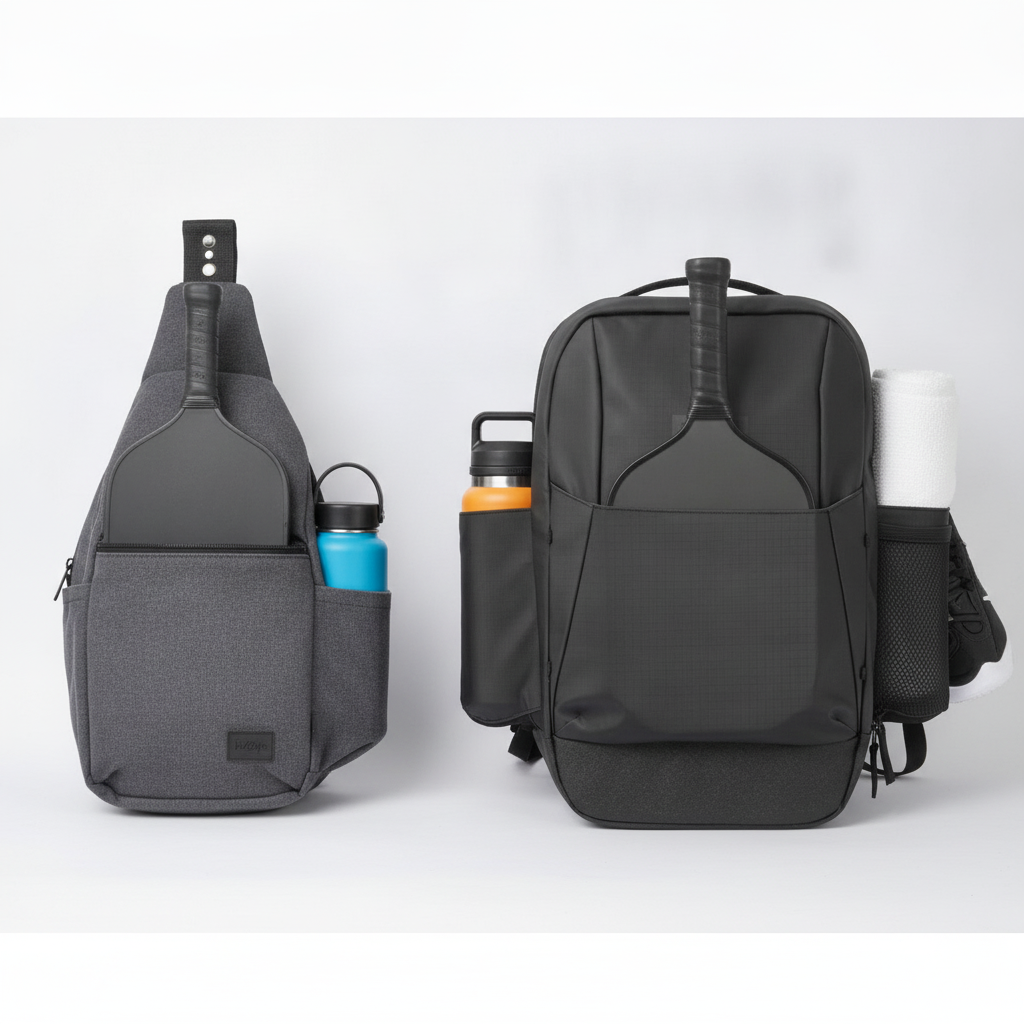
A backpack wins for tournament play — it distributes weight across both shoulders, stays hands-free while you move between courts, and gives you better compartment organization than a tote or duffel. Look for one with a dedicated paddle sleeve, water bottle pockets on both sides (so you can reach either with one hand), and a separate main compartment for clothes and recovery gear. Sling bags are fine for casual play but too small for a full tournament day's kit.

Leave a comment
This site is protected by hCaptcha and the hCaptcha Privacy Policy and Terms of Service apply.