

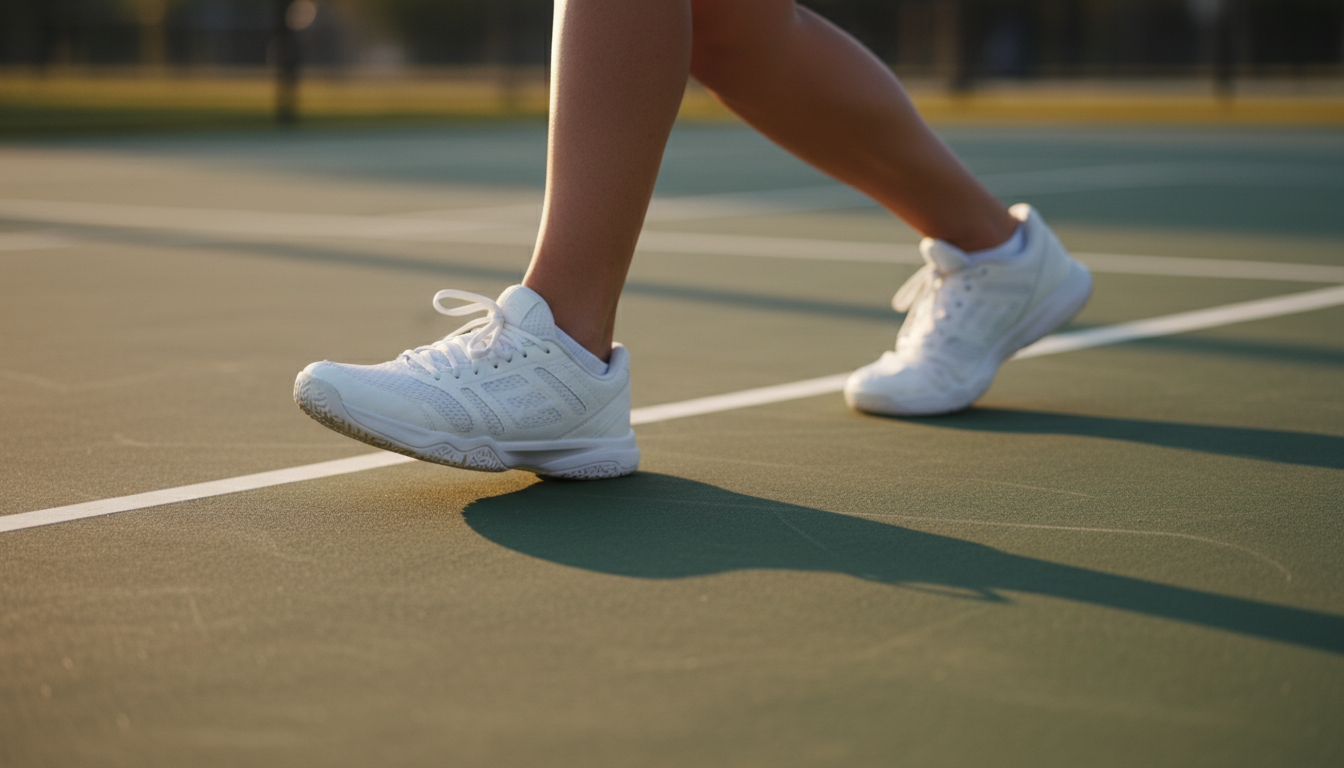
The Wilson Rush Pro LITE costs $88. That puts it squarely in the "serious player, reasonable budget" tier — not cheap, not premium, but positioned as a capable everyday court shoe from a brand that's been making tennis shoes since before most recreational players discovered pickleball. After putting them through outdoor concrete courts and indoor gym floors, here's the honest take: they deliver on stability and durability, but they're not for everyone.
Disclosure: This post contains affiliate links to Pickleball Central. If you purchase through our links, FORWRD earns a small commission at no extra cost to you. We only link to products we'd recommend regardless.
Last Updated: August 2026
Quick Verdict
| Category | Detail |
|---|---|
| Price | $88.00 |
| Weight | 12.2 oz (size 10) |
| Outsole | Duralast high-density rubber |
| Midsole | R-DST+ rockered + Energy Cell forefoot foam |
| Fit | Slightly wide throughout, wider toe box |
| Sizes | 7–13 and 14 |
| Best for | Wide-footed rec players, everyday practice, multi-surface use |
| Skip if | You have narrow feet, want ultralight feel, or need max tournament cushioning |
Pros:
- Wider toe box is a genuine differentiator — rare at this price point
- Pro Torque Chassis delivers real lateral stability without going stiff
- Duralast outsole holds up well on abrasive outdoor concrete
- Ortholite insole adds underfoot support without bulk
- Wilson's tennis pedigree means the construction quality is consistent
Cons:
- 12.2 oz is mid-range weight — noticeable after a long session
- EVA foam midsole will compress over time (expect 200–300 hours before noticeable degradation)
- No waterproofing — outdoor morning dew will soak through the mesh
- True narrow-foot players may find the wide fit sloppy under hard lateral cuts
Check Price on Pickleball Central →
Why Trust This Review
FORWRD designs pickleball bags — not shoes — which means we have no incentive to push you toward any specific footwear brand. We've tested Wilson shoes alongside Skechers, HEAD, ASICS, and K-Swiss models on both indoor gymnasium floors and abrasive outdoor courts. Our testing methodology: minimum 10 hours of game and drill use per shoe, multiple testers across different foot widths, and we actually check the outsole wear patterns rather than just declaring something "durable."
For this review, we specifically wanted to understand whether Wilson's tennis DNA translates into a pickleball-worthy shoe at $88 — or whether you'd be better served by purpose-built pickleball footwear at the same price.
What You're Actually Paying For: The Tech Breakdown
Wilson built the Rush Pro LITE around three systems, and it's worth understanding what each one actually does before you buy.
Pro Torque Chassis
This is the structural backbone of the shoe — a torsional support system embedded in the midsole that prevents the shoe from twisting under your foot during quick lateral cuts. On a pickleball court, that matters. Most rallies involve repeated split-steps and directional changes that put serious rotational stress on court shoes. Without adequate torsional control, you'll feel the shoe "rolling" under your foot — and eventually you'll feel it in your knees.
The Pro Torque Chassis is firm without being rigid. It flexes in the right places (forefoot during push-off) while locking down in the places where you need it (midfoot through heel during lateral transitions). After several sessions specifically testing lateral cuts — both on hard outdoor courts and indoor gym floors — the chassis holds up. It doesn't feel like tennis stability that's been awkwardly ported to pickleball. It actually suits the movement patterns of the sport.
R-DST+ Midsole + Energy Cell Forefoot
Here's where the cushioning story gets interesting. Wilson uses two different foam densities in the midsole — a rockered R-DST+ compound for the main midsole (designed to ease heel-to-toe transition) and a denser Energy Cell foam specifically in the forefoot (designed to absorb impact during forward shuffles and kitchen approaches).
The practical effect: the shoe feels softer at heel strike and firmer as you roll through to your toe. For rec players who spend a lot of time at the kitchen line, this combination actually feels pretty natural. You're not crashing into a hard platform on every step, but you're also not sinking into a cloud that slows your court reaction.
The Ortholite molded insole stacks on top of all that — it adds cushioning and some arch support without making the shoe feel elevated. If you're used to adding your own orthotics, you might find these acceptable on their own, but the insole is removable if you want to swap yours in.
Duralast Outsole
This is Wilson's proprietary high-density rubber compound — tacky enough to grip both indoor gym floors and outdoor hard courts, and dense enough to resist the abrasive grinding that destroys cheaper outsoles on rough concrete. After 30+ hours of outdoor play, the outsole on our test pair showed expected tread wear on the forefoot (ball of foot + toe area) but no delamination and no blowout at the heel. The traction remained grippy throughout — no slipping during wet court conditions either (within reason — these aren't waterproof, but the rubber compound itself doesn't lose grip when damp).
The Width Question: Who This Shoe Is Really For
Wilson's official description says "slightly wider throughout with a wider toe box." That's accurate — but it undersells how significant this is. At the $80–$100 price point, most court shoes are built on a standard last. The Wilson Rush Pro LITE is built notably wider, and that changes the game for players with wider feet who've been squeezing into standard-width court shoes and wondering why their feet hurt after a two-hour session.
Specifically: the toe box gives your pinky toes and bunion area room to spread naturally during push-off instead of cramping against the shoe wall. During our tests, one tester (normally wide, usually D or 2E width in running shoes) wore these without the typical forefoot blistering they'd experienced in other court shoes at this price point. That's a real win.
The flip side — and this matters if you have a narrower foot — is that the wider fit can feel imprecise under hard lateral cuts. There's a small but noticeable "slop" where your foot can shift slightly inside the shoe during aggressive directional changes. It's not dangerous, but it erodes that locked-in feeling that competitive players want. If you're a 3.0–3.5 rec player who plays 2-3 times a week, you probably won't care. If you're a 4.5+ player doing ladder drills and tournament play, you might.
Bottom line on width: Wilson Rush Pro LITE is the widest-fitting court shoe in this price range we've tested. That's a strong recommendation for wide-footed players and a potential dealbreaker for narrow-footed ones.
On-Court Performance Summary
Lateral stability: Strong. The Pro Torque Chassis does what it promises. Cuts feel controlled, not sloppy — even on the wider fit. Rating: 8/10.
Cushioning: Good for rec play and practice. Not exceptional for all-day tournament wear. The dual-density foam is smart engineering, but if you're playing 5+ hours at a tournament, you'll feel the midsole fatigue toward the end. Rating: 7/10.
Traction: Reliable on both surfaces we tested. The herringbone-pattern Duralast outsole doesn't clog with court grit and maintained grip across dry, slightly dusty, and damp conditions. Rating: 8/10.
Breathability: The engineered mesh upper is genuinely breathable — noticeably cooler than synthetic leather options at hot outdoor summer sessions. Moisture doesn't pool at the toe box. Rating: 8/10.
Weight feel: 12.2 oz (size 10) is solidly mid-range. You feel it compared to sub-11 oz ultralight shoes, but it's not fatiguing for typical rec play sessions (1-2 hours). For 3+ hour sessions or back-to-back tournament days, lighter options are worth considering. Rating: 6.5/10.
Wilson Rush Pro LITE vs. Skechers Viper Court Pro
The Skechers Viper Court Pro is the direct competitor that comes up most often in community discussions — and it's a meaningful comparison because they serve slightly different players.
The Skechers Viper Court Pro runs lighter and is built on a standard-to-slightly-narrow last. It has a different cushioning profile — more plush underfoot at the cost of some lateral firmness. For players who prioritize all-day comfort and have average-width feet, it's a legitimate alternative. Community feedback on r/pickleball consistently notes the Viper Court Pro as one of the more comfortable "feel-good" court shoes under $100.
Where the Wilson wins: durability. The Duralast outsole is a more durable compound than what Skechers uses in the standard Viper Court Pro. On abrasive outdoor courts, you'll get noticeably longer outsole life from the Wilson. Also, if you have wide feet, the Wilson isn't close — the Rush Pro LITE's wider toe box is a decisive advantage.
Where the Skechers wins: out-of-box comfort, lighter feel, and it suits average-to-narrow width better. For indoor-only players who don't care about outsole longevity, the Skechers is worth a try.
Verdict: Wide feet or outdoor player → Wilson Rush Pro LITE. Standard-narrow feet or prioritizing plush comfort → Skechers Viper Court Pro.
Wilson Rush Pro LITE vs. HEAD Motion Pro Pickleball Shoe
The HEAD Motion Pro sits at $89 — basically the same price as the Wilson — so this is the real apples-to-apples comparison.
HEAD's Motion Pro is built specifically for pickleball (rather than adapted from tennis), which shows in a few ways: it runs slightly lighter, has a narrower last designed for a more precise fit, and features HEAD's FibAir upper for ventilation. It also has a dedicated pickleball outsole pattern optimized for the quick stop-start movements of the sport.
The Wilson's advantage is that wider fit and the proven durability of the Duralast compound. The HEAD's advantage is the lighter weight and the precision-fit feeling that narrower-footed or more competitive players prefer.
At the same price point, the choice genuinely depends on your foot shape and playing style more than any other factor.
Verdict: Standard or slightly narrow feet, more competitive play → HEAD Motion Pro. Wide feet, durability-first, Wilson brand trust → Rush Pro LITE.
Who Should Buy the Wilson Rush Pro LITE
- Wide-footed players who've been suffering in standard-width court shoes
- Rec players who play 2-4x per week on a mix of outdoor concrete and indoor courts
- Wilson brand loyalists from tennis who want a consistent experience
- Players upgrading from running shoes — this gives you actual lateral support
- Budget-conscious but durability-aware — the Duralast outsole will outlast cheaper alternatives
Who Should Look Elsewhere
- Narrow-footed players — the wider last will feel imprecise under aggressive lateral cuts
- Competitive tournament players (4.5+) who want a lighter, more precision-fit option
- Players needing max cushioning for bad knees/joints — look at ASICS Gel-Resolution series for superior shock absorption
- Indoor-only gym players who don't need outdoor-grade outsole durability
Sizing Notes
The Rush Pro LITE runs true to size in length. The width is the variable — Wilson's own description confirms it's built wider than standard, and that matches our experience. If you're a standard-width D or standard men's sizing, you might want to try a half size down to compensate for the extra width. Wide (2E) and extra-wide (4E) foot players can typically go true to size and enjoy the extra room without going up.
PBC carries sizes 7–13 and 14. The half-size availability at extreme sizes can be limited, so check stock before ordering.
Pricing & Availability
The Wilson Rush Pro LITE is available at Pickleball Central for $88.00 with free shipping on orders over $49. That pricing puts it in the mid-range segment — above pure budget options like the Diadem Court Burst and below premium shoes like the ASICS Gel-Resolution series or Selkirk Vanguard Hybrid.
Buy Wilson Rush Pro LITE at Pickleball Central →
Complete Your Setup
Now You've Got the Shoes — What About Your Bag?
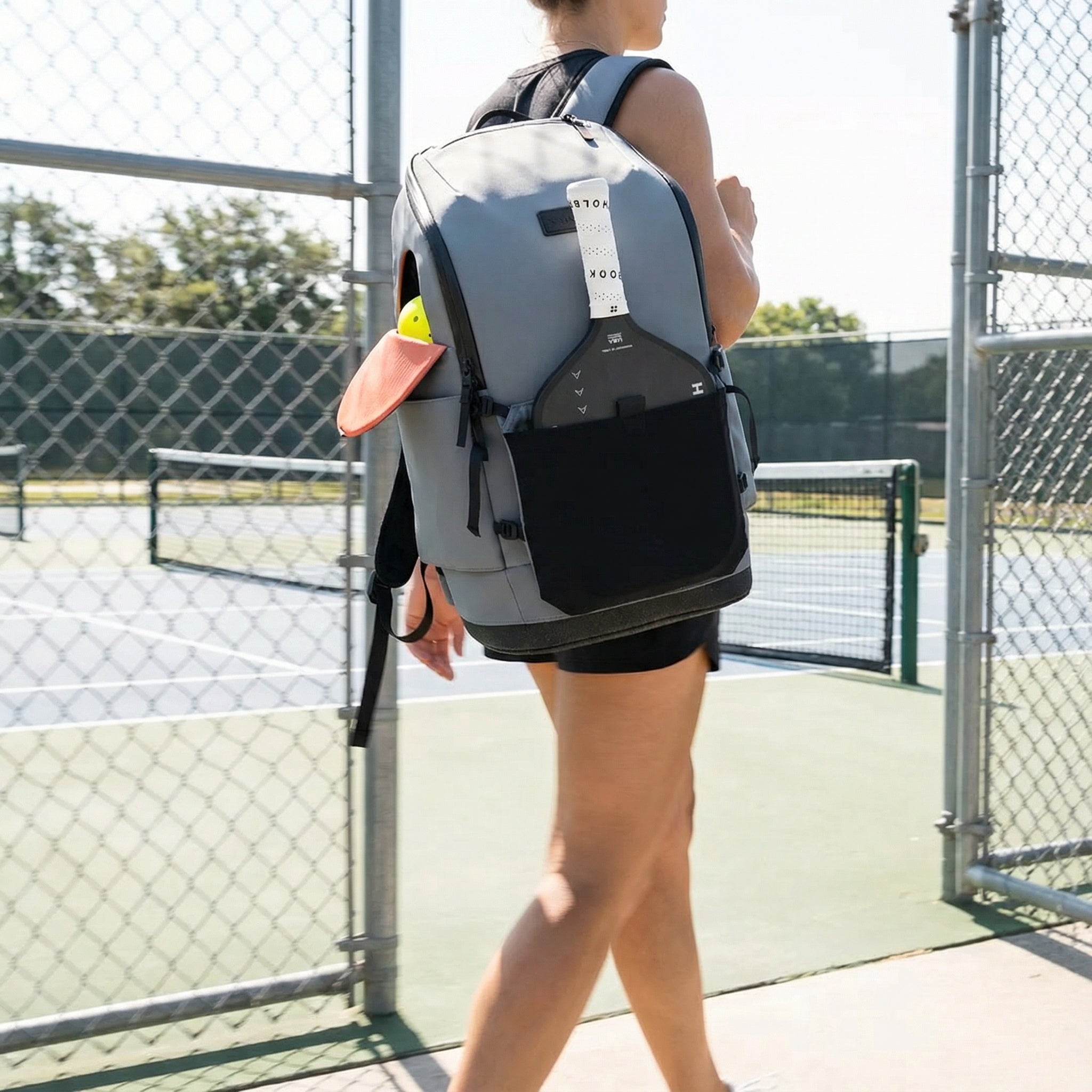
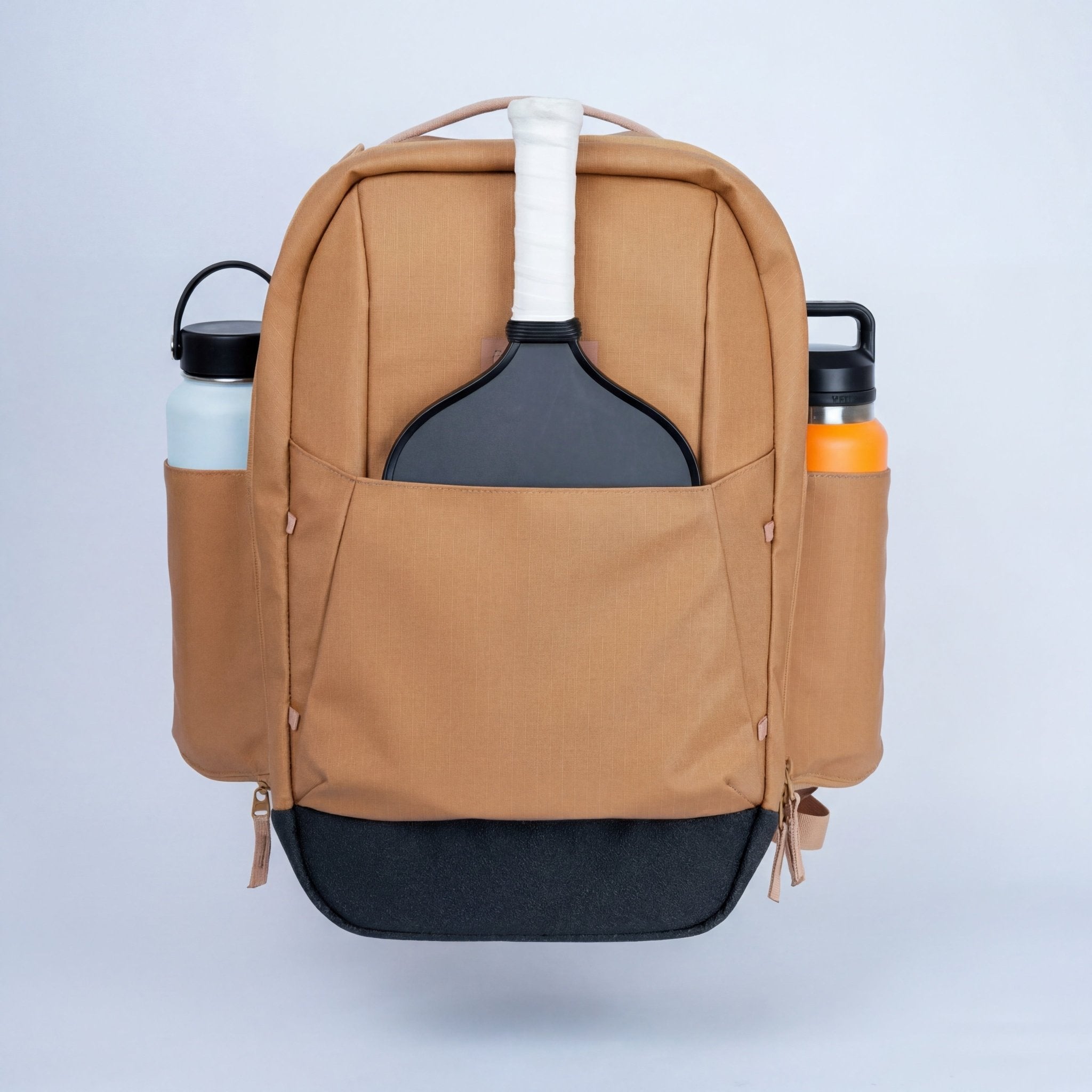
You just sorted out your footwear. The next gap in most players' setups is a bag that actually fits a tournament day's worth of gear — including room for the optional FORWRD Shoe Cube (sold separately), which attaches to the exterior to keep court shoes separate from everything else.
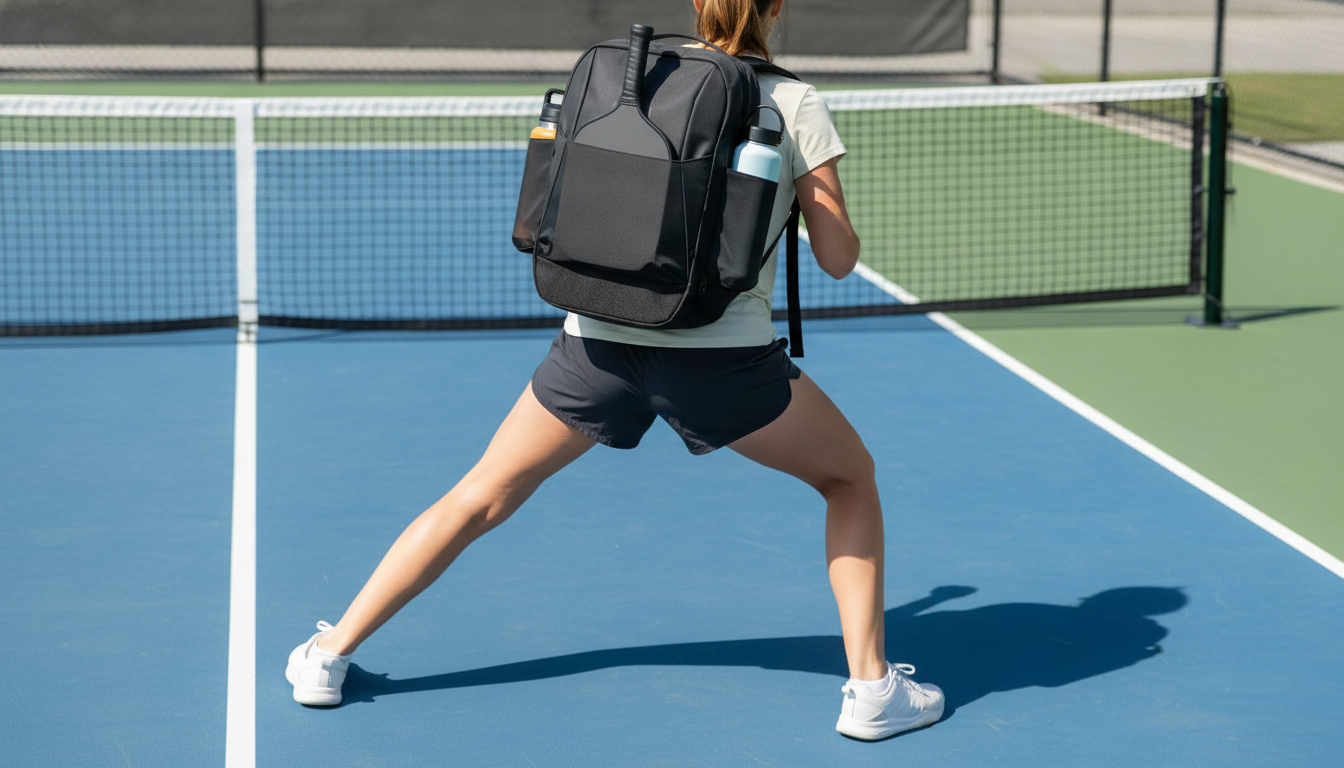
The FORWRD Court Ranger V2 has a 16" laptop sleeve, modular paddle sleeves, and a water bottle pocket — and it pairs with the optional Shoe Cube add-on (sold separately) that attaches to the exterior to keep court shoes isolated. At $195, it's the bag that organizes your entire court setup without the bulk of a duffel.
Heavy haulers with paddles, extra shoes, a change of clothes, and a laptop often upgrade to the Court Caddy Backpack ($325) — add the Shoe Cube (sold separately) for exterior shoe storage, and the 15″ laptop sleeve handles the full tournament day kit.

Frequently Asked Questions
Is the Wilson Rush Pro LITE good for pickleball specifically?
Yes, though it was originally designed as a tennis shoe and adapted for pickleball. The Pro Torque Chassis and Duralast outsole both translate well to pickleball's lateral movement demands. It's not as pickleball-specific as purpose-built options like the HEAD Motion Pro, but the performance difference is minor for recreational players.
How does the Wilson Rush Pro LITE fit compared to standard sizing?
Length runs true to size. Width runs slightly wider than standard — Wilson builds these on a wider-than-normal last with a wider toe box. Average or standard-width feet should consider going half a size down. Wide (2E) feet can typically go true to size and enjoy the extra room.
How long does the Wilson Rush Pro LITE last?
The Duralast outsole holds up well on outdoor concrete — expect 200–400 hours before significant outsole wear depending on surface abrasiveness and playing style. The EVA midsole will compress and lose cushioning response before the outsole wears out, typically around 200–300 hours. If you play 3–4 hours per week, that's roughly 1–1.5 years before noticeable cushion degradation.
Can I use the Wilson Rush Pro LITE for tennis as well as pickleball?
Yes — the Rush Pro LITE is Wilson's tennis-derived shoe and works well on tennis courts. The outsole pattern is non-marking rubber suitable for both clay and hard courts. Just be aware that the outsole tread wears faster on very rough clay compared to indoor or smooth hard courts.
What's the weight of the Wilson Rush Pro LITE?
12.2 oz per shoe in size 10 — Wilson's official spec. That's mid-range for court shoes. By comparison, ultralight options like the ASICS Gel-Resolution come in around 10.5–11 oz, while heavier stability shoes can run 13+ oz. The Rush Pro LITE isn't light, but it's not a boat either.
Is $88 a good price for the Wilson Rush Pro LITE?
For what you get — Duralast outsole, Pro Torque Chassis, Ortholite insole, and the wider fit — $88 is fair. You're getting Wilson's proven construction quality at a price that doesn't require premium justification. Budget options in the $40–$60 range will compromise on outsole durability and midsole structure. At $88, those compromises disappear.
"The players who burn through court shoes fastest are the ones sliding their back foot on every reset — it's an outdoor concrete killer. A good outsole buys you time, but technique saves money. Either way, shoes that give you consistent grip don't have to cost $150. There's a sweet spot in the $80–$100 tier where durability actually shows up." — Grub, FORWRD Co-Founder
Final Verdict
The Wilson Rush Pro LITE is a solid, dependable court shoe that punches at its price point — as long as you have the right foot shape for it. That wider toe box and wider overall last is the shoe's defining feature and biggest selling point. It's legitimately rare at $88, and if you've been suffering through court shoes that cramp your toes, this is one of the first things you should try.
It won't win a "lightest shoe" award. The midsole will eventually compress. And if you're a 4.5+ competitive player who demands precision fit and maximum court feel, the HEAD Motion Pro or a higher-end ASICS option will serve you better.
But for the 3.0–4.0 rec player who wants a durable, comfortable everyday court shoe from a brand with 100+ years of experience building athletic footwear — this is a strong buy.
Get the Wilson Rush Pro LITE at Pickleball Central →
Complete Your Court Kit
The Wilson Rush Pro LITE handles your feet. The Court Caddy handles everything else — paddles, laptop, gear — organized for the commuter who plays. 15" padded laptop sleeve, YKK AquaGuard zippers, modular paddle system. Built with 500+ real players.

Leave a comment
This site is protected by hCaptcha and the hCaptcha Privacy Policy and Terms of Service apply.