

Disclosure: This post contains affiliate links to Pickleball Central. If you purchase through our links, FORWRD earns a small commission at no extra cost to you. We tested this product independently and were not compensated by ERNE.
Last Updated: June 2026
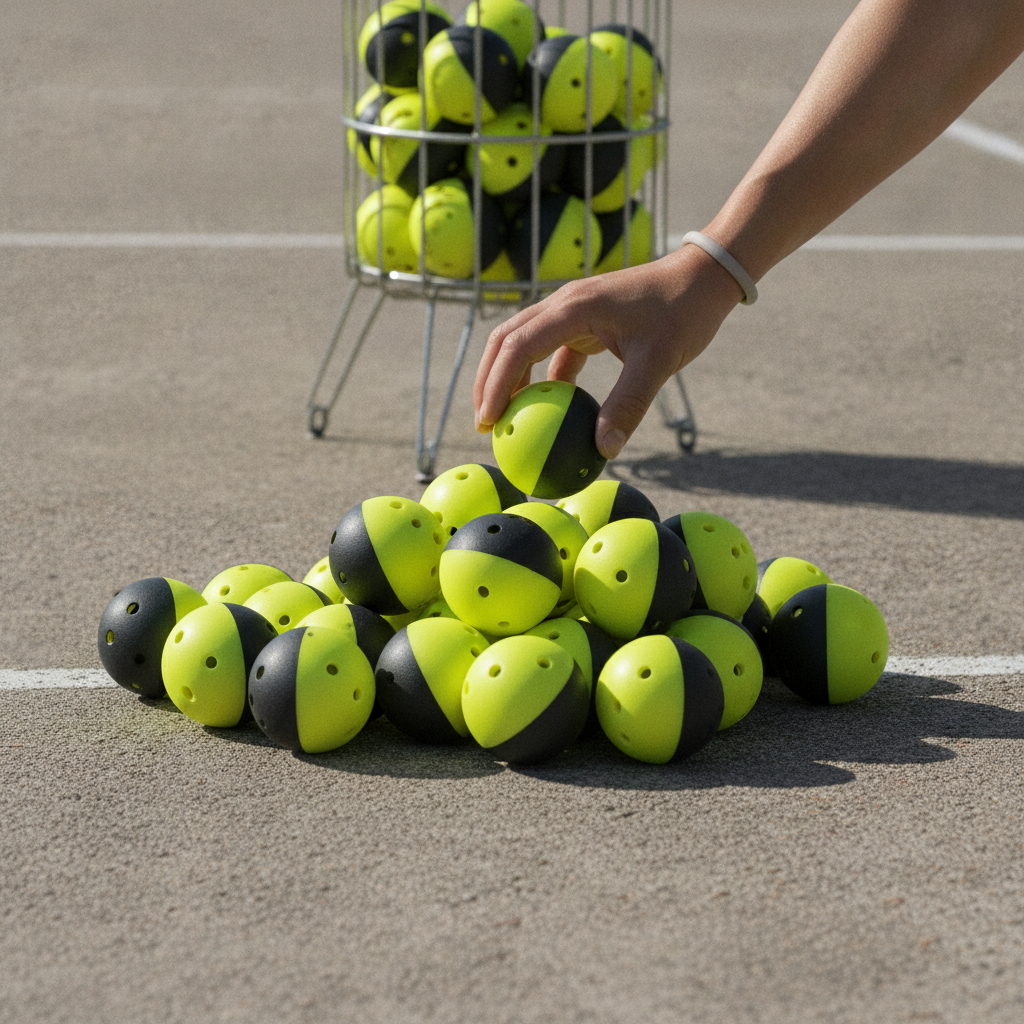
The ERNE Training Pickleballs solve one specific problem: you can't see ball spin with a solid yellow ball. The neon yellow/black split design changes that — rotation becomes visible immediately, and within a single session you start reading it before the bounce instead of after. At $2.80/ball for the 50-pack, you're paying a premium over standard game balls. Whether that premium makes sense depends entirely on how seriously you train.
Quick Verdict
Pros
- Dual-color split makes ball spin visible and readable in real time
- 50-ball count means 4-5 minutes of uninterrupted reps before shagging
- Rotomolded construction holds up under high-volume drill impact
- Standard weight and diameter — habits transfer cleanly to game balls
- High-contrast neon yellow/black tracks well indoors and outdoors
Cons
- $2.80/ball is 2-3x the cost of standard game balls
- Not tournament-approved — need game balls separately for matches
- Slightly denser feel than game balls due to thicker training walls
- No indoor-specific or outdoor-specific variant
- $140 upfront is a real commitment before you know if you'll use them
Price: $140.00 / 50-pack ($2.80/ball)
Who it's for: Players drilling 3+ sessions/week, coaches running clinics, ball machine owners
Who should skip: Casual rec players, anyone mostly playing games, strict budget buyers
Check Price at Pickleball CentralSpecs at a Glance
| Design | Dual-color (Neon Yellow / Black split) |
| Weight | Standard (0.78-0.935 oz) |
| Diameter | Standard (2.87-2.97 in) |
| Holes | 40 (standard) |
| Construction | Rotomolded |
| Tournament Approval | Training use only |
| Colors | Neon Yellow / Black |
| Pack / Price | 50 balls / $140.00 ($2.80/ball) |
See current pricing at Pickleball Central
Why Trust This Review
FORWRD makes pickleball bags — not balls. No financial stake in recommending ERNE over anyone else. We tested these across multiple dedicated drill sessions: third-shot drops, cross-court dinking patterns, and serve/return repetitions, comparing them directly against Franklin X-40 game balls in the same drills. Goal: does the dual-color spin visualization claim hold in actual practice, and does the feel difference create any muscle memory problems on match day?
Short answers: spin tracking works, and the feel difference is real but minor enough that it doesn't matter. Longer answers below.
ERNE as a Brand: Ball Machine First, Training Ecosystem Second
Most players who've heard of ERNE know them for the ERNE Ghost ball machine — a mid-range unit that competes in the $1,500-$2,000 range and has built real traction among serious solo trainers. The training pickleballs are a natural extension: if you're buying a machine to improve through deliberate practice, you want training-optimized balls feeding it, not just whatever game balls happen to be in your bag.
That context matters. If you own or are considering a ball machine, the ERNE training balls pair with it cleanly — standard weight and diameter means compatibility with virtually any machine that accepts standard-size balls. If you're a solo driller using a wall or rebounder, the same logic applies. If you mostly play games and drill casually, the ERNE ecosystem isn't really built for how you train.
The brand name itself comes from the erne shot in pickleball — the jump volley across the kitchen corner that pros like Ben Johns have turned into a legitimate weapon. It's deliberate positioning: a brand for players who take the technical side of pickleball seriously.
Spin Visibility: Does the Dual-Color Design Actually Change Anything?
Yes — and faster than you'd expect.
After about 20 minutes of cross-court dinking with the ERNE balls, something shifts. You stop reacting to where the ball goes and start anticipating it based on what the spin told you before the bounce. Reacting is defensive. Anticipating is how 4.0+ players gain court position. The dual-color design forces the anticipation habit because the feedback is instant — you can see whether the ball is spinning topspin, sidespin, or flat from the moment it leaves the paddle.
With standard yellow game balls, that information is invisible. You infer it from ball behavior after the bounce — half a second too late. With the ERNE dual-color, the rotation is visible mid-flight. After a few hundred reps, your visual processing starts picking it up automatically. That habit stays when you return to solid-color game balls in matches.
The benefit is most pronounced in spin-heavy exchanges: topspin drives, cut shots, spin serves, slice returns. For players who drill flat shots exclusively, the effect is smaller. But even for flat hitters, high-contrast neon yellow/black tracks faster in the eye than a single-color ball, and better ball tracking generally is not a small thing.
One honest note: this is a training effect, not a game-day advantage. You can't bring these to tournament play. The value is the reading habit you build that transfers to standard balls in matches. If you're skeptical of that transfer, it's the same principle as everything else in skill development: practice a harder version of the task so the game version feels easier.
Durability Under Real Drill Conditions
Training balls take more punishment per hour than game balls. In a focused drill session, you might hit the same 10 balls 150+ times in 45 minutes. That repetitive stress is what splits thin-walled balls at the seams — it's different from the distributed impact pattern of an actual game.
The rotomolded construction handles it well. Across several weeks of intensive use — hard drive drills, wall sessions, and ball machine feeds — seam integrity stayed solid. No splitting, no deformation at the seam line. The dual-color split (the seam between yellow and black halves) also held without peeling or losing contrast, which matters because the spin-visibility function is only as good as the color distinction staying sharp.
The trade-off: thicker walls mean a slightly denser feel off the paddle face. You'll notice it in the first few minutes of a session. After that, your arm adjusts and it stops being a factor. Returning to standard game balls doesn't produce any appreciable feel mismatch — the standard weight and diameter handle that.
Why 50 Balls Changes How You Train
This is the underrated argument for this pack — and for a lot of players, it's actually more important than the spin-visualization feature.
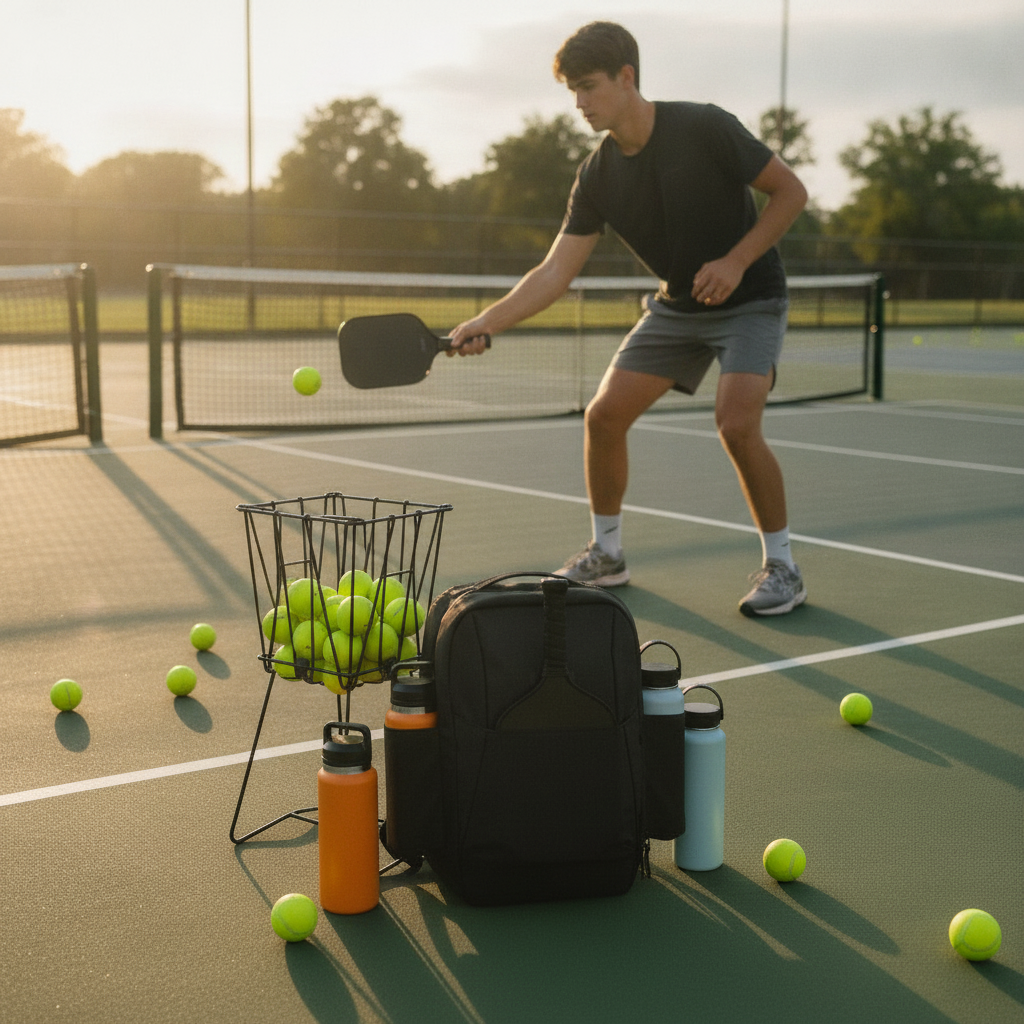
Most people drill with 4-6 balls, which means every drill sequence ends with collecting balls. Start, 6 reps, collect, reset, start. That rhythm breaks the flow that deliberate practice research shows is most effective for motor pattern building. Blocked practice — long uninterrupted repetition sequences — builds muscle memory faster than distributed practice with recovery breaks between each small set.
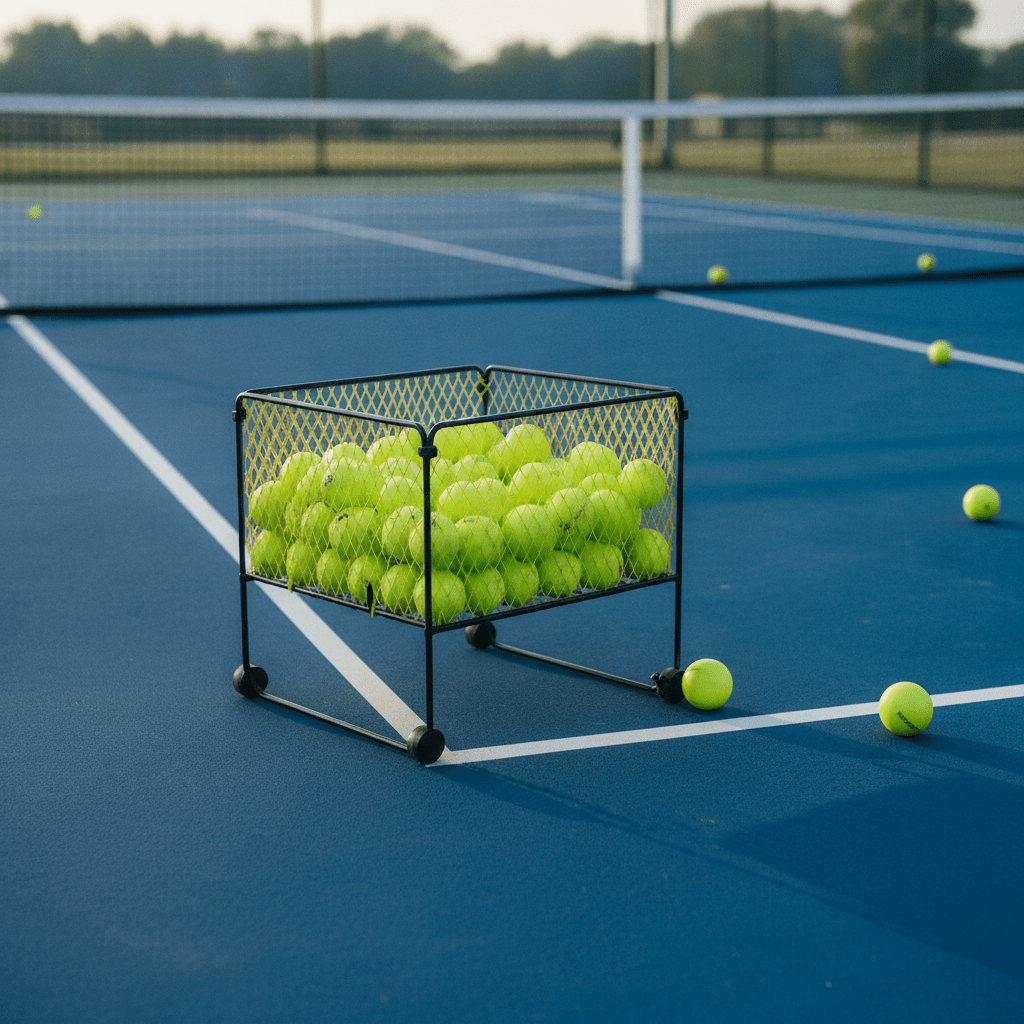
Fifty balls means 4-5 minutes of uninterrupted drilling at 10-15 shots per minute. That's 60-75+ clean reps before you shag. For serve practice, it's nearly a full rotation without stopping. For return-of-serve drills, it's enough repetitions to actually groove the pattern. For kitchen line dinking work with a feeding partner, it's the difference between meaningful repetition and constantly picking up balls every 30 seconds.
"The players who improve fastest at club level aren't the ones hitting the best shots in games. They're the ones who've put in clean, uninterrupted reps in practice — the kind where you're not stopping every minute to pick up balls. Volume matters, but uninterrupted volume matters more." — Grub, FORWRD Co-Founder
For coaches: this argument is even stronger. Running a group clinic with 6 students means you need volume to keep everyone drilling without interruption. A 50-pack dedicated to training means you can run full rotation drills without managing a ball shortage mid-session.
ERNE Training Pickleballs vs. Game Balls for Drilling
These aren't direct competitors — you need game balls for matches regardless. But if you're deciding whether to buy training balls or just stock up on Franklin X-40s for drilling, here's the real comparison:
| Ball | Type | Price/Ball | Tournament OK | Best For |
|---|---|---|---|---|
| ERNE Training (50-pk) | Training | $2.80 | No | Spin drilling, coaching clinics, high-volume reps |
| Franklin X-40 | Game (outdoor) | ~$1.00-1.50 | Yes | Match play, outdoor courts, tournaments |
| JOOLA HC-40 | Game (all-court) | ~$2.00-2.50 | Yes | All-weather match play, premium game feel |
| Engage 40 | Game (outdoor) | ~$2.00-2.50 | Yes | Softer feel, quieter play, USAPA approved |
Approximate per-ball prices based on standard retail packaging at major retailers. Verify current pricing at Pickleball Central before purchasing.
The cost math looks unfavorable for ERNE until you factor in purpose. Using Franklin X-40s for drilling means using match-grade balls in a context that wears them faster — repetitive hard impact accelerates seam stress. You're either degrading your match balls early or buying more game balls than you otherwise would. Dedicated training balls keep your game balls fresh and add spin-visibility. The two-product system makes sense if you drill 3+ sessions per week.
Who Should Buy the ERNE Training Pickleballs
If you drill with intention — not just hitting around but working on specific skills — and do it more than twice a week, the ERNE 50-pack is worth it. The spin visualization is a genuine training tool, and 50 balls changes the quality of your sessions in a way that's hard to appreciate until you've drilled with volume vs. without.
Buy these if:
- You drill 3+ sessions per week and are actively working on spin recognition or shot shaping
- You own a ball machine and want training-optimized balls for spin-reading practice
- You coach group clinics and need high ball volume to keep stations running without constant interruption
- You do solo wall work or net drills where 50 balls meaningfully extends your uninterrupted rep count
Get the ERNE Training 50-Pack at Pickleball Central
Who Should Skip the ERNE Training Pickleballs
These are not for casual players. If your week is Thursday night rec play and the occasional weekend open court session, $140 on training balls you'll rarely use is not a smart spend. A 12-pack of Franklin X-40s for $15 handles casual drilling just fine.
Skip these if:
- You play more than you drill — these don't help in games (they're not legal in sanctioned play)
- You're still building basic mechanics — spin recognition is an intermediate/advanced skill
- Budget is a constraint — game balls for drilling work fine at casual volume
- Your drilling focus is footwork or positioning rather than spin specifically
Pricing and Availability
The ERNE Training Pickleballs 50-Pack is $140.00 at Pickleball Central — $2.80 per ball. Generally in stock, though training-specific ball packs in this quantity can move when coaches and clinic operators find them. If you're planning a structured training block, don't wait until the week before.
Check Current Price and Stock at Pickleball Central
Complete Your Setup
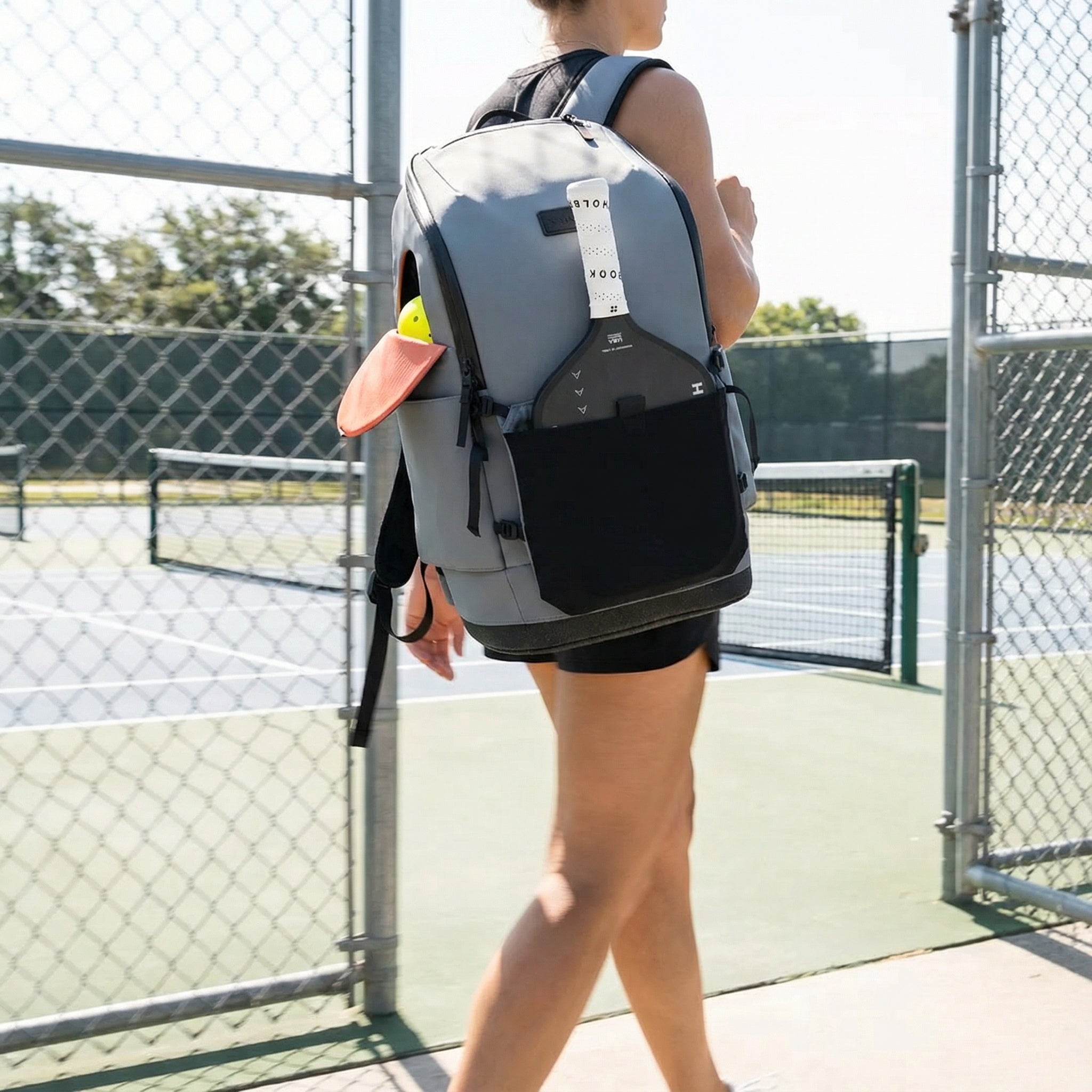
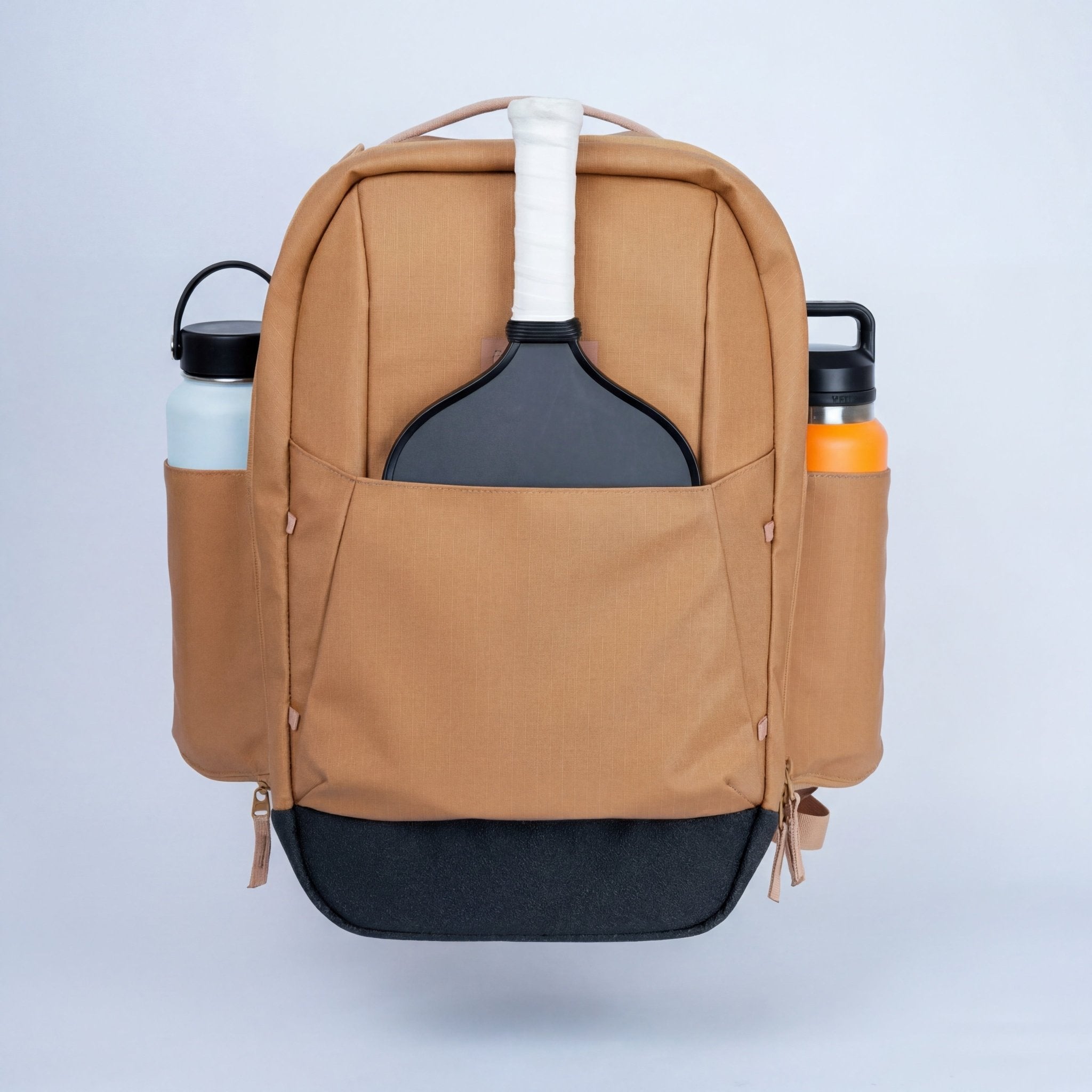
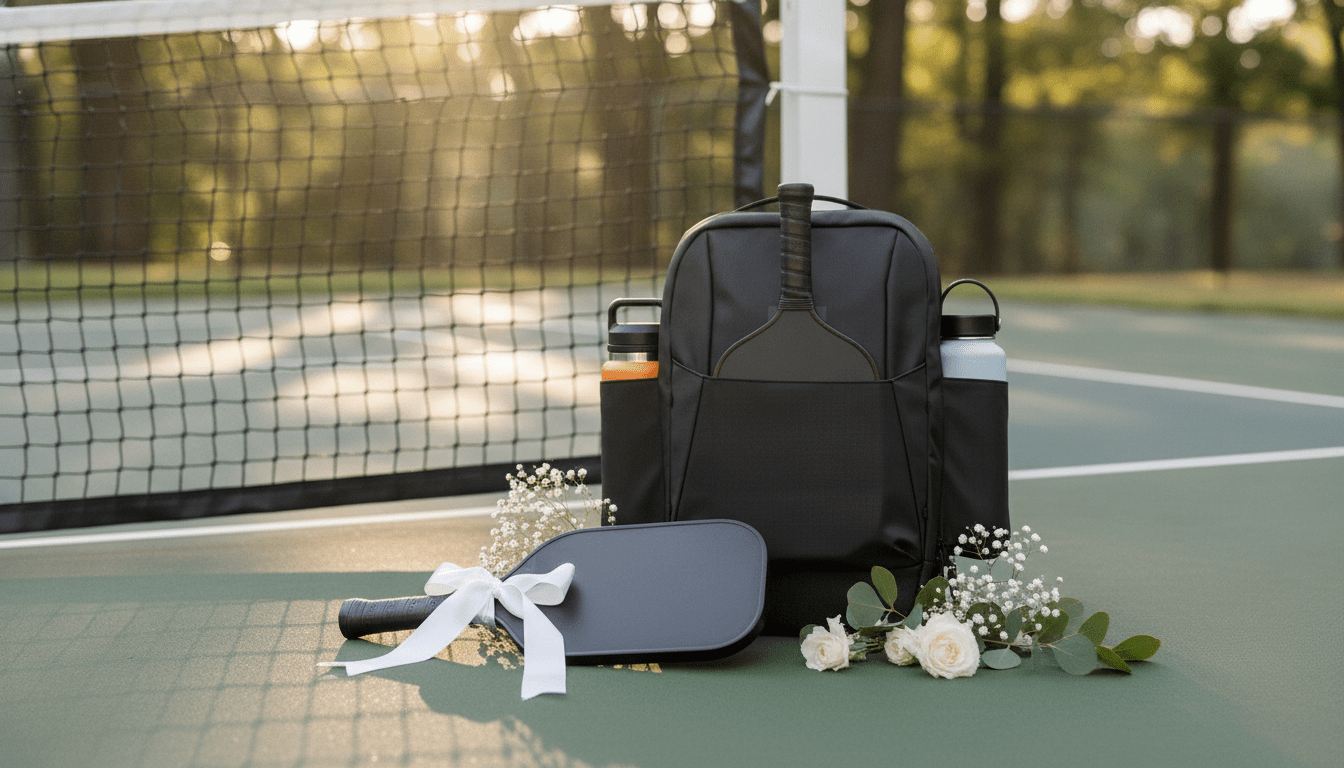
Fifty training balls need a home when you're not drilling. The FORWRD Court Ranger V2 ($195) has a mesh ball pocket that holds a full can of outdoor balls — plus organized compartments for your paddles and gear. Coaches running clinics with 50 ERNE balls plus assorted kit might prefer the Court Caddy Backpack ($325) for its roomier main compartment and 15″ padded laptop sleeve. Either way, a bag that keeps everything sorted saves time between sessions.

FAQ: ERNE Training Pickleballs Questions
Are ERNE Training Pickleballs USA Pickleball approved?
No. The ERNE Training Pickleballs are designed for practice and drilling only — not approved for tournament or sanctioned recreational play. You still need standard game balls like the Franklin X-40 or JOOLA HC-40 for matches. The dual-color design exists specifically to help players visualize ball spin during training, which is why tournament approval is not the goal.
Can I use ERNE Training Pickleballs with a ball machine?
Yes — standard weight and diameter means they're compatible with most pickleball ball machines that accept standard-size balls, including ERNE's own Ghost machine. Pairing these with a ball machine is actually the strongest use case: the machine feeds consistently, you focus entirely on reading the spin from the dual-color design, and 50 balls means long uninterrupted training runs before you need to collect. Check your specific machine's compatibility specs if you're using a non-ERNE machine.
Do ERNE Training Pickleballs feel different from game balls?
Slightly. The rotomolded training construction means thicker walls than most tournament-grade balls, which translates to a slightly denser feel off the paddle face. It's noticeable in the first few minutes, then your arm adapts. Because weight and diameter match standard specs, your shot habits still transfer cleanly to game balls in matches — there's no meaningful muscle memory mismatch.
How long do ERNE Training Pickleballs last under heavy drill use?
Better than standard game balls in high-rep drill contexts. Rotomolded construction handles repetitive hard contact better than the thinner-walled design of most tournament balls. The dual-color contrast also holds over extended use, keeping the spin visualization intact. With regular 1-hour sessions 3x per week, expect several months of solid use before significant wear. Results vary based on surface type and shot velocity.
Should I buy training balls or just use game balls for drilling?
Depends on how seriously you train. If you drill 3+ times per week on specific skills, the ERNE 50-pack delivers spin visualization and volume that game balls can't match. If you drill casually and mostly play games, a 12-pack of Franklin X-40s for around $15 does the job. The ERNE training pack is a deliberate practice investment — it makes sense if your training habits match what it's designed for.
What is the difference between training pickleballs and game pickleballs?
Game pickleballs are tuned for match play — USA Pickleball approved with precise bounce consistency. Training pickleballs sacrifice tournament approval to optimize practice. The ERNE's dual-color design makes spin visible in ways a solid yellow ball can't. Training balls also typically prioritize durability under high-rep impact over the bounce precision tournament balls require. For serious skill development, you need both: training balls for drilling, game balls for matches.
Final Verdict
The ERNE Training Pickleballs do exactly what they're designed to do. The dual-color spin visualization works — it's measurable in practice within a single session. The 50-ball volume changes the quality of drilling sessions for serious players. Rotomolded construction holds up under conditions that crack game balls early.
At $140 for 50 balls, you're buying a deliberate practice tool. Keep your game balls for matches. Add ERNE for drilling. That two-product approach makes sense at 3.5 and above, especially if spin recognition and training volume are already part of how you think about improving.
Casual players: save the money and get a 12-pack of game balls. Serious trainers who drill regularly: this is one of the more useful training investments at this price point, and the spin feedback alone justifies it if you use them consistently.
Shop ERNE Training Pickleballs at Pickleball Central
For a full ranking of every major pickleball ball for match play — outdoor, indoor, and premium options — read our complete guide to the best pickleball balls for every player type.

Leave a comment
This site is protected by hCaptcha and the hCaptcha Privacy Policy and Terms of Service apply.