

Pickleball Paddle Power vs Control: The Honest Guide to Choosing [2026]
Last Updated: July 2026
Most players buying their second or third paddle make the same mistake: they reach for power. It feels logical — hit harder, win more points. But the data on what actually separates 3.0 players from 3.5 players, and 3.5 from 4.0, tells a different story. The players moving up aren't hitting harder. They're making fewer unforced errors and winning more points at the kitchen line. A control paddle is usually the right answer — and this guide will help you know for sure which fits you.
Quick Take: Power vs Control
- You're at 3.0–4.0 level
- You lose more points at the kitchen than from drives
- You want to improve your third shot drop
- You play 3+ days/week and want consistency
- You're 4.0+ with a reliable soft game
- You play primarily from the baseline (singles)
- You have strong footwork and reset ability
- Your current paddle is so soft it costs you easy put-away opportunities
The Complete Pickleball Paddle Guide 2026 covers the full buying landscape. This guide goes deeper on one specific decision: the power-vs-control tradeoff and why it matters more than any other spec.
What "Power" and "Control" Actually Mean in a Pickleball Paddle (Not What Brands Say)
Paddle brands use "power" and "control" as marketing shorthand, which muddies the water fast. Here's what these words actually mean in physics terms:
Power in a paddle means trampoline effect — when the ball contacts the face, how much energy does the paddle surface return to the ball? A paddle that stores and releases energy efficiently drives the ball faster. You feel it as "pop."
Control means dampening — the paddle absorbs some of the incoming energy and gives you more time to redirect it. You feel it as "softness" or "feel." The ball doesn't fly off the face; it lingers just long enough for your hand to sense exactly where it's going.
Here's the thing brands won't say in their own marketing: it's a direct tradeoff. Every design choice that adds pop removes feel, and vice versa. There is no "high power AND high control" paddle — only paddles that balance the tradeoff differently. Any brand claiming otherwise is playing word games.
The Core Technology: How Core Thickness and Face Material Drive Power vs Control
Two specs determine 90% of where a paddle falls on the power-control spectrum:
Core thickness. A thicker polymer core (16mm is the gold standard for control) absorbs impact energy and dampens the ball's rebound. This is where "feel" comes from. A thinner core (14mm or less) creates a livelier trampoline effect — the core doesn't absorb; it rebounds. Most performance power paddles are 13–14mm. Most control paddles are 16mm. Anything 15mm is a legitimate hybrid.
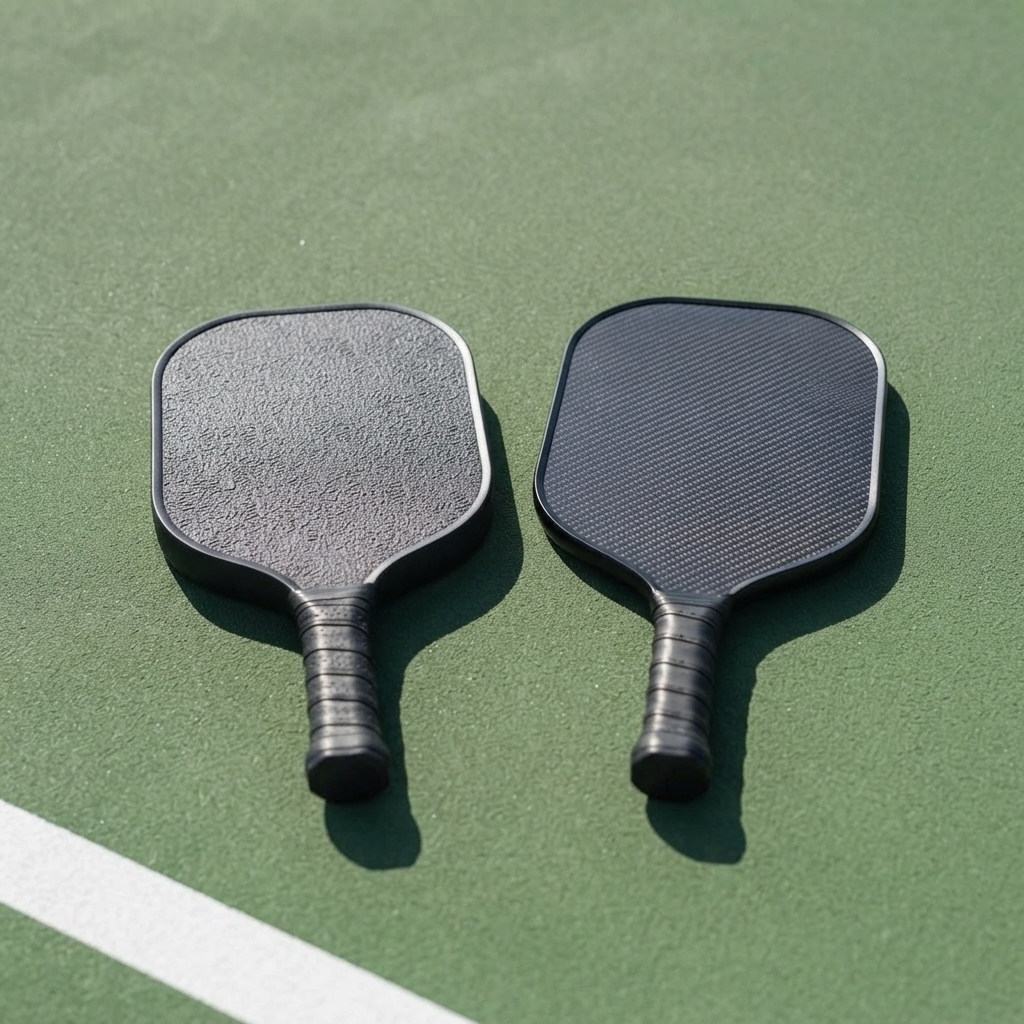
Face material. Carbon fiber faces generate more spin and tend to be stiffer — which adds pop. Fiberglass faces flex more on contact, absorbing energy and creating a softer, more controlled feel. Raw carbon (uncoated carbon fiber weave) sits in a unique position: it's stiff but textured, which creates enormous spin potential while still allowing some flex. Most premium 2026 paddles use some form of carbon fiber, but the weave pattern and surface coating make a huge difference in actual play.
Weight matters too, but less than most players think. Heavier paddles hit harder, but the difference between a 7.6 oz paddle and an 8.2 oz paddle is maybe 2–3 mph on a flat drive. The core/face combination moves power vs control by 10–15 mph. Weight is a secondary consideration.
| Paddle | Core | Thickness | Face | Best For | Get It |
|---|---|---|---|---|---|
| Selkirk LUXX Control Air InfiniGrit Epic | Polymer | 16mm | Carbon fiber (InfiniGrit texture) | Kitchen-dominant control | Shop PBC → |
| CRBN 1 TruFoam Genesis | TruFoam | 16mm | Carbon fiber | Soft game, touch players | Shop PBC → |
| JOOLA Perseus Pro V Ben Johns 16mm | Foam Core+ | 16mm | Charged carbon fiber | Power-control hybrid | Shop PBC → |
| JOOLA Perseus Pro V Ben Johns 14mm | Foam Core+ | 14mm | Charged carbon fiber | Power-forward, drives | Shop PBC → |
| Six Zero Double Black Diamond | Polymer | 14mm | Carbon fiber | Aggressive baseliners | Shop PBC → |
Check Pickleball Central for current pricing — paddle prices shift with new model releases throughout 2026.
Power Paddles: Who They're Built For (And the 3.0–3.5 Trap)
Power paddles are built for a specific type of player: someone with a reliable soft game who wants to extend their baseline offense. That's not most recreational players.
Here's what I saw in my own game after three months with a power-biased 14mm carbon paddle: my drive wins went up. I was winning more points on speed-up attacks from the transition zone. But my third shot drop percentage dropped by a noticeable margin — I'd estimate 15–20 percentage points — and my reset rate from being attacked at the kitchen fell off. The paddle wanted to pop the ball away, and I was fighting it every time I needed the ball to die softly over the net.
The net result: I wasn't actually winning more points overall. I was just winning differently — fewer unforced errors on drives, more unforced errors at the kitchen. For players whose kitchen game is still developing (roughly 2.5–3.5 DUPR), this is a bad trade.
We call this the Power Trap. It's the pattern where intermediate players buy power paddles because they instinctively associate winning points with hitting harder — but the kitchen game is where 3.0-to-4.0 development actually happens. Power paddles don't make the kitchen game harder by magic; they just make it easier to avoid practicing soft shots because the paddle rewards hard contact. Players who escape the Power Trap are usually the ones who hit a rating plateau, swapped to a control paddle for a month, and discovered their dinks, drops, and resets got sharper almost immediately.
Three signs you're in the Power Trap:
- You're more confident on drives than on third shot drops
- You feel like you're "fighting" your paddle when trying to dink softly
- Your rating has stalled for 6+ months despite putting in court time
None of this means power paddles are bad. At 4.0+ where players have genuine kitchen consistency, adding a power layer to offense makes sense. Some 3.5 players with excellent soft games are ready for it. But it's the exception, not the rule.
Control Paddles: Why Most Recreational Players Win More With Less Power
The argument for control paddles at the recreational level isn't that power is bad — it's that control gives you more at-bats.
A ball that stays in play forces the opponent to make a decision. A ball that goes wide or long doesn't. At 3.0–3.5 DUPR, somewhere between 60-70% of points end on unforced errors rather than winners. A control paddle reduces the rate of those errors because it's more forgiving: the sweet spot effectively feels larger, the ball doesn't rocket off the face on mishits, and soft shots stay soft instead of popping up for easy put-aways.
The Selkirk LUXX Control Air InfiniGrit Epic is the clearest example of modern control paddle design. It pairs the 16mm polymer core (maximum dampening) with a carbon fiber face that still generates serious spin — which is the trick. You're not giving up spin by going control; you're giving up outright pace. The InfiniGrit texture on the face means your dinks with sidespin, your drops with backspin, and your serves with topspin all still bite on landing.
The CRBN 1 TruFoam Genesis takes a different approach — the TruFoam core material has a slightly different dampening character than standard polymer, described by most players as "pillowy." Mishits feel softer. The paddle forgives slightly off-center contact in a way that polymer cores don't. For players focused on developing consistent touch, it's worth the premium.
If you want data on how intermediate-level players are playing with specific paddles right now, the Best Pickleball Paddles for Intermediate Players 2026 guide breaks it down by DUPR range and play style.
The Hybrid Middle Ground: What "All-Around" Paddles Actually Give You
A 15mm core paddle positioned as "all-around" or "balanced" is a real thing, not just marketing. The JOOLA Perseus Pro V in 16mm is genuinely closer to the control end; the 14mm version sits closer to power. Both use the same charged carbon fiber face, same Foam Core+ construction — the only difference is 2mm of core thickness, and that 2mm shifts everything.
If you're genuinely torn between categories and can't test both, the 16mm Perseus is the safer bet for most rec players. You keep the spin potential of the carbon face, the power of a modern foam core, but the dampening of 16mm controls the output enough that kitchen play doesn't suffer.
Hybrid paddles make sense for players who play multiple formats — doubles kitchen-focused play on weekdays, singles baseline-driven play on weekends. You compromise slightly on both ends but gain flexibility you'd otherwise need two paddles to cover.
How Your Skill Level and Court Position Should Drive Your Choice
The simplest framework:
- 2.0–3.0: Always start with a control paddle. You're building hand-eye and touch. Power is counterproductive.
- 3.0–3.5: Control paddle, full stop, unless you can demonstrate consistent third shot drops (not just attempts). The Power Trap lives here.
- 3.5–4.0: This is where it gets individual. If your kitchen game is solid and your primary weakness is pace off the baseline, a hybrid or power paddle is defensible. If you still struggle at the NVZ, keep the control paddle and work the kitchen. The kitchen strategy guide is worth reading before making this call.
- 4.0+: Either category works — you have the skill to handle a power paddle at the kitchen when needed. Your choice here is about style and preference.
"Every 3.5 player who comes to me saying they need more power, I ask them one question: 'Are the points you're losing from not hitting hard enough, or from errors at the kitchen?' Nine times out of ten, they go quiet. Power isn't what they need. Consistency is, and a 16mm control paddle gives you that — it doesn't make soft shots easy, but it stops punishing you for not being perfect."
— Topher Donahue, FORWRD co-founder and certified pickleball instructor
Complete Your Setup
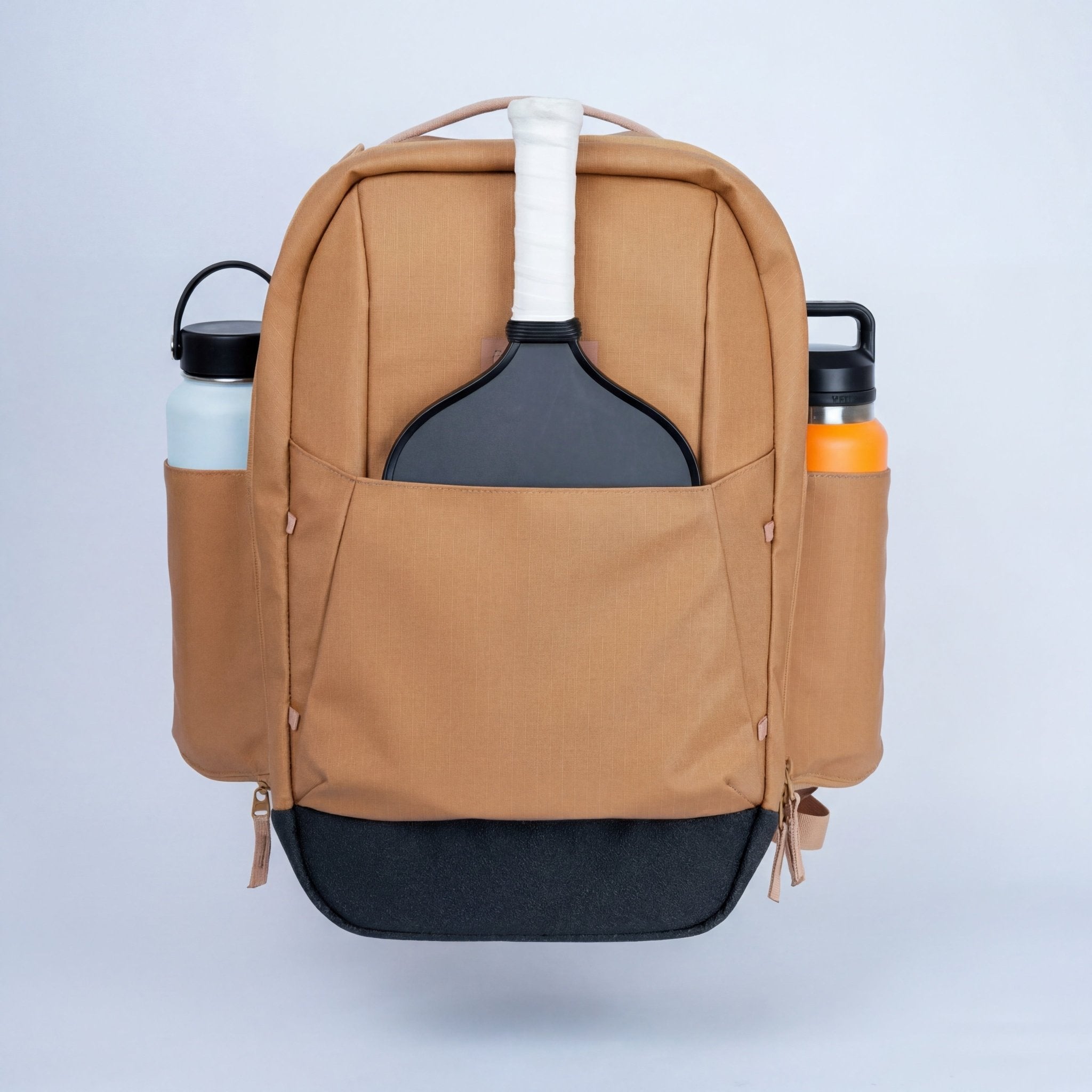
One underrated benefit of owning both a power demo and your main control paddle: you can actually test them back-to-back in the same session. The FORWRD Court Caddy fits up to 4 paddles in its modular sleeve system — so your test session doesn't require two separate trips to the car.

FAQ: Pickleball Paddle Power vs Control
What is the difference between a power and control pickleball paddle?
A power paddle uses a thinner core (typically 13–14mm) and stiffer face to maximize energy return — the ball rebounds fast off the face. A control paddle uses a thicker core (16mm) to absorb energy, giving you more feel and dampening for soft shots. The tradeoff is direct: more power means less feel, and vice versa.
Should I get a power or control paddle?
For most players at 3.5 DUPR and below, a control paddle. The data is clear: at recreational levels, most points are lost to unforced errors — not won with winners. A control paddle reduces error rate and helps you develop the kitchen game that's actually required to move up in rating. Power paddles make sense at 4.0+ when your soft game is already reliable.
Do power paddles make you better at pickleball?
Not at the intermediate level. Power paddles can actually slow development by making it easier to avoid the kitchen game — which is where 3.0-to-4.0 skill development happens. Players stuck at 3.5 for extended periods sometimes find that switching to a control paddle for 4–6 weeks dramatically improves their drops, dinks, and resets.
What paddle type is best for beginners?
Control paddle, without question. Beginners need to build hand-eye coordination, consistency, and touch. A forgiving 16mm paddle reduces the punishment for mishits and helps build the feel required for kitchen play. Starting with a power paddle at 2.0–3.0 is like learning to drive in a sports car with a hair-trigger throttle.
Can a paddle be both powerful and controlled?
In practice, no — it's a direct physical tradeoff. A paddle with high pop has less dampening; a paddle with strong dampening has less pop. "Balanced" or "all-around" paddles (typically 15mm core) compromise on both rather than excel at either. They're a legitimate choice for players who need to cover multiple play styles, but they're not magic.
What does core thickness have to do with control?
Everything. A thicker polymer core (16mm) deflects more on ball contact, absorbing impact energy before returning it. This dampening effect is what creates "feel" — the tactile feedback that lets you place drops and dinks precisely. A thinner core (13–14mm) deflects less, returning energy to the ball faster. That's where the "pop" comes from. Thickness is the single most important spec when comparing paddles on the power-control axis.
Final Verdict
The power-vs-control decision is the most important paddle choice you'll make — and most players get it wrong by defaulting to power. If you're at 3.5 or below, pick control: the Selkirk LUXX Control Air or CRBN 1 TruFoam Genesis are the most forgiving options at the performance tier. At 4.0+, the JOOLA Perseus Pro V 14mm delivers genuine power without sacrificing the spin generation that modern play demands.
If you're not sure which category you belong in: play 10 games with your current paddle and count where you lose points. Kitchen errors? Get the control paddle. Consistently winning at the kitchen and losing from the baseline? The power category is finally ready for you.


Leave a comment
This site is protected by hCaptcha and the hCaptcha Privacy Policy and Terms of Service apply.