

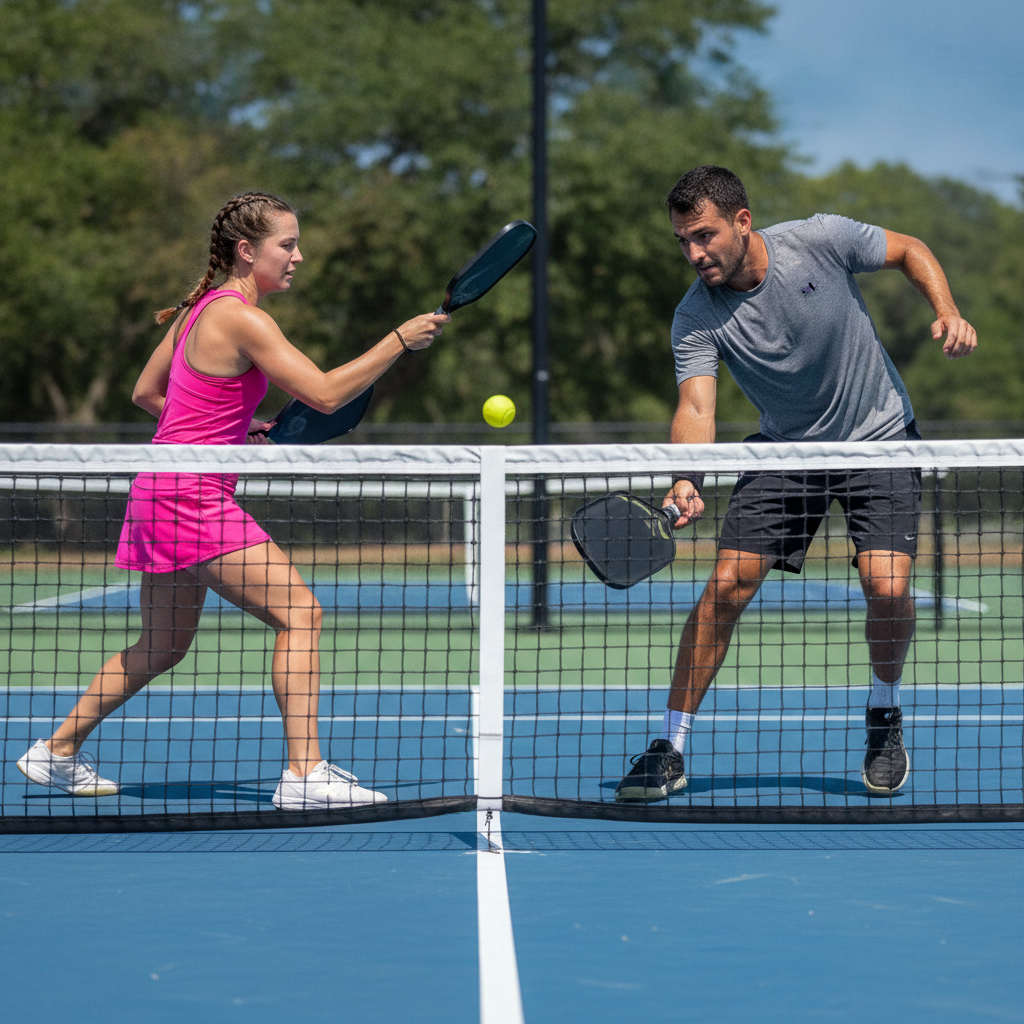
The kitchen is where pickleball points are actually decided — not at the baseline, not on the serve, and not during the transition. Players who control the non-volley zone win more rallies, force more errors, and dictate pace in a way that's deeply frustrating to play against. This guide breaks down the three decisions you make at the NVZ every single point, the specific situations where most recreational players choose wrong, and the Kitchen IQ Test that separates 3.5 players from 4.0 players at the net.
Last updated: July 2026
What the Kitchen Actually Is (And Why Most Players Misunderstand the Rule)
The kitchen — officially the non-volley zone (NVZ) — is the 7-foot area on each side of the net. The rule: you can't volley a ball (hit it out of the air before it bounces) while standing inside the NVZ or on the NVZ line. Clear enough. But here's where players get tripped up in actual match play:
You CAN stand in the kitchen between rallies and during dinking exchanges. You can dink from the kitchen all day long — dinks bounce first, so they're not volleys. You can be in the kitchen on one shot, back out, and volley the next ball cleanly. What you can't do is volley while your foot is on that line.
The fault most recreational players don't catch: foot momentum. If you volley a ball and your forward momentum carries your foot into the kitchen after the shot, that's a fault — even if your foot was behind the line when you made contact. The rule covers the volley act AND the momentum that follows it. This trips up 3.0 players constantly and occasionally catches 4.0 players in aggressive net situations where they're lunging forward.
The practical read: maintain a base 6–8 inches behind the NVZ line, and don't lunge at balls that would require you to swing from a forward-falling position. Most kitchen faults come from positioning problems, not timing problems.
The Three Decisions You Make at the Kitchen (Every Point, Every Time)
Every ball that reaches you at the NVZ demands one of three responses: dink, speed-up, or reset. The shot selection failure isn't that players don't know these options exist — it's that they're choosing the wrong one for the situation they're actually in.
| Situation | Ball Height | Your Position | Correct Shot |
|---|---|---|---|
| High ball above the tape | Above net | Stable at NVZ | Speed-up |
| Low, soft incoming dink | Below net | Stable at NVZ | Dink |
| Hard drive at your body | Waist or above | Stable at NVZ | Block or reset |
| Ball arriving while you're mid-transition | Any | Still moving | Reset |
| Opponent out of position, high ball | Above net | Stable, balanced | Speed-up to the gap |
When to Dink: The Patience Game Most Players Rush
A dink is a soft shot that clears the net and lands in the opponent's kitchen. The goal isn't to win the point with it — it's to wait until your opponent produces a ball high enough to attack. That distinction is everything, because most 3.0–3.5 players try to win with the dink instead of using it to force the opportunity.
Good dink mechanics, stripped down:
- Firm wrist, relaxed grip — you're absorbing the ball, not striking it
- Contact point in front of your body, not beside it or behind it
- Low-to-high swing path, abbreviated — a 4-inch controlled push, not a 10-inch follow-through
- Default direction is cross-court: more net clearance, longer diagonal gives you margin for error
Dinking is correct when: the ball is at or below net height, your opponent is stable at their NVZ, and there's no obvious gap or high ball to attack into. Keep dinking. Apply pressure through placement — aim at the backhand, aim between opponents in doubles, aim toward their feet as they shift laterally. The rally ends when they pop one up. Your job is patience, not power.
"The hardest thing I coach at the kitchen is patience. Players who've been playing 6 months want to attack every ball they touch. The ones who break through to 4.0 are the players who've genuinely learned to wait — they understand that a bad speed-up is worse than a missed attack opportunity. The right ball will come. Keep dinking until it does."
When to Speed Up: Reading the Right Opening From the NVZ
The speed-up is a fast, flat drive from the NVZ intended to force a pop-up or win the point outright. It works when two conditions are both true simultaneously: (1) the ball is above the top of the net tape and (2) you're in a stable, balanced position at the NVZ. Both have to be true. Attack a low ball and you're hitting the net. Speed up while you're off-balance and you're handing your opponent a clean reset opportunity.
Where to aim:
- At the body — the most reliable speed-up target in doubles. Players can't react effectively when the ball's coming at their hip or shoulder; they have no room to swing.
- Cross-court at the hip — opens the court for your next shot if they can't re-set it cleanly. This is the go-to for advanced players because it creates a follow-up opportunity.
- Down the line — experienced opponents anticipate this. Use it sparingly to stay unpredictable, not as a default.
What NOT to speed up: any ball you're reaching for sideways, any ball below your waist, and any ball that arrives while you're still finding your footing at the NVZ. Experienced players reset those every time and you've just worked hard to give them an easy ball.
When to Reset: Defensive Kitchen Play That Wins Points
A reset is a soft, controlled shot — usually directed into the NVZ — designed to neutralize a fast incoming ball and restart the dinking exchange. It's the hardest shot in pickleball for recreational players to execute under pressure, because it requires slowing down a ball that's already coming at you quickly.
Reset when:
- You're mid-transition toward the kitchen and get caught by a hard drive
- You're out of position laterally and can't attack without opening up a gap
- Your opponent drove at your body and you didn't have the setup to block aggressively
Reset mechanics: soft hands, open paddle face at contact, no backswing — you're redirecting, not swinging. The goal is to make the ball die in their kitchen so they have to produce a soft ball in return, which restarts the dinking exchange on your terms rather than theirs. A well-executed reset feels anticlimactic. A reset attempt with tight hands becomes a pop-up that ends the point against you.
The reset is the most underrated shot in recreational pickleball. Players who drill it see their kitchen fault rate drop measurably within a few weeks — and that alone raises their effective skill rating.
Kitchen Footwork: The One Physical Skill That Changes Everything
Most players watch the ball. Kitchen players watch the kitchen line.
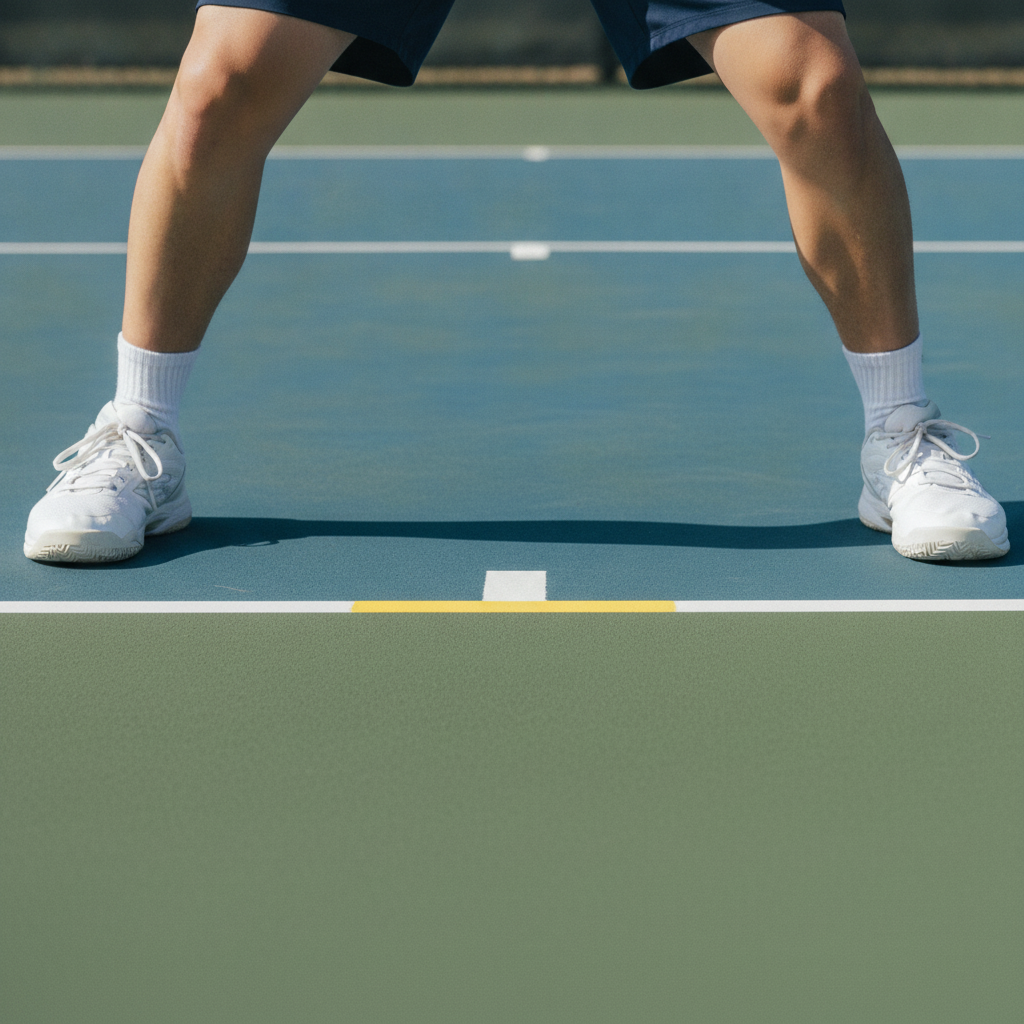
Your feet need to be positioned 6–8 inches behind the NVZ line — not a full foot back, and definitely not on the line. The closer to the net you can legally play, the earlier you intercept the ball (less time for it to drop, less time for opponents to recover after a difficult shot). But get too close and you're either on the line or one off-balance step away from a foot fault.
The split step is what makes lateral movement efficient. As your opponent's paddle contacts the ball, split — a small, balanced hop that loads your weight equally on both feet. From split position, you can push laterally in either direction without crossing your feet or losing your base. Players who don't split step are always a half-step late at the kitchen. Against a fast speed-up, that half-step is the difference between a clean block and a pop-up.
The Kitchen IQ Test: 5 Match Situations — What's Your Shot?
Read each scenario. Pick your shot. Answers are below.
Scenario 1: You're at the NVZ. Your opponent dinks cross-court to your backhand. The ball is 4 inches above the net tape when it clears to your side. You're balanced and set. What do you do?
Scenario 2: You just hit your third shot drop and you're transitioning toward the kitchen. Your opponent drives hard at your feet before you've reached the NVZ line. The ball is coming fast, waist-high. What do you do?
Scenario 3: You've been dinking cross-court for 9 shots. Your opponent pops the ball up — shoulder height, you're stable at the NVZ, and your opponent's partner is positioned toward the center of their side. What do you do?
Scenario 4: You're dinking. Your opponent dinks behind you — the ball is low and you have to reach back to get it. Below net height when you contact it. What do you do?
Scenario 5: You made a slight pop-up — the ball sits at just below shoulder height as it comes back at you, fast, from an opponent who spotted the opportunity. What do you do?
Answers:
- Scenario 1 — Speed-up. Ball is above the tape, you're balanced. This is the attack moment — aim at the hip of the farther opponent or cross-court into the gap.
- Scenario 2 — Reset. You're not at the NVZ yet, you're off-balance, and the ball's at your feet. Block it softly into their kitchen. Don't try to attack from a moving position — you'll lose every time.
- Scenario 3 — Speed-up at the gap. High ball, stable position, and there's a gap in the middle. Drive cross-court at the gap or at the body of the closer opponent. This is the moment you've been waiting for through 9 dinks.
- Scenario 4 — Dink. Low ball, off-balance reach — dink situation no matter how frustrated you are with the long rally. A swing at a low ball when you're reaching becomes a pop-up. Reset the exchange with a cross-court dink and rebuild.
- Scenario 5 — Block/reset. You gave them an opportunity. Their speed-up is coming. Don't panic, don't lunge — firm paddle face, soft hands, redirect into their kitchen. The point isn't over; the reset is.
How'd you do? 4–5 correct: your kitchen IQ is strong, work on execution under pressure. 2–3 correct: you have a reliable attack tendency but may be speeding up low balls. 0–1 correct: focus exclusively on the reset before anything else — it's the foundation that makes the rest of this work.
Drills to Sharpen Your Kitchen Game (Solo and Partner)
Cross-Court Dinking Drill (Partner)
Both players at the NVZ, dinking cross-court only. Target: 50 consecutive dinks without a pop-up. When someone pops it, start from zero. This drill builds low-contact muscle memory under pressure better than anything else — you can't cheat it, and the frustration of resetting the count is actually useful. It simulates the mental weight of a long kitchen rally.
Speed-Up / Reset Drill (Partner)
Player A dinks to Player B. Player B decides to speed-up at will — any time, no warning. Player A resets every speed-up back into the NVZ. Rotate after 5 minutes. This trains the speed-up decision AND the reset execution together in a single drill, which is exactly the pairing you need — because in a match, reset follows speed-up within two shots.
Triangle Dink (Three Players)
Three players, one at each NVZ corner across a standard doubles court. Players rotate dinks in a triangle pattern. You're forced to dink backhand AND forehand and to redirect the ball quickly as the angles shift. Great for building placement variety — recreational players often dink to the same spot out of habit, and this breaks that pattern.
Build these into a consistent pickleball practice routine — 15–20 minutes of kitchen drills per session produces measurable improvement in 4–6 weeks. It's learnable at any level. It just takes intentional reps instead of hoping it develops naturally in open play.
For control-class paddles that give you the touch needed for NVZ play, shop Selkirk paddles at Pickleball Central or JOOLA paddles at Pickleball Central. Overgrips matter for kitchen touch too — a fresh grip keeps the paddle from slipping on soft dinks. Stock overgrips at Pickleball Central.
For the broader doubles picture — court positioning, stack formations, serving strategy — our pickleball doubles strategy guide picks up where this kitchen guide leaves off.
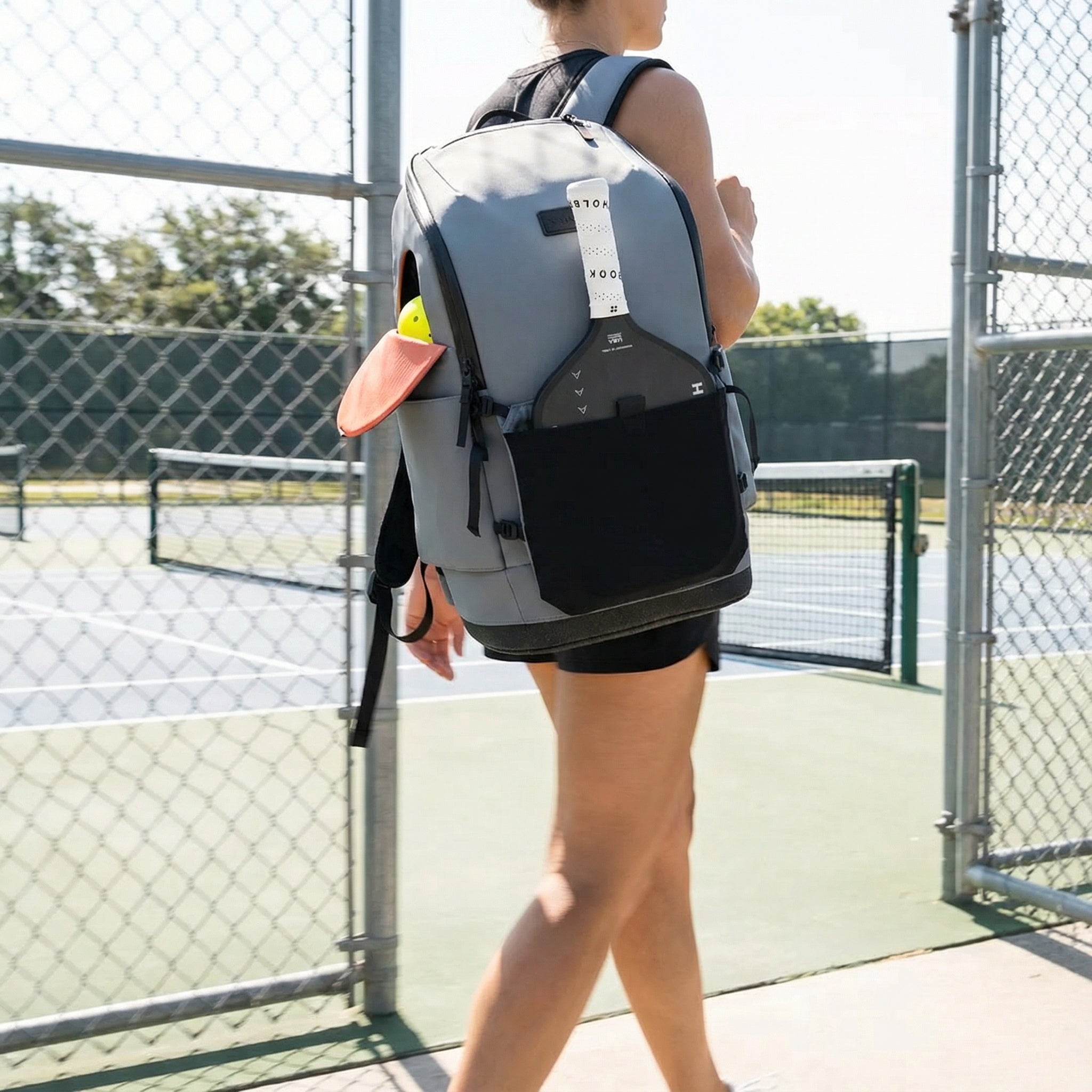
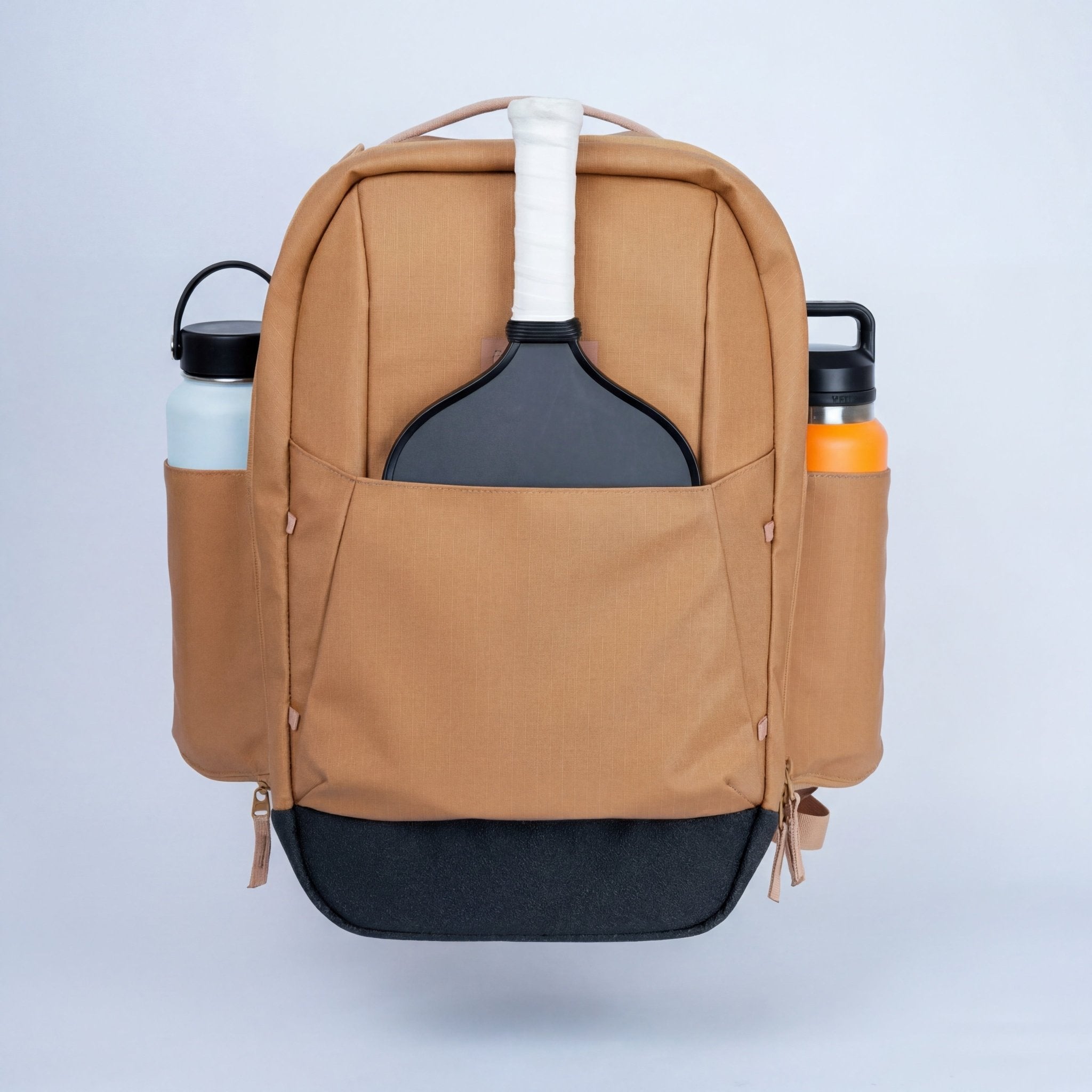
Whether you're drilling kitchen patterns or grinding through league nights, the Court Ranger V2 ($195) carries what you need between sessions — paddles organized, shoes isolated, YKK AquaGuard zippers that don't care about outdoor court conditions.
FAQ: Pickleball Kitchen Strategy Questions
What is the kitchen rule in pickleball?
The kitchen rule states that players cannot volley — strike the ball out of the air — while standing in or on the non-volley zone line. The rule also covers post-volley momentum: if you volley and forward momentum carries you into the NVZ after contact, it's a fault even though you were behind the line when you hit the ball. You can stand in the kitchen at any other time.
Can you stand in the kitchen in pickleball between rallies?
Yes. You can stand anywhere in the kitchen between rallies, during dinking exchanges, and whenever you're not volleying. The only restriction is you cannot volley while in the NVZ or on the NVZ line. Standing there during a dink rally, while you wait for the ball to bounce, is completely legal and often smart positioning.
What are the best shots to use at the kitchen?
The three shots at the kitchen are dinks (soft cross-court shots that keep the ball in the NVZ), speed-ups (fast flat drives when the ball is above the net tape), and resets (soft blocks that redirect fast incoming balls back into the kitchen). The correct choice depends on ball height, your court position, and opponent positioning — not on feel or instinct alone. See the decision table above.
How do you avoid kitchen faults in pickleball?
Two habits eliminate most kitchen faults: (1) maintain your base 6–8 inches behind the NVZ line so you're never at risk of stepping on it during a volley, and (2) stay conscious of your post-volley momentum — don't lunge at balls where your follow-through will carry you forward into the kitchen. Most kitchen faults come from positioning, not timing.
How do you win more points at the non-volley zone?
Patience is the single most reliable answer. Wait for a ball above the net tape before attacking — don't force speed-ups on low balls. Keep dinks low and cross-court to limit opponent attack angles. Use the speed-up at the body in doubles. And drill the reset specifically: it's the most underrated shot in recreational pickleball, and players who execute it reliably under pressure win the kitchen exchange far more often than those who don't.

Leave a comment
This site is protected by hCaptcha and the hCaptcha Privacy Policy and Terms of Service apply.