

Last updated: July 2026
The single most effective mental reset in pickleball isn't a breathing exercise or a visualization ritual. It's calling the score out loud after every point — even when, especially when, you're down 8-2. Your brain treats the verbalized number as a pattern break. It yanks you out of the spiral and back into the next point.
This guide covers the five mental situations that derail most players — not from a generic sports psychology angle, but from the specific dynamics of 11-point games, kitchen-line dinking wars, and the experience of watching your doubles partner miss their fourth easy ball in a row while you wait at the net.
Why Pickleball Is Mentally Unique (Not Just Another Sports Psychology Article)
Tennis has tiebreaks at 6-6. A bad mental patch costs you a game, maybe a set. In pickleball, a three-point mental collapse during a side-out game costs you the entire match. One bad three-point run in an 11-point game is half the deficit you need to overcome. That's how compressed pickleball's mental pressure is.
Then there's the kitchen. No other racket sport forces you into a mandatory patience zone where aggression is illegal, where you have to wait for a ball to rise above net height before attacking, and where the psychological pressure of a 20-shot dinking exchange builds shot by shot. That's not physical discipline — it's mental endurance. Every dink rally is a test of who flinches first.
Doubles adds another layer that doesn't exist in singles tennis or golf: you're sharing the mental load in real time. When you're playing poorly, your partner knows immediately. When they're playing poorly, so do you. Managing that dynamic — staying encouraging without being condescending, staying focused without shutting your partner out — is its own skill set that almost nobody in the mental game conversation talks about.
Most mental game content for pickleball is recycled tennis or golf psychology with "pickleball" swapped into the headline. Nothing against that material, but it misses the specific pressure points. This guide doesn't.
The 5 Mental Situations Every Pickleball Player Faces (and How to Handle Each)
These aren't hypotheticals. If you've played more than a handful of competitive recreational matches, you've been in every single one of these.
1. The Unforced Error Spiral
You miss a dink into the net. No reason — just a bad contact. Your next shot is rushed because you're trying to compensate. Now you've made two in a row. Your partner glances at you. You're thinking about not missing again instead of the shot directly in front of you. Classic spiral.
Fix: Exhale, bounce your paddle once on your non-paddle hand, and call the score out loud. The physical action (bounce) breaks the emotional loop. The verbal action (score) anchors you to the present point. Don't apologize to your partner mid-rally — that splits your focus. One brief acknowledgment between points, then move on entirely.
2. Choking on an Easy Ball
Your opponent pops a ball up at chest height. Perfect setup. But instead of thinking "put it at their feet," you thought "don't miss this" — and dumped it into the net. The choke shot happens because your brain shifted from execution mode into protection mode.
Fix: Give your brain a specific target instead of a negative instruction. "Low cross-court" or "at the feet of the closer player" — anything that redirects attention toward placement rather than away from failure. Your nervous system can't execute on "don't miss." It can execute on "here."
3. Down 8-2 (Comeback Psychology)
Covered in depth below. Short version: stop treating 8-2 as a losing score. Start treating it as math. You need nine points before they need three. The next point is the only point that exists right now.
4. The Frustrated Partner
Also covered below. Short version: the two worst things you can do are say nothing and say too much. There's a narrow third path that actually works — the exact phrase is in the doubles section.
5. Second-Game Tightness After Winning Game 1
You won game 1 easily. Game 2 starts and suddenly you're playing tight because you don't want to blow the lead. Your game 1 score means nothing in game 2. The match resets at 0-0. Carrying that lead into the second game isn't protection — it's a cognitive anchor slowing you down. Treat game 2 as a standalone match. It is one.
How to Stay Calm at the Kitchen Line Under Pressure
The kitchen is where matches get decided. And it's where the mental game is most nakedly on display. The problem with dinking under pressure isn't shot mechanics — most 3.5+ players can dink technically. The problem is the waiting. A 20-shot dinking exchange is 20 separate opportunities to flinch.
Two things consistently happen when players tighten up at the kitchen:
- They aim away from the net rather than toward a target. "Don't hit it out" replaces "drop it here." The result: cramped, defensive shots that float and get attacked.
- They speed up their paddle prep to compensate for anxiety. Fast prep = less time to read the incoming ball, more tension in the swing, worse contact. It's the exact opposite of what the situation needs.
The reset cue that actually works: between every shot, check your non-paddle hand. If it's balled up, gripping your shirt, or tight in any way — you're already tense. Keep that hand open and loose. It sounds trivially small. It's not.
"When I'm playing well at the kitchen, my non-paddle hand is just hanging there, almost passive. When I'm tight, it's balled up or gripping my shorts without me realizing. The moment I notice and open my hand, my dinking calms within two or three shots." — Grub, FORWRD co-founder

For more on dominating the kitchen tactically, read our Pickleball Kitchen Strategy 2026 guide.
The Comeback Protocol: Recovering After Going Down 8-2
Eight-two is the specific score that breaks most recreational players psychologically — because you need nine points before they need three. That feels like a cliff. Here's what that score actually means: you're two side-outs away from being down by one point. That's it.
The psychological problem isn't the score itself — it's the narrative your brain attaches to it. "We're losing badly" is a story you invented from a number. Replace the story with a process.
The 8-2 Reset Protocol
- Call the score out loud. "Eight-two." Both numbers, out loud.
- Say to your partner, meaning it: "We need nine." That's the whole conversation.
- For the next three points, play your highest-percentage shot every time. No hero shots. No trying to make up ground in one swing. The math only works if you stop giving points away.
- If you win a side-out: update aloud. "Eight-three. We need eight." Keep updating.
What doesn't work: trying harder. Under pressure, "trying harder" almost always means swinging faster, taking lower-percentage attacks, and manufacturing errors. It feels like effort. It produces the opposite of results. The comeback is about lowering your error rate — not raising your aggression.
One pattern I've noticed in recreational play at the 3.5 level: the most common comebacks don't start with a brilliant attacking winner. They start when the leading team makes an unforced error, or the returning team finally strings together two conservative, high-percentage side-outs. Momentum is given before it's taken. Make them give it to you by playing clean.
Doubles Dynamics: Managing Partner Frustration Without Killing the Vibe
Your partner just missed their third ball wide in five points. They know. You know. The longer neither of you acknowledges it, the more tension builds between you — and the next shot carries that extra weight. Say the wrong thing and it gets worse. There's a very specific thing that works.
Say: "That's mine next time." Then drop it immediately.
Not "it's okay" — which reads as dismissive when it's clearly not okay. Not "just relax" — which registers as criticism. Not silence — which reads as blame. "That's mine next time" does three things simultaneously: it takes the pressure off your partner for the next similar ball, it shifts the focus forward, and it signals that you're still playing as a team. Your brain processes it as a tactical plan, not consolation. That's the difference.
What Doesn't Work Mid-Match
- "You've got this" — too generic, doesn't address what's actually going wrong
- "Try aiming higher" — technical coaching mid-match rarely helps, frequently hurts
- Apologizing to yourself out loud — "sorry" after your own error signals to your partner that you're rattled
- Total silence — partners read absence of acknowledgment as blame, every time
One more doubles dynamic worth naming: if your partner is struggling and nothing you say helps, the best move is silent — cover more of the court. Take balls from the middle. Be the one to step for the overhead. Carrying more of the load is a trust signal that needs no words.
Your Pre-Match Mental Routine: 10 Minutes That Actually Work
The players with the strongest mental games in recreational play almost always have a pre-match routine — not because routines are magical, but because a consistent pre-match routine removes decision-making friction. You're not thinking about where your backup paddle is, whether you remembered a towel, or how much water you have. That cognitive overhead is gone before the first rally starts.
The 10-Minute Pre-Match Sequence
10 minutes out: Gear check. Paddles out, water filled, balls ready. This is the practical reset. If you're still rummaging through your bag when warm-ups start, your head isn't in the game yet.
7 minutes out: Light physical warm-up. Five minutes of movement — not hitting. Walking the court, shoulder rolls, hip circles. Get blood moving to your extremities so your first shot isn't a cold miss.
3 minutes out: Mental preview. Three situations you'll likely face: an extended dink rally, a ball popped up that needs a clean put-away, and a moment where someone loses two or three in a row. Run through each one specifically. Not "stay focused" — specific action. "Dink cross-court, soft, land at their feet."
1 minute out: One controlled breath. Inhale through the nose (four counts), hold (two), exhale through the mouth (six). Once. That's it. Don't turn this into a breathing session.
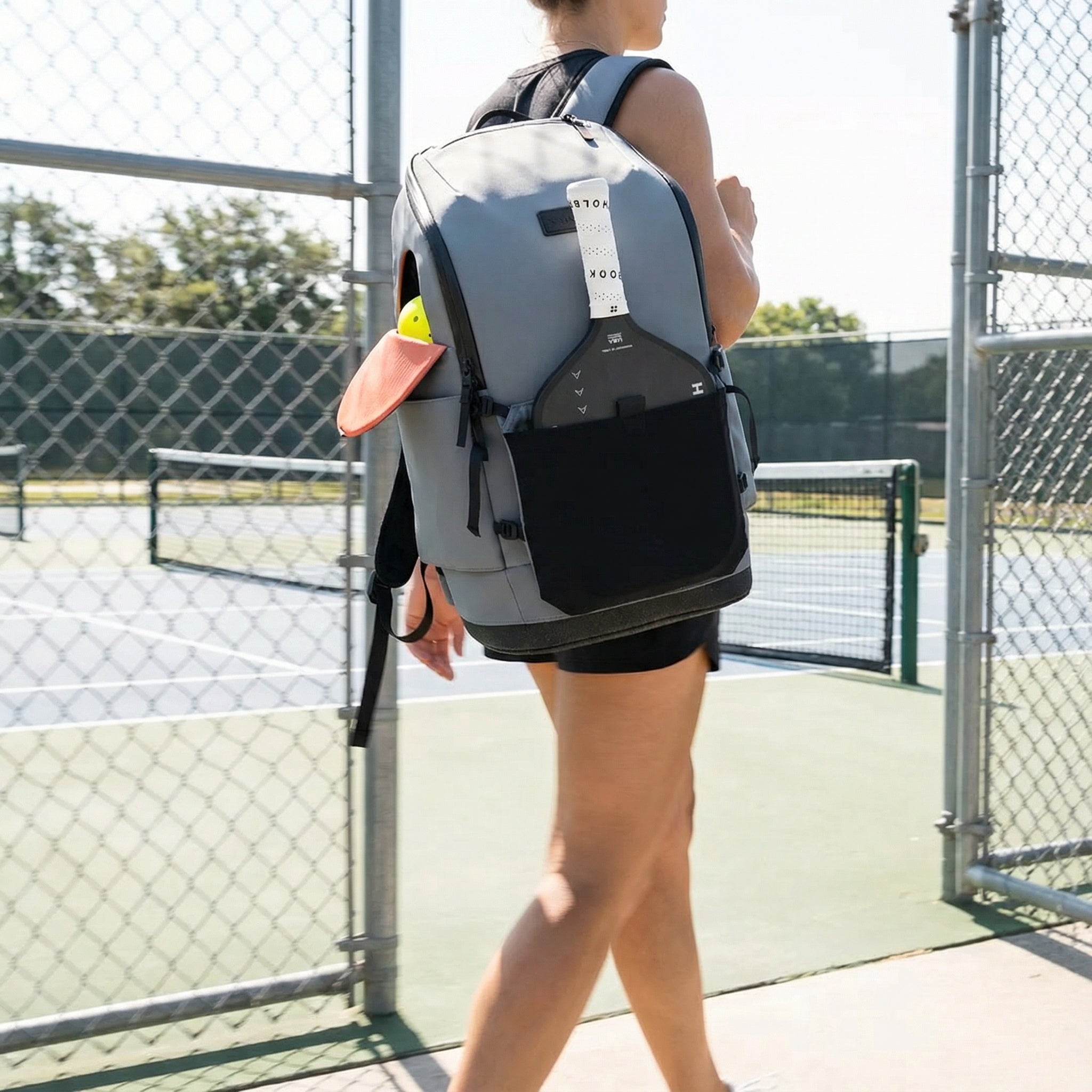
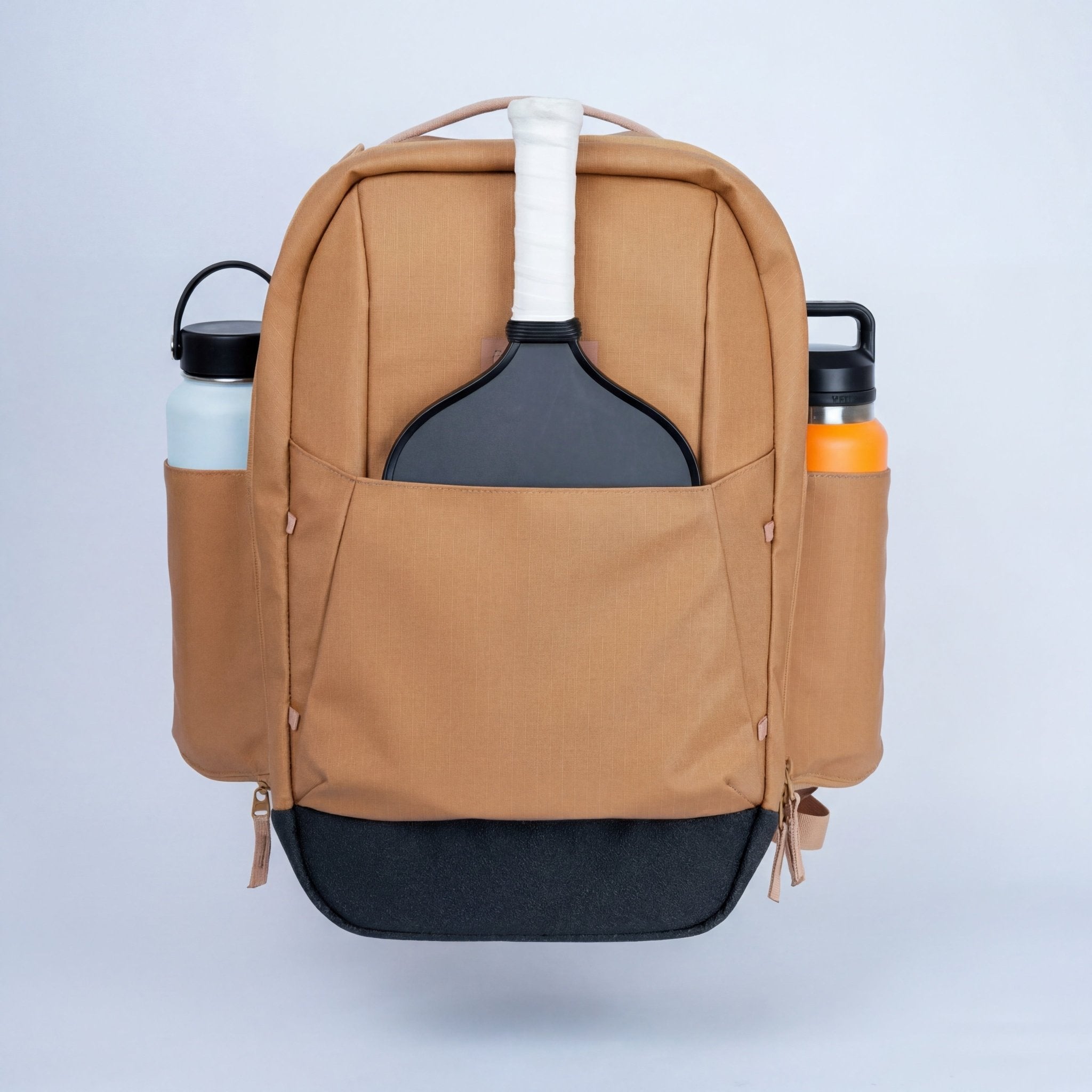
Part of what makes this routine work is having your gear organized before you arrive at the court. When your Court Caddy is packed the night before — paddles in the modular sleeve, water in the side pocket, fresh balls in the front compartment — the gear check takes 20 seconds instead of three minutes. The ritual starts when you organized your bag. That's not a small thing.

For more on building a full practice structure, see our Pickleball Practice Routine guide.
The Mental Reset Card: Print This, Put It in Your Bag
No competitor in the pickleball mental game space has a usable, pickleball-specific reset framework in card form. Print this, laminate it, and keep it in your bag alongside your extra ball. Every situation, one action:
PICKLEBALL MENTAL RESET CARD
| Situation | Your Action |
|---|---|
| You just made an unforced error | Exhale → bounce paddle on palm → call the score aloud |
| Opponent just hit a clean winner | Nod once → reset stance → think only of the next point |
| Down 8-2 | Say "we need nine." Play highest-percentage shot every time |
| Partner made 2+ errors in a row | Say "that's mine next time." Drop it immediately |
| Tightening at the kitchen | Check non-paddle hand — is it open? Open it |
| Easy ball coming, feel the pressure | Pick a specific target. "Low cross-court, their feet." Never "don't miss" |
| Leading 9-4 and starting to tighten | Treat the next point as 0-0. The lead is irrelevant until it's on the scoreboard |
Ready to upgrade your setup? Shop the Court Caddy — designed with 500+ real players, the modular organization keeps your gear mentally and physically organized before every match.
FAQ: Pickleball Mental Game Questions
How do I stay calm during a pickleball match?
Call the score out loud after every point — even when you're winning. The verbal act forces a pattern break and returns your attention to the present rally. Add a physical reset cue (bouncing your paddle on your palm once) and your nervous system receives a consistent reset signal between every point.
How do I stop choking on easy shots in pickleball?
Replace "don't miss" with a specific target before you swing. Your brain can't execute on a negative instruction. Give it a direction — "low cross-court at their feet" — and execution mode replaces protection mode. Almost every choke shot comes from thinking about failure rather than placement.
Why do I play better in practice than in games?
Practice removes the consequence frame. Your brain executes better when stakes are absent. To close the gap, introduce small stakes into practice — loser runs a lap, winner picks the next drill — so your nervous system learns to execute under mild pressure regularly. The goal is to make match-day pressure feel familiar, not exceptional.
How do I deal with a frustrating pickleball partner?
Say "that's mine next time" and move on immediately. It takes pressure off them, signals that you're still playing as a unit, and shifts focus forward. Avoid technical coaching mid-match — it registers as criticism almost always, regardless of intent, and rarely produces better shots on the next rally.
How do I come back after losing a big lead in pickleball?
Stop treating the lost lead as a failure and start updating your math in real time. Down 10-8 after leading 8-2? You need one point to tie. Call the current score, focus entirely on the next point, and lower your error rate rather than raising your aggression. Comebacks almost always start with clean play, not hero shots.
What's a good pre-match mental routine for pickleball?
Ten minutes: gear check and bag setup (two minutes), light physical warm-up (five minutes), mental preview of three likely scenarios with specific action plans (two minutes), one controlled breath (one minute). Consistency matters more than the specific steps. A routine you do every time beats a perfect routine you improvise.

Leave a comment
This site is protected by hCaptcha and the hCaptcha Privacy Policy and Terms of Service apply.