

Last updated: July 2026
The first time I grabbed my indoor Franklin X-26 balls for an outdoor session, I figured it out about 30 seconds in. Wind caught every soft drop shot I attempted. Balls floated sideways, bounced weirdly, acted like they'd never met a paddle before. An outdoor regular watching me probably assumed I was brand new to the game. I wasn't — I'd just brought the completely wrong equipment.
Indoor and outdoor pickleball are the same game. Same rules, same net height, same court dimensions. But the ball, the shoes, the strategy, and even your warm-up routine are fundamentally different depending on where you play. If you switch between both — or you're picking one to start — here's what actually matters.
Short version: Outdoor pickleball uses a harder 40-hole ball, demands wind and sun awareness, and rewards aggressive baseline play. Indoor pickleball uses a softer 26-hole ball, plays more predictably, and rewards touch and consistency. Beginners belong indoors. Competitive development accelerates outdoors.
Disclosure: This post contains affiliate links to Pickleball Central. If you purchase through our links, FORWRD earns a small commission at no extra cost to you. We only link to products we'd recommend regardless.
The Core Difference: Conditions vs. Consistency
Indoor pickleball is a controlled environment. The ball behaves the same on shot 3 as it does on shot 300. Temperature's stable. No wind. You can actually dial in your soft game because the variables don't change.
Outdoors? Every session is slightly different. Wind direction shifts. Sun angle changes by the hour. Concrete surfaces play faster than asphalt. Humidity affects how the ball comes off the paddle face. You're not just playing against your opponent — you're playing against conditions.
That unpredictability is actually what makes outdoor players better over time. But it's also why beginners get discouraged and think they're worse than they are.
Here's the quick-reference table no other guide gives you:
| Factor | Indoor | Outdoor |
|---|---|---|
| Ball | 26 large holes (Franklin X-26) | 40 small holes (Franklin X-40) |
| Shoes | Gum rubber, fine tread (gym floor grip) | Harder rubber, deeper grooves (debris resistance) |
| Warm-up time | 5 min — conditions don't change | 10–15 min — read wind, sun, and surface first |
| Best strategy | Touch and consistency, soft resets | Drives and deep serves into the wind; drops with tailwind |
| Best for | Beginners, control development, bad weather days | Competitive development, tournament prep |
Ball Selection: X-40 Outdoor vs. X-26 Indoor (and Why It Matters)
This is where most players get it wrong first. The balls aren't interchangeable — they're engineered for their environment.
The Franklin X-40 outdoor ball has 40 smaller holes. That design cuts through wind more predictably and bounces higher off hard outdoor surfaces — roughly 81 centimeters on a concrete court. The harder plastic handles the abrasive wear of asphalt without cracking within a session (though you'll still go through them faster than indoor balls, typically 3–10 sessions before they crack).
The X-26 indoor ball has 26 larger holes. Softer plastic, lighter construction, lower bounce — around 76 centimeters off a smooth gym floor. Because there's no wind resistance to worry about, those bigger holes actually improve control on touch shots. Your drop shots stay where you put them. Your resets actually reset.
Common mistake: playing outdoors with an indoor ball. The wind catches those big holes immediately, and the softer plastic cracks faster on rough concrete. It's not just suboptimal — it makes outdoor play genuinely frustrating in a way that has nothing to do with your skill level.
Use indoor balls indoors, outdoor balls outdoors. Not complicated, but worth saying once clearly.
Wind: Reading It and Adjusting Your Shot Selection
Wind is the single biggest adjustable variable in outdoor pickleball, and most players underestimate it until they've lost a set they shouldn't have.
The practical read: before your first warm-up rally, look at a nearby flag or tree. Drop a leaf or toss up a small piece of fuzz from your paddle bag. You want to know direction, not just "is there wind" — because your strategy changes depending on whether the wind is coming at you from the net end, pushing at your back, or crossing laterally.
Into the wind: drives become more effective. The wind slows your hard shots less than it affects soft ones, so attacking from the baseline is actually viable. Your drops, on the other hand, will float — push them lower and harder than you normally would or skip them entirely.
With a tailwind: your drives will carry long. Drop shots can actually work better — the wind holds them up slightly in a way that looks deceptively gentle. But be careful: lobs become weapons if you're on the right end, and your opponent knows it.
Crosswind: the cruelest scenario. Balls drift mid-flight. You start compensating by aiming inside-out, which creates new errors. The best adjustment here is shortening your swing, hitting flatter shots, and abandoning any attempt at finesse from the baseline until you've played a few games into the conditions.
None of this is guesswork after a few outdoor sessions. You develop wind feel the way a golfer does — and it makes you a better player in controlled conditions too, because you've learned to control ball flight deliberately.
Sun Angle: The Court Orientation Problem Every Outdoor Player Faces
Outdoor pickleball courts are supposed to be oriented north-south per USA Pickleball recommendations — so neither player is looking directly into morning or afternoon sun. In practice? Most recreational outdoor courts are oriented based on available space, not solar angle. You will play into the sun at some point.
The practical adjustments:
- Serve and return from the shaded end first if you can choose sides — most players don't bother to think about this at open play
- For lobs: use the sun. A well-placed lob into the sun is genuinely unreturnable for most recreational players. Don't be shy about it
- For returns: get closer to the baseline when returning into sun so you can track the ball longer before the glare catches it
- Polarized eyewear cuts sun glare without affecting depth perception the way tinted lenses sometimes do — worth owning if you play outdoors regularly
This is knowledge that transfers from outdoor tennis, beach volleyball, and golf — but almost nobody talks about it in pickleball guides because most of those guides are written for gym players.
Footwear: Why You Need Different Shoes for Each
Showing up to an indoor gym with outdoor court shoes isn't a crime. But you'll notice the difference immediately — less grip on the smooth hardwood or sport tile, a feeling that you're gliding slightly rather than planting on lateral cuts.
Indoor shoes use gum rubber soles with fine tread patterns designed for smooth, clean surfaces. They grip hardwood and sport tile like they were made for it — because they were. That same sole on rough concrete wears down dramatically faster. You'll go from new to slick in 10-15 outdoor sessions on shoes that would last a full season indoors.
Outdoor shoes are built from harder rubber with deeper tread grooves to handle grit, debris, and the abrasion of concrete and asphalt. The trade-off: less immediate grip on smooth floors. If there's even a trace of moisture on a gym floor and you're in outdoor shoes, you're skating, not playing. It's a real safety issue, not just a performance one.
The cleanest solution if you play both regularly: two pairs, worn for their respective surfaces, stored separately so you're not cross-contaminating the tread with the wrong surface debris. Which also means you need dedicated shoe storage. The FORWRD Shoe Cube add-on (sold separately) attaches to the bag exterior for clean separation, or the Court Ranger V2's roomy main compartment keeps muddy outdoor shoes from contaminating your clean indoor pair.

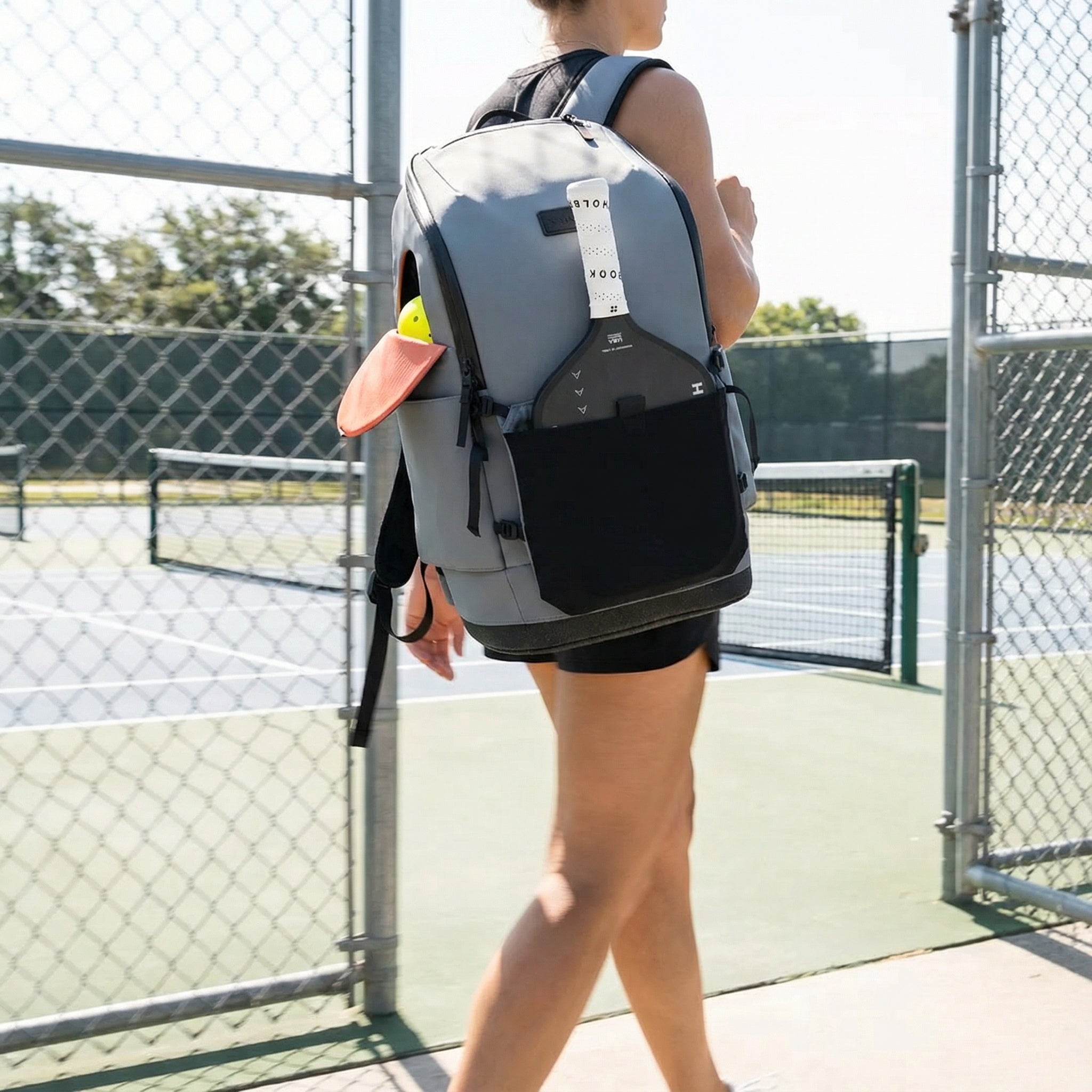
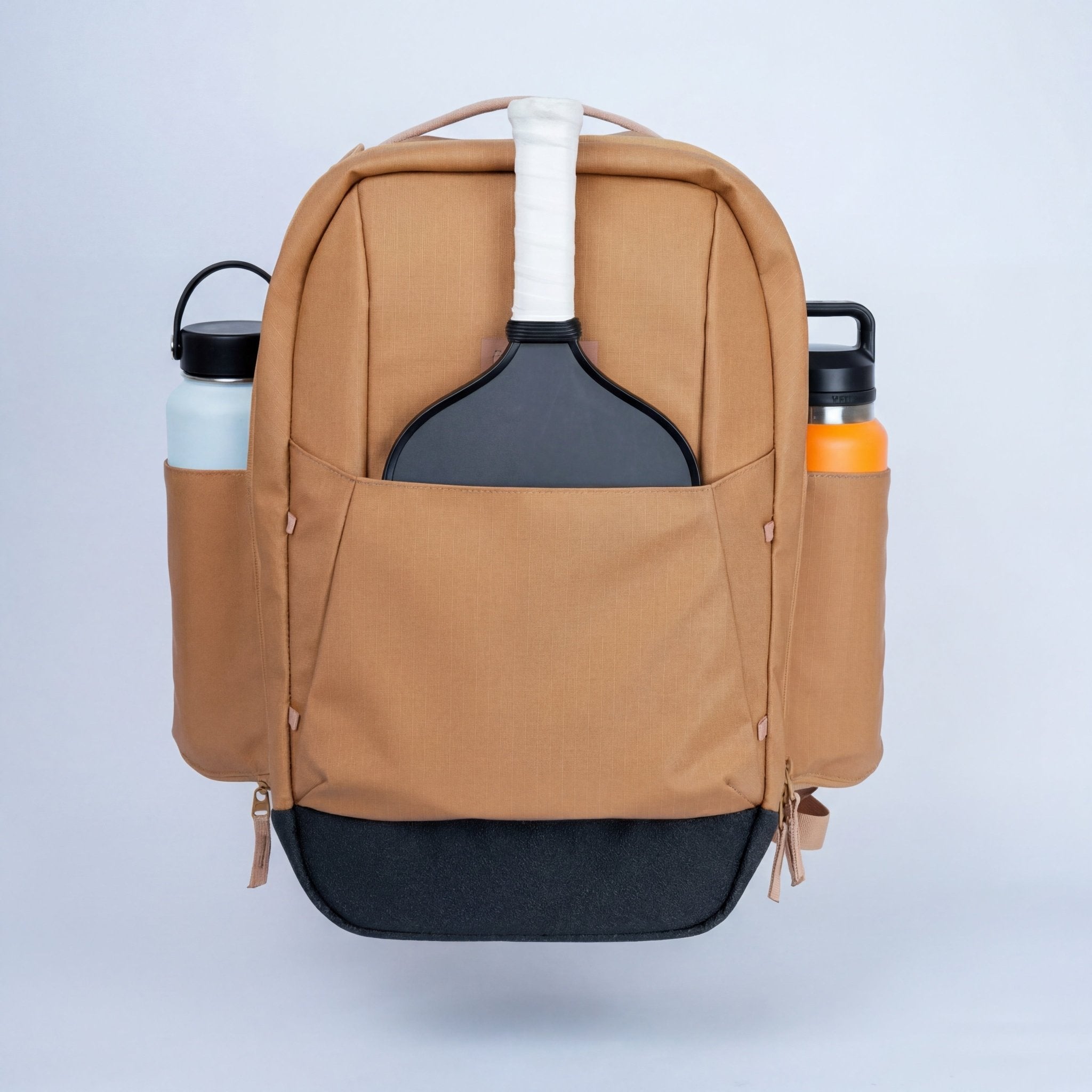
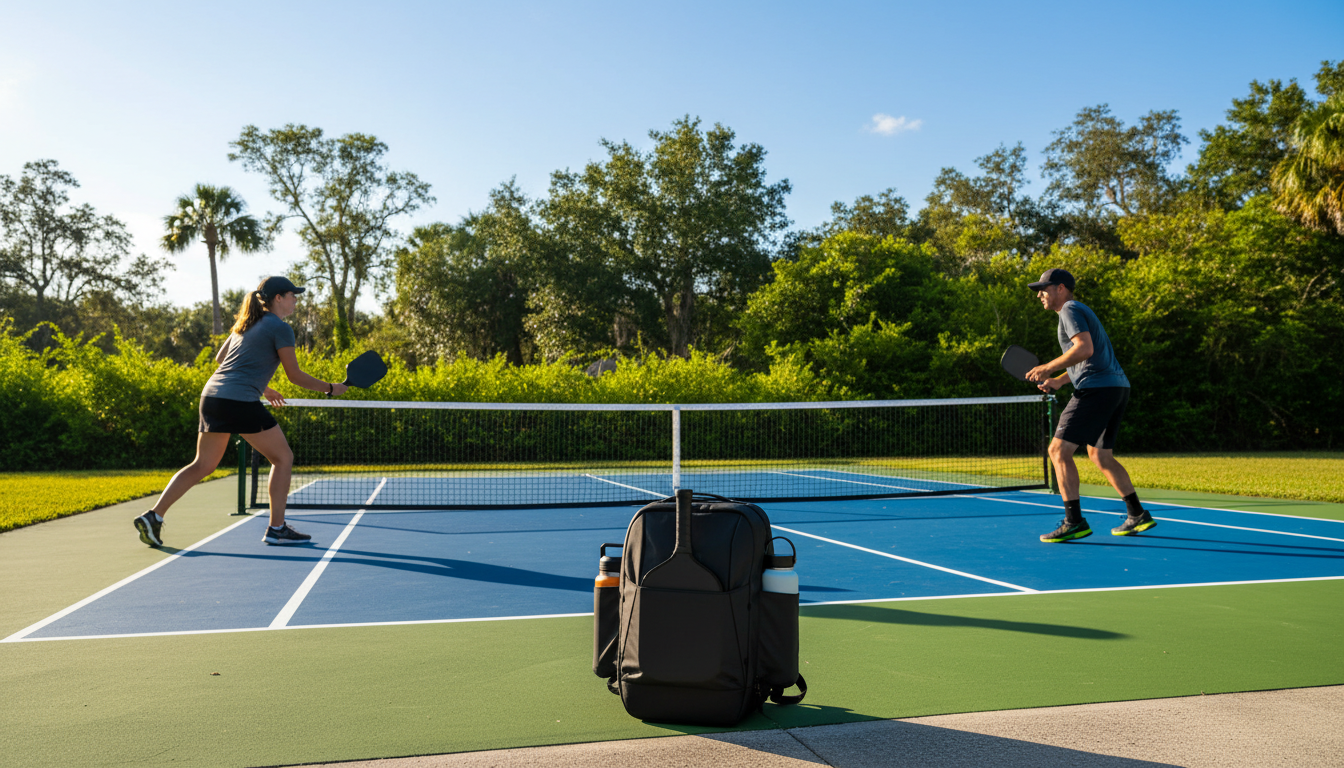
The Court Ranger V2 ($195) is what most players who regularly switch between indoor and outdoor land on — it's got enough compartment separation to hold two different ball types plus two pairs of shoes without the bag turning into chaos. The 16" padded laptop sleeve means it doubles as a commuter bag on days you're going court-to-work. Designed with feedback from 500+ real players, including a lot of people who play both.
Sound and Venue: Indoor Gym vs. Outdoor Court Reality
This one gets overlooked, but it matters for player experience and concentration.
Indoor pickleball is loud. That soft plastic X-26 ball still produces a sharp crack on fast exchanges, and gym acoustics amplify everything. Eight simultaneous courts in a recreation center is a wall of noise. Some players thrive in it. Others — especially newer players still trying to track the ball — find it genuinely distracting.
Outdoor courts produce that sharper "pop" from the harder X-40, but it disperses immediately in open air. Easier to hear your own shot. More natural ambience. Most players report they concentrate better outdoors once they've accounted for the conditions.
Venue culture is different too. Indoor open play often has faster rotation — games to 11, next group waiting. Outdoor courts at parks tend to run longer, looser. Know which environment fits your schedule and social preference before deciding where to anchor your regular game.
Which Is Better for Beginners? (Short Answer: Indoor)
Indoor pickleball for beginners — it's not even close. The controlled environment lets you actually learn the strokes without fighting wind, sun, and surface variation at the same time. You can develop your drop shot because it actually drops where you intend it to. You can develop your reset because the ball behaves predictably.
Start outdoors as a beginner and you'll spend your first 10 sessions thinking you're playing badly when you're actually just playing in conditions that require a year of experience to read properly. That's demoralizing and it slows development.
"We always tell new players: get your third shot drop working indoors first, where the ball actually goes where you put it. Then take it outside. The transition is hard enough without fighting the wind at the same time."
Once you can consistently place the ball indoors, outdoor conditions become a puzzle to solve rather than an overwhelming set of unfamiliar variables.
Which Is Better for Competitive Development? (Short Answer: Outdoor)
Once you've built your fundamentals, outdoor pickleball accelerates your game faster. The variables force you to think shot-by-shot in ways that indoor play doesn't require. You develop wind feel, court awareness, sun management, strategic flexibility. And most PPA Tour and APP Tour events are played outdoors — so tournament prep means outdoor reps.
The physical demands are higher too. Concrete plays faster and harder on your joints than a wood gym floor. You develop stamina and footwork resilience that you don't get in the forgiving gym environment.
The best players play both. Indoor for touch and consistency development. Outdoor for competitive conditioning and tactical adaptability. Pick the environment that serves your current development need — then switch.
Ready to play both without the gear chaos?
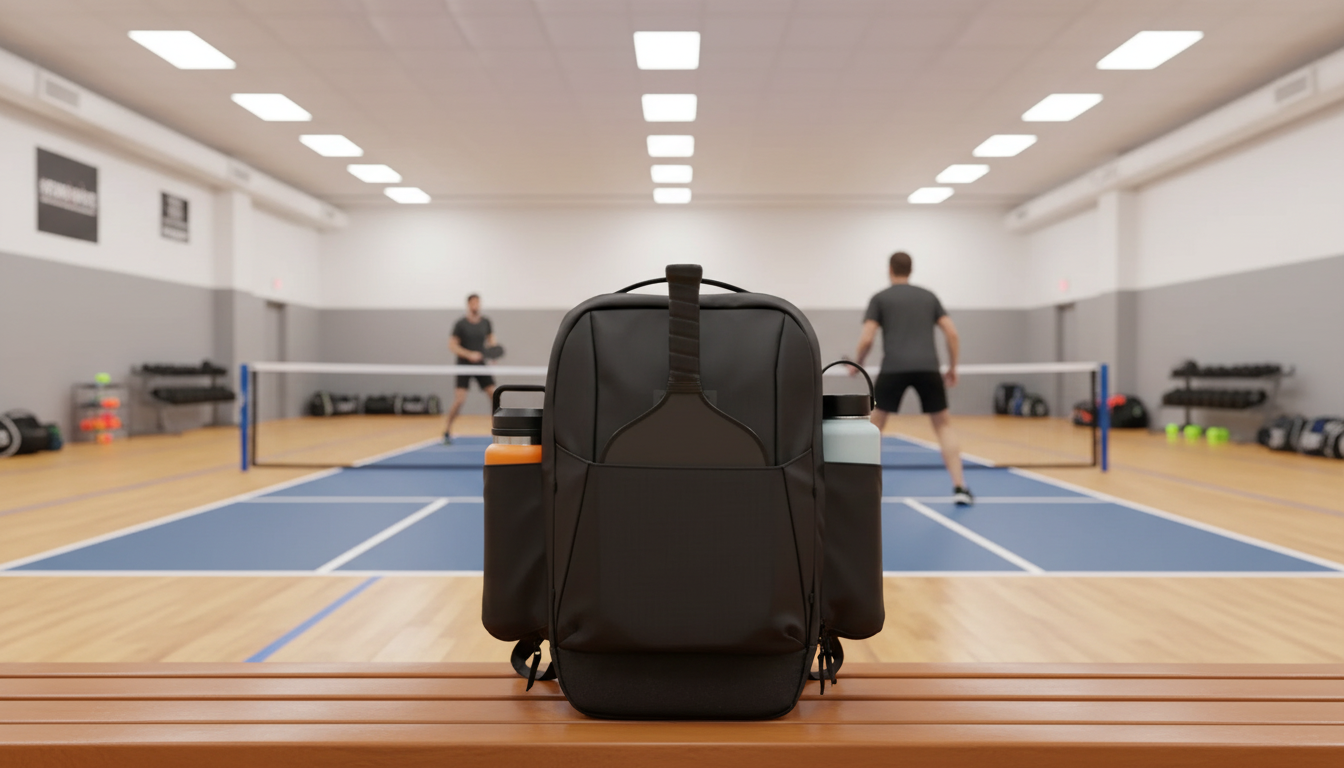
The Court Ranger V2 holds everything — two ball types, both pairs of shoes, paddles, and a 16" laptop sleeve for the commute. Built with input from 500+ real players. $195.
FAQ: Common Questions About Indoor vs. Outdoor Pickleball
Is indoor or outdoor pickleball better for beginners?
Indoor. The consistent conditions — no wind, stable lighting, predictable bounce — let beginners focus on developing strokes rather than fighting environmental variables. Most instructors and experienced players recommend getting comfortable indoors before adding the complexity of outdoor conditions.
What balls do you use for indoor vs outdoor pickleball?
Indoor pickleball uses balls with 26 large holes — the Franklin X-26 is the most common. Outdoor pickleball uses balls with 40 smaller holes (like the Franklin X-40) designed to cut through wind and handle rough surfaces. Using the wrong ball for the environment significantly impacts play quality.
Can you use outdoor pickleball shoes indoors?
Not safely, no. Outdoor shoes have harder rubber soles with deeper grooves that provide poor grip on smooth gym floors. If there's any moisture on a hardwood or sport tile surface, outdoor shoes become a slip hazard. Dedicated indoor shoes with gum rubber soles are significantly safer and more effective.
Does wind affect pickleball that much?
Yes — more than most beginners expect. Even a 10 mph breeze significantly affects soft shots, lobs, and drop attempts. Outdoor balls with 40 smaller holes reduce wind interference compared to indoor balls, but strategic adjustments are still required. Experienced outdoor players read wind before every session and adjust serve, drive, and drop shot strategy accordingly.
What is the difference between indoor and outdoor pickleball courts?
Same dimensions (20×44 feet), same net height (34" center, 36" posts). The surface differs: indoor courts typically use hardwood, sport tile, or gymnasium flooring; outdoor courts use concrete or asphalt, which plays faster and harder on joints. Outdoor courts also require managing sun angle, wind, and temperature variation.
Is it harder to play pickleball outside?
Different, not harder. Outdoor pickleball requires more tactical awareness — reading wind, managing sun exposure, adjusting to surface speed. That adds complexity. But the fundamentals are identical, and many players find outdoor play more engaging once they've built the experience to manage those variables.
For official court specs that apply to both environments, see our Complete Pickleball Court Guide.

Leave a comment
This site is protected by hCaptcha and the hCaptcha Privacy Policy and Terms of Service apply.