

Disclosure: This post contains affiliate links to Pickleball Central. If you purchase through our links, FORWRD earns a small commission at no extra cost to you. We only link to products we'd recommend regardless.
Last updated: July 2026
The worst speed up in pickleball isn't the one you miss into the net. It's the one that clips the tape, pops up chest-high, and hands your opponent the easiest putaway of their afternoon—at which point they drive back into your feet and win the rally you thought you were taking over.
That's what happens when you speed up from the wrong position, on the wrong ball, against opponents who are fully set and waiting. The shot feels aggressive. It just doesn't work.
Here's what does work: a situational decision system. Not gut instinct, not "just go for it when the ball sits up," but a repeatable framework built around three factors that separate a high-percentage attack from an expensive gift. This guide gives you that framework—including the one resource that doesn't exist anywhere else on the SERP: a full Speed Up Decision Matrix you can actually use on the court.
What Is a Speed Up Shot (and Why Players Get It Wrong)
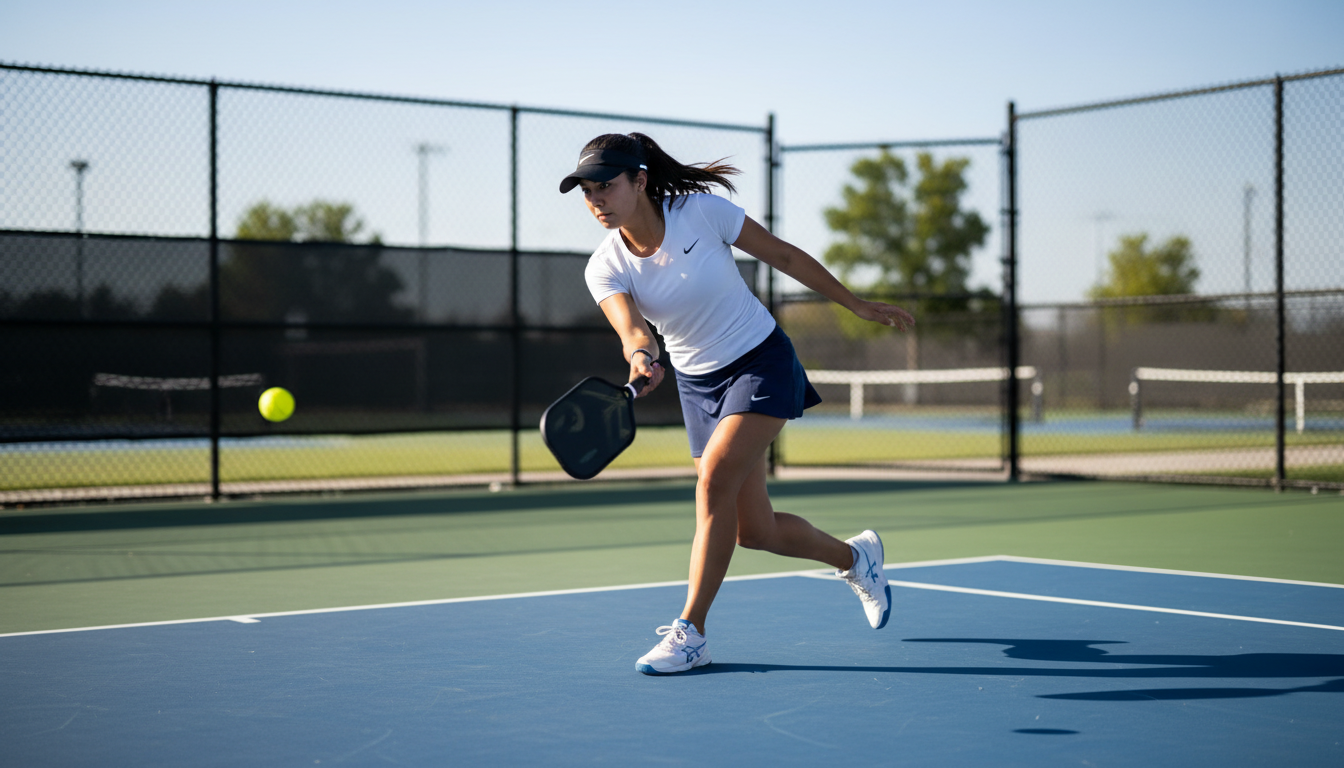
A speed up is any contact where you deliberately add pace to a soft exchange—turning a dink or slow rally ball into a fast, driven shot aimed at forcing an error. It usually happens from the transition zone (3–12 feet behind the NVZ) or from the kitchen line itself, directed at an opponent's body or backhand shoulder.
It's one of the most effective weapons in pickleball. It's also one of the most misunderstood.
Most players treat it like a bail-out move. They're getting dinked cross-court, the exchange is going nowhere, they get a ball at waist height, and they rip it. Sometimes it works. More often, the opponent at the NVZ blocks it right back into their feet—because two people standing at the kitchen, paddles up, have roughly 0.4 seconds of reaction time to a ball coming from 15 feet away. That's enough.
The problem isn't the shot. It's the conditions under which it's being used.
A well-timed speed up—on a ball above net height, from a stable base, with at least one opponent still in transition or paddle-down—can end a rally in one swing. The same swing on the wrong ball hands your opponent a gift basket.
I learned this the hard way at 10-8 in a 3.5 rec game. I'd been waiting for the "right moment" to speed up, then finally went for a ball at mid-thigh, scrambled my contact, and sent it directly to the most patient defender on the other side. She reset it into the kitchen and I spent the next three balls scrambling. We lost the game. I thought about that speed up the whole drive home.
To understand where the speed up fits into the broader attack-reset decision, read Pickleball Third Shot Drop: 2026 Technique & Drill Guide—it covers the shot that gets you into the transition zone in the first place.
The Conditions That Make a Speed Up High-Percentage
Not every ball you can speed up should be sped up. The difference between a winning attack and an unforced error usually comes down to three conditions being in your favor simultaneously:
1. Ball height at contact
The single most important variable. When the ball is at your waist or above—especially above net height—you have the downward angle to drive it with pace and keep it in court. Below the waist, any hard swing is likely to net or float up, giving your opponent a comfortable reset. The working rule: below the belt, drop or reset. At the belt and above, you have options.
2. Your body position
You can't speed up cleanly while lunging or off-balance. Weight moving backward, feet shuffling, or body twisted sideways all kill your paddle face control. You need feet set, weight forward, and a stable base. One major reason speed ups fail from deep in the transition zone is that players are still moving when they swing.
3. Opponent position and paddle readiness
This is the factor most players ignore completely. Speeding up at two opponents fully planted at the NVZ, paddles up and chin-height, is a low-percentage play—they're already in position to intercept. The window opens when one of them is still moving up from the baseline, their paddle is low, or they've just hit a tough shot and are resetting their stance. That's when the speed up punishes instead of feeding them.
Pro players on the PPA and APP tours don't speed up constantly. They're patient, working the cross-court dink, manufacturing small positional advantages—then they accelerate when all three conditions align. The shot frequency is lower. The success rate is much higher.
"The speed up from 12 feet behind the NVZ almost never wins the point. The defender has too much time. Your real window opens from 3–7 feet back, where your drive arrives before they can fully reset their paddle position." — Grub, FORWRD co-founder
See Pickleball Transition Zone Strategy: No Man's Land Decoded for how your court zone changes the entire risk profile of any attack.
Speed Up Decision Matrix: Attack vs Reset vs Drop
Here's what doesn't exist anywhere else in pickleball strategy content: a structured decision table based on the two most important situational factors—ball height at contact and your opponents' court position.
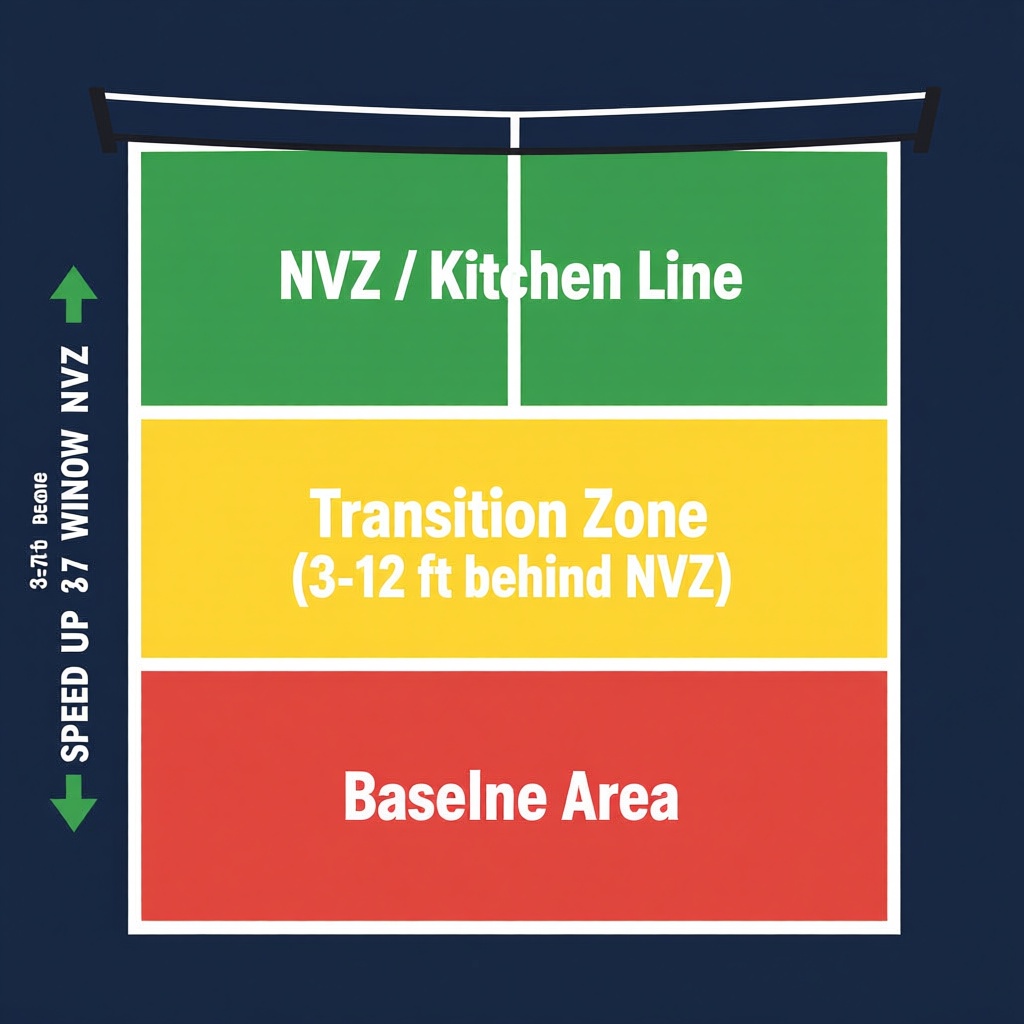
Use this as your on-court reference system. Screenshot it. Print it. Work through it mentally before your next drilling session.
| Ball Height at Contact | Opponents at NVZ (Set) | Opponents in Transition | Opponents Near Baseline |
|---|---|---|---|
| Above waist (above net) | ✅ Speed Up — target body or backhand shoulder | ✅ Speed Up aggressively — follow to kitchen | ⚠️ Drive and close — they have time; play smart |
| At waist (near net height) | ⚠️ Neutralize — float risk is high; reset or drop | ✅ Speed Up if body position is set | ⚠️ Drop or neutralize — they have recovery time |
| Below waist (below net) | 🚫 Reset — no exceptions | 🚫 Reset — even in transition, low contact = error | 🚫 Drop — play the third-shot game from here |
A few things this matrix makes obvious once you see them side by side:
The green zone is top-left and top-center. Ball above your belt + opponents at the kitchen or moving toward it = highest-percentage attack in pickleball. You have the downward angle, and they have the least reaction time.
The bottom row is a wall. A lot of players try to speed up low balls because the slow exchange feels frustrating. Don't. A hard swing below knee height going upward either misses long or floats back at a comfortable height for your opponent. Every time.
The right column is deceptive. Opponents near the baseline might seem like easy targets. They're not—they have more time to read and react, and they're not caught mid-step. A well-placed drop that forces them forward is often a better play than a speed up they can step into.
This matrix is a direct application of the broader attack-reset framework in Pickleball Shot Selection Strategy: Attack, Reset, or Dink—the speed up is just the most aggressive end of that decision tree.
Speed Up Mechanics: Paddle Angle, Contact Point, and Follow-Through
Reading the matrix is half the battle. Executing the shot cleanly under pressure is the other half.
Contact point: in front of your body
The most common mechanics error is contacting the ball even with or behind your hip. When that happens, your swing path goes sideways or up instead of forward and through—the ball floats. Contact should be 12–18 inches in front of your lead hip, where your arm is extended and your paddle face can close over the ball naturally.
Paddle angle: start open, close through contact
You're not swiping sideways or punching flat. The paddle face starts slightly open (angled up) to get underneath the ball, then closes—rotating forward and down—through impact. This is what creates topspin. Without that closing motion, the ball flattens out and either nets or sits up for a counter-attack. It's a compact wrist-and-forearm motion, not a full-arm swing.
Follow-through: forward, not around
Full arm-swing follow-throughs look powerful on video. In practice, they're usually counterproductive—they pull your paddle off the ball early and take you out of ready position. A compact punch-forward motion, finishing at shoulder height, gives better control and faster recovery.
After the speed up: move immediately
The rally isn't won on the speed up—it's won on the follow-up putaway when your opponent's block pops up. Close toward the NVZ line the moment your paddle clears the ball. Don't watch the shot; move. That's where 3.5+ players separate from 3.0 players: they know the speed up is the setup, not the finisher.
Defending the Speed Up: How to Take It Early and Reset
If you're going to use this shot more, you need to defend it better—because opponents will start returning the favor.
The single best adjustment: take the ball earlier. Most players' instinct when they see pace coming is to back up and let it travel past them. Against a speed up, that's wrong. The ball is at peak velocity off your opponent's paddle. Every foot it travels, it drops lower and harder to handle. Get to it early—at the top of the bounce or, if volleying, well in front of your body—and you intercept it while you can still redirect it into the kitchen.
The block volley
Paddle up, grip firm but not tense, face slightly open. You're not swinging—you're intercepting. Place the paddle where the ball is going and let the ball's own pace carry it into the kitchen. It sounds passive. It works because of geometry: a slightly open face converts pace into a soft, dropping shot. Think catching with a frying pan, not hitting with one.
Target the backhand shoulder
When an opponent speeds up at your body, a compact backhand block cross-court is your most reliable response. If they target your backhand shoulder specifically, a short reset down-the-line often catches them already moving the wrong direction for a follow-up.
Resist the urge to immediately counter-attack
After you survive a speed up, you haven't won anything yet—you've just not lost. Your opponent's attack didn't produce a winner. Now restart the dink exchange from a position of control. Counter-attacking immediately off a reset is how players turn survived exchanges into gift points.
Speed Up Drills: Building Consistency in 3 Progressions
Understanding the decision matrix mentally is one thing. Executing correctly in a 3.0+ match—when your heart rate is up and the score is 9-8—is another. These three drills build the recognition and mechanics together.
Drill 1: Ball height recognition ("call it before you hit it")
Drilling partner feeds dinks from the NVZ line. Your job: call "high" or "low" aloud before making contact, and act accordingly—speed up the high ones, reset the low ones. No winners required. The drill is purely about training the recognition reflex so it fires automatically in match play. Start slow. Build feed pace over 15-minute blocks.
Drill 2: Position-based decisions
Partner alternates starting positions: at the NVZ line (you reset everything) vs in the transition zone (you speed up anything above waist height). Forces you to read court position before deciding. This directly mirrors the column logic in the decision matrix—your response changes based on their location, not just the ball height.
Drill 3: Speed up and close
Self-feed a half-lob from 7–8 feet back. Speed up cross-court, immediately close to the NVZ line, and continue the rally from there. This trains the movement habit that makes speed ups effective in real matches: you're not practicing the swing in isolation, you're practicing the swing plus the positioning that wins the next ball.
For players drilling consistently 3–4 times per week, a ball machine with variable-speed feed settings can simulate the unpredictable pace and placement of real speed up exchanges without burning out a drill partner. Shop ball machines at Pickleball Central if you're looking to build a solo drill setup.
FAQ: Common Questions About the Pickleball Speed Up Shot
What is a speed up shot in pickleball?
A speed up shot is a deliberate increase in pace mid-rally—usually from the transition zone or kitchen line—aimed at forcing an error or creating a winning follow-up. It differs from a drive off the bounce: a speed up happens inside a soft exchange, injecting sudden pace to catch opponents between paddle positions.
When should you speed up the ball in pickleball?
Speed up when the ball is above your waist (ideally above net height), your body is balanced, and your opponents aren't fully set at the NVZ. The highest-percentage window is from 3–7 feet behind the kitchen—close enough that your drive arrives before they can reset their ready position. From 12+ feet back, the odds drop sharply.
How do you defend a pickleball speed up shot?
Take the ball early—at peak bounce height or in front of you as a volley. Use a compact block with a slightly open paddle face, letting the ball's pace carry it into the kitchen. Reset cross-court or down-the-line depending on opponent position. Don't counter-attack immediately; surviving and restarting the exchange is the goal.
Is it better to speed up or reset in pickleball?
Depends entirely on the ball and your position. High ball, good balance, opponent out of position = speed up. Low ball, off-balance, or opponents set at the NVZ = reset without hesitation. Forcing a speed up from unfavorable conditions is one of the most common unforced errors at 3.0–3.5 level. The matrix above makes the decision automatic.
What makes a good pickleball speed up shot?
Three things working together: ball at or above waist height at contact, contact point in front of your body (not beside it), and a closing paddle face through impact that generates topspin. The ball needs to drive forward and down—not float out long. Without the closing motion, the shot flattens and becomes easily read.
How do you speed up consistently in pickleball?
Train the recognition reflex first: practice calling "high" or "low" before contact until the decision is automatic. Then compound the drill with movement—speed up, close to the NVZ, rally from the kitchen. Consistent speed ups come from reading the ball early and being in position, not from swinging harder. Mechanics follow recognition, not the other way around.

Leave a comment
This site is protected by hCaptcha and the hCaptcha Privacy Policy and Terms of Service apply.