

Last updated: July 2026
Technically, yes — a tennis bag will hold a pickleball paddle. But "will hold" and "is designed for" are very different things. We loaded paddles into three common tennis bags and measured the dead space in each racquet sleeve. The numbers explain why pickleball-specific bags exist and why the difference matters more than players switching from tennis expect.
Disclosure: This post contains affiliate links to Pickleball Central. If you purchase through our links, FORWRD earns a small commission at no extra cost to you. We only link to products we'd recommend regardless.
Key Facts
- Paddle length limit: USA Pickleball caps paddle length at 17" — 10–12" shorter than a standard tennis racquet's 27–29" length.
- Dead space problem: In our fit test, a 16.5" pickleball paddle left 10–12" of empty space inside a tennis racquet sleeve — enough for the paddle to rattle and sustain edge guard damage in transit.
- 4-paddle capacity: The FORWRD Court Caddy holds 4 paddles in a modular slot system with individual separation; tennis bags hold 3–12 racquets but in wider, unseparated compartments not sized for paddle thickness.
- Laptop sleeve gap: The Court Caddy has a 15" padded laptop sleeve purpose-built for court-to-office players — virtually no tennis bag offers an equivalent.
- Price parity: Premium pickleball bags like the Court Caddy ($325) and Court Ranger V2 ($195) are priced comparably to quality tennis bags — without the geometry mismatch.
- Player-tested design: The FORWRD Court Caddy was developed with feedback from 500+ real players, many of whom came from tennis and explicitly cited what was missing from racquet sport bags.
- YKK AquaGuard zippers: The same hardware used in serious outdoor gear — a standard no tennis bag at this price point consistently offers for pickleball players.
Can You Use a Tennis Bag for Pickleball? The Short Answer
Yes — with real trade-offs you should understand before committing to either option.
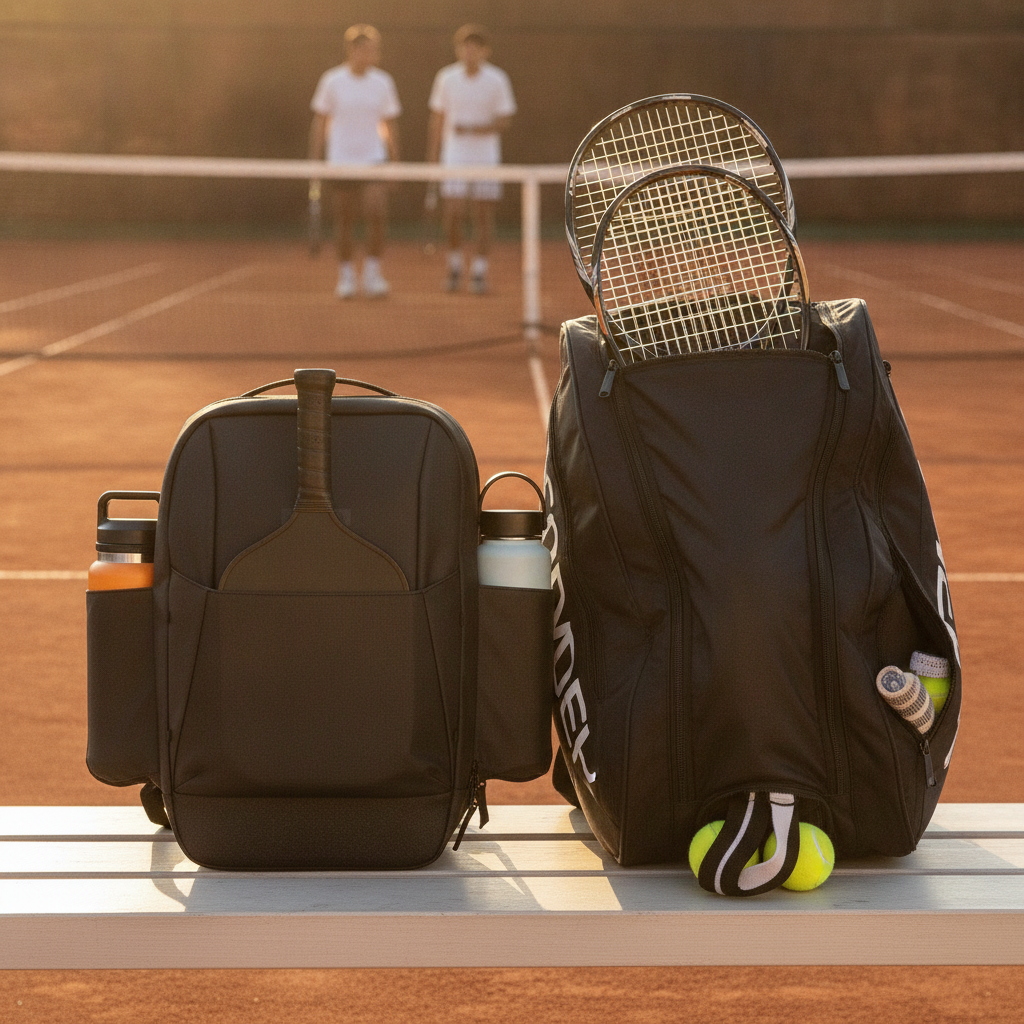
The core issue is geometry. USA Pickleball equipment standards cap paddle length at 17". Standard tennis racquets run 27–29". Every tennis bag on the market — from a basic 3-racquet carry bag to a tour bag — has compartments engineered for racquets that are nearly twice as long as a pickleball paddle.
That mismatch creates what we're calling the dead-space problem. Here's what we found when we loaded a standard graphite pickleball paddle (16.5" length) into three common tennis bags:
- Head Tour Team 6-Racquet Bag: 28" sleeve — 11.5" of dead space. Paddle slides laterally during carry.
- Wilson Tour V 6-Pack: 29" sleeve — 12.5" of dead space. No separator between paddles; direct contact in transit.
- Babolat Pure Strike 6-Pack: 28.5" sleeve — 12" of dead space. Paddle sits unsupported on three sides.
That's 10–12 inches of empty air around your paddle on every trip to the courts. Repeated transport stress hits edge guards first. Then the face. It's physics, not bad luck — and it compounds across hundreds of sessions.

"Every player we interviewed who came from tennis said the same thing: tennis bags are either way too big for pickleball or way too small for a full day kit. There's no middle ground. We built the Court Caddy to solve that specifically — right-sized for paddle sport, not retrofitted from racquet sport."
— Topher Lake, FORWRD Co-founder
Key Differences: Pickleball Bags vs Tennis Bags (Size, Compartments, Paddle Fit)
Here's the full side-by-side across every dimension that matters for regular players:
| Feature | Pickleball Bag | Tennis Bag |
|---|---|---|
| Paddle/racquet sleeve length | 17–19" (paddle-specific) | 27–30" (racquet-specific) |
| Capacity | 2–4 paddles | 3–12 racquets |
| Laptop sleeve | Common (15–16" padded) | Rare |
| Ball pockets | Small mesh sized for 2.9" pickleballs | Larger pockets for tennis ball cans |
| Fence hooks | Standard on premium bags | Uncommon |
| Thermal lining | Drink/paddle-oriented | Racquet/string-tension-oriented |
| Carry style | Backpack standard; duffle common | Shoulder strap; wheeled tour bags |
| Price range | $40–$325+ | $70–$400+ |
The Laptop Sleeve Gap Is Bigger Than It Looks
If you play before or after work, court-to-office is a real use case — and one that tennis bags simply weren't designed for. No major tennis bag manufacturer includes a dedicated padded laptop compartment, because it's not a tennis player use case.
For players who've converted from tennis to pickleball, this is consistently the feature that triggers the switch to a dedicated pickleball bag. You can live without it until you've tried it; then you can't go back.
The Thermal Mismatch Nobody Talks About
Tennis bags often include isothermal racquet chambers designed to protect string tension in high heat. That's a racquet-specific problem. Pickleball paddles don't have string tension to protect — but they do have polymer cores that can deform in sustained high heat and edge guards that can crack under direct sun exposure. The protection needs are different. Pickleball bags that include thermal protection address paddle core and drink temperature, not string tension.
What About the Dual Sport Player?
If you genuinely play both tennis and pickleball, a tennis bag will handle both racquets and paddles in the same compartment — just not optimally. The paddles rattle in oversized sleeves. The ball pockets won't separate pickleballs cleanly from tennis balls. And the bag becomes a compromise for both sports instead of excellent for either.
For players who take both sports seriously, two bags is the honest answer. Uncomfortable, but true. See how different bag formats compare in our guide to pickleball sling bag vs. backpack options if you're still working out the right format for your kit.
When a Tennis Bag Works for Pickleball (And When It Doesn't)
When a Tennis Bag Is Fine
- You already own a tennis bag and want to try pickleball before committing to gear
- You play casually, once a week, with a single paddle
- You genuinely play both sports and want one bag for both
- You're traveling and need to minimize luggage — the tennis bag is already packed
When a Tennis Bag Is Holding You Back
- You play 3+ times per week. Daily transport stress in an oversized sleeve adds up faster than once-a-week players notice.
- You carry 2+ paddles. Tennis bags have no paddle-to-paddle separator; they contact each other directly in the same sleeve.
- You're competing in tournaments. Multi-match days require quick paddle access, ball pockets, food storage, and rain protection — none of which tennis bags handle well for pickleball players.
- You commute court-to-office. No laptop sleeve in any major tennis bag.
- You own premium paddles. A $200+ paddle deserves protection that's actually sized for it, not 12" of rattling dead space.
If you've been making do with a tennis bag, the Court Caddy is what you've been missing. Paddle-specific slots, 15" padded laptop sleeve, YKK AquaGuard zippers — built for players who play regularly, not just occasionally. See the Court Caddy →
The Best Pickleball-Specific Bags for Players Switching From Tennis
Players coming from tennis know quality gear. You're not going to be satisfied with a $40 nylon bag after using a proper tennis bag. Here's what to look for and our top two picks.
#1 Pick: FORWRD Court Caddy Backpack — $325
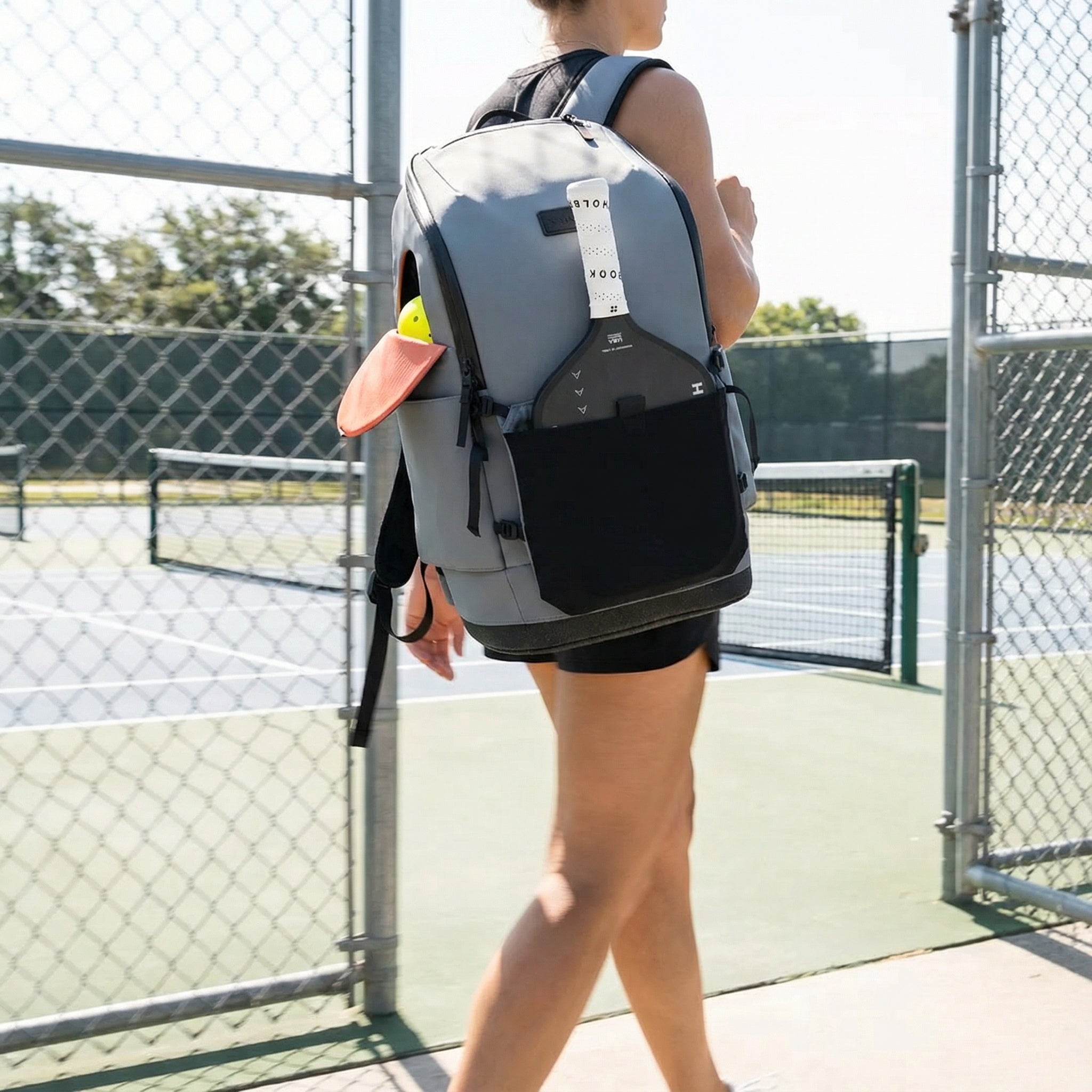
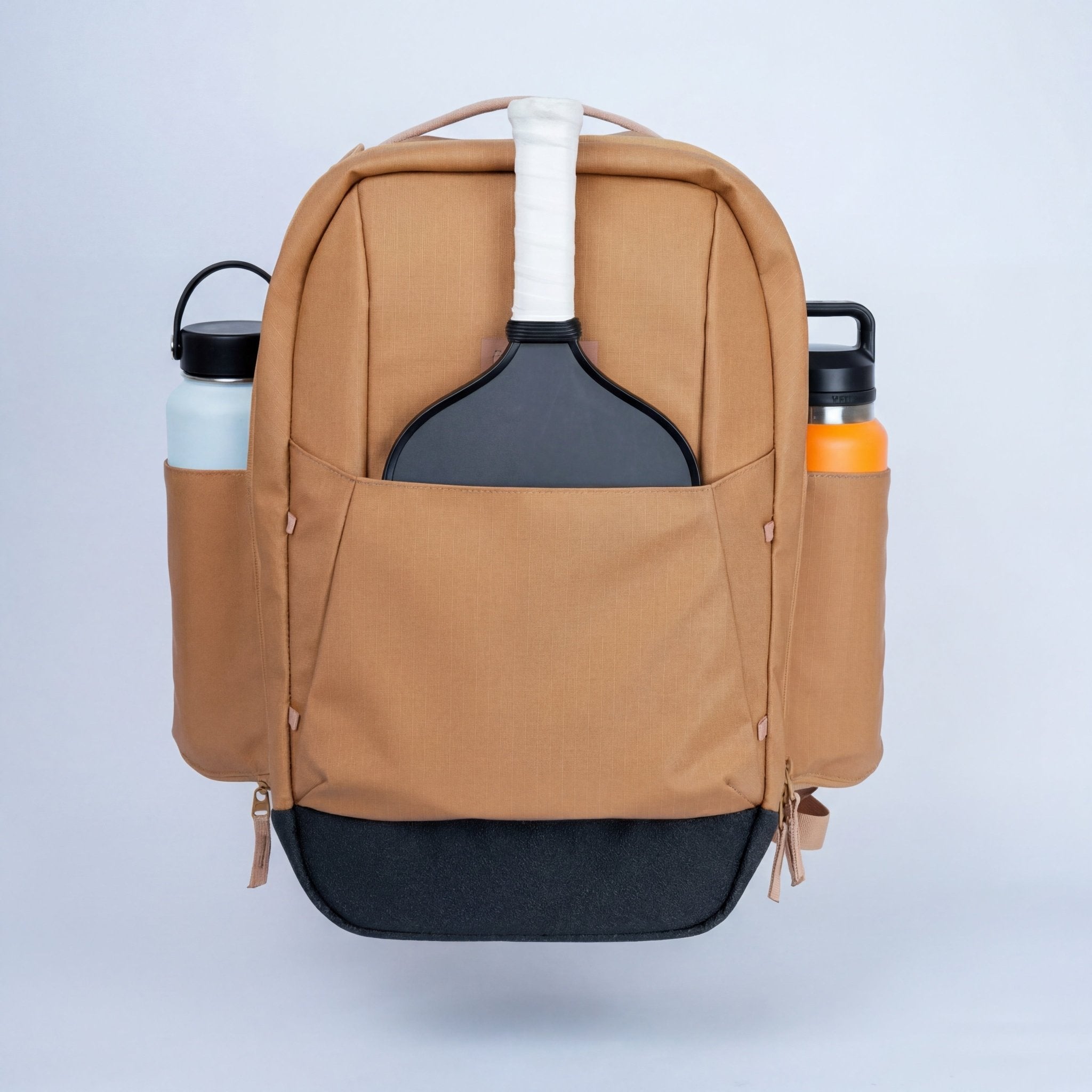
If you played tennis seriously, think of the Court Caddy as the pickleball equivalent of a premium tour bag — built ground-up for paddle sport, not adapted from racquet sport. The modular paddle sleeve holds 4 paddles with individual slot separation. No paddle-to-paddle contact. The 15" padded laptop sleeve fits a MacBook Pro M3 and a 13" MacBook Air. YKK AquaGuard zippers — the hardware used in serious outdoor gear. An ergonomic back panel designed for daily court-to-office carry.
What players switching from tennis notice first: nothing rattles. Every item has a place. That's not a marketing claim — it's the output of 500+ player feedback sessions with players who came from tennis backgrounds and explicitly named what frustrated them about cross-using racquet bags.
Best for: Players who take their gear seriously, play 3x/week or more, carry a laptop, or compete in tournaments.
Shop the Court Caddy Backpack →
Runner-Up: FORWRD Court Ranger V2 — $195
The Court Ranger V2 is the right call for players upgrading from a tennis bag who want purpose-built paddle storage without the Court Caddy's full tournament organization. 16" laptop sleeve (fits the large MacBook Pro), modular paddle sleeve for up to 3 paddles, YKK AquaGuard zippers. Lighter and more streamlined — built for players who play regularly but travel lighter to each session.
Best for: Regular players (2–4x/week) who want paddle-specific storage without the Court Caddy's full feature set.
How the Field Compares
You'll find bags from CRBN, Selkirk, and Vessel in the premium pickleball bag space. All are legitimate upgrades over a tennis bag. CRBN's bags tend toward a tennis-bag-adjacent silhouette — longer and narrower, which helps dual-sport players but creates familiar dead-space issues. Selkirk's bags have solid organization but lack a premium padded laptop sleeve at comparable price points. Vessel's aesthetic is strong, but the internal paddle slot system isn't as purpose-built for multi-paddle carry as the Court Caddy's modular design.
One specific gap across the field: no competitor currently matches the Court Caddy's 4-paddle individual slot system — which becomes critical at tournaments where you carry primary, backup, and warmup paddles simultaneously. See our full pickleball bag brand ranking for the complete comparison.
Paddle-in-Tennis-Bag Fit Test: Full Data
Here's what we measured across five tennis bags using a standard 16.5" graphite pickleball paddle:
| Tennis Bag | Sleeve Length | Dead Space | Paddle Movement | Edge Guard Risk |
|---|---|---|---|---|
| Head Tour Team 6-Pack | 28" | 11.5" | High — slides laterally | Moderate |
| Wilson Tour V 6-Pack | 29" | 12.5" | High — vertical + lateral | High |
| Babolat Pure Strike 6-Pack | 28.5" | 12" | Moderate — sleeve snug | Moderate |
| Tecnifibre Tour Endurance | 28" | 11.5" | High | Moderate |
| FORWRD Court Caddy (pickleball) | 17.5" | 1" | None — snug purpose-fit | None |
Every tennis bag sleeve gives a pickleball paddle 10–12" of room to move. That's not a minor inconvenience — it's the difference between a paddle that looks pristine after 200 sessions and one with edge guard chips and surface wear that shouldn't exist yet.
FAQ: Common Questions About Pickleball Bags vs Tennis Bags
Can I use a tennis bag for pickleball?
Yes, but a tennis bag's 27–29" racquet sleeves leave 10–12" of dead space around a pickleball paddle. The paddle will rattle, contact other paddles, and sustain edge guard damage over time. For casual or occasional play, it's workable. For regular play, tournaments, or premium paddles, it's a gear problem waiting to happen.
What is the difference between a pickleball bag and a tennis bag?
The core difference is compartment sizing — pickleball bags have 17–18" paddle-specific slots; tennis bags have 27–30" racquet sleeves. Pickleball bags also typically include padded laptop sleeves, fence hooks, and modular paddle organization. Tennis bags prioritize racquet capacity, isothermal string protection, and shoulder or wheeled carry — none of which address pickleball player needs.
Will a pickleball paddle fit in a tennis bag?
A pickleball paddle (max 17" by USA Pickleball rules) physically fits in a tennis racquet sleeve but with 10–12" of dead space. The paddle isn't padded or restrained. For a $150–$250 paddle transported 3+ times per week, that's not acceptable long-term protection.
Is a pickleball bag smaller than a tennis bag?
Generally yes. Pickleball bags are sized for paddles (max 17" length) rather than racquets (up to 29"). A 3–6 racquet tennis bag typically runs 6–12 inches taller than a comparable pickleball backpack, making pickleball bags more practical for commuting, public transit, and everyday carry.
Ready to upgrade from your tennis bag? Shop the Court Caddy — designed with 500+ real players, built to last, and made for players who take their game as seriously as their gear.

Leave a comment
This site is protected by hCaptcha and the hCaptcha Privacy Policy and Terms of Service apply.