

How to Use a Pickleball Ball Machine for Real Improvement (Not Just Rally Practice)
The most effective way to use a pickleball ball machine is to drill one specific shot pattern at a time — not click random and rally. Set your machine to a repeatable feed that forces you to move, reset, and decide, then work through 3–5 structured sequences per session. Players who do this improve measurably faster than those who just hit until the hopper runs out.
If you're still deciding which machine to buy, start with FORWRD's full ball machine buyer's guide. This article assumes you already have a machine and want to actually use it to improve — which is where most guides stop.
Last updated: October 2026
Disclosure: This post contains affiliate links to Pickleball Central. If you purchase through our links, FORWRD earns a small commission at no extra cost to you. We only link to products we'd recommend regardless.
What Most Players Get Wrong With Ball Machines
Watch almost anyone pick up a ball machine for the first time. They wheel it to the baseline, click "random oscillation," step to the kitchen line, and start hitting whatever comes at them for 30 minutes. Then they pack up and call it practice.
The problem: that's not practice. That's solo rallying. And solo rallying trains reactivity, not skill — you're responding to randomness without building the specific muscle memory your match game actually needs.
Here's the real value of a ball machine: total control over the shot you're drilling. No partner fatigue. No variance in quality. No awkward moments when you ask someone to hit body shots at you for the fifth time. The machine will feed the exact same ball 200 times in a row without complaining.
Use that.
Understanding Your Machine's Key Settings
Before running any drill, know what you're working with. All quality pickleball machines share these core dials:
Speed (MPH)
Most machines cover 10–68 MPH. Your match play cross-court dink travels at roughly 25–35 MPH. A hard reset attack at your feet is 55–65 MPH. Rule of thumb: drill at 75–80% of the target shot speed, not max speed. Drilling at 65 MPH when you want to practice a 50 MPH ball teaches your body the wrong timing.
Feed Rate (Seconds Between Balls)
4–5 seconds gives you time to reset your feet and position before the next ball — good for technical work. 2–3 seconds is pressure mode — you barely have time to reset, which is where real match training lives. Start slower, tighten it down as the drill improves.
Oscillation Types
- Straight: Every ball to the same spot. Use this for isolated mechanics — third shot drop, overhead, reset volley. Zero movement required.
- 2-line: Alternates between two preset spots (forehand and backhand corners, or two depths). Forces lateral movement. Best for kitchen dink practice.
- Random/Sweep: Full-width randomness. Integration drills only — use this after you've isolated the mechanics, not before.
Spin
Topspin and backspin change the bounce height significantly. Topspin kicks high — good for practicing resets from aggressive attacks. Backspin dies low — good for third shot drop simulation. Use spin sparingly; most rec players improve faster drilling with no spin first.
Elevation
Lobster machines have a manual elevation crank (0–50°). Low elevation fires drives and dinks. High elevation launches lobs and overheads. The Pickleball Tutor models achieve this with a speed-compensation dial. Titan machines handle elevation digitally.
Budget-Friendly Entry Point: Pickleball Tutor Plus
Solid 10–60 MPH range, random and 2-line oscillation, manual elevation. Hits the core features for 90% of the drills below without the premium price tag.
5 Drill Sequences That Actually Work
1. Third Shot Drop Sequence
Purpose: Building the transition shot from baseline defense to kitchen attack — the shot that separates 3.0 players from 3.5 players.
Setup: Machine at the opposite baseline. You stand at your baseline.
Settings:
- Speed: 35–45 MPH (simulates a medium-pace return of serve)
- Feed rate: 5–6 seconds (time to simulate backing off serve, setting feet)
- Oscillation: Straight or 2-line alternating backhand/forehand
- Spin: None (or slight topspin to simulate a topspin return)
- Elevation: Low-medium (machine at net height simulation)
Lobster Pickle Two users: Set oscillation to 2-line narrow, speed to level 3, feed rate to 5 seconds. The two-line setting alternates corner to corner — this trains you to drop from both wings, not just your forehand.
Pickleball Tutor Plus users: Elevation knob to ~20°, speed dial to 35–40 MPH, straight feed. Program the 2-line manually by pressing the alternating position button after each 10-rep set.
Drill: Receive the ball, execute a drop shot landing in the opponent's kitchen, then advance 2 steps toward the kitchen line before the next feed. You're conditioning the full shot-plus-advance sequence, not just the drop in isolation.
Target: 7 of 10 landing in the kitchen. When you hit 8 of 10 consistently, tighten the feed rate to 4 seconds to add pressure.
2. Reset Under Pressure
Purpose: The defensive reset — absorbing a hard attack aimed at your feet or body — is one of the highest-leverage skills in pickleball. It's also the drill where a machine outperforms a drilling partner by miles. No partner wants to blast body shots at you 60 times in a row. A machine doesn't care.
Setup: Machine aimed at your kitchen-line position from mid-court or opposing kitchen.
Settings:
- Speed: 55–65 MPH
- Elevation: High enough to feed to chest/foot level at kitchen line
- Feed rate: 3–4 seconds (pressure pace — no recovery time)
- Oscillation: Random after 5 sessions of straight-ahead work
Drill: Stand at the kitchen line. The machine fires at your body. Soft hands — absorb the pace and redirect to an imaginary opposing kitchen. Focus on not blocking hard; the goal is touch, not power.
After two weeks of this drill at 55 MPH, a 40 MPH attack feels slow. That's the adaptation you're after.
3. Overhead and Lob Defense Sequence
Purpose: Most players practice overheads from stationary positions. Matches send you chasing lobs while backing up — a completely different skill.
Settings:
- Elevation: High (40–50° on Lobster models)
- Speed: 25–40 MPH (lobs travel slower, but height creates urgency)
- Oscillation: Start with straight feed, progress to random
- Feed rate: 6–8 seconds (time to return to starting position)
Drill progression:
- Stationary overhead from mid-court — 15 reps
- Start at kitchen line, retreat on every ball — 15 reps
- Random oscillation — you don't know if the ball goes left or right — 20 reps
The third stage is where this becomes match-realistic. The randomness forces you to read the ball off the machine, not just time the bounce.
4. Speed-Up Defense (Counter-Attack Training)
Purpose: Training the reflex to counter a speed-up at the kitchen line — the reactive block volley and transition to counter-attack.
Requirement: This drill needs a machine with 60+ MPH capability and adjustable upper-body elevation. The Lobster Pickle Champion handles it cleanly. The Pickleball Tutor Spin Ultra can get there. The base Tutor Plus struggles at the combination of elevation + speed needed.
Settings:
- Speed: 60–68 MPH
- Elevation: Mid (aimed at shoulder/upper chest at kitchen line)
- Feed rate: 3 seconds
- Oscillation: 2-line (alternates left shoulder, right shoulder)
Drill: Stand at kitchen line. Block the speed-up with a compact, flat volley back toward the machine's position (treating it like an opponent standing at their kitchen). Do not swing — this is all about hand speed and contact point in front of the body.
Best for Advanced Drill Work: Lobster Pickle Champion
Six preloaded drill programs including "Defuse the Banger" and "Green Light Red Light" — plus full-range speed and elevation for speed-up defense training. The machine competitive players actually use.
5. Match Simulation (Mixed Pattern)
Purpose: Integration — bringing together the isolated skills into something that feels like a real point.
Do this last. Not first. Players who start with random oscillation get random results. Do this after 15–20 minutes of isolated drill work.
If you have a Lobster Pickle Champion, the preloaded sequences do this automatically. "Around the Clock" cycles through eight court positions. "Defuse the Banger" fires hard drives and expects you to reset and counter. These are legitimately well-designed sequences — not just marketing features.
For Tutor and Lobster Two users without preloaded programs, set random oscillation at variable speed and alternate your own positions after each 5-ball sequence. It's less sophisticated but achieves the integration goal.
Session Structure That Actually Works
Here's the session breakdown I've landed on after testing this across a full season on outdoor hard courts:
- 5 minutes: Warmup — straight dinks from kitchen line, no oscillation, medium speed. Wakes up the hands without building bad habits.
- 15 minutes: Focused drill — one or two sequences from above. This is the main work block.
- 5 minutes: Integration — random oscillation, mixed speed, combining the isolated skills.
- 5 minutes: Free hitting — no structure, just feel. Lets you internalize what you just drilled.
Total: 25–30 minutes. That's a productive machine session. Much longer and the quality of your reps drops off as fatigue sets in. Quality reps beat volume every time with machine work.
For weekly training balance: 2 machine sessions + 2 partner drilling sessions per week is the sweet spot for most 3.0–4.0 players. The machine builds isolated mechanics; the partner sessions build the interactive reading and reaction skills machines can't provide. See the complete pickleball drills and training guide for how to structure a full week of deliberate practice — machine sessions, partner drills, and match play in sequence.
USA Pickleball's official player rating guidelines break down the skill standards at each level, which is useful for choosing the right drill intensity — a 3.0 player drilling at 65 MPH is working on the wrong thing entirely.
Machine Comparison: Which One Supports These Drills?
| Machine | Price (est.) | Speed | Oscillation | Preloaded Drills | Best For |
|---|---|---|---|---|---|
| Pickleball Tutor Plus | ~$499 | 10–60 MPH | Random, 2-line | None | Drills 1–3 above; budget entry |
| Lobster Pickle Two | ~$849 | 10–65 MPH | Random, 2-line, sweep | None | All 5 drills; intermediate players |
| Lobster Pickle Champion | ~$1,199 | 10–68 MPH | All + programmable | 6 preloaded | All 5 drills + match simulation; serious players |
Honest take: If your budget is under $600, the Pickleball Tutor Plus covers the first three drills above — the ones most recreational players need. The Lobster Pickle Two's 2-line and sweep oscillation open up the fourth and fifth drills and is the better choice if you're playing 4x per week. The Champion's preloaded programs are genuinely useful — not just features on a spec sheet — but they're bonus, not essential, at the $1,199 price point.
Ball Quality and Machine Maintenance
Cheap balls wreck machines. Budget outdoor balls split at the seams mid-session, jam the feed mechanism, and end your session early. Use Franklin X-40 or Onix Fuse G2 in your machine — they hold their shape, feed consistently, and don't shred. Budget about 60–80 balls for a full hopper session.
Quick maintenance checklist (every 10 sessions):
- Check feed tube for ball debris and dirt buildup — wipe clean
- Charge battery fully before sessions; most machines lose 15–20% efficiency at low battery
- Store indoors — outdoor UV and temperature swings degrade the electronics and rubber wheels faster than anything else
- Rotate ball stock — replace any cracked or warped balls immediately; one bad ball can jam the hopper mid-drill
Machines that get this treatment routinely last 5–8 years. Machines that get thrown in a garage in direct sun are gone in two.
Complete Your Setup
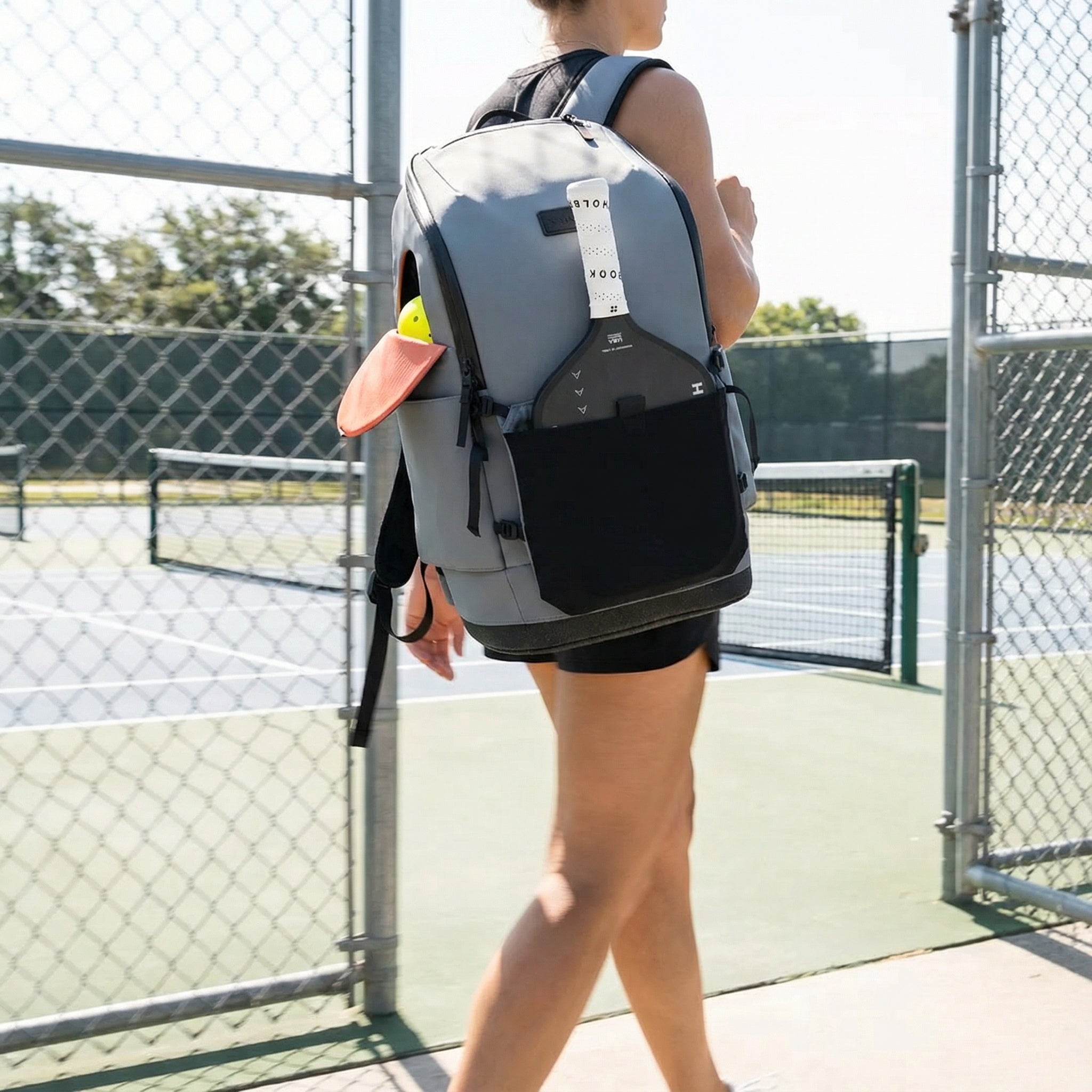
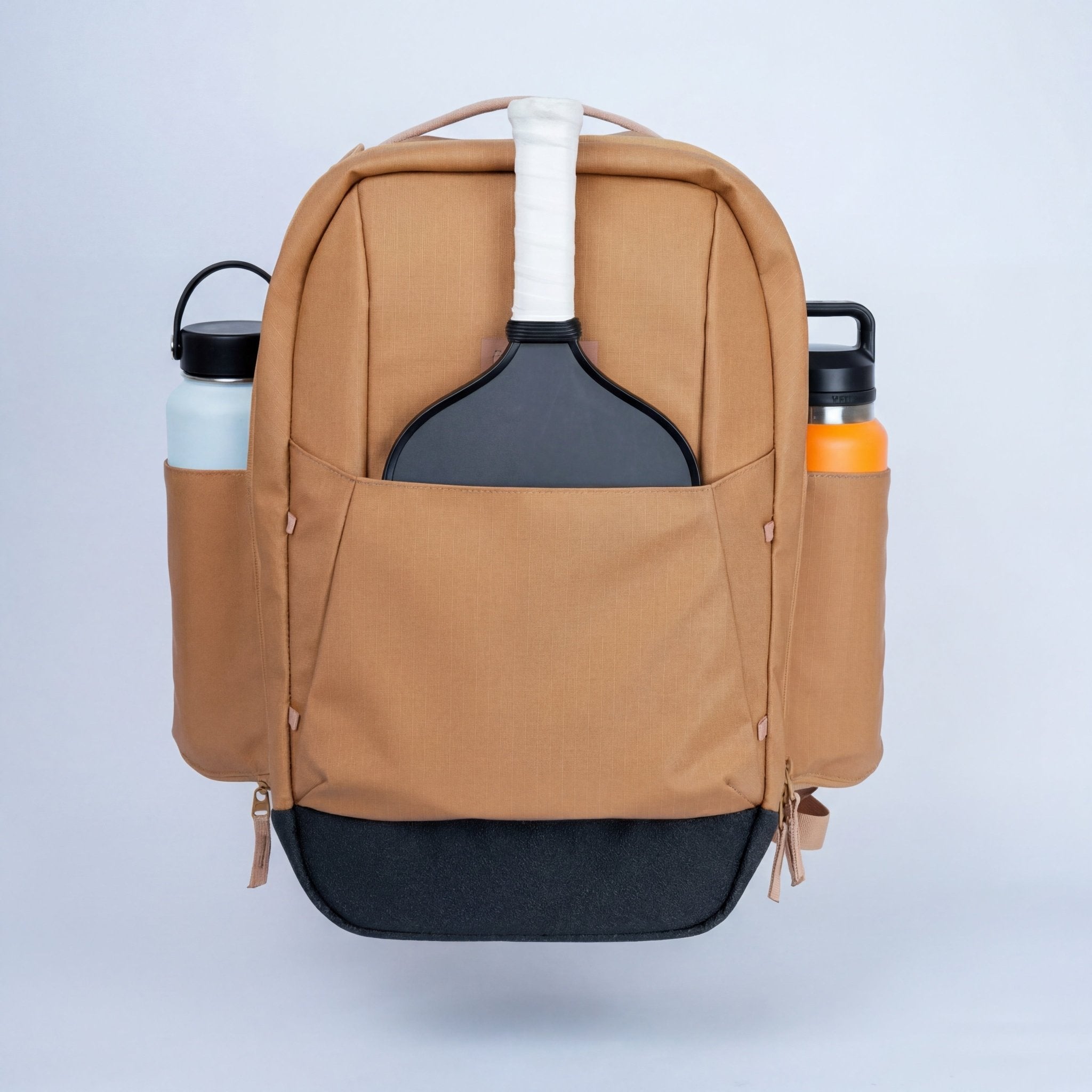
Got your machine sorted? You still need somewhere to carry all the gear between sessions. The Court Caddy Backpack fits 4 paddles in a modular paddle sleeve system, includes a 15" padded laptop compartment, and handles whatever the courts throw at it with YKK AquaGuard weatherproof zippers. Built with feedback from 500+ real players. Court Ranger V2 if you want something lighter at $195.

FAQ
Is a pickleball ball machine worth it?
For players drilling more than twice a week without reliable partner access, yes — the machine pays back quickly in skill development. For casual players who get on court a few times a month with partners, the investment is harder to justify. The sweet spot is 3+ sessions per week.
What machine settings should I use for third shot drop practice?
Speed 35–45 MPH, feed rate 5–6 seconds, straight oscillation or 2-line narrow, no spin. This simulates a medium-pace return of serve from the baseline. Start with straight feed to build isolated mechanics, then add 2-line to introduce lateral movement after 2–3 sessions.
Lobster vs. Pickleball Tutor — which is better?
The Pickleball Tutor Plus handles the core drills for less money and is the right call under $600. Lobster machines carry a wider speed range, better oscillation variety, and the Champion model adds six preloaded drill programs that most intermediate-to-advanced players use regularly. For serious competitive players, Lobster is the better long-term investment.
How many balls do I need for a machine session?
60–80 balls fills most hoppers and gives you a full 25–30 minute session before you're picking up. Buy more than you think you need — you'll inevitably lose a few per session, and running out mid-drill interrupts the practice rhythm you're trying to build.
Can a ball machine replace a drilling partner?
Not fully. Ball machines are better for isolated mechanics — consistency and volume of the same shot. Partners provide interactive reading, realistic ball variation, and the communication needed for strategy drilling. Use both. The machine handles 30–40% of your drilling; a partner handles the rest.
What's the best ball machine drill for beginners?
Start with the third shot drop sequence at a slow feed rate (6–8 seconds, 30 MPH). Master one shot before adding movement or speed. Beginners who skip isolation work and go straight to random oscillation ingrain bad mechanics faster than they'd ingrain good ones.

Leave a comment
This site is protected by hCaptcha and the hCaptcha Privacy Policy and Terms of Service apply.