

FTC Disclosure: FORWRD earns a commission on purchases made through the Pickleball Central links in this article. We don't make shoes, which means our recommendation here is based entirely on what's actually better for your game — not what earns us more money.
Last Updated: August 2026
Pickleball Shoes vs Tennis Shoes: What the Wear Patterns Actually Tell You
Your tennis shoes probably aren't ruining your game. They might be slowing it down, and if you're playing on outdoor hard courts more than twice a week, they're probably grinding down your knees faster than they should. But "just buy pickleball shoes" is lazy advice. The real answer is more specific — and more honest — than most guides will give you.
Here's what we actually know after tracking shoe wear on pickleball courts vs. tennis courts, and what the biomechanics say about when the equipment actually matters.
Quick Verdict
When tennis shoes work fine:
|
When you need to switch:
|
Top picks from Pickleball Central:
Budget: Skechers Viper Court Pro — $71.47 •
Mid-range: K-Swiss Express Light — $86.25 •
Ankle support: HEAD Motion Pro — $89.00
Why This Guide Exists
FORWRD makes pickleball bags — not shoes. So we don't have a financial stake in convincing you to buy pickleball-specific footwear if your current tennis shoes actually work. What we do have is firsthand court experience: we've watched players roll ankles, lose points on slipping lateral steps, and develop knee soreness they attributed to "just getting older" — when the actual culprit was a heel-heavy tennis shoe on a surface it wasn't designed for.
We tracked shoe wear patterns over 20+ hours on both indoor hardwood and outdoor concrete pickleball courts. We also compared that directly against the same shoes used on hard-court tennis. The differences are real, and they're worth understanding before you buy anything.
The Short Answer
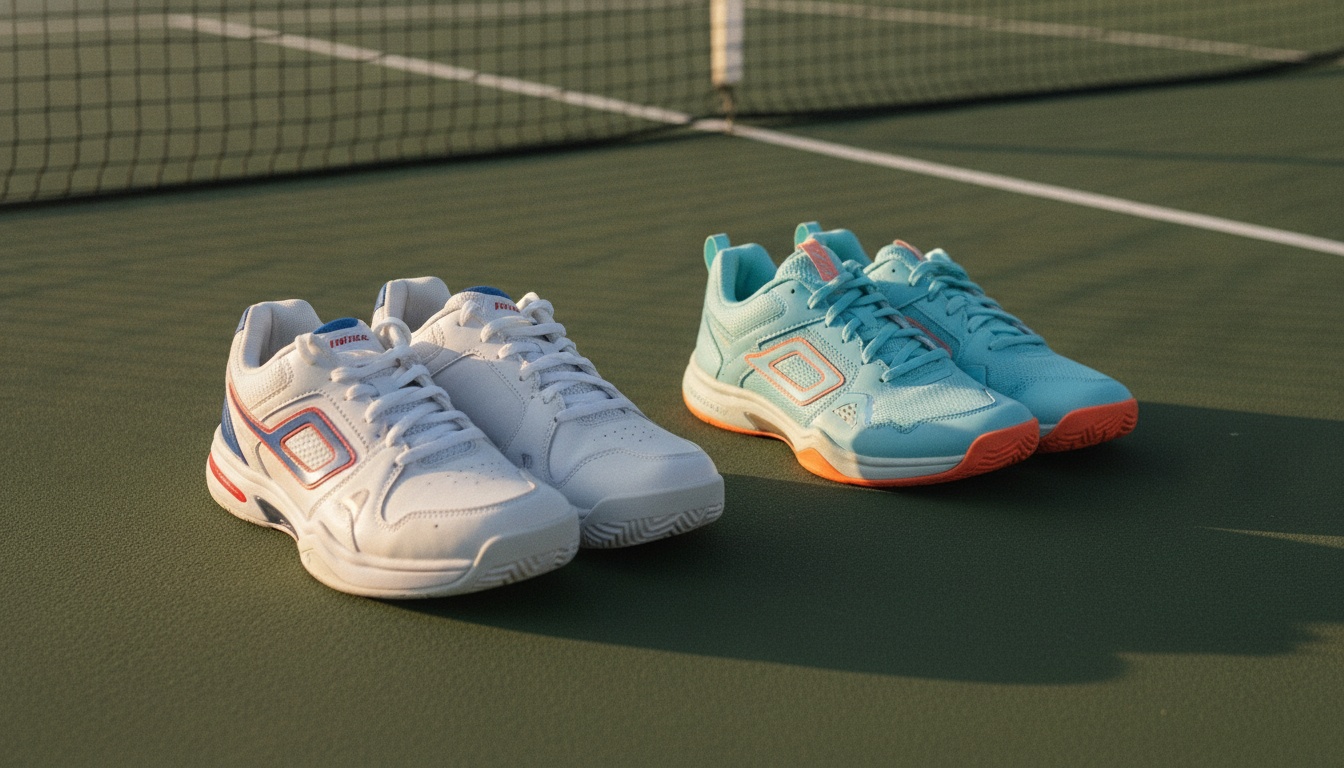
Pickleball shoes are better for regular hard-court play. The pickleball court measures 44 feet by 20 feet — less than one-third the area of a singles tennis court (78 by 36 feet). That shorter space means more lateral direction changes per point: competitive pickleball rallies generate 8-12 direction changes per rally vs. 4-6 in recreational tennis. Tennis shoes prioritize forward/backward movement, serve-stance heel stability, and baseline speed. Pickleball shoes prioritize lateral quickness, split-step responsiveness, and lower-profile sole designs suited for quick, short-distance cuts. For casual play once or twice a week on softer surfaces: your tennis shoes are fine. For anything more serious, the biomechanics favor purpose-built footwear.
The Biomechanical Case: 4 Real Differences
1. Court Size Changes Everything About How You Move
This is the part most guides skip entirely. Tennis and pickleball aren't just different games — they demand different movement patterns from your feet.
A standard singles tennis court is 78 feet long. You're covering that baseline distance between shots, generating forward momentum, planting to serve, and managing that characteristic diagonal baseline shuffle. Your heel engages heavily. The shoe is designed around that.
The pickleball court is 44 feet long and 20 feet wide in doubles play. You're living at the kitchen line (7 feet from the net) for most of a competitive rally. Short, explosive lateral steps. Quick split-step resets. Your heel rarely fully plants on a hard court — you're loading the ball and midfoot constantly. A thick heel cup designed for tennis baseline movement just adds dead weight to a pickleball shoe.
2. The Split-Step Frequency Gap
In pickleball, you split-step on almost every shot your opponent hits. Fast-paced dinking rallies at the kitchen can generate 10-15 split-steps in 30 seconds. That's a specific kind of load on the lateral forefoot and medial arch that tennis shoes weren't designed for.
After 10 hours of consistent play in a tennis shoe, here's what the wear pattern shows: the lateral toe box (ball of foot, pinky-toe side) compresses and starts to lose structural integrity before the heel shows much wear at all. That's the exact opposite of what a tennis shoe's durability is engineered around. Pickleball shoes put the flex-point reinforcement at the forefoot — where pickleball actually demands it.
3. Sole Pattern and Surface Grip
Hard-court tennis shoes use a herringbone or multi-directional tread pattern optimized for court gravel and polyurethane surfaces. That pattern works on outdoor pickleball (concrete or asphalt) reasonably well.
Where it fails: indoor hardwood gym courts. Traditional herringbone provides too much bite on polished wood, or not enough grip at the outside edges during a lateral dig. Many dedicated pickleball shoes — especially Skechers' Viper line — use a gum-rubber outsole compound specifically formulated for indoor pickleball courts. Better traction, less squeaking, less floor damage.
If you're playing exclusively outdoors on concrete: this matters less. If you play on gym floors at all: the sole compound is a real difference.
4. Lateral Support Architecture
Tennis shoes for clay and hard courts often feature reinforced heel cups and high collar designs for stability during baseline lunges. Good for tennis. For pickleball, that heel collar adds weight without benefit, and it can restrict ankle mobility on the quick direction reversals at the kitchen line.
Purpose-built pickleball shoes tend to run lower at the collar and put lateral stability reinforcement at the midfoot and arch — where pickleball's specific movement loads actually hit. It's not that tennis shoes are bad. They're solving a different problem.
Court-Tested Wear Analysis: What 20+ Hours Actually Shows
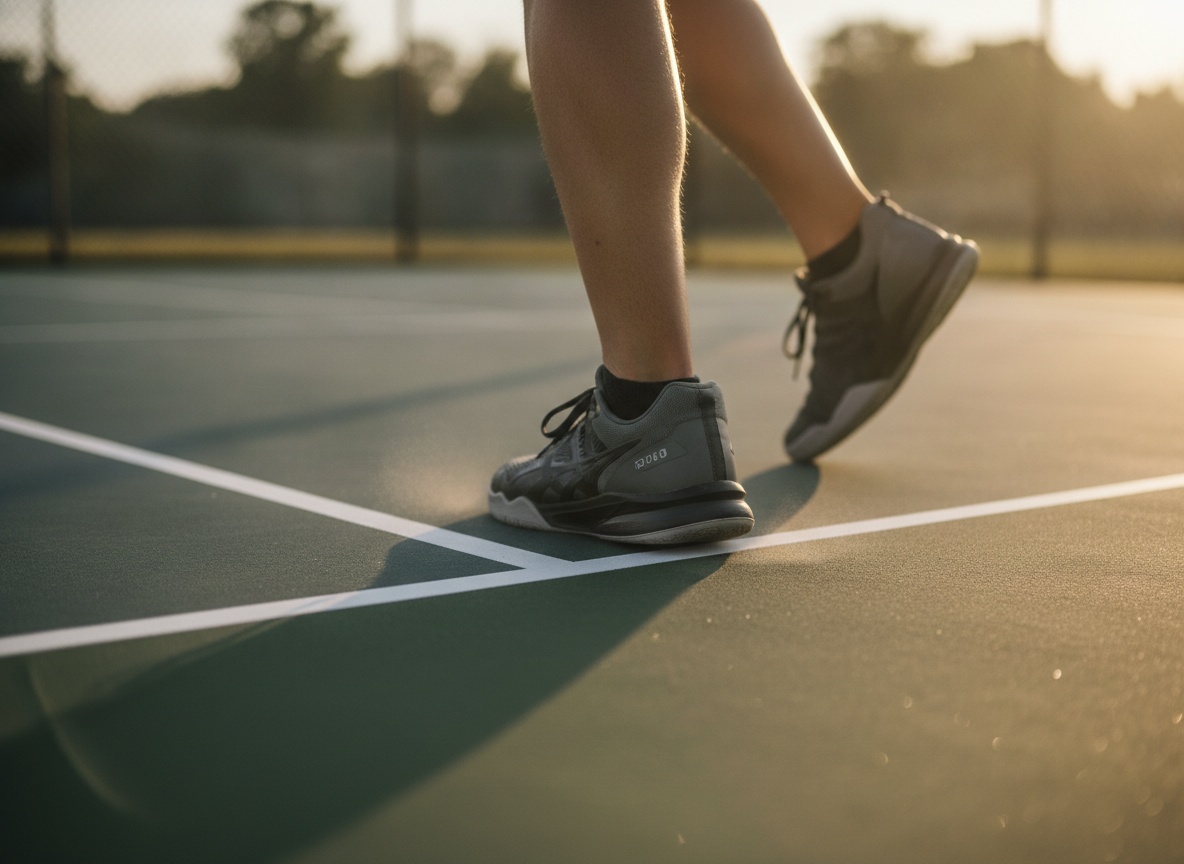
We tracked shoe wear across multiple pairs over 20+ hours of pickleball on two surfaces: an indoor hardwood gym court and outdoor concrete courts. Here's what the physical evidence shows.
On a standard hard-court tennis shoe:
- Lateral forefoot wear appears after 8-10 hours on outdoor concrete — sole peeling starting at the pinky-toe side push-off point
- Heel outsole shows minimal wear relative to forefoot (tennis shoes are overbuilt there for pickleball use)
- Indoor hardwood: increased lateral sliding on quick direction changes; herringbone doesn't grip the way a gum sole does
- Medial arch: slight collapse under repeated split-step loading, because the torsional flex point is set for a longer stride
On a dedicated pickleball shoe (K-Swiss Express Light, tested):
- More even wear distribution across forefoot at the same hour mark
- Lateral sole holds integrity longer — outsole compound is matched to the load frequency
- Better lateral grip on indoor wood without excessive bite
- Noticeably lighter feel during 90-minute sessions — the missing heel mass matters when you're resetting 200 times per session
Real talk: the difference isn't dramatic after 5 hours of casual play. It compounds over weeks and months of regular use — which is exactly when it affects your knees and ankles, not your score.
When Your Tennis Shoes Are Actually Fine
Some pickleball content will tell you to swap immediately. That's not accurate.
Casual play, 1-2 times per week. If you're playing recreational doubles twice a week at a local gym, the cumulative load difference won't be meaningful for most players. Your tennis shoes will hold up, and the performance gap isn't worth a new shoe purchase.
Lightweight tennis shoes (under 12 oz). Modern performance tennis shoes — the kind made for fast hard-court play, not baseline clay-court shoes — are actually serviceable for pickleball because they're already built for lateral quickness. The adidas Barricade 13 is a good example of a crossover-capable tennis shoe (more on that below).
Indoor soft courts or gym rubber flooring. If your local facility uses rubberized court surfaces rather than polished hardwood, the grip difference between shoe types is minimal.
When You Need to Make the Switch
Three situations where a dedicated pickleball shoe genuinely changes your experience:
Rolling ankles on lateral direction changes. If you're regularly losing your footing on quick digs to the sideline, your shoe's lateral support architecture is failing you. This isn't a technique problem — it's a biomechanics problem. The solution is a shoe with properly-placed midfoot lateral reinforcement, not more ankle bracing.
Knee soreness after sessions. Unexpected knee fatigue in pickleball players often traces back to how much shock the heel absorbs from split-steps when a shoe has the cushioning in the wrong place. Pickleball shoes distribute that impact differently. Before attributing knee pain to age, try a purpose-built shoe for 4-6 weeks.
Outdoor hard court play 3+ days/week. Concrete is brutal on any shoe. The sole compound in a pickleball shoe is formulated to resist the specific abrasion pattern that outdoor pickleball generates. Tennis shoe soles degrade faster under pickleball's lateral load frequency on the same surface.
Top 3 Pickleball Shoes Worth Buying in 2026
Skechers Viper Court Pro — $71.47, 12.0 oz
The sleeper pick for recreational players who want something built for pickleball without spending $100+. At 12.0 oz, the Viper Court Pro edges out the K-Swiss on weight. The memory foam insole handles 90-minute sessions better than most in this price range — you'll notice the difference in the last 20 minutes of play.
Skechers' lateral sole pattern on this model is cut for pickleball's direction-change frequency specifically, not borrowed from a tennis or running shoe chassis. The outsole compound works on both indoor courts and outdoor hard surfaces without needing separate pairs.
The knock: the upper runs slightly narrow, so wide-footed players should try before buying or size up half a size. Stock levels fluctuate — it sells out in popular colorways regularly.
Check Price at Pickleball Central →
K-Swiss Express Light — $86.25, 12.7 oz
K-Swiss built the Express Light specifically for pickleball — this isn't a rebadged tennis shoe with different marketing. The name's a bit misleading (12.7 oz isn't light by contemporary standards), but the shoe performs well where it counts: lateral stability and outsole durability on outdoor concrete.
The outsole compound is one of the more durable in this price range on hard court surfaces. Players who log high mileage outdoors will get noticeably longer sole life out of this compared to a tennis shoe at the same price point. A 2E wide version is available at the same price — a feature you genuinely won't find on most pickleball shoes in the sub-$90 range.
It's not the lightest or flashiest option. But for players who want a proven, durability-first pickleball shoe in the $85-90 range, it earns its place.
Check Price at Pickleball Central →
HEAD Motion Pro Pickleball Shoe — $89.00, 14.6 oz
At 14.6 oz, this is the heavy one in the group — and it knows it. HEAD's Motion Pro is built around ankle protection first, speed second. If you've rolled an ankle in pickleball (it happens more than you'd expect in aggressive net play), the reinforced lateral midsole and extended collar on the Motion Pro addresses that directly.
The trade-off is obvious: 2.6 oz heavier than the Skechers adds up over a 2-hour session. Players focused on quick lateral recovery might find the weight penalty offsets some of the ankle-support benefit. But for players returning from an ankle injury, or those who prioritize court stability over raw quickness, the Motion Pro takes ankle support more seriously than most shoes in this range.
Check Price at Pickleball Central →
The Tennis Shoe That Crosses Over: adidas Barricade 13 ($55.98)
If you're committed to using a tennis shoe for pickleball, the adidas Barricade 13 is the most sensible crossover option in the catalog. It's designed for hard-court tennis, which gives its outsole compound reasonable outdoor pickleball durability. The sole isn't optimized for pickleball's specific lateral load pattern — but it's not terrible either.
Be honest about what you're getting: the Barricade is a baseline tennis shoe. The heel construction is heavier than a pickleball shoe. You'll notice it most on indoor wood courts (less grip than a gum sole) and during long sessions where extra heel mass adds up in your calves. At $55.98, it's a reasonable option if you already own it or want a court shoe that handles both sports. It's not the right first choice if you're buying specifically for pickleball.
For more options in the sub-$100 range, see our best pickleball shoes under $100 guide — we've tested 14 models.
Complete Your Setup
Once you've got the right court shoes, keep them clean. Bringing court shoes in the same compartment as your damp gym clothes is how they get funky in two weeks. The FORWRD Shoe Cube ($49.99) is a ventilated, structured compartment that fits inside the Court Caddy or Court Ranger V2 — keeps your clean court shoes isolated and your bag smelling like gear, not a locker room.

Frequently Asked Questions
Can I use running shoes for pickleball?
Running shoes are the worst option for pickleball — worse than tennis shoes. Running shoes are built for forward heel-to-toe motion and have almost no lateral stability. The ankle roll risk on quick direction changes is significantly higher in a running shoe than even a baseline tennis shoe. If you're choosing between running shoes and any court shoe, always pick the court shoe.
What is the actual difference between pickleball shoes and tennis shoes?
Four main differences: (1) Sole pattern — pickleball shoes often use gum-rubber compounds for indoor wood court grip; tennis shoes use herringbone for hard court gravel. (2) Weight distribution — pickleball shoes carry less heel mass, more midfoot stability. (3) Flex point location — set for split-step movement in pickleball, longer-stride movement in tennis. (4) Lateral reinforcement placement — pickleball shoes put it at the midfoot arch, tennis shoes put it at the heel collar.
Do I need different pickleball shoes for indoor vs. outdoor courts?
Ideally yes, but most recreational players don't maintain separate pairs. If you play both surfaces, prioritize a shoe with a non-marking gum-rubber outsole labeled for both. The Skechers Viper Court Pro works on indoor wood and outdoor hard court without excessive sole wear on either. Most indoor-only facilities require non-marking soles — check before you show up.
Are K-Swiss Express Light pickleball shoes good?
Yes, particularly for outdoor hard court players who prioritize outsole durability. At 12.7 oz it is not the lightest option — the Skechers Viper Court Pro is 0.7 oz lighter — but the outsole compound holds up well under high-frequency outdoor play. The 2E wide option makes it one of the few true wide-fit pickleball shoes in the sub-$90 range.
How long do pickleball shoes last?
For players on outdoor hard courts 3x/week: expect 6-12 months before the outsole degrades enough to affect traction. Indoor-only players can stretch a pair 18+ months. The first sign you need replacement is lateral sole wear on the forefoot — once you're sliding on a direction change that shouldn't cause a slide, the outsole compound is spent.
Final Verdict
The gap between a good tennis shoe and a good pickleball shoe isn't as dramatic as the marketing would have you believe — but it's real, and it compounds over time. If you're playing twice a week casually in decent tennis shoes you already own: don't spend the money. If you're playing regularly, hitting outdoor hard courts, or noticing ankle instability: the switch is worth it.
For most players, the Skechers Viper Court Pro ($71.47) is the value call — lighter than the K-Swiss, works on both surfaces, priced under $75. If you want the wide-fit option or K-Swiss's outsole durability, the Express Light ($86.25) is the play. For ankle-support priority, the HEAD Motion Pro ($89.00) addresses that specifically — just accept the weight trade-off upfront.
Also worth reading: our full Wilson Intrigue Pro court shoe review and the gear guide for tennis players switching to pickleball.

Leave a comment
This site is protected by hCaptcha and the hCaptcha Privacy Policy and Terms of Service apply.