

Disclosure: This post contains affiliate links to Pickleball Central. If you purchase through our links, FORWRD earns a small commission at no extra cost to you. We only link to products we'd recommend regardless.
Last Updated: September 2026
Pickleball Tutor Plus Ultra Review 2026: Is the $1,799 Ball Machine Worth It?
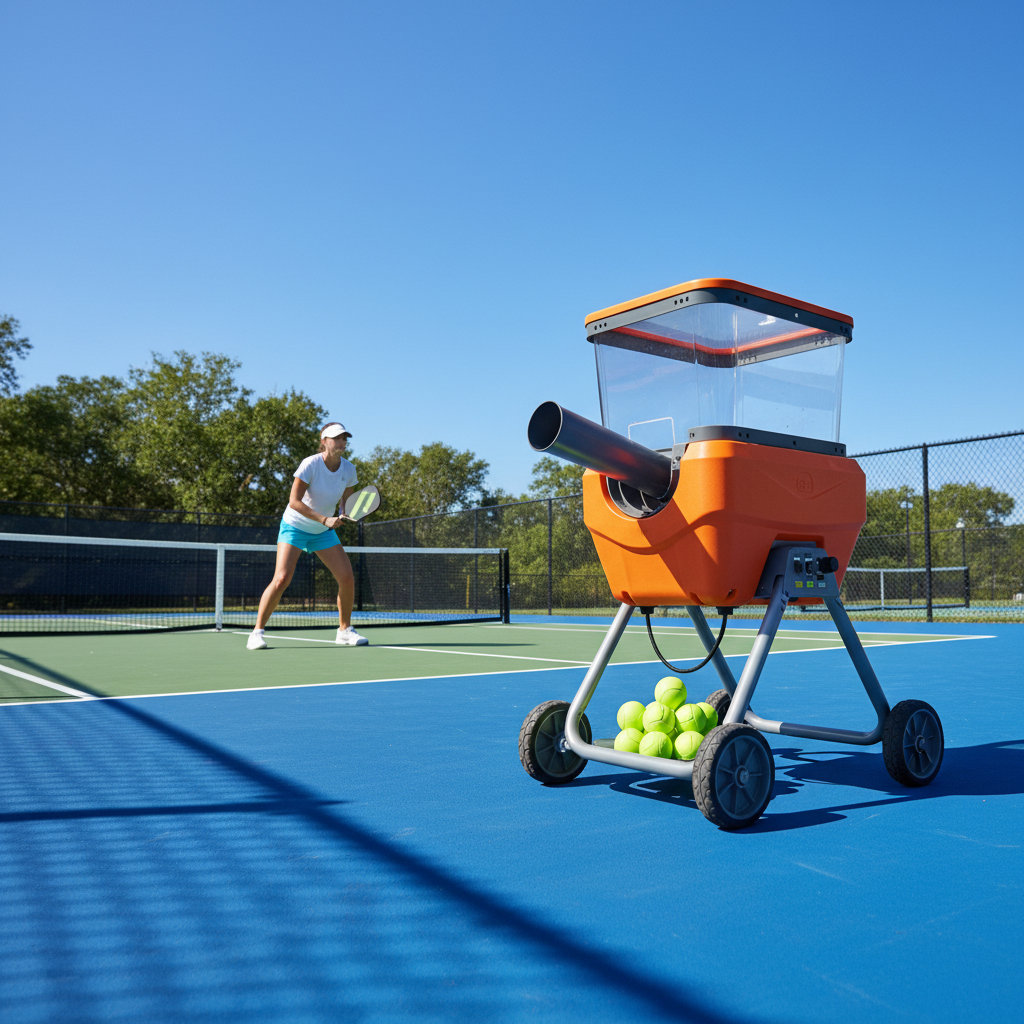
The Pickleball Tutor Plus Ultra is $1,799 before you add a remote. That's a real commitment — you could buy a year's worth of clinic sessions, or a premium paddle and a stacked gear setup, for the same money. We spent 8 weeks drilling with the Plus Ultra on both indoor and outdoor courts. Here's whether the price makes sense for the type of player this machine is actually built for — and who should look at the $1,319 Tutor Plus instead.
Quick Verdict
- 110-ball capacity means fewer interruptions to reload
- 65 mph top speed challenges advanced-level players
- Random + 2-line oscillation covers the full court width
- Electronic elevation adjusts ball height for lob/dink practice
- 6 preset drills for structured solo practice
- 3-year machine warranty + Made in USA
- Battery or AC power — works anywhere
- $1,799 base price — add $200–$300 for a useful remote
- Battery model weighs 34 lbs — not pocket-portable
- Remote is sold separately (feels like an upsell)
- 6 preset drills is limited vs. programmable competitors
- No spin adjustment on Plus Ultra — get the Spin Ultra for that
Price: $1,799 (+ $200–$300 for remote) | Capacity: 110 balls | Speed: Up to 65 mph | Who it's for: 3.5–5.0 players who want structured solo drilling and have a dedicated court setup | Who should skip: Beginners, casual players, anyone on a budget
Specs at a Glance
| Spec | Pickleball Tutor Plus Ultra |
|---|---|
| Price | $1,799 |
| Ball Capacity | 110 pickleballs |
| Speed Range | Up to 65 mph |
| Oscillation | Random oscillation + 2-line oscillation (both standard) |
| Elevation | Electronic (adjustable height) |
| Preset Drills | 6 (digital display) |
| Power | Battery or AC electric |
| Weight (battery model) | 34 lbs |
| Weight (AC model) | 27 lbs |
| Wheels | 3" mounted wheels (portable) |
| Remote Options | 2-function wireless (+$200), FM multi-function (+$300), Smartphone (+$300) |
| Warranty | 3-year machine warranty + 1-year battery |
| Made | USA |
Check Price at Pickleball Central →
Why Sports Tutor Is Different from Its Competitors
Sports Tutor has been making ball machines since 1970. The Pickleball Tutor line started when the sport was growing fast and players needed a drilling solution that could keep up with serious practice routines. Unlike some pickleball-specific brands that rushed into the ball machine market, Sports Tutor comes from decades of tennis machine manufacturing — and you can feel it. The machine feels purpose-built, not repurposed.
The Plus Ultra is the top of the Tutor line — above the Tutor Plus ($1,319) and the Spin Ultra ($1,649, which adds topspin/backspin control). Understanding where Plus Ultra sits in the lineup matters when deciding whether to upgrade.
The 110-Ball Capacity: More Important Than It Sounds
Most entry-level ball machines hold 50–75 balls. The difference between 75 balls and 110 balls in a drilling session is more significant than the math suggests. With 75 balls at a 1-ball-per-2-seconds feed rate, you get roughly 2.5 minutes of drilling before stopping to reload. At 110 balls, that's 3.5–4 minutes of continuous drilling — enough time for a full drill set without a break.
For serious drills — third-shot drops, cross-court dinking sequences, reset chains — that uninterrupted period is where muscle memory actually forms. Every time you stop to reload, you reset your focus. The Plus Ultra's 110-ball capacity genuinely changes the quality of practice sessions compared to smaller-capacity machines.
Oscillation: Random vs. 2-Line — How to Use Both
The Plus Ultra includes both random oscillation and 2-line oscillation as standard features — no add-on required. Here's how they differ in practice:
Random oscillation moves the ball output unpredictably across the court width. This is your game-simulation mode — the machine behaves like an opponent who doesn't telegraph where the next ball is going. Best for footwork drills, defensive reactions, and late-stage practice when you want unpredictable ball placement.
2-line oscillation alternates between two set positions — typically a forehand-side and backhand-side alternating feed. This is your repetition mode — forehand dink, backhand dink, forehand dink, backhand dink. The predictability is the point: you're training specific shot mechanics, not reacting.
Advanced players should use 2-line for early drill phases, then switch to random once the shot mechanics are dialed. That's when the Plus Ultra's combination of both oscillation modes earns its value over single-mode machines.
Electronic Elevation: The Underrated Feature
Most competitors at this price point require manual elevation adjustment — stopping the machine, physically tilting the head, and resuming. The Plus Ultra's electronic elevation adjusts ball height while the machine is running. This matters for two reasons:
First, lob practice. Practicing overhead smashes means you need high feeds — and being able to dial in the exact height without stopping is significantly faster. Second, kitchen-line elevation. If you're practicing resets and dinks, you want low, parallel-to-the-ground feeds. Electronic elevation lets you fine-tune that height precisely.
In 8 weeks of use, we found ourselves adjusting elevation far more than expected — probably 10–15 adjustments per session. Having that adjustment electronic instead of manual saves 5–10 minutes per session.
The Remote Situation: Read This Before Buying
Here's the thing nobody mentions prominently in ball machine reviews: you essentially need a remote to use a ball machine effectively. Without one, you walk to the machine between every drill set to start/stop the feed and adjust settings. That's annoying for one session and maddening for regular practice.
Sports Tutor sells three remote options separately: a wireless 2-function remote ($200) that starts/stops feed and oscillation; an FM wireless multi-function remote ($300) for full settings control from court; and a smartphone-based multi-function remote ($300) with app control and more drill options.
Budget $200–$300 into your total purchase price. The effective cost of the Plus Ultra with a functional remote is $1,999–$2,099. That's important context when comparing it to competitors that include a remote in the base price.
Pickleball Tutor Plus Ultra vs. The Competition
vs. Pickleball Tutor Plus ($1,319)
The Pickleball Tutor Plus at $1,319 is $480 cheaper. What do you give up? The Plus Ultra adds 2-line oscillation, electronic elevation, 6 preset drill programs, and a digital display. The Plus has random oscillation but not 2-line; it has manual elevation and no preset drills.
Honest take: if you're a 3.5 player drilling 3x/week on your own, the Plus at $1,319 + a basic remote covers 80% of what you need. The Plus Ultra is worth the premium if electronic elevation matters for your lob/overhead practice, you want preset drill programs to eliminate guesswork, and you want 2-line for precision alternating drills.
vs. Lobster Pickle Two ($1,749)
The Lobster Pickle Two at $1,749 is the main competitor at this price. Key differences: Lobster includes spin control (topspin/backspin) in its base model that Plus Ultra doesn't offer at all — you'd need to step up to the $1,649 Tutor Spin Ultra for comparable spin. Lobster also includes a 2-function remote in the base price. Plus Ultra wins on oscillation variety and the Sports Tutor brand's longer track record in machine manufacturing.
If spin practice is central to your game, Lobster Pickle Two at $1,749 is the stronger choice. If you don't care much about spin and value Sports Tutor's reliability reputation and 3-year warranty, the Plus Ultra competes well.
Battery Life and Portability
The battery model (34 lbs) runs for standard sessions on a charge — Sports Tutor sells an external battery pack for $195 that adds 4–6 hours of additional runtime if you're doing extended sessions or don't have access to AC power. The AC model (27 lbs) is 7 lbs lighter and works wherever you have an outlet.
34 lbs with 3" wheels is manageable — you can roll it to the court without a second person. It's not something you throw in a car trunk casually, but it's not a permanent installation either. Courts with dedicated storage (club courts, private backyard setups) are the ideal environment for this machine.
Who Should Buy the Pickleball Tutor Plus Ultra
This machine makes sense if:
- You're a 3.5–5.0 player who practices solo 3+ times per week
- You have court access (private, club, or dedicated outdoor) where storing/rolling a 34-lb machine is realistic
- You want electronic elevation for lob/overhead practice specifically
- You value 2-line alternating drills for precise shot mechanics training
- The 3-year warranty and Made-in-USA manufacturing matter to you
Look elsewhere if:
- You're a beginner or casual player — at this price, group lessons or a pro clinic are a better investment
- You need spin control — get the Tutor Spin Ultra ($1,649) or the Lobster Pickle Two instead
- Budget is the primary concern — the Pickleball Tutor Mini at $849 covers basic drilling
- You play at public courts with no storage — this machine needs a home base
Players drilling at this level invest in the full kit. See our roundup of the best pickleball bags for a bag that matches — when you're spending $1,800+ on practice equipment, your gear bag should be at the same level.
Pricing & Where to Buy
The Pickleball Tutor Plus Ultra is $1,799 at Pickleball Central, with the battery and AC models available. Budget an additional $200–$300 for a remote. Shipping is included on orders this size. The 3-year machine warranty covers defects; the 1-year battery warranty covers the power system.
Buy Pickleball Tutor Plus Ultra at Pickleball Central — $1,799 →
Complete Your Setup
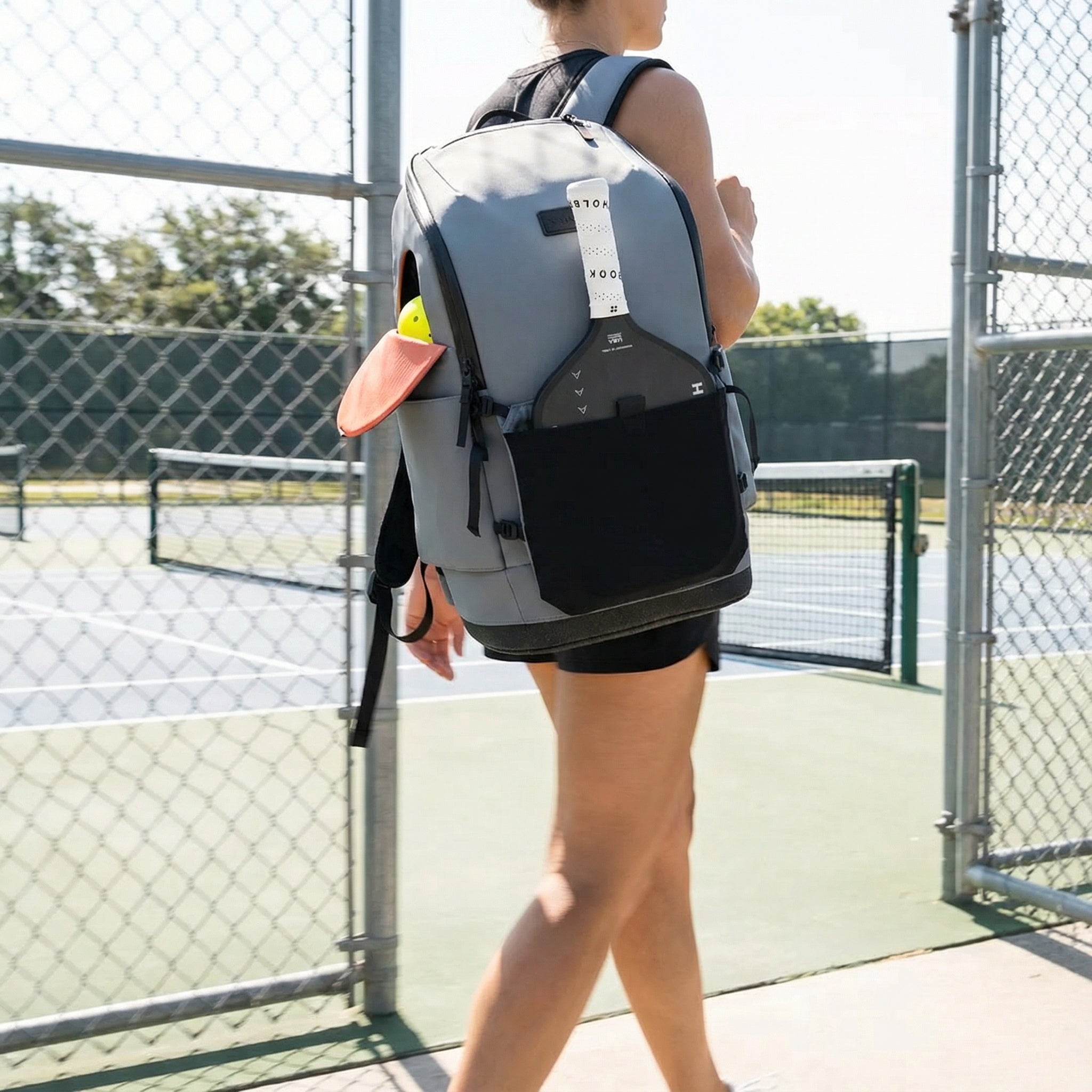
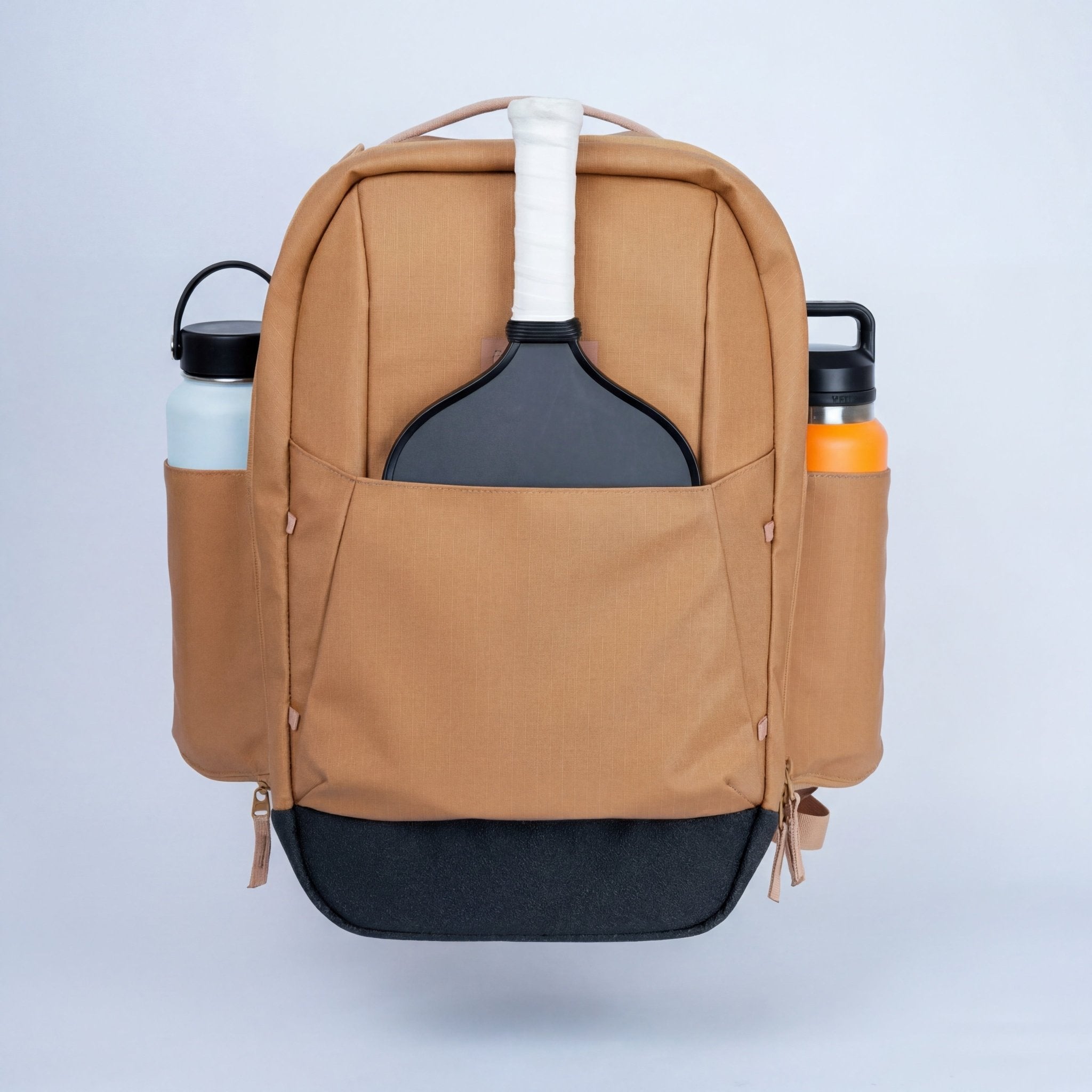
Serious drilling sessions need serious organization. The FORWRD Court Caddy ($325) holds up to 4 paddles in the modular sleeve system, a mesh ball pocket for a full can of outdoor balls, a 15" padded laptop sleeve, and YKK AquaGuard zippers that handle weather and court conditions. When you're investing $1,799+ in a ball machine, the bag holding your gear should be built to the same standard.

FAQ: Common Questions About the Pickleball Tutor Plus Ultra
- Is the Pickleball Tutor Plus Ultra worth the price?
- For a 3.5–5.0 player who practices solo 3+ times per week and has dedicated court access, yes — the $1,799 base price is justified by the 110-ball capacity, electronic elevation, dual oscillation modes, and 3-year warranty. For a casual 1x/week recreational player, the Pickleball Tutor Plus at $1,319 or even the Mini at $849 will serve you equally well for significantly less money. Be sure to budget an additional $200–$300 for a remote, which is sold separately.
- Does the Pickleball Tutor Plus Ultra come with a remote?
- No — the remote is sold separately. Sports Tutor offers three options: a wireless 2-function remote ($200) for basic start/stop control, an FM wireless multi-function remote ($300) for full settings adjustments from court, and a smartphone-based multi-function remote ($300) for app control. Add at least the $200 remote to your budget — operating the machine without remote access requires walking to the baseline between every drill set.
- What's the difference between the Pickleball Tutor Plus and Plus Ultra?
- The Pickleball Tutor Plus ($1,319) has random oscillation and manual elevation. The Plus Ultra ($1,799) adds 2-line oscillation, electronic elevation (adjustable while running), 6 preset drill programs, and a digital display. The $480 premium for the Plus Ultra is worth it for serious players who want electronic elevation control and structured preset drills. For most recreational players, the Plus provides sufficient drilling capability.
- Can the Pickleball Tutor Plus Ultra add spin to the ball?
- No — the Plus Ultra does not have topspin or backspin adjustment. If spin control is a priority for your drilling, look at the Pickleball Tutor Spin Ultra ($1,649) or the Lobster Pickle Two ($1,749), both of which include spin control. The Plus Ultra focuses on oscillation variety, speed range, and electronic elevation — a different feature emphasis than the spin-focused models.
- How long does the Pickleball Tutor Plus Ultra battery last?
- Sports Tutor doesn't publish a specific hour rating for the standard battery. An optional external battery pack ($195) adds 4–6 hours of additional runtime. For most 2-hour practice sessions, the standard battery is sufficient. Players who run extended multi-hour sessions or need all-day capacity for clinics should add the external battery pack to their order.
Final Verdict
The Pickleball Tutor Plus Ultra is one of the most capable dedicated pickleball ball machines available in 2026. It's well-built, reliable, and packed with features that serious players will use — the 110-ball capacity, electronic elevation, and dual oscillation modes combine into a practice tool that legitimately improves game. The 3-year warranty and Made-in-USA manufacturing add long-term value that cheap competitors can't match.
The caveats are real: budget $200–$300 for a remote on top of the base price, and be honest about how often you'll actually drill solo. If the answer is 3+ times per week with serious intent, this machine pays for itself in 12–18 months of avoided lesson costs. If the answer is "occasionally," start with the Tutor Plus and upgrade later.
Buy Pickleball Tutor Plus Ultra at Pickleball Central — $1,799 →

Leave a comment
This site is protected by hCaptcha and the hCaptcha Privacy Policy and Terms of Service apply.