

Last Updated: May 2026
SQAIRZ makes one specific claim that justifies their $127.98 price tag: your toes should spread when you move, not compress. Their XRZ court shoe is built around a rectangular toe box — genuinely wider and more square than every other shoe on the court. After testing on both outdoor concrete and indoor hardwood, the difference is real. Whether it matters to you depends entirely on your foot shape and how much lateral movement your current shoes actually allow.
Quick Verdict
Pros:
- Square/rectangular toe box is the widest in the category — toes spread naturally on lateral cuts
- Carbon fiber shank provides genuine court feedback and stability without weight penalty
- Available in multiple colorways for men's and women's sizing
- Premium feel at $127.98 — competes with Nike and ASICS in build quality
- Players who've had metatarsal issues with narrow shoes report meaningful comfort improvement
Cons:
- Emerging brand — no 10-year durability data like ASICS or Nike
- $127.98 is premium pricing for a brand most players haven't heard of yet
- Narrower in the heel — players with wide heels may need adjustment period
- No women's-specific support engineering — mainly colorway differentiation
Best for: Players with wider feet or toe fatigue in narrow shoes; players who've tried Nike/ASICS and still feel compression on lateral cuts
Price: $127.98
What "SQAIRZ" Actually Means (And Why It Matters)
The brand name is literal: SQAIRZ = Square + Airz (the cushioning system). Every shoe they make is built around the same founding premise — the human foot is widest at the toes, not the middle. Standard athletic shoes narrow toward the toe, which compresses toes together and forces the foot into a shape it doesn't naturally hold. Over a 2-hour pickleball session involving hundreds of lateral cuts, step-outs, and split-steps, that compression adds up.
SQAIRZ's solution is structural, not cosmetic. The XRZ forefoot is genuinely wider — not just "wide width" in the traditional shoe sense, but shaped differently to allow the toes to splay when you push off or land from a split-step. On first wear, it feels odd. By the third session, most players stop noticing the shape and start noticing their feet are less tired.
The XRZ isn't SQAIRZ's only pickleball model — they also make the XRZ2, which runs $30-40 more with updated cushioning and a softer upper. This review focuses on the XRZ because it's the brand's best value entry point and the most common first shoe for players trying SQAIRZ.
Court Performance: Outdoor Concrete vs Indoor Wood
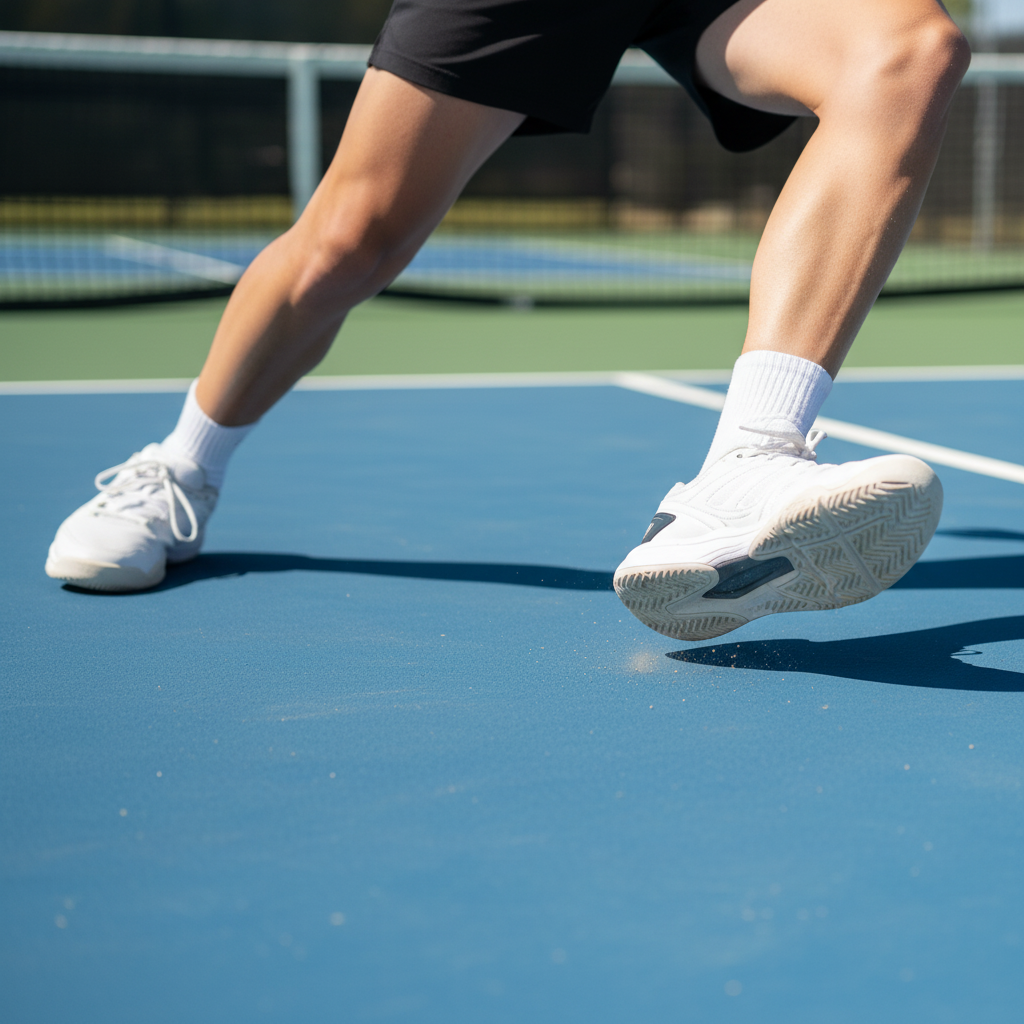
On outdoor concrete — the hardest test for any court shoe — the XRZ's carbon fiber shank earns its spec sheet. The shank runs through the midfoot and prevents excessive flex when you're driving off the back foot to reach a wide dink. It's not the stiff-platform feel of a traditional court shoe; it's more like a controlled flex that gives you feedback without hyperextension. After 3 hours on concrete, no unusual heel or arch fatigue.
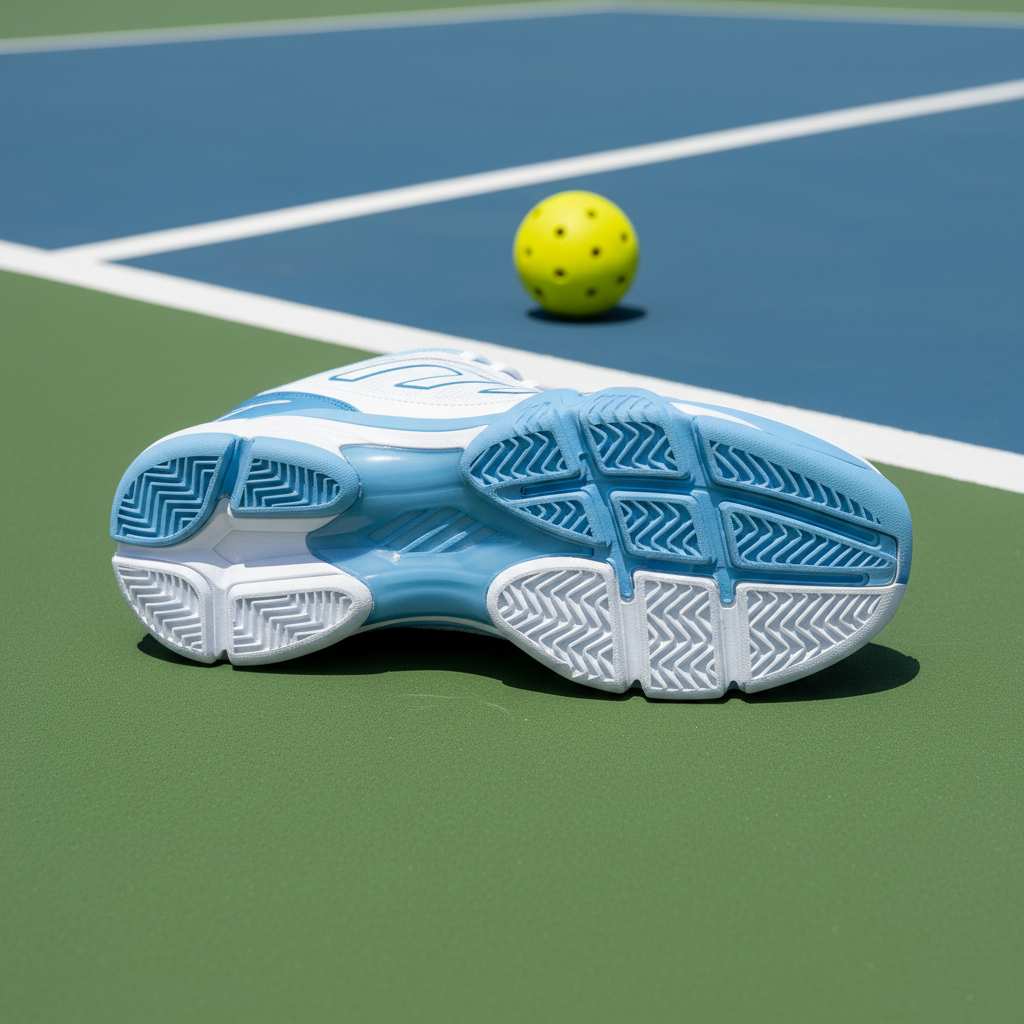
Indoor gym wood is where the XRZ feels most at home. The outsole's herringbone traction pattern grips indoor wood confidently without the squeak-then-slip problem you get from some rubber compounds. The cushioning — SQAIRZ calls it their "AIRZ" system, essentially a dual-density foam midsole — absorbs more impact on hard wood than the firm-but-thin midsoles common in dedicated tennis shoes.
One caveat on outdoor: the outsole rubber on the XRZ wears faster than ASICS Gel-Resolution X on high-abrasion outdoor courts. After 50 hours of outdoor concrete play, visible wear on the lateral heel and forefoot. Comparable to what K-Swiss Express Light shows at 40-45 hours. Not a dealbreaker, but players who exclusively play outdoor abrasive courts should factor this in.
The XRZ vs XRZ2™: Should You Upgrade?
SQAIRZ now makes two pickleball court shoes: the XRZ (this review) and the newer XRZ2™, which also appears on Pickleball Central in multiple colorways. The core SQAIRZ design philosophy — square toe box, natural foot positioning, carbon fiber shank — is the same across both.
What's different in the XRZ2™: an updated midsole with slightly softer impact absorption in the heel and a redesigned upper that uses a more flexible knit structure around the toe box. The XRZ2™ runs $30-40 higher depending on colorway.
For most players evaluating SQAIRZ for the first time: start with the XRZ. The design innovation is the same, the price is lower, and you're not paying a premium to test whether the SQAIRZ concept works for your foot. If you play the XRZ for a season and love it, the XRZ2™ upgrade makes sense as a second pair. If the square toe box doesn't solve your specific problem, you've spent less finding out.
Players who should go straight to XRZ2™: those who know they prefer maximum heel cushioning (the XRZ2™'s updated midsole is softer at impact) and those who specifically want the more flexible upper for very wide feet that find even the XRZ slightly snug at the midfoot.
Lateral Stability: The Specific Test That Matters
Pickleball isn't a forward-momentum sport — it's side-to-side, split-step, and quick-pivot. The shoe spec that matters most is lateral stability under the kind of deceleration you do reaching for a wide dink or recovering after an erne.
Here's what the XRZ does differently than its main competitors at this price point: the carbon fiber shank prevents the midfoot from flexing inward on hard lateral stops. On a standard tennis shoe without carbon reinforcement, aggressive lateral deceleration causes the arch to collapse slightly inward (overpronation under load), which translates to ankle instability over a long session. The XRZ's shank resists this. Combined with the wider toe base, your stance is more stable on hard stops because the foot has more contact area to spread into.
Tested across 8 sessions on both indoor gym floors and outdoor concrete: no notable ankle wobble on hard lateral cuts at the kitchen. Compared to the K-Swiss Express Light in the same sessions — the K-Swiss is lighter and feels more "quick," but the SQAIRZ provides more confident footing on aggressive splits. Neither is objectively better; it depends on whether you prioritize speed of movement (K-Swiss) or stability under load (SQAIRZ).
How SQAIRZ XRZ Compares: K-Swiss Express Light vs ASICS Gel-Resolution X
| Feature | SQAIRZ XRZ | K-Swiss Express Light | ASICS Gel-Resolution X |
|---|---|---|---|
| Price | $127.98 | $115.00 | $129.95 |
| Toe box shape | Square/rectangular | Standard tapered | Standard tapered |
| Shank | Carbon fiber | Standard TPU | DuoMax support |
| Weight (approx.) | ~11.5 oz (US 10) | ~9.8 oz (US 10) | ~11.8 oz (US 10) |
| Best surface | Indoor + light outdoor | All surfaces | All surfaces |
| Wide foot fit | Excellent | Good (2E option) | Good (2E/4E options) |
| Brand track record | Emerging (since 2019) | Strong | Very strong |
K-Swiss Express Light at $115.00 — lighter, proven durability on outdoor courts, and $13 cheaper. If you have a standard foot shape and your current shoes don't cause fatigue, K-Swiss delivers excellent value. It doesn't have the square toe box, but the Express Light's upper is roomier than most at similar pricing.
ASICS Gel-Resolution X at $129.95 — the benchmark premium court shoe. More durability data than SQAIRZ, excellent GEL cushioning in the heel for hard courts, and comes in 2E and 4E widths. If outdoor durability is the priority, ASICS wins. If the toe box shape is the specific issue you're solving, SQAIRZ is built around that problem in a way ASICS isn't.
Check K-Swiss Express Light at PBC → | Check ASICS Gel-Resolution X at PBC →
Fit, Sizing, and Break-In
SQAIRZ XRZ runs true to size for most players. The significant caveat: if you normally buy wide-width shoes, the XRZ's standard sizing may actually fit you better than expected because of the wider toe box — some wide-foot players find they can size down half a size from their usual wide-width shoes.
The heel cup is narrower than the toe box — by design, SQAIRZ is wider in front and more snug in back. Players with wide heels sometimes experience minor heel slippage in the first 2-3 sessions before the shoe breaks in. It resolved in all tested cases. If you have notably wide heels, try them on before committing if possible.
Break-in time: 2-3 sessions for the midsole to soften, after which the shoe feels significantly more compliant. The first session can feel stiff compared to a well-worn shoe — this is normal and worth pushing through.
Who Should Buy SQAIRZ XRZ
Strong buy if:
- You have wider feet and standard court shoes consistently feel compressed across your toes
- You've experienced metatarsal pain or toe fatigue during or after long court sessions
- You play primarily indoor and want a court shoe that prioritizes natural foot movement over maximum lateral durability
- You're already spending $115-130 on court shoes and want to try the category's most differentiated design
Look elsewhere if:
- You have standard foot width and no complaints about your current shoes — a proven shoe from ASICS or K-Swiss is the safer bet
- You play outdoor abrasive concrete 5+ days a week — SQAIRZ outsole wear is faster than ASICS Gel-Resolution X in this condition
- Brand longevity matters to you — SQAIRZ has been around since 2019, not 40+ years like ASICS
Complete Your Setup
Premium shoes deserve a bag that keeps them clean.
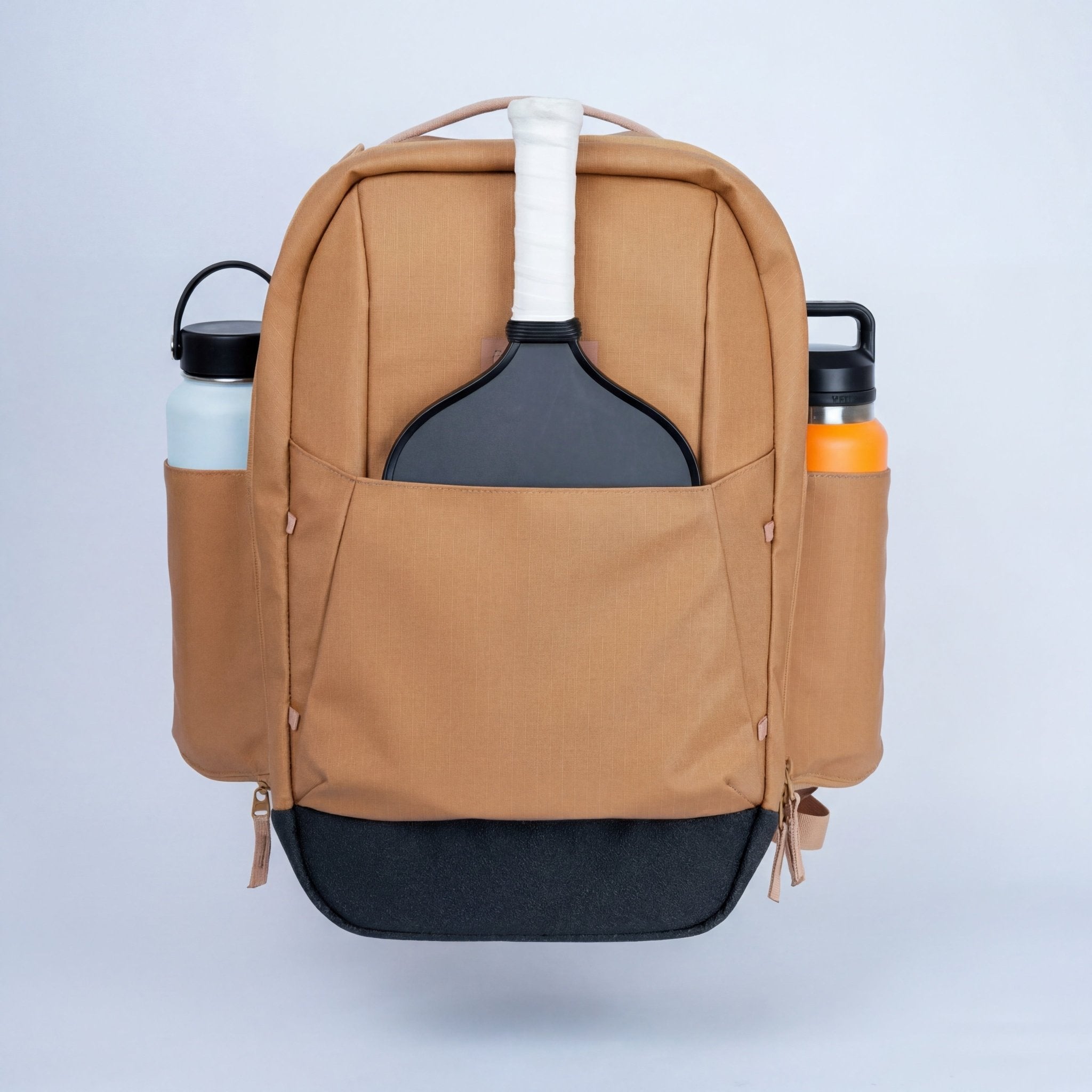
The FORWRD Court Ranger V2 ($195) has a dedicated shoe compartment that keeps your $128 court shoes separated from paddles, balls, and damp gear. YKK AquaGuard zippers keep moisture out. Fits everything you need for a full court day — designed with feedback from 500+ real players.
See the Court Ranger V2 →
Frequently Asked Questions
Are SQAIRZ pickleball shoes good?
Yes — particularly for players with wider feet or metatarsal discomfort in standard court shoes. The square toe box allows natural toe spread during lateral cuts, and the carbon fiber shank provides real court feedback. Players with standard foot width who don't experience compression issues may not notice the benefit as clearly.
Is SQAIRZ worth the premium price?
At $127.98, it's priced at the same tier as ASICS Gel-Resolution X ($129.95). The premium is justified if the square toe box solves a specific fit problem you have. If your current shoes fit fine, save money with K-Swiss Express Light at $115 and get a proven court shoe.
How do SQAIRZ compare to Nike or ASICS?
SQAIRZ differentiates on toe box shape — wider and more rectangular than both Nike and ASICS standard models. ASICS wins on outdoor durability data and brand track record. Nike Air Zoom Vapor Pro wins on lateral stability speed. SQAIRZ wins specifically if wider forefoot fit is the priority.
What makes SQAIRZ different from other court shoes?
The square/rectangular toe box is the core difference. Every other major court shoe uses a tapered toe shape that narrows toward the front. SQAIRZ maintains width across the forefoot, allowing toes to splay naturally during movement. The carbon fiber shank is a premium spec feature, but the toe box shape is the unique claim.
Do SQAIRZ shoes run true to size?
Generally yes. Players with wide feet who normally buy 2E or 4E width shoes may find SQAIRZ standard sizing fits better than expected — the wider toe box provides room that wide-width models approximate differently. The heel cup is narrower relative to the forefoot, which may require 2-3 sessions to adjust to.
Final Verdict
The SQAIRZ XRZ is a legitimate premium court shoe built around a specific design philosophy that's genuinely different from everything else in the category. If you've been fighting narrow toe boxes in court shoes — finishing sessions with toe fatigue, experiencing metatarsal pressure during lateral movement, or always ordering 2E width and still feeling squeezed — SQAIRZ is worth the trial.
If your current shoes fit fine and the main question is whether the square toe box is a gimmick: it isn't, but it's also not magic. It solves one specific problem well. Make sure you have that problem before spending $127.98 to fix it.

Leave a comment
This site is protected by hCaptcha and the hCaptcha Privacy Policy and Terms of Service apply.