

Vantage Labs Vue Photochrome 2.0 Review 2026: The UV-Reactive Glasses Built for Players Who Can't Commit to One Court
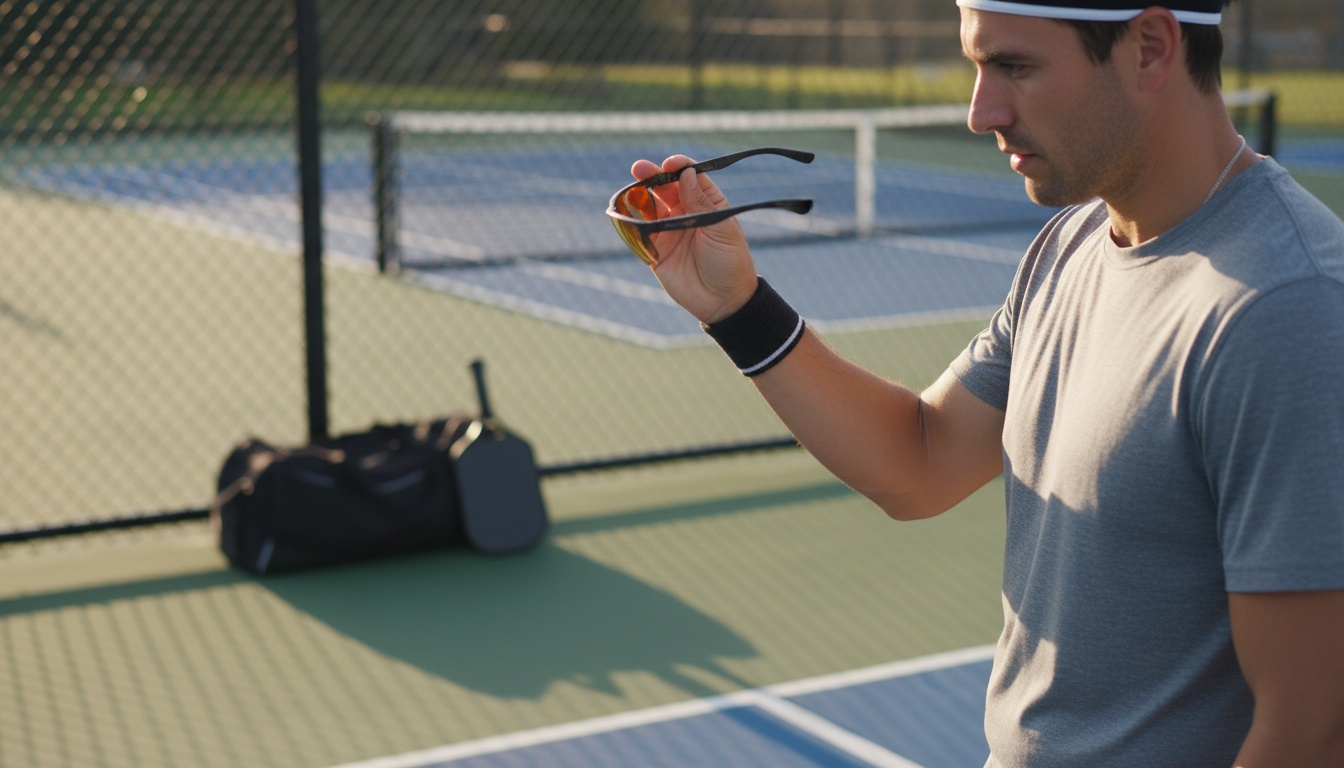
The Vantage Labs Vue Photochrome 2.0 is $169, UV-activated, and built around one specific problem: you play indoor mornings and outdoor afternoons and you're tired of carrying two pairs of glasses. At 95% lens transparency indoors and roughly 20% tint in direct sun, the range here is genuinely wide. Worth it? That depends entirely on how your courts work.
Disclosure: This post contains affiliate links to Pickleball Central. If you purchase through our links, FORWRD earns a small commission at no extra cost to you. We only link to products we'd recommend regardless.
Last Updated: July 2026
Quick Verdict
| Category | Detail |
|---|---|
| Price | $169 |
| Pros | 95%→~20% photochromic range; ColorVue contrast tint for ball tracking; wide field of view; anti-fog coating; 3-position adjustable nose piece; one pair handles indoor and outdoor |
| Cons | UV-dependent — won't tint under gym fluorescents or in a car; transition is chemistry-based, not instant; pricey if you only play one court type |
| Best for | Players who split sessions between indoor and outdoor courts, or play in variable outdoor light (cloud-to-sun transitions) |
| Skip if | You play exclusively indoors; you want instant electronic tinting; you're on a tight budget |
Check Price at Pickleball Central →
Specs at a Glance
| Spec | Detail |
|---|---|
| Lens Technology | Photochromic (UV-reactive chemistry) |
| Transparency Range | ~95% clear (indoor) → ~20% tint (full sun) |
| Lens Treatment | ColorVue contrast enhancement + anti-fog |
| Field of View | Wide wraparound |
| Nose Piece | 3-position adjustable |
| Protection | Impact-rated lenses |
| Price | $169 at Pickleball Central |
Why Trust This Review
FORWRD makes pickleball bags. We're not an eyewear brand. What we are is a team that logs serious court time — indoor rec leagues, outdoor club sessions, tournament prep — and we pay close attention to how gear affects performance. Eye fatigue is real on a 2-hour outdoor session, and we've tried enough glasses to know what works and what's marketing language. This review is the honest version of that experience.
Photochromic vs Polarized vs Electronic Auto-Tinting — What You Actually Need to Know
Most pickleball glasses content glosses over this distinction, and it matters a lot for how you play.
Polarized lenses filter horizontally polarized light — excellent for reducing glare off flat surfaces (water, courts, car hoods). Fixed tint, no transition. Great for consistent bright outdoor conditions, bad indoors where light is already low.
Photochromic lenses (like the Vue 2.0) use UV-reactive molecules embedded in the lens. When UV hits them — specifically the UV component of natural sunlight — the molecules darken. Indoors under fluorescent or LED lights, there's minimal UV, so the lens stays nearly clear. Step outside into sun, and they darken automatically. No UV = no darkening. This is why photochromic glasses don't tint sitting in a car (windshields block UV).
Electronic/motorized auto-tinting (like the Chamelo Falcon at $199) uses tiny electrodes rather than chemistry. It responds to any light change regardless of UV content, tints faster, and costs more. It's a different solution to the same problem — and it works in conditions where photochromic doesn't.
The Vue Photochrome 2.0 is firmly in the photochromic camp. For players moving from an indoor court to an outdoor court, that's actually ideal — nearly clear glass inside, full sun protection outside, no manual swap.
The Vue 2.0 Lens in Action: What 95% Clear to 20% Tint Means on Court
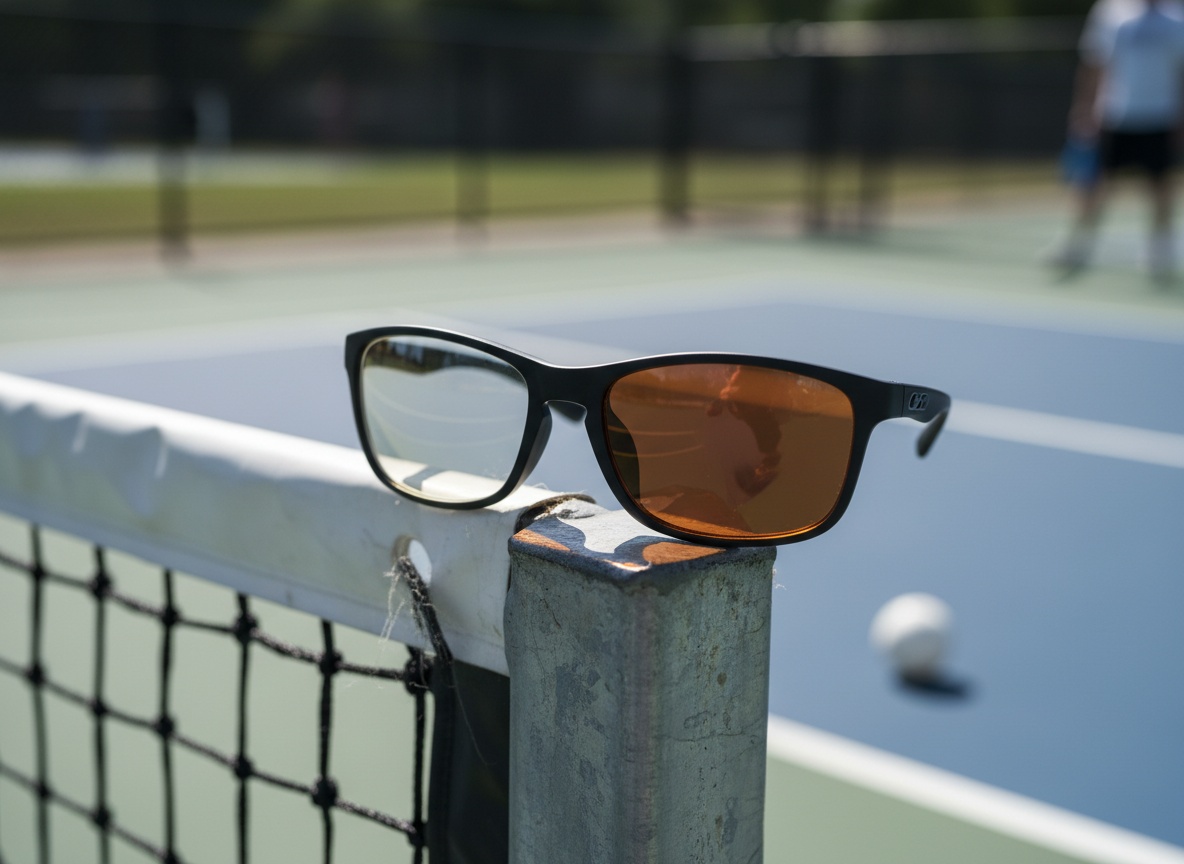
Indoor performance first. At 95% transparency, the Vue sits at the clearest end of any photochromic sports lens you'll find. Most photochromic lenses start at 75-80% even when "clear" — the Vue's 95% baseline is genuinely close to wearing nothing. Under gym fluorescents, you'll barely notice the lens is tinted at all. That's important: the worst version of photochromic glasses is the kind that stay medium-dark indoors because they partially activated from ambient UV. The Vue doesn't do that.
Outdoors in full sun, ~20% transmission is substantial protection. For context: most sunglasses marketed for sports land between 8-30% VLT (visible light transmission). The Vue's 20% puts it solidly in the appropriate outdoor range without going so dark that shaded courts become murky.
The ColorVue treatment deserves a separate mention. It's not just a neutral gray tint — it's a contrast-enhancing formula (similar to what's branded as "high contrast" in hunting or shooting optics). The effect: the yellow-green pickleball pops against the court background. Tracking fast hands at the kitchen line is subtly easier. Spin detection improves slightly. Real benefit — not marketing language.
The anti-fog coating matters more than you'd think. Players going from air-conditioned indoor courts to humid outdoor afternoons know the problem: step outside and your lenses immediately fog up. The Vue's anti-fog coating handles the temperature differential well. Don't expect miracles in extreme humidity, but it handles standard mid-day transitions without issue.
Fit and Comfort Over a Full Two-Hour Session
The 3-position adjustable nose piece is a genuine differentiator. Most athletic glasses assume one nose bridge width and that's that. The Vue lets you dial in the fit — tighter for aggressive movement, looser for long sessions. If you've ever had glasses slide down during a hard drive volley, you know why this matters.
The wide wraparound frame keeps peripheral light out. There's no "light leak" around the sides that some players notice on smaller frames. For outdoor play where sun angles change throughout a session, this prevents the distraction of stray light entering from the sides during dink rallies.
Impact-rated lenses are standard in serious court glasses at this price point — the Vue checks that box. A stray errant ball at the face shouldn't shatter these.
Vantage Labs Vue Photochrome 2.0 vs JOOLA RJX Lite vs CRBN Pivot
Three options at three different price points and three different technologies:
| Vue Photochrome 2.0 $169 |
JOOLA RJX Lite $97.46 |
CRBN Pivot $95 |
|
|---|---|---|---|
| Lens Type | Photochromic (UV-reactive) | Standard tinted | Polarized |
| Indoor Use | Excellent (95% clear) | Good (light tint) | Poor (always dark) |
| Outdoor Bright Sun | Excellent (~20% VLT) | Good (fixed tint) | Excellent (glare cut) |
| Transitions | Automatic (UV-based) | Fixed — none | Fixed — none |
| Anti-Fog | Yes | No | No |
| ColorVue Contrast | Yes | No | No |
| Adjustable Fit | 3-position nose piece | Standard | Standard |
The JOOLA RJX Lite wins on price. At $97.46, it's the right call if you play outdoor courts only in consistent afternoon sun — fixed tint, reliable protection, solid JOOLA build quality. It doesn't solve the indoor/outdoor problem because it doesn't try to.
The CRBN Pivot at $95 is the polarized option. Polarized lenses cut glare better than photochromic in bright flat-light conditions — if your outdoor court has a shiny concrete surface that produces annoying reflections, polarized is your weapon. But wear them indoors and visibility drops noticeably. For single-environment outdoor players, CRBN Pivot is arguably better value than the Vue. For multi-environment players, it's the wrong tool.
The Vue costs $72 more than either. That premium buys you photochromic transition, ColorVue enhancement, anti-fog, and the adjustable nose piece. If you need those features, the gap is justified. If you don't, save the money.
Who Should Buy the Vue Photochrome 2.0 (and Who Shouldn't)
Buy this if you:
- Play indoor and outdoor sessions — even the same day
- Want one pair that works across court types without compromise
- Play in variable outdoor conditions (cloudy mornings to sunny afternoons)
- Have had fog problems with other glasses when transitioning environments
- Care about ball-contrast enhancement for faster tracking
Skip this if you:
- Play exclusively indoors — clear lens sports glasses cost $40-$60 and do the same job
- Play exclusively outdoors in consistent bright light — polarized is better for pure glare control
- Want instant tinting without any transition lag — the Chamelo Falcon does this electronically
- $169 is too much for accessories at this stage of your game
Complete Your Setup
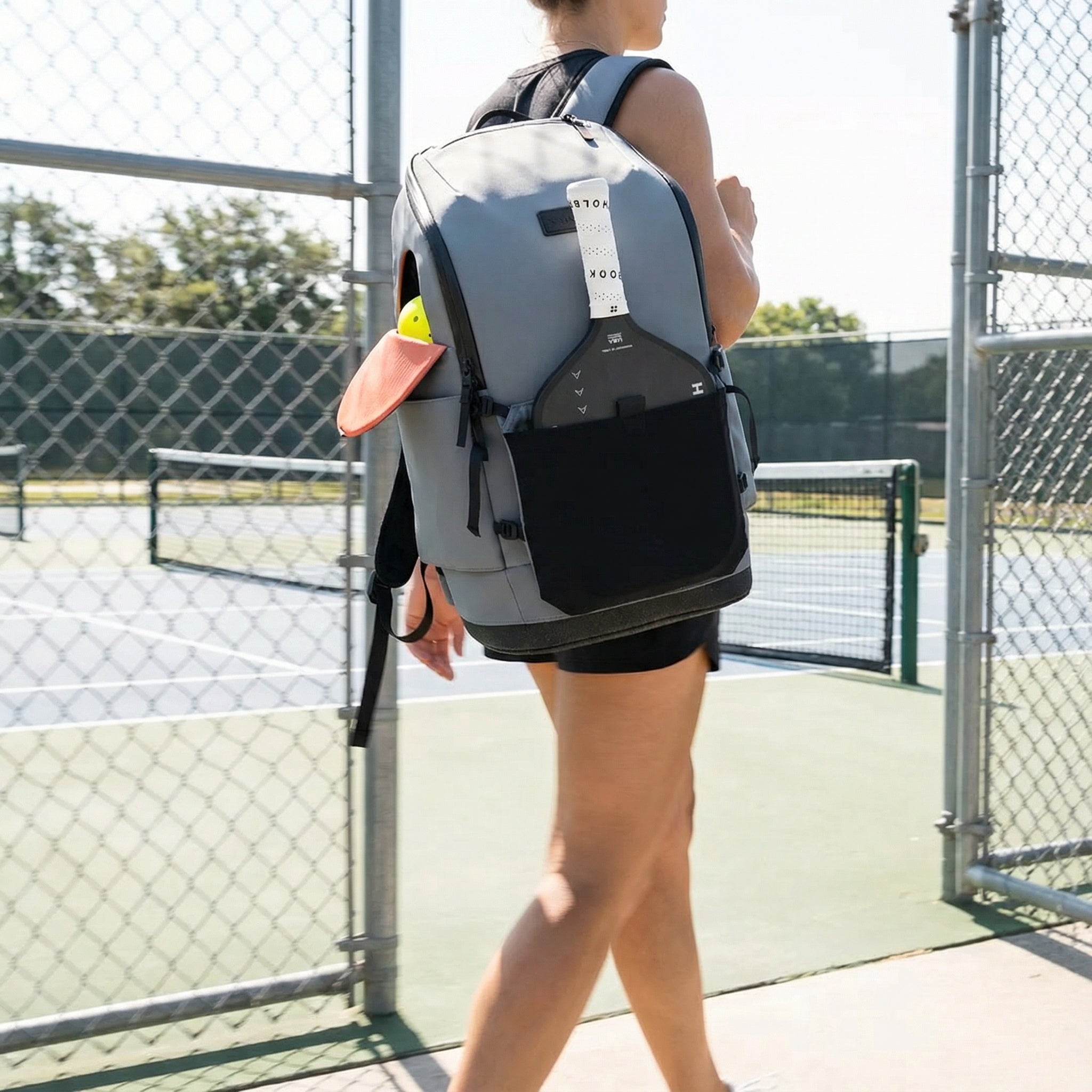
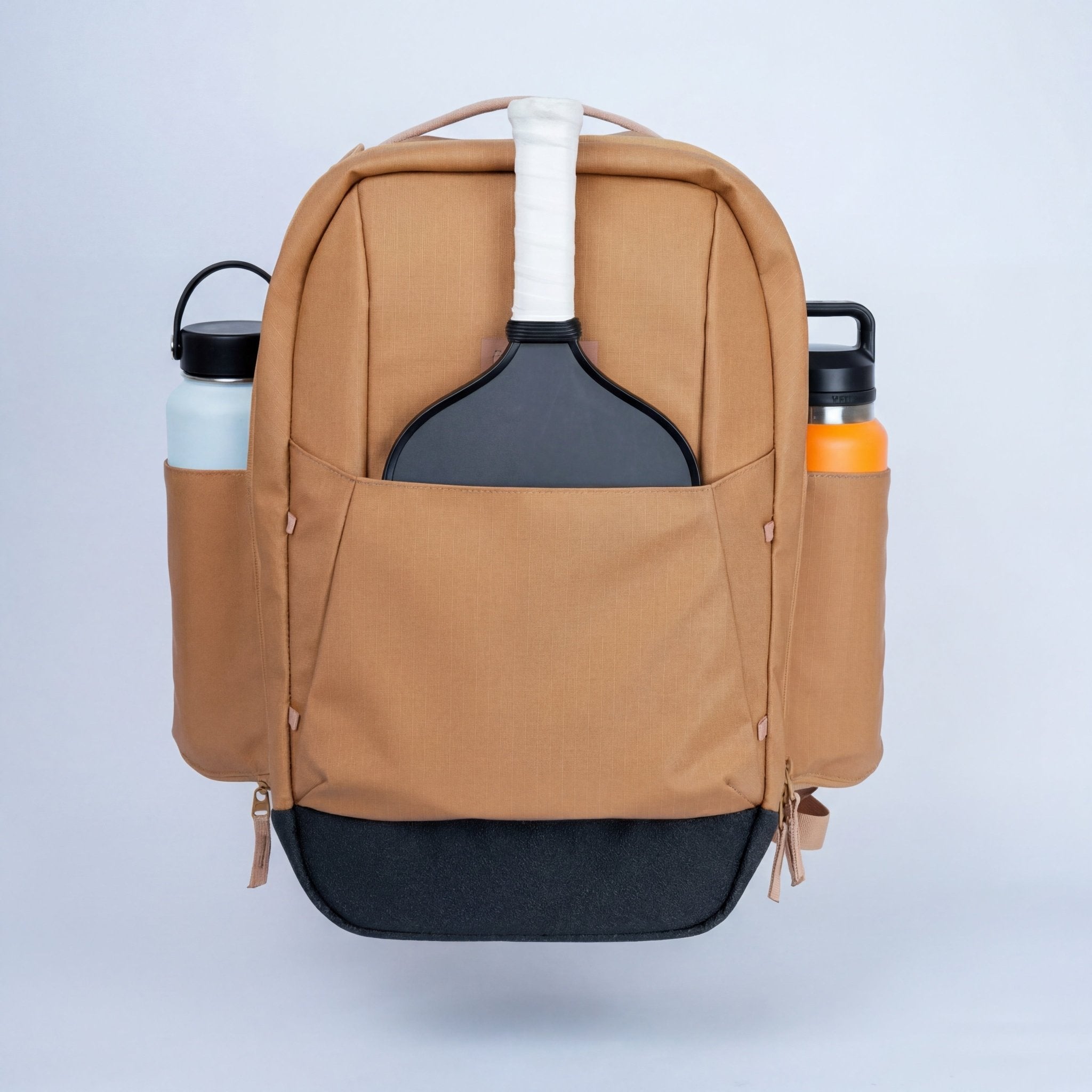
If you're upgrading your eyewear, your bag's probably due too. The FORWRD Court Ranger V2 ($195) organizes all your court essentials — 16" laptop sleeve, dedicated shoe compartment keeps your court shoes separate from your gear, modular paddle sleeve. Built for players who move between courts, same as the Vue.

Pricing & Where to Buy
The Vantage Labs Vue Photochrome 2.0 is available at Pickleball Central for $169. That's a reasonable price for a true photochromic sports lens with anti-fog and contrast enhancement. The Vantage Labs ColorVue lens isn't cheap to manufacture, and compared to $200+ prescription photochromic glasses at an optical shop, $169 for a sports-tuned version is defensible.
Buy Vantage Labs Vue at Pickleball Central ($169) →
FAQ: Vantage Labs Vue Photochrome 2.0 Pickleball Glasses
What's the difference between photochromic and polarized pickleball glasses?
Photochromic lenses change their tint automatically based on UV light exposure — nearly clear indoors, darker outdoors in sunlight. Polarized lenses have a fixed dark tint that cuts horizontal glare regardless of UV. For players who move between indoor and outdoor courts, photochromic is more versatile. For players who only play in bright outdoor sun, polarized often provides better glare control at a lower cost.
How long do photochromic lenses take to transition outdoors?
Modern photochromic lenses like the Vue 2.0 typically take 20-45 seconds to reach full outdoor darkness and 2-5 minutes to fully clear back indoors. The clear-to-dark direction is faster than dark-to-clear. For pickleball, this means stepping onto an outdoor court provides near-full tinting within one or two rallies. The transition back indoors is slower — you may notice slight residual tint for the first few minutes.
Do photochromic glasses work under indoor gym lighting for pickleball?
Yes — and this is the key advantage. Standard fluorescent and LED gym lights emit minimal UV, so photochromic lenses stay nearly clear indoors. The Vantage Labs Vue reaches ~95% transparency under typical indoor lighting, which means almost zero visual compromise. They won't darken in a gym environment the way some lower-quality photochromic lenses do.
Are pickleball glasses like the Vantage Labs Vue USAPA-legal?
USAPA rules don't regulate eyewear for recreational or most tournament play. Players are free to wear any eyewear they choose. Safety requirements for court glasses exist at specific organized venues but don't restrict photochromic or tinted lenses. The Vue Photochrome 2.0 is impact-rated, which may satisfy safety requirements at venues that do mandate protective eyewear.
What are the best pickleball glasses for players who play both indoor and outdoor courts?
For players who genuinely move between indoor and outdoor courts, photochromic glasses are the most practical solution. The Vantage Labs Vue Photochrome 2.0 ($169) is the top photochromic option — its 95% indoor clarity and ~20% outdoor tint represent the widest range available in a pickleball-specific lens. For players willing to spend more for faster electronic tinting, the Chamelo Sport Falcon Auto Alpha ($199) responds without needing UV activation. For dedicated outdoor players only, the JOOLA RJX Lite ($97.46) or CRBN Pivot ($95) offer better value.
Final Verdict
The Vantage Labs Vue Photochrome 2.0 does what it promises. The 95%→20% photochromic range is legitimately one of the widest on the market. The ColorVue contrast treatment adds real on-court value for ball tracking. Anti-fog and adjustable fit are thoughtful inclusions at this price.
The honest limitation: it's UV-dependent. Covered outdoor courts with no direct sun won't trigger full darkening. And if you want sub-second electronic tinting, this isn't that — chemistry takes a moment. But for the player who plays in a gym in the morning and on an outdoor court in the afternoon, the Vue Photochrome 2.0 is the right tool. One pair, no swapping, no compromise on clarity indoors or sun protection outdoors.
At $169, you're paying for real photochromic performance. It earns it.
Get the Vantage Labs Vue Photochrome 2.0 at Pickleball Central →

Leave a comment
This site is protected by hCaptcha and the hCaptcha Privacy Policy and Terms of Service apply.