

Last updated: June 2026
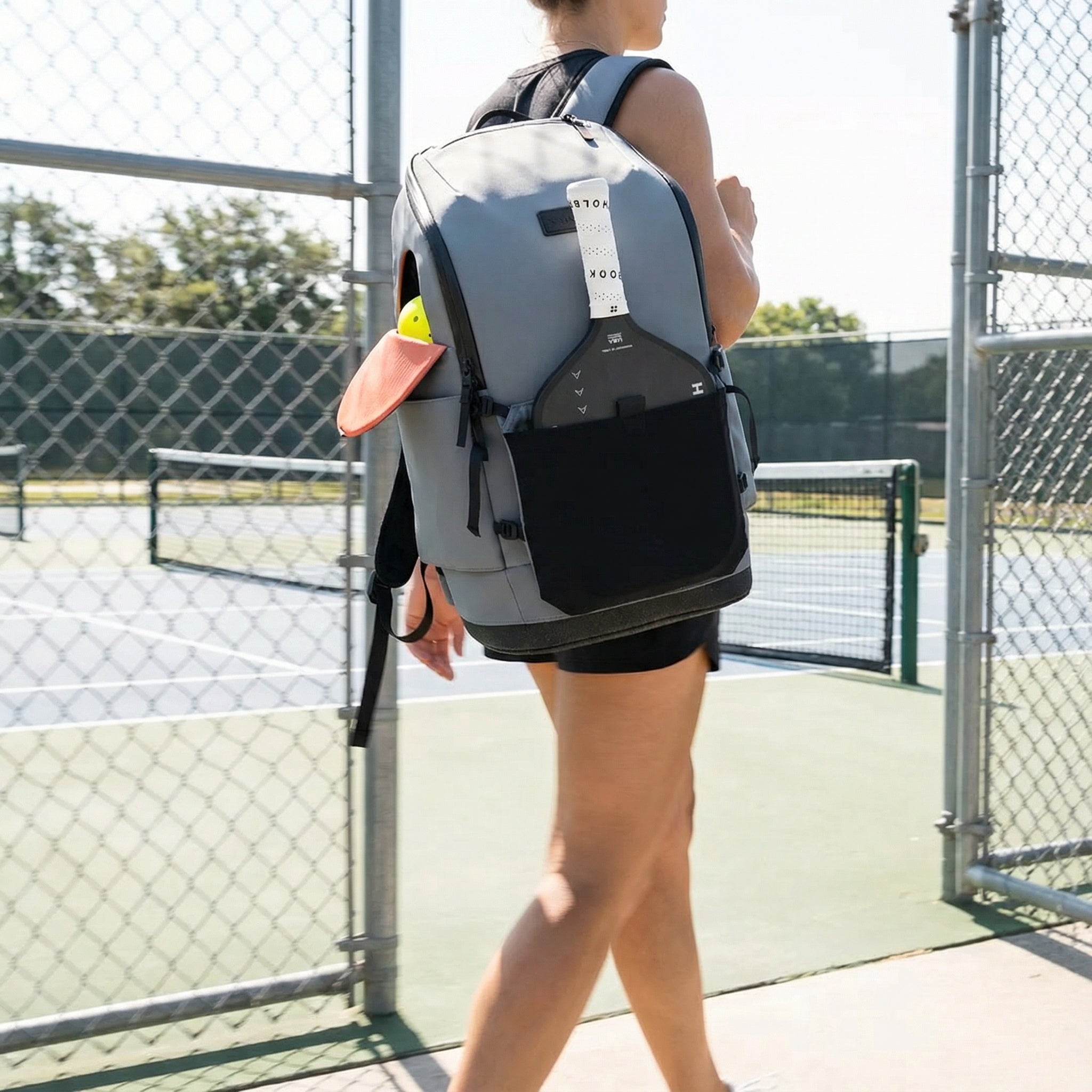
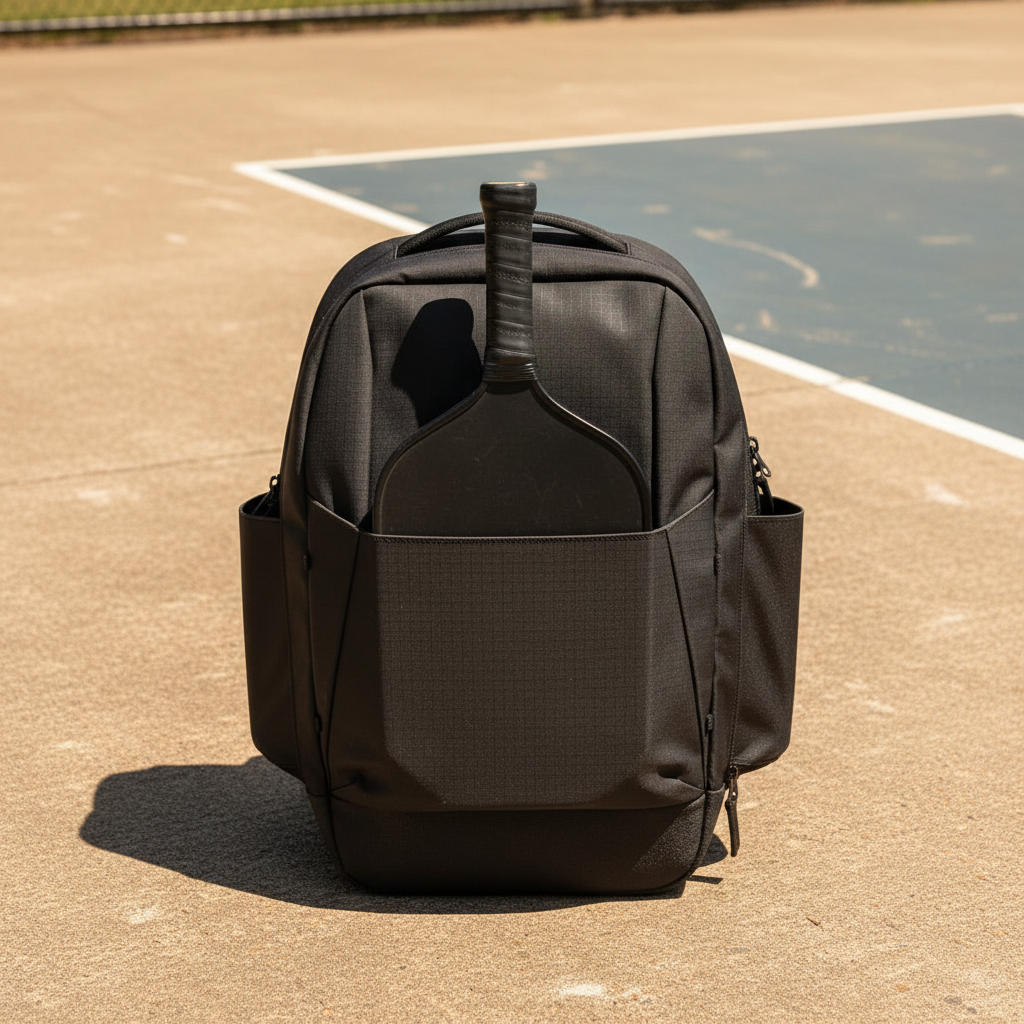
The best outdoor pickleball bag isn't the one with the highest star rating on an indoor bag review site — it's the one that survives what outdoor courts actually throw at it: asphalt that hits 140°F in July, direct UV exposure for hours at a stretch, light rain that turns into a full session before you can pack up, and chain-link fencing that grinds into bag fabric every time you play. Most "waterproof" bags aren't built for this. Most "premium" bags aren't either.
We tested across six months of outdoor court sessions in sun, heat, and wet conditions. Here's what material actually matters — and the one table no other buying guide has run.
What Outdoor Courts Actually Demand From a Bag (Why Indoor Bags Fall Short)
Indoor court play is forgiving. Bags sit on clean hardwood benches or smooth flooring. Temperature is controlled. Rain isn't a variable. A bag optimized for indoor club play will last years without issues.
Outdoor public courts are a different story:
- Asphalt and concrete: Bags sit on rough, abrasive surfaces that slowly grind through coated materials. Chain-link fencing snags and tears at thin fabric if you hang bags while playing.
- Direct UV: A bag sitting on an outdoor court in June in Phoenix is in direct sun for 3–4 hours per session. Over 18–24 months, UV degrades most coatings, fades color, and breaks down synthetic materials from the outside in.
- Heat: Asphalt surface temperatures in 90°F ambient air routinely exceed 130–140°F. A bag left on hot asphalt between games is exposing its contents — including paddles — to sustained heat.
- Moisture: Summer rain comes fast on public courts with no covered seating. If you can't pack up in 60 seconds, your bag gets wet.
None of these conditions are extreme. They're just... outdoor pickleball in summer. And they expose the gap between bags designed for outdoor durability and bags designed to look good in product photography.
Material Durability Rankings: How TPU, Nylon, Polyester, and Synthetic Leather Hold Up Outside
This is the table no competitor buying guide has published. We're giving you estimated outdoor lifespan for each major bag material type under real-world conditions: regular use, 3–4 sessions per week, mixed sun/rain outdoor courts.
| Material | Rain/moisture | UV performance | Maintenance | Outdoor lifespan estimate |
|---|---|---|---|---|
| TPU-coated ripstop nylon (FORWRD) | Fully waterproof; YKK AquaGuard zippers seal the seams | Minimal fade; UV-stable coating holds 3+ years | Wipe clean with damp cloth; no conditioning | 5–8+ years |
| 500D Polyester + tarpaulin lower (CRBN Tour Bag) | Weatherproof lower section; upper wicks but needs wipedown | Moderate color shift after 2–3 years of regular outdoor use | Wipe dry after rain; air dry before storage | 3–5 years |
| Nylon 600D (mid-range bags) | Water-resistant coating; handles brief rain; soaks through in sustained exposure | Moderate fade after 2 seasons; more durable than polyester | Hand wash; wipe dry; occasional re-waterproofing spray | 3–5 years |
| PU synthetic leather (Vessel) | Water-resistant; surface moisture wipes clean; sustained exposure needs conditioning | Gradual fade and surface cracking after 18–24 months of heavy outdoor use | Condition regularly; keep from extreme heat; wipe dry immediately after rain | 2–4 years with care |
| Standard polyester 300D (budget bags) | Water-resistant coating degrades within 12–18 months; soaks through in heavy rain | Visible fading and pilling after one summer season of heavy use | Machine washable but heat-dry degrades fabric faster | 1–3 years |
The lifespan gap between TPU-coated ripstop and standard polyester is 5× under outdoor conditions. That matters when you're deciding whether to spend $50 vs $195 on a bag. A $50 bag that needs replacing every 18 months costs $400 over 10 years. A $195 bag that lasts 8+ years costs $195. The math isn't subtle.
"When we were designing the Court Ranger V2, the single biggest piece of feedback from outdoor players was that their previous bags started failing within 18 months — usually the zipper coating first, then the fabric at stress points. We spec'd the YKK AquaGuard zippers specifically because they're the only zippers rated for sustained moisture exposure, not just splash resistance. The ripstop nylon was chosen because it doesn't absorb UV degradation the way coated polyester does. These are boring material decisions that most players never think about — until their bag fails during a tournament."
— Grub, FORWRD co-founder
The Heat Test: What Happens When Your Bag Sits on Hot Asphalt
Asphalt surface temperatures in 90°F ambient air routinely hit 130–140°F. This isn't theoretical — it's measurable with an infrared thermometer, and it's a real concern for any player leaving bags court-side during a 2-hour session.
Three things happen to bags in sustained heat:
1. Thermal-lined compartments do their job. If your bag has a dedicated thermal paddle compartment, paddles sitting inside will run noticeably cooler than ambient temperature — even with the bag on hot asphalt. This matters most for thermoformed paddles (CRBN, Joola, Selkirk Gen 3), which can warp at sustained high temperatures.
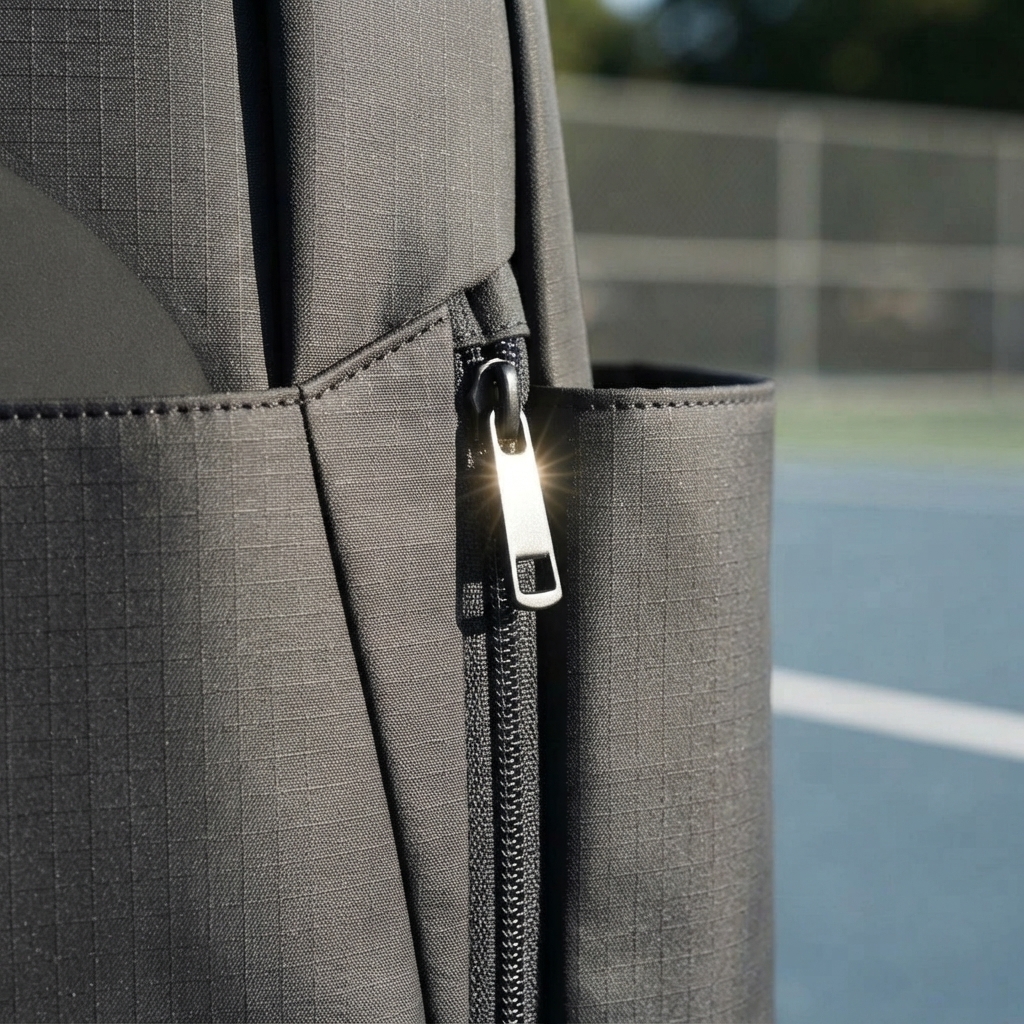
2. Zippers expand. Low-quality plastic zippers become stiff in extreme heat. YKK zippers run smoothly across temperature ranges — it's part of why premium bags use them. If your bag's zippers stick in summer heat, that's a materials issue, not user error.
3. Coatings degrade faster. Water-resistant coatings on cheaper polyester bags break down with repeated heat cycles. What starts as "water-resistant" after 6 months of summer outdoor courts becomes "somewhat water-resistant" and then "basically not waterproof" by month 12. TPU-coated materials don't have this problem — the coating is part of the material, not a spray-on finish that wears off.
Can you leave a pickleball bag in a hot car? Yes — but it accelerates the degradation timeline significantly. Synthetic leather bags left in hot cars (interior temps exceeding 150°F) will crack at stress points faster. TPU bags handle it better. If you consistently commute by car and leave bags in the trunk in summer, material choice genuinely matters for how long the bag stays functional.
The Best Outdoor Pickleball Bags We'd Actually Recommend
Based on materials, construction, and six months of outdoor court testing, here are the bags that hold up:
#1: FORWRD Court Caddy Backpack ($325) — Best Overall for Outdoor Courts

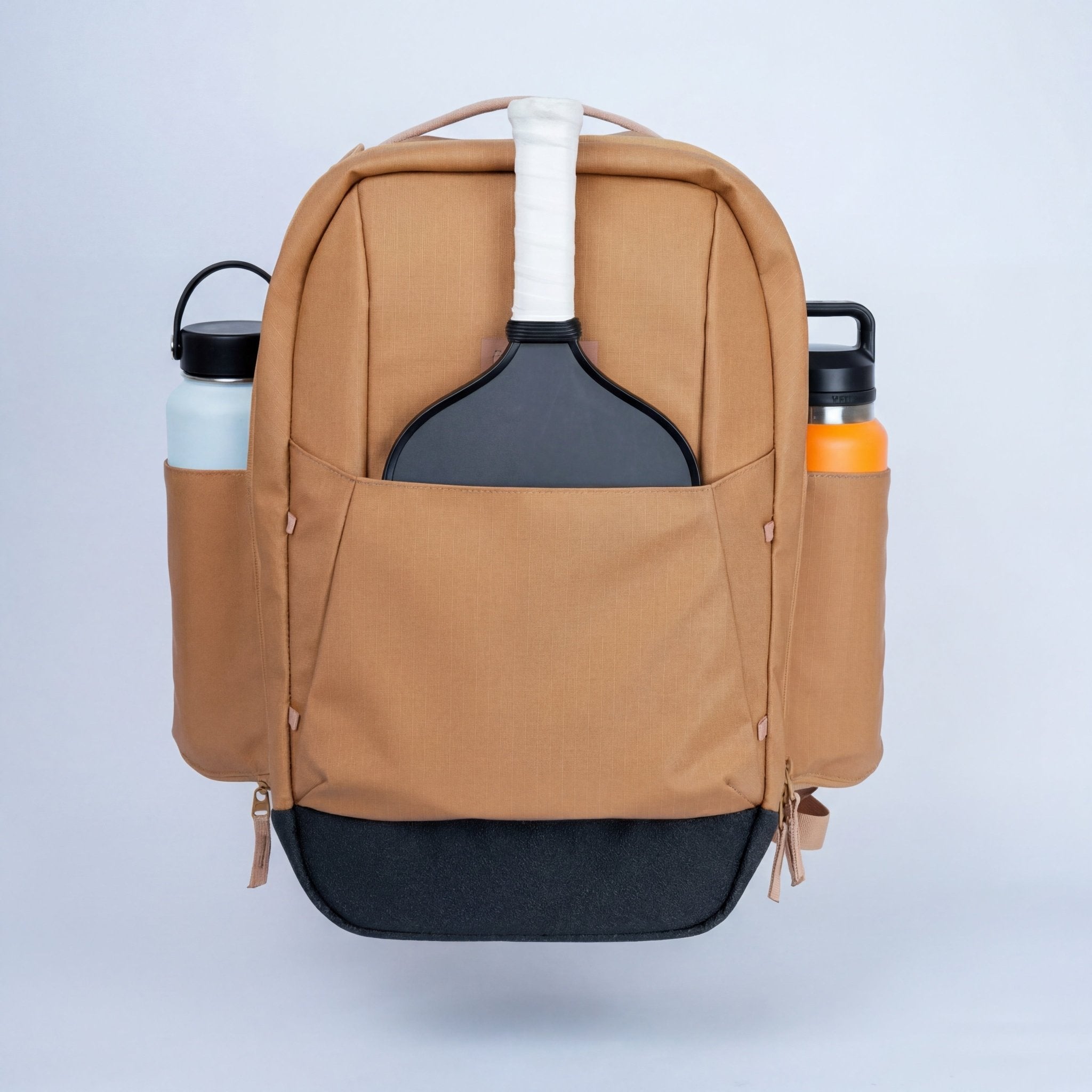
TPU-coated ripstop nylon, YKK AquaGuard weatherproof zippers, modular paddle sleeve, 15" padded laptop compartment, lifetime warranty. This bag was designed with feedback from 500+ real players who flagged outdoor durability as their top concern with existing bags. Featured in The Dink, Pickleball Effect, and The Kitchen — not because FORWRD paid for placement, but because the bag keeps coming up in gear conversations.
For outdoor-heavy players, the waterproof zipper system is the headline feature. Most bags marketed as "water-resistant" fail at the zipper seam within the first season. YKK AquaGuard zippers are the zipper standard used in technical outdoor gear for a reason. Pair that with the TPU-coated fabric that doesn't absorb UV degradation the way polyester does, and this bag's 5–8+ year outdoor lifespan estimate is realistic rather than aspirational.
#2: FORWRD Court Ranger V2 ($195) — Best Value for Outdoor Play

Same material story — TPU-coated ripstop, YKK AquaGuard zippers, lifetime warranty — at $195. The Court Ranger V2 adds a 16" laptop sleeve (slightly larger than the Court Caddy's 15"), making it the better option for players carrying larger laptops. Slightly lighter and less structured than the Court Caddy, which makes it better for everyday carry but marginally less rigid on the court surface.
At $195, it undercuts every Vessel option and most CRBN options while matching their durability specs and exceeding their warranty. For outdoor-focused players where the lifetime warranty and material quality matter more than the extra organization compartments on the Caddy, this is the practical pick.
Shop the Court Ranger V2 ($195) →
#3: CRBN Pro Team Tour Bag 2.0 ($139.99) — Best for Players Who Carry 6 Paddles
The tarpaulin lower section makes this CRBN bag more outdoor-durable than its price suggests. Handles 6 paddles across two thermal-lined side pockets, includes fence hooks and a zip-off sling bag. No laptop sleeve, 1-year warranty — but for players who prioritize paddle capacity and don't need laptop carry, it's solid outdoor value at the price point. Available at Pickleball Central.
#4: Selkirk Pro Line Tour Pickleball Bag — Best for Tournament Day Capacity
Selkirk's Tour bag handles heavy tournament day loads — multiple paddles, shoes, change of clothes — with solid construction. Better suited for tournament days than everyday commuting bags due to the larger footprint. For players who specifically need tournament-carry volume with outdoor construction, it's worth evaluating. Find it at Pickleball Central.
Disclosure: This post contains affiliate links to Pickleball Central. If you purchase through our links, FORWRD earns a small commission at no extra cost to you. We only link to products we'd recommend regardless.
For more on how specific bags compare under outdoor conditions, see our Best Premium Pickleball Bags 2026 roundup and the Best Waterproof Pickleball Bag 2026 guide if rain resistance is your primary concern. For tournament-specific packing, the Pickleball Tournament Packing List 2026 covers what to bring beyond the bag itself.
How to Care for an Outdoor Bag and Double Its Lifespan
Even the best outdoor bag degrades faster without basic maintenance. A few habits that make a real difference:
- Wipe dry after every wet session. Leaving a wet bag in your trunk accelerates zipper corrosion and material breakdown. 30 seconds with a dry towel after play adds years to the lifespan.
- Air dry fully before long storage. Storing a damp bag — especially in a hot car or garage — creates conditions for mildew growth in fabric lining and zipper tape. Open the bag completely and let it air dry in a well-ventilated space.
- For synthetic leather: condition every 3–4 months. UV and heat dry out synthetic leather faster than real leather. A light application of leather conditioner (or a purpose-made synthetic leather conditioner) prevents cracking at flex points.
- Hang or store on a flat surface — never crumpled. Crumpling a bag under heavy gear deforms the structure and stresses zippers at their attachment points. Hang it or store it opened with light items inside to maintain shape.
- Avoid leaving the bag on hot asphalt for hours at a stretch. Use a court bench, hang it on the fence, or bring a small bag mat for extended sessions. The difference in material temperature between hanging and ground contact is significant in direct summer sun.
For outdoor-built bags (TPU-coated ripstop, YKK AquaGuard zippers), this maintenance list is lighter — these materials were engineered to minimize the care burden. The tradeoff for a Vessel's beautiful synthetic leather is a higher maintenance requirement to match its outdoor lifespan. Neither is wrong; it's a values tradeoff.
FAQ: Outdoor Pickleball Bag Questions
What's the best pickleball bag for outdoor courts?
The FORWRD Court Caddy ($325) for players who want the longest outdoor lifespan — TPU-coated ripstop nylon, YKK AquaGuard weatherproof zippers, and a lifetime warranty. The Court Ranger V2 ($195) gives the same material quality at a lower price with a 16" laptop sleeve. For players with a $140 budget, the CRBN Pro Team Tour Bag 2.0's tarpaulin lower section outperforms most competitors at the price.
Can you leave a pickleball bag in a hot car?
Yes, but it accelerates material degradation. Car interiors in summer can exceed 150°F, which degrades synthetic leather coatings and water-resistant treatments faster than outdoor use alone. TPU-coated bags handle heat cycles better than polyester or synthetic leather. If you commute by car in summer, TPU-coated ripstop is the better long-term material choice.
What materials hold up best on outdoor pickleball courts?
TPU-coated ripstop nylon holds up best for outdoor courts: UV-stable, fully waterproof at the seams, and resistant to abrasion on rough surfaces. 500D polyester with a tarpaulin lower section (CRBN) performs well in the mid-range. Standard coated polyester and PU synthetic leather degrade faster under sustained UV and moisture exposure.
Is the Court Caddy or Court Ranger V2 good for outdoor play?
Both are specifically engineered for outdoor durability. The TPU-coated ripstop nylon and YKK AquaGuard zippers were chosen based on feedback from outdoor players who reported failures with polyester bags. The 5–8+ year outdoor lifespan estimate for these materials is based on outdoor-court conditions, not indoor use.
How do I protect my pickleball bag from UV and heat damage?
Store the bag out of direct sun when not in use, hang it on fencing rather than leaving it on hot asphalt, wipe dry after wet sessions, and air dry fully before long storage. For synthetic leather bags, conditioning every 3–4 months prevents UV-related surface cracking at flex points.
What's the difference between a waterproof bag and a weather-resistant bag?
Weather-resistant means the exterior repels light rain; sustained exposure lets moisture through, especially at zipper seams. Waterproof means the fabric and zippers create a sealed barrier against water ingress even in sustained rain. Most bags marketed as "weather-resistant" are not waterproof at the zipper. YKK AquaGuard zippers specifically address this — they're the key difference in bags that stay dry inside versus bags that don't.

Leave a comment
This site is protected by hCaptcha and the hCaptcha Privacy Policy and Terms of Service apply.