

Last updated: June 2026
Summer is the best and worst thing that happens to pickleball gear. More daylight, more outdoor courts, more sessions — and more heat doing things to your equipment that no one talks about. Balls bounce harder. Paddle delamination risk goes up in a hot car. Standard zippers corrode faster when coated in sweat and sunscreen. Most "best summer bag" guides skip straight to a product list. This one starts with the actual problem, then builds the recommendation around it.
Across 30+ outdoor sessions in summer conditions, one bag handled heat, rain, and morning dew without complaint: the FORWRD Court Caddy. Here's why — and what you should know before buying anything.
Disclosure: This post contains affiliate links to Pickleball Central. If you purchase through our links, FORWRD earns a small commission at no extra cost to you. We only link to products we'd recommend regardless.
Table of Contents
- What Makes a Pickleball Bag Ideal for Summer Play
- Best Pickleball Bags for Summer 2026: Our Picks
- Hot Weather Bag Features: What Actually Matters (And What Doesn't)
- How the Court Caddy Handles Summer Conditions
- FAQ: Common Questions About Pickleball Bags for Summer
What Makes a Pickleball Bag Ideal for Summer Play
Most bag guides treat summer as a marketing backdrop. "Great for outdoor play!" doesn't tell you anything. Here's what summer conditions actually do to gear — and what that means for bag selection.
What Heat Does to Your Balls
Outdoor pickleballs are sealed units with internal air. In sustained heat — a bag left in a car at 130°F, or sitting in direct sun for two hours — internal air pressure increases, making balls bounce harder and faster than the conditions you practiced for. This doesn't ruin balls immediately, but repeated heat cycles accelerate wear. A bag that vents or insulates the ball pocket extends ball life and keeps your warm-up consistent.
What Heat Does to Your Paddles
Graphite-faced paddles have a bonded face layer that can delaminate under sustained high heat. This isn't a risk during active play — you're holding the paddle, it's moving, and ambient air is cooling it. The risk is storage: a paddle left in a hot car or inside a dark bag in direct sun for hours can reach temperatures that stress the adhesive bond. Thermal lining in a bag compartment moderates temperature swings during transport. Whether that matters depends on your climate and habits — more on this in the features section.
What Summer Sweat and Sunscreen Do to Zippers
This one nobody talks about. Standard metal zipper teeth corrode when exposed to sweat salts and the chemical compounds in sunscreen — both of which end up on your hands and, inevitably, your zippers. USA Pickleball-sanctioned outdoor tournaments run through summer months where players reapply sunscreen between matches, handling their bag dozens of times. After a full summer of regular play, standard zippers on a $100–$150 bag often show visible corrosion and sticking. YKK AquaGuard zippers have a polyurethane coating that resists this. It's not a marketing claim — it's the reason FORWRD chose them for the Court Caddy specifically.
What UV Does to Bag Fabric
Cheaper bag fabrics — 300D or 420D polyester — fade and weaken noticeably after a summer of regular outdoor exposure. Higher-denier fabrics like 840D ballistic nylon and TPU-coated ripstop hold color and structure through extended UV exposure. For a bag you're carrying to outdoor courts 3+ times a week from May through September, fabric durability under UV is a real consideration.
Best Pickleball Bags for Summer 2026: Our Picks
#1 Summer Pick: FORWRD Court Caddy ($325)
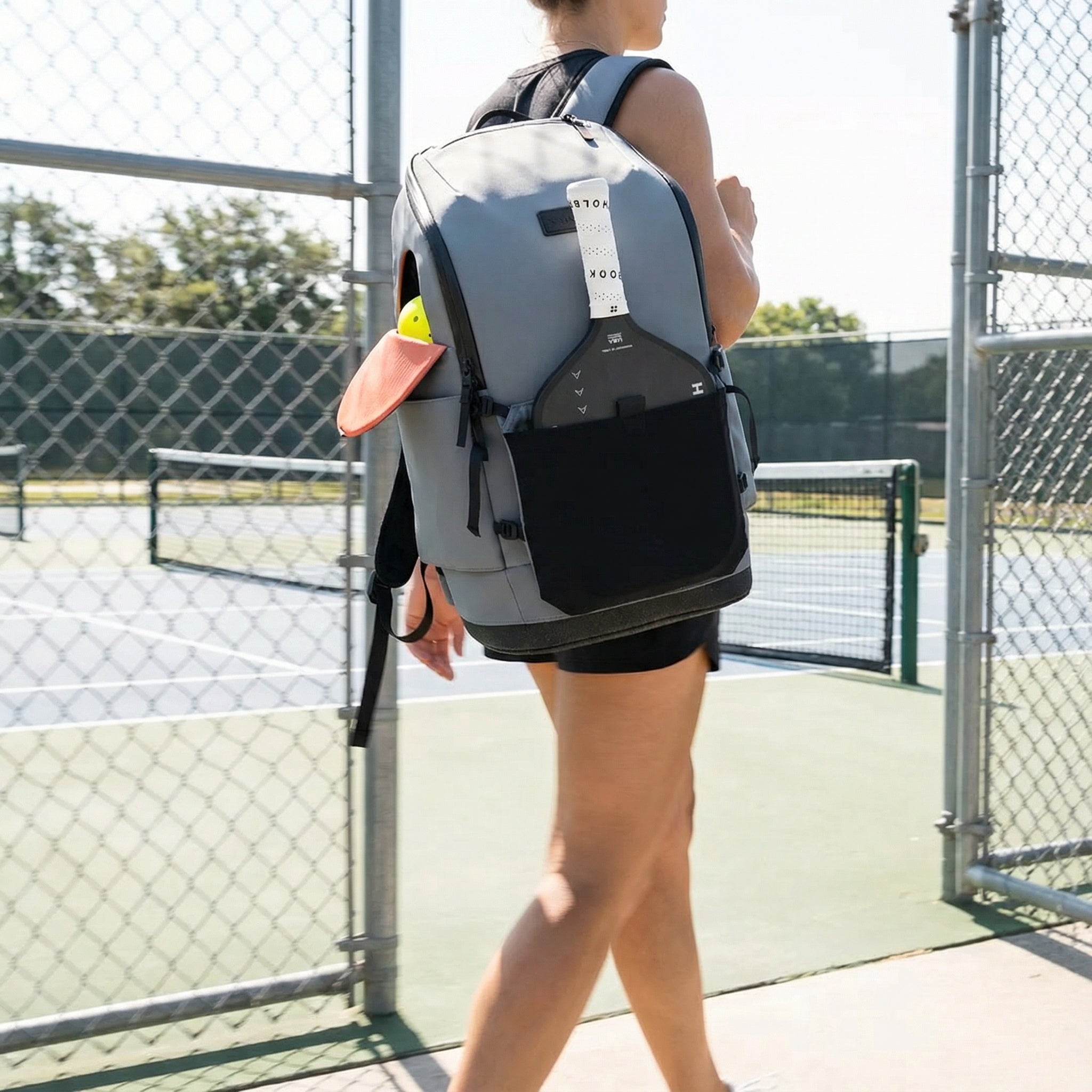
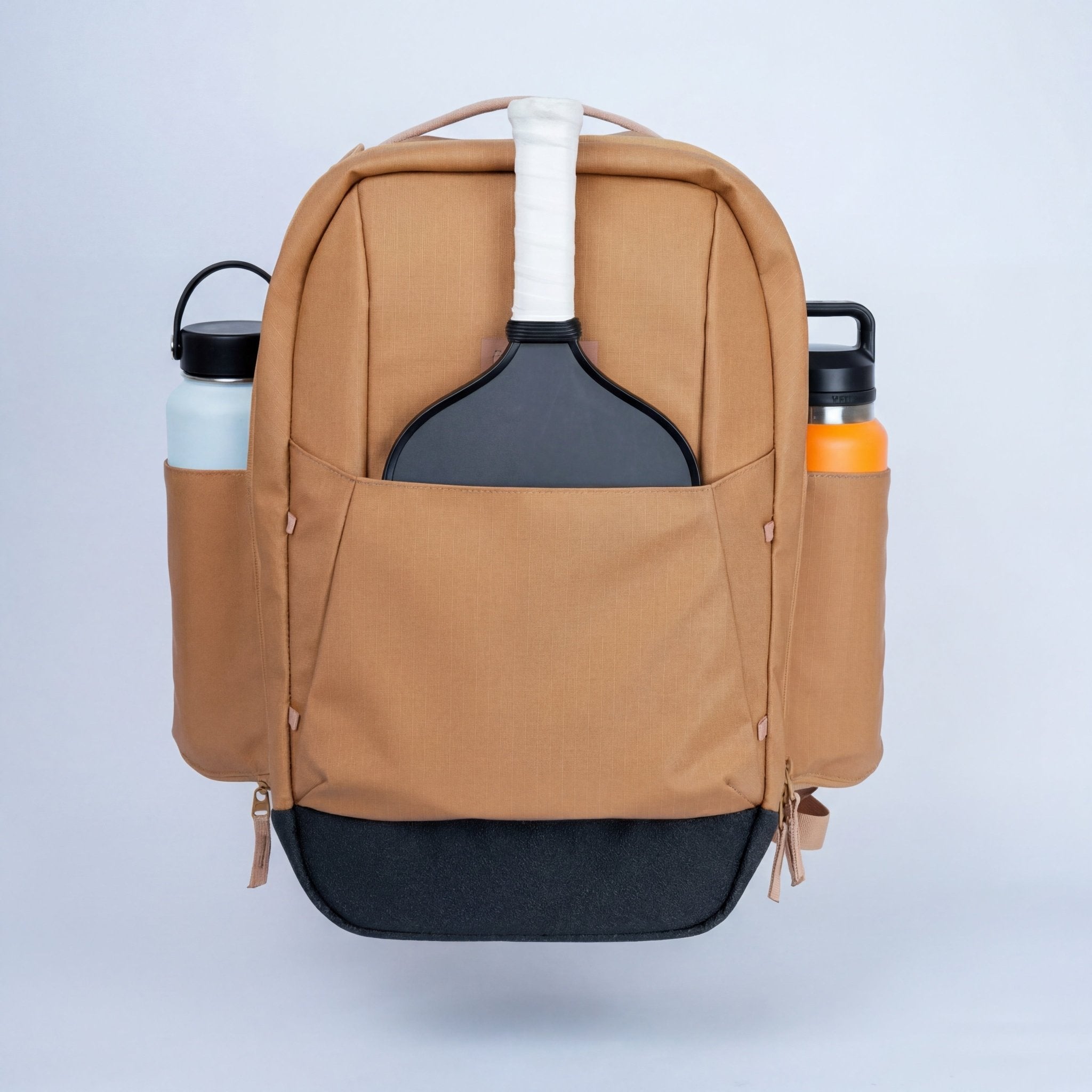
The Court Caddy earns the summer top pick on the criteria that actually determine summer performance: YKK AquaGuard waterproof zippers resist sweat and sunscreen corrosion; 840D ballistic nylon handles UV and heat-related wear over a full season; magnetic side pockets give one-handed ball access without fumbling in bright outdoor light. The 15" padded laptop sleeve isolates electronics from weather and paddle contact regardless of conditions.
One honest note: the Court Caddy does not have thermal paddle lining. We address exactly when that matters — and when it doesn't — in the section below. For most outdoor summer sessions, it's a non-issue. Shop the Court Caddy.
#2 Summer Pick: JOOLA Tour Elite (~$130–$150)
The JOOLA Tour Elite earns its summer ranking on two genuine advantages: thermal-lined paddle compartments that actively moderate temperature swings during transport, and a fence hook for courtside storage that keeps the bag out of direct ground heat. For players in Arizona, Texas, or Florida who regularly leave gear in a hot car between sessions, thermal lining is a real protective feature. Standard zippers are its main limitation — corrosion is a longer-term concern under heavy summer use.
#3 Summer Pick: CRBN Pro Team Backpack (~$149)
The CRBN Pro Team's thermal-lined paddle compartment and thermal side pockets for balls address both summer heat failure modes in one bag. Its shoe compartment keeps sweaty footwear isolated from gear — a minor but real quality-of-life feature on hot days. Standard zippers are the same limitation as the JOOLA. Durability at 18+ months of heavy summer use is a more common concern with the CRBN than with the Court Caddy.
| Bag | Price | Zipper Quality | Thermal Lining | UV-Resistant Fabric | Best Summer Use |
|---|---|---|---|---|---|
| Court Caddy | $325 | YKK AquaGuard ✅ | No | 840D ballistic nylon ✅ | All-season outdoor player, commuter, daily use |
| JOOLA Tour Elite | ~$130–150 | Standard | Yes (paddle) ✅ | Standard polyester | Hot-climate player, car storage, fence-hook user |
| CRBN Pro Team | ~$149 | Standard | Yes (paddle + ball pockets) ✅ | Standard polyester | Heat-sensitive paddle protection, day player |
Hot Weather Bag Features: What Actually Matters (And What Doesn't)
What Actually Matters
Zipper quality. This is the feature with the most direct impact on summer durability and it gets the least attention. YKK AquaGuard zippers resist sweat, sunscreen, and moisture. After a summer of regular play, a bag with AquaGuard zippers looks and functions the same. Standard zippers on bags in the $100–$150 range often show corrosion and resistance after four to five months of heavy summer use.
Fabric denier and coating. 840D ballistic nylon or TPU-coated ripstop nylon handles UV exposure and heat-related fabric fatigue across a full season. Standard 300D or 420D polyester shows wear — fading, slight stiffening, reduced water resistance — by late summer if used 4+ times per week outdoors.
Magnetic or lever-access pockets. In bright summer sun with sweaty hands, fumbling with a zipper pull to grab a ball between points is a friction point every session. Magnetic flap closures on the Court Caddy's side pockets mean one-handed access every time.
What Matters Less Than You'd Think
Thermal lining — for most players. Here's the honest take: thermal lining protects paddle surfaces from delamination during prolonged heat exposure. That risk applies primarily when your bag is stored in a hot car for hours between sessions — not during active court use. If you're playing and leaving immediately, thermal lining provides minimal additional protection. If you regularly leave your bag in a car during a hot workday before an evening session, thermal lining is genuinely useful. If you go from house to car to court in under 30 minutes, it's a nice-to-have.
Ventilated back panels. Nice for comfort on a warm day but not a make-or-break feature for gear protection. If you're choosing between better zipper quality and a mesh back panel, choose the zippers.
Lighter bag weight. Some guides recommend lighter summer bags for comfort. A quality bag with proper padding handles summer heat better than a lightweight bag that cuts material costs — and the weight difference between a sling and a full backpack matters less after two sets than it does in the parking lot.
How the Court Caddy Handles Summer Conditions
Across 30+ outdoor summer sessions, here's what held up and what we noted honestly.
What Held Up
YKK AquaGuard zippers: After repeated exposure to sunscreen, sweat, and rain, every zipper on the Court Caddy runs smooth. No corrosion, no sticking. This is the biggest single summer durability differentiator versus standard zippers on bags in the same price range.
840D ballistic nylon: No fading, no stiffening, no delamination of the outer fabric after a full summer of use. The Court Caddy looks the same in September as it did in May.
Magnetic side pockets: One-handed ball access works as well on a sweaty-palmed summer day as it does in April. No fumbling, no zipper resistance from sunscreen buildup on the pulls.
15" padded laptop sleeve: Electronics stay dry and isolated from paddle contact regardless of humidity or morning dew. The padded divider performs the same in summer as in any other season.
The Honest Gap: Thermal Lining
The Court Caddy does not have thermal lining. In direct comparison to the JOOLA Tour Elite or CRBN Pro Team, this is a real difference. For players who leave gear in a hot car in July in Phoenix or Dallas — where car interior temperatures can exceed 150°F — thermal lining provides active protection the Court Caddy doesn't offer.
Our recommendation: If car storage in extreme heat is your reality, consider the JOOLA Tour Elite for that thermal protection. If your sessions run house-to-court-and-back with limited car storage time, the Court Caddy's zipper quality, fabric durability, and modular organization win the summer comparison on the factors that accumulate over a season.
→ Shop the Court Caddy — built for the weather, backed by a lifetime warranty. Planning a tournament this summer? See our full tournament bag guide.
FAQ: Common Questions About Pickleball Bags for Summer
What features should I look for in a pickleball bag for summer?
Prioritize in this order: (1) YKK AquaGuard or equivalent waterproof zippers — sweat and sunscreen corrode standard zippers over a full summer of regular play; (2) high-denier fabric (840D ballistic nylon or TPU-coated ripstop) for UV resistance; (3) quick-access pockets for sweaty-hand conditions; (4) thermal lining if you regularly store your bag in a hot car. Most players overweight thermal lining and underweight zipper quality — the zipper is what fails first.
What pickleball bags are best for hot weather?
The Court Caddy leads on zipper quality and fabric durability for year-round hot-weather use. The JOOLA Tour Elite and CRBN Pro Team both offer thermal paddle lining, which is the best protection for bags stored in hot cars in extreme-heat climates (Arizona, Texas, Florida). See the comparison table above for a side-by-side on the features that matter most for summer play.
How do I protect my pickleball bag in summer heat?
Keep it out of direct sun when not in use — UV degrades standard fabric over a full season. Avoid leaving it in a car for extended periods in extreme heat (130°F+ car interiors can stress paddle adhesives and over-inflate balls). Wipe zipper pulls regularly to remove sunscreen residue. After sessions, air out the main compartment before sealing to prevent moisture buildup and odor.
Are thermal pickleball bags worth it for summer play?
For specific scenarios: yes. If you regularly leave your bag in a hot car for hours between a workday and an evening session, thermal lining actively protects paddle surfaces from delamination risk. For players who go directly from home to court and back, thermal lining is a nice-to-have rather than a necessity. Zipper corrosion from sweat and sunscreen is a more common failure mode for most summer players than paddle delamination from heat.

Leave a comment
This site is protected by hCaptcha and the hCaptcha Privacy Policy and Terms of Service apply.