

Last updated: October 2026
Most pickleball bag reviews skip the most basic question: does the bag actually fit you? Not "does it hold two paddles and a water bottle" — everyone's bag does that. Does the frame sit at the right height on your back? Do the shoulder straps shorten enough for a 5'4" player, or spread wide enough for someone built like a linebacker? After two hours on the court hauling 10–15 lbs, a bag that doesn't fit your body becomes the loudest thing in the room.
Almost every competitor article recommends the same bags in the same order with no mention of body type. This guide does something different: it gives you a fit matrix, honest strap-system analysis, and specific recommendations based on your height, shoulder width, and torso length.
Why Bag Fit Actually Matters on the Court
The weight of a fully loaded pickleball bag — two paddles, water bottle, shoes, balls, a towel, extra grip tape — typically runs 10 to 15 lbs. That's nothing to hold for a moment. Over an hour of walking between courts, loading and unloading between games, and hauling across tournament parking lots, that same weight compounds significantly depending on how it sits on your body.
The issue isn't the weight. It's where the bag distributes it.
A shoulder strap designed for a 5'11" player sits too low on someone 5'3". The bag's center of gravity shifts away from your spine — the worst possible position — and your shoulder muscles do extra work to compensate. The sternum strap, the clip across the chest, positions at your diaphragm instead of your actual chest level. For wide-shoulder players, the opposite problem: standard strap placement creates inward tension, like the bag is trying to cave your shoulders together.
Three fit variables determine whether a pickleball bag actually works for your body:
- Strap adjustability range — the full shortening-to-extending span of the shoulder straps
- Sternum strap position — whether it slides vertically or anchors at a fixed height
- Back panel height — whether the frame contacts your back from shoulder to hip, or floats halfway
FORWRD built both the Court Caddy and the Court Ranger V2 with direct feedback from 500+ real players across a range of heights, shoulder widths, and playing frequencies. The fit differences between those two bags aren't incidental — they're the result of that feedback. One bag optimizes for shorter torso fits. The other for taller, broader builds. USA Pickleball-sanctioned tournament play involves carrying your full kit across multiple courts and multiple days — which is where poorly fitted bags go from "slightly uncomfortable" to "shoulder problem by lunch."
Best Bags for Petite Players (Under 5'4")
Petite players have two specific fit problems: straps that won't shorten enough to raise the bag into the correct carry position, and a sternum strap that sits at the wrong height on the torso. A bag riding low on a 5'2" player isn't just uncomfortable — it's pulling the neck forward and loading the lower trapezius in ways it isn't designed to handle across a long session.
What to look for when you're under 5'4":
- Compact frame (25L or under) that doesn't overwhelm a shorter torso
- Shoulder straps with a genuinely short minimum — not just a wide range
- Vertically sliding sternum strap that reaches actual chest height
- Lighter empty weight, which matters more proportionally on smaller frames
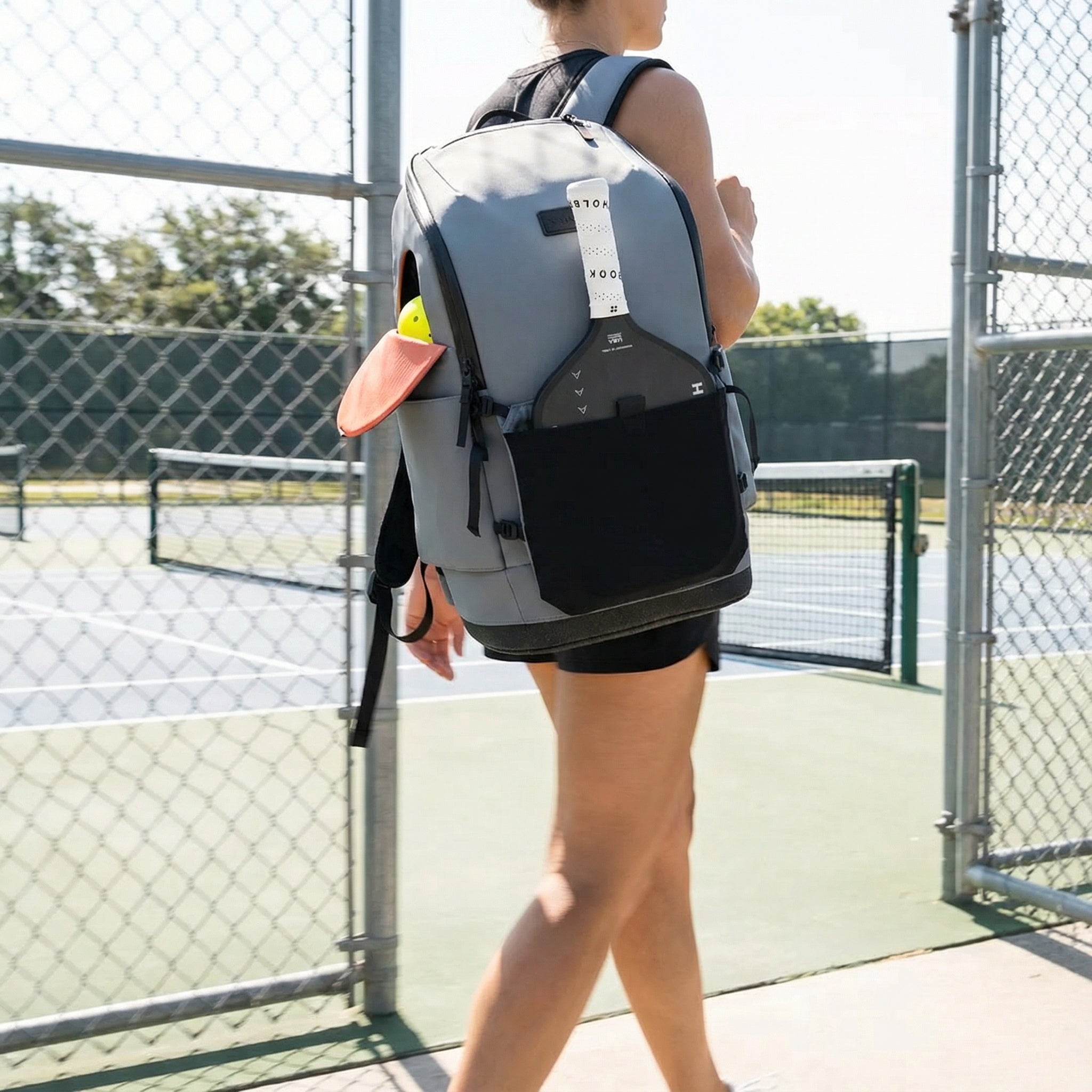
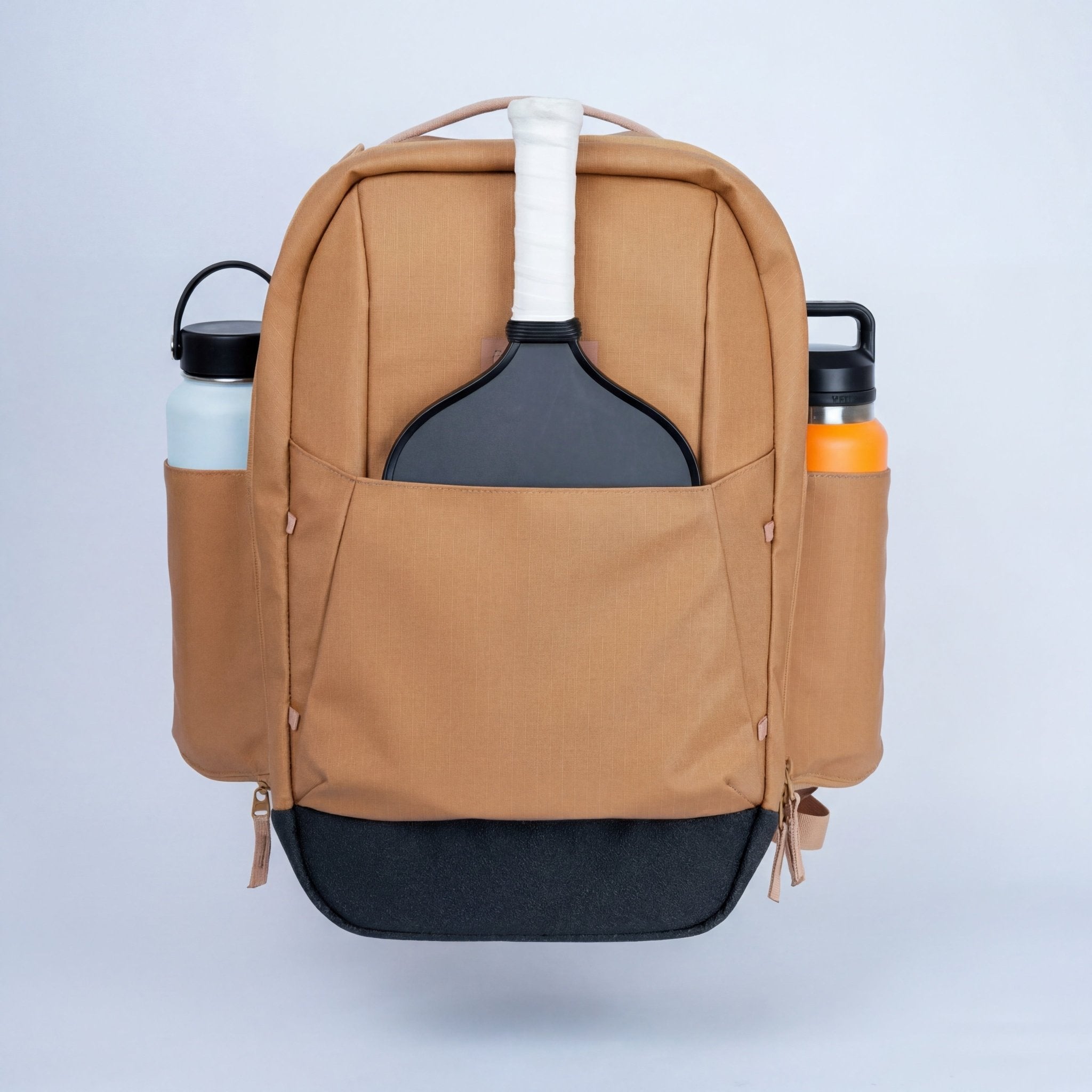
The Court Ranger V2 ($195) is FORWRD's best fit for players under 5'6". The 25L frame was designed with shorter torso lengths in mind — the back panel makes consistent contact from shoulder to mid-back without the frame overextending toward the hip, which is the dead giveaway that a bag was built for a taller body. The shoulder straps shorten further than the Court Caddy's and the sternum strap slides vertically, so players can set it at their actual chest level rather than wherever the manufacturer decided to anchor it.
The Ranger V2 also weighs less empty than the Court Caddy. For a smaller frame, that matters — a bag's relative load scales with your body weight, not just its absolute weight. The 16" laptop sleeve, dual paddle sleeves, and TPU-coated ripstop nylon construction stay constant regardless of your height.
"We kept hearing from players in the 5'3"–5'7" range that most bags felt like they were designed for someone else. The sternum strap was always in the wrong spot. The Ranger V2 was built to fix that — compact frame, shorter strap minimum, and a sternum position that actually lands where it's supposed to on a smaller torso."
— Grub, Co-founder, FORWRD
What petite players should avoid: Bags over 30L with fixed or bottom-anchored sternum straps. Also avoid sling bags for sessions longer than 90 minutes — single-shoulder loads that feel fine for a quick hit become a shoulder problem across a full round-robin or open play afternoon. See our full comparison of pickleball sling bags vs. backpacks for the complete breakdown by session length and gear load.
For petite players who are also shopping by gender-specific design, our best pickleball bags for women (2026) covers fit considerations across a wider range of builds and brands.
Best Bags for Tall Players (5'10"+) and Wide Shoulders
Tall players and wide-shoulder players share a frustration that shorter players never encounter: straps that can't open wide enough, and a back panel that contacts at the shoulders but floats away at the mid-back. For 6'+ players, most bags sit like a hiking pack positioned two inches too high — all the load goes to the shoulder muscles rather than distributing down the back.
What to look for when you're 5'10" or taller, or built broad:
- Larger frame (28L+) with a longer back panel that spans more of the torso
- Extended maximum strap length so the bag can drop to the correct carry height
- Wide strap channel spread — the distance between where the two straps attach at the top of the bag
- Structured base or hip-anchoring to prevent the bag from rocking at tall frame heights
The Court Caddy ($325) fits tall players and wide-shoulder builds better than anything we've tested at this price point. The 30L frame spans the full torso length on players up to 6'4", with a back panel that makes consistent contact from shoulders to lower back rather than floating at the midpoint. The shoulder strap channel spread is wider than the Ranger V2's, which matters significantly for wide-shoulder players who find standard bags pulling their shoulders together at the sternum.
Where the Court Caddy is honestly better for tall/broad players:
- The 15" padded laptop sleeve, modular paddle system (1–5 paddles), and YKK AquaGuard weatherproof zippers are all standard — but the carry system is where it separates from the field for bigger frames
- The strap adjustability ceiling is higher — the Caddy can extend further than the Ranger V2, which makes the difference for 6'2"+ players who bottom out on smaller bags
- The wider frame distributes the 30L load across a larger contact surface, reducing pressure concentration on any single point on your back
The Court Caddy is heavier empty than the Ranger V2. For tall players, this is typically a non-issue — the proportional load on a 185 lb frame is lower than on a 120 lb frame. If back pain is already a concern, see the next section.
Best Bags for Players with Back or Shoulder Issues
If you're managing a rotator cuff issue, lumbar sensitivity, or chronic shoulder fatigue from playing 4+ days per week, bag fit moves from comfort preference to performance necessity.
Three things matter most for players with back or shoulder sensitivities:
- Load centering. A bag that sits close to your spine reduces the lever-arm force on your shoulder muscles. A bag floating even 3–4 inches away from your back doubles the effective load on those muscles. Back panel contact across the full height of the bag is non-negotiable.
- Sternum strap engagement. When positioned and clipped correctly, a sternum strap pushes 15–20% of the bag's load into your chest and rib cage structure, off your shoulder muscles entirely. It's not decorative — it's a load-sharing mechanism that most players skip.
- Even bilateral load. Sling bags, regardless of how light, load one shoulder asymmetrically. For players with shoulder sensitivities, a two-strap backpack distributes load across both shoulders and reduces peak stress per side by roughly half.
The Court Caddy's padded back panel makes consistent contact on medium-to-large torsos, which eliminates the floating-bag problem. Its sternum strap system positions correctly for players in the 5'7"–6'4" range. For players with existing back or shoulder sensitivities, the Caddy's structured load distribution across a larger frame is typically easier to manage across a full morning of play.
Bag fit is one piece of shoulder health. Our pickleball shoulder mobility guide covers the pre-session warm-up and mobility work that protects your shoulder across a full season of play.
The Body-Type Fit Matrix: Which Bag Is Right for You?
No competitor article gives you this. Use it as a quick-reference before you buy:
| Height Range | Shoulder Build | Torso Type | Best Fit | Why |
|---|---|---|---|---|
| Under 5'4" | Narrow–Medium | Short | Court Ranger V2 | Compact 25L frame, shorter strap minimum, lighter empty weight |
| 5'4"–5'7" | Medium | Short–Medium | Court Ranger V2 | Sweet spot for the Ranger V2's frame; fits without overextending |
| 5'7"–5'10" | Medium | Medium | Either — choose by capacity | Both bags fit this range; Caddy for more gear, Ranger V2 for lighter carry |
| 5'10"–6'2" | Medium–Wide | Long | Court Caddy | 30L frame spans longer torsos; wider strap spread for broad shoulders |
| 6'2"+ | Wide | Long | Court Caddy | Maximum strap extension; full back panel contact at tall torso lengths |
| Any height | Wide | Any | Court Caddy | Wider strap channel spread prevents the inward pull that plagues wide-shoulder players |
| Any height | Any | Back/shoulder sensitivity | Court Caddy | Structured load distribution; sternum strap reduces shoulder muscle engagement |
Ready to find your fit?
If the matrix puts you in Ranger V2 territory: Shop the Court Ranger V2 — $195 →
If it puts you in Court Caddy territory: Shop the Court Caddy — $325 →
How to Test Bag Fit Before You Buy
If you're buying in person at a tournament pro shop or demo event, test fit before committing. If buying online, these are the checks to run when the bag arrives — and what to look for when deciding whether to keep it:
- Load it to game weight first. An empty bag always fits. Load it with 10–12 lbs — paddles, water, shoes — before adjusting a single strap. You're fitting the bag you'll actually carry, not the shell.
- Adjust straps with load on. Shorten shoulder straps until the top of the bag sits 1"–2" below the base of your neck. The bag should make simultaneous contact with your upper and mid-back — not rock.
- Position the sternum strap at mid-chest. Clip it across your chest at the mid-pec level, not near your collarbone and not at your diaphragm. When clipped correctly, you should feel the load shift slightly forward off your shoulders.
- Walk 50 yards. That's roughly the distance from a parking lot to the back courts at most public parks. If the bag is already migrating — sliding down, pulling forward, or torquing to one side — it's a fit problem that gets worse over two hours, not better.
- Simulate a court change. Set the bag down, pick it up, set it down, pick it up. If the motion is awkward or the bag is hard to one-hand off the ground, it's not going to feel better at game three of a round-robin.
Good bag fit pairs with good bag organization. Our pocket-by-pocket pickleball bag organization guide covers the optimal load layout for both the Court Caddy and Court Ranger V2 so the weight distribution matches the frame design.
FAQ: Common Questions About Pickleball Bag Fit and Body Type
What pickleball bag works best for petite players?
The Court Ranger V2 ($195) is the top pick for players under 5'6". Its 25L compact frame, shorter strap minimum, and vertically sliding sternum strap fit shorter torsos the way the bag was designed to — without the bag riding low or pulling the neck forward during extended sessions.
Do wide-shoulder players need a different bag fit?
Yes. Standard bags position shoulder straps for a medium shoulder spread, which creates inward tension on wider frames. Wide-shoulder players should prioritize bags with a wider strap channel spread — the distance between the two strap attachment points at the top of the bag. The Court Caddy's wider frame accommodates broad-shoulder builds better than any other bag we've tested.
Is the Court Ranger V2 too big for shorter players?
No — it's actually FORWRD's best fit for shorter players because it's the smaller bag. At 25L with a shorter back panel height and lighter empty weight, the Ranger V2 was designed for the 5'3"–5'8" range. The Court Caddy's 30L frame is the one that overextends on shorter torsos.
What features matter most for ergonomic bag fit?
In order of impact: (1) strap adjustability range that actually reaches your body's dimensions, (2) a vertically sliding sternum strap positioned at chest level, (3) back panel contact along your full torso, not just your shoulders. Load weight matters less than load distribution — a 15 lb bag that fits correctly will feel lighter than a 10 lb bag that doesn't.
Which FORWRD bag should I choose if I play 4+ days a week?
High-frequency players accumulate more carry time per week, so fit problems compound faster. Use the body-type matrix above to identify your frame range, then size up in capacity if you play tournaments or bring a full kit (more gear = more load = more critical to distribute it correctly). Court Caddy is typically better for high-volume tournament players; Ranger V2 is better for high-volume recreational players who want to move light between sessions.
Can I use a sling bag if I have shoulder problems?
For 45-minute casual play with minimal gear: yes. For longer sessions, competitive play, or active shoulder issues, a two-strap backpack distributes load bilaterally and reduces peak stress per shoulder by roughly half. Sling bags are convenient for quick hits — they're not designed for sustained carry under heavy loads.
Ready to upgrade your bag? Shop the Court Caddy — designed with feedback from 500+ real players and built to last across thousands of court sessions. Or go compact: see the Court Ranger V2 — the bag built for serious players who want to move light without sacrificing organization.

Leave a comment
This site is protected by hCaptcha and the hCaptcha Privacy Policy and Terms of Service apply.