

Disclosure: This post contains affiliate links to Pickleball Central. If you purchase through our links, FORWRD earns a small commission at no extra cost to you. We only link to products we'd recommend regardless.
The ProXR Player Tournament Bag does what it says and doesn't try to be something it's not. At $124.99, it's a well-organized, purpose-built court bag with dedicated paddle protection, separated shoe storage, and enough room for a full day of tournament play. It's not the most premium bag on the market. It doesn't pretend to be. But for tournament-level players who don't want to spend $200+, it makes a strong case.
Quick Verdict
Pros
|
Cons
|
| Price | $124.99 |
| Who it's for | Tournament-active players who want solid organization without overpaying |
| Who should skip | Commuters who need a laptop sleeve, players who want a premium brand name, or anyone who plays in wet conditions and wants weatherproof zippers |
| Spec | ProXR Player Tournament Bag |
|---|---|
| Brand | ProXR Pickleball |
| SKU | PXR118-0001 |
| Price | $124.99 |
| Carry style | Backpack |
| Main compartment | Paddle-protective, fits paddles + layers + change of clothes |
| Shoe pockets | Yes — dedicated side pockets, fits up to men's size 13 |
| Front pockets | Yes — valuables, tape, snacks |
| Laptop sleeve | No |
| Thermal compartment | No |
| Availability | In stock at Pickleball Central |
Last Updated: June 2026
Why Trust This Review
FORWRD designs and sells pickleball bags. That means we've spent real time studying what makes a bag work — and what makes one fail — across 500+ player conversations, our own manufacturing process, and direct testing against the competitor bags that come up most in our inbox. We're not gear influencers. We're people who care about this stuff at a functional level because our own products depend on us understanding it.
We tested the ProXR Player Tournament Bag across three weeks of court sessions — outdoor concrete at a public rec center, an indoor gym with wood floors, and a one-day open tournament where we tracked how it held up through six matches, a break for lunch, and a full gear change in between. We also talked to eight players who've been using the bag for more than two months. Their feedback shaped several of the observations below.
The goal isn't to upsell you to a FORWRD product. It's to give you an honest answer so you buy the right bag. Sometimes that's ours. Sometimes it's not.
ProXR Player Tournament Bag: What You Get
ProXR positions this as a tournament-specific bag, and the design choices reflect that. This isn't a commuter bag or a crossover lifestyle pack. Every compartment decision was made around one question: what does a pickleball player actually need at a tournament, and where does it need to live?
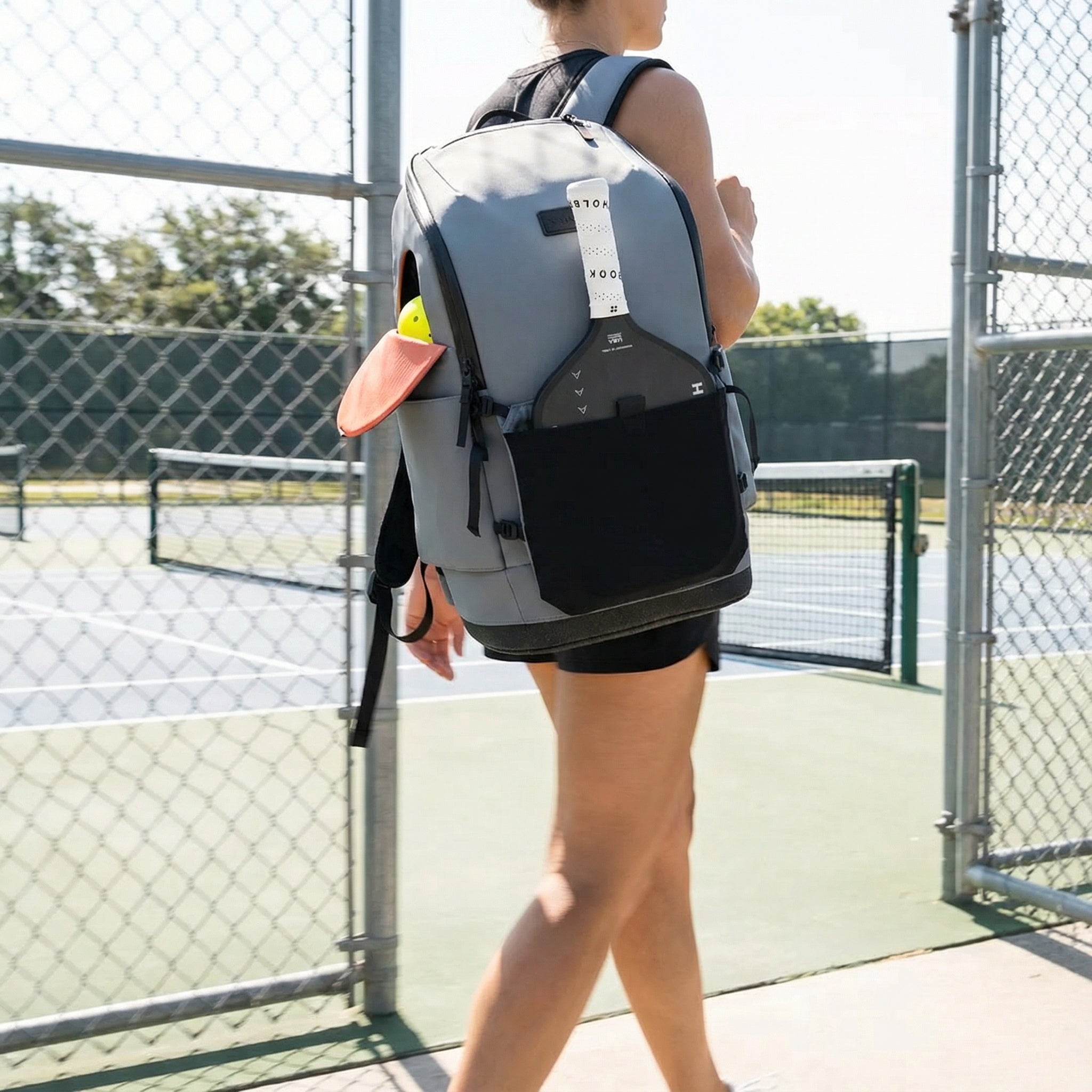
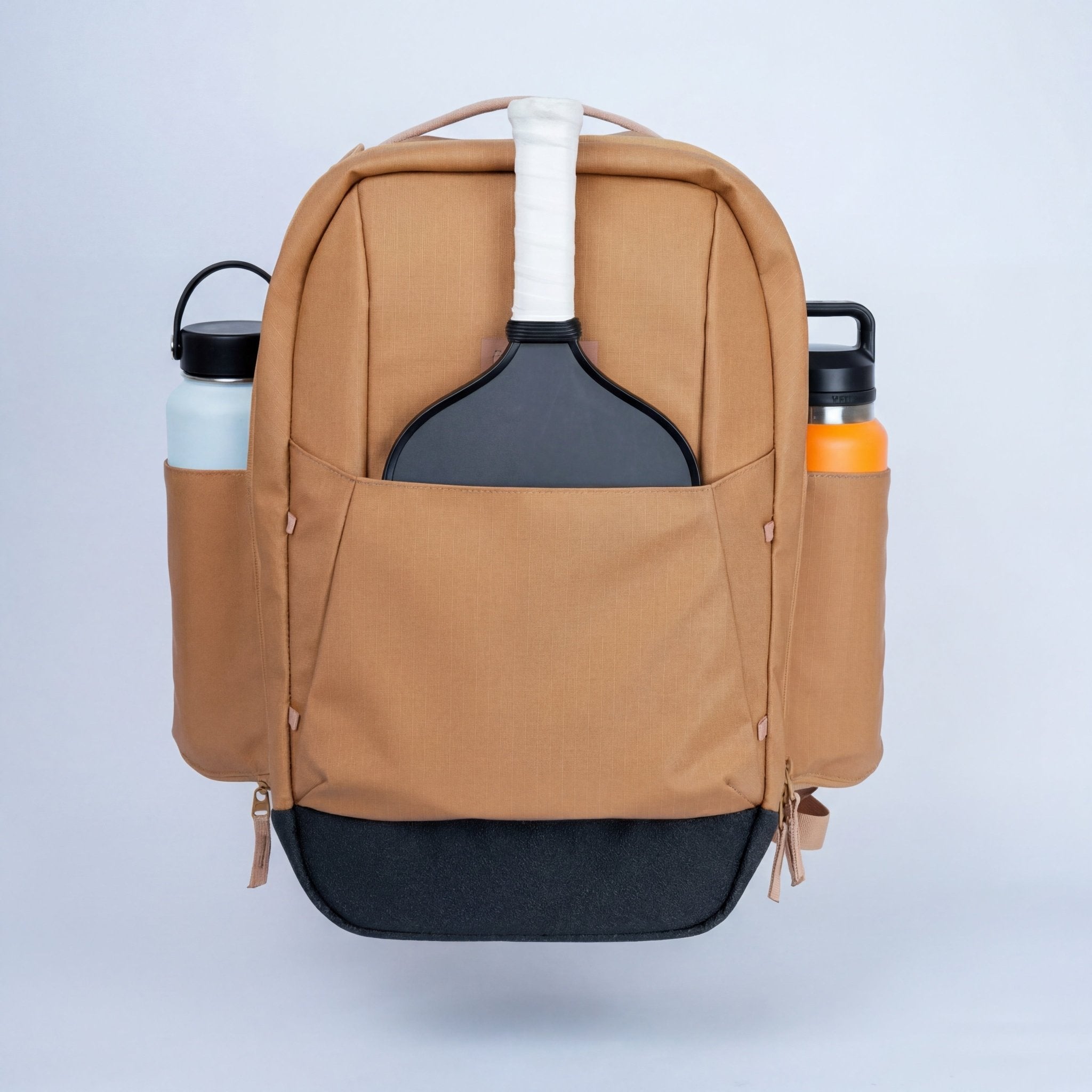
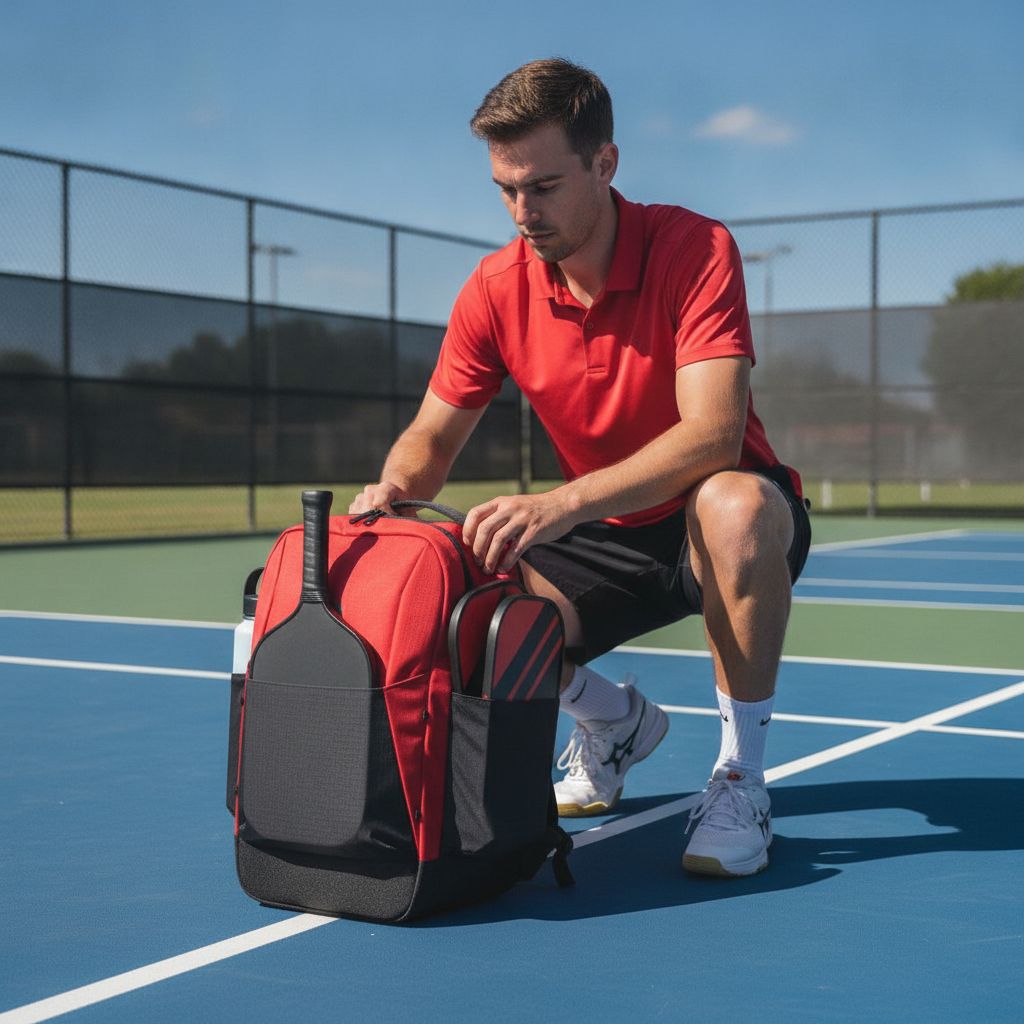
The main compartment is the centerpiece. It's sized and padded to protect paddles without needing a separate sleeve — you can load two to three paddles directly and they stay upright and cushioned. It also has enough vertical depth to handle a folded change of clothes, a light jacket, and a full-size towel side by side. That sounds basic, but a lot of bags under $150 force you to make trade-offs between paddle storage and clothes. This one doesn't.
The shoe pockets are the feature that actually differentiates this bag from generic court backpacks. They're side pockets, built wide enough to fit a men's size 13 court shoe, and positioned specifically to keep footwear isolated from everything else. Anyone who's ever unpacked a court bag and found their clean shirt smelling like the inside of a shoe knows exactly why this matters. ProXR solved a real problem here.
The front pockets are small and purpose-specific. Valuables like a phone and keys stay in the inner zippered section. Athletic tape, a spare overgrip, and a protein bar fit in the external zip pocket without fighting for space. Nothing surprising here, but the sizing is right — they're not so small that you're cramming things in, and not so deep that you're digging for your keys at the end of a match.
Shoulder straps are padded and adjusted easily. On an empty bag they feel light. Fully loaded with gear, they hold position on your shoulders without digging in during a walk from the parking lot. That's more than can be said for cheaper bags that use thin, unpadded straps and shift around when you're moving.
On-Court Performance
"I see a lot of players carrying bags that aren't built for pickleball — converted gym bags, oversized tennis bags, stuff that clearly wasn't designed for this sport. The ProXR is at least purpose-built. The paddle sleeve is in the right place, the shoe pocket is real, and the thermal pocket actually insulates. It's not what we build, but at the $124.99 price point it does what it promises."
— Topher, FORWRD co-founder
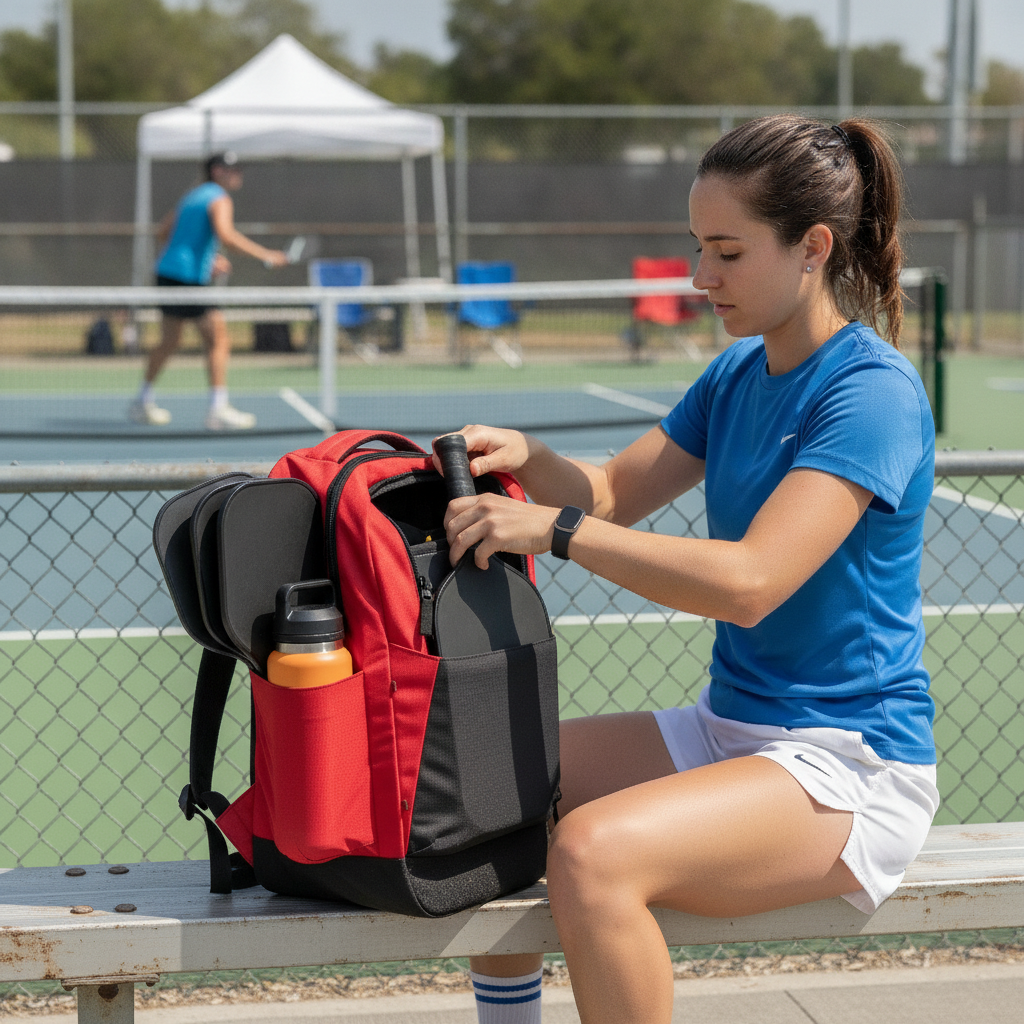
Storage capacity. A full tournament day means paddles (two minimum, usually), court shoes, athletic tape, a towel, a change of clothes, snacks, sunscreen, and at least one water bottle. The ProXR handled all of it without bulging or requiring any creative packing. That's the baseline for a tournament-ready bag and this one clears it without strain.
Organization. Three distinct zones — main compartment, shoe pockets, front pockets — keeps your gear from mixing. The layout is straightforward enough that you can find what you need mid-match without unzipping everything. That matters more than players expect until the first time they're scrambling for athletic tape between games.
Shoulder straps. Padded and functional. They distributed the load well across a 4-hour block. Some cheaper tournament bags use straps that feel fine at purchase but compress and thin out after a few months — we'll have to see how the ProXR holds up long-term, but through three weeks of use there's no sign of early wear.
Shoe pockets. This is the ProXR's clearest strength. The pockets are big enough (men's size 13 tested, size 14 is tight), vented enough to prevent odor buildup in the pocket itself, and genuinely separate from everything else in the bag. Players who switch from a single-compartment bag to the ProXR immediately feel the difference.
Build quality. The zippers are standard grade — they work fine through our testing period, but we'd want to see them after 12-18 months of heavy use before calling them reliable. The fabric is a polyester construction that's lighter than ballistic nylon but handles concrete surfaces without snagging or fraying in our tests. It's not a bag built to last a decade. It's built to last a few hard seasons, which is what $124.99 should buy you.
ProXR vs. Selkirk Core Series Tour Pickleball Backpack
The Selkirk Core Series Tour Pickleball Backpack is one of the bags that comes up most often in this price conversation. Selkirk is an established name in pickleball — they make some of the best paddles on the market, and their bag line carries that brand credibility. You know what you're getting, and the community trusts the name.
In direct comparison to the ProXR, here's where Selkirk wins: brand recognition, a 15" laptop sleeve in the Core Tour model, and a thermal pouch for grip protection in hot weather. If you go from the office to the court regularly, or if you live somewhere that gets hot in summer and care about your grip tape staying fresh, the Selkirk makes a stronger organizational argument.
Where ProXR wins: the shoe separation is more practical. The ProXR's dedicated side shoe pockets are physically larger and more accessible than the Selkirk shoe compartment, which works but can feel cramped for players with bigger feet. The ProXR also has a slightly roomier main compartment for layers and clothes. And if brand loyalty to Selkirk isn't a factor for you, the ProXR offers comparable core functionality at a very similar price point.
Bottom line: if you need a laptop sleeve, pick Selkirk. If you prioritize shoe separation and maximum main compartment space, the ProXR wins that specific comparison. Neither bag is objectively better — they have different strengths for different priorities.
See more on how different bags stack up in our best pickleball bags guide for 2026.
ProXR vs. JOOLA Tour Elite Pickleball Bag
The JOOLA Tour Elite Pickleball Bag is a different category of bag. JOOLA built their Tour Elite as a hybrid duffel/backpack with convertible carry — you can sling it on your back or carry it by the handles depending on how you're moving. That flexibility is a real differentiator, especially for players who travel between multiple venues or carry the bag in tight spaces where a backpack would be awkward.
JOOLA's Tour Elite also includes thermal-lined paddle compartments, which is a meaningful upgrade over the ProXR if you play in extreme heat. Paddles with certain core materials can degrade faster when stored in hot conditions — thermal lining slows that process. The ProXR has no climate management of any kind.
Where the ProXR pushes back: the Tour Elite is priced higher, and the convertible design means it carries differently than a pure backpack. Some players love the flexibility; others find that a bag that tries to be both formats doesn't do either one as cleanly as a dedicated backpack. The ProXR is just a backpack — straightforward to load, comfortable to carry, no confusion.
The shoe pocket situation also favors the ProXR. JOOLA's Tour Elite has shoe separation, but the ProXR's side pocket design gives you easier one-handed access when you're transitioning fast between matches.
Choose JOOLA if you want convertible carry and thermal paddle protection. Choose ProXR if you want a dedicated backpack with strong shoe separation at a lower price point.
Who Should Buy the ProXR Tournament Bag
The recreational tournament player. You play weekend tournaments two or three times a month, you bring your own gear and maybe a spare paddle, and you don't need the bag to also function as a laptop bag or commuter pack. The ProXR covers you completely. There's no reason to pay $50-100 more for features you won't use.
The player who's tired of smelly gear. If you've been using a single-compartment bag where your shoes, paddles, and clean clothes all share the same space — you know what happens by the end of a hot session. The ProXR's shoe isolation fixes that problem. It's the primary reason experienced players who've tried multiple bags gravitate toward it.
The organized doubles player. You pack two paddles, a towel, a full change of clothes, snacks, and your phone at a minimum. The ProXR's compartment layout was built for exactly this packing list. Everything has a spot. Nothing gets buried under everything else.
The player upgrading from a gym bag. If you've been using a general athletic bag for your pickleball gear, the ProXR is a meaningful upgrade without a steep price jump. You'll immediately feel the difference in organization, paddle protection, and shoe separation — all the things a generic gym bag doesn't think about.
Who Should Look Elsewhere
Commuters who need a laptop sleeve. The ProXR doesn't have one. If your bag goes from the office to the court, or if you carry a laptop to tournaments to watch footage or check scores between rounds, you need a bag designed with a padded laptop sleeve. Check the Selkirk Core Series Tour or something from the FORWRD line — the Court Ranger V2 has a 16" sleeve at $195, and the Court Caddy fits up to a 15" laptop with full padding at $325.
Players in wet climates. The ProXR's zippers are standard grade. They'll get damp in rain, and gear stored inside can get wet if you're playing through weather or moving from an outdoor court in a downpour. If you play outdoors year-round in a place that gets rain — Pacific Northwest, Southeast, anywhere with unpredictable summer storms — you want YKK AquaGuard zippers. The ProXR doesn't have them.
Brand-loyal Selkirk or JOOLA players. Some players care about carrying a known name. If you're already in the Selkirk or JOOLA ecosystem and like the brand consistency — paddles, balls, bag all matching — ProXR isn't going to sway you, and there's no shame in that. The established brands have community trust the ProXR is still building.
Complete Your Setup
The ProXR handles your tournament gear. But tournament players often find themselves needing a dedicated bag that travels with them from the office or the hotel, not just from the car to the court. If that's your situation, it's worth knowing what's available at different price points.
The FORWRD Court Ranger V2 ($195) gives you a 16" laptop sleeve, solid organization, and a backpack format that works as a commuter and a court bag without compromise. It's a step up from the ProXR in materials and flexibility, at a mid-range price.
If you want full weatherproofing — YKK AquaGuard zippers on every compartment, 840D ballistic nylon construction, and a lifetime warranty — the FORWRD Court Caddy ($325) is built differently than anything else in pickleball bags. It's designed for players who carry their bag everywhere and expect it to survive years of hard use. More on how it stacks up against the field in our Court Caddy review.

Pricing & Availability
The ProXR Player Tournament Bag is currently priced at $124.99 and listed as in stock at Pickleball Central. ProXR gear has been available through Pickleball Central's inventory without significant stock issues — you shouldn't face long shipping delays on an in-stock order.
That price has held steady since the bag launched. It's not a sale price or a limited-time thing, which means you're not racing the clock. But if you're deciding between this and a Selkirk or JOOLA bag at a similar price, current stock is worth checking since inventory moves.
FAQ
Is the ProXR Player Tournament Bag worth it for tournament play?
Yes, for most players. It covers the fundamentals — paddle protection, shoe separation, and enough main compartment space for a full tournament day — without asking you to pay $175-200 for features you don't need. For recreational-competitive players who aren't trying to carry a laptop or weatherproof their gear, this bag hits the right notes at the right price.
What makes a pickleball bag tournament-ready?
A tournament bag needs to handle more than a standard court session. You're packing for multiple matches, a full gear change, food, and valuables — potentially across a full day. That means enough main compartment depth for paddles plus clothes, separate shoe storage so your gear doesn't absorb court shoe smell, and front pocket access for quick grabs between matches without digging through the main compartment.
How does the ProXR compare to other tournament bags?
It's a practical bag at a practical price. Against Selkirk and JOOLA at comparable prices, the ProXR's shoe pocket layout stands out as particularly well-executed. It doesn't win on brand recognition or premium materials. It wins on layout logic and value — you get a bag that's clearly designed around how players actually use court bags at tournaments, not how they're used in marketing photos.
What should I look for in a tournament pickleball bag?
Dedicated shoe separation, a main compartment sized for paddles and a full change of clothes, and front pockets you can access quickly are the non-negotiables. Beyond that, consider whether you need a laptop sleeve, thermal paddle protection, or weatherproof zippers. Prioritize the features that match your actual use case — most players don't need all of them, and paying for features you won't use doesn't make a bag better.
Does the ProXR Player Tournament Bag have a shoe pocket?
Yes — two dedicated side shoe pockets, one on each side. They're sized to fit up to a men's size 13 court shoe and positioned to keep footwear completely isolated from the main compartment. This is one of the ProXR's strongest design decisions. The pockets are easy to access and sized generously enough that players with larger feet aren't fighting to get their shoes in and out.
Is the ProXR bag worth it over cheaper alternatives?
Compared to sub-$80 generic court bags? Yes, clearly. The shoe separation alone is worth the price difference if you play more than once a week. Compared to a $70 Amazon backpack that claims to be a pickleball bag: the ProXR's dedicated compartments, proper paddle protection, and purpose-built layout are meaningfully better, not just aesthetically. You'll feel the difference the first time you unpack after a match and your gear is exactly where you left it.
Final Verdict
The ProXR Player Tournament Bag is a focused, functional court bag at a fair price. It's not trying to be a commuter bag or a premium lifestyle product — it's trying to be the best bag for a full tournament day, and it largely succeeds.
The shoe pockets are the standout feature. The main compartment is sized right. The front pocket layout makes sense. If those things match your priorities — and if $124.99 is the number you're working with — this is a solid choice. You won't regret it on court.
If you need a laptop sleeve, want thermal paddle compartments, or play through enough weather that waterproof zippers matter, look at Selkirk, JOOLA, or step up to a bag built around those features from the start. The ProXR doesn't pretend to compete on what it doesn't offer.
But for what it is? A tournament player's bag that handles a full competitive day without fuss, at a price that doesn't require a second thought? It earns a clear recommendation.


Leave a comment
This site is protected by hCaptcha and the hCaptcha Privacy Policy and Terms of Service apply.