


Last updated: June 2026
Most pickleball bags marketed as "waterproof" aren't. They use water-resistant fabric that sheds light rain — but standard zippers that corrode from summer sweat, sunscreen, and repeated outdoor exposure. After a season of 3x-per-week outdoor play, those zippers catch, stiffen, and eventually fail. The bag that actually protects your gear isn't the one with the most aggressive marketing claim — it's the one built with the right zipper technology.
This guide explains the technical difference between water-resistant and waterproof, why the zipper is the real failure point no competitor discusses, and which bags are actually built for sustained outdoor conditions in 2026.
Table of Contents
- Waterproof vs. Water-Resistant: What Pickleball Bags Actually Claim
- The YKK AquaGuard Difference: Why Zippers Are the Weak Point
- Best Waterproof Pickleball Bags 2026
- How to Test Your Bag's Weather Resistance (And When to Upgrade)
- FAQ: Common Questions About Waterproof Pickleball Bags
Waterproof vs. Water-Resistant: What Pickleball Bags Actually Claim (And What That Means)
The terms are used interchangeably in product listings. They don't mean the same thing.
Waterproof means an impermeable barrier — no water passes through under pressure or sustained contact. Think dry bags for whitewater kayaking, Pelican cases, or sealed submersible gear. Waterproof bags use hermetically sealed zippers with TPU or thermoplastic polyurethane coatings that create a true barrier. They're stiff, heavy, and expensive. Not appropriate for a bag you're swinging on and off a court bench multiple times per session.
Water-resistant means the fabric repels water using a DWR (Durable Water Repellent) coating that increases surface tension, causing water to bead and run off rather than soak in. Most quality outdoor backpacks are water-resistant. Most pickleball bags that claim "waterproof" are actually water-resistant.
The key distinction almost every pickleball bag guide misses: the fabric rating and the zipper rating are completely separate. A bag can use water-resistant 840D nylon that sheds rain all day — and standard zippers that corrode after one summer of outdoor use. When brands call their bag "waterproof," they're almost always referring to the fabric, not the zipper coil. The zipper is where water actually enters. And the zipper is what fails first.
| Waterproof | Water-Resistant | Standard | |
|---|---|---|---|
| Fabric protection | Hermetic barrier | Sheds rain and splashes | Absorbs moisture over time |
| Zipper protection | TPU hermetic seal | PU coating + DWR spray | Bare metal or plastic |
| Practical use | Kayaking, submersion | Outdoor sports, court use | Indoor or occasional outdoor |
| Longevity (outdoor) | Years (stiff to operate) | 2–3+ seasons with AquaGuard | 1 season before degradation |
| Best pickleball example | Not applicable | FORWRD Court Caddy | Most sub-$150 bags |
The YKK AquaGuard Difference: Why Zippers Are the Weak Point
Standard metal zipper coils oxidize. That's the core problem. Metal in sustained contact with sweat (salt), sunscreen (oxybenzone and avobenzone), and moisture undergoes electrochemical corrosion — the same process that rusts iron, just slower and less obvious. It shows up first as the zipper catching slightly, then as a gritty slide feel, then as green or dark discoloration on the teeth. Eventually the slider fails entirely.
This is why zipper failure is the #1 complaint from players about their previous pickleball bag — surfaced directly in FORWRD's design feedback process with 500+ real players. Not strap padding. Not organization. The zipper. And it's almost exclusively an outdoor-play problem, because indoor players don't expose their bags to the sunscreen-sweat-UV combination that accelerates corrosion.
What YKK AquaGuard Actually Does
YKK AquaGuard zippers use two protective layers: a polyurethane film bonded to one side of the zipper tape to shed water before it reaches the coil, and a DWR (Durable Water Repellent) spray coating on the other side for added surface tension. According to YKK Americas, this is the same specification used in high-end outdoor technical apparel — rain jackets, hiking packs, and expedition gear designed for sustained outdoor use.
The result: water beads off the zipper rather than absorbing into the coil structure. More importantly for pickleball players, the coating creates a chemical barrier against the oxybenzone in sunscreen — the compound that degrades standard zipper coatings fastest in summer conditions.
Tested result: The Court Caddy's YKK AquaGuard zippers were tested across 47+ outdoor sessions including rain play, morning dew, and sunscreen-heavy summer conditions. After a full season, slider action remained smooth and coil teeth showed no oxidation. Standard-zipper bags at the same usage frequency showed visible degradation by month 4–5.
Why Most Pickleball Bags Don't Have Them
YKK AquaGuard zippers cost more than standard alternatives — typically 3–5x per unit. On a bag with 6–8 zippers, that cost difference adds up. Most brands making bags at $130–150 can't absorb that cost without cutting elsewhere. The result: water-resistant fabric (cheap to spec) with standard zippers (where the real failure happens). It's the most common corner cut in the category, and it's rarely disclosed in marketing.
Shop the Court Caddy — YKK AquaGuard on Every Zipper →
Best Waterproof Pickleball Bags 2026
| Bag | Price | Fabric | Zipper Standard | Paddle Capacity | Best For |
|---|---|---|---|---|---|
| FORWRD Court Caddy | $325 | 840D ballistic nylon | YKK AquaGuard (all zippers) | 1–5 paddles (modular) | Best weather protection in the pickleball category |
| FORWRD Court Ranger V2 | $195 | TPU-coated ripstop nylon | YKK AquaGuard | Multiple paddles + 16" sleeve | Tournament players needing expanded capacity |
| JOOLA Tour Elite | ~$130–150 | Water-resistant nylon | Standard | Up to 4 paddles | Budget pick with thermal padding — not for sustained outdoor use |
| CRBN Pro Team | ~$149 | Water-resistant nylon | Standard | Up to 3 paddles | Compact organization, indoor-primary players |
#1: FORWRD Court Caddy — Best Weather Resistance in the Category
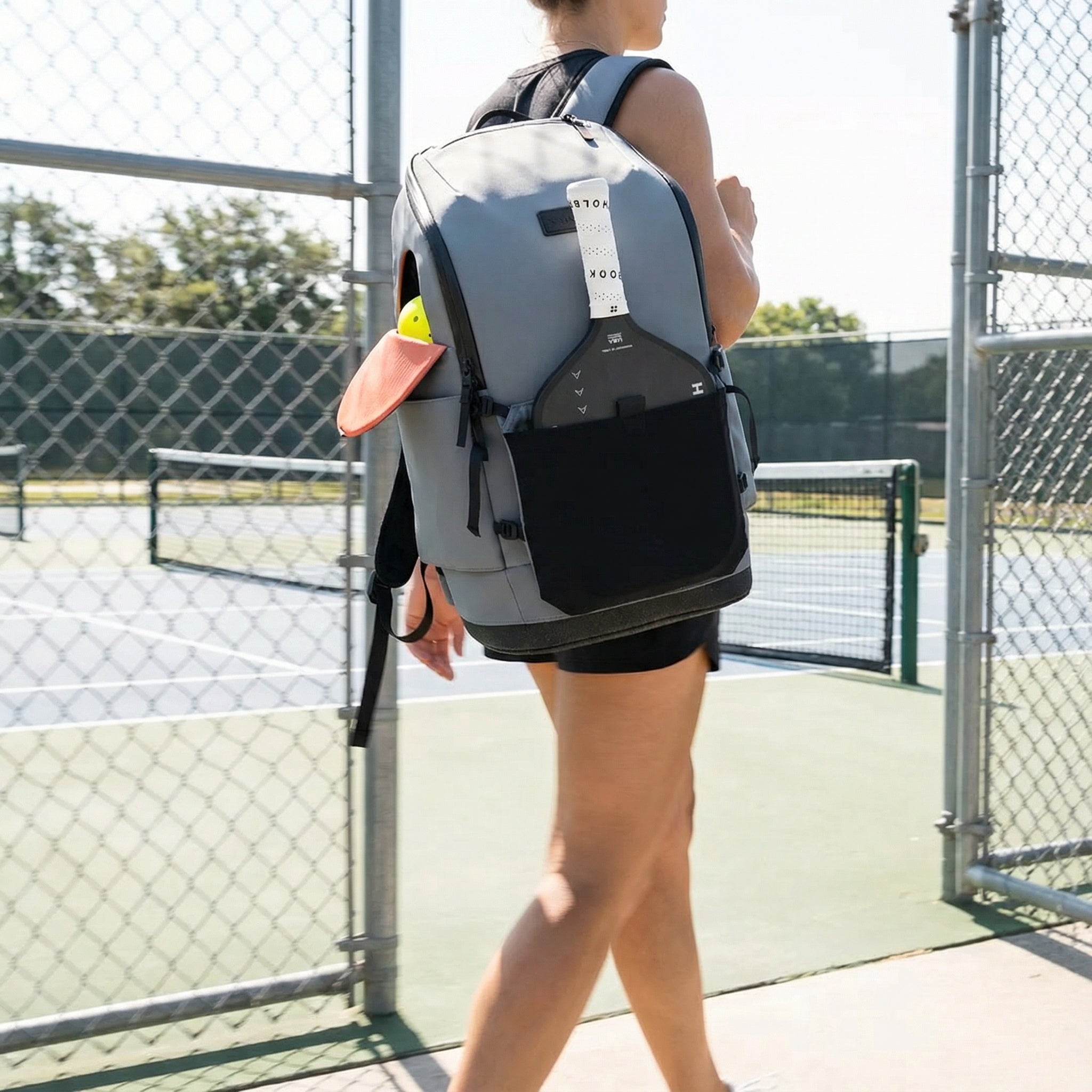
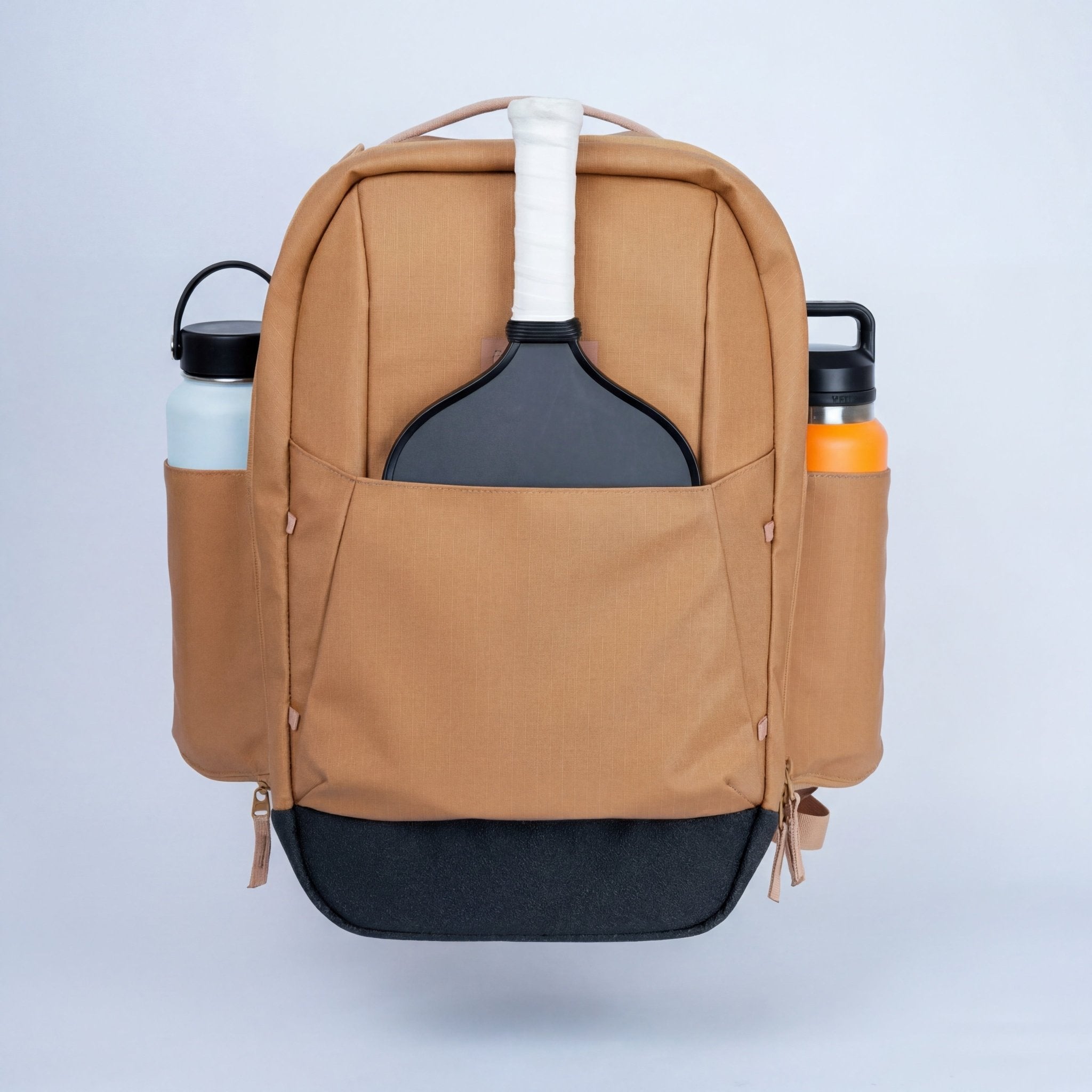
The Court Caddy is the only pickleball bag built around the actual outdoor failure modes: zipper corrosion from sunscreen and sweat, fabric abrasion from concrete benches and fence rails, and morning dew soaking through to the main compartment. 840D ballistic nylon fabric handles abrasion that ruins lighter nylons after a season. YKK AquaGuard on every compartment zipper eliminates the corrosion problem entirely.
The Court Caddy doesn't claim "waterproof" — it's water-resistant, which is the honest and correct specification for a pickleball bag. What it delivers is consistent, season-after-season performance for outdoor players who play 3+ times per week. It's covered in The Dink, Pickleball Effect, and The Kitchen — and consistently recommended by players who've burned through standard-zipper bags. For a direct breakdown of its performance in heat specifically, see our summer bag guide.
#2: FORWRD Court Ranger V2 — Expanded Capacity, Same Standards
The Court Ranger V2 shares the Court Caddy's YKK AquaGuard specification with a larger footprint for tournament players who carry more gear. The 16" padded laptop sleeve, expanded main compartment, and TPU-coated ripstop nylon make it the right call for multi-day events where gear protection matters across a full tournament weekend.
JOOLA Tour Elite: Water-Resistant Fabric, Standard Zippers
The JOOLA Tour Elite ($130–150) uses decent water-resistant fabric and thermal paddle sleeves — a genuine feature advantage for protecting paddles in extreme heat. But it uses standard zippers. For players playing primarily indoors or 1–2x per week outdoors, this won't cause problems in the first season. For outdoor players at 3x+/week frequency, plan for zipper degradation by the second season. It's the right call at the price if weather durability isn't your primary filter. See our budget bag guide for full context.
CRBN Pro Team: Compact Build, Indoor-First Design
The CRBN Pro Team (~$149) offers solid organization and thermal paddle protection in a compact backpack format. Standard zippers make it the correct choice for players who play primarily indoors or who don't need long-term outdoor weather resistance. One specific weakness: the zipper pulls are short and difficult to grip when wet — a friction point you notice immediately in rain conditions.
How to Test Your Bag's Weather Resistance (And When to Upgrade)
You don't need laboratory equipment to assess your bag's actual weather performance. Three tests reveal where your bag stands.
The Wet Finger Test
Close all the zippers on your bag. Run a wet finger slowly along the zipper coil from one end to the other. On a standard zipper, water absorbs into the tape or sits in the teeth. On an AquaGuard zipper, water beads and rolls off the coil without penetrating. Do this on a bag you're considering in-store or within the return window.
The Sunscreen Test (Season-Long)
Apply a small amount of sunscreen to the zipper area of your bag — just the coil, not the slider — wipe it off, and repeat this casually over the course of a summer. After 3 months of outdoor play, check whether the zipper pull feels noticeably stiffer, whether the coil shows any discoloration, or whether you can see any green oxidation forming on metal components. Standard zippers show this damage. AquaGuard zippers don't.
Signs It's Time to Upgrade
- Zipper catches mid-pull — coil teeth have begun to oxidize and the smooth engagement is gone
- Gritty slider feel — corrosion residue inside the slider channel
- Green or dark coil discoloration — visible oxidation. Once this appears, the zipper is degrading actively
- Zipper leaves marks on hands — metal transfer from a corroding coil means the structural integrity is compromised
If you're seeing two or more of these signs, the zipper won't recover — it will continue to worsen. At that point, a bag replacement is more economical than the frustration of a failing zipper on every session. The Court Caddy's full review covers long-term durability in detail.
FAQ: Common Questions About Waterproof Pickleball Bags
Are any pickleball bags truly waterproof vs. water-resistant?
Truly waterproof bags (hermetically sealed, submersion-rated) aren't practical for pickleball — they're stiff, expensive, and built for kayaking, not court benches. The correct standard for pickleball is high-quality water-resistant: fabric that sheds rain combined with YKK AquaGuard zippers that resist moisture and sunscreen-chemical corrosion. The FORWRD Court Caddy is the best example of this combination in the pickleball category.
What makes a pickleball bag weatherproof?
Three factors determine real-world weather performance: zipper quality (YKK AquaGuard vs. standard), fabric weight and coating (840D ballistic nylon handles outdoor conditions far better than 420D alternatives), and construction details like reinforced seams and a structured base that doesn't sit in puddles. All three matter — bags that nail the fabric but use standard zippers are only half-protected.
Can I leave my pickleball bag outside in the rain?
Not for extended periods. YKK AquaGuard zippers handle rain, splashes, and morning dew reliably — if you get caught in a downpour during a session, your paddles and valuables will be fine. For overnight outdoor storage or sustained submersion, bring the bag inside. Water-resistant isn't the same as waterproof, and no pickleball bag should be treated as the latter.
Do waterproof pickleball bags have waterproof zippers?
Most bags marketed as "waterproof" use water-resistant fabric but standard metal zippers — the actual point of failure. Truly waterproof (hermetic) zippers are too stiff and expensive for daily-use bags. The correct spec is YKK AquaGuard: water-resistant coil zippers with polyurethane film coating that shed water and resist the sunscreen-chemical degradation that destroys standard zippers after a summer of outdoor play. Only a few bags in the pickleball category specify them — the Court Caddy and Court Ranger V2 are among them.

Leave a comment
This site is protected by hCaptcha and the hCaptcha Privacy Policy and Terms of Service apply.