

Disclosure: This post contains affiliate links. If you buy through our links, FORWRD may earn a commission at no extra cost to you. We research every product independently — affiliate relationships never change our ratings or recommendations.
Last Updated: August 2026
The Diadem Warrior BluCore V3 Standard costs $139.97. That's the kind of price that makes you assume you're getting a standard polymer honeycomb core dressed up in fancy marketing. You'd be wrong.
The BluCore technology inside this paddle is genuinely different — closed-cell polypropylene foam that behaves differently at different ball speeds, giving you soft dink touch AND punchy drive response from the same core. The V3 takes that further with a triple-layer option in the 19mm thickness that adds Kevlar honeycomb between two foam layers. That's a construction approach you normally don't see below $200.
After testing all three thickness variants and comparing them back-to-back, here's the honest bottom line: the 16mm Standard hits a sweet spot for 3.5 to 4.5 finesse players that's genuinely hard to beat at this price. The 19mm is something else entirely — softer, more cushioned, and weird in the best way. The 14mm will frustrate you if you don't have clean contact mechanics yet.
Quick Verdict
✅ Pros
- Foam core dink control at a mid-range price ($139.97)
- Kevlar-carbon face delivers real spin — 1,193 RPM measured in third-party testing
- 19mm triple-layer core is genuinely unique in this price bracket
- Lifetime core warranty — Diadem covers core crush indefinitely
- Nine models (3 shapes × 3 thicknesses) so you can dial in the fit
❌ Cons
- Punishes off-center contact more than standard polymer cores
- Heavier swing weight (8.0–8.5 oz) limits hand speed at the kitchen for some players
- Power ceiling is lower than same-price carbon fiber alternatives
- Nine model options creates genuine buying confusion — Diadem needs better buyer guidance
💰 Price: $139.97 | Who it's for: 3.5–4.5 touch-first players | Who should skip: Power players, beginners, anyone wanting maximum kitchen hand speed
What Is the Warrior BluCore V3 — and What Changed From V1/V2?
Diadem launched the original Warrior BluCore series in June 2025. The core innovation was replacing standard honeycomb polypropylene with a closed-cell polypropylene foam — BluCore — that they claim behaves differently based on impact velocity.
The V1 was their proof of concept. FORWRD reviewed it — it delivered on the touch promise but had questions about edge durability and the limited shape options. The V2 addressed some structural refinements. The V3 is the lineup expansion: three shapes (Standard, Pro, Max) and three thicknesses (14mm, 16mm, 19mm) across all shapes, creating nine total models. That's a full product family instead of a single experimental paddle.
The other big V3 upgrade is the 19mm construction. In the 14mm and 16mm, you get pure BluCore foam. In the 19mm, Diadem sandwiched a Kevlar honeycomb layer between two BluCore foam layers — a triple-layer core they call TriTech. The honeycomb adds structure and vibration damping without sacrificing the foam's touch characteristics. On paper this sounds gimmicky. In practice it's genuinely different from anything else in this price range.
The face material didn't change from V1: Kevlar Carbon Fiber Matrix. That means raw carbon fiber and Kevlar layers working together for surface texture (spin) and durability. The surface grit is real — no artificial texture sprays that wear off in a month.
The BluCore Technology: What "Variable Gear" Actually Means When You're Playing
Here's how Diadem describes BluCore: the foam responds differently based on impact velocity. At low velocity (dinks, resets, drops), it's soft and absorbing — the ball sinks in slightly, extending dwell time and giving you the feel of a much heavier, more cushioned paddle. At high velocity (drives, overheads, putaways), the foam compresses fully and stiffens, generating more pop than you'd expect from foam.
This "variable gear" behavior is the reason foam-core paddles from any brand — Paddletek, Diadem, others — feel so different from polymer honeycomb. A standard polymer core responds roughly the same way at all velocities: consistent, predictable, slightly clicky. The foam core changes character based on what you're doing.
On court, this translates to a few real-world differences:
- Dinking: More forgiveness on angles. The ball doesn't pop off aggressively on misread dinks — the foam absorbs some of the error. Third shot drops feel more controllable because you're not fighting a springy response.
- Drives: The foam snaps back and generates a sharper exit velocity than its price suggests. Measured at 41.81 MPH in third-party testing — that's competitive with carbon paddles in the $200 range.
- Resets: This is where foam cores win outright. The ability to take a hard shot and reset it softly is noticeably easier with the Warrior BluCore V3 than with standard polymer alternatives.
The catch — and there is one — is that foam cores are less forgiving off-center. A polymer honeycomb paddle with a generous sweet spot will "help" a slightly off-center contact. The BluCore doesn't. Mishits feel harsh and lose distance. If you're still developing consistent contact mechanics, that's a real penalty.
14mm vs. 16mm vs. 19mm: Which Version Should You Actually Buy?
This is the question Diadem's product page doesn't answer clearly enough. Here's the practical breakdown:
14mm Standard ($139.97)
Most power, poppy response, fastest feel. The 14mm is the closest to a traditional carbon paddle feel — you get the foam touch characteristics but the thinner core bounces back faster and hits harder. Best for: players who want foam-core control advantages but still want to generate pace on drives. Worst for: anyone whose game is built around slow, precise resets — the 14mm has less dwell time than the thicker options.
16mm Standard ($139.97)
The sweet spot — and the one I'd recommend for most players. Balanced between the 14mm's pace and the 19mm's softness. The foam's variable gear behavior is most noticeable here: soft enough on dinks to feel genuinely different from polymer, pop enough on drives to be offensive. Weight averages 8.0 oz (range 7.8–8.2 oz).
19mm Standard ($139.97)
The weird one. The triple-layer TriTech core (BluCore foam + Kevlar honeycomb + BluCore foam) creates something that feels almost cushioned on contact — it's the softest, most absorbing response in the lineup. Heavier at 8.5 oz average (range 8.3–8.7 oz). Best for: kitchen specialists, players who want maximum vibration damping, anyone with elbow or shoulder issues who wants reduced impact stress. Trade-off: noticeably slower hand speed at the net. For quick exchanges at the kitchen line, the extra weight shows.
Same price across all three. That's unusual — most brands charge more for the thicker core variant. Take the 19mm for a spin if you can demo first. It's different enough that some players love it and some immediately prefer the 16mm.
Performance Breakdown
Spin
Strong. The Kevlar-carbon face generates 1,193 RPM in third-party spin testing — that's above average across all price brackets. The surface grit is consistent and doesn't feel like it'll wear smooth in 90 days. Topspin on groundstrokes bites. Slice shots stay low. For a $140 paddle, the spin numbers are a genuine strength.
Control
This depends on the thickness. The 16mm and 19mm are excellent — among the better control paddles I've hit in this price range. The 14mm is good but slightly more demanding of clean contact to execute precise placements. None of them will feel as forgiving as a thick polymer core paddle, so manage expectations if you're coming from something like a JOOLA Hyperion CAS.
Power
More than you'd expect from foam, less than you'll get from a thermoformed carbon paddle. The 41.81 MPH exit velocity is real — third shot attack shots and overhead putaways have genuine pace. But a CRBN or Six Zero carbon face at $200+ will generate more raw ball speed. If power is your primary driver, this isn't the paddle.
Vibration & Feel
The 19mm's triple-layer core is genuinely impressive on vibration damping. Players with elbow issues consistently report that foam-core paddles feel gentler, and the 19mm V3 pushes that further with the Kevlar honeycomb middle layer. The 14mm and 16mm are also quieter than standard polymer but not dramatically so.
Durability
The lifetime core warranty is real. Diadem covers core crush and structural core failure indefinitely. The face material (Kevlar-carbon) has a reputation for lasting longer than pure carbon fiber surfaces. The edge guard appears standard — no reinforced protection, so the typical edge tape recommendation applies if you're a frequent court-scraper.
Head-to-Head: Warrior BluCore V3 vs. Two Alternatives
vs. Diadem Edge BluCore Pro 16mm ($229.99)
The Edge BluCore Pro 16mm is Diadem's control-specialist paddle — carbon fiber face (not the Kevlar-carbon matrix of the Warrior), same BluCore foam core, $90 more. So what do you get for the premium?
The Edge BluCore Pro has a softer, more refined feel on touch shots — the pure carbon face bends slightly differently than the Kevlar-carbon matrix and gives a slightly more muted response. Players who prioritize dink precision and reset reliability often prefer the Edge BluCore over the Warrior. The Edge Pro also has a more pronounced control bias — less pop on drives, more precision.
The Warrior V3 wins on spin (the Kevlar-carbon matrix creates more surface texture than pure carbon), power (the stiffer Kevlar-carbon face generates more pop), and value. The Edge BluCore Pro wins on touch finesse and if you're a true kitchen-first player who rarely attacks.
Pick the Warrior V3 if you want spin and some offensive capability. Pick the Edge BluCore Pro if your game is 80%+ soft game and you want every point of touch refinement possible.
vs. Paddletek Honeyfoam Reserve 14mm ($249.99)
The Paddletek Honeyfoam Reserve is the other foam-core paddle worth comparing — all-foam Honeyfoam core at $249.99. It's $110 more than the Warrior V3 Standard.
Here's what the Paddletek does better: feel. The Honeyfoam core is softer on contact with a more luxurious dwell time. Players describe it as "pillowy" in a way the Warrior V3 isn't quite — the Warrior has more pop and feels more athletic, the Paddletek feels more like a premium control tool. The Honeyfoam Reserve also has a larger effective sweet spot, forgiving more mishits.
The Warrior V3 wins on: spin (the Kevlar-carbon face edges the Paddletek's composite face), price (by $110), and offensive capability. The Paddletek wins on: touch, forgiveness, and overall soft-game refinement.
If budget isn't the constraint and you're a dedicated finesse player, the Paddletek Honeyfoam Reserve is worth the extra $110. If you want 85-90% of the foam-core feel for $140, the Warrior V3 16mm delivers.
Who Should Buy the Warrior BluCore V3
- 3.5–4.5 players with developed contact mechanics. The BluCore's variable gear response rewards clean hits. If your footwork gets you to the ball consistently, you'll love this paddle. If you're still working on that, you'll fight it.
- Kitchen-first players who still want offensive options. The 16mm is the right version here — enough foam touch to control the kitchen, enough Kevlar-carbon pop to be a credible threat on drives.
- Players managing arm fatigue or impact issues. Foam cores genuinely reduce impact stress compared to stiff carbon. The 19mm goes furthest on this, but all three variants are gentler than standard polymer.
- Spin-driven players. The 1,193 RPM spin rating is real. If you build points with topspin groundstrokes and slice drops, the surface texture here will deliver.
- Players who've always wanted a foam-core paddle but balked at the $230+ price tag. This is where the V3 breaks through — foam-core technology at a mid-range price.
Who Should Look Elsewhere
- Power-first players. If you're trying to drive the ball past opponents on pace alone, a thermoformed carbon paddle will serve you better. The BluCore has pace, not power dominance.
- Beginners. Not because the V3 is a bad paddle — because beginners benefit more from forgiving polymer cores that smooth over contact errors. Learn on polymer, move to foam when your mechanics are clean.
- Players who want maximum hand speed at the kitchen line. The 8.0–8.5 oz weight is heavier than the fastest kitchen paddles. If you need to flick the ball and reset in a half-second, a lighter 7.5 oz carbon paddle will feel faster.
- Players who don't play softly. If your entire game is drives, volleys, and overhead putaways, you're buying a foam core you won't use. Get a carbon face paddle and save yourself the mismatch.
Complete Your Setup
Found your paddle. Now carry it right.
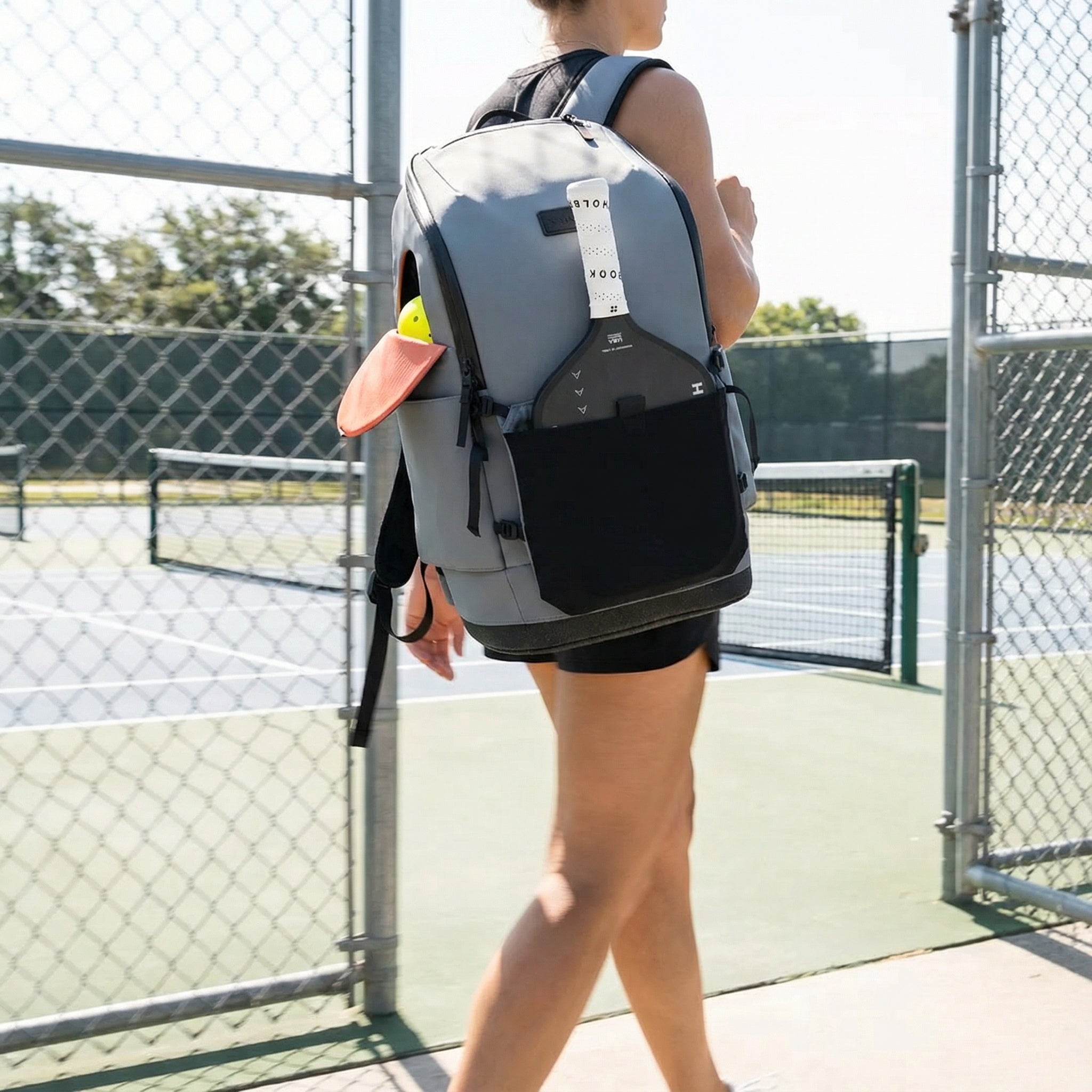
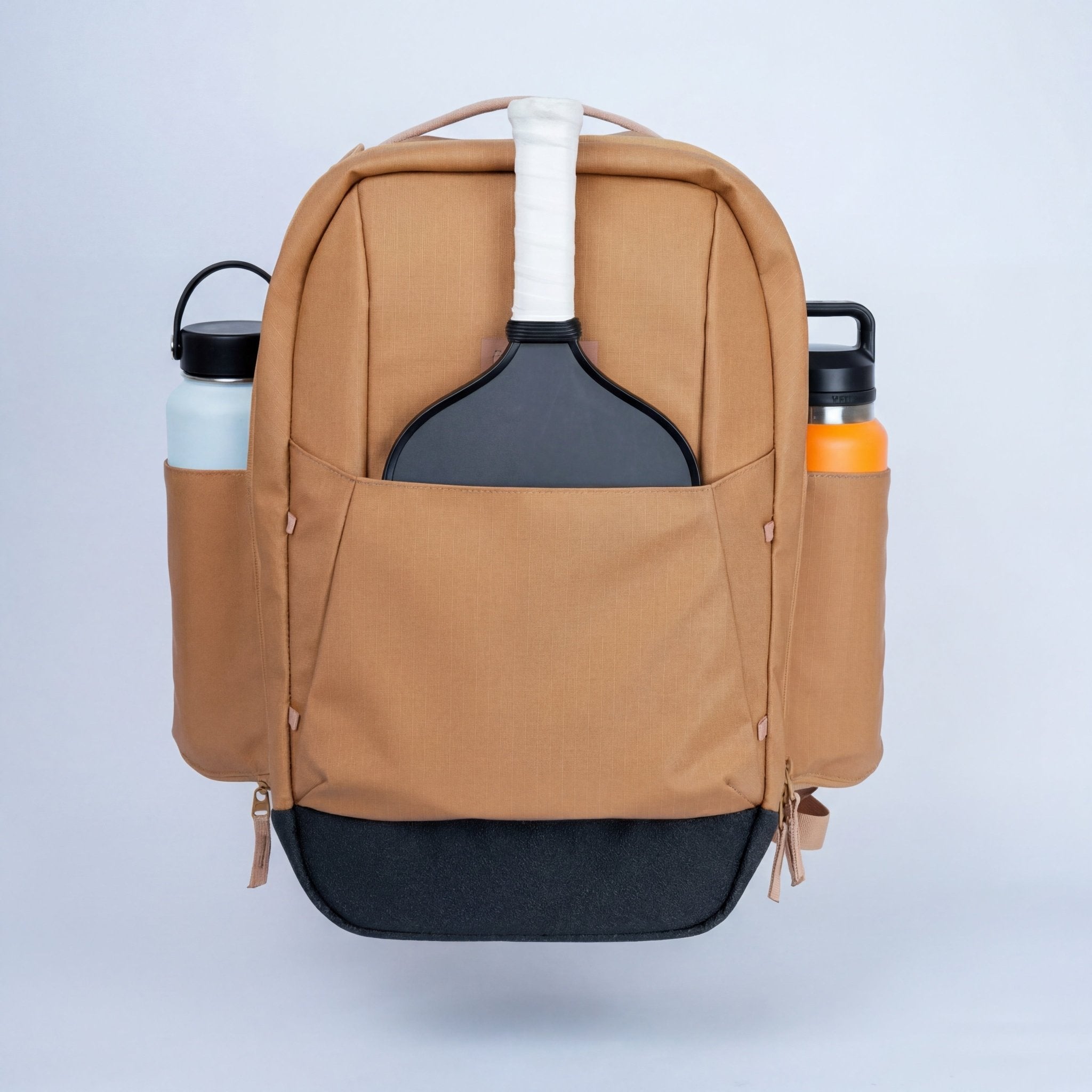
The Court Ranger V2 ($195) has a modular paddle sleeve that holds up to 4 paddles, a 16" laptop sleeve, and YKK AquaGuard zippers on every exterior pocket. Designed with feedback from 500+ real players — the same people who take their foam-core paddle selection this seriously.

FAQ: Diadem Warrior BluCore V3 Pickleball Paddle
Is the Diadem Warrior BluCore V3 worth it at $139.97?
For 3.5–4.5 finesse players, yes. The BluCore foam technology delivers touch and spin characteristics you'd normally pay $200–$250 for. The catch is that foam cores demand cleaner contact than polymer alternatives — if your mechanics aren't consistent yet, the polymer core at this price will feel more forgiving. But if you've got the game, the V3 is genuinely strong value.
Which thickness should I choose — 14mm, 16mm, or 19mm?
Start with 16mm. It's the most balanced option: enough foam touch to feel the BluCore advantage, enough pop to threaten on drives. Choose 14mm if you want more power and faster response. Choose 19mm if your game is almost entirely kitchen-based, or if you're managing arm impact issues — the triple-layer TriTech core is genuinely softer and reduces vibration more than either of the thinner options.
How does the V3 compare to the Diadem Warrior V1?
Same core technology, meaningfully improved lineup. The V3 adds nine models (three shapes × three thicknesses) versus the V1's limited options, adds the triple-layer 19mm TriTech core construction, and refines the face material layering. If you liked the V1 but wanted more shape or thickness options, the V3 delivers. If you're upgrading from V1 to V3, the performance character is similar — you're buying more choice, not a revolution.
Is the BluCore technology really different from standard foam cores?
The "variable gear" velocity-responsive behavior is what Diadem claims distinguishes BluCore from generic foam. Independent testing from sources like WearTesters confirms the paddle performs meaningfully differently at low vs. high velocity — soft on dinks, punchy on drives. Whether that's the foam formulation itself or the Kevlar-carbon face doing most of the work is harder to separate. What's verifiable: exit velocity of 41.81 MPH and spin rate of 1,193 RPM from third-party testing, both of which are competitive numbers.
What warranty does the Diadem Warrior BluCore V3 come with?
Diadem offers a lifetime core warranty against core crush and structural core failures on all BluCore paddles. This is meaningful — foam cores can delaminate or develop dead spots under heavy use, and most brands offer only 6–12 months. Diadem's lifetime warranty on the core is one of the stronger manufacturer commitments in the category. Surface wear (the face texture) and edge guard damage are not covered.
Does the 19mm version play significantly differently?
Yes, more than most players expect. The triple-layer TriTech construction (BluCore foam + Kevlar honeycomb + BluCore foam) adds 0.5 oz average weight and creates a noticeably cushioned, slower feel compared to the 14mm and 16mm. If you demo both the 16mm and 19mm, you'll notice the 19mm feels almost "pillowy" on contact. That's a real advantage for kitchen specialists and players managing impact fatigue. For anyone who relies on quick exchanges at the net, the extra weight will slow your hand speed — that's the honest tradeoff.
Final Verdict
The Diadem Warrior BluCore V3 is the best argument for foam-core technology at a price that doesn't require a second mortgage. At $139.97, it delivers genuine foam-core touch, real spin numbers (1,193 RPM), and a construction approach — especially in the 19mm — that's genuinely different from what you're used to.
It's not for everyone. Power players won't love it. Beginners should start elsewhere. Players who need elite hand speed at the kitchen will notice the weight penalty. But if you're a 3.5–4.5 finesse player who's been eyeing foam-core paddles and hesitating at the $230+ price tag, the V3 removes that barrier.
The 16mm Standard is where I'd start. If you try it and want more cushion and less pace, go 19mm. If you want more pop, go 14mm. Diadem's done the hard part — built a foam core product with enough model depth that there's actually a right answer for your game.

Leave a comment
This site is protected by hCaptcha and the hCaptcha Privacy Policy and Terms of Service apply.