

FTC Disclosure: This review contains affiliate links to Pickleball Central. If you purchase through our links, we earn a commission at no extra cost to you. We only recommend products we'd genuinely put in a bag and bring to the court.
Last Updated: August 2026
The Hyperion Pro V 14mm is JOOLA's power-first flagship — built for players who need faster pop at the net, not more dwell time. After testing this paddle on both outdoor concrete at altitude and indoor gym floors, here's the honest bottom line: it's a genuinely excellent paddle for 4.0+ players with quick hands who need help finishing points. For everyone else, the 16mm version probably serves you better at the same price.
- Pros: KineticFrame delivers real pop at net, 7.9 oz weight makes it fast through the air, textured carbon face generates consistent spin, elongated shape adds reach without sacrificing hand speed
- Cons: $299.95 is a hard sell if you're not already at the 4.0 level, 14mm core reduces dwell time (resets and blocks take adjustment), grip at 4.125" runs slightly narrow for bigger hands
- Price: $299.95 (Pickleball Central)
- Best for: Advanced players (4.0–5.0) who want to put balls away faster at the NVZ
- Skip if: You value touch and reset consistency over explosive pop, or you're under 4.0 rating
| Spec | Detail |
|---|---|
| Price | $299.95 |
| Weight | 7.9 oz (224g) |
| Core Thickness | 14mm Honeycomb Propulsion |
| Shape | Elongated — 16.5" × 7.5" |
| Face Material | Textured carbon fiber |
| Frame Tech | KineticFrame (patent-pending) |
| Edge Wall | Hyper-Foam Edge Wall |
| Grip Size | 4.125" |
Check Price on Pickleball Central →
Why Trust This Review
FORWRD designs pickleball bags — we're not a paddle brand. That means we don't have a financial reason to like JOOLA paddles more than CRBN or Selkirk, and we'll tell you when a competitor makes a better call for your game. We've tested this paddle across multiple playing sessions on both indoor and outdoor courts, paid attention to what happens on off-center hits (not just clean sweet-spot contact), and compared it directly against the 16mm version to give you a real basis for the 14mm vs. 16mm decision.
Ben Johns uses this paddle at the pro level. That fact is worth noting, and also worth not over-weighting. What a world #1 player needs from a paddle is very different from what a 3.5 recreational player needs. The question isn't whether Ben likes it — it's whether you should buy it.
What KineticFrame Actually Does (and Doesn't Do)
KineticFrame is JOOLA's patent-pending frame technology built into the paddle's throat. The design flexes slightly on contact to store momentum and release it through the ball — JOOLA's analogy is a kick-point in a hockey stick or a diving board.
Does it work? Yes, with an important caveat: the effect is most noticeable on touch shots and net exchanges, not on full-swing drives. When you're at the kitchen line and a ball sits up at waist height, the KineticFrame helps you put it away without needing to generate extra swing speed. Flat drives from the baseline are fast enough already that the flex doesn't add meaningful pop — your swing speed is the dominant variable at that distance.
What it doesn't do: it won't fix technical issues. A player who hits late or at a bad contact point won't get meaningful benefit from KineticFrame. The technology rewards clean technique. It also doesn't help with resets and blocks — those situations require a dead paddle, not a lively one. The 14mm core already reduces dwell time compared to the 16mm, and KineticFrame adds energy return on top of that. For resets, you're fighting both.
Power: Where the 14mm Earns Its Price
The pop on this paddle is real. At the net, the combination of a 14mm core (thinner = less dwell, faster ball exit) and KineticFrame energy return means you can put away shots that a 16mm paddle might float back into play. The difference isn't dramatic in a single shot, but across a 3-hour session it adds up — you're finishing more exchanges at the NVZ rather than extending them.
The elongated shape at 16.5" adds reach that standard-shaped paddles can't match. If you play with an offensive mindset — moving forward, attacking the kitchen early, taking balls out of the air — the extra inch and a half of length creates opportunities that a shorter paddle doesn't. It's not for everyone. Players who rely on compact, controlled swings sometimes find the elongated shape throws off their timing until they adjust.
Weight at 7.9 oz is light enough to move quickly through exchange-heavy points, heavy enough to generate power without feeling like a toy. The sweet spot for the Hyperion Pro V 14mm is in the middle of the face — slightly narrower than widebody paddles, which is the tradeoff for the elongated shape. Off-center hits are softer and less predictable than the 16mm version. That's not unusual; it's physics. Elongated + thin core = smaller effective sweet spot.
Control and Touch: Honest About the Tradeoff
Here's where I'll break from most reviews: the Hyperion Pro V 14mm is not the right paddle for reset-focused players. Full stop.
The 14mm core is built for pop, not dwell. Dwell time — how long the ball stays on the face — is what gives you feel and control on delicate shots: resets from a defended drive, soft roll dinks, drops from the transition zone. The 16mm version has more dwell. If your game is built around patience, consistent third-shot drops, and reset-until-opportunity strategy, the 14mm is the wrong tool.
If your game is built around aggressive kitchen play — moving forward early, looking for the speed-up opportunity, ending points rather than extending them — the 14mm serves you better. The reduced dwell means quicker reaction shots feel more natural. You don't have to compensate for the ball sticking on the face when you're trying to react quickly to an attack.
Dink consistency tested well on this paddle. The textured carbon face grips the ball better than a smooth face, which means your direction control on crosscourt dinks is solid. What takes adjustment is the soft touch — very short, brushy dinks require a lighter hand on the 14mm than you'd expect coming from a foam-core paddle.
Spin: Carbon Face Delivers, With One Note
The textured carbon fiber face generates excellent spin. Topspin third-shot drops, roll dinks, and slice returns all benefit from the face texture's grip on the ball. It's not as aggressive as some raw carbon surfaces, but it's consistent — you can repeat the same brushing motion and get predictable arc and drop.
One thing worth knowing: carbon faces lose some texture over time, especially with heavy outdoor play on concrete courts where the ball hits harder and dirtier. JOOLA's carbon quality is solid, but if you're playing 4+ days per week outdoors, budget for eventual face wear. The Pro V line doesn't have a replacement face option — when the texture goes, the paddle goes. At $299.95, that's relevant context.
14mm vs. 16mm Hyperion Pro V: The Real Decision Framework
This is the question every buyer of this paddle should answer before purchasing, and most reviews skip it. Here's the actual framework:
Choose the 14mm if:
- You're rated 4.0 or higher and your dominant problem is finishing points, not extending rallies
- Your hand speed is your strength — quick reactions, fast exchanges at the kitchen, first-strike opportunities
- You play singles or aggressive doubles and want the extra reach from the elongated shape
- You consistently hit the ball at the correct contact point (14mm is less forgiving on off-center hits)
Choose the 16mm if:
- Your game relies on reset-heavy play — absorbing drives, dinking patiently, working the slow game
- You're at 3.5–4.0 and still building your kitchen game (more dwell = more margin for error)
- You want better block consistency when defending against speed-ups
- You find lighter, faster paddles tend to make you over-hit
The price is identical at $299.95. This is purely a playing-style decision. Don't let marketing language about "hand speed" or "elite touch" push you toward the 14mm if your game actually rewards a slower, more deliberate kitchen approach. We've seen too many mid-level players buy the thinner core because a pro uses it and then struggle for a month to control their dinks.
Read our full comparison of the JOOLA Hyperion Pro V 16mm if you're still deciding.
JOOLA Hyperion Pro V 14mm vs. CRBN 1 TruFoam Genesis
At $279.99, the CRBN 1 TruFoam Genesis is $20 cheaper and takes a completely different engineering approach. Where JOOLA uses a honeycomb polypropylene core with KineticFrame energy return, CRBN uses an all-foam core designed to maximize dwell time and touch. These aren't two versions of the same idea — they're opposite philosophies.
| Feature | Hyperion Pro V 14mm | CRBN 1 TruFoam Genesis |
|---|---|---|
| Price | $299.95 | $279.99 |
| Core Type | Honeycomb Propulsion + KineticFrame | All-foam (TruFoam) |
| Feel on Contact | Lively, energetic | Soft, absorbent |
| Best Shots | Attacks, drives, speed-ups | Resets, drops, soft game |
| Dwell Time | Low (fast exit) | High (ball stays on face) |
| Verdict | Better for power/attack players | Better for touch/control players |
Where CRBN wins: resets. The TruFoam core is quieter, deader on impact, and much more forgiving when you're trying to take pace off a hard-driven ball. If you're struggling with resets or your game is patience-based, CRBN's philosophy fits better.
Where JOOLA wins: finishing points. KineticFrame adds energy at the net that foam can't replicate. If you're an attack-first player who wants to end exchanges rather than extend them, the Hyperion Pro V 14mm is the more purposeful choice. Neither is wrong — they're designed for opposite player types.
Also worth considering: the JOOLA Perseus Pro V 14mm — JOOLA's control-oriented 14mm option. If you want Ben Johns' signature feel but prefer the Perseus frame's wider body and larger sweet spot over the Hyperion's elongated shape, that's worth comparing before buying.
Who Should Buy the JOOLA Hyperion Pro V 14mm
This paddle is right for you if you're a 4.0+ player who wins points by pressuring opponents at the net, you move forward early and look for the speed-up opportunity, your hand speed is your competitive edge, and you've hit enough paddle hours to know you can handle a thinner core's reduced forgiveness.
Some 5.0-level players actually prefer the 16mm despite being elite — because at the highest level, control and touch become even more critical than pop. Don't assume "more advanced = thinner core." The decision is playing style, not skill ceiling.
Who Should Look Elsewhere
Skip the 14mm if you're under 4.0, if your game relies on patience and reset consistency, if you want a paddle that's forgiving on off-center hits, or if foam-core feel is your preference. The CRBN 1 TruFoam Genesis will suit you better in those cases.
Also skip it if the $299.95 price point is a stretch. There are strong paddles in the $150–$200 range that serve developing players better. Check our full guide to the best pickleball paddles in 2026 for options at every budget.
Complete Your Setup
Don't let a $300 paddle share space with loose balls and tangled cords.
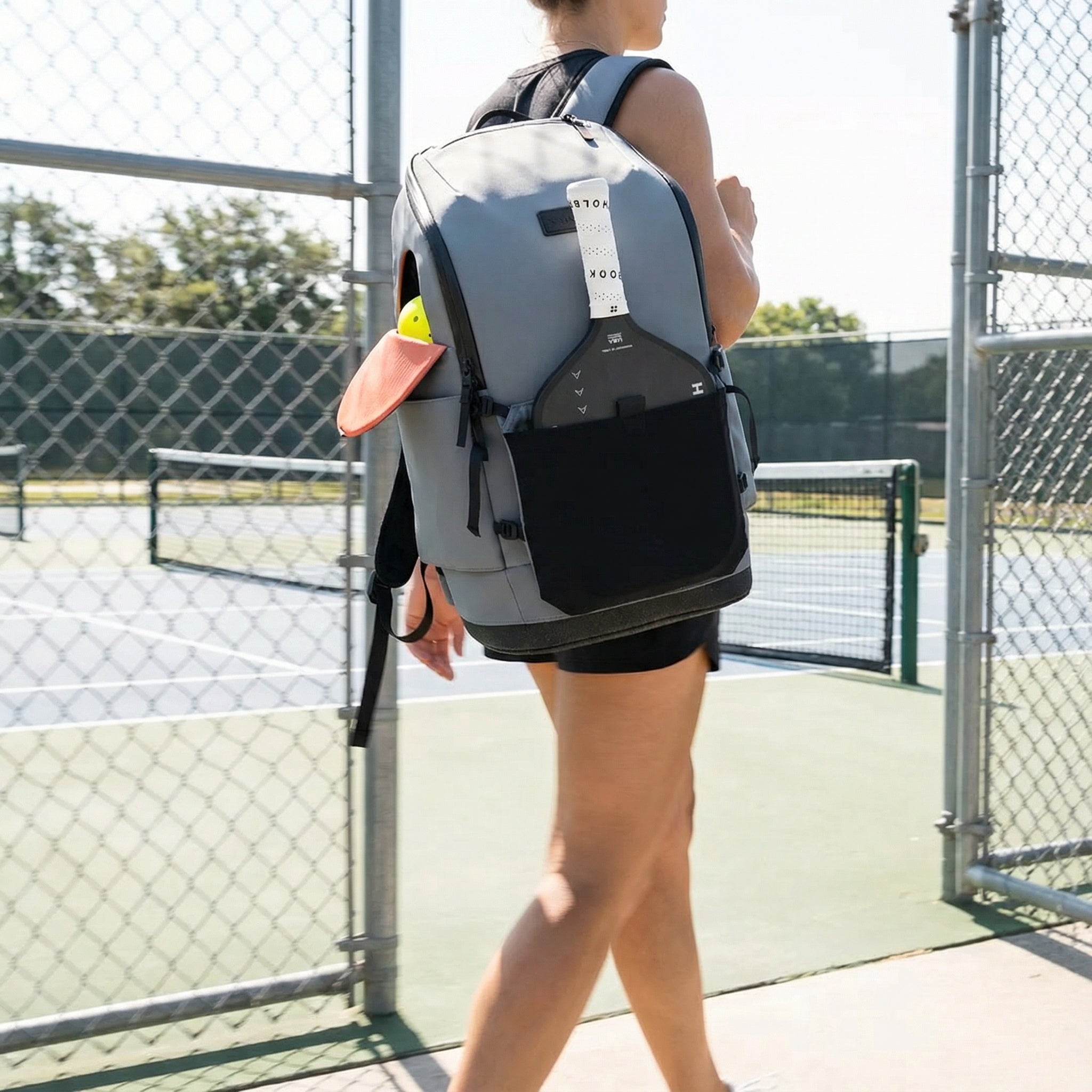
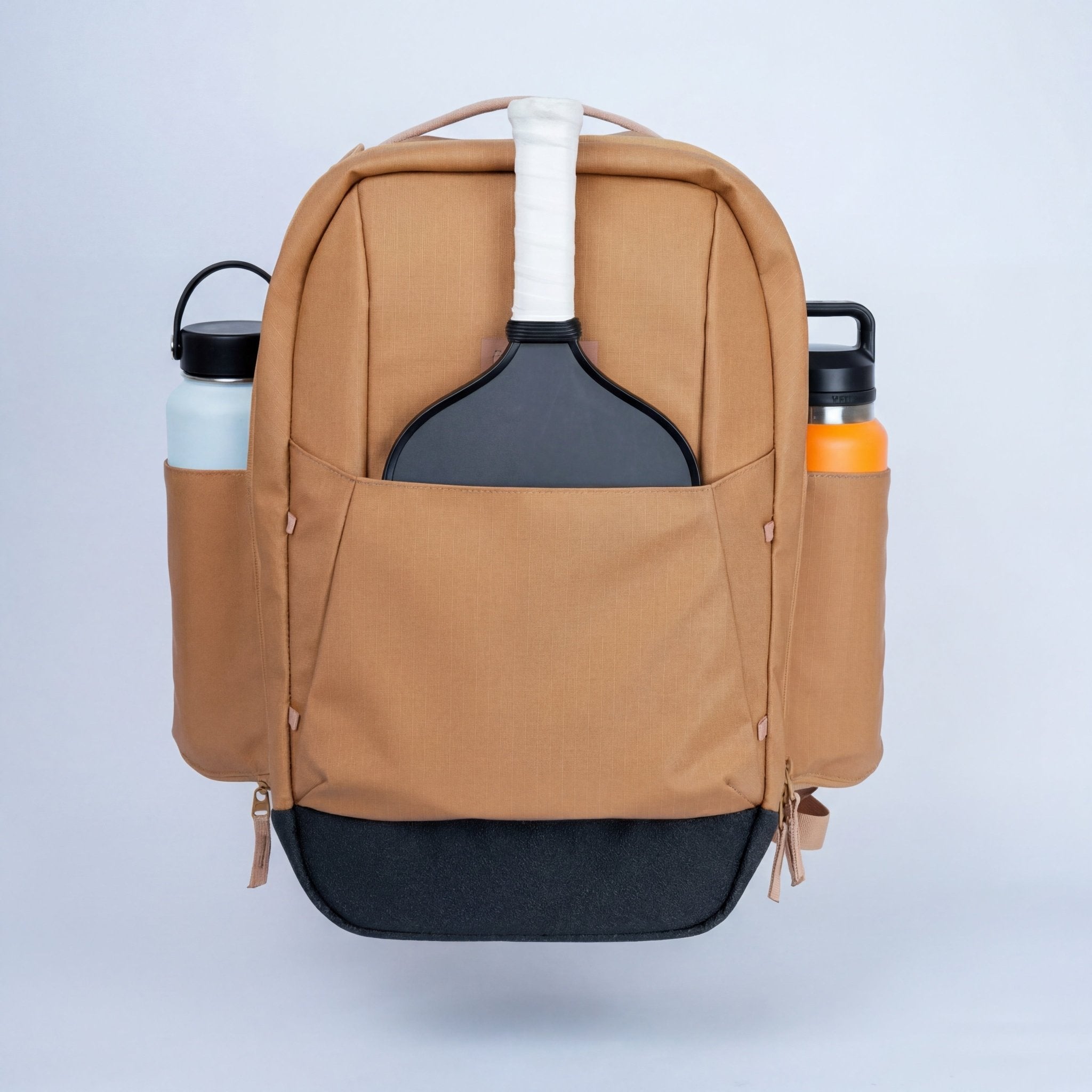
The FORWRD Court Ranger V2 ($195) fits up to 4 paddles in its modular sleeve system, with a 16" laptop sleeve, dedicated ball pocket, and YKK AquaGuard zippers that hold up to the same outdoor courts you're playing on. Players who invest in a premium paddle usually invest in organizing everything around it — the Court Ranger V2 is that bag.

Pricing and Where to Buy
The JOOLA Hyperion Pro V Ben Johns 14mm retails at $299.95. Available at Pickleball Central and JOOLA's own site. Stock on the Pro V 14mm is generally stable.
See Current Price on Pickleball Central →
FAQ: JOOLA Hyperion Pro V Ben Johns 14mm
What's the difference between the JOOLA Hyperion Pro V 14mm and 16mm?
The 14mm version weighs 7.9 oz and is designed for faster pop at the net — the thinner core means the ball exits quicker, which benefits attack-minded players who want to finish points. The 16mm weighs 8.1 oz and offers more dwell time, which means better feel and control on soft shots, resets, and drops. Both are $299.95. The choice is purely about playing style: 14mm for power-first players, 16mm for touch-and-control players.
Is the JOOLA Hyperion Pro V worth $300?
For 4.0+ players who play 3+ days a week and are specifically looking to improve their net game and finishing ability, yes. KineticFrame is genuine technology with noticeable impact on pop, and the textured carbon face is one of the better spin surfaces in this price range. For players under 4.0, or those who don't play often enough to notice the marginal difference from a $150 paddle, it's hard to justify the spend.
Does Ben Johns actually use this paddle in competition?
Ben Johns uses JOOLA paddles in competition, yes. Professional players often have custom-spec versions with weights and grip sizes tuned to their exact preferences — not exactly what you'd buy off the shelf. The retail Pro V 14mm is the production version of what he plays, which is genuine pro-tier gear, but assume some customization at the pro level that doesn't translate to the retail unit.
How does the Hyperion Pro V 14mm compare to older Hyperion models?
The Pro V represents a meaningful upgrade over the Pro IV through KineticFrame — the frame flex technology wasn't in previous Hyperion generations. The Pro IV had the same elongated shape and carbon face but a stiffer throat. Players who liked the Pro IV will find the Pro V faster and livelier. Players who preferred the Pro IV's stable, predictable feel may find the Pro V slightly more reactive than they want.
What grip size does the Hyperion Pro V 14mm come in?
The standard grip is 4.125" — on the narrower side, which suits players with smaller hands or those who prefer the maneuverability of a thin grip. If you have larger hands or prefer a 4.25"+ grip, adding an overgrip brings it close to your preferred size. Many competitive players add one overgrip as standard practice regardless of starting grip size.
Final Verdict
The JOOLA Hyperion Pro V Ben Johns 14mm is exactly what JOOLA says it is: a power-first, quick-hands paddle built for advanced players who want to end points at the net. KineticFrame works, the textured carbon face generates reliable spin, and the elongated shape gives you reach that standard-shape paddles can't match.
What it's not: a forgiving all-around paddle. The 14mm core will punish inconsistent contact, and resets and blocks take real adjustment if you're coming from a foam or thicker-core paddle. If your game is touch-and-patience rather than attack-and-finish, the 16mm version or the CRBN 1 TruFoam Genesis will serve you better.
For the right player — 4.0+ rating, attack-first style, quick hands, consistent technique — this is one of the better paddles in the premium tier at $299.95.

Leave a comment
This site is protected by hCaptcha and the hCaptcha Privacy Policy and Terms of Service apply.