

Last updated: August 2026
Disclosure: This post contains affiliate links to Pickleball Central. If you purchase through our links, FORWRD earns a small commission at no extra cost to you. We only link to products we'd recommend regardless.
The search for the "largest pickleball paddle" usually comes from one of two places: a power player who wants maximum reach and a bigger sweet spot, or someone who just got dinked to death and wants to know if a longer paddle actually helps. Both are valid — and the answer is more nuanced than "bigger is better."
Here's the short version: elongated pickleball paddles (the largest legal size allowed under USAPA rules) give you more reach and spin potential, but they come with a smaller sweet spot and a higher swing weight. For the right player — usually a 3.5+ with a strong foundation — they're a genuine upgrade. For beginners, they're usually the wrong tool for the stage.
What "Largest Pickleball Paddle" Actually Means
USAPA regulations set hard limits: paddle length cannot exceed 17 inches, and the combined length plus width cannot exceed 24 inches. That's the legal ceiling for how large a paddle can be.
In practice, this plays out in two shapes:
- Elongated paddles: Longer, narrower shape — typically 16-16.5" long x 7.5" wide. More reach, more swing speed, better for spin. Popular with baseliners and hard-hitting 4.0+ players.
- Wide-body paddles: Shorter, wider shape — typically 15.5" long x 8.3" wide. Larger hitting surface and forgiving sweet spot. Popular with control-oriented players and beginners.
Most "largest pickleball paddle" searches are really looking for elongated paddles. That's what this guide covers.
Who Should Use an Elongated Paddle
Elongated paddles aren't for everyone. Here's the honest breakdown:
Good fit for you if:
- You're a 3.5+ player with solid fundamentals who already hits consistently
- You play primarily at the baseline and drive the ball (not a soft-game specialist)
- You want more topspin and reach on your forehand
- You're coming from tennis and want something that moves like a tennis racket in your hand
Wrong choice if:
- You're still developing your dink game — the smaller sweet spot punishes off-center contact
- You play at the kitchen primarily — elongated paddles are slower to maneuver at net
- You're a beginner looking for forgiveness — a standard shape gives you a bigger, more forgiving sweet spot
Not sure if you're at the stage where elongated makes sense? See our guide to choosing your first pickleball paddle — it walks through the skill-level decisions before paddle shape even enters the picture.
"We get asked constantly about paddle shape. The honest answer: for players still working on their third-shot drop and kitchen consistency, an elongated paddle usually makes things harder, not easier. The reach advantage matters at the higher levels where you're already placing shots accurately." — Topher, FORWRD co-founder and 4.0+ tournament player
Key Specs to Evaluate on Large Paddles
When comparing elongated paddles, these are the specs that actually matter:
Core thickness: Thicker core (16mm+) = more control and softer touch. Thinner core (12-13mm) = more pop and power. Most serious elongated-paddle players use 14-16mm for a balance.
Face material: Raw carbon fiber provides the best spin texture — the rough surface grabs the ball and generates heavy topspin. Fiberglass is softer and more forgiving on feel. For elongated paddles where power is already built into the shape, raw carbon fiber faces are common.
Swing weight: Elongated paddles have more material at the tip, which increases swing weight (how heavy the paddle feels in motion). Higher swing weight = more power but slower reaction time at net. Look for paddles in the 110-125 swing weight range for a usable balance between power and maneuverability.
Grip length: Longer handles (5.5"+) let you choke up for control or drop down for two-handed shots. This is particularly useful in elongated paddles where handle positioning affects the swing weight distribution significantly.
Before settling on an elongated paddle, it's worth understanding the full power vs. control spectrum — our paddle power vs. control guide maps out how core thickness, face material, and swing weight interact for different playing styles.
Best Brands for Elongated Pickleball Paddles
Rather than reviewing specific models that change season-to-season, here's where to look by brand — each has a strong elongated line worth exploring:
Selkirk: Makes elongated versions of their control-oriented paddles with excellent dwell time and raw carbon fiber faces. Known for consistency in manufacturing. Good starting point for intermediate players moving to elongated shape.
JOOLA: The Perseus Pro V series comes in elongated configurations. JOOLA paddles are widely used on the professional circuit and have strong quality control. Known for foam injection technology that improves the sweet spot even on elongated shapes.
CRBN: Raw carbon fiber specialists. CRBN paddles generate exceptional spin due to their unidirectional carbon fiber face. The elongated CRBN options suit advanced players who want maximum spin and power from a large paddle.
Want to see how an elongated paddle actually performs under real court conditions? Our Engage X2 Elongated 16mm review is a full breakdown of foam core construction versus carbon-only in an elongated shape — useful context before choosing a brand.
Paddletek: Offers elongated shapes with polypropylene honeycomb cores known for excellent pop. One of the few brands consistently praised for edge guard quality — relevant for elongated paddles that see more off-center impacts.
Choosing the right paddle shape is just half the setup equation — once you've committed to elongated, make sure your bag can carry multiple paddles safely during your demo period. See our guide to the best pickleball bags 2026 for a full breakdown of what serious players carry.
Six Zero: Makes aggressive elongated options with carbon fiber faces. Popular with players who drive hard from the baseline. Their elongated line runs hotter than most — not ideal for kitchen-first players, very good for power-first players.
What to Expect When Switching to an Elongated Paddle
The adjustment period is real. Expect 2-4 weeks of recalibration when switching from a standard shape to an elongated paddle:
- Week 1-2: Off-center hits will feel clearly different than they did on a wide-body paddle. The sweet spot is narrower — you'll notice mishits you previously got away with.
- Week 2-3: Your reach and serve mechanics start adapting. Elongated paddles improve topspin ability naturally once you find your swing plane.
- Week 3-4: Net play recalibrates. Elongated paddles are slightly slower at the kitchen due to higher swing weight. Your reset and dink game will feel off before it improves.
Most players who stick through this adjustment period report that the elongated shape improves their third-shot drive and groundstroke power measurably. Most players who give up after 2 weeks go back to the standard shape and miss the transition window.

USAPA Certification: Why It Matters for Tournament Play
Before buying any elongated paddle for tournament play, verify it's on the USAPA approved equipment list. The dimensions rule (17" max length, 24" combined) is strictly enforced at sanctioned tournaments. Most paddles from major brands (Selkirk, JOOLA, CRBN, Paddletek) are certified, but budget paddles and newer brands sometimes aren't.
If you're buying an elongated paddle primarily for recreational play, USAPA certification is less critical. If you plan to compete, it's mandatory — and buying a non-certified paddle is a waste of money for your use case.
Complete Your Setup

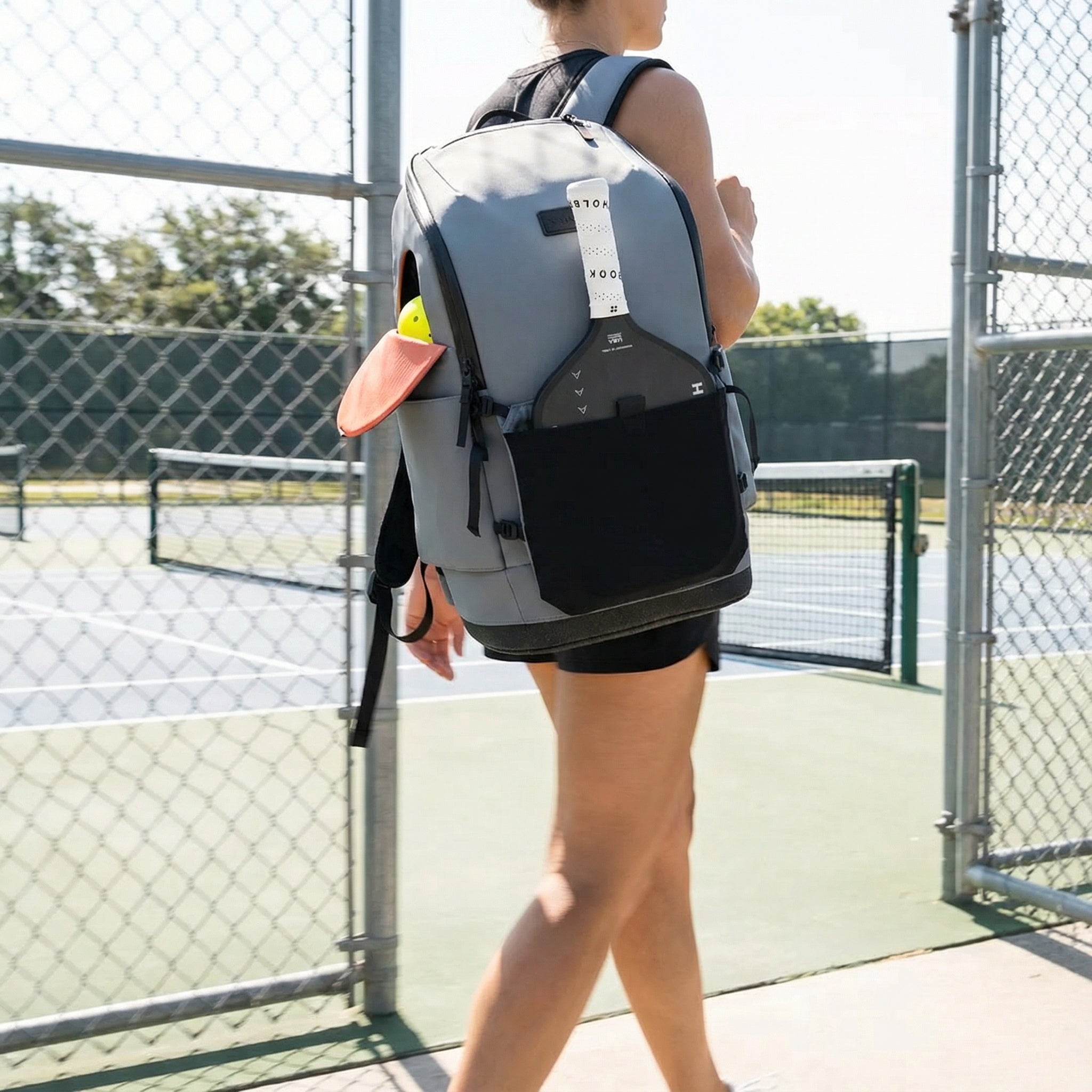
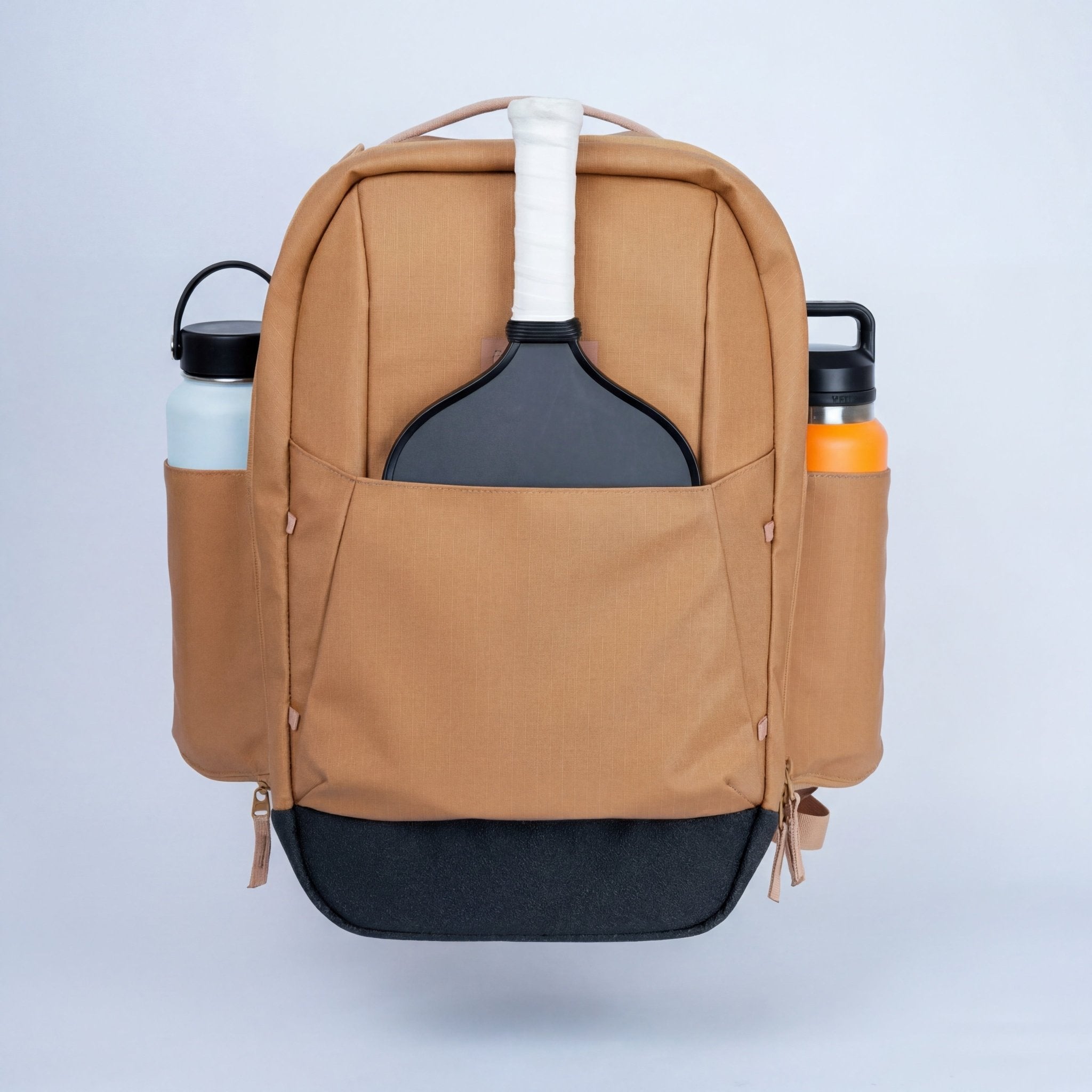
When you're testing elongated paddles — and you should test a few before committing to a shape — you need a bag that carries multiple paddles without letting them rattle against each other. Carbon fiber faces scratch. Edge guards ding. A bag with individual modular paddle sleeves solves this problem.
The FORWRD Court Caddy ($325) holds 4 paddles in individual protective sleeves, so you can bring your current paddle and 2-3 elongated options to a demo session and keep them all separate. YKK AquaGuard zippers, 15" laptop sleeve, lifetime warranty. Built by players who test paddles the same way you do.
Ready to take your paddle game seriously? Shop the Court Caddy — built with 500+ real players.
Frequently Asked Questions
What is the largest legal pickleball paddle allowed in tournament play?
USAPA rules set the maximum paddle length at 17 inches, with a combined length plus width limit of 24 inches. Most elongated paddles run 16 to 16.5 inches long by 7.5 inches wide, which keeps them at or near the legal maximum. Standard paddles run about 15.5 to 16 inches long by 8 inches wide — slightly more surface area but shorter reach.
Are elongated pickleball paddles good for beginners?
Generally no. Elongated paddles have a narrower sweet spot and higher swing weight, which means off-center hits are more noticeable and net play requires faster reaction times. Beginners build better fundamentals on standard-shape paddles with larger sweet spots, then graduate to elongated shapes once their placement is consistent enough to benefit from the extra reach and spin.
Do elongated paddles generate more spin?
Yes — the longer shape increases paddle head speed at the tip for the same swing, which generates more topspin on drives and serves. The difference is most pronounced with raw carbon fiber face paddles that already have high spin texture. If spin is your primary goal, an elongated paddle with a raw carbon fiber face is the correct combination.
How do I know if an elongated paddle is right for my game?
Try one for 2-4 weeks. Borrow from a partner or demo from a local shop before buying. If your groundstrokes improve and the adjustment to net play feels manageable, the elongated shape suits your game. If you spend most of your time at the kitchen and the slower reaction at net consistently costs you points, go back to standard shape — there's no universal right answer on paddle shape.
What's the difference between an elongated paddle and a wide-body paddle?
Elongated paddles are longer and narrower — more reach, more spin, faster tip speed on swings. Wide-body paddles are shorter and wider — bigger hitting surface, more forgiving sweet spot, better for control-oriented kitchen play. Most beginners and kitchen-first players do better on wide-body shapes. Power hitters and baseliners usually prefer elongated shapes once their fundamentals are solid.

Leave a comment
This site is protected by hCaptcha and the hCaptcha Privacy Policy and Terms of Service apply.