

Last updated: September 2026
Disclosure: This post contains affiliate links to Pickleball Central. If you purchase through our links, FORWRD earns a small commission at no extra cost to you. We only link to products we'd recommend regardless.
The grip on your paddle is easy to ignore until it fails you mid-match — a shot you've hit clean a hundred times suddenly flies because your hand slipped a quarter-inch at contact. That's not a paddle problem. That's a grip problem.
We've wrapped a lot of handles over the years. Tested replacements in 95°F outdoor matches, overgrips during back-to-back tournament days, specialty grips in the kitchen against players with elbow sensitivity. The grip isn't glamorous gear, but it's the one piece of equipment that literally touches every shot you hit — and it's almost always neglected until it's obviously wrong.
Pickleball grips come in two categories: replacement grips (the thick base layer that wraps directly onto the handle) and overgrips (the thin wrap that goes on top, changed frequently). Most players ignore the distinction and wonder why their paddle handle feels wrong. Get this right first, then pick from the grips below.
The 5 Best Pickleball Grips in 2026
1. Hesacore Pickleball Grip — Best for Control
Type: Replacement grip | Price: ~$20–25 | Best for: Control players, kitchen-first games, twisting paddle problems
The Hesacore is the one grip on this list with a genuinely different design rationale. That honeycomb pattern isn't a gimmick — the hexagonal structure lets the material compress differently under each finger, which reduces the micro-rotation that kills dink accuracy. If you're fighting paddle twisting during reset volleys or third-shot drops, Hesacore addresses that specific problem more directly than any other grip we've used.
The tradeoff is real: it adds about 5–8 grams depending on variant, and some players feel the girth change affects their swing mechanics. There's also a gel version at a slightly higher price that's worth considering if you have elbow sensitivity — the vibration dampening is notable and genuinely different from the base model. For players dealing with tennis elbow or persistent arm fatigue, this is the first grip we'd point to.
Don't start here if you're a beginner. The benefit is only noticeable once you've developed a consistent enough grip to feel the micro-differences Hesacore is solving.
2. Tourna Grip Pickleball — Best for Heavy Sweaters
Type: Overgrip | Price: ~$12–18 per pack | Best for: Hot weather, humid courts, players with consistently wet hands
Tourna's dry-feel formula is the reason this grip has been a standard in racquet sports for 40+ years. The counterintuitive thing: it gets tackier as it absorbs sweat, which is the opposite of every synthetic replacement grip. For indoor courts in Florida in August, or for anyone whose hands run hot and wet, nothing else comes close in this price range.
Fair warning: if you play in a dry climate or your hands don't sweat much, Tourna can feel almost too dry at first — slightly rough, almost abrasive compared to softer alternatives. It's a performance grip for a specific condition, not a cushioned everyday wrap. In those humid conditions, though, it genuinely outperforms everything else here.
3. UDRIPPIN Pickleball Overgrip — Best Value
Type: Overgrip | Price: ~$10–12 | Best for: Players who change overgrips on a regular schedule
UDRIPPIN doesn't have the brand recognition of Tourna or the unique design story of Hesacore, but the performance-to-cost ratio is hard to argue with. Tacky surface that holds up through a full session, legitimate sweat absorption, and easy application — it does the basics without charging a premium for them.
Where it underperforms: extreme heat or very long sessions (3+ hours on outdoor hard courts) will wear through it faster than Tourna. For regular 1.5-hour club sessions, it'll last 2–3 weeks before needing a swap, which makes it cost-effective if you're replacing grips on a regular schedule. For tournament players who want zero grip-failure risk, Tourna is the safer call. For club regulars just keeping the handle fresh, UDRIPPIN earns its spot.
4. Diadem Comfort Max Replacement Grip — Best for Comfort
Type: Replacement grip | Price: ~$7 | Best for: Long sessions, comfort-priority players, dialing in handle size
Diadem's polyurethane material is legitimately soft compared to most replacement grips — not in a way that affects paddle stability, but immediately noticeable if you've been playing on a worn-down original grip. The moisture-wicking works without Tourna's dry feel, which puts it in a different category: this is for players who want comfortable, long-session padding with moderate moisture control.
Available in three versions — Standard, Feather (thinner), and EVA Thick — which is useful for dialing in handle circumference. The Feather version is underrated for players who've added an overgrip on top of a thick replacement grip and found the handle too large. At ~$7, it's the most cost-accessible replacement grip on this list.
5. Gearbox Moisture Absorption Pickleball Grip — Best for Fast Installation
Type: Overgrip | Price: ~$10–14 | Best for: Players who want fast, clean application
Gearbox designs their overgrip around a self-adhesive backing that makes installation genuinely faster than competitors — you're not fighting starting tape or trying to hold the wrap taut from the end. For club players who change grips in the parking lot before a drill session, that matters more than it sounds.
The profile runs thinner by design, so it's not a substitute for a cushioned replacement grip. If you're adding this on top of a worn replacement grip hoping to restore handle feel, swap the replacement grip first. As a maintenance overgrip on a good foundation, it delivers solid contact and moisture control.
Replacement Grip vs. Overgrip: What's the Actual Difference?
This causes more confusion than any other grip question. The short version:
- Replacement grip: wraps the bare handle directly. Thicker (usually 1.5–2mm), defines your handle circumference, lasts months. Swap when the base padding is flattened or the handle feels hollow.
- Overgrip: wraps on top of the replacement grip. Thinner (0.5–0.6mm), designed to swap every few weeks. Adds tackiness, moisture control, and minimal thickness without changing handle size significantly.
If your paddle came with a stock replacement grip that feels worn, replace that first before adding an overgrip. Layering an overgrip over a dead replacement grip is like putting new tires on a car with shot suspension — the foundation matters.
One thing most players don't realize: you can stack up to two overgrips without significantly changing your grip feel, but three or more starts changing your swing mechanics in ways that are hard to diagnose. If your handle feels too big, you've probably got too many layers, not a paddle sizing issue.
How to Pick the Right Grip Size
Grip circumference for most paddles ranges from 4" to 4.5". To check your size: hold the paddle in a standard grip and look at the space between your fingertips and your palm. If your index finger fits comfortably in the gap, you're close to right. Too small means your grip works harder to prevent twisting — and fatigues faster. Too large reduces wrist flexibility and touch on soft shots.
When in doubt, go smaller — you can always add an overgrip to build up. Going back down once you've added thickness is harder. Also worth reading: our complete pickleball paddle grip size guide if you want to get into circumference measurements, finger gap testing, and how grip size interacts with your playing style.
Note: USA Pickleball's approved equipment database lists paddle specifications including grip size ranges for sanctioned tournament play — useful reference if you're dialing in a tournament-legal setup.
How to Wrap a Pickleball Grip (Step by Step)
Wrapping an overgrip is a skill that takes about two minutes once you've done it a handful of times. Doing it wrong results in gaps, bunching, or a lumpy handle that affects feel. Here's the process that works:
- Start at the butt cap. Peel the adhesive strip at the bottom of the overgrip and anchor it at the base of the handle, angled slightly — typically 45 degrees from vertical. This angle is what creates the tight diagonal wrap pattern.
- Wrap with slight overlap. Each rotation should overlap the previous by about 3–4mm. More overlap builds up thickness faster; less overlap risks gaps. Keep consistent tension throughout — not white-knuckle tight, but firm and even.
- Work toward the top of the handle. As you reach the top, the overgrip should run out just above where the handle meets the throat. If you have excess, unwrap slightly and adjust your overlap.
- Secure the end. Most overgrips include a finishing tape strip. Wrap it around the top of the grip to lock the end in place. Some players add a small strip of electrical tape for extra security — that's fine for practice, but not allowed in tournament play per USAPA rules.
The whole process takes about 90 seconds once the motion becomes natural. Worth practicing before a tournament morning — applying a fresh overgrip in a rush leads to uneven tension and a handle that moves on your palm.
Best Pickleball Grip for Outdoor vs. Indoor Courts
Court surface type doesn't change the grip mechanics, but environmental conditions do — and outdoor vs. indoor usually means a big difference in temperature, humidity, and sweat output.
Outdoor courts (especially in summer): You're dealing with heat, direct sun, and elevated sweat output. Tourna Grip is the clear first choice here — the dry-feel material performs specifically well in high-moisture conditions. UDRIPPIN is the value play if you don't want to pay Tourna prices for every session.
Indoor courts (climate-controlled): Conditions are more stable. Here's where comfort-first grips like Diadem Comfort Max make more sense — you don't need maximum moisture absorption, so softer, more cushioned options hold up well. Hesacore also shines indoors where the control benefits are easier to feel without sweat interfering.
The real variable is your hands, not the court. Some players sweat heavily regardless of venue; others barely dampen a grip after an hour outdoors. If you're a heavy sweater, Tourna wins everywhere. If your hands stay dry, almost any grip in this list works — pick based on comfort and feel.
When to Replace Your Pickleball Grip
A replacement grip is due when: the base material feels hollow or compacted (instead of springy), the texture has worn smooth, or the handle diameter has noticeably shrunk from sweat saturation. For regular players (3+ times per week), plan on replacing the base grip every 4–6 months.
An overgrip is due when: it stops absorbing sweat efficiently, it's visibly worn or dirty, or you notice slippage at contact. For daily players, that's every 2–3 weeks. For once-a-week players, monthly is reasonable. A detailed replacement schedule by play frequency covers this with more specifics if you want to dial in the cadence.
The tell that most players miss: overgrips don't always fail dramatically. The grip will feel fine until it doesn't — and that moment often comes mid-match. If you can't remember the last time you changed your overgrip, it's time.

Complete Your Pickleball Setup
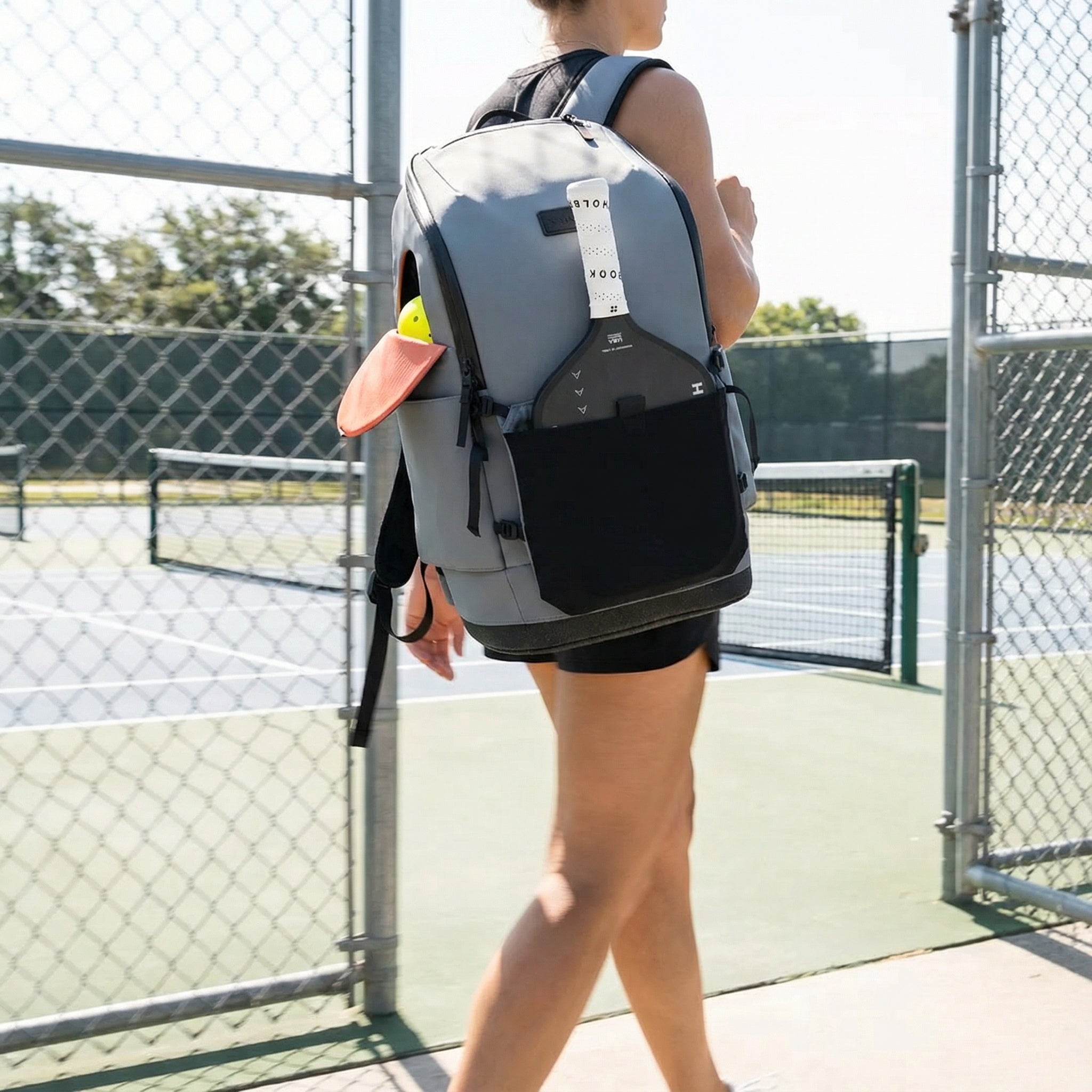
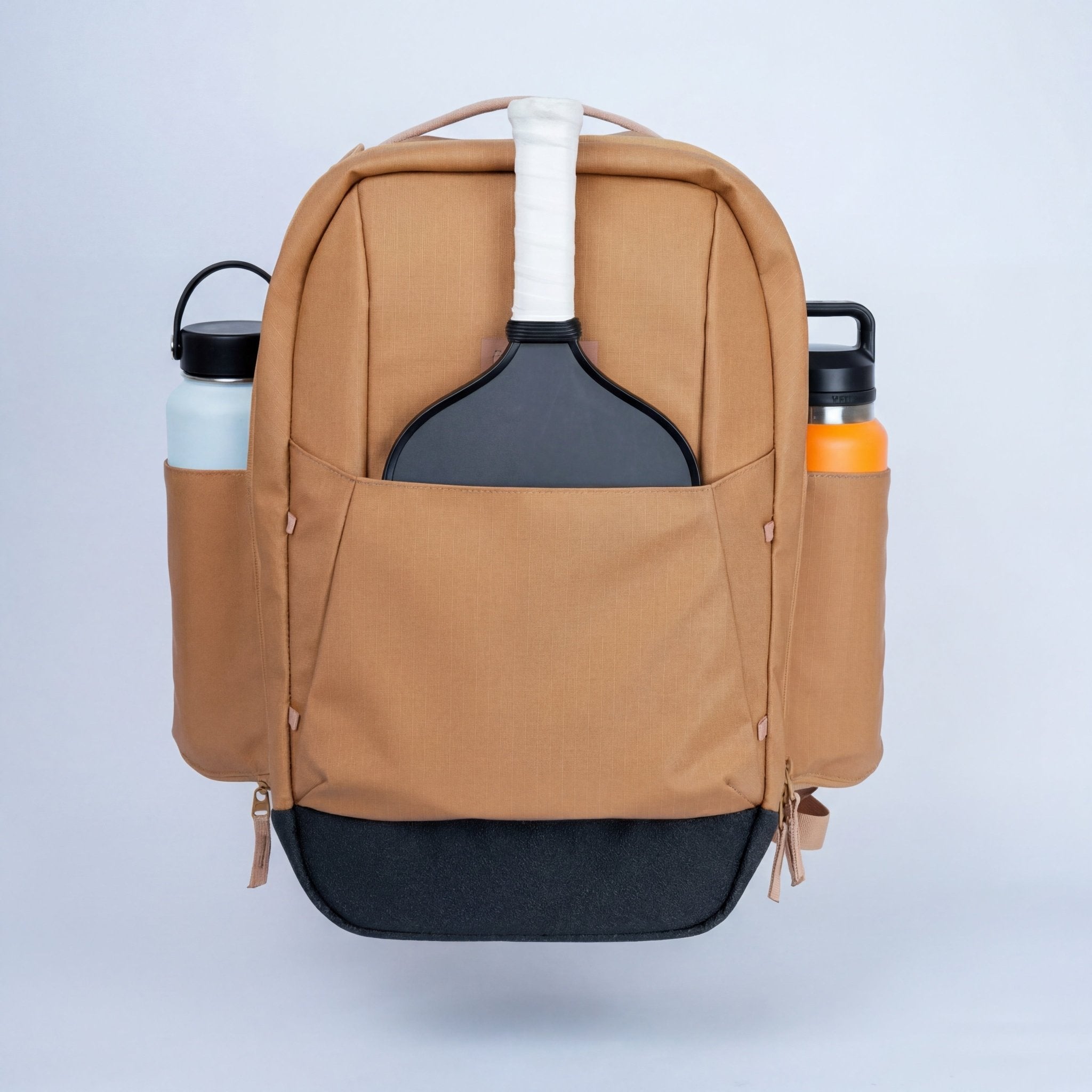
A fresh grip is step one. The FORWRD Court Ranger V2 ($195) keeps a spare grip roll in the paddle sleeve pocket — so you're never caught mid-tournament without a fresh wrap. Built with 840D ballistic nylon, 16" laptop sleeve, YKK AquaGuard zippers, and a lifetime warranty.
Best Pickleball Grip for Beginners
If you're new to the sport and overwhelmed by grip options, this is the short answer: start with the Diadem Comfort Max as your replacement grip and the UDRIPPIN overgrip on top.
Here's why those two: both are affordable, forgiving, and easy to install. You won't be throwing money at a specialty grip before you've developed strong enough opinions about handle feel to appreciate what you're buying. Hesacore and Tourna are excellent, but the difference is only noticeable once you've played enough to know what you're looking for.
Once you've put in 3–4 months and start forming opinions about how your handle feels — too slippery, too thick, not enough cushion — come back to this list and pick based on the specific problem you're solving. Grip preferences are personal, and the "best" grip for most players won't be best for you if your conditions are different.
Frequently Asked Questions
How do I know if my pickleball grip is the right size?
Hold the paddle normally. If your index finger fits in the gap between your fingertips and the base of your palm, the size is right. No gap means too small; a large gap means too big. Most paddles ship in 4–4.5" circumference, and adding an overgrip adds roughly 1/16". When sizing is borderline, go smaller — an overgrip can always build it up.
What's the difference between a replacement grip and an overgrip?
A replacement grip wraps the bare handle and is the base layer that defines size and cushioning. An overgrip wraps on top — thinner, cheaper, swapped frequently for tackiness and moisture control. Don't skip the replacement grip when it's worn; stacking overgrips on a dead base doesn't solve the underlying problem.
What is the best pickleball grip for sweaty hands?
Tourna Grip is the standard recommendation — it uses a dry-feel material that gets tackier as it absorbs sweat, which is the opposite of most grips that get slick when wet. The GAMMA Supreme Overgrip works well as a second option if Tourna's dry texture doesn't feel right from the start.
How often should I replace my pickleball grip or overgrip?
For 3+ times weekly players: overgrips every 2–4 weeks, replacement grips every 3–6 months. Signs it's time: slippage during play, worn-flat texture, or a tacky grip that's stopped being tacky. Grips are inexpensive; a fresh one genuinely improves control, so err on the side of changing sooner rather than later.
Can I use tennis overgrips on a pickleball paddle?
Yes — brands like Tourna sell the same grip for both sports, and the wrapping mechanics are identical. Pickleball-specific overgrips from Hesacore, Gearbox, and UDRIPPIN are designed around pickleball handle standards, so they're the cleaner starting point, but a quality tennis overgrip won't hurt your game.
What is the best pickleball grip for beginners?
The Diadem Comfort Max replacement grip paired with the UDRIPPIN overgrip on top. Both are affordable, easy to install, and forgiving — and they'll give you enough time on the court to develop opinions about what you actually want in a handle before investing in specialty options.

Leave a comment
This site is protected by hCaptcha and the hCaptcha Privacy Policy and Terms of Service apply.