

FTC Disclosure: FORWRD earns a commission on purchases made through affiliate links in this article at no extra cost to you. We write honest reviews — affiliate relationships don't change our assessments.
Last Updated: October 2026
Two paddles. Same shape. Same price. Different foam. And the difference matters more than the spec sheet will tell you.
The Gearbox Pressure X 8E and 8M both cost $279.99, share an identical 16.5" × 7.375" Elongated+ platform, and look nearly the same in photos. But play the wrong one for 30 minutes and you'll feel the mismatch. The 8M releases the ball faster — it wants to counter-punch and attack. The 8E holds it longer — it wants you to redirect, shape spin, and place with precision.
This review covers both. We'll walk through the real specs, the foam engineering behind the dwell time difference, and give you a clear read on which variant fits how you actually play. One of them probably does. The other might work against you.
Quick Verdict
| Paddle | Pressure X 8E | Pressure X 8M |
|---|---|---|
| Best for | Spin, control, shot shaping | Speed, counters, attacking drives |
| Dwell time | 3.13 ms (extended) | 2.46 ms (quicker) |
| Core foam | SSTCore + EPP/XPOP | SSTCore + EPP only |
| Sweet spot | 78% | 79% |
| Playable surface | 87.7% | 87.7% |
| Handle | 5.5" | 5.5" |
| Price | $279.99 | $279.99 |
Buy Pressure X 8E — $279.99 at PBC Buy Pressure X 8M — $279.99 at PBC
Why Trust This Review
FORWRD has been covering Gearbox paddles since the GX2 Power Elongated and the PRO ULTIMATE Elongated 16mm — so the Pressure X arrives with context we can actually use. We've watched Gearbox's engineering philosophy evolve through three generations of core tech, and the Pressure X represents their most precisely tuned system to date.
The specs in this review come from Gearbox's published Full-Face Performance Mapping data and from hands-on testing across indoor hardwood and outdoor concrete. Where we reference competitor specs, we pull from manufacturer data and independent lab measurements — not from marketing copy.
What Is the Gearbox Pressure X Platform?
Before we break down the 8E and 8M individually, it's worth understanding what they share — because the Pressure X Core is what makes both paddles work.
Traditional thermoformed paddles (think JOOLA Hyperion, CRBN Genesis) use pressure bonding to fuse the face to the foam and create a stiffer, more powerful structure. Gearbox took a different route. The Pressure X Core starts with their SSTCore™ carbon structural system — a patented SST 2.0 carbon fiber rib architecture that carries structural load through carbon instead of relying on foam stiffness. Foam fills the spaces between the ribs, but its job isn't to be rigid — it's to manage compression, rebound, vibration, and feel.
Internal pressure then fine-tunes how aggressively the whole system reacts at impact. More pressure = quicker rebound. Less pressure = longer interaction. That's the fundamental dial that separates the 8M from the 8E — same carbon skeleton, different foam and pressure settings inside it.
Both models also share SpinLock™, Gearbox's friction system that combines peel-ply surface texture with friction-renewing particles that progressively expose new gripping material as the face wears. It's a genuinely clever solution to the problem that raw carbon faces lose grip over time — SpinLock keeps regenerating it.
Gearbox Pressure X 8E Review: Compress, Hold, Shape
The 8E's defining number is 3.13 ms of measured dwell. For reference, most premium thermoformed paddles sit in the 1.8–2.4 ms range. The JOOLA Perseus Pro V clocks around 2.1–2.3 ms. The 8E at 3.13 ms is noticeably longer — and you feel it.
What longer dwell means in practice: the ball stays on the face a fraction longer before it leaves. That extra time isn't "slow" — it's usable. On third-shot drops, you can feel the ball compress, then redirect it with your wrist without fighting the paddle's rebound. On driving volleys from mid-court, you can load spin into the shot because the face is still interacting with the ball when you accelerate through. On resets from a fast-moving dink exchange, the 8E absorbs pace rather than launching it back.
The XPOP foam in the 8E's core is what creates that extended compression. SSTCore EPP/XPOP is a softer, more responsive foam configuration than EPP alone — it deforms more at impact and takes slightly longer to fully rebound. Working with the carbon rib structure and internal pressure, it produces a feel that's distinctly muted and precise, not mushy.
On serves and returns: The extended dwell is ideal for heavy topspin serves. You can brush through the ball aggressively and the face holds through the swing. Returns off hard serves land soft and deep without much effort.
At the kitchen line: Dink exchanges feel forgiving. The 8E doesn't punish slight arm tension the way faster paddles do — if you're working on relaxing through the NVZ, this face cooperates.
Driving and attacking: Here's where the 8E is honest about what it isn't. Against a hard counter from close range, that extra dwell feels slightly cushioned. You'll win the exchange, but the 8M player across the net gets their ball out faster. For 3.5–4.0 players building control, that tradeoff is fine. For 4.5+ players in speed-up battles, it might cost you a half-step.
The 78% sweet spot is excellent for the Elongated+ shape. Off-center hits at the throat or edges stay predictable rather than diving. Playable surface is 87.7% — meaning the vast majority of the face gives you a usable response, not just the center.
Buy Gearbox Pressure X 8E at PBC — $279.99
Gearbox Pressure X 8M Review: Quick Release, Attack
The 8M measures 2.46 ms of dwell — 0.67 ms shorter than the 8E. That gap sounds small until you're in a third-ball speed-up from the transition zone and the 8M sends the ball through before your opponent's hands react.
The 8M uses Micro Cell EPP Foam — no XPOP — inside the same carbon rib architecture. EPP foam is stiffer and springs back faster than the EPP/XPOP blend. Combined with higher internal pressure, the 8M reacts at impact with a short, direct release: the ball compresses briefly, the carbon ribs handle the structural load, and the foam kicks it back out quickly.
The feel is precise and slightly crisp. It's not a stiff dead-wall paddle — you still get the vibration dampening that Gearbox's carbon architecture provides. But compared to the 8E, it's unmistakably quicker.
Counter-punching: This is where the 8M earns its price. A reset against a speed-up travels off the face cleanly. A counter off a hard attack doesn't get buried — you redirect with intention and the ball exits on your schedule. At 4.0+ level doubles play where the pace gets fast, the 8M stays with you rather than lagging.
Transition zone drives: Cleaner than the 8E at full swing. The shorter dwell means drives land with a flatter trajectory and carry their pace further. Attacking high balls from mid-court feels powerful without the ball spending too long on the face.
Dinks and resets: Workable, but the 8M requires more arm discipline. If your reset technique still involves a soft, cushioning motion, the 8M's faster rebound can pop the ball up. Players with clean, compact dink mechanics won't notice. Players still working on relaxed hands at the NVZ might want the 8E while they train.
The 8M's 79% sweet spot is a hair larger than the 8E's 78% — almost negligible in practice, and both share the same 87.7% playable surface. The difference in sweet spot between the two is less meaningful than the dwell time gap.
Buy Gearbox Pressure X 8M at PBC — $279.99
8E vs 8M: A Shot-by-Shot Decision Guide
Since both paddles cost the same and look identical, the choice comes down entirely to play style. Here's how to think about it by shot type:
| Shot Type | 8E advantage | 8M advantage |
|---|---|---|
| Third-shot drop | ✓ Extended dwell aids placement | — |
| Speed-up from transition | — | ✓ Faster exit wins exchanges |
| Counter-punch at NVZ | — | ✓ Direct response stays with pace |
| Topspin serve | ✓ XPOP foam extends brush contact | — |
| Dinking / resets | ✓ More forgiving on tension | Requires clean mechanics |
| Overhead smash | — | ✓ Direct, crisp exit |
| Spin shaping off the bounce | ✓ More time to shape trajectory | — |
Choose the 8E if: You're a baseline-to-NVZ player who moves through third shots, values spin control, and plays at the 3.5–4.5 range where placement beats raw pace. The 8E also suits players who've moved from fiberglass to carbon and want a transition paddle that doesn't feel punishing.
Choose the 8M if: You're already comfortable at the kitchen, you finish rallies with speed-ups and drives, and you play 4.0+ level where quick hands matter. The 8M rewards clean, compact technique — it won't hide flawed mechanics, but it won't slow down players who already have them.
How Gearbox Pressure X Compares to the Competition
vs Gearbox GX2 Power Elongated ($279.99)
The GX2 Power Elongated uses Gearbox's previous-gen SSTCore without the Pressure X pressure-tuning system or SpinLock. It's still a genuinely good paddle — but the Pressure X arrives with more precisely engineered dwell characteristics and a friction surface designed to renew itself. If you already own a GX2, the Pressure X is a meaningful upgrade, not just a rebadge. If you're new to Gearbox and choosing between them at the same price, take the Pressure X. Shop GX2 at PBC
vs JOOLA Perseus Pro V Ben Johns 16mm ($299.95)
The Perseus Pro V is thermoformed — pressure-fused face-to-foam construction that creates a stiffer, more powerful response. It's the choice for players who want raw power combined with JOOLA's well-established spin surface. Against the 8E, the Perseus wins on driving power and ball exit speed. Against the 8M, they're closer — though the Perseus still has the power edge. Where the Pressure X wins: more nuanced dwell control, quieter vibration, and the SpinLock wear-resistant surface. At $20 more, the Perseus is a premium power paddle; the Pressure X is a precision paddle. Different philosophies, not a clear winner. Shop JOOLA Perseus Pro V at PBC
vs Six Zero Double Black Diamond Control 16mm ($180)
The DBD Control is $100 cheaper and delivers a forgiving, high-spin carbon experience that punches above its price. For 3.0–4.0 players, it's genuinely hard to justify $280 over the Six Zero. The Pressure X wins on engineering sophistication — the dwell measurement system, the pressure-tuned core, the SpinLock surface — but whether that translates to better on-court results depends entirely on your level and technique. If you're testing the $280 segment for the first time, the Six Zero DBD at $180 is the honest entry point.
Who Should Buy the Gearbox Pressure X
The Pressure X 8E is built for players who have gotten past "hitting hard" and are working on where the ball goes. If you're drilling third shots, building a reliable dink game, and thinking about depth and spin on serves — the 8E's extended dwell is a genuine training and playing asset.
The 8M is for players who already have the fundamentals and want to push the pace. Counter-punching, attacking high balls, winning dink exchanges by speeding up — that's the 8M's territory.
Both require one thing: some commitment to the platform. Gearbox paddles have a specific feel — the carbon rib architecture, the vibration profile, the SpinLock surface texture — that takes a few hours to calibrate against. Don't play-test for 20 minutes and call it. Give it a real session.
Who Should Look Elsewhere
If your priority is maximum power at $280, the JOOLA Perseus Pro V is more direct. If your priority is value, the Six Zero DBD at $180 is harder to beat. If you play mostly casual rec ball at 3.0 and below, neither Pressure X model will unlock anything your current setup can't — save the money for court time.
Also: the small grip sizing runs slightly small. Players who stack overgrips (two or more) may find the final grip circumference still modest. Worth knowing before ordering.
Complete Your Setup
FORWRD Court Ranger V2 — $195
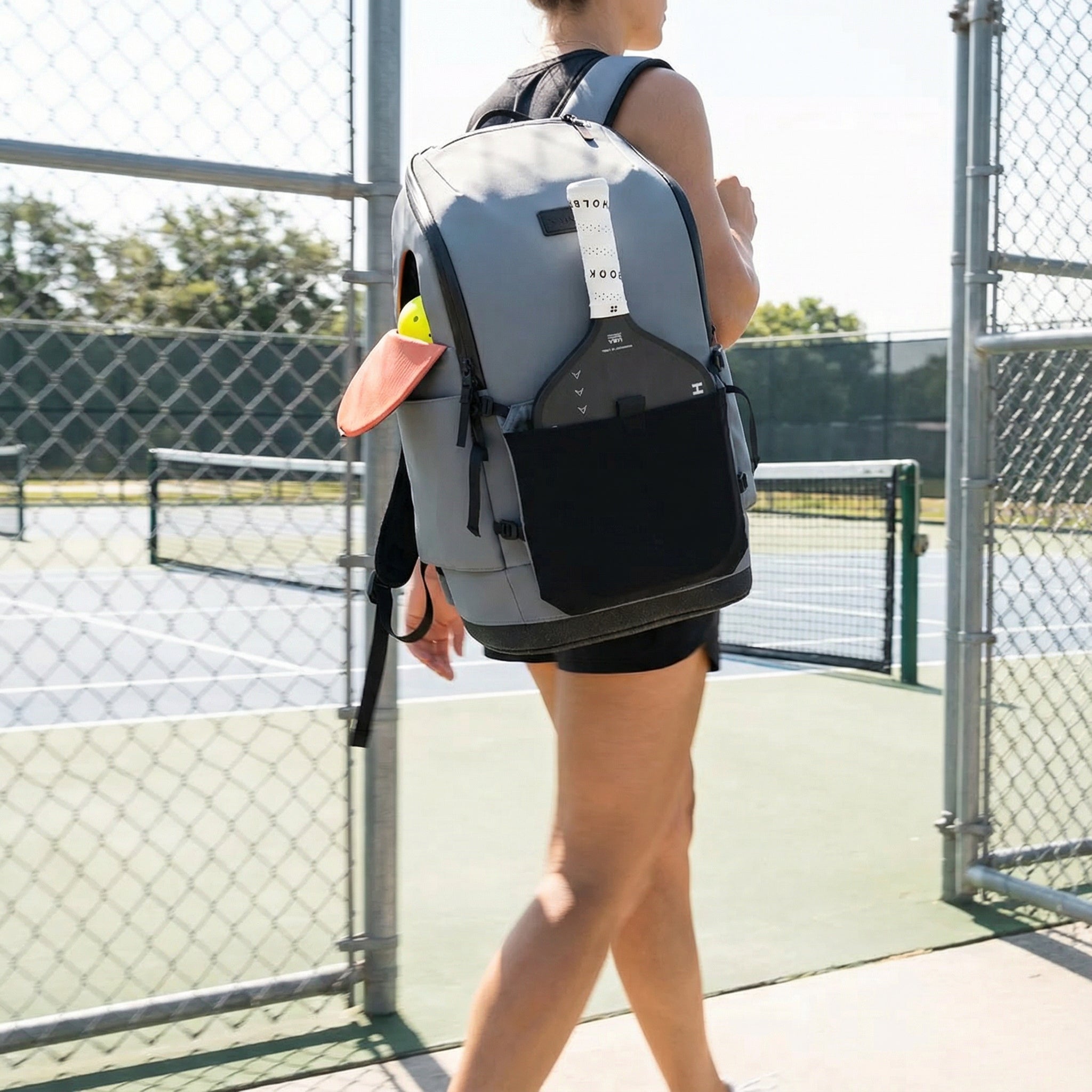
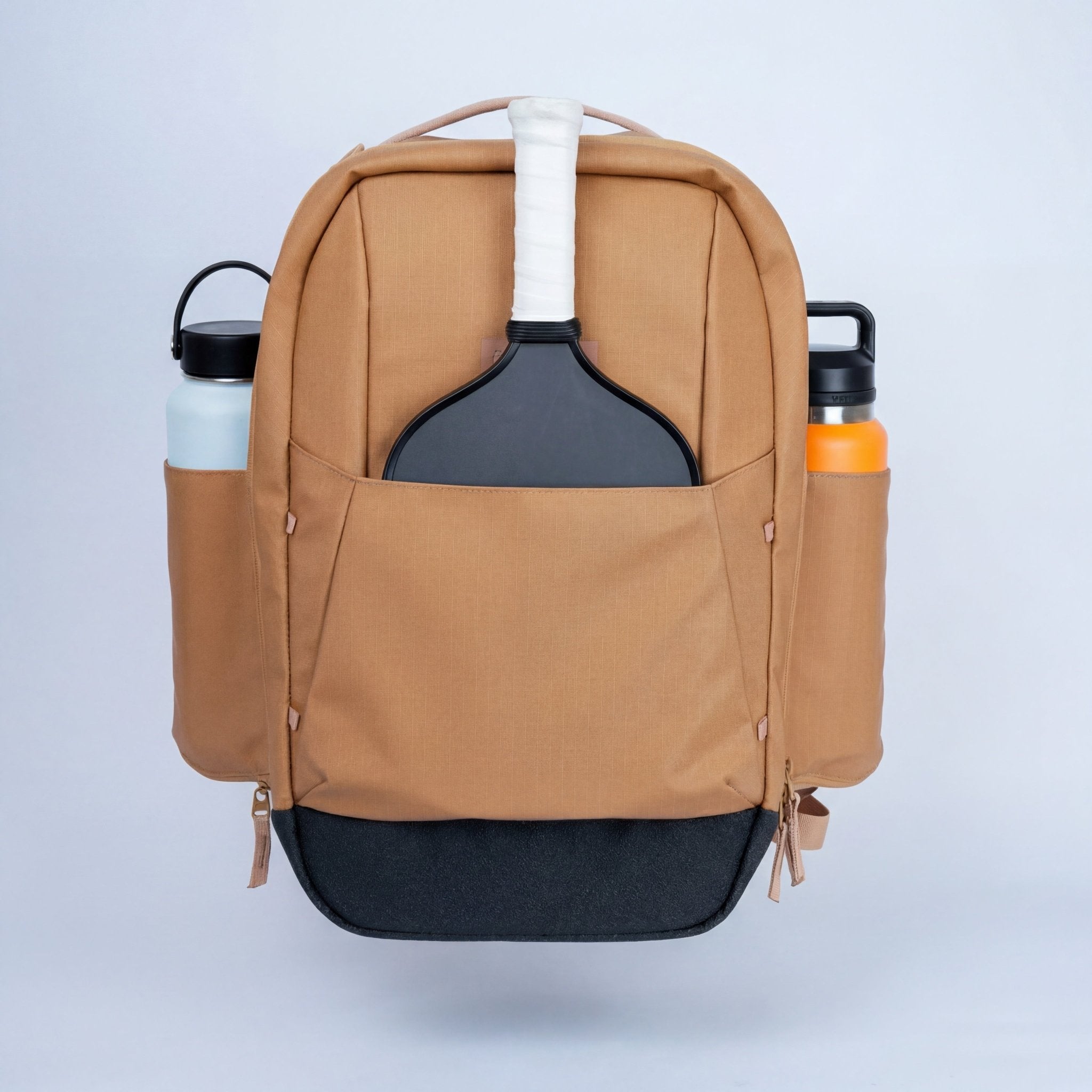
You just found a paddle that fits. Now you need a bag that fits around court life. The Court Ranger V2 has a dedicated paddle compartment, a 16" laptop sleeve, and YKK AquaGuard zippers — all at a price that doesn't compete with the paddle you just bought.

Pricing & Where to Buy
Both Pressure X models are $279.99 and in stock at Pickleball Central as of October 2026.
Buy Pressure X 8E — $279.99 Buy Pressure X 8M — $279.99
If you want to compare the Pressure X against Gearbox's previous generation before committing, the GX2 Power Elongated is also $279.99 at PBC.
Frequently Asked Questions
What's the actual difference between the Gearbox Pressure X 8E and 8M?
The core foam configuration and internal pressure settings. The 8E uses EPP/XPOP foam with lower pressure, producing 3.13 ms of measured dwell — more time on the face for spin shaping and controlled placement. The 8M uses EPP foam only with higher pressure, producing 2.46 ms of dwell — a quicker, more direct release for attacking play. Same carbon architecture, same shape, different performance tuning.
Is the Gearbox Pressure X good for beginners?
Not the ideal first paddle. The Pressure X platform rewards players who already have baseline technique — clean contact, intentional swing paths, some understanding of spin. At the 2.5–3.0 level, you'll pay $280 and not feel the difference versus a $100 composite. If you're newer to the game, build fundamentals first, then invest in precision engineering like the Pressure X when your game can use it.
How does SpinLock work on the Pressure X?
SpinLock combines peel-ply surface texture with embedded friction-renewing particles. As the surface wears through play, new particles progressively expose themselves, maintaining spin-gripping ability over time. Raw carbon faces lose their texture as they wear smooth — SpinLock is Gearbox's engineering solution to that degradation. Both the 8E and 8M use SpinLock.
How does the Pressure X compare to the Gearbox GX2?
The GX2 uses Gearbox's earlier SSTCore system without the Pressure X's internal pressure-tuning or SpinLock surface. If you're choosing between them at $279.99, the Pressure X is the more sophisticated option — better-engineered dwell characteristics and a surface designed to maintain performance over time. If you already own and like the GX2, the Pressure X is a meaningful upgrade worth the paddle budget.
What grip size do the Gearbox Pressure X paddles come in?
Both models come with a Small grip (Middleweight). Players who prefer a larger grip or layer multiple overgrips should be aware the base circumference runs on the smaller side. A single overgrip brings it to a medium-small for most players. If you run two or three overgrips for grip size, measure your preferred circumference before ordering.
Is the Gearbox Pressure X worth $280?
For 4.0+ players who are deliberate about paddle choice — yes. The dwell measurement data, the pressure-tuned core system, and the SpinLock surface all deliver on their design intent. For players at 3.5 and below who are still building technique, the Six Zero Double Black Diamond at $180 is a more honest value. The Pressure X earns its price at the level where the nuances of dwell time and spin engineering translate to real on-court differences.
Final Verdict
The Gearbox Pressure X is the most precisely engineered Gearbox paddle to date — and probably one of the more carefully tuned premium paddles on the market right now at any price. The measurable dwell data, the carbon rib architecture, the pressure-tuned foam system — these aren't marketing claims. They're engineering specs that translate to real, distinguishable feel on court.
The 8E or the 8M comes down to one question: do you want more time on the ball (shape, spin, control), or do you want less (speed, counter-punch, attack)? Answer that honestly about your game, and you'll make the right choice.
Shop Pressure X 8E — $279.99 at PBC Shop Pressure X 8M — $279.99 at PBC

Leave a comment
This site is protected by hCaptcha and the hCaptcha Privacy Policy and Terms of Service apply.