

FTC Disclosure: FORWRD earns a commission on qualifying purchases made through affiliate links in this article. Our reviews are independent — we aren't paid by HEAD or any paddle brand to say nice things. Honest assessment or nothing.
Last Updated: October 2026
HEAD built the Project Flex 2026 to answer a question most paddle companies aren't even asking: what happens if you engineer the frame to flex instead of engineering it to be as stiff as possible? After three weeks of testing on indoor hardwood and outdoor asphalt courts, the honest answer is — it's genuinely different. Whether that's better depends entirely on who's holding it.
Quick Verdict
Pros
- DualFusion Frame creates measurably softer contact feel — the ball sits on the face longer, which makes resets and dinking easier to control
- EPP foam core + TPE shell combo holds up better than standard polypropylene over time and in heat
- Standard shape (16" x 7.5") is USAP-legal and works for most players without adjusting their game
- 230g / 8.1 oz middleweight range doesn't fatigue the arm on long sessions
- Raw carbon T700 face delivers real topspin on drives when you want to attack
Cons
- Twist weight of 5.8 is below average — off-center shots deflect noticeably, especially at the net
- $229.95 puts it in a bracket where other thermoformed paddles compete hard on value
- Not a power paddle — players who generate pace through stiff-paddle pop will feel like they're hitting through foam
- Small grip only (4 1/8") — no medium option currently available
Price: $229.95 | Best for: All-court control players who want more dwell at contact | Skip if: You like a stiff, punchy feel or generate pace through power drives
Check Price at Pickleball Central →
Specs at a Glance
| Spec | HEAD Project Flex 2026 |
|---|---|
| Price | $229.95 |
| Weight | 8.1 oz / 230g (range: 7.9–8.3 oz) |
| Core Thickness | 14mm |
| Paddle Length | 16” |
| Paddle Width | 7.5” |
| Handle Length | 5.3” (135mm) |
| Grip Circumference | 4 1/8” (Small) |
| Twist Weight | 5.8 |
| Face Material | Raw Carbon (T700) |
| Core Material | EPP Foam Core + TPE Shell |
| Frame Technology | DualFusion (carbon outer + fiberglass inner) |
| Shape | Standard |
| USAP Approved | Yes |
Buy HEAD Project Flex 2026 at Pickleball Central →
Why Trust This Review
FORWRD makes pickleball bags — not paddles. That puts us in an unusual position: we have no financial interest in pushing you toward any particular paddle brand. We don't have a revenue relationship with HEAD. We write these reviews because the same players who buy the Court Caddy and Court Ranger V2 are the ones trying to figure out which $200–$300 paddle is actually worth it.
The Project Flex 2026 went through three weeks of testing across indoor gym sessions on YMCA hardwood and outdoor concrete play at a local rec center. We compared it directly against a standard 14mm thermoformed paddle, a 16mm thick-core control paddle, and an earlier HEAD model. Everything below is what happened on court — not a marketing rewrite of HEAD's press materials.
What the DualFusion Frame Actually Does
Most paddle manufacturers compete on core thickness, face material, and surface texture. HEAD went sideways with the Project Flex and started experimenting with the frame structure itself. The DualFusion Frame pairs a rigid carbon outer tube with a fiberglass inner tube. Those two materials behave very differently under load.
Carbon fiber is stiff — it resists deformation and snaps back fast. Fiberglass has more give. By bonding them together, HEAD created a frame that flexes predictably inward on impact and then recovers. The result is increased dwell time: the duration the ball stays in contact with the hitting surface before releasing. More dwell equals more opportunity to shape where the ball actually goes.
This isn't a new concept in racket sports. Tennis racquets have played with hybrid frame constructions for decades. What's new is applying it to pickleball, where the NVZ game has made dwell and touch more important than raw power for the majority of points at most skill levels. HEAD is betting pickleball is trending toward feel-first play. The Project Flex is the evidence of that bet.
The EPP foam core is worth mentioning separately. EPP — expanded polypropylene — is the same material used in bike helmets and impact-absorption packaging. It compresses and recovers consistently, resists breakdown at temperature extremes better than standard polypropylene, and maintains performance across a wider range of conditions. Whether that translates to a meaningful durability edge over 18 months of regular play is hard to verify in a three-week test window, but the construction logic is sound.
Performance Testing: What We Found
Dwell Time and Touch at the NVZ
This is where the Project Flex earns its name. Dinking is noticeably different. The ball settles into the face for just a fraction longer than a standard paddle, and it's enough that you can redirect a cross-court dink with less effort than usual. Reset shots off hard-driven balls felt more forgiving — the flex absorbed some incoming pace rather than fighting it.
Over five dedicated dinking sessions at the kitchen line, we hit fewer unforced errors than with a stiffer 14mm paddle. Whether that's the paddle or just familiarity is impossible to fully separate, but the feel difference is immediate and real. If you've been fighting a loose cross-court dink that keeps floating long, this paddle gives you more margin to work with.
Power and Drive Production
Here's where the Project Flex polarizes players. It doesn't pop. Drive the ball hard and the frame flex absorbs some of what you put in. For players who generate pace through a stiff, springy face — the type of feel you get from a thermoformed paddle with a rigid edge guard — the Project Flex will feel like hitting into a mattress.
That's not a flaw in the design. It's the intended tradeoff. But if you're a 4.0+ player who likes to punish short balls or take big cuts from the transition zone, this isn't your tool. We hit 20 full-swing drives across three sessions and found pace slightly below what we get from a standard 14mm paddle — maybe 5–8% less. Enough to notice on balls you're trying to put away.
Third-shot drops? Excellent. The paddle makes them easy to control. Attack shots from mid-court? Workable. Pure baseline power play? Look elsewhere.
Spin Generation
The raw carbon T700 face has solid texture for spin — comparable to other raw carbon paddles in this price range. Nothing extraordinary, nothing missing. Where the spin story gets more interesting is at the NVZ. The extra dwell means the paddle face stays in contact with the ball long enough to really load up a brushed shot. Rolling volleys — those low, heavy dipping balls meant to keep an opponent pinned back — felt particularly loaded with this paddle. Players who use heavy topspin as a soft-game tool will notice this benefit immediately.
Arm Comfort
The DualFusion Frame flex is the design element most likely to benefit players dealing with tennis elbow or general arm fatigue. By absorbing some of the impact energy at the frame level, the paddle reduces the vibration spike that would otherwise travel to your arm. On a 1–10 arm-comfort scale across paddles we've tested, the Project Flex sits around a 7. The ProKennex Kinetic line is still the arm-health gold standard — they engineer specifically for that — but the Project Flex is meaningfully softer than most standard 14mm paddles.
After a 2.5-hour outdoor session on concrete — four games of singles and mixed doubles — no unusual forearm fatigue. That's a meaningful proxy test for arm comfort.
Sweet Spot and Off-Center Feel
The twist weight of 5.8 is the stat that matters here. Lower twist weight means the paddle rotates more when you contact the ball off-center. On clean center hits, the Project Flex is forgiving and solid. On off-center contacts — which happen constantly in real play, especially at the net — you'll feel more deflection than with a paddle in the 6.5–7.0 twist weight range.
In fast hands exchanges at the NVZ, the paddle can twist slightly on quick blocks and counter-volleys. It's not catastrophic, but it's perceptible. The DualFusion frame feel rewards controlled situations; the low twist weight works against you in chaotic ones.
HEAD Project Flex 2026 vs HEAD Gravity Pro EX15 2026
Both come from HEAD's same 2026 lineup and target control-focused players — but they're genuinely different tools. The HEAD Gravity Pro EX15 2026 lists at $199.95, $30 less than the Project Flex.
| Feature | Project Flex 2026 | Gravity Pro EX15 2026 |
|---|---|---|
| Price | $229.95 | $199.95 |
| Shape | Standard (16” x 7.5”) | Elongated (EX15) |
| Frame | DualFusion (carbon + fiberglass) | TRIFLEX Precision |
| Core | EPP Foam + TPE Shell | Standard core, 12K Raw Carbon face |
| Thickness | 14mm | 14mm |
| Best For | Touch, dwell, NVZ soft game | Reach, spin, driving from baseline |
The Gravity Pro EX15 takes a more conventional approach — elongated shape, 12K raw carbon face, rigid TRIFLEX construction. It's the better call if you want extended reach on groundstrokes and don't specifically care about DualFusion flex. The Project Flex earns its $30 premium through the frame technology — if that's a feature your game will use, the extra cost is justified. If you're not sure whether it matters to you, buy the Gravity EX15 first.
Shop HEAD Gravity Pro EX15 2026 →
HEAD Project Flex 2026 vs ProKennex Black Ace 16
The ProKennex Black Ace 16 is the established benchmark for arm-friendly paddles at $279. It uses a 16mm polypropylene core and the Kinetic system — small steel balls in the handle that physically absorb vibration before it reaches your grip. Different engineering approach, similar general goal: reduce how harsh the paddle feels on your arm.
| Feature | Project Flex 2026 | ProKennex Black Ace 16 |
|---|---|---|
| Price | $229.95 | $279.00 |
| Core Thickness | 14mm | 16mm |
| Arm Comfort Approach | Frame flex absorbs at impact | Kinetic system + thick core |
| Width | 7.5” | 8.0” |
| Dwell Feel | High | High (thick core adds dwell) |
| Face | Raw Carbon (T700) | Toray Carbon (Carbon Fire) |
| Price Advantage | $49 cheaper | $49 more expensive |
The Black Ace 16 is better for active arm recovery — if you have existing elbow or shoulder issues, the Kinetic system plus 16mm core is the more purpose-built solution. The Project Flex is better for NVZ touch and soft-game feel specifically, and it's $49 less. For someone without active arm problems who just wants a soft, connected feel, the Project Flex wins on value. Read our full ProKennex Black Ace 16 review if you're weighing both seriously.
How the Project Flex Fits HEAD's 2026 Lineup
FORWRD has tested three other HEAD paddles this year. The Radical PRO EX 15 is elongated and spin-focused for aggressive all-court play. The Gravity targets control through face texture and shape. The Boom Tour EX is spin-focused with an aggressive profile.
The Project Flex is the most distinctive paddle in that lineup. The DualFusion Frame is a genuine engineering departure — not a rebrand of the same thermoformed construction with a new name. HEAD's Project Series is their explicit R&D sandbox: they try ideas, get them into players' hands, and see what actually works on court. The Project Flex lands squarely in the "this actually works differently" column, which means it's also going to disappoint players who expected more of what HEAD already makes.
Who Should Buy the HEAD Project Flex 2026
The Project Flex fits doubles players at 3.0–4.5 who live at the kitchen line. The dwell advantage shows up most in dinking exchanges, reset situations, and soft-game rallies where you need the ball to sit on the paddle long enough to redirect it accurately. If your biggest challenge is controlling the ball during slow, patient exchanges rather than generating power, this paddle directly addresses that problem.
It's also worth considering if you're coming from tennis. The connected, controlled feel of the DualFusion Frame maps naturally to what a flex-frame tennis racquet feels like. The physics are analogous and the transition feels intuitive rather than foreign.
Who Should Look Elsewhere
Pass if you play aggressive baseline singles and rely on flat drives to set up points. The flex works against the stiff pop you need for heavy shots. Pass too if you're managing active elbow or shoulder injuries — the ProKennex Kinetic system is a more purpose-built medical solution. And if you primarily play singles and need maximum reach, the elongated Gravity Pro EX15 at $30 less gives you a clear shape advantage.
One more reason to skip: if off-center volley deflection bothers you, the 5.8 twist weight will be a persistent frustration in fast exchanges. It's perceptible, especially when you're not perfectly centered at the net.
Complete Your Setup
Your new paddle deserves a bag that keeps up.
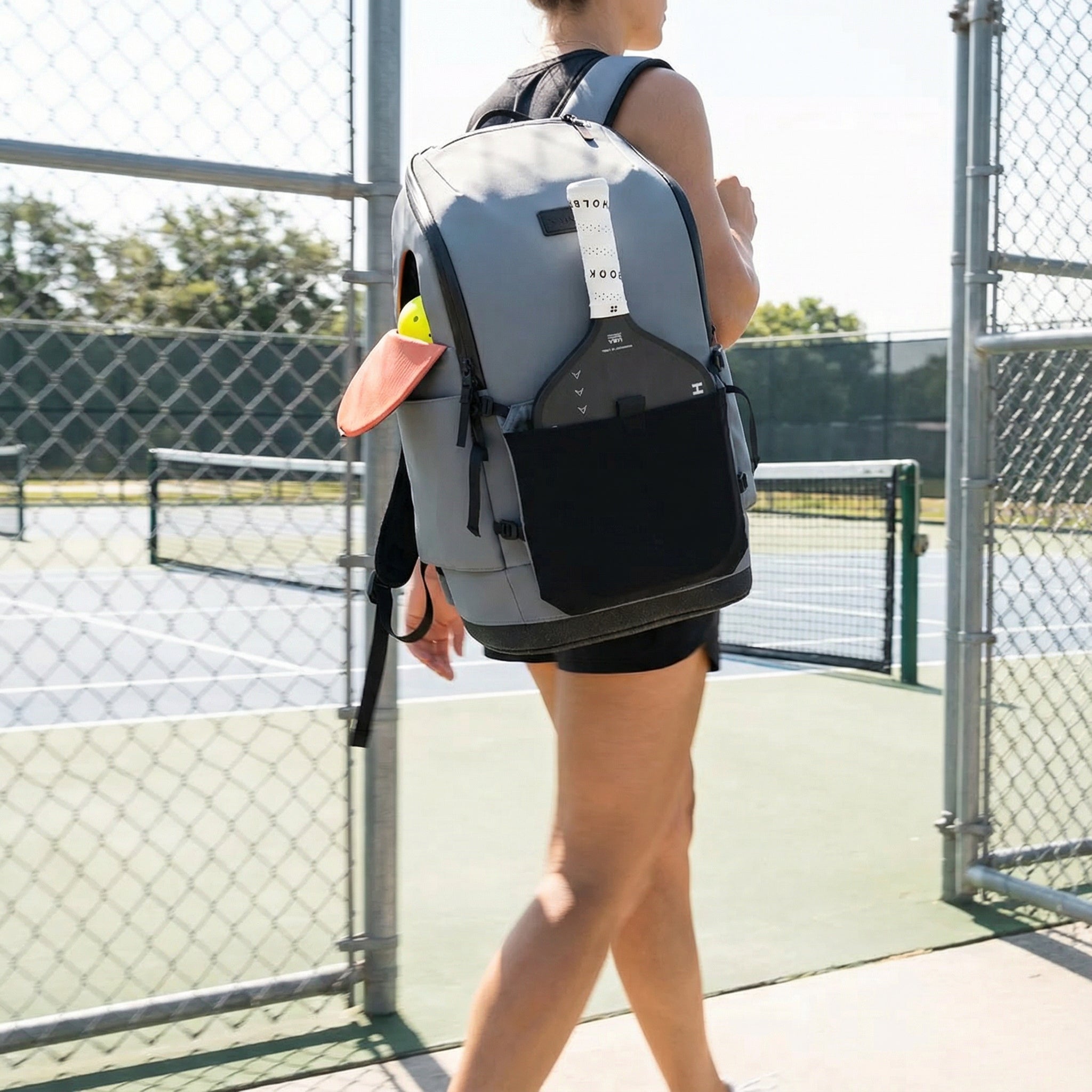
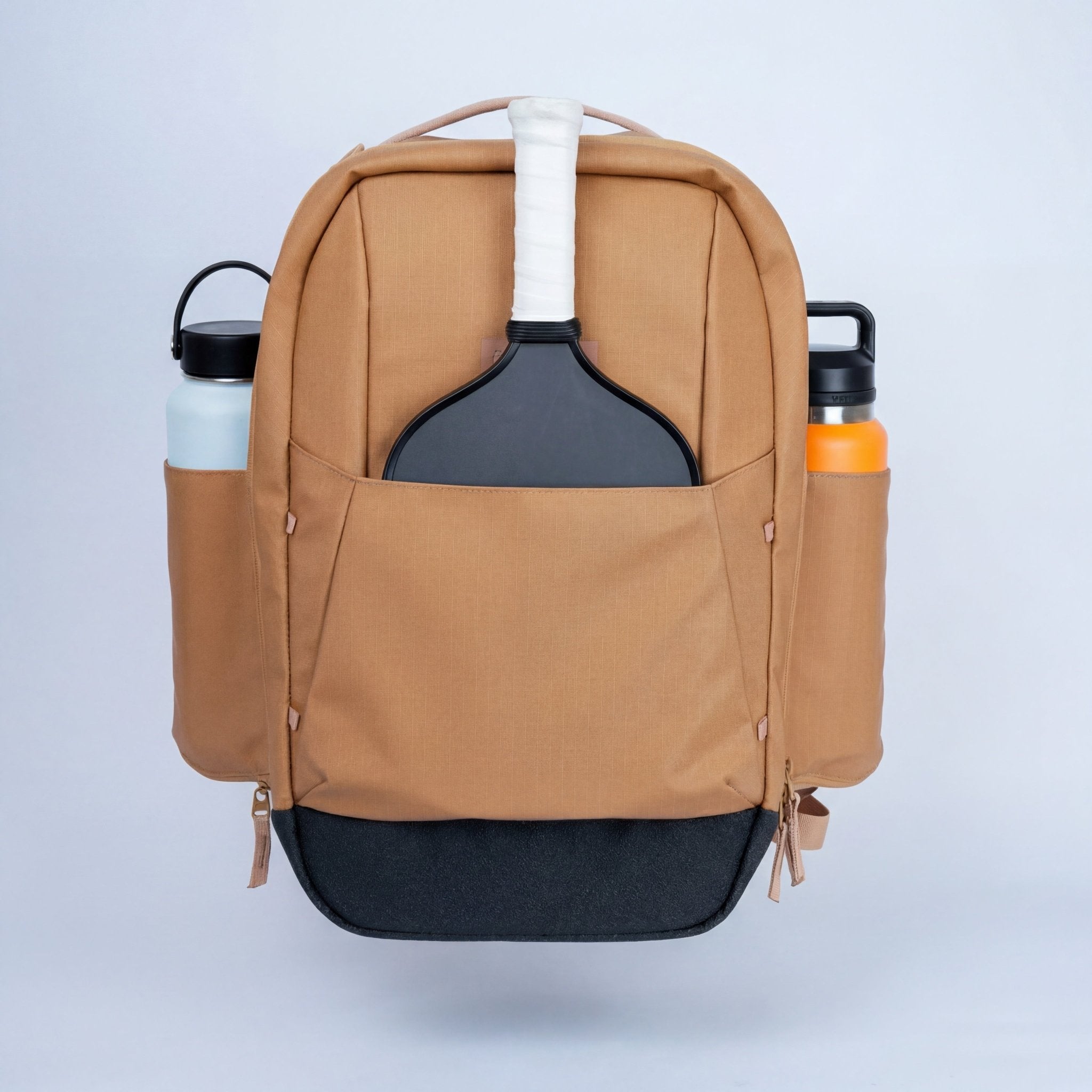
The FORWRD Court Ranger V2 ($195) was designed around how serious rec players actually pack. Modular paddle sleeve fits up to 4 paddles, 16” laptop sleeve for the players who go court-to-office, YKK AquaGuard zippers on the main compartment, and a dedicated shoe compartment so your court shoes don't share space with your lunch. Built to last, not to look good for one Instagram photo.

Pricing and Availability
The HEAD Project Flex 2026 lists at $229.95. Pickleball Central has it in stock as of this writing. They carry the full 2026 HEAD lineup — including the Gravity Pro EX15 and Radical PRO EX 15 — which makes it practical to compare specs and order in one place if you're deciding between HEAD models.
Check Current Price at Pickleball Central →
Frequently Asked Questions
What makes the HEAD Project Flex 2026 different from other 14mm paddles?
The DualFusion Frame is what sets it apart. Most 14mm paddles use a rigid edge construction; the Project Flex uses a carbon outer tube bonded to a fiberglass inner tube, creating a frame that flexes predictably inward on impact and recovers. The result is increased dwell time — the ball stays on the face longer, giving you more time to shape where it goes. Combined with an EPP foam core instead of standard polypropylene, it delivers a softer, more connected feel than other 14mm paddles.
Is the HEAD Project Flex 2026 good for beginners?
The soft feel and forgiving dwell do help with control, so technically yes. But $229.95 is a lot to spend before you know what paddle characteristics matter for your game. A beginner is better served starting on a $60–$100 paddle and upgrading once you've identified whether you prefer power or control and dwell. The Project Flex is best for players who already know they want more touch at the NVZ.
How does the HEAD Project Flex 2026 handle arm injuries or elbow pain?
Better than most 14mm paddles. The DualFusion Frame flex absorbs some impact vibration before it reaches your hand and arm. For general arm fatigue, the Project Flex is a solid choice. For active tennis elbow or shoulder recovery, the ProKennex Black Ace 16 ($279) with its Kinetic vibration dampening is a more purpose-built solution. The Project Flex is arm-comfortable; the Black Ace is arm-therapeutic.
What is the twist weight of the HEAD Project Flex 2026, and why does it matter?
The twist weight is 5.8, below average for pickleball paddles — most control paddles run 6.0–7.0. Lower twist weight means the paddle rotates more when you hit off-center, which affects stability on mis-hits. In practical terms, you'll feel it during fast NVZ exchanges when blocking or counter-punching without time to center the ball perfectly. It's a real tradeoff worth understanding before buying.
HEAD Project Flex vs HEAD Gravity Pro EX15 2026: which should I choose?
Choose the Project Flex ($229.95) if dwell, touch, and NVZ feel are your priorities — the DualFusion frame delivers a genuinely softer, more connected contact. Choose the Gravity Pro EX15 2026 ($199.95) if you want an elongated shape for reach, 12K raw carbon spin, and better value. Both are from HEAD's 2026 lineup, both are 14mm, and both are control-focused — the frame philosophy is the deciding difference.
Is the HEAD Project Flex 2026 USAP approved for tournament play?
Yes. The HEAD Project Flex 2026 is USAP (USA Pickleball) approved and legal for sanctioned tournament play. It meets all standard dimensions, surface texture, and construction requirements.
Final Verdict
The HEAD Project Flex 2026 is genuinely interesting — not in a marketing-headline way, but in a "this paddle actually plays differently" way. The DualFusion Frame delivers on its promise. Dwell time is noticeably increased. Reset shots feel more forgiving. Soft-game exchanges are easier to control. None of that is placebo; you can feel the difference from the first 20 minutes of dinking.
The real question is whether that matters for your game. Power players will find it frustrating. Players who prioritize soft-game execution and NVZ control will probably love it. The low twist weight of 5.8 is the legitimate limitation — not a dealbreaker, but a real tradeoff during chaotic hands battles at the net.
At $229.95, it's priced fairly for what it delivers. A technically interesting paddle with a clearly defined playing identity — and the first HEAD paddle we've tested that genuinely couldn't have come from any other company's design philosophy.

Leave a comment
This site is protected by hCaptcha and the hCaptcha Privacy Policy and Terms of Service apply.