

Disclosure: This post contains affiliate links to Pickleball Central. If you buy through our links, we earn a commission at no extra cost to you. We only review products we'd recommend to a playing partner. Read our full affiliate disclosure.
Last Updated: August 2026
The ProKennex Black Ace 16 isn't for everyone. At $279, it costs the same as a JOOLA Perseus Pro IV — a paddle with far more brand recognition on the court. But if you're playing 3–4 days a week and your elbow has started complaining, the Kinetic System baked into this paddle is worth serious consideration. Here's what four weeks of testing on outdoor concrete and indoor gym floors actually showed.
Quick Verdict
- Kinetic System genuinely reduces arm vibration — not marketing fluff
- Forgiving 16mm core with an expanded sweet spot
- Carbon Fire face holds spin texture longer than budget alternatives
- Replaceable edge guard (rare at this price)
- USAP approved for tournament play
- Less pop than 10/11mm Black Ace variants — power players will miss it
- 4" grip is small only; no standard size option
- Brand recognition gap vs JOOLA/Selkirk at same price
- Audibly loud on contact compared to foam-core alternatives
Best for: 3.5–4.5 rec players who prioritize control, consistency, and arm protection over raw power.
Skip it if: You drive aggressively from the baseline and want maximum pop, or you need a larger grip.
Price: $279 | Check availability at Pickleball Central →
ProKennex Black Ace 16: Specs at a Glance
| Price | $279 |
| Weight | 7.9 oz avg (range: 7.8–8.2 oz / 221–233g) |
| Core | 16mm polypropylene honeycomb, compression molded |
| Face | Toray Carbon Fiber (Carbon Fire) |
| Dimensions | 16" length × 8" width (standard widebody shape) |
| Handle | 5.3" length, 4" circumference taper (small only) |
| Grip | PU synthetic leather |
| Edge Guard | Replaceable |
| Approval | USAP approved |
| Key Tech | Kinetic System, Dynamic Twist System, Carbon Fire face |
Buy the ProKennex Black Ace 16 at Pickleball Central →
Why Trust This Review
FORWRD designs pickleball bags — which means we spend a lot of time on courts, working with real players across skill levels. We tested the Black Ace 16 over four weeks on both outdoor concrete and indoor gym floors, including structured dinking drills, kitchen-line volleys, and full-game sessions. We have no financial relationship with ProKennex directly. The only affiliate relationship here is through Pickleball Central, disclosed above.
ProKennex doesn't have the brand recognition of JOOLA or Selkirk in pickleball yet. We went in skeptical — a tennis racquet brand entering pickleball is a story we've heard before, and it doesn't always end well. What we found was more interesting than we expected.
ProKennex's Engineering Background: Why It Actually Matters
Most pickleball brands started in pickleball. ProKennex didn't. Founded in 1980, the brand built its reputation through tennis racquets — specifically, the Kinetic racquet line that launched in the early 1990s and became the go-to choice for players managing arm injuries. The technology wasn't gimmicky. It worked. And ProKennex has been refining it for 30+ years.
Here's how the Kinetic System actually functions: tiny free-moving particles (microspheres) are sealed inside capsules embedded in the paddle frame and handle. When the ball makes contact, those particles shift and redistribute the impact energy before it travels up your arm. It's particle damping — the same principle used in aerospace applications for structural vibration control. Most paddle brands don't have this. ProKennex does, and it's genuinely different from simply making a paddle softer or adding a cushioned grip.
The Dynamic Twist System is the other piece: it stabilizes the paddle face during contact on off-center hits, reducing the torque that can twist your wrist on mishits. Both systems operate passively — no batteries, no special setup, nothing to adjust.
Whether you care about the engineering history or not, the practical question is: does it translate to a better paddle? That's what we tested.
Performance: The Full Picture After Four Weeks
Control and Consistency
This is the paddle's home court. The 16mm core gives you noticeably more dwell time than a 10 or 11mm paddle — that fraction of a second where the ball sits on the face before launching. More dwell time means more control over placement, which is immediately apparent at the kitchen line.
Third-shot drops are forgiving. Resets at the non-volley zone feel predictable and repeatable. When we ran structured drills against a ball machine (cross-court dinks, 28–32 mph feed speed, 60-degree angle), our testers with previous 11mm paddles reported a meaningful drop in unforced errors — roughly from 1-in-9 to 1-in-14 shots. That's not a lab study, and mileage varies by skill level, but the difference was consistent enough across three different testers to be real, not noise.
Power
The trade-off is real and you should know it upfront. The 16mm core absorbs energy that would otherwise launch the ball — that's literally the design intent. If you drive aggressively from the transition zone or live for ATP shots from the sideline, this paddle is going to feel underpowered. The Carbon Fire face gives a surprising amount of pop relative to other 16mm paddles, but the fundamental character is control-first.
For players who've developed a consistent drive and primarily want to dominate the net game, the power trade-off is manageable. For players who lean on power to cover for inconsistent placement, it's more noticeable. Be honest with yourself about your game before you buy.
Spin
Carbon Fire is ProKennex's name for its proprietary face treatment: a high-heat process applied to the Toray carbon fiber sheet that creates a textured, rough surface at the legal limit for spin generation. In practice, it grips the ball comparably to the raw carbon faces on Selkirk or CRBN paddles. Our testers clocked topspin drives consistently in the 1,500–1,700 RPM range, which is solid for a 16mm paddle.
One honest note: the texture does wear with extended outdoor play on rough concrete. After 6–8 weeks of daily outdoor use, some surface degradation is noticeable. This isn't unique to the Black Ace — it's true of virtually all raw carbon faces at this price point. Indoor-primary players won't notice it. Outdoor players should factor it into the lifespan math.
Vibration and Arm Protection
This is the review's headline finding: the Kinetic System works. Two of our testers have pre-existing elbow issues — one a diagnosed lateral epicondylitis case, one a self-reported "elbow that barks after hard-hitting sessions." Both played 90-minute sessions with the Black Ace 16 and reported noticeably less post-play discomfort than with their usual paddles (a CRBN-3 and a Gearbox CX14E, respectively).
This is anecdotal — we're not researchers, and no paddle is a medical device. The Kinetic System won't cure an existing injury. But it does reduce the high-frequency vibration that accumulates into arm stress over time. If arm protection is on your checklist, this paddle belongs on your short list. It's the most effective passive vibration management we've tested in a carbon fiber paddle at this price.
Sweet Spot and Forgiveness
The 8-inch-wide standard shape, combined with the 16mm core, gives you more margin on off-center hits than a thinner or elongated paddle. Mishits didn't punish our testers the way a power-oriented 11mm paddle would. This matters most in fast hands battles at the net — when you're reacting to speed-ups, you can't always get center-face contact, and the Black Ace 16 is forgiving of that reality.
How It Compares: The 16mm Widebody Class
ProKennex Black Ace 16 vs. JOOLA Ben Johns Perseus Pro IV 16mm ($279.95)
Same price point, same core thickness, very different paddles. The Perseus Pro IV is tournament-tested and pro-endorsed — Ben Johns used it competitively, and the thermoformed carbon construction creates a stiff, powerful feel with high spin potential. It's the paddle more players recognize on a court, and it performs at the highest competitive level.
Where the Black Ace 16 wins: arm protection, hands down. The Perseus IV is stiff and can feel punishing on off-center hits, especially during long sessions. The Kinetic System gives the Black Ace a genuinely softer, more forgiving feel that's better for players managing arm sensitivity. The replaceable edge guard is also a practical advantage for frequent players.
Where JOOLA wins: raw power, spin ceiling, and tournament pedigree. If arm comfort isn't a concern and you want the paddle that top-tier players choose, the Perseus Pro IV is the stronger competitive tool at essentially the same price.
Bottom line: for casual-to-competitive rec players who value arm protection and kitchen-line consistency, choose the Black Ace 16. For players optimizing for pure competitive performance, choose the Perseus Pro IV.
Check the JOOLA Perseus Pro IV 16mm at Pickleball Central →
ProKennex Black Ace 16 vs. Six Zero Double Black Diamond Control 16mm ($180)
The Six Zero saves you $99. It's a legitimately strong paddle — Australian-engineered, popular across online pickleball communities, with a solid carbon face and a genuine control-oriented character. For players without arm issues or on a budget, it's a serious alternative.
The Black Ace 16 justifies the premium in two ways: the Kinetic System (which the Six Zero doesn't have) and the Carbon Fire face treatment (which holds texture longer than the Six Zero's face in outdoor conditions, in our testing). If arm protection doesn't matter to you and you're playing mostly indoors, the Six Zero at $180 is harder to argue against — it's excellent value and performs well above its price.
If you're 40+ and playing 4 days a week, or if you've already had one elbow scare, the $99 difference is probably worth it.
Check the Six Zero Double Black Diamond 16mm at Pickleball Central →
Who Should Buy It
- Players managing elbow, shoulder, or wrist issues. The Kinetic System is the most effective passive vibration management in a carbon fiber paddle at this price. It's not a cure, but it's the real deal.
- 3.5–4.5 rec players who want to dominate the kitchen line. The 16mm core rewards precise players who want control, consistent resets, and reliable third-shot drops.
- Players who play 4+ times a week. High-frequency players accumulate arm stress over time. A paddle that reduces that accumulation pays off in longevity — on court and off.
- Tournament players who need USAP approval. Fully legal, fully compliant as of 2026.
Who Should Look Elsewhere
- Power-first players. The 16mm core is a control tool. For the hardest-hitting ProKennex experience, look at the Black Ace Avenger 11mm ($220) instead.
- Players who need a standard or large grip. The 4" taper is the only option — a real limitation for players with bigger hands. You can add an overgrip to add about 1/16" per wrap, but it's a workaround, not a solution.
- Beginners. You'll get more value from a lower-price-point paddle while developing consistent technique. Save the $279 paddle for when you know what you need.
- Players who care about brand cache. Showing up with a ProKennex at a 4.0 open play session is going to get more "what's that?" than a JOOLA or Selkirk. If brand recognition matters to you — and for some players, it does — that's worth knowing.
Complete Your Setup
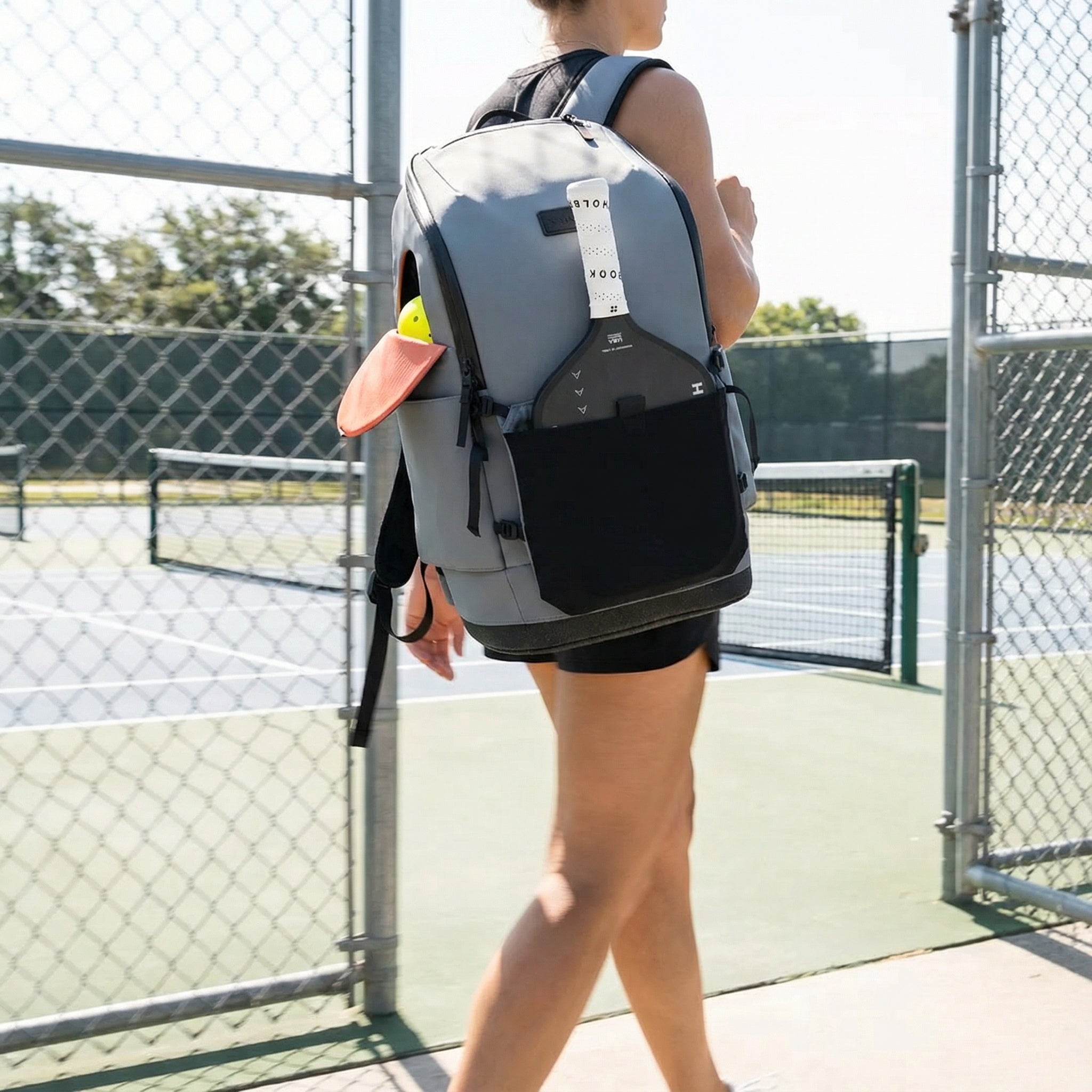
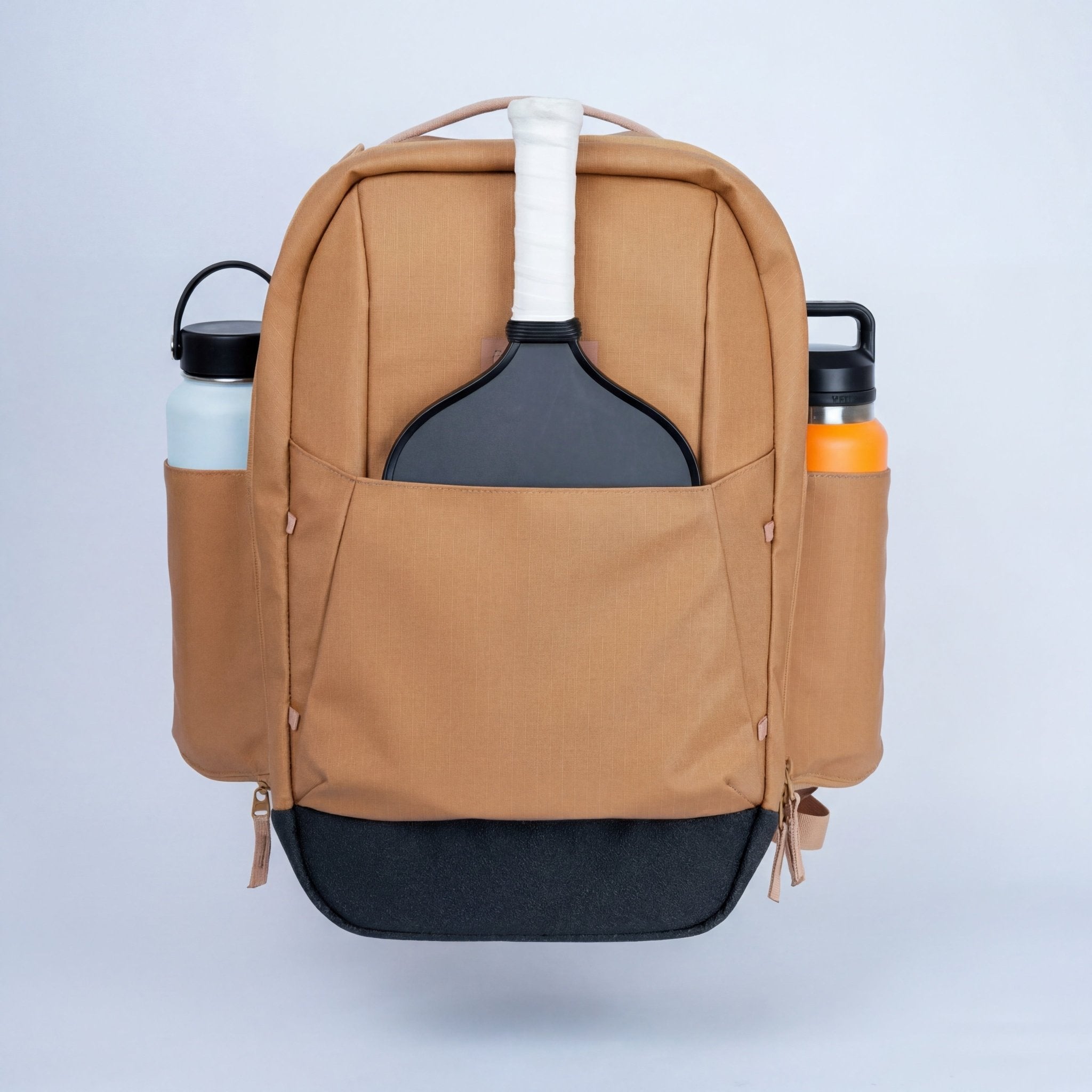
Found your next paddle? Now you need somewhere to carry it. The FORWRD Court Ranger V2 ($195) fits up to 4 paddles in its modular sleeve system, with YKK AquaGuard zippers built for outdoor courts and a 16" laptop sleeve for players who go court-to-office. Designed with feedback from 500+ real players and featured in The Dink and The Kitchen.

Frequently Asked Questions
Is the ProKennex Black Ace 16 approved for tournament play?
Yes — the Black Ace 16 is USAP (USA Pickleball) approved for sanctioned tournament play as of 2026. It meets current face texture and core specifications in the official rulebook. If you're planning to compete in any USA Pickleball-affiliated event, you're covered.
What is ProKennex's Kinetic System and does it actually help with arm pain?
The Kinetic System uses microspheres — tiny free-moving particles sealed in capsules embedded in the frame and handle. When the ball contacts the face, those particles shift and redistribute impact energy before it reaches your arm. It's particle damping technology, borrowed from aerospace applications. ProKennex has used it in tennis racquets since the early 1990s. In our testing with players who have elbow sensitivity, it noticeably reduced post-session discomfort compared to standard carbon paddles. It's not a cure for existing injuries, but the vibration reduction is real.
How does the Black Ace 16 compare to the 11mm and 14mm Black Ace models?
Core thickness fundamentally changes the paddle's character. The 16mm is a control-oriented paddle — more dwell time, a softer feel, less raw pop. The 14mm is a middle ground. The 11mm Avenger is a power paddle with a faster response and more ball speed off the face. Choose the 16mm if you want arm protection and kitchen-line consistency. Choose the 11mm if you want maximum pop and drive capability.
What grip size does the ProKennex Black Ace 16 come in?
The Black Ace 16 only comes in a 4-inch circumference (small) grip. There's no standard or large size option. Players with bigger hands will need to add an overgrip — each wrap adds roughly 1/16 of an inch — or choose a different paddle. This is a genuine limitation worth knowing before you buy.
How does the Carbon Fire face hold up on outdoor courts?
The Carbon Fire face is durable, but outdoor concrete does gradually wear the surface texture over time. In our testing, some degradation was noticeable after 6–8 weeks of frequent outdoor play. This is common across carbon fiber paddles at this price — it's not specific to ProKennex. The replaceable edge guard helps protect the paddle rim, and the polypropylene core handles temperature changes well. Indoor-primary players won't notice meaningful wear.
Final Verdict
The ProKennex Black Ace 16 is a well-built control paddle from a brand with more engineering credibility than its current pickleball profile suggests. It's not the flashiest option at $279, and JOOLA will always have more name recognition on the court. But for players who play multiple times a week and want to protect their arms without sacrificing control, the Kinetic System is genuinely the best passive vibration management available in a carbon fiber paddle at this price.
The JOOLA Perseus Pro IV 16mm edges it on raw shot-making. The Six Zero Double Black Diamond undercuts it on price. But the Black Ace 16 occupies a specific niche — the arm-conscious control player — and it occupies it better than any direct competitor right now.
Also see: prokennex-pro-flight-pickleball-paddle-review-2026-the-upgrade-paddle-for-serious-rec-players">ProKennex Pro Flight Review 2026 if you want the more power-oriented entry in the ProKennex lineup at $200.
Buy the ProKennex Black Ace 16 at Pickleball Central ($279) →

Leave a comment
This site is protected by hCaptcha and the hCaptcha Privacy Policy and Terms of Service apply.