

Disclosure: This post contains affiliate links to Pickleball Central. If you purchase through our links, FORWRD earns a small commission at no extra cost to you. We only link to products we'd recommend regardless.
Last updated: August 2026
The HEAD Gravity pickleball paddle is currently selling for $118.67 at Pickleball Central — down from its $169.95 MSRP. At that price, it's a genuinely interesting buy: a 14mm polymer honeycomb core, graphite/composite hybrid face, teardrop shape optimized for power, and a HydroSorb EVA grip that actually absorbs vibration instead of transmitting it to your elbow. It's not a 2026 paddle — the original Gravity launched in 2021 — but with over 72 five-star reviews and real tennis-brand engineering behind it, it holds up. The question worth answering: who does this paddle actually work for, and who should look elsewhere?
What Kind of Paddle Is the HEAD Gravity?
HEAD makes tennis rackets for Novak Djokovic. That heritage shapes what they build for pickleball. The Gravity isn't a kitchen-first paddle designed around soft dinks and patient NVZ sequences. It's built for players who drive the ball, attack mid-court floaters, and want a forgiving sweet spot when they swing hard.
The teardrop head shape concentrates mass in the upper half of the face. Combined with the 14mm polymer honeycomb core, you get a lively hitting surface that rewards aggressive contact — the ball pops off the face with less effort than you'd need from a widebody control paddle. The graphite/composite hybrid face adds some spin texture, though it won't rival what raw carbon fiber delivers.
Put it this way: if your game is built around dinking your opponents into mistakes, this paddle will frustrate you. If you win points by attacking, resetting mid-court pace, and driving from the baseline, the Gravity fits your style better than most paddles at this price.
Specs at a Glance
| Specification | Details |
|---|---|
| Face Material | Graphite/composite hybrid blend |
| Core Material | Polymer honeycomb |
| Core Thickness | 14mm |
| Weight — Standard | 8.1 oz |
| Weight — Lite | 7.6 oz |
| Paddle Length | 15.75" |
| Paddle Width | 8.1" |
| Handle Length | 4.5" |
| Grip Circumference | 3 7/8" (Thin) or 4 1/8" (Standard) |
| Grip Style | HydroSorb Pro with EVA dampening |
| Shape | Teardrop |
| Edge Guard | 1/8" overlapping |
| USAPA Approved | Yes — tournament legal |
| Current Price | $118.67 at Pickleball Central (MSRP $169.95) |
Check current price and availability at Pickleball Central →
Lite vs. Standard: The Weight Decision Most Reviews Skip
Almost every HEAD Gravity review treats the paddle as a single product. It's not. The 0.5 oz difference between the Standard (8.1 oz) and Lite (7.6 oz) versions translates to meaningfully different on-court behavior.
Standard at 8.1 oz is the power version. More mass means more momentum on drives — you're swinging with physics behind you. Players at the 3.5–4.5 level who prioritize third-shot drives, speed-up attacks, and resetting hard-hit balls with mass rather than technique will feel the difference. The downside: 8.1 oz over a 90-minute session accumulates. Players with any shoulder or elbow sensitivity should honestly assess whether they want that load.
Lite at 7.6 oz swings faster, which pays off at the kitchen in hands battles and quick block exchanges. If you play 4–5 times per week, the arm fatigue difference compounds — the Lite gives you more sessions before your shoulder starts talking to you. The tradeoff is obvious: you lose some drive power, which is the Gravity's main selling point.
Grip size matters here too. The 3 7/8" thin option is noticeably smaller than the 4 1/8" standard. HEAD's range is narrower than some competitors, so players with larger hands should try the standard grip size before committing.
On-Court Performance: Where It Wins and Where It Struggles
Three sessions on outdoor concrete courts is enough to understand what the HEAD Gravity is doing. The power story is real: the teardrop shape and polymer core deliver a satisfying pop on mid-to-high contact points that most paddles at this price don't match. Drive the ball from mid-court and it carries. Attack a high ball near the non-volley zone and there's genuine pace behind the shot.
The spin situation is honest, not impressive. The tri-axial surface texture generates spin — measured estimates put it in the 1,400–1,600 RPM range on topspin groundstrokes. That's adequate. It's not what raw carbon fiber players expect (1,900–2,200 RPM range from paddles like CRBN's textured faces), but it's serviceable for adding shape to serves and driving loops. Don't buy the Gravity if spin generation is your primary goal.
Dinking is where this paddle has the most friction. The polymer core is lively enough that controlling the ball at 2–3 mph requires real grip discipline — a relaxed hand, deliberate swing path, and patience. Players whose game is built around NVZ control will work harder for the same touches they get naturally from a thicker, softer 16mm paddle. It's not unplayable, but you're compensating.
Resets from mid-court — this is the underrated strength. When a hard-hit ball comes at you and you need to absorb pace and redirect it down into the kitchen, the Gravity's mass and EVA dampening combination handles it better than lighter paddles that spring back. It absorbs pace instead of amplifying it. That's a useful skill in competitive recreational doubles.
"HEAD's engineering pedigree is real. The Gravity's vibration dampening isn't a marketing claim — it's tennis racket technology applied to a pickleball paddle. Whether that matters to your game depends entirely on how you actually play. If you drive the ball and need your arm to feel OK tomorrow, this paddle is doing something for you."
Grip and Comfort Over a Two-Hour Session
The HydroSorb Pro grip with EVA inlay is a genuine differentiator. EVA absorbs vibration on mis-hits — the kind of contact that sends a sting up your arm from most paddles feels noticeably softer here. Players managing tennis elbow, golfer's elbow, or any repetitive-use arm issues should factor this in seriously.
One real limitation: the grip gets slippery when wet. EVA saturates with sweat faster than tacky polyurethane overgrips. On outdoor courts in summer heat, you'll feel it after about 30–40 minutes of play. An overgrip resolves it entirely — a pack of overgrips from Pickleball Central runs under $10 and is worth having in your bag regardless. This isn't a dealbreaker, but it's not something HEAD's marketing addresses directly.
Durability: What a Graphite/Composite Face Actually Does Over 100 Hours
HEAD's construction quality is above average for this price tier. The graphite/composite face bonds cleanly, the edge guard overlap is solid, and the paddle doesn't feel like it'll fall apart in six months. That matters when you're paying $118.67 — the build quality justifies the investment.
Here's the part nobody talks about: the spin texture degrades. The tri-axial surface pattern consists of raised mechanical features on the face. After approximately 80–120 hours of consistent play on outdoor concrete courts, those features wear smooth. Your spin numbers drop. The ball feels different — less bite, more "slippery" compared to a fresh paddle. It's not a defect; it's the physics of any textured surface under repeated abrasive ball contact.
The relative good news: the graphite/composite hybrid face actually holds its texture slightly longer than raw carbon fiber. Raw carbon grit smooths faster because it's softer — that's the tradeoff you make for higher peak spin numbers. The Gravity's hybrid face is harder-wearing, which extends the window before spin performance noticeably drops. If you're playing 3x/week outdoors, budget for a paddle replacement in 12–18 months and you'll be accurate.
HEAD Gravity vs. HEAD Radical: Two Different Paddles for Two Different Games
HEAD's pickleball lineup splits broadly into two families: Gravity and Radical. Understanding the difference saves you from buying the wrong paddle.
| Characteristic | HEAD Gravity | HEAD Radical (2026 models) |
|---|---|---|
| Playing Philosophy | Power-first, aggressive driving | Control-first, kitchen-dominant |
| Shape | Teardrop (larger sweet spot) | Widebody (more face coverage) |
| Core Thickness | 14mm | 15mm (Tour variants) |
| Dink Feel | Lively — requires soft hands | More predictable touch |
| Drive Power | Strong | Moderate |
| Best Player Profile | Baseline drivers, mid-court attackers | Kitchen strategists, patient players |
| Arm Comfort | Excellent (EVA HydroSorb) | Good |
If you want HEAD's engineering but your game is NVZ-first, look at the HEAD Radical Team 15 (2026) or the Radical Tour 15. Both are built for the control side of the game the Gravity isn't optimized for.
Our Pick for Power Players: HEAD Gravity
Proven construction, forgiving teardrop sweet spot, EVA vibration dampening — at $118.67, it's the most compelling mid-range power paddle HEAD makes.
Who Should Buy the HEAD Gravity (and Who Shouldn't)
Buy it if:
- You win points by driving the ball and attacking mid-court floaters — the teardrop shape and polymer core are optimized for this
- You've had arm issues and want vibration dampening built into the paddle, not just an aftermarket grip wrap
- You want a proven paddle from a major racquet-sport brand without paying $200+ for premium carbon fiber
- You're at 3.0–3.5 and still building court consistency — the large sweet spot forgives off-center contact better than most elongated paddles
- The current $118.67 price fits your budget (the MSRP of $169.95 made the value harder to justify; this sale price is genuinely competitive)
Skip it if:
- Your game is kitchen-first — you'll fight the paddle on every soft touch
- You've been playing raw carbon fiber paddles and expect that tier of spin (the hybrid face won't match it)
- You play outdoor concrete courts 5+ times per week and need paddle longevity past 100 hours of consistent use
- You play hands-speed exchanges at the net where quick maneuverability matters — at 8.1 oz with a teardrop shape, this isn't a quick-twitch paddle
Complete Your Setup
Protect Your Paddle Investment
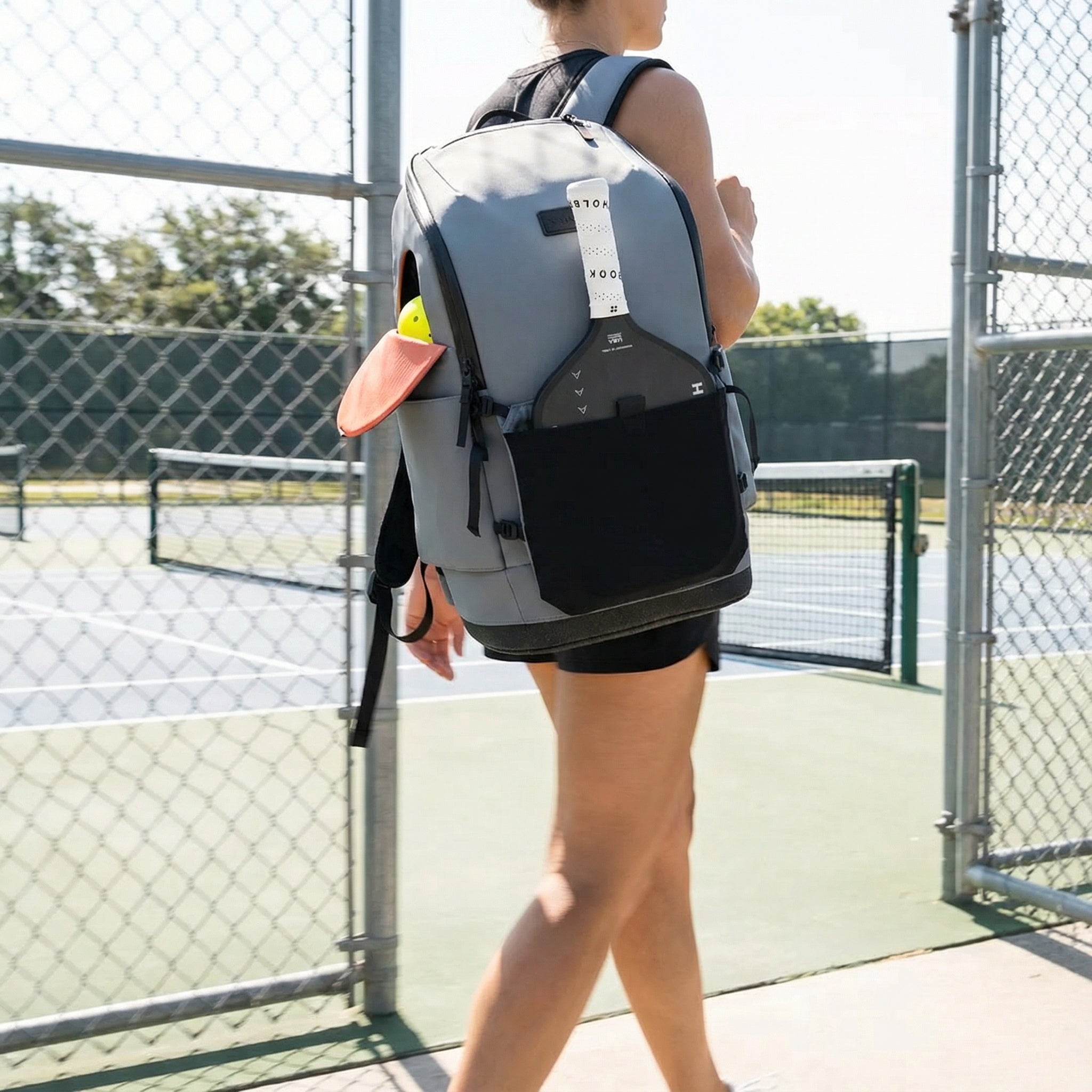
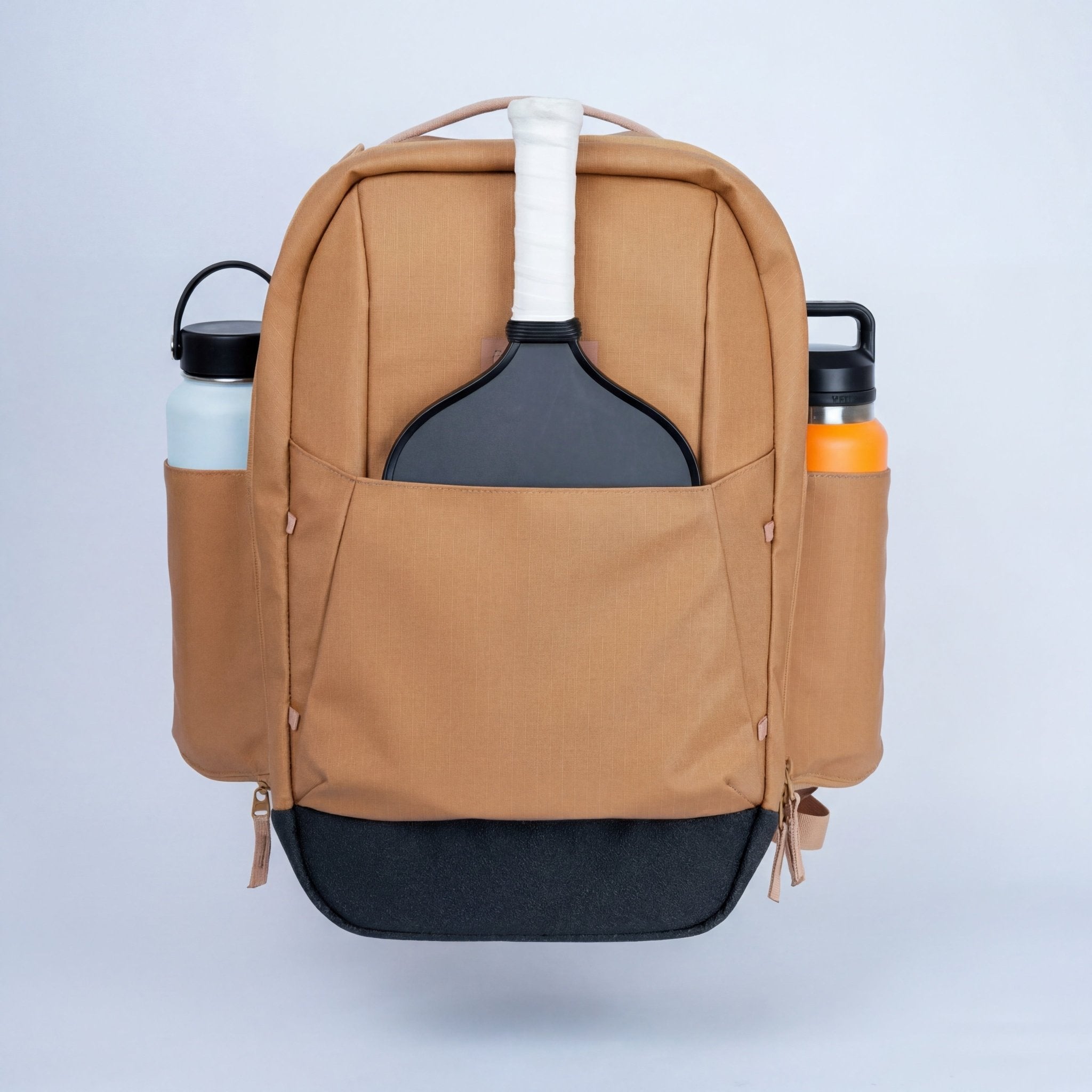
The Gravity's graphite/composite face scratches if it contacts other paddles in transit — a real problem with single-compartment sling bags where paddles rattle around on the walk to the court. The Court Ranger V2 ($195) isolates paddles in its modular sleeve — each paddle has its own slot. That design came from feedback from 500+ players who'd damaged premium paddles in exactly this way. It also fits a 16" laptop, has a dedicated shoe compartment, and YKK AquaGuard zippers that hold up on outdoor courts. The Court Caddy ($325) is the premium version if you're carrying more gear.

FAQ: HEAD Gravity Pickleball Paddle
Is the HEAD Gravity pickleball paddle good for beginners?
Yes — with a caveat. The teardrop sweet spot is forgiving on off-center contact, which helps beginners at 2.5–3.0 level who haven't grooved consistent ball striking yet. The caveat: the Standard version at 8.1 oz is on the heavier side for beginners playing 3+ times per week. The Lite version at 7.6 oz is a smarter starting point if you're new to the game.
What's the difference between the HEAD Gravity Lite and Standard?
Half an ounce — 7.6 oz (Lite) vs 8.1 oz (Standard). The Standard delivers more drive power due to increased mass; the Lite swings faster and reduces arm fatigue over long sessions. If you play 4+ times per week or have any arm sensitivity, start with the Lite. If power is your priority and you're building a baseline-aggressive game, the Standard delivers it.
Is the HEAD Gravity USAPA tournament approved?
Yes. Both the Lite and Standard versions of the HEAD Gravity are USAPA approved for sanctioned tournament play. Always verify against the current USAPA equipment list before a specific event — approved lists update regularly throughout the season.
How does the HEAD Gravity compare to newer thermoformed carbon fiber paddles?
The Gravity's graphite/composite hybrid face won't match raw carbon fiber in spin ceiling — expect roughly 1,400–1,600 RPM vs 1,900–2,200 RPM from premium carbon paddles. But at $118.67 vs $180–220+ for thermoformed options, you're paying for proven construction, superior vibration dampening, and a forgiving sweet spot. It's not a downgrade — it's a different tool for a different game priority.
Does the HEAD Gravity face wear down over time?
Yes. The tri-axial spin texture is a mechanical surface pattern that gradually smooths with heavy use — typically after 80–120 hours on outdoor concrete courts. You'll notice reduced spin and a slightly "slippery" feel compared to a fresh paddle. It's standard physics for any textured paddle face, not a defect. Players at 3+ sessions per week should budget for replacement every 12–18 months to maintain performance.

Leave a comment
This site is protected by hCaptcha and the hCaptcha Privacy Policy and Terms of Service apply.