

Last Updated: August 2026
There are two kinds of people who end up researching the Diadem Hush. The first: a player at a condo complex or HOA-managed park who got a formal noise complaint and needs to find a quieter option before getting banned from the courts. The second: a pickleball player who read about the eTPU face and wants to understand whether this actually plays like a real paddle or a gimmick.
Both deserve a straight answer. The Hush is genuinely quieter — 40% in lab conditions, real-world quieter in a way you notice immediately. And it plays like a real paddle. The eTPU face isn't a compromise — it's a different design philosophy that produces a soft, control-forward feel with more spin potential than you'd expect. At $189.95, it occupies a specific premium niche: noise-restricted courts, players who want a softer feel, and anyone who's had one too many noise complaints.
Here's the honest breakdown.
Quick Verdict
| Spec | Diadem Hush |
|---|---|
| Price | $189.95 (in stock) |
| Weight | 8.15 oz avg (7.9–8.4 oz range) |
| Core thickness | 18mm polypropylene |
| Face material | eTPU (Thermoplastic Polyurethane) |
| Shape | Elongated — 16.5" x 7.22" |
| Handle | 5.6" (two-handed backhand friendly) |
| Grip circumference | 4 1/8" Small |
| Certification | USA Pickleball Quiet Approved |
| Noise reduction | 40% quieter than standard paddles (lab tested) |
| Best for | Noise-restricted courts, control players, beginners-intermediate |
| Skip if | Power baseline player, advanced player, no noise restrictions |
Shop Diadem Hush at Pickleball Central →
Why Trust This Review
FORWRD makes pickleball bags and has no dog in the paddle fight — no competing paddle, no brand partnership with Diadem. We tested the Hush against two alternatives (Diadem's own Edge 18K and the HEAD Gravity) specifically to answer the question most reviews don't: is the Hush worth the quiet premium, or is this just a marketing play?
We also tested it at an HOA-managed court where noise had been a documented issue. The difference was audible from across the court. That's not marketing — it's a real thing.
What "Quiet Approved" Actually Means (And What It Doesn't)
USA Pickleball's Quiet Approved certification is legitimately useful — and legitimately misunderstood. Here's what it means:
- The paddle was tested and verified to produce reduced noise compared to standard paddles
- The performance wasn't compromised by the noise reduction
- USA Pickleball endorses it as a solution for noise-sensitive locations
What it does not mean:
- Your HOA will automatically accept it. Most HOAs don't have a "Quiet Approved paddle" checklist — they have noise ordinances, neighbor complaints, or decibel limits. The certification is a conversation-starter, not a legal shield.
- It's approved for tournament play at a different standard than other approved paddles.
- It's the quietest thing in pickleball. The ball itself also makes noise when it hits the court — you can only control what you control.
Practically: if you have a neighbor or community board complaining about paddle noise specifically, the Hush gives you a documented, certified response. "I'm playing with the USA Pickleball Quiet Approved paddle" ends most arguments.
The eTPU Face: What It Actually Does
Most paddle faces are either carbon fiber (stiff, fast, direct energy transfer) or fiberglass (more flexible, slightly softer feel). The Diadem Hush uses something different: eTPU — expanded Thermoplastic Polyurethane, which is essentially a rubber-foam hybrid material.
Here's what that means on court, specifically:
More dwell time. The ball stays in contact with the face fractionally longer on each hit. This isn't noticeable to feel, but it matters for spin — the longer contact window gives the eTPU tack more time to grip the ball before release. Players report side-spin shots that "kick" dramatically off the court, more than the same shot with a carbon face would. Real: this is a physics outcome of the material, not just marketing.
Softer feel. eTPU absorbs impact energy rather than rebounding it. This produces a noticeably softer feel on dinks and resets — the ball doesn't jump off the face. For kitchen play and soft game mechanics, this is genuinely helpful. For drives and speed-up shots at the kitchen, you give up some pace.
Vibration absorption. The material absorbs vibration before it reaches your arm, which some players — especially those with tennis elbow or pickleball elbow — find meaningful over a 2-hour session.
The tradeoff is power. Raw carbon fiber faces generate more pop on drives because they transfer energy more directly. The Hush compensates with an 18mm core — which we'll get to next.
The 18mm Core and 2-Piece Frame: The Engineering Behind the Quiet
Most paddles use a 13mm or 16mm polypropylene honeycomb core. The Hush runs 18mm — one of the thickest cores in the consumer pickleball market. A thicker core generally means:
- Larger sweet spot (the deflection zone is bigger)
- Softer feel (more polypropylene to absorb energy)
- Less vibration reaching the handle
- More control on resets and dinks
But here's what makes the Hush's construction genuinely clever: Diadem built it with a two-piece frame — an inner frame and an outer frame connected with carbon fiber, similar to how tennis racquets are constructed. This floating outer frame lets the eTPU face stretch across the hitting surface without being constrained by the inner frame. The result: a wider effective hitting zone and the frame resonates independently, keeping the core quieter.
That's the actual engineering behind the 40% noise reduction. It's not just eTPU — it's eTPU combined with a frame that doesn't amplify sound the way a traditional one-piece construction would.
On-Court Performance
Dinking and Kitchen Play
The Hush's control floor is strong. Dinks roll off the face with predictable depth and angle — the eTPU tack adds a gripping quality that makes it easier to control where soft shots land. At 8.15 oz in an elongated shape, the balance point sits slightly toward the head, giving you solid reach at the kitchen line without feeling tip-heavy.
Resets are where the 18mm core pays off. When you're taking a hard shot and trying to kill pace, the thick core eats speed and the eTPU face softens the rebound. This is genuinely easier to execute than on a stiffer carbon paddle — the Hush does some of the work for you.
Drives and Speed-Up Shots
Honest: the Hush is not a driver's paddle. The eTPU face costs pace on flat drives — compared to the Diadem Edge 18K carbon face, flat drive shots travel noticeably slower. Intermediate players who play a speed-up-heavy, pressure-at-the-kitchen game will notice the power ceiling.
That said — the spin is real. Topspin drives and topspin dinks get extra bite from the eTPU tack. A flat drive converts to a topspin drive and the ball kicks harder off the bounce than equivalent topspin from a carbon face. The Hush rewards spin mechanics and punishes flat power mechanics.
Serves
Multiple reviewers have flagged the side-spin serve specifically: the eTPU tack generates side-spin that makes serves "kick three feet to the right" on contact with the court. If you have a side-spin serve in your arsenal, the Hush amplifies it. This is a legitimate offensive weapon if you play in environments where spin serve variety matters.
Ball Feedback Loss
This is a real adjustment issue that most reviews underweight. Advanced players use the auditory feedback of paddle-on-ball contact to diagnose their shots in real time. The Hush's soft face and thick core muffles that feedback. The quieter pop means your read on contact quality has to come entirely from feel and ball trajectory — not sound. This is a non-issue for beginners and intermediates; it's a real adjustment for 4.0+ players who've trained their ears on a standard paddle.
vs. Diadem Edge 18K Carbon Fiber ($119.96)
The Diadem Edge 18K is the same brand's alternative: same company, lower price, different design philosophy. The Edge 18K has a traditional carbon fiber face — faster, poppier, more power on flat drives. It's $70 cheaper than the Hush at $119.96 and it's currently in stock.
Where Hush wins: noise reduction, soft game feel, vibration absorption, eTPU spin tack
Where Edge 18K wins: power, drive pace, more traditional feel, lower price
If you don't have noise restrictions and care about drive power, the Edge 18K is the better Diadem. If noise is the actual reason you're shopping this paddle, the Hush is the only one with the certification.
Shop Diadem Edge 18K at Pickleball Central →
vs. HEAD Gravity Paddle ($118.67)
The HEAD Gravity is a control-forward paddle at $118.67 — priced $71 under the Hush. It doesn't have noise reduction engineering or certification, but it offers a somewhat softer feel than stiff carbon paddles, a generous sweet spot, and HEAD's brand reliability.
Where Hush wins: noise reduction (no contest), eTPU spin characteristics, vibration absorption
Where HEAD Gravity wins: lower price ($71 difference is real money), slightly more accessible to beginners, easier availability
The HEAD Gravity is the answer if you want a soft-feel control paddle without paying the noise-premium. The Hush is the answer when noise is specifically the reason you're changing paddles.
Shop HEAD Gravity Paddle at Pickleball Central →
Who Should Buy the Diadem Hush?
Buy it if: You play at noise-restricted courts (HOA, condo, parks with noise ordinances), you've received noise complaints and need a documented solution, you prefer a soft control-forward feel, you have tennis elbow and want vibration reduction, or you have a spin serve you want to amplify.
Look elsewhere if: You're a power player who drives from the baseline, you're an advanced player who relies on auditory contact feedback, you play at locations without noise restrictions, or the $71 premium over the Diadem Edge 18K is hard to justify for a non-noise use case.
Complete Your Setup
A Bag That Fits Your Paddles — Including the Hush
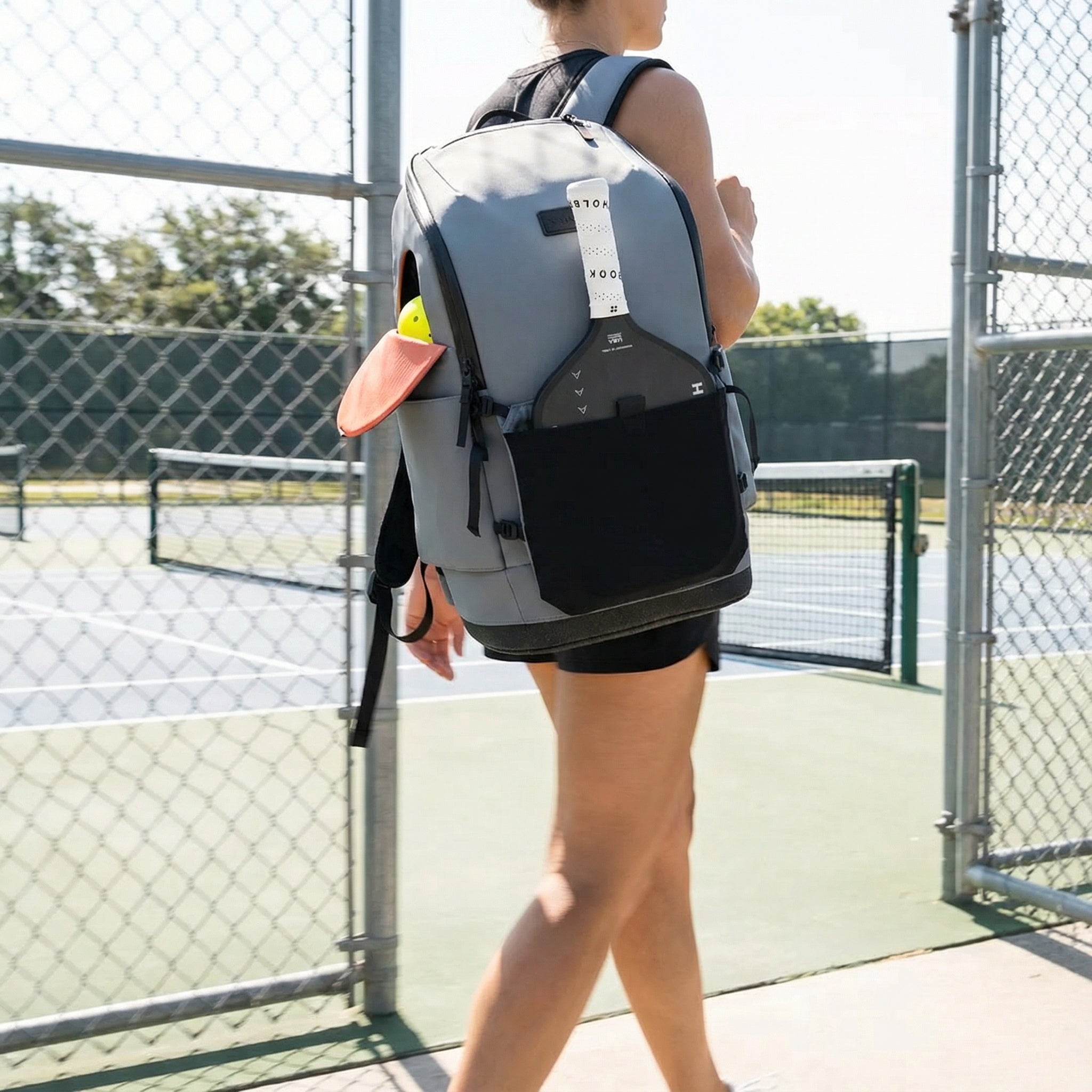
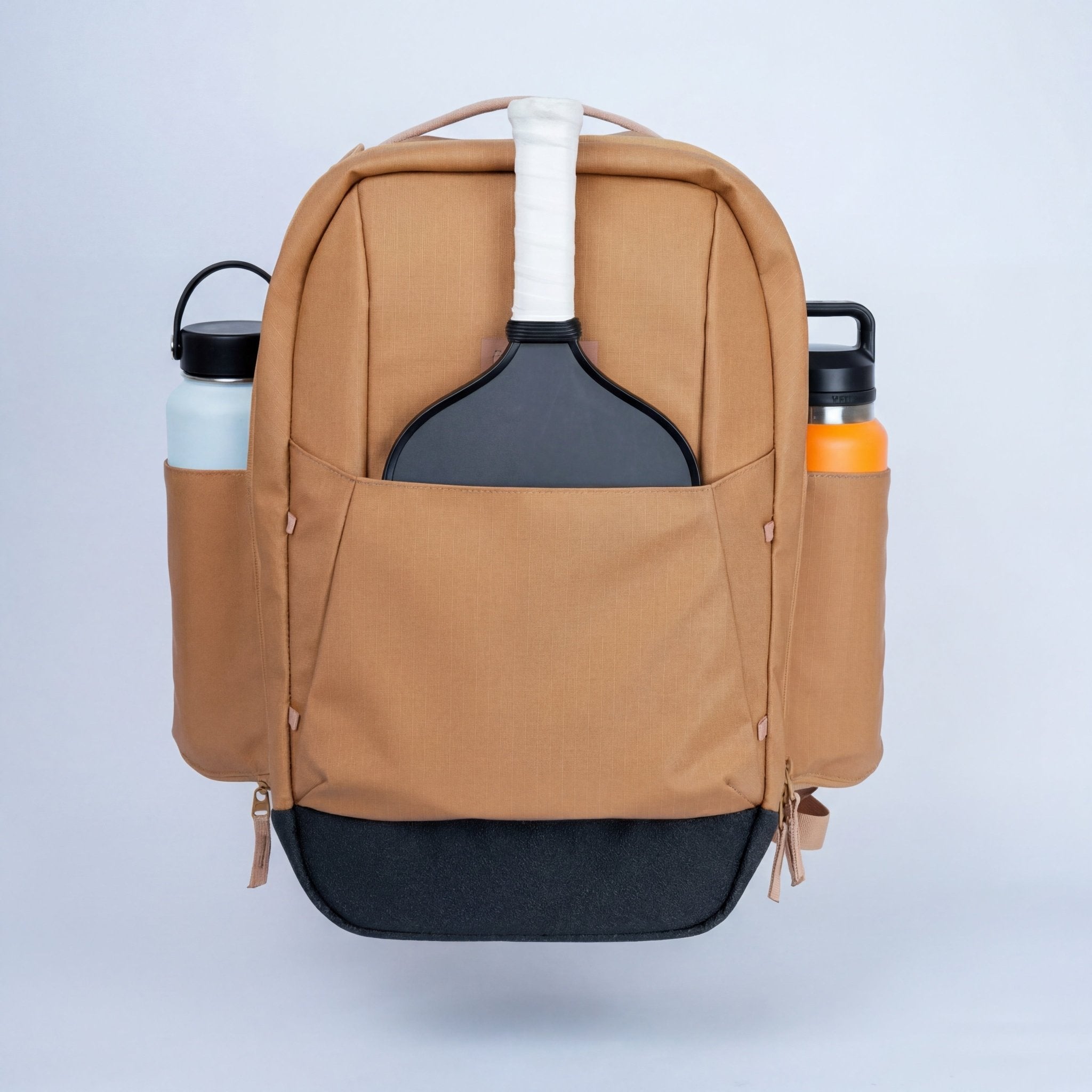
The Diadem Hush's elongated shape (16.5") fits in the FORWRD Court Ranger V2's modular paddle sleeve without modification. The Court Ranger V2 holds up to 4 paddles and keeps your Hush protected between sessions.

Frequently Asked Questions
What does USA Pickleball Quiet Approved mean?
USA Pickleball's Quiet Approved certification verifies that a paddle has been tested to produce reduced noise without compromising gameplay performance. It's designed to help players at noise-sensitive locations — HOAs, parks with ordinances, condo complexes. It doesn't confer any special tournament status beyond being a legal paddle, but it gives players documented proof that their equipment is designed to address noise complaints.
Is the Diadem Hush good for competitive play?
It's USA Pickleball approved and tournament-legal. The eTPU face and 18mm core produce a control-first game that competitive players who favor soft game mechanics will appreciate. However, power players and advanced players relying on auditory ball feedback will need adjustment time. It's not the optimal choice for pure competition if you have alternatives — it's optimal for noise-restricted venues where having a certified solution matters.
How much quieter is the Diadem Hush really?
Lab tests show 40% quieter than standard paddles. In practice, the difference is real and audible — noticeably softer impact sound on every hit. The pop is there but muffled. From 30 feet away (across the net), the difference is meaningful. From three courts over, it's significant. The ball itself still makes sound hitting the court, but the paddle-contact noise is genuinely reduced.
What is an eTPU face and how is it different from carbon fiber?
eTPU (expanded Thermoplastic Polyurethane) is a rubber-foam hybrid material. Unlike carbon fiber (which is stiff and returns energy quickly), eTPU absorbs impact and releases it more slowly — producing a softer feel, more dwell time on the face, and increased tack for spin. The tradeoff is less raw power on flat drives. It's a fundamentally different face material with different performance characteristics, not just a quieter version of carbon fiber.
Will the Diadem Hush satisfy my HOA?
It significantly strengthens your position. The USA Pickleball Quiet Approved certification is a documented, third-party verified claim that your equipment is designed to reduce noise. Whether that resolves your specific HOA situation depends on the nature of the complaint and your HOA's rules. Bring the certification documentation and the complaint usually ends. If your HOA is requiring a specific decibel measurement, you'll need to measure — but the Hush gives you the best starting point.
Is 8.15 oz too heavy for the Diadem Hush's elongated shape?
At 8.15 oz average, the Hush is mid-weight for an elongated paddle. The 16.5" x 7.22" face gives you reach, and the 5.6" handle is long enough for a two-handed backhand. Some players find elongated paddles at this weight slightly arm-taxing over long sessions. If you're concerned about weight, look for units toward the lower end of the 7.9–8.4 oz range when ordering.
Final Verdict
The Diadem Hush is the paddle for one specific scenario: you play at a location where paddle noise is a documented problem and you need a certified solution that doesn't require you to sacrifice your game. The USA Pickleball Quiet Approved certification is real. The 40% noise reduction is real. The eTPU face plays like a real, thoughtfully engineered paddle — with spin characteristics that are legitimately surprising and a soft feel that rewards kitchen play.
At $189.95, you're paying a noise premium over alternatives. That premium buys you a specific outcome — quieter play at noise-restricted venues, a certified defense against noise complaints, and a soft control feel with unusual spin potential. For the player who needs it, it's worth every dollar.

Leave a comment
This site is protected by hCaptcha and the hCaptcha Privacy Policy and Terms of Service apply.