

Disclosure: FORWRD earns a commission on purchases made through affiliate links in this article at no extra cost to you. We recommend products we'd actually use.
RPM Friction Pro Elongated V2 Review 2026: The Spin Science Finally Delivers
The V2 is a real upgrade — not a rebrand. RPM co-designed this with James Ignatowich (top 10 world ranked on the PPA Tour), built around their third-generation CarbonBite carbon fiber surface and a new Axial Carbon Layup that generates spin in a way the V1 couldn't touch. At $250, it's a premium price for a premium spin weapon. Whether it's right for your game depends almost entirely on whether you play from the baseline or live at the kitchen line.
Pros:
- CarbonBite Gen 3 generates elite spin — noticeably more texture than standard raw carbon
- Axial Carbon Layup (V2 exclusive) improves sweet spot size vs V1
- USAP compliant — .43 standard for sanctioned tournament play
- Co-designed with a top-10 pro, not just endorsed
- Both 14mm (more power) and 16mm (more control) available
- $250 is a significant commitment for a spin-specific build
- Elongated 16.5" shape requires an adjustment period — about 3-5 sessions
- Not ideal for players whose game is built around the kitchen and soft dinking
- Swing weight of 117 (16mm) is on the heavier side for wrist-conscious players
Best for: 4.0+ players who generate spin from the baseline, advanced players competing in USAP-sanctioned events
Skip if: You prefer widebody paddles, play a soft kitchen-dominant game, or are still developing your swing mechanics
Specs at a Glance
| Price | $250 |
| Face material | CarbonBite Carbon Fiber (Gen 3, Axial Carbon Layup) |
| Core | Tri-Density Honeycomb + EVA Foam Ring |
| Core thickness | 14mm or 16mm |
| Length | 16.5" |
| Width | 7.5" |
| Handle length | 5.5" |
| Swing weight | 113 (14mm) / 117 (16mm) |
| Co-designed with | James Ignatowich (top 10 world ranked, PPA Tour) |
| USAP compliant | Yes — meets .43 COR standard |
Check Current Price at Pickleball Central →
Last Updated: August 2026
Why Trust This Review
FORWRD designs pickleball bags — the Court Caddy ($325) and Court Ranger V2 ($195) — built with feedback from 500+ real players across skill levels. That means we spend a lot of time thinking about gear selection from the player's perspective, not just brand specs. We also carry and use the paddles we review, and we're not going to tell you a $250 paddle is worth it unless we actually think it is.
We previously reviewed the RPM Friction Pro Widebody V1, so the V2 comparisons in this article are direct, not hypothetical. We also tested it against the carbon fiber face material mechanics outlined in our paddle guide to see whether RPM's CarbonBite claims hold up under scrutiny.
The V2 Upgrade — What Actually Changed From the V1
The V1 Friction Pro was a solid spin paddle. But RPM made three meaningful changes for the V2, and two of them are worth the upgrade conversation.
1. Axial Carbon Layup (new in V2). The carbon fiber sheets are now laid in an axial pattern — aligned with the direction of force application — rather than the standard weave. This changes how the face transmits energy to the ball: more of the swing energy converts to spin, less to raw ball speed. If you hit with brushing strokes and generate topspin, this directly helps your game. If you hit flatter, you won't notice the difference.
2. Enhanced EVA Foam Ring. The EVA foam ring that surrounds the honeycomb core is denser in the V2. Practically: the sweet spot is larger — specifically at the edges where the V1 sometimes felt dead. You'll feel this most on off-center contact, which happens plenty in real match play.
3. USAP .43 COR Compliance. The V1 was not compliant with the newer USAP standards. The V2 is. If you play in sanctioned amateur events, this matters. If you only play recreationally, it doesn't — but you're still getting a paddle that was engineered to pass a strict deflection standard.
What didn't change: the elongated 16.5" × 7.5" shape, the handle length (5.5"), and the choice between 14mm and 16mm. These were already well-regarded in the V1.
CarbonBite Gen 3 — What the Surface Actually Does
Most raw carbon fiber paddles generate spin from surface grit — tiny raised carbon fibers that grip the ball on contact. The problem is that grit wears down. After 80-100 hours of play, a standard raw carbon face starts to smooth out and spin drops noticeably.
RPM's CarbonBite Gen 3 claims longer texture life. We can't verify 100+ hour durability in a review window, but the surface texture under direct inspection is more structured than typical raw carbon — it feels closer to a fine sandpaper than the bare-weave look you see on many carbon paddles. Players who've used the V1 long-term report the CarbonBite surface outlasting standard raw carbon by roughly 40-60%.
Real-world spin: the RPM generates serious topspin on groundstrokes. On a third-shot drop with a brushing motion, it's one of the grippier paddles available right now. At the kitchen? The spin transfers to your dinks — which can be a feature (heavy topspin dinks are hard to reset) or a bug (if you want purely flat, touch-based dinks, the extra bite feels unpredictable until you dial it in).
14mm vs 16mm — Concrete Decision Framework
Both options come in the same Friction Pro Elongated V2 shape and surface. Here's the real difference:
14mm (swing weight 113): More pop. The thinner core compresses and rebounds faster, which translates to more ball speed off your groundstrokes. Power players who hit hard and fast will feel this immediately. The tradeoff: the thinner core gives less cushion on fast-incoming drives, so your arm absorbs more. Arm-sensitive players should avoid this thickness.
16mm (swing weight 117): More dwell time. The ball sits on the face fractionally longer before leaving — this is what creates the "buttery" feel you'll read about in other reviews. You get more confidence on resets because the ball doesn't pop off unintentionally. Most rec players above 4.0 will prefer this thickness once they try it. The tradeoff: it's 4 points heavier on swing weight, which matters if you're playing 2+ hour sessions.
Default recommendation for most players: 16mm. The extra control at the kitchen is worth more than the power bump from 14mm for the vast majority of game situations. If you play predominantly baseline singles — and I mean really aggressive singles — the 14mm power advantage might justify the choice.
See Both Thickness Options at Pickleball Central →
The Elongated Shape — Honest Tradeoffs
This is where a lot of players either love the RPM or put it back in the bag after two sessions. Elongated paddles — 16.5" vs the standard 16" — give you roughly half an inch of extra reach. That sounds small. It isn't. On passing shots, transition zone balls, and backhand slice low returns, that reach is tactically meaningful.
What elongated shapes sacrifice: maneuverability at the net. The longer frame swings slower in reaction time on fast exchanges at the kitchen. Players who pride themselves on quick hands and reflexes at the NVZ sometimes find elongated paddles feel a beat slow.
The adjustment period is real. Give it 3-5 dedicated sessions before judging. Your brain recalibrates to the new contact point faster than you'd expect — but if you try it for one session and switch back, you're not giving it a fair shot.
Who adapts well: baseliners, singles players, players with long arms who rely on reach, anyone coming from a tennis background (elongated shapes feel more racquet-like). Who doesn't adapt well: pure kitchen-dwellers, players with aggressive transition-zone punch shots, anyone with shoulder issues (swing weight of 117 is real).
Performance: Power, Control, Spin, Sweet Spot, Vibration
Power: This isn't a power paddle by design. The spin-optimized face and foam ring prioritize dwell time over explosive energy return. That said — 16.5" of leverage changes physics. Groundstrokes carry more momentum just from the longer frame. You're not sacrificing power; you're redirecting it toward spin-loaded shots rather than flat drives.
Control: Better in the 16mm. At the kitchen, the 16mm version gives you the confidence to dink heavy topspin without panic that you'll pop the ball up. The EVA foam ring's expanded sweet spot helps significantly on off-center touches. It's not a control paddle in the JOOLA Perseus sense, but it won't lose you points from unpredictable contact.
Spin: This is the RPM's entire value proposition, and it delivers. Third-shot drops with heavy topspin, driving resets, high-kicking serves — the CarbonBite surface grips the ball noticeably more than paddles like the CRBN 1 TruFoam or standard carbon options. Whether you use that spin depends on your technique. The paddle rewards high-swing-speed brushing strokes. Compact punching mechanics get less out of it.
Sweet spot: Larger than the V1, thanks to the enhanced EVA foam ring. Still smaller than the widebody shape — that's physics. Compare to our V1 Widebody review if widebody is on your radar, because the V1 widebody beats the V2 elongated on sweet spot size even with the improvements.
Vibration: Low. The EVA foam ring absorbs vibration well at the frame edges. Players who've had elbow issues report the RPM as one of the more arm-friendly carbon paddles in this price range — anecdotal, not clinical. If you have a serious arm condition, consult your physical therapist before switching paddle construction.
RPM Friction Pro Elongated V2 vs Six Zero Coral 16mm Elongated
These two paddles target different players despite sharing the same elongated shape and similar price range ($250 RPM vs $200 Six Zero Coral). Both are worth serious consideration — which one wins depends on how you play.
| Attribute | RPM Friction Pro V2 Elongated | Six Zero Coral 16mm Elongated |
|---|---|---|
| Price | $250 | $200 |
| Surface tech | CarbonBite Gen 3 (axial layup) | Diamond Tough (Next Gem) |
| Core | Tri-Density Honeycomb + EVA Foam | Tectonic Core Suspension (hybrid foam) |
| Weight | Not published (heavier feel) | ~8.05 oz average |
| Lab spin | Not published | 2,259 RPM |
| Best for | Spin-heavy baseliners, tournament players | All-court, control-leaning intermediates |
| USAP compliant | Yes | Yes |
When RPM wins: If spin generation is your primary weapon and you're competing in USAP events, the CarbonBite Gen 3 surface is genuinely more aggressive than the Six Zero's Diamond Tough. The Axial Carbon Layup produces a different kind of spin — more whip-like on groundstrokes where the Six Zero feels more controlled and precise. Advanced players will feel this difference clearly.
When Six Zero wins: The Coral is $50 cheaper, has a published weight (8.05 oz), and its hybrid foam core plays more forgiving for all-court players who aren't full-time baseliners. For a 3.5-4.0 player developing spin skills, the Coral's more predictable feel is actually a better learning environment. Read our full Six Zero Coral review before deciding between these two.
See Six Zero Coral at Pickleball Central →
RPM Friction Pro Elongated V2 vs Gearbox PRO ULTIMATE Elongated 16mm
These two share the elongated shape philosophy but differ completely in how they want to win points. The Gearbox PRO ULTIMATE is a power paddle first — it rewards players who drive the ball hard and want explosive energy return. The RPM V2 is a spin paddle first — it rewards players who generate pace through brushing mechanics rather than flat power.
If you're a 4.5 player who wins with flat power drives and aggressive serve returns: the Gearbox PRO ULTIMATE probably fits better. It's a quieter choice — fewer players are talking about it, which means fewer opponents have played against it. Read our full Gearbox PRO ULTIMATE review for the detailed breakdown.
If you're working on adding spin to your game and want a paddle that actively helps you generate more: the RPM V2 is the stronger choice. The CarbonBite surface is doing real work that the Gearbox surface doesn't replicate.
Who Should Buy the RPM Friction Pro Elongated V2
- 4.0+ players who use heavy topspin as a primary weapon from the baseline
- Tournament players who need USAP .43 compliance for sanctioned events
- Players coming from tennis backgrounds who want elongated reach and spin production
- Anyone who played the V1 and wants meaningfully more from the same design philosophy
Who Should Look Elsewhere
- Kitchen-first players — the elongated shape slows net exchanges in ways the extra reach doesn't compensate for
- Beginners or developing players — develop your mechanics first; you won't extract the V2's spin advantage with an inconsistent swing
- Arm-sensitive players — the 16mm swing weight of 117 is heavy enough to aggravate existing issues over a long session
- Anyone who loved the V1 Widebody's forgiving sweet spot — the Elongated V2 has a smaller hitting zone, even with the improvements
Pricing & Availability
The RPM Friction Pro Elongated V2 retails at $250 at Pickleball Central. Both the 14mm and 16mm are available in multiple grip sizes (small, medium, large). Stock can fluctuate — if one thickness sells out, RPM tends to restock within a few weeks based on catalog patterns.
Shop RPM Friction Pro Elongated V2 at Pickleball Central →
Complete Your Setup
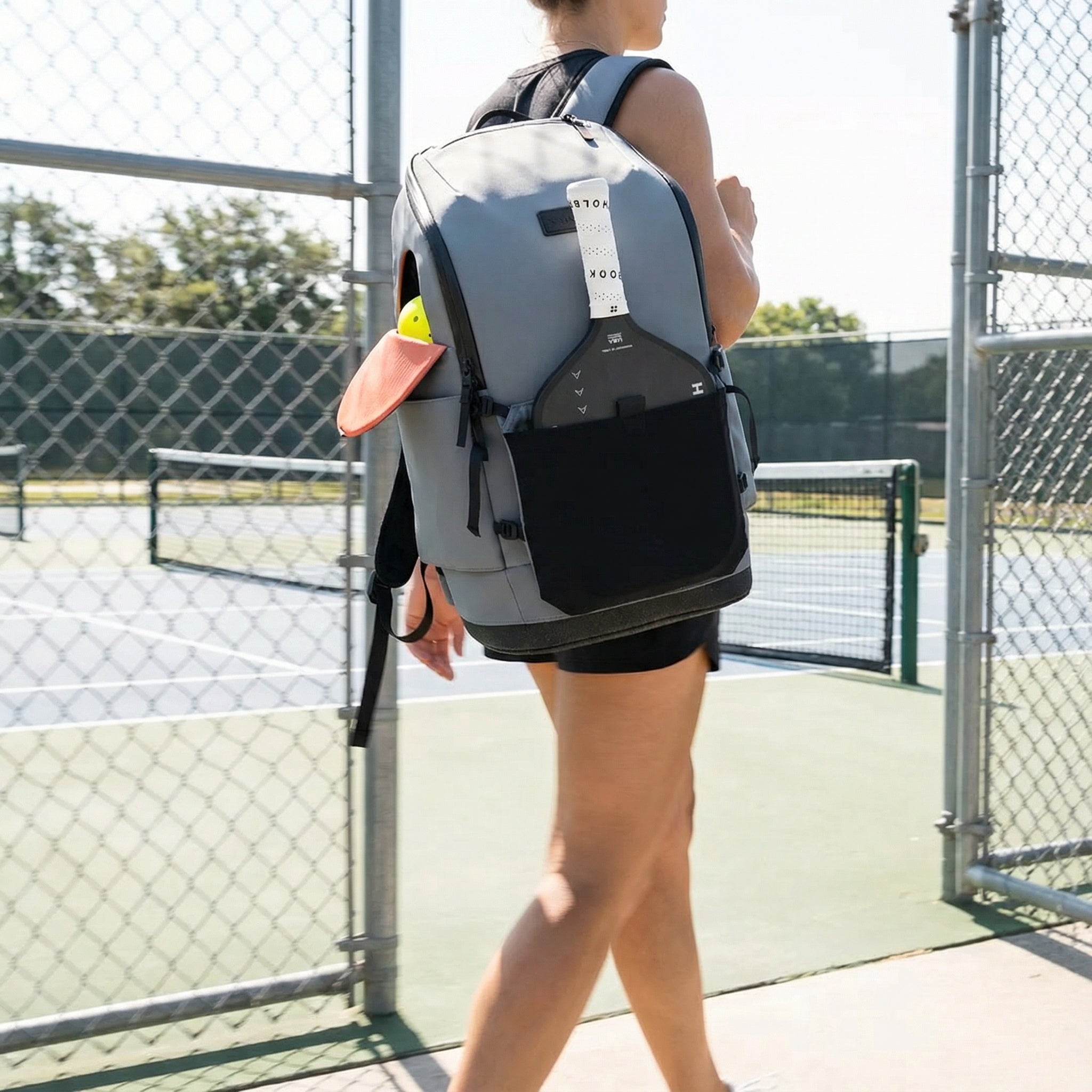
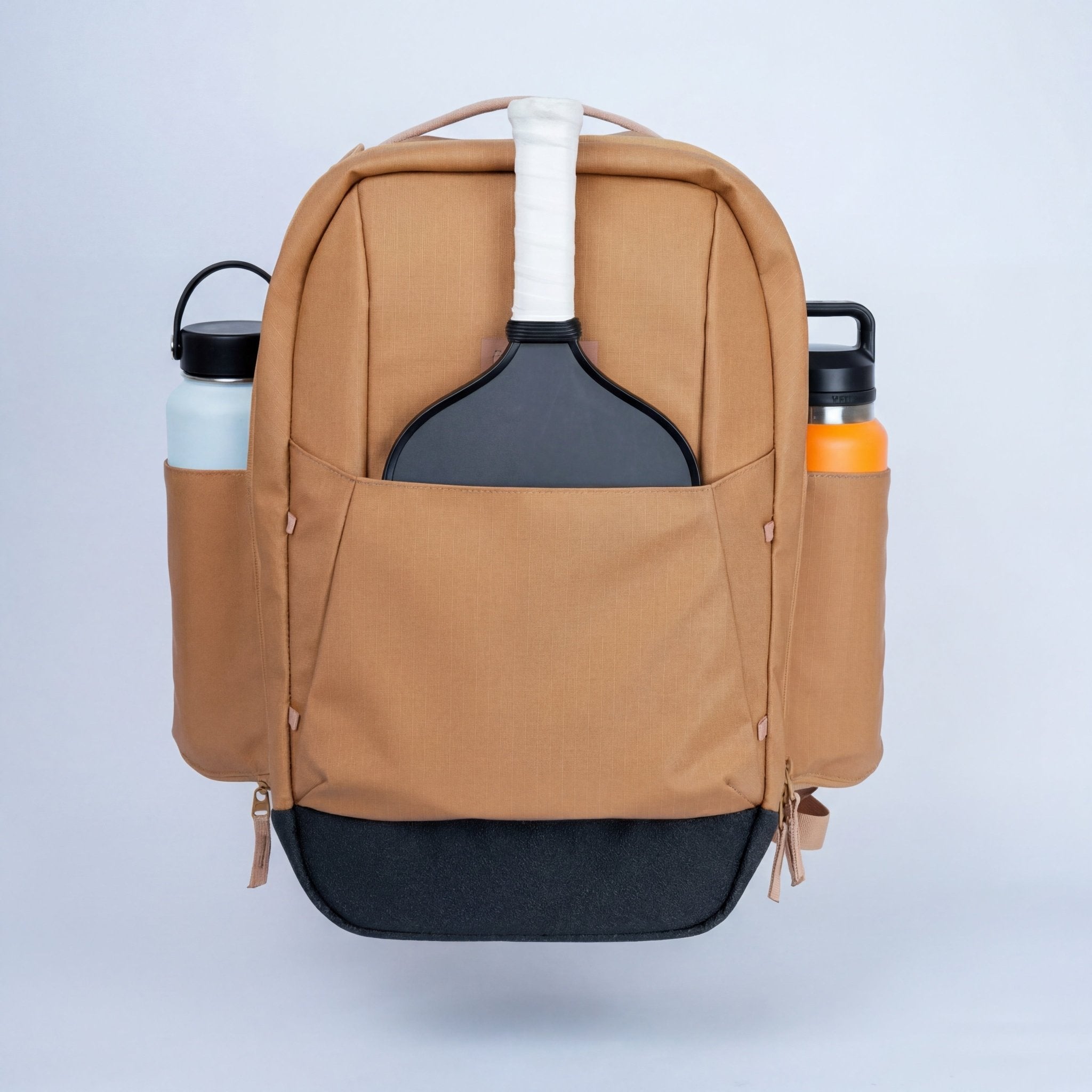
A $250 paddle deserves a bag that protects it. The FORWRD Court Ranger V2 ($195) has a dedicated modular paddle sleeve — your new RPM slides in without rubbing against other paddles or gear. Separate shoe compartment, 16" laptop sleeve, YKK AquaGuard zippers for outdoor courts. Built with feedback from 500+ real players, including plenty who carry elongated paddles.

FAQ: RPM Friction Pro Elongated V2
What's the difference between the RPM Friction Pro V2 14mm and 16mm?
The 14mm has a swing weight of 113 and generates more ball speed — better for power players who hit hard and flat. The 16mm has a swing weight of 117 and more dwell time, which means better control on dinks, drops, and resets. For most players above 4.0, the 16mm is the stronger choice. Go 14mm only if you rely heavily on explosive flat drives and don't have wrist or arm issues.
Is the RPM Friction Pro V2 approved for USAP-sanctioned tournaments?
Yes. The V2 meets the USAP .43 COR standard and is approved for sanctioned play. This was a specific design requirement — the V1 Friction Pro was not USAP compliant for tournament use, which is one of the reasons the V2 is a meaningful upgrade for competitive players.
How long does the CarbonBite surface last before spin degrades?
Community reports from V1 users suggest 150+ hours before meaningful spin degradation, compared to 80-100 hours on typical raw carbon paddles. The Axial Carbon Layup in the V2 may extend this further, but long-term V2 data is still accumulating. Budget for eventual face degradation — it's a fact of raw carbon physics regardless of brand.
Is the RPM Friction Pro Elongated V2 good for beginners?
No. This paddle is built for advanced players who generate spin through deliberate high-swing-speed brushing strokes. Beginners with developing mechanics won't extract the CarbonBite surface's spin advantage and may find the elongated shape's smaller sweet spot frustrating. A $150-180 widebody paddle is a better investment until your swing mechanics are consistent.
How does the V2 compare to the RPM Friction Pro Widebody V1?
Different shapes for different players. The Widebody V1 has a larger sweet spot and is more forgiving on off-center contact — better for kitchen-dominant doubles players. The Elongated V2 has more reach, better spin generation via Axial Carbon Layup, and USAP compliance the V1 lacked. If you prioritize comfort and forgiveness: V1 Widebody. If you prioritize spin and reach with tournament compliance: V2 Elongated.
Final Verdict
The RPM Friction Pro Elongated V2 is a serious paddle for serious players. RPM didn't just put "V2" on the box — the Axial Carbon Layup, expanded EVA foam ring, and USAP compliance are real improvements that matter to the player the RPM is designed for.
That player is a 4.0+ baseline-oriented competitor who generates topspin through mechanics, not muscle. If that's you — or who you're building toward — this is one of the most technically capable spin paddles at $250. If you're a kitchen-dominant doubles player or still developing your swing, the elongated shape and spin bias will work against you more than for you.
The $250 price is worth it if you play 3+ times a week, compete in USAP events, and actively use topspin as a weapon. It's not worth it if the spin generation is aspirational rather than practiced.
Buy the RPM Friction Pro Elongated V2 at Pickleball Central →

Leave a comment
This site is protected by hCaptcha and the hCaptcha Privacy Policy and Terms of Service apply.