

Disclosure: This post contains affiliate links to Pickleball Central. If you purchase through our links, FORWRD earns a small commission at no extra cost to you. We only link to products we'd recommend regardless.
Last updated: August 2026
The short answer: carbon fiber gives you more spin and kitchen control; fiberglass gives you more pop and power on drives; composite blends both without fully winning either battle. Which material actually matches your game comes down to three things — how often you play, where your game breaks down, and one durability fact that most paddle reviews never mention.
Here's what the marketing leaves out about how paddle faces actually age, plus a three-question framework for choosing the right material for your game right now.
What Your Paddle Face Is Actually Made Of (And Why It Matters)
Most guides treat "carbon fiber" as a single category. It's not — and buying the wrong type for your game is easy when brands use the terms interchangeably.
Raw Carbon Fiber (Unidirectional or Textured Face)
Raw carbon fiber faces are made from loose carbon strands layered in polymer resin, then left with a deliberately gritty, textured surface. That grit is the mechanism for spin. The microscopic peaks grip the ball a few extra milliseconds on contact, generating topspin and slice that smooth surfaces genuinely can't match.
This is the CRBN specialty — the CRBN 1 TruFoam Genesis is the clearest example of a raw carbon kitchen specialist. The Six Zero Double Black Diamond is another — we've tested both extensively. What neither brand will tell you upfront: that grit is also what degrades first. More on this in Section 3.
Woven Carbon Fiber (Carbon Fiber Fabric)
Woven carbon fiber presses carbon strands into an interlocked fabric — you can see it as a cross-hatch pattern on some paddle faces. Smoother than raw carbon, stiffer than fiberglass. The surface texture exists but it's subtler. You get excellent touch, a consistent feel across the full face, and longer grit life than raw carbon. Ben Johns plays the JOOLA Perseus Pro V, which uses woven carbon construction. His game isn't maximum spin — it's controllable spin combined with precision that's difficult to replicate on raw carbon alone.
Some brands add a post-manufacturing surface treatment to woven carbon to add grit back in. Selkirk's InfiniGrit process on the LUXX Control Air InfiniGrit is the most prominent example. The result is a carbon fabric paddle that plays closer to raw carbon on spin — with woven carbon's consistency underneath.
Fiberglass (E-Glass)
Fiberglass faces are woven from molten silica strands (E-glass). The key physical property is flex: fiberglass deflects more than carbon on ball contact, snaps back, and returns more energy to the ball — a trampoline effect. More pop. More power on drives. Less grit, less spin potential.
Beginners often pick fiberglass and don't even know it — the ball "goes" more reliably without requiring precise form. Price range: $40–$120 for most fiberglass options. If you're new to the sport or play once a week, this is where the math works in your favor. There's no reason to spend $200 on spin potential you haven't developed the form to use yet.
Composite / Hybrid
Composite faces blend materials — often fiberglass base layers with carbon overlay, or different fiber densities across the face. The appeal is obvious: you want fiberglass pop AND carbon spin. The reality is more nuanced. Composite paddles are solid all-around performers, but they typically don't fully match dedicated carbon on spin or dedicated fiberglass on raw power. Anna Leigh Waters plays the Franklin C45 Aurelius, a hybrid construction at a strong price point — and her success with it reflects how far composite performance has come, not that composite beats carbon on spin.
Carbon vs Fiberglass vs Composite: Performance Differences Explained
The honest comparison, not the manufacturer comparison:
| Material | Spin Potential | Power/Pop | Touch & Control | Face Lifespan* | Price Range | Best For |
|---|---|---|---|---|---|---|
| Raw Carbon Fiber | ★★★★★ | ★★★ | ★★★★ | 100–150 hrs | $150–$300 | Kitchen-focused 3.5+ players |
| Woven Carbon Fiber | ★★★★ | ★★★ | ★★★★★ | 150–200 hrs | $130–$260 | All-around advanced players |
| Fiberglass | ★★★ | ★★★★★ | ★★★ | 100–150 hrs | $40–$120 | Beginners, power-focused players |
| Composite / Hybrid | ★★★★ | ★★★★ | ★★★★ | 100–150 hrs | $80–$200 | Intermediate all-arounders |
*Face lifespan = time before noticeable performance degradation under regular play (3–4x per week). The paddle still works — but it plays differently than when it was new.
A note on paddle core: face material works alongside core thickness (14mm vs 16mm) and core material (polypropylene honeycomb being the standard). A 16mm core with a carbon fiber face plays significantly different from a 14mm core with the same face — thicker core absorbs more energy and softens the feel. If you read reviews comparing two carbon paddles and they seem to contradict each other on "feel," core thickness difference is often the reason. Material guides are one piece of a bigger equation. For the full breakdown, read our paddle power vs control guide.
How Paddle Material Affects Your Game (Spin, Power, Touch, Durability)
Spin
Raw carbon fiber grit grips the ball longer at contact — the microscopic surface peaks create friction that smooth faces can't. The measurable result is roughly 20–30% more spin potential compared to fiberglass on equivalent strokes. That advantage matters most at the kitchen, where heavy topspin dinks land steeper and bounce lower, and on third-shot drops where spin gives you more net clearance margin.
Fiberglass generates less spin. The face is smoother and more forgiving on mishits, but you'll work harder for the same topspin at the kitchen. Players who've only played fiberglass and then try raw carbon for the first time often describe it as "the ball finally does what I want it to." That's the grit at work.
Power and Pop
Fiberglass wins here — not close. The flex-rebound mechanism returns more energy to the ball on drives and resets. Useful when your game needs to push opponents back from the baseline, or when you're transitioning from tennis and miss the pace of a racquet. Carbon is stiffer; it absorbs energy and distributes it more evenly across the face, giving you precision but not raw pace. Switching to carbon to fix a power deficit is a mistake many intermediate players make — the material won't solve that problem.
Touch and Feel
Woven carbon fiber earns its reputation here. The stiffness translates to a softer, more controllable feel on drops and dinks — the paddle doesn't amplify small wrist movements. Raw carbon is more reactive, which cuts both ways: you get clear feedback on contact, but you also get volatility. Beginning-to-intermediate players on raw carbon sometimes over-hit dinks precisely because the paddle amplifies what they give it. If your drops keep launching, raw carbon might be the wrong tool at your current skill level — even if the spin is appealing.
Durability — The Part Brands Don't Talk About
This is the one thing most reviews skip. Raw carbon fiber grit degrades over time. The microscopic surface peaks are real texture — and like any textured surface under repeated friction and load, they flatten. After approximately 100–150 hours of regular play, spin generation noticeably drops. The paddle still works. But it plays differently than it did when you bought it.
Sweat accelerates this. The mild acids in perspiration slowly etch the face surface over time. Playing outdoor summer sessions on concrete courts? Add UV exposure and heat cycling, which stress the resin holding the carbon structure together. Players who store paddles loosely in hot cars — face-to-face, unprotected — can see degradation accelerate significantly compared to players who store them carefully.
The practical math: if you play 4x per week at 2 hours per session, you're approaching 100 hours in 12–13 weeks. Budget for paddle replacement every 4–6 months if you're serious, or commit to proper storage that slows grit wear. Our paddle maintenance guide covers cleaning and storage in detail.
"We watch players ruin $250 carbon fiber paddles by stacking them loose in a bag where they knock against each other every time you move. The grit on a raw carbon face is not indestructible. One sharp surface contact per trip adds up. That's why we built individual sleeves into the Court Caddy — separation is the simplest thing you can do to protect a carbon face between sessions."
— Grub, FORWRD co-founder
Protect Your Paddle Investment
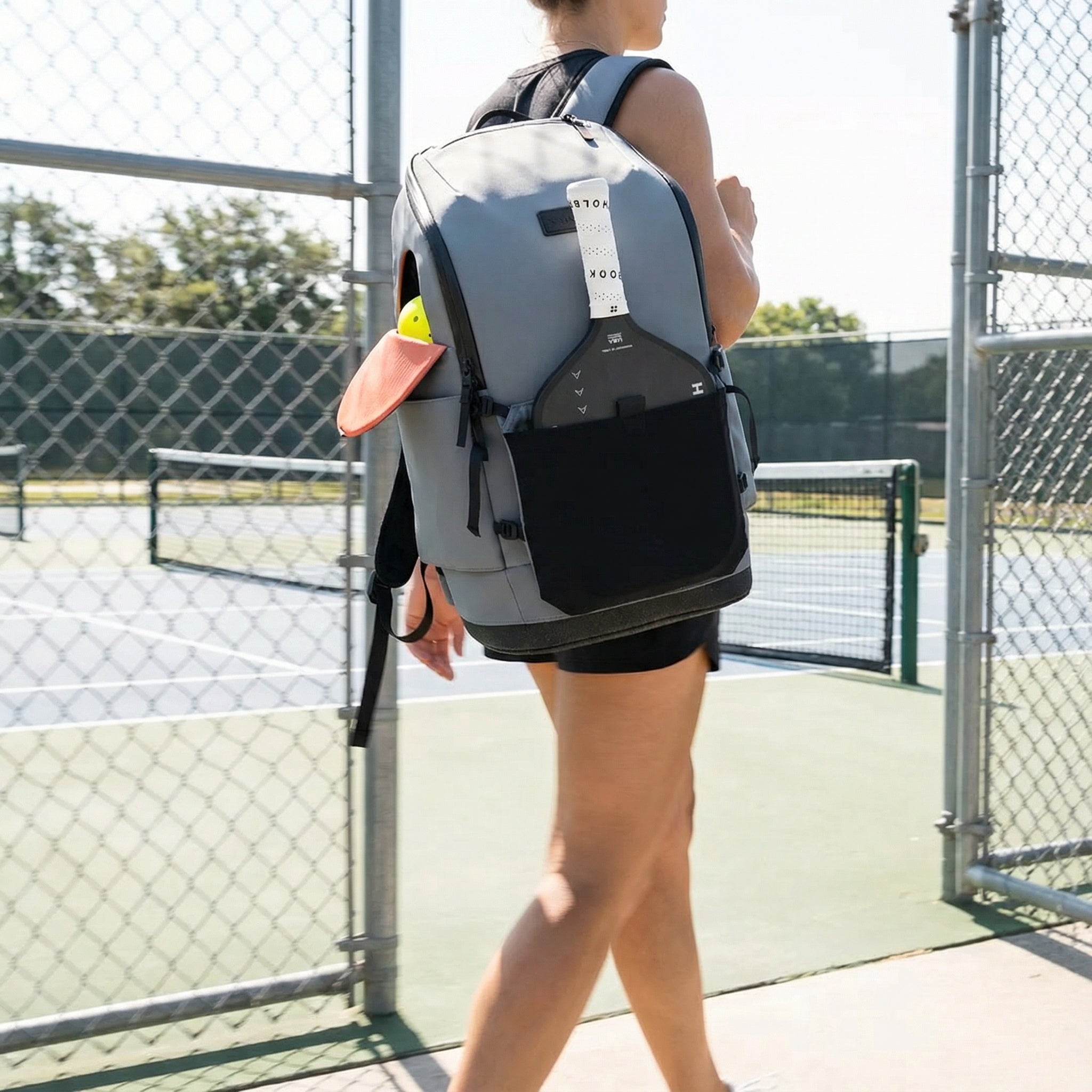
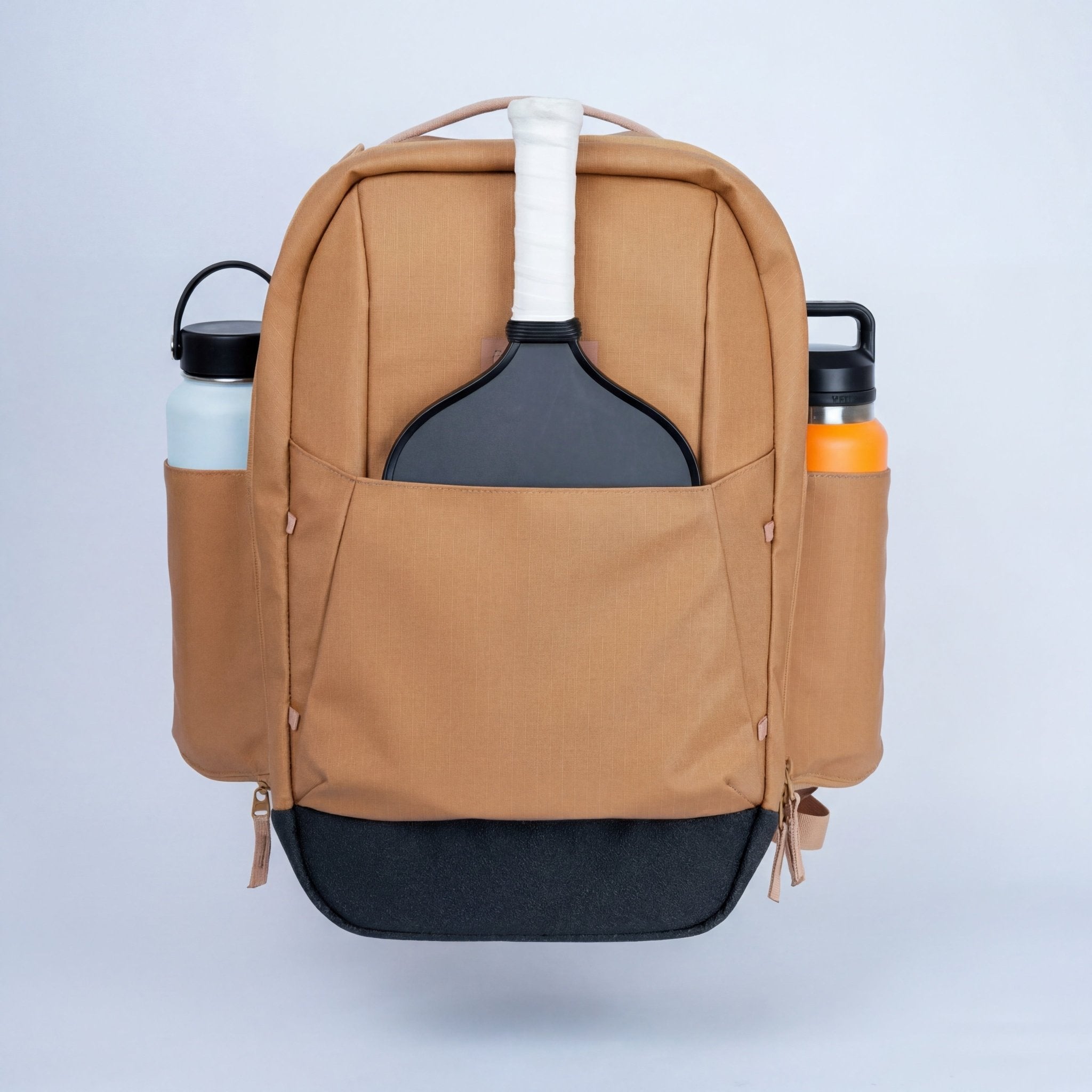
A $200 carbon fiber paddle stored face-to-face with other gear degrades faster than it should. The Court Caddy Backpack separates each paddle in its own modular sleeve — no face contact, no grit wear from transport. If you're spending real money on a carbon paddle, the bag is how you protect the face lifespan you paid for.

Matching Face Material to Your Playing Style and Skill Level
Three questions. Answer honestly — the right material category becomes obvious.
Question 1: How Often Do You Play?
Less than 2x per week: Fiberglass or composite. The forgiving feel is a better learning tool at lower frequency, and you won't hit the spin ceiling at rec-pace rallies. Cost matters too — fiberglass paddles at $60–$100 are easy to replace when you decide to upgrade. Spending $200 on raw carbon spin potential you're not consistently using is the wrong move.
3x+ per week, consistently: Carbon fiber earns its premium at this frequency. You'll develop consistent enough form to deploy the spin advantage, and you'll play enough to notice the kitchen control improvement within a few weeks of switching. The face lifespan also amortizes better at higher play volume — the cost-per-session math improves significantly.
Question 2: Where Does Your Game Break Down?
Power deficit — drives land short, opponents attack your weak shots: Fiberglass or a composite with a fiberglass-dominant construction. The trampoline rebound helps. Switching to carbon to fix a power problem doesn't work — stiffer carbon actually reduces raw ball speed slightly compared to fiberglass flex. Don't let the marketing convince you otherwise.
Kitchen control — third-shot drops miss the net, too many pop-up dinks: Carbon fiber. The spin potential gives you more margin over the net on drops, and the stiffer face helps you feel the dink contact point instead of muscling through it. For a deep dive on this tradeoff, see our beginner paddle framework guide — the decision logic applies at every level, not just beginners.
Everything feels inconsistent — you can't diagnose the problem: Composite is the right call. It removes the material variable so you can figure out whether the issue is technique or equipment. If a composite paddle still feels inconsistent after 3–4 weeks of solid practice, it's technique — not the paddle face.
Question 3: What's Your Replacement Budget?
This one reframes the whole decision. A $90 fiberglass paddle lasting 12 months = $90/year. A $200 raw carbon paddle lasting 15 months before noticeable degradation = ~$160/year. The long-term cost difference is smaller than the sticker price implies. The real question isn't "can I afford carbon" — it's "am I playing enough to use the spin advantage before the face degrades."
If the answer is yes: here's where to start by player type:
- Casual beginner (under 2x/week): Entry fiberglass or composite, $60–$100 range. Browse beginner paddle options at Pickleball Central →
- Developing intermediate (3.0–3.5, 2–3x/week): Mid-tier composite or woven carbon, $120–$180. Franklin C45 hybrid construction is a good reference point at this price.
- Kitchen-focused advanced player (3.5+, 4x/week+): Raw carbon. CRBN 1 TruFoam Genesis is the dedicated raw carbon choice — read our full Six Zero Double Black Diamond raw carbon review for a second reference point in this category.
- All-around advanced player who wants control over maximum spin: Woven carbon. JOOLA Perseus Pro V or Selkirk LUXX Control Air InfiniGrit are the standards at the moment.
One more practical note: USA Pickleball maintains an approved paddle list that's updated when new materials enter the market. If you're playing sanctioned tournaments, confirm your paddle is on the current approved list before registering — carbon fiber face treatments and surface grit standards have faced scrutiny as the sport professionalizes. Your grip maintenance matters too — a good grip extends paddle life regardless of face material by reducing the torque stress on contact.
Ready to protect your paddle investment? The Court Caddy Backpack ($325) keeps carbon fiber faces separated in individual modular sleeves so the grit stays intact session after session — designed with 500+ player feedback, built to last.
FAQ: Pickleball Paddle Face Materials 2026
What's the difference between composite and carbon fiber pickleball paddles?
Composite paddles blend materials — usually fiberglass base layers with some carbon fiber element — offering balanced power and spin without strong tradeoffs. Pure carbon fiber paddles maximize spin potential and kitchen control but reduce raw power. For beginners, composite is more forgiving. For advanced players focused on kitchen performance, carbon wins. The key question is where your game actually needs improvement, not which material sounds more premium.
Is carbon fiber better than fiberglass for pickleball?
It depends entirely on your game. Carbon fiber gives more spin and kitchen control; fiberglass gives more pop on drives. If you play 3+ times per week and your game is built around the kitchen line, carbon fiber is worth the premium — and the durability cost. If you're power-focused, a beginner, or play occasionally, fiberglass performs better for your specific situation. Neither is universally "better."
How does paddle face material affect spin?
The surface texture on raw carbon fiber faces — microscopic grit peaks — grips the ball longer at contact, generating more friction and spin. Raw carbon generates roughly 20–30% more spin potential than fiberglass on equivalent strokes. Woven carbon sits in between. Fiberglass faces are smoother, producing less spin but more energy return on contact (pop). Spin potential also depends on core thickness: a 14mm core plays faster and amplifies spin; a 16mm core softens feel and slightly dampens it.
What's the best paddle face material for beginners?
Fiberglass or a composite blend. Fiberglass is more forgiving on mishits — the trampoline flex helps off-center shots still clear the net — costs significantly less ($40–$120 vs $150–$300 for carbon), and matches most beginners' needs better than a spin-focused carbon paddle they can't fully use yet. Start with fiberglass, develop consistent form, then upgrade to carbon when you can notice the difference in your dink quality.
How long does a carbon fiber paddle face last compared to composite?
Raw carbon grit degrades noticeably after 100–150 hours of regular play (roughly 3–6 months at 3–4x/week). The face wears from friction, sweat acids, and heat cycling. Woven carbon lasts longer — 150–200 hours — because the texture is more structurally embedded. Composite and fiberglass faces don't have the same grit-degradation issue; they lose rebound characteristics more gradually. Plan for replacement every 12–18 months at regular play frequency and store paddles with faces separated to slow the process.

Leave a comment
This site is protected by hCaptcha and the hCaptcha Privacy Policy and Terms of Service apply.