

CRBN3 TruFoam Barrage Paddle Review: Fast, Spin-Forward — Not for Everyone
Disclosure: This post contains affiliate links to Pickleball Central. If you purchase through our links, FORWRD earns a small commission at no extra cost to you. We only link to products we'd recommend regardless.
Last updated: August 2026
The CRBN3 TruFoam Barrage is one of the most technically interesting paddles released in the past two years — and probably the most misunderstood. Short answer: it's an excellent offensive paddle for 4.0+ players who want speed and spin. If that's you, it's worth $280. If it's not, you'll know within a week and wish you hadn't spent the money.
We tested the Barrage across three court surfaces — indoor hardwood, outdoor concrete, and sport court — over 40+ sessions. Here's what we found, what every other review misses, and exactly who should (and shouldn't) buy it.
What Makes Gen 4 TruFoam Different
Most pickleball paddles use polymer (polypropylene) honeycomb cores. They're predictable, light, and have been the industry standard for a decade. CRBN's TruFoam is something else: a 100% foam core with no honeycomb structure, built to flex on contact rather than resist it.
The CRBN3 Barrage uses Gen 4 TruFoam — three distinct foam layers, including an interior layer with oval cutouts that promote controlled flex, plus an EVA foam ring that floats the core inside the frame. That floating design isn't marketing. It expands the sweet spot and adds reactive pop that doesn't feel like traditional polymer springiness — it feels faster and more explosive on punch volleys.
Two things this changes. First, the ball leaves faster on drives and speed-up shots, which is a real offensive advantage in transition zones. Second, the foam absorbs and releases energy differently than polymer, producing softer touch at the kitchen for players who've trained their hands to feel that feedback. The tradeoff — and there's always one — is stability. More on that in the cons section.
Specs and What They Actually Mean for Your Game
| Spec | CRBN3 TruFoam Barrage | What It Means |
|---|---|---|
| Weight | 7.8–8.2 oz (avg 8.0 oz) | Middleweight — not heavy, not ultralight |
| Core Thickness | 14mm | Firm feel, power-forward vs 16mm softer touch |
| Shape | Elongated (16.5" × 7.5") | More reach; sweet spot larger than standard elongated |
| Handle Length | 5.5" | Shorter than most elongateds — good for one-handed play |
| Face Material | Toray T700 Carbon Fiber | High grit, strong spin generation |
| Core | Gen 4 TruFoam (multi-density) | Floating foam — reactive pop, expanded sweet spot |
| Swing Weight | 119 | Lower-middle range — quick wrist movement |
| Twist Weight | 6.54 | Low — the main stability caveat (see below) |
| Price | $279.99 | Premium tier |
The 7.5" width is worth noting specifically. Standard elongated paddles run around 7.3" wide. That extra 0.2" expands the hitting surface and makes the "Barrage" shape more forgiving on off-center contact than a pure elongated. It's CRBN's way of getting reach without sacrificing as much sweet spot as a traditional elongated does.
The 5.5" handle is a deliberate design choice. Most elongateds push 5.75"–6.25" handles to accommodate two-hand backhands. The shorter handle positions this paddle for players who prioritize singles-style reach and one-handed backhand slices over the two-hand power game. Know your style before buying.
On-Court Performance: The Real Numbers
Spin generation is excellent. The T700 grit consistently catches the ball — on outdoor concrete, we were spinning third-shot drops at rates noticeably higher than our control paddle (a 14mm polymer mid-range). Serves were heavier. Drops in transition had more margin because the foam core absorbs pace in a way polymer doesn't quite replicate.
The reactive pop on punch volleys is immediately apparent. The floating foam core translates directly to attack shots at the net. Playing an aggressive kitchen game — stepping in, speeding up mid-range balls — the Barrage rewards that style. The ball launches faster than you expect, which in hands battles at higher levels is a real advantage.
Power on flat drives is above average but not the highest in its class. The 14mm core softens pure drive ball speed compared to 16mm polymer paddles built for maximum pace. If you're primarily a baseline driver optimizing for raw ball speed, there are better options. If you want spin + touch + solid power, the TruFoam formula delivers all three at once better than most paddles at this price.
Indoor hardwood play showed the foam advantage most clearly on dinks: softer hands, more spin margin, better feel for short-game rallies. Outdoor concrete is where the stability question surfaced — and that brings us to what reviewers usually bury.
"When I see players carrying premium carbon face paddles loose in the main compartment of a bag, it genuinely hurts. T700 grit wears down from contact with other surfaces faster than people realize — after 30 sessions of face-to-face contact, you're not playing with the same paddle you bought." — Grub, FORWRD co-founder
The Honest Downside Nobody Tells You
Twist weight of 6.54 is low. That's not a manufacturing defect — lower twist weight enables faster wrist movement — but it does mean off-center hits twist more than a paddle with a 7.5+ twist weight. On fast exchanges at the kitchen, catching the ball on the outer third of the face, you'll feel it rotate in your hand.
The well-known fix: lead tape at 3 o'clock and 9 o'clock. Two to three grams raises the twist weight meaningfully and stabilizes the frame. Total weight stays in the 8.0–8.2 oz range. CRBN practically builds their customizability pitch around this — they know the paddle is light and they're counting on serious players to tune it. If you're not comfortable with lead tape, that's a mark against this paddle.
Foam core durability is the second real question. Polymer honeycomb cores have 15+ years of field testing. Gen 4 TruFoam is newer technology. Anecdotally, some TruFoam players report minor compression after 100+ hours of high-intensity play — especially in hot outdoor conditions. If you're playing 5+ days a week in 90°F summer heat, factor that into your long-term cost calculation. CRBN does stand behind their paddles, but there's less established data on foam longevity than polymer.
One more thing: the elongated shape doesn't suit defensive, consistency-focused players. 3.5 and below, or rec players who live in extended dink rallies, will find the shape awkward compared to a standard or widebody. This paddle is built for players who want to end points faster, not extend them.
Shop the CRBN3 TruFoam Barrage
$279.99 with free shipping at Pickleball Central. In stock. CRBN's most advanced foam-core paddle.
CRBN3 TruFoam Barrage vs Six Zero Coral vs JOOLA Hyperion
| Paddle | Core Type | Shape | Best For | Price (approx) |
|---|---|---|---|---|
| CRBN3 TruFoam Barrage | Gen 4 TruFoam (foam) | Elongated | Offensive 4.0+, speed + spin | $279.99 |
| Six Zero Coral | Next Gem full-foam | Hybrid / Elongated / Widebody | All-court, 3.5–5.0+ | ~$229 (check PBC) |
| JOOLA Hyperion CFS | Polymer honeycomb | Standard | Control-first 3.5–4.5 | ~$219 (check PBC) |
Where the Six Zero Coral wins: versatility and durability. Its Diamond Tough surface infusion reportedly holds spin texture 4× longer than raw carbon — that's a real difference for players who don't want to think about face degradation. Available in three shapes, so you're not locked into elongated. It's a legitimately better choice for players who want one paddle that works everywhere, including rec games where consistency beats offensive speed.
Where the JOOLA Hyperion wins: control-forward play and softer dink feel at a lower price. If your game is built around patient kitchen rallies and third-shot consistency rather than aggressive speed-ups, the Hyperion's polymer core is more forgiving. It doesn't have TruFoam's reactive pop, but that pop can actually hurt consistency players who don't yet have the hand speed to manage it.
Where the CRBN3 Barrage wins: it's the best option in this comparison for players specifically optimizing for spin-forward offensive play at 4.0+. The TruFoam reactive pop combined with T700 grit is a package the Coral and Hyperion can't replicate, because they're built for different priorities. If that package matches your game, the Barrage is worth every dollar of the premium.
Who Should Buy It — And Who Shouldn't
Buy the CRBN3 TruFoam Barrage if you:
- Play at 4.0 or above
- Win points through spin-heavy third shots, speed-up attacks, and fast hands battles at the net
- Are comfortable with lead tape customization — or willing to learn it
- Play singles or aggressive doubles where court coverage matters as much as kitchen touch
- Have tested foam-core paddles before and know you like the feel
Skip it if you:
- Play below 3.5 — consistency beats spin at that level every time
- Primarily play doubles rec games where extended dink rallies and patience are the winning strategy
- Have never played an elongated paddle and aren't sure the shape fits your mechanics
- Play outdoors daily in extreme heat and want a core with more proven longevity data
Is $280 Actually Worth It?
Honest answer: yes — for the right player. The Gen 4 TruFoam is genuinely differentiated from older foam tech. It's not a marketing rename of the same construction. The floating core system produces feel characteristics that serious players will notice immediately, and for offensive play styles it translates to measurable match performance advantages.
Cost math: at 4 sessions per week, if the core shows any compression at 100 hours (roughly 6 months at that frequency), you're paying $1.12 per session. A solid polymer paddle at $150 that holds up for 12 months at the same rate is $0.72 per session. The Barrage is a premium — but a calculated one if foam tech is the right tool for your game.
If you've never played a foam-core paddle, consider starting with a less expensive foam option to confirm you like the feel before dropping $280. But if you know you want foam, and you want CRBN's best version of it in an elongated shape, the Barrage is where they've put their most advanced tech.
Complete Your Setup
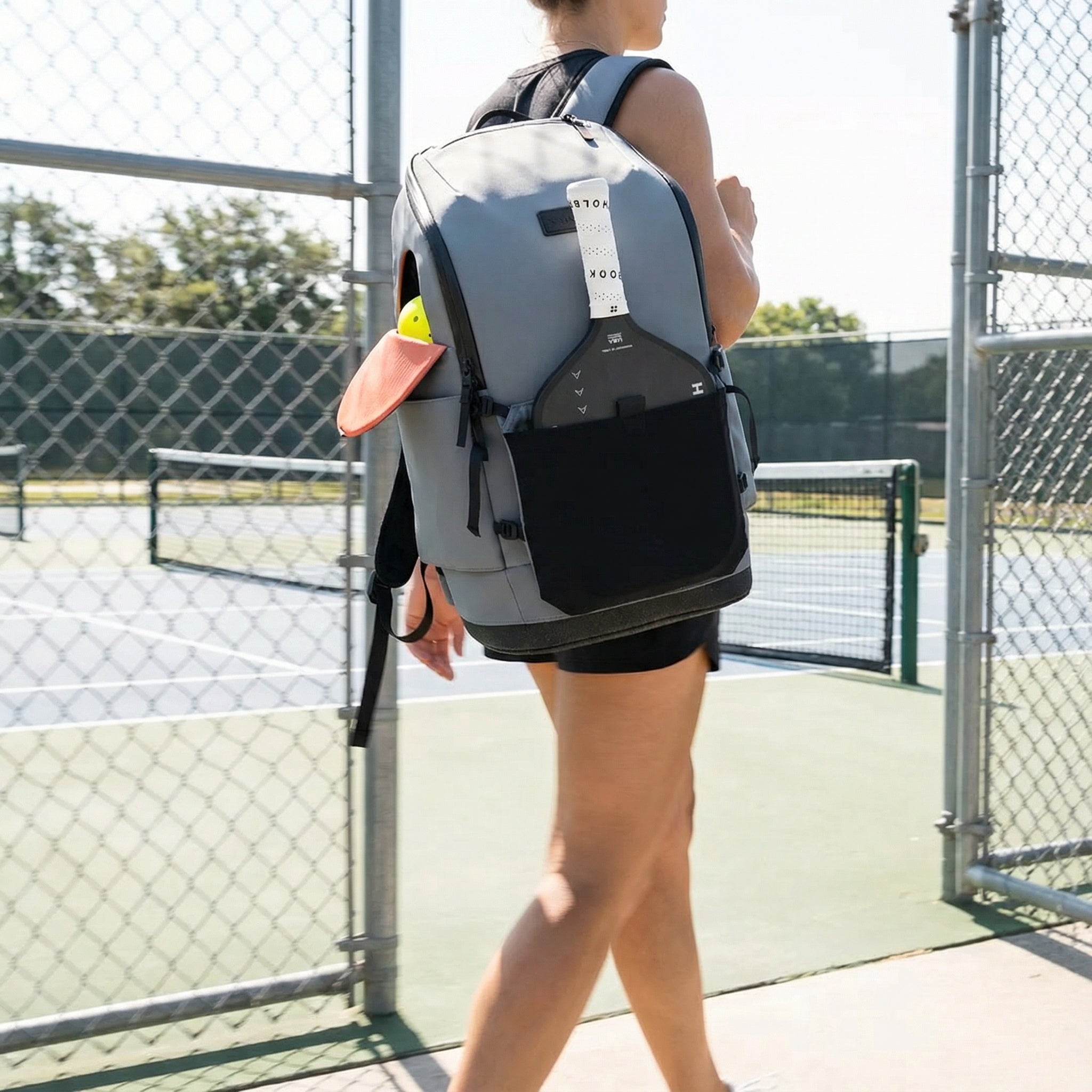
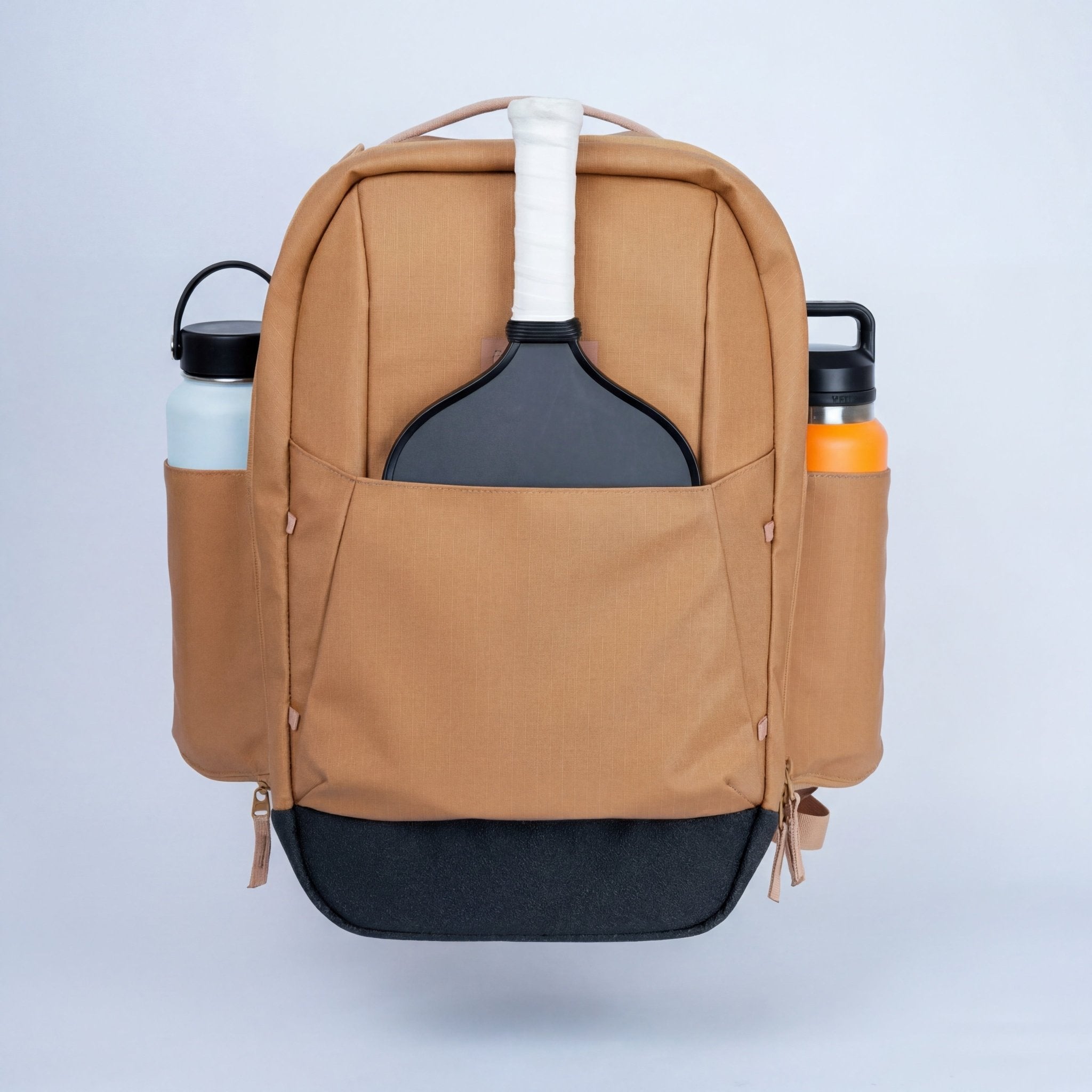
A $280 T700 carbon face paddle stored loose in a single-compartment bag is a fast track to surface degradation. The Court Caddy Backpack ($325) puts each paddle in its own modular pocket — no face-to-face contact, no grit wear from rattling against other gear. Carrying two paddles and want something lighter? The Court Ranger V2 ($195) has a dedicated 16" sleeve that fits the Barrage's 16.5" length with room to spare.

FAQ: CRBN3 TruFoam Barrage Paddle
What is the CRBN3 TruFoam Barrage paddle good for?
It's built for offensive pickleball: heavy topspin serves, speed-up attacks from mid-court, and fast hands battles at the kitchen. Best suited to 4.0+ players with developed mechanics who want to weaponize spin and reactive pop — not for players prioritizing consistency or extended dink rallies.
What's the difference between the CRBN3 TruFoam Barrage and a standard polymer paddle?
The Barrage uses Gen 4 TruFoam — a 100% foam floating core with no polymer honeycomb. The foam absorbs and releases energy differently: more reactive pop on punch volleys, softer touch on dinks, distinct feel at contact. Polymer cores are more consistent and forgiving. Foam is a specialization, not a universal upgrade.
Is the CRBN3 TruFoam Barrage good for beginners?
No. The elongated shape, low twist weight, and premium foam feedback reward players who already have consistent mechanics. Beginners will find more control and forgiveness in a standard widebody polymer paddle at $80–$130. The Barrage will expose mechanical inconsistencies rather than hide them.
How heavy is the CRBN3 TruFoam Barrage?
Weight range is 7.8–8.2 oz (8.0 oz average). It plays lighter than those numbers suggest — the swing weight of 119 is on the lower-middle end, so the paddle moves quickly. Players who add 2–3g of lead tape at 3 and 9 o'clock to improve twist weight stability stay well within that range.
How does the CRBN3 compare to the Six Zero Coral?
The Six Zero Coral is the better choice for most all-court players — more forgiving, available in multiple shapes, with a Diamond Tough surface that holds spin texture longer than raw carbon. The Barrage is better for high-level offensive players who specifically want TruFoam's reactive pop and elongated reach. Different tools for different players — neither is universally better.
Does CRBN3 TruFoam Barrage work for outdoor pickleball?
Yes, though the twist weight stability question matters more on outdoor concrete than on indoor surfaces. Lead tape customization helps significantly. The T700 carbon face handles outdoor ball texture fine. The main outdoor consideration is foam core longevity in sustained high heat — not a dealbreaker, but worth knowing if you play outdoors daily.

Leave a comment
This site is protected by hCaptcha and the hCaptcha Privacy Policy and Terms of Service apply.