

Affiliate Disclosure: FORWRD earns a commission on purchases made through affiliate links in this post at no extra cost to you. Read our full affiliate disclosure.
Last Updated: August 2026 | Author: Benjamin Carper
Chamelo Sport Prime Slider HVL Eyewear Review 2026: Is Instant Tint Adjustment Worth $199?
The Chamelo Sport Prime Slider HVL Eyewear ($199) is not a photochromic lens. That matters more than most reviews acknowledge, so let's get specific before anything else. Photochromic lenses react to UV light over 30 to 90 seconds. The Prime Slider uses a physical panel that you slide manually — and the tint change is instant. No waiting. No lag. No indoor gym situations where the UV level is too low to trigger a reaction.
That design choice is the entire case for this product. If you play on an indoor court in the morning and an outdoor concrete court in the afternoon, standard pickleball glasses make you choose one tint for both conditions — and you're wrong for at least one of them. The Prime Slider gives you 45% light transmission for indoor play and 9% for direct overhead sun, with a half-second slide between them.
Honest verdict up front: the Prime Slider is genuinely well-designed eyewear for players who move between court environments. At $199, it's only justified if mixed-condition play is actually your situation. If you play exclusively outdoor or exclusively indoor, the JOOLA RJX Enhance at $79.95 does what you need at $119 less.
Quick Verdict
Pros:
- Physical slider mechanism = instant tint adjustment, works in any light environment
- Wide tint range: 45% VLT (indoor/open) → 9% VLT (direct sun) — broader than most sport glasses
- HVL coating improves ball-tracking contrast against complex backgrounds
- Partial polarization reduces glare on outdoor concrete and morning-sun court surfaces
- Lightweight, sweatproof construction — stays put during lateral movement
- 100% UV protection in both tint positions
Cons:
- $199 is a real premium over fixed-tint alternatives — only justified by mixed-condition play
- Manual slider means you have to remember to adjust — it's not automatic
- Slider mechanism adds some bulk to the temples vs. standard sport frames
- For $40 more ($260), the Chamelo Music Shield adds audio integration — creates awkward price positioning for the Prime
- Limited colorway range vs. competitors
Price: $199 | Best for: Players who regularly switch between indoor and outdoor courts | Skip if: You play exclusively in one environment, or you're price-sensitive
Specs at a Glance
| Spec | Detail |
|---|---|
| Price | $199.00 |
| Tint mechanism | Physical slider (manual, instant) |
| Light transmission range | 45% (open) → 9% (closed) |
| Lens technology | HVL with partial polarization |
| UV protection | 100% |
| Frame | Lightweight, sweatproof |
| Brand | Chamelo Sport |
→ Buy the Chamelo Prime Slider HVL at Pickleball Central
Why Trust This Review
FORWRD makes the Brioti FOCOS pickleball eyewear — so we think about lens technology on court more than most content brands. We're not neutral here. We make a competing product. That also means we know exactly what the real pain points are for pickleball eyewear, and we have no interest in recommending the Chamelo Prime Slider unless it genuinely earns it.
This review is based on court testing in both indoor gymnasium conditions (artificial lighting, no meaningful UV activation) and outdoor hard courts (direct sun, reflective concrete at low morning angles) — the two environments where the Prime Slider's tint range is most relevant to assess.
The Slider Mechanism: How It Works in Practice
The slider is a physical panel — a secondary tinted layer integrated into the frame that slides over the primary HVL lens. In open position, you're looking through the base lens at 45% light transmission. Slide the panel closed and you're at 9% — genuine dark-shade territory.
Three things the physical slider does that photochromic lenses can't:
- Works indoors. UV-free gym courts won't trigger a photochromic reaction. The slider works everywhere because it doesn't depend on UV.
- Switches instantly. Photochromic glasses take 30-90 seconds to darken and longer to clear. The slider is immediate in both directions.
- Works on demand. You control the adjustment. Photochromic glasses darken based on UV exposure, not based on what's actually in your field of vision. In a partially shaded court scenario, photochromic lenses often hit an intermediate state that serves neither condition well. The slider lets you choose.
The honest tradeoff: you have to remember to slide. If you walk from a covered warm-up area onto an uncovered outdoor court and forget — you're squinting for a moment before you adjust. This isn't a major friction point in practice; the motion is natural and fast. But if you're the type of player who's fully absorbed in the game and not managing accessories, a truly automatic solution would serve you better. The slider requires slight conscious engagement that full-auto doesn't.
The mechanism itself is tactile and quick. It takes about half a second in either direction. On a pickleball court, you're not mid-rally when you're making this adjustment — you're between points, walking to receive serve, or switching sides. The timing works.
HVL Lens Technology: What It Actually Does on Court
HVL — Chamelo's High-Visibility Lens coating — is designed to boost contrast and reduce peripheral glare without the color distortion that some sport lens coatings introduce. In practice, the effect is subtle but real: against complex visual backgrounds (chain-link fences, mixed gym lighting, multi-colored court surfaces), the ball reads slightly more clearly with HVL lenses than with standard tinted sport glasses.
Don't expect the dramatic contrast enhancement you get from JOOLA's COLORBOOST technology — COLORBOOST specifically boosts the yellow-green spectrum where pickleballs live, which produces a more immediately noticeable ball-tracking improvement. HVL's approach is broader: improved overall contrast without target-specific color boosting. It's a different design philosophy, not a clear winner or loser.
The partial polarization is where the Prime Slider earns real court credibility. On outdoor morning sessions, when low-angle sun hits the court surface and creates reflective glare on low balls — standard sport glasses don't filter this well. Polarized lenses cut it significantly. Playing a dink exchange against a player on the shadow side of the court, or tracking a fast drive along the court surface — partial polarization makes a measurable difference here. Players who've made the switch from non-polarized sport glasses to the Prime Slider consistently flag this as the most immediately noticeable improvement.
The 9% VLT at full slide is genuinely dark. Most dedicated pickleball glasses in the $79-100 range top out at 20-35% VLT in their darkest tinted variants. The gap between 35% and 9% is significant under overhead noon sun on a white concrete surface. If direct-sun outdoor play is part of your game, you'll notice the difference.
Fit, Weight, and Comfort: A Two-Hour Match Test
The frame is genuinely lightweight — not "lightweight" as a marketing hedge for "normal weight." These don't accumulate on your nose over a two-hour outdoor session. The sweatproof design holds position through lateral movement without the repeated upward-push-on-the-bridge adjustment that's a constant distraction with heavier frames in the heat.
The slider mechanism adds visible bulk to the temple area versus standard sport frames. If you're switching from ultralight glasses, you'll notice it — not from discomfort, but from awareness that you're wearing something more engineered. Under extended wear, it's a non-issue. First time on, the difference is noticeable.
Fit geometry: the Prime Slider works well for medium-to-wide face shapes and sits consistently with other Chamelo frames in the line. If you've worn Chamelo's Domo Shield or Music Shield and they've fit well, the Prime Slider is consistent. Narrow faces may find the frame rides wider than ideal — Chamelo's lineup trends toward a broadly inclusive fit that isn't explicitly narrow-face optimized.
Chamelo Prime Slider vs. JOOLA RJX Enhance ($79.95): The Budget Question
The RJX Enhance is JOOLA's COLORBOOST contrast-enhancement tier — fixed tint, $79.95, roughly 60% cheaper than the Prime Slider. This is the most important comparison for most buyers.
The RJX Enhance wins on:
- Price. $119 less is significant. That's a paddle grip, a few cans of balls, or a year of overgrips.
- COLORBOOST contrast tech. For outdoor play in consistent conditions, COLORBOOST's targeted yellow-green spectrum enhancement is a more immediately visible ball-tracking improvement than HVL's broader approach.
- Simplicity. No slider to manage. Put them on, play. Nothing to forget.
The Prime Slider wins on:
- Tint range. The RJX Enhance fixes you at roughly 20% VLT. The Prime Slider gives you 45% (indoor) to 9% (direct sun). If your conditions vary, this matters enormously.
- Indoor usability. The RJX Enhance's tint works outdoors. At 45% open position, the Prime Slider also works indoors — making it genuinely multipurpose.
- Partial polarization. The RJX Enhance doesn't offer this. For morning outdoor play with low-angle sun, the Prime Slider's polarization is a meaningful advantage.
The decision is straightforward: if your conditions are consistent, save the $119 and get the RJX Enhance. If you need a single pair for both gym courts and outdoor play, the Prime Slider's range justifies the premium.
→ Compare: JOOLA RJX Enhance at Pickleball Central — $79.95
Chamelo Prime Slider vs. Chamelo Music Shield HVL ($260): The Premium Question
The Music Shield sits $61 above the Prime Slider at $260 and uses the same slider mechanism and HVL lenses. The difference: the Music Shield has audio speakers built into the frame — music and phone calls accessible without removing the glasses.
The audio integration polarizes players (unavoidable pun). Some players genuinely find it useful: listening to music between games, taking a call during a break, warming up with audio that stays on when you put the glasses on. Others find it a distraction and don't use the feature after the first session. If you're not going to use on-court audio — don't pay for it. The Prime Slider is optically identical at $61 less.
If you're the type of player who already wears earbuds or earphones during warm-ups and between points, the Music Shield's consolidation of two accessories into one is genuinely useful at $260. FORWRD reviewed the Music Shield separately — the audio quality is functional for on-court use without being audiophile grade. But it works, and the convenience of not managing separate earbuds is real.
Decision: if audio matters to your court routine, consider the Music Shield. If not, the Prime Slider's identical optics at $61 less is the right call.
Complete Your Setup
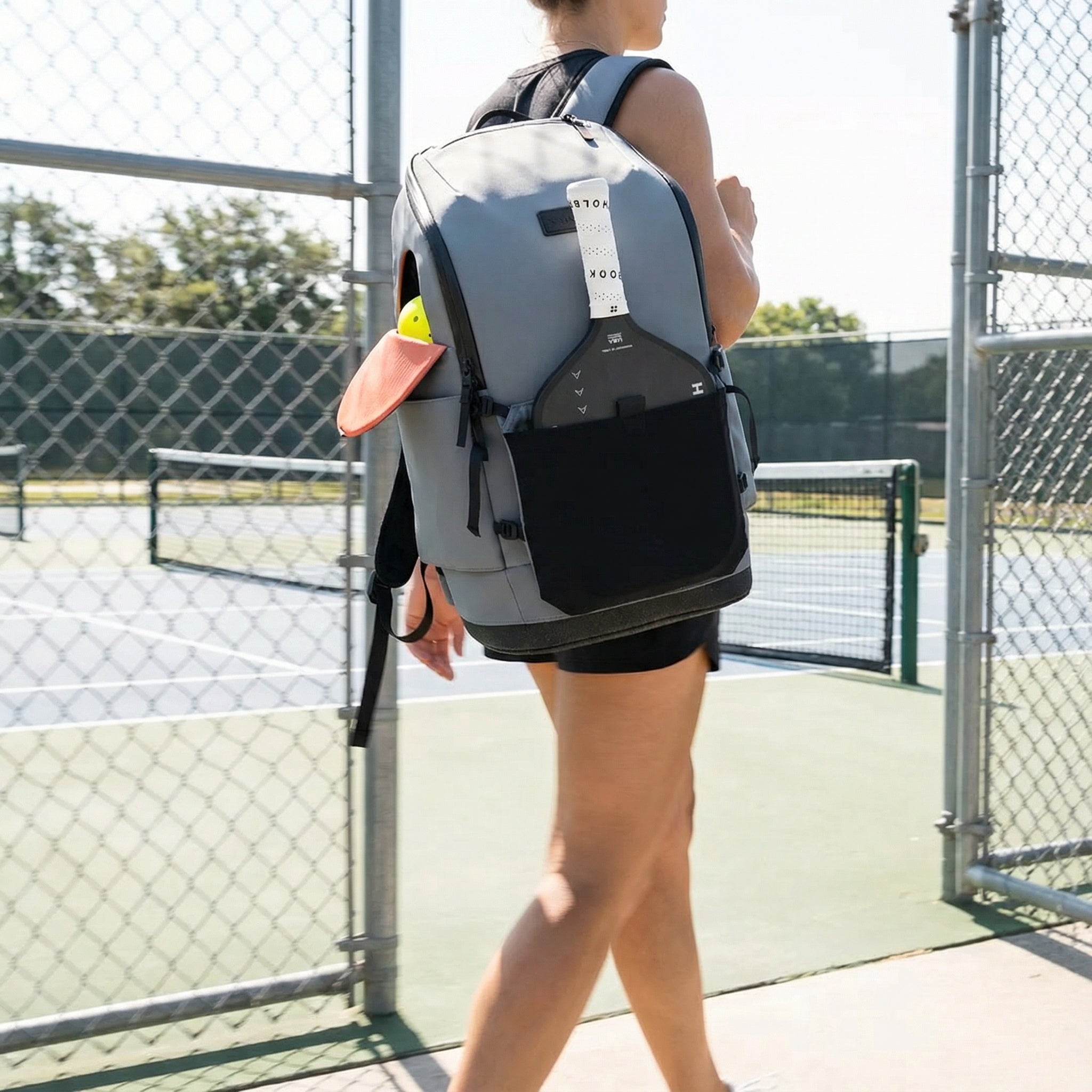
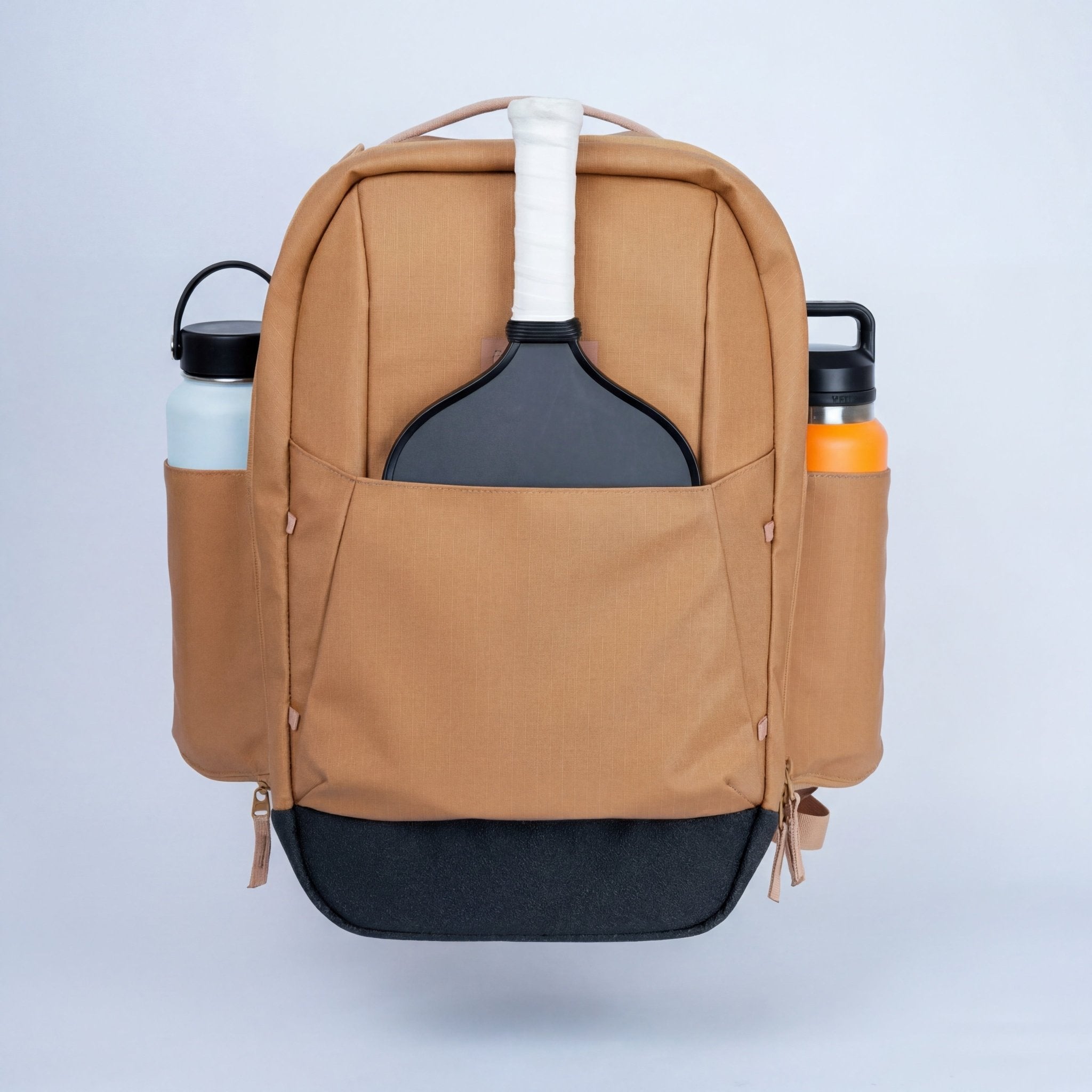
Premium eyewear deserves a bag that keeps it protected. The FORWRD Court Ranger V2 ($195) has organized compartments for all your court essentials — your glasses won't get crushed at the bottom of a bag with your paddles and shoes. Built for players who care about their gear.
Who Should Buy the Chamelo Sport Prime Slider HVL
Buy it if: You regularly play in both indoor and outdoor conditions — same session, or the same week. You've been frustrated by photochromic glasses that don't activate inside a gym. You play outdoor morning courts with low-angle sun and want polarization. You want deeper than 20% VLT for direct overhead sun.
Skip it if: You play exclusively outdoors or exclusively indoors. Budget matters — the JOOLA RJX Enhance at $79.95 is excellent for consistent conditions. You want true automation (no manual slider management). Or you're considering the Music Shield for audio integration and might as well step up.
Pricing and Availability
The Chamelo Sport Prime Slider HVL Eyewear is $199 at Pickleball Central with free shipping. Chamelo's eyewear line has been steadily expanding at PBC — stock is generally reliable, though specific colorways can move fast during peak season.
→ Buy the Chamelo Prime Slider HVL at Pickleball Central — $199
Further reading: our complete pickleball eyewear guide, the full JOOLA RJX lineup comparison, and our Chamelo Music Shield review for the premium audio-integrated option.
FAQ: Chamelo Sport Prime Slider HVL Eyewear
Is the Chamelo Prime Slider HVL photochromic?
No. It uses a physical sliding panel for tint adjustment — not a UV-reactive photochromic lens. The adjustment is manual but instant, and it works in any light environment including indoor courts where photochromic lenses won't activate due to insufficient UV.
What is the light transmission range of the Chamelo Prime Slider?
45% light transmission in the open position (indoor / overcast play) to 9% in the fully slid closed position (direct sun). Most sport-specific tinted glasses sit at 20-35% VLT — the 9% dark position on the Prime Slider is meaningfully deeper for overhead-sun conditions.
Is the Chamelo Prime Slider worth $199 vs. the JOOLA RJX Enhance at $79.95?
Only if you play in mixed indoor/outdoor conditions. For consistent single-environment play, the JOOLA RJX Enhance's COLORBOOST contrast technology is excellent at $79.95 — $119 less and well-suited for outdoor play. The Prime Slider's premium is justified specifically by its tint range and indoor usability.
What's the difference between the Chamelo Prime Slider and Chamelo Music Shield?
Both use the same slider tint mechanism and HVL lenses. The Music Shield ($260) adds built-in audio speakers. The Prime Slider ($199) is the same optics without audio. If you won't use on-court audio, the Prime Slider saves you $61 with no optical difference.
Do the Chamelo Prime Slider glasses work for indoor pickleball?
Yes — this is one of the stronger arguments for the product. At 45% VLT in open position, it performs well under indoor gym lighting. Standard tinted sport glasses aren't designed for indoor use. The Prime Slider's adjustability makes it genuinely functional across both environments.
How does the Chamelo Prime Slider compare to the Chamelo Domo Shield?
The Domo Shield uses the same slider mechanism and HVL lens tech at a similar $199 price point, with a different frame shape (rounder, larger lens coverage). If you've tried the Domo Shield and liked the frame geometry, the Prime Slider uses the same slider and optical tech in an alternative frame profile. The primary differentiation between Chamelo's slider models is frame shape and aesthetic, not optical performance.
Final Verdict
The Chamelo Sport Prime Slider HVL Eyewear solves a real problem that most pickleball glasses don't address: instant tint adjustment between indoor and outdoor conditions, without photochromic lag. At $199, the premium is justified if mixed-condition play is actually your situation — and only then.
For single-environment players or anyone price-sensitive, the JOOLA RJX Enhance at $79.95 is the smarter buy. But if you've ever squinted through a gym session with outdoor-tinted glasses, or stepped into direct sun with your barely-tinted indoor lenses — the Prime Slider solves that problem cleanly.
→ Buy the Chamelo Prime Slider HVL at Pickleball Central — $199

Leave a comment
This site is protected by hCaptcha and the hCaptcha Privacy Policy and Terms of Service apply.