


Disclosure: This post contains affiliate links to Pickleball Central. If you purchase through our links, FORWRD earns a small commission at no extra cost to you. We only link to products we'd recommend regardless.
Last updated: May 2026
A $200 carbon fiber paddle lasts 2–4 years with decent care. Without it, you're looking at 8–12 months before dead spots appear, the surface grit flattens, and your spin numbers quietly tank. Most players don't notice until they're mid-session wondering why their third-shot drops stopped biting. Here's exactly what maintenance actually matters — and where the "gear helps / gear doesn't" line sits for each type of care.
Why Paddle Care Actually Matters ($200+ on a Dead Paddle Is the Problem)
Here's the math most players skip: a $200 paddle replaced every 18 months costs $133/year. The same paddle cared for properly and replaced every 4 years costs $50/year. That gap pays for better balls, better shoes, or a few extra court sessions.
What actually degrades a paddle faster than normal wear:
- Heat damage. Car dashboard temperatures regularly hit 130°F+ in summer sun. That's above the threshold where polymer core materials begin to soften and deform. One hot car afternoon can start a delamination process that takes months to become obvious.
- Grip neglect. A worn overgrip makes you grip harder. That torque stress concentrates at the throat of the paddle — exactly where the core meets the handle — and accelerates internal separation over time.
- Surface grit loss. Raw carbon fiber and textured composite faces lose spin-generating texture from ball contact and outdoor grit. Cleaning regularly and correctly can extend the useful spin life by months.
- Impact damage from other equipment. Paddles stored loose in a bag where they're hitting balls, shoes, and keys develop micro-fractures on the face edge that grow into dead spots.
What doesn't matter as much as you'd think: light surface scuffs and cosmetic edge scratches don't affect playability. Aesthetic wear isn't functional wear. Don't chase a cosmetically pristine paddle — chase a mechanically sound one.
Cleaning Your Paddle: The 3-Minute Post-Session Routine
This takes less than 3 minutes. Do it after every session and it becomes automatic. Skip it for a month and you're trying to clean caked-in court grit that's ground itself into the face texture.
Step 1: The Face (60 seconds)
Damp microfiber cloth — barely damp, not wet. Wipe in small circular strokes across the face, working from the center outward to the edge guard. This removes ball residue, outdoor court dust, and sweat transfer from hand contact near the throat. Let the face air dry for 30 seconds before the next step.
For raw carbon fiber faces: the textured grit surface traps debris more aggressively than smooth composite. Use a carbon fiber cleaning block ($7.99) — rub in light circular motions to lift embedded grit from the surface texture without flattening it. Once a week is enough for players who compete regularly.
For Carbon Fiber Paddles: GAMMA Cleaning Block
Restores spin-generating surface texture by removing embedded court grit — a damp cloth won't do what this does on raw carbon fiber.
Step 2: The Edge Guard (30 seconds)
Dry wipe only. Run a dry microfiber edge-to-edge along the top and sides. Check for any separation where the guard is lifting — you'll feel a slight catch if the adhesive has started to pull away. Catch it early (a drop of super glue under the lifted section, held with finger pressure for 60 seconds) and you avoid a full guard replacement later.
Step 3: The Handle and Grip (60 seconds)
Dry cloth only on the handle. If you're using a fresh overgrip, this is quick — just wipe down any visible sweat residue where the grip meets the throat. If your overgrip is showing wear, this is your signal that replacement is overdue.
What to Avoid
No household cleaners, window cleaners, or alcohol on the paddle face. They leave chemical residue that accumulates in the texture and can make the surface tacky in a way that actually traps more debris on the next session. Water and a clean microfiber cloth handles 95% of what you'll ever need to clean.

Overgrip Maintenance: When and How to Replace
Your grip is the only point of contact between your hand and everything else. It's also the maintenance item most players neglect longest.
When to Replace
Replace when:
- The surface feels slick on your first ball strike of the day (not after warming up — immediately)
- You can see visible shine where the tackiness has worn off
- You notice yourself gripping harder to maintain control — this is the subtle signal
- It's been 20+ hours of play regardless of visual condition
For players competing 3–4 times per week, that's roughly every 3–5 weeks. For once-a-week players, once a month. Keep a fresh roll in your bag so replacement is never a production — it's a 3-minute bench swap, not a project.
What to Use
The GAMMA Supreme Overgrip ($7.99 for a 3-pack) remains the most-used overgrip at professional-level play — tacky without being sticky, comfortable on a sweaty hand, and thin enough that it doesn't meaningfully change the handle diameter for players who've calibrated their grip size. The GAMMA Pro Wrap runs the same price and wraps thicker for players who prefer more material between their palm and the handle.
How to Wrap (If You Haven't Done It Before)
Start at the butt end, angle the tape at roughly 45 degrees, wrap overlapping each layer by about 1/4 inch as you move up toward the throat. Tension should be consistent — enough to stick but not so tight you're compressing the grip. Finish with the included finishing tape. The whole thing takes about 3 minutes the first few times, 90 seconds once it's muscle memory.
"Grip maintenance is the highest-ROI maintenance item by a mile. When we were designing the Court Caddy, we made sure there was an easy-access pocket for overgrip rolls because we know from 500+ players that the players who swap grips regularly are the same players who play better longer."
— Topher, FORWRD Co-founder
Edge Guard and Protector Tape: Worth Adding?
Edge guards protect the perimeter of the paddle from impact damage — rim shots on court surfaces, bangs against other paddles and net posts, contact during dink battles at the kitchen. Whether to supplement the factory guard with protector tape depends on how you play.
When Protector Tape Is Worth Adding
If you're an aggressive net player — frequent kitchen duel positions, paddle-to-paddle contact, playing outdoor courts where the surface is rough — the top edge of your paddle takes disproportionate impact. Aftermarket protector tape on the top 3–4 inches of the paddle edge extends the life of that high-contact zone meaningfully. It's transparent, low-profile, and doesn't affect playability.
Look for edge protector tape designed for pickleball or racquetball paddles — available from most sporting goods retailers. It runs $8–12 for enough to do multiple applications. Apply clean-dry to the edge guard surface; any moisture reduces adhesion significantly.
When to Skip It
If your paddle already has a thick factory edge guard in good condition and you're a baseline/control player who avoids the extreme physical edge of the court, the factory guard is sufficient. Don't add tape just because you can — it adds weight (minimal, but real) and can affect weight distribution for feel-sensitive players.
Fixing a Separating Edge Guard
A slightly lifted edge guard section doesn't need replacement — just super glue. Drop a small amount under the separation, press firmly for 60 seconds, and it'll hold for months. Catching this early prevents the more expensive outcome of a fully detached guard that turns into full guard replacement or, worse, edge delamination underneath.
Storage and Temperature: What Kills Paddles Faster Than You'd Think
This is the maintenance category most players completely ignore, and it's responsible for more premature paddle death than anything else.
The Hot Car Problem
Car dashboard temperatures on a sunny day routinely hit 130–150°F. Many polymer core materials begin to soften at 120°F — the internal structure starts to compress and deform under the weight of the face layers. This process isn't immediately obvious; it shows up as dead spots and reduced core response 2–3 months later, and most players don't connect the storage habit to the performance problem.
Don't leave your paddle in the car. Bring it inside. USA Pickleball's player health guidance notes equipment care as part of overall court safety. This single habit extends paddle life more than any cleaning routine.
Direct UV Exposure
Extended direct UV exposure accelerates surface degradation on both composite and carbon fiber face materials. It also breaks down grip adhesives over time. Keep paddles stored in a bag or paddle cover when not in use — not loose on a window shelf or outdoor rack.
Moisture
Moisture finding its way under the edge guard or into any micro-cracks in the face material accelerates delamination. Dry your paddle face and edges after outdoor play in humid or wet conditions. Don't store the paddle in a sealed bag while still damp — let it air dry first.
The Correct Storage Setup
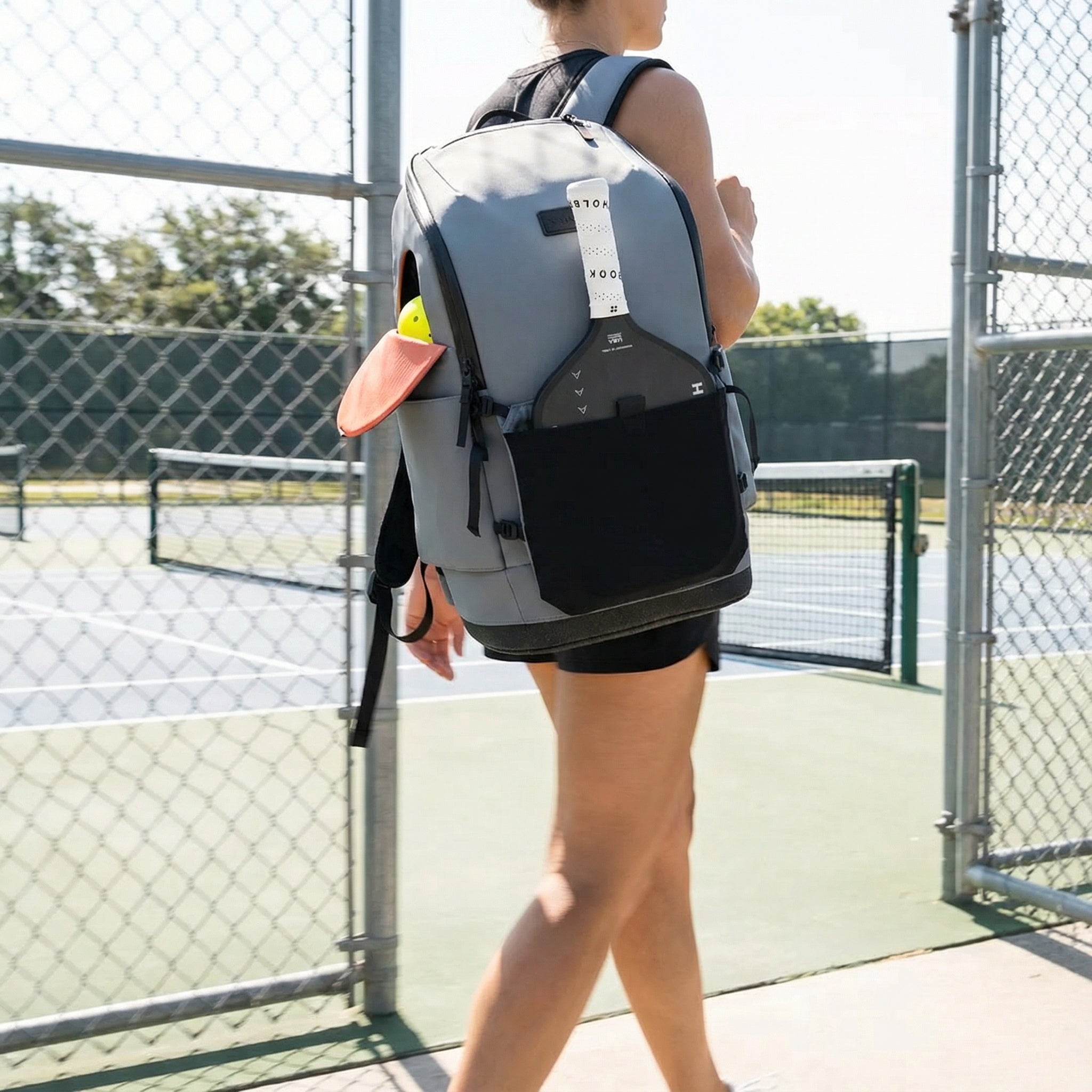
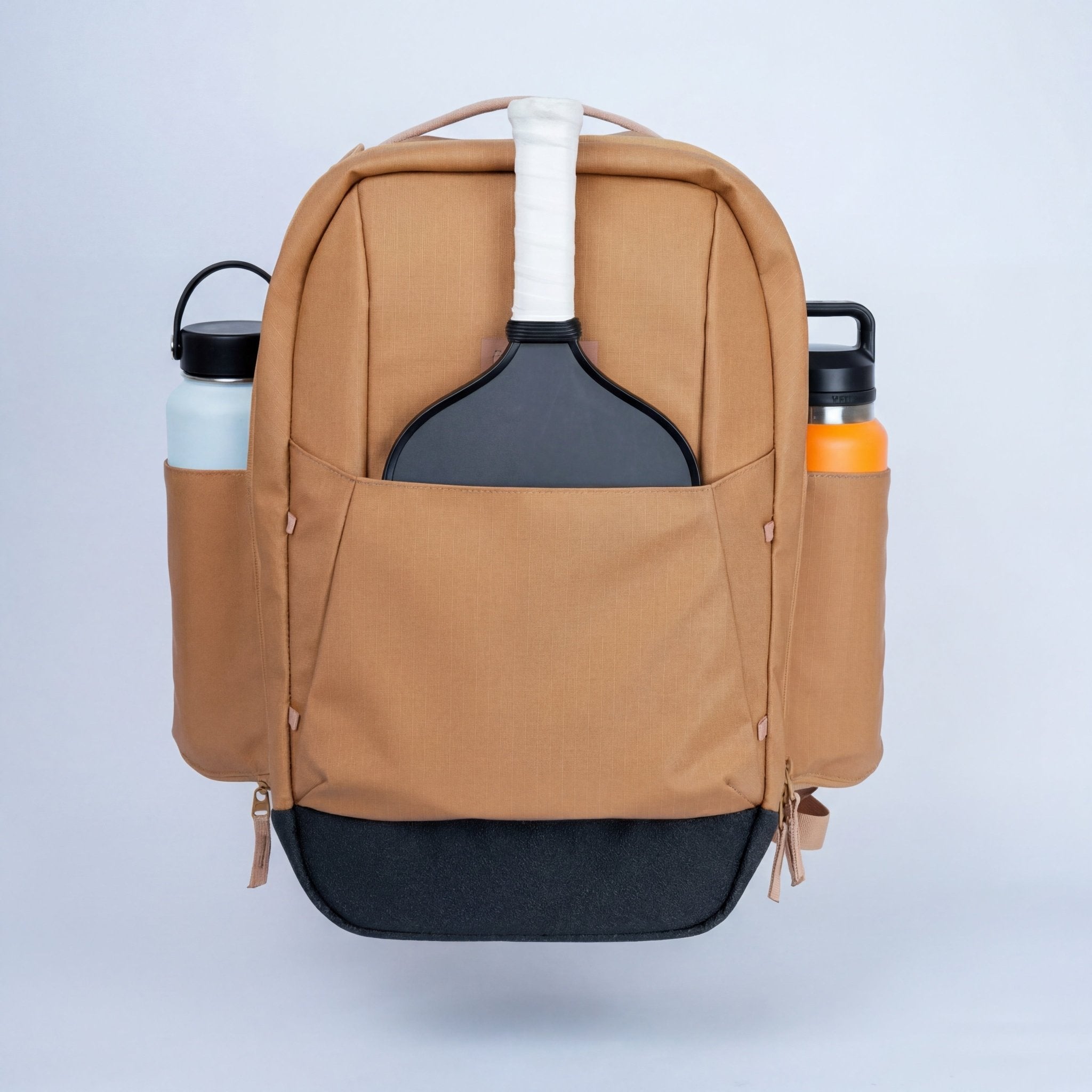
A dedicated bag compartment or paddle sleeve, room temperature (60–85°F), away from direct sun and heat sources. The Court Ranger V2 and Court Caddy both have modular paddle sleeve systems that keep paddles separated from other gear — one of the original design requirements from the 500+ player feedback process, because the number of players storing paddles loose among keys, balls, and shoes was striking.
How to Tell When Your Paddle Is Dead
The hardest maintenance question — and the one competitors' care guides consistently dodge. Here's the honest framework.
The Dead Spot Test
Tap the face lightly with two fingers at different spots, systematically from the edges toward the center. A healthy paddle produces a consistent, slightly hollow sound across the face. A dead spot sounds dull and different — sometimes described as "thuddy" compared to the surrounding area. Dead spots indicate core delamination or compression damage underneath the face material. Once present, they don't self-repair.
Spin Grit Degradation
If you're hitting shots with the same technique and the ball is staying low and flat when it used to kick off your paddle with topspin — your face texture is worn. You can test this by rubbing a finger lightly across the paddle face. New carbon fiber texture should feel slightly rough, like 220-grit sandpaper. If it feels smooth, the spin surface is gone.
Core Compression
A compressed core makes the paddle feel "boardy" — reduced pop, less energy transfer on drives, less feel on dinks. It usually develops gradually, which is why players often don't notice until they pick up a newer paddle and immediately feel the difference.
Delamination
Press gently across the face with your palm. Any slight give or flex that wasn't there before — especially unevenly distributed across different areas of the face — indicates the face material is separating from the core. Once started, delamination progresses and is not repairable.
The Honest Answer on When to Replace
One dead spot = paddle is compromised, start shopping for a replacement. Two dead spots = stop using it for competitive play immediately, it's a practice paddle at best. If spin grit is gone but the core feels solid, a carbon fiber cleaning block and surface treatment may buy 2–3 more months but won't restore original performance. If it feels boardy, test it against a new paddle — if the difference is noticeable, that's your answer.
See our Pickleball Equipment Guide 2026 for paddle recommendations at every price point when the time does come.
FAQ: Pickleball Paddle Maintenance
How do I clean my pickleball paddle?
Damp microfiber cloth on the face in circular strokes, dry wipe on the edge guard and handle. Takes under 3 minutes after every session. For raw carbon fiber faces, use a carbon fiber cleaning block once a week to restore spin surface texture. Avoid household cleaners — they leave residue in the face texture.
How long should a pickleball paddle last?
With consistent care — regular overgrip changes, proper storage away from heat, post-session cleaning — 2–4 years for a quality paddle. Without care, 12–18 months before performance degrades noticeably. Heat damage (hot car storage) is the single biggest life-shortening factor most players overlook.
How do I know when my pickleball paddle is worn out?
Run the dead spot test: tap systematically across the face and listen for dull, inconsistent tones. Check spin grit by running a finger across the face — it should feel slightly rough like fine sandpaper, not smooth. A boardy feel on drives and dinks signals core compression. Any of these means it's time to replace or move the paddle to practice-only status.
Should I use edge guard tape on my pickleball paddle?
If you're an aggressive net player with frequent kitchen contact and outdoor court use, yes — protector tape on the top edge extends the life of the high-contact zone. If you're a control player with a clean factory guard in good condition, the factory guard is sufficient. Don't add it just because you can — it adds weight and may affect feel for sensitive players.
Can I use rubbing alcohol to clean my paddle?
A very small amount on a cloth can remove stubborn sticky residue, but it's not recommended for routine cleaning. Alcohol can dry out composite surface materials over time and accelerates edge guard adhesive degradation. Use water and microfiber for regular cleaning; the carbon fiber cleaning block for grit restoration.

Leave a comment
This site is protected by hCaptcha and the hCaptcha Privacy Policy and Terms of Service apply.