

Disclosure: This post contains affiliate links to Pickleball Central. If you purchase through our links, FORWRD earns a small commission at no extra cost to you. We only link to products we'd recommend regardless.
Last updated: May 2026
Most pickleball injury articles recommend a brace for every injury. Elbow pain? Get an elbow brace. Knee soreness? Get a knee sleeve. Ankle twinges? You guessed it. The problem: for most overuse injuries, a brace treats the symptom while the actual cause — bad mechanics, overloading, wrong grip size — keeps doing damage underneath. This guide splits it honestly: which protective gear actually prevents injury, and which is pain management wearing the costume of prevention.
The 4 Most Common Pickleball Injuries (and Why They Happen)
Roughly 19,000 pickleball-related injuries are treated in U.S. emergency rooms every year — a figure tracked by USA Pickleball — and that number has tracked the sport's participation surge almost exactly. The 50-plus demographic absorbs around 90% of those injuries, which makes sense given that's also where most of the player base sits. But younger players aren't immune, especially as competitive play increases session volume.
The four injuries that account for the bulk of what happens on pickleball courts:
- Ankle sprains — the single most common, driven by lateral movement on hard courts. The direction changes near the kitchen line happen fast. Courts aren't always level. Ankles pay the price.
- Pickleball elbow (lateral epicondylitis) — same overuse mechanism as tennis elbow, but it often arrives faster in pickleball. New players discover the sport, play four times a week immediately, and wonder why their elbow aches six weeks in.
- Knee strains and patellar stress — not usually acute tears, but cumulative from constant lateral shuffling and the bent-knee "ready position" players hold for long rallies. Patellar tendons take a real beating in extended sessions.
- Rotator cuff inflammation — shoulder overuse, common in players who muscle every overhead rather than using body rotation. Poor mechanics here are the accelerant.
What every injury on that list has in common: they're all overuse problems at the root. Gear can support a damaged body part. It doesn't fix the overuse pattern that created the problem in the first place.
Pickleball Elbow: Prevention Gear and Technique Fixes
Let's be direct about elbow braces: a counterforce strap (the classic band worn just below the elbow) reduces load on your lateral epicondyle by diffusing vibration before it reaches the tendon. That's real pain relief. But it's not prevention — it's management. If you strap up and keep playing with a death grip and a wrist-dominant swing, you're borrowing time.
The actual prevention fix is grip size and mechanics. The leading cause of pickleball elbow is a paddle grip that's too small — players compensate with a tighter squeeze, which transfers vibration straight to the tendon. The test: hold your paddle in continental grip; you should be able to fit one finger between your fingertips and the heel of your palm. If you can't, your grip is too small.
Second fix: shoulder rotation. Players who arm-swing through every shot — especially the third shot drop — put 3-4x more load on their elbow than players who drive the shot from the shoulder and let the arm follow. This is the single most common mechanical error in players with chronic elbow pain.
When gear helps: if you're already dealing with lateral epicondyle pain and can't take time off, a counterforce brace reduces discomfort enough to play. A compression sleeve reduces muscle vibration. Both are useful treatment tools. Neither prevents the problem from getting worse if you don't also fix the mechanics. Worth trying before the brace: a thicker overgrip — adding even 5-10 grams of grip circumference can reduce elbow load meaningfully and costs about $5.
Knee Support: When a Brace Helps and When It Doesn't
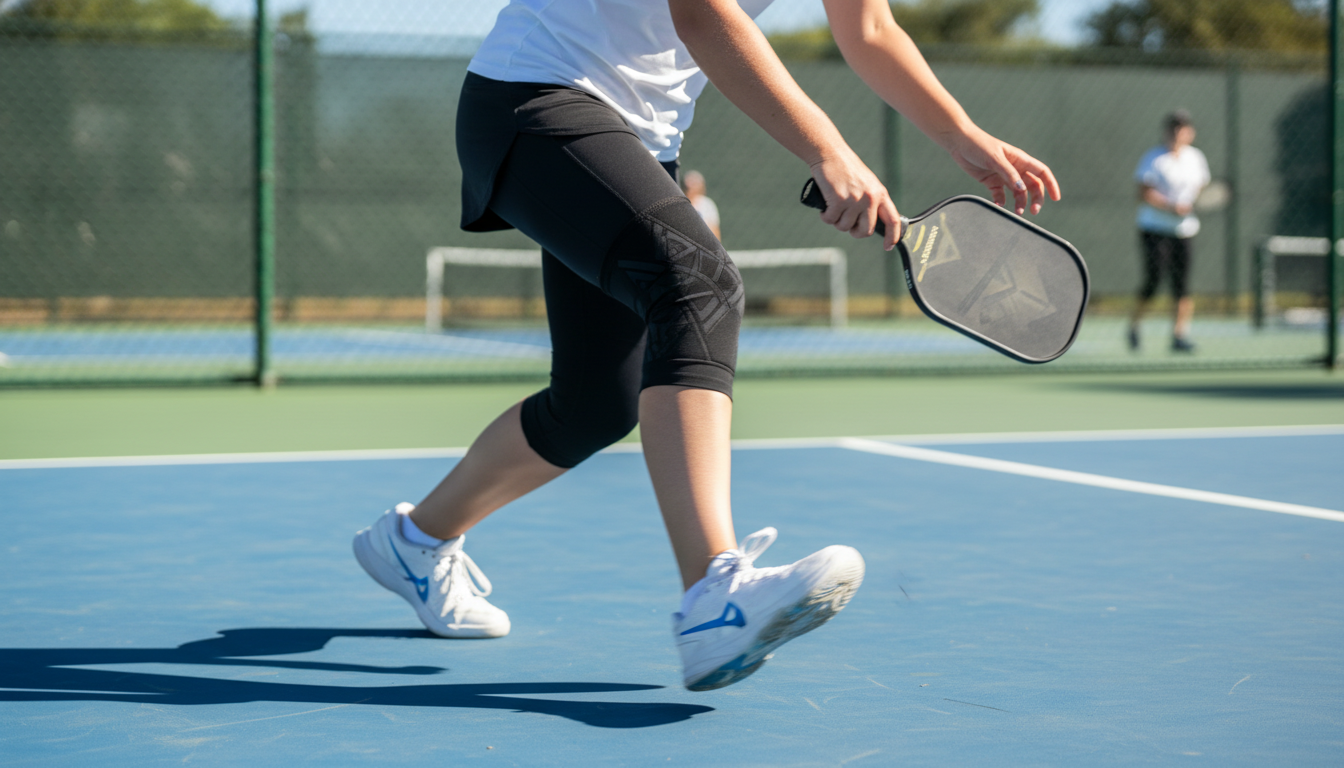
Knee braces in pickleball fall into three categories, and they solve genuinely different problems. Knowing which category you're in matters before spending money.
Compression sleeves (neoprene or knit) help with mild swelling, patellar tracking, and proprioception — your body's sense of joint position. That last one is underrated. Players recovering from a knee sprain often wear sleeves not for mechanical support but because the compression reminds the knee where it is, reducing accidental overextension. For this specific purpose, they're genuinely useful.
Hinged braces provide real ligament protection for ACL and MCL instability. If you've had a partial knee injury and your doctor cleared you to return to play, a hinged brace is often the recommendation. They're not comfortable for two-hour sessions, but they reduce re-injury risk on the aggressive lateral cuts pickleball demands.
Unloader braces are specifically for knee osteoarthritis — redistributing weight away from the arthritic joint surface. For players 55 and older managing mild-to-moderate arthritis, these can genuinely extend playing years. They're expensive ($400-700 range) but often covered by insurance with a prescription.
When a knee brace doesn't help: general knee soreness from being out of condition for pickleball's movement demands doesn't improve with a sleeve. The fix is strength — specifically quad and glute work. Most pickleball knee stress comes from insufficient deceleration strength. If your knees ache after every session and you don't have a specific prior injury, build strength and reduce session frequency before reaching for a brace.
Ankle Braces: Who Needs One and Which Type
Ankle sprains are pickleball's most common injury — and they're also where preventive bracing has the strongest evidence. Players who've had a prior ankle sprain have significantly elevated re-injury risk, and lace-up ankle braces consistently reduce that risk. This isn't just symptom management; it's actual injury prevention for players with a sprain history.
Two main styles:
- Lace-up ankle braces (worn inside court shoes) provide the most lateral support and are recommended for players with prior sprains or chronic ankle instability. They restrict range of motion slightly, which bothers some players on quick direction changes. Worth the adjustment period for anyone with a sprain history.
- Ankle compression sleeves provide mild proprioceptive support without restricting movement. Best for players with minor soreness or mild instability who haven't had a full sprain.
The shoe decision matters more than the brace for players without a prior injury. Court shoes with proper lateral support are the foundation. Running shoes — even excellent ones — lack the sidewall stiffness that prevents ankle rolls on hard lateral cuts. This is the most cost-effective "brace" you can buy: the right shoe. One specific thing most players miss: many people size their court shoes the same as their running shoes, but running shoes are often bought 0.5 size large for toe room during forward motion. That extra room creates lateral slippage in court movements and increases roll risk.
If you're rolling the same ankle repeatedly, worth having a physical therapist assess whether it's structural, a surface issue, or a shoe fit problem before assuming you need ongoing bracing.
Eye Protection: The Injury Nobody Plans For
Of every injury type in this guide, eye injuries are the one where players are most underprepared — and where prevention gear is genuinely non-negotiable. A pickleball traveling 25-50 mph directly toward your face at kitchen-line distance (14 feet in doubles) is not a theoretical risk. Eye injuries from ball impact are rare, but when they happen, they're serious. The sport's fast-paced net exchanges make this real.
Players most at risk: those at the kitchen line in doubles, particularly when the opponent drives the ball rather than dinking. This describes almost every competitive session at 3.5 and above.
Protective eyewear for pickleball does two distinct things:
- Ball impact protection — sports glasses with polycarbonate lenses and ASTM F803 certification handle ball impact without shattering. Standard sunglasses don't meet this standard and won't protect against a direct hit.
- Glare and ball tracking — for outdoor play, lens tint matters. Color-enhanced lenses can improve ball contrast against busy backgrounds. If you've ever lost track of a fast ball against a light sky or a cluttered fence, you understand why this is a real performance factor, not just marketing.
The JOOLA RJX Enhance is the eyewear we see most on competitive recreational courts. At $119.96, it offers ASTM-certified lenses with ColorBoost technology — genuinely helpful for ball tracking — and a frame built for athletic movement, not casual wear. See the JOOLA RJX Enhance at Pickleball Central →
If you want a budget entry point, ASTM F803-certified sports glasses are available under $30. Don't skip the certification check. ASTM F803 is the spec you're looking for — it's the court-sports impact standard that accounts for the speed and size of a pickleball specifically.
Wrist and Shoulder: Gear vs Technique
Both of these injury sites are almost entirely technique-dependent. That's not what players want to hear when their shoulder aches after a session, but it's the honest assessment.
Wrist: Wrist pain in pickleball usually traces to one of two things — a flick-heavy dink style that puts repetitive stress on the wrist extensors, or a backhand drive taken with a loose wrist instead of a locked forearm. Wrist braces reduce range of motion, which can force better mechanics as a side effect. But playing through wrist pain almost always makes it worse. The real fix is identifying which stroke is causing the stress and modifying the mechanics. A quick drill: hit 20 dinks focusing on keeping the wrist joint completely still, driving motion from the shoulder. Most wrist pain in rec players who try this drill diminishes noticeably within a week.
Shoulder: Rotator cuff inflammation from pickleball is nearly always an overhead mechanics issue. Players smashing overheads with a dropped elbow and pure arm power put enormous load on the rotator cuff. The proper mechanic — hip rotation driving the shoulder, elbow high, contact point forward — is dramatically less stressful. Shoulder compression sleeves have limited evidence for overuse prevention specifically. The work happens with a coach or video review of your overhead.
One area where gear does matter for shoulder health: paddle weight. Moving from a 7.5-ounce to an 8.5-ounce paddle increases shoulder load on every single swing. If you're dealing with rotator cuff pain and playing a heavier paddle, try a lighter option before committing to physical therapy. Sometimes it's the simplest variable.
"We heard this constantly in our player research — people asking us to recommend a brace for elbow pain that turned out to be a grip-size issue. The gear didn't cause the problem, but it also wasn't going to fix it. Getting the grip right first changes everything." — Topher, FORWRD co-founder
Court-Ready: Carrying Your Recovery Gear
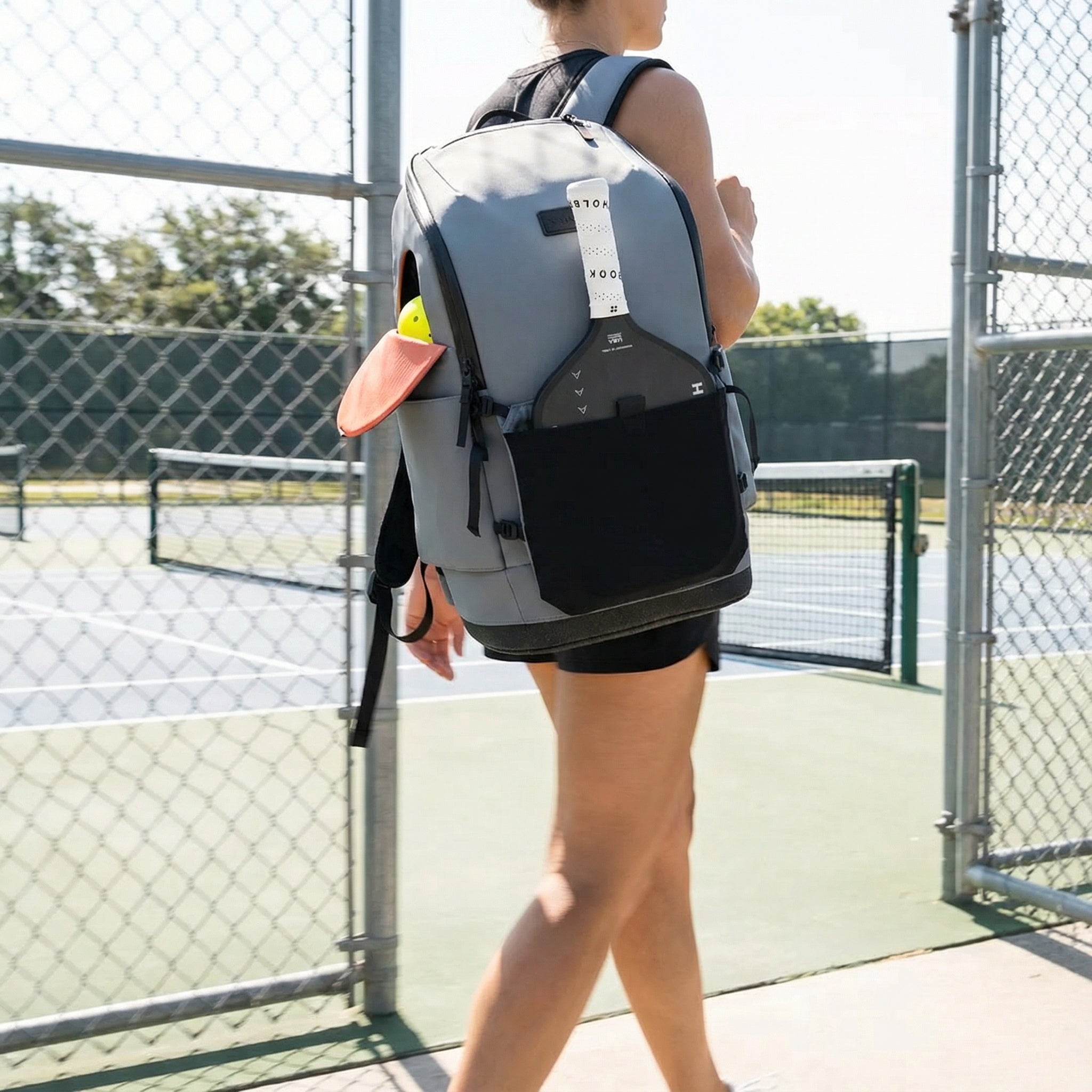
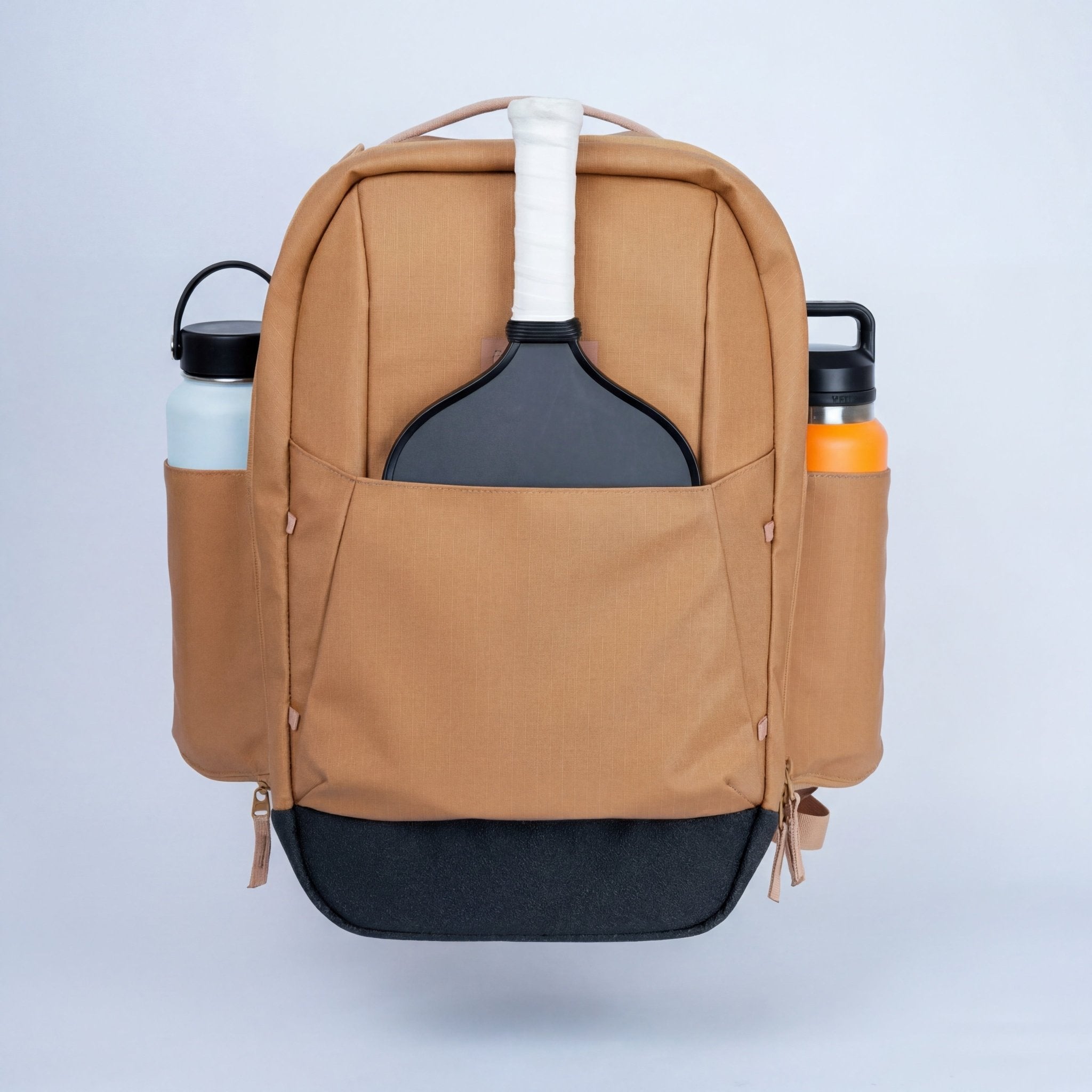
If you're managing an injury and still playing — even carefully — you're hauling more to the court: a brace, an ice pack for post-session, extra towels, maybe a spray bottle. The Court Ranger V2 is organized enough to keep recovery gear separate from paddles and balls without making you dig through one giant main compartment. At $195, it's the bag players reach for when they're taking their kit seriously without going full tournament load-out.

Also worth cross-referencing: the complete pickleball equipment guide covers shoes, paddles, and gear selection in full depth if you're building out your setup from scratch or upgrading after an injury pushes you to reassess your kit.
FAQ: Common Questions About Pickleball Injury Prevention
How do I prevent pickleball elbow?
Fix your grip size first — a grip that's too small causes players to over-squeeze, which transfers vibration directly to the lateral epicondyle tendon. The test: you should fit one finger between your fingertips and the heel of your palm in continental grip. Second, add shoulder rotation to your swing. Arm-only shots are the primary mechanical cause of elbow strain in pickleball players at every level.
Should I wear a knee brace while playing pickleball?
It depends on your history. If you have a prior knee injury, a compression sleeve or hinged brace can genuinely help with proprioception and re-injury prevention. If you have no prior injury and just general post-session soreness, strength work — quads, glutes, single-leg exercises — is more effective. A brace without addressing the underlying strength deficit is a short-term band-aid.
What causes pickleball injuries?
Most are overuse injuries — the result of jumping from minimal activity to four sessions per week without building baseline conditioning first. Ankle sprains from lateral movement on hard courts are the most common acute injury. Elbow, knee, and shoulder injuries tend to accumulate over weeks or months. Poor mechanics accelerate every pattern: too-small grip for elbow, arm-dominant swings for shoulder, insufficient lateral strength for knees.
Is pickleball hard on your joints?
Less than most court sports. The non-volley zone limits all-out sprinting, and the smaller court reduces total distance covered compared to tennis. That said, the lateral cuts at the kitchen line do stress knee ligaments and ankle tendons, particularly for players without lateral conditioning or who are playing in running shoes rather than court-specific footwear.
What protective gear do I actually need for pickleball?
Three non-negotiables: court shoes with lateral support (not running shoes), ASTM F803-certified eye protection for kitchen-line play, and an overgrip sized correctly for your hand. Beyond those: brace any previously-injured joint you're actively managing. Everything else is optional and specific to your injury history.
Is eye protection necessary for pickleball?
Yes, for serious doubles play — especially at the kitchen line. A ball at 25-50 mph at face height is a real risk, not a theoretical one. Look for ASTM F803-certified polycarbonate lenses — that's the court-sports standard that accounts for ball speed and size. Standard sunglasses don't meet this standard.

Leave a comment
This site is protected by hCaptcha and the hCaptcha Privacy Policy and Terms of Service apply.